Why Won’t My Dog Eat: Discover Reasons and Practical Tips
When you see your dog’s food bowl sitting full hours after you put it down, it's completely natural to start worrying. A dog refusing to eat can mean anything from "I'm bored with this kibble" to something more serious. The key is to remember that their appetite is a direct line of communication about how they're feeling, both inside and out.
Decoding Your Dog's Mealtime Message
That untouched food bowl can feel like a huge red flag, sending even the most seasoned dog owner into a tailspin. We get it. But before you panic, let's try to look at this differently: your dog's refusal to eat is a powerful signal, like a daily report card on their physical and emotional health. Learning to read these signals is the first step to figuring out what's wrong and how to help.
Answering the question "why won't my dog eat?" almost always comes down to exploring four main areas. It's a common problem, and thankfully, there are often clear, simple steps you can take right at home.
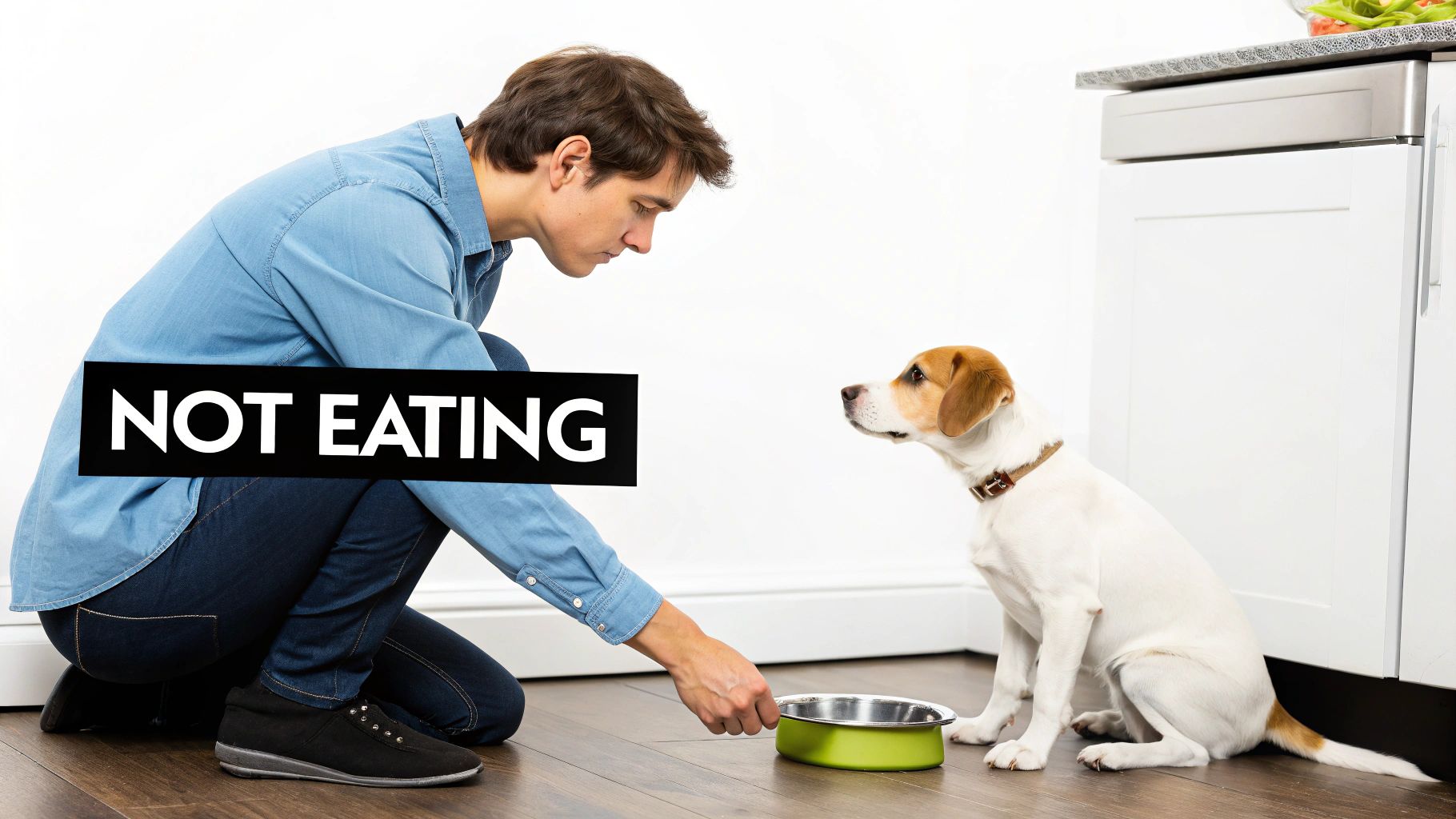
To help you quickly pinpoint the potential cause, here's a quick reference guide.
Quick Guide to Appetite Loss in Dogs
Use this table to quickly pinpoint potential reasons your dog is refusing their meals.
| Category | Common Causes | Key Signs to Watch For |
|---|---|---|
| Medical Discomfort | Dental pain, upset stomach, infections, underlying illness, recent surgery | Lethargy, vomiting, diarrhea, whimpering, changes in posture |
| Behavioral & Emotional | Anxiety, stress, new pet or baby, changes in routine, separation anxiety | Hiding, pacing, excessive barking, clinginess, panting when at rest |
| Environmental Changes | Moving to a new home, loud noises (construction, storms), new food bowl | Nervousness, reluctance to enter certain areas, startling easily |
| Food-Related Issues | Boredom with current food, pickiness, too many treats, spoiled food | Sniffing food and walking away, holding out for something better |
This table is a starting point. Let’s break down these categories a bit more.
The Four Main Reasons a Dog Stops Eating
When your dog suddenly turns their nose up at dinner, the reason usually falls into one of these buckets. Thinking through them can help you narrow things down and decide what to do next.
-
Medical Discomfort: This is always the first thing to rule out. Hidden pain from a cracked tooth, an upset stomach, or a more serious internal issue can make the idea of eating unbearable. If your dog also seems tired or is showing any other unusual symptoms, a medical cause is a strong possibility.
-
Behavioral or Emotional Stress: Our dogs are incredibly sensitive. A shift in your work schedule, a new baby in the house, thunderstorms, or even just moving their food bowl to a new spot can create enough anxiety to shut down their appetite completely.
-
Environmental Changes: Dogs are creatures of habit who thrive on predictability. A big change like moving to a new house or even something smaller like rearranging the living room furniture can make them feel unsettled. This instability can directly impact their desire to eat.
-
Simple Food Fatigue or Pickiness: Let's be honest—would you want to eat the same dry cereal every single day? Sometimes, it’s just boredom. Your dog might be holding out for something more interesting, a habit that can definitely be encouraged if they get a lot of tasty table scraps.
Your dog's food bowl is more than just a place for kibble; it's a window into their health. An empty bowl usually means a happy, healthy pup, while a full one is a clear sign to pay closer attention.
Understanding these foundational reasons is your first step. By watching your dog’s behavior and thinking about any recent changes in their life, you can start to connect the dots. This initial detective work helps you decide whether you need to make a simple adjustment at home or call your vet for professional advice. In the next sections, we'll dive deeper into each of these areas and give you some real-world strategies to get your dog back to their happy, meal-loving self.
Uncovering Hidden Medical Reasons for Appetite Loss
When your chowhound suddenly turns their nose up at their favorite meal, it’s easy to write it off as a new fussy habit. But more often than not, a sudden loss of appetite isn't just a quirk—it's one of the clearest signals your dog can send that something is physically wrong.
If you’re asking, "why won't my dog eat?" the very first place to look is their physical well-being. A dog's refusal to eat is a direct message that something hurts or feels off, and the reasons can range from minor discomfort to more serious conditions.
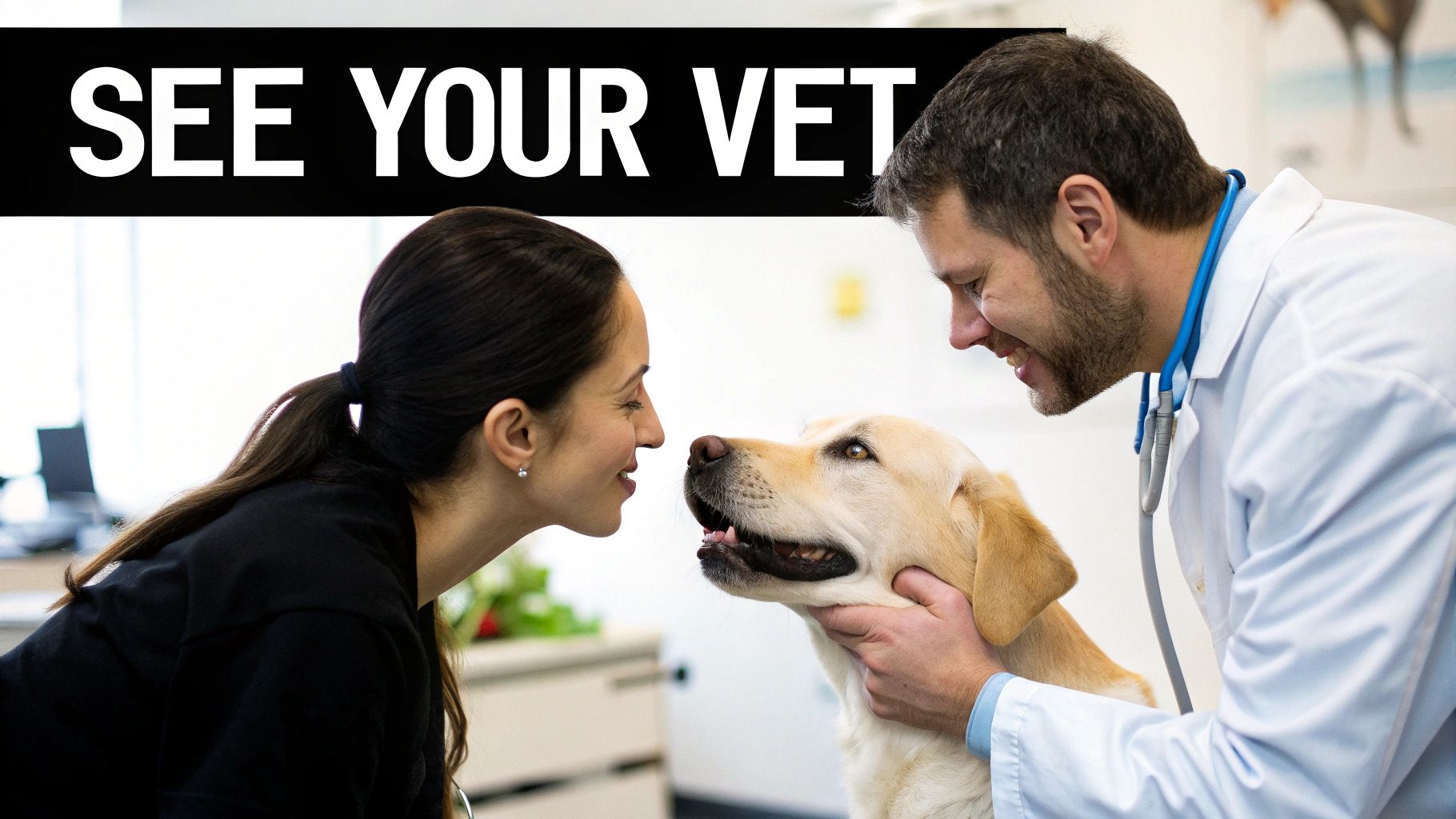
The Painful Truth About Dental Disease
One of the most common—and frequently overlooked—reasons for a dog to stop eating is dental pain. Think about it: if you had a raging toothache, would you want to crunch down on a bowl of granola? Probably not. It's the same for our dogs.
It’s a staggering statistic, but dental disease impacts 80% of dogs by the age of two. Problems like a cracked tooth, infected gums, or painful periodontal disease can make chewing hard kibble an unbearable experience. In fact, one recent survey found that 65% of dog owners said their pets refused to eat during bouts of oral discomfort.
This is why a sudden aversion to hard food should always prompt a quick look inside their mouth. Check for red or swollen gums, obvious damage, or unusually bad breath.
Gastrointestinal Upset and Other Internal Issues
Beyond the mouth, your dog’s entire digestive system can be a source of appetite-killing trouble. Just like us, a simple upset stomach is enough to make them lose all interest in food.
An untouched food bowl is one thing. But when it's paired with other symptoms like lethargy, vomiting, or diarrhea, it’s a clear sign that you’re dealing with more than just pickiness. This combination almost always points to an underlying medical issue that needs a vet's attention.
These symptoms could signal a whole host of internal problems. Here are some of the usual suspects:
- Stomach Upset: This could be from a simple case of "dietary indiscretion" (eating something they shouldn't have) or a more chronic issue like inflammatory bowel disease.
- Acid Reflux: That burning feeling in the throat and chest can make swallowing painful, leading a dog to avoid food entirely.
- Infections: Any kind of systemic infection, whether viral or bacterial, can bring on fever and nausea that completely wipes out a dog’s desire to eat.
- Serious Underlying Conditions: While less common, a persistent loss of appetite can also be an early sign of more serious illnesses like kidney disease, pancreatitis, or even cancer.
The Role of a Professional Diagnosis
While it's smart to be aware of these potential causes, self-diagnosing is never the answer. Only a veterinarian can run the proper exams and tests to figure out exactly why your dog has stopped eating. If your dog skips more than one meal or shows any other signs of being unwell, it’s time to call the vet.
Even after a diagnosis, getting a dog to eat again can be a challenge, especially if they’re recovering from dental pain or stomach upset. Their kibble provides vital nutrition, but it might be too hard or just not appealing enough. This is where a little help can make a huge difference.
A soft, palatable meal enhancement like ChowPow can be a gentle bridge back to normal eating. By mixing the powder with a bit of water, you create a soft gravy that coats their kibble, making it much more enticing and easier for a sore mouth to handle. It doesn't replace their current kibble, but it’s a simple way to boost its appeal and ensure they get the calories and nutrients they need to get back on their paws.
How Stress and Environment Affect Your Dog's Appetite
Beyond physical health, a dog's emotional state is directly wired to their food bowl. Think about it—when you're nervous or completely overwhelmed, food is probably the last thing on your mind. Your dog's feelings can have the exact same effect. When you're trying to solve the mystery of "why won't my dog eat," it's absolutely crucial to look at the world from their perspective.
A dog’s home is their entire world, and they are incredibly sensitive to changes within it. Even shifts that seem minor to us can feel monumental to them, triggering a stress response that shuts down their desire to eat.
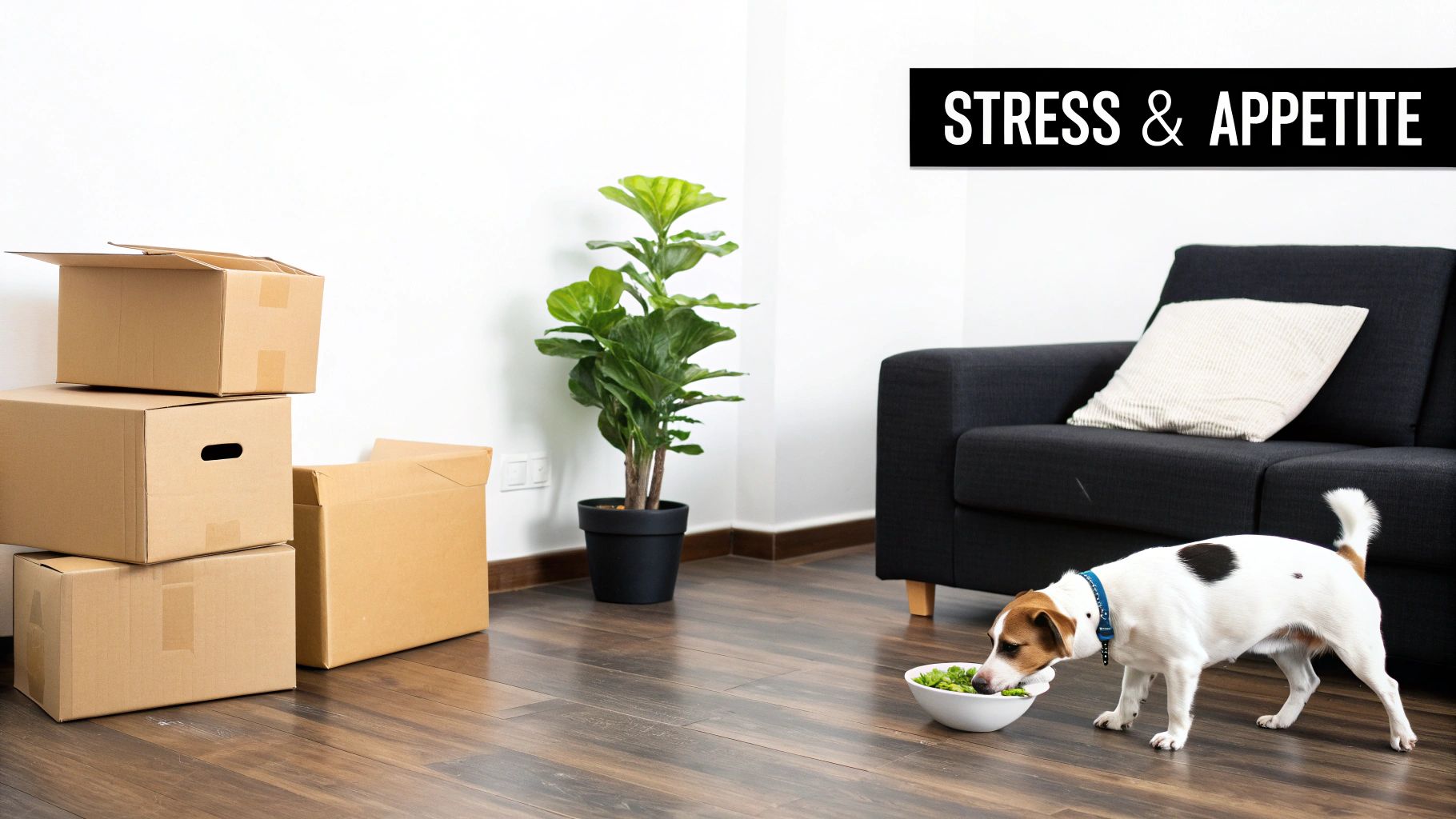
Common Environmental and Emotional Triggers
Dogs are creatures of habit; they thrive on routine and predictability. When their sense of security gets shaken up, their appetite is often the very first thing to disappear. Take a moment and think about whether your dog has recently experienced any of these common stressors.
- Changes in the Home: This could be a huge event like moving to a new house, but it can also be something as simple as renovations or rearranging the furniture. A new layout can make a familiar space feel confusing or even threatening.
- New Family Members: The arrival of a new baby or another pet can completely upend your dog's world. This sudden change can spark feelings of jealousy, anxiety, or just plain confusion about their place in the pack.
- Shifts in Routine: A new work schedule, a family member leaving for college, or even a change in their daily walk times can disrupt the predictability your dog relies on to feel safe.
- Loud Noises: Thunderstorms, construction, and fireworks are downright terrifying for many dogs. The intense fear these sounds create can easily lead to a loss of appetite.
- Travel and New Places: Being in an unfamiliar environment, like a hotel room, can be stressful. Planning ahead by understanding a hotel's approach, like Hyatt's pet policy, can help you create a more comfortable and predictable experience for your dog on the road.
Stress and anxiety are the silent culprits behind why up to 30% of dogs experience sudden appetite refusal, especially with big changes like moves, new pets, or fireworks. In fact, one study found that 25% of dogs in urban households skip meals during high-stress periods, which can lead to a 5-10% drop in weight within just a few weeks.
Creating a Calm and Consistent Feeding Space
If you suspect stress is the reason your dog won't eat, your main goal is to rebuild their sense of security. The best way to do this is by creating a calm, consistent, and positive mealtime routine.
Start by designating a quiet, low-traffic spot for their food and water bowls. A dog who feels exposed or vulnerable while eating is far less likely to relax and finish their meal. Avoid placing their bowl in a busy hallway or right next to a loud appliance like the washing machine.
Next, stick to a predictable feeding schedule like clockwork. Feeding your dog at the same times each day reinforces routine and helps them feel secure. This consistency lets them know that even if other things have changed, this important part of their day remains the same.
Your dog's mealtime should be a peaceful ritual, not a stressful event. By creating a safe, predictable feeding environment, you directly counter the anxiety that's suppressing their appetite and show them that mealtime is a time for calm and enjoyment.
Using Scent to Overcome Anxiety
Even with the perfect routine, a stressed-out dog might still turn up their nose at food. This is where you can use their most powerful sense to your advantage: their sense of smell. A dog’s natural instincts are strongly driven by scent, and an enticing aroma can often cut right through that anxiety-induced food refusal.
This is exactly why a high-quality meal enhancement can be so effective. A supplement with a rich, meaty scent—like the real beef heart in ChowPow—can trigger a dog's primal drive to eat. Sprinkling just a small amount over their regular kibble can make their meal suddenly irresistible, even when they're feeling unsettled.
It’s a simple strategy, but it works because it speaks directly to their instincts. You're not replacing their regular food; you're just boosting its appeal and nutritional value. This helps make mealtime a positive experience they can look forward to, rebuilding both their confidence and their appetite.
Solving the Picky Eater Problem
When your dog gives their food bowl a quick sniff and then walks away, it’s all too easy to just slap the “picky eater” label on them. But is it true pickiness, or is something else going on? The line between a genuinely finicky dog and one who's just plain bored with their food can get pretty blurry. Sometimes, figuring out "why won't my dog eat?" starts with taking a hard look at the meal itself.
Think about it from their perspective. Just like us, dogs can get tired of eating the exact same thing, day in and day out. Imagine if you had the same dry cereal for breakfast, lunch, and dinner. You’d probably lose your enthusiasm pretty quickly, too. This is often called food fatigue, and it’s a very real reason why so many dogs suddenly lose interest in their meals.
Are You Accidentally Creating a Picky Eater?
Sometimes, our own habits can unintentionally teach our dogs to be finicky. We only want what's best for them, of course, but certain well-meaning actions can send the wrong signal, encouraging them to hold out for something better than what's already in their bowl.
Here are a few common habits that can contribute to picky eating:
- Free-Feeding: Leaving a full bowl of kibble out 24/7 lets your dog graze whenever they please. This can make mealtime feel less special and less exciting because the food is just always there. A structured feeding schedule, on the other hand, builds anticipation and makes them appreciate their meals more.
- Too Many Treats: If your dog is filling up on high-value snacks between meals, they simply won't be hungry when dinner is served. It's the doggy equivalent of a kid eating cookies all afternoon and then refusing their vegetables.
- Sharing Table Scraps: Tossing your dog bites of your own flavorful food teaches them a powerful lesson: if they hold out long enough, something far more delicious than kibble might just appear. This can make their regular food seem incredibly dull in comparison.
Making Mealtime Exciting Again
If you’ve ruled out medical problems and stress and you suspect you're just dealing with a case of food boredom, the fix doesn't have to involve a complete and stressful diet overhaul. In fact, constantly switching your dog's main food can often lead to an upset stomach and might even make picky habits worse.
The goal isn’t to find an entirely new food; it’s to make their current food irresistible. Instead of replacing their diet, you can simply upgrade it with exciting flavors and added nutrition.
This is where a high-quality meal enhancement becomes your secret weapon. You can transform their daily kibble from a monotonous chore into a five-star dining experience they’ll get genuinely excited about. For more ideas, check out our detailed guide on the best dog food toppers for picky eaters.
The Perfect Solution for Food Fatigue
This is the exact reason we created ChowPow. It’s not a replacement for your dog's regular food; it's a powerful nutritional enhancement designed to solve the picky eater problem right at its source. A simple sprinkle of this whole-ingredient supplement over their existing kibble is the easiest way to put an end to food fatigue.
ChowPow is made from dehydrated beef heart, a nutrient-dense organ meat that dogs are instinctively drawn to. Its rich, meaty aroma instantly makes any food more appealing, triggering your dog’s natural instincts and bringing excitement back to the bowl. It's a simple addition that adds a massive punch of flavor and a powerful boost of protein, vitamins, and minerals.
You're not just adding flavor; you're boosting the nutritional value of their meal. It’s the perfect way to give your dog the variety they crave without all the digestive problems that can come from constantly switching foods. With ChowPow, you empower them to love their food again, turning every meal into a healthy, satisfying feast.
Supporting Senior Dogs and Those in Recovery
As dogs get older or start the long journey back from an illness or surgery, their needs change in a big way. An untouched food bowl from one of these pups isn't just a sign they're being picky; it's a red flag that they’re dealing with unique challenges that make eating tough or even unappealing.
Figuring out what those challenges are is the first step. When you're asking, "why won't my dog eat?" in these situations, the answer usually lies in their changing bodies and a desperate need for gentle, effective nutrition.
The Unique Hurdles for Senior Dogs
Aging brings on a whole host of changes that can really mess with a senior dog's appetite. That once-unbeatable excitement for dinner can start to fade as their senses and physical abilities decline.
- A Weaker Sense of Smell: A dog’s world is built on scent. As they get older, that powerful sniffer can weaken, making their regular kibble suddenly seem boring and bland.
- Dental Pain: Years of chewing can lead to sore gums, loose teeth, or other painful dental issues. Suddenly, chomping down on hard kibble becomes a chore they’d much rather skip.
- Slower Digestion: A senior dog’s gut can become more sensitive, making it harder to process the same food they’ve eaten for years without any trouble.
The Critical Needs of a Recovering Dog
For a dog on the mend from surgery or illness, a lost appetite is an incredibly common—and scary—problem. Their body is working overtime to heal, which demands a ton of energy, but this is the exact moment they feel least like eating. Pain, discomfort, and medications that cause nausea can completely shut down their hunger cues.
It's a serious issue. Recent illness or surgery leaves 40-50% of dogs with little to no appetite, sometimes for weeks. Their metabolism slows down to cope, but without proper nutrition, studies show 20% of these dogs can lose over 10% of their body weight, risking dangerous muscle wasting. For seniors, the numbers are even starker, with 60% facing digestive setbacks during recovery. You can dig deeper into this problem within the USD 51.27 billion dog food sector in this pet food market report.
For a dog in recovery, every single calorie counts. Their body is in full-on repair mode. Giving them nutrient-dense, easy-to-digest food isn't just helpful—it's absolutely essential for a fast and successful recovery.
Gentle Nutrition When They Need It Most
For both seniors and recovering pups, the goal isn't just to get them to eat anything. It’s about getting them the right kind of nutrition in a way they can actually handle. This is where a simple but powerful meal enhancement like ChowPow can be a game-changer.
ChowPow was designed with these exact situations in mind. Because it's a supplement, not a whole new food, you can boost the nutritional power of their current meals without risking an upset stomach.
Here’s how it helps:
- High-Quality Protein: The dehydrated beef heart is packed with the protein and amino acids they need to maintain muscle mass (for seniors) or repair tissue (for recovering dogs).
- Gentle on the Stomach: It’s a simple, whole-ingredient formula that’s easy for sensitive digestive systems to process.
- Perfect for Sore Mouths: When you mix ChowPow with a bit of water, it creates a soft, savory gravy that coats their kibble. This makes it so much easier for dogs with dental pain to eat and get the calories they desperately need.
- Boosts Crucial Hydration: That same gravy also encourages them to drink more, which is vital for both seniors and dogs bouncing back from illness.
By simply enhancing their current food, you're giving them the targeted support they need. It’s a gentle yet effective way to ensure your senior or recovering dog gets the essential fuel to feel their best and get back on their paws.
Your Action Plan for a Dog Who Won't Eat
Feeling that knot of worry in your stomach when your dog turns their nose up at their bowl is completely normal. We've all been there. The good news is, you're not powerless. Let's walk through a clear game plan, starting with the absolute must-know red flags and then moving on to some gentle tricks you can try at home.
First things first, we need to be crystal clear about when to stop playing detective and call in a professional. Some symptoms just aren't worth waiting on.
When to Call Your Vet Immediately
If your dog's loss of appetite is paired with any of the following signs, please don't wait. Pick up the phone and call your vet right away, as these can point to serious medical issues needing urgent care.
- Lethargy or Weakness: Is your dog unusually tired, weak, or struggling to even stand up? That's a big red flag.
- Vomiting or Diarrhea: We're talking multiple episodes, especially if you see any blood.
- Signs of Pain: Any whimpering, shaking, a hunched-over posture, or yelping when you touch them is a clear signal something is wrong.
- Refusing Water: A dog who won't eat or drink is at a high risk for dehydration, which can get serious, fast.
- Skipping Multiple Meals: For a healthy adult dog, if they've skipped more than two meals in a row (that's about 24 hours), it's time to make the call. For puppies, seniors, or dogs with pre-existing health issues, that timeline is much, much shorter.
Your At-Home Toolkit for Reluctant Eaters
Okay, so your dog isn't showing any of those scary symptoms. That's a great sign! It means we have some room to try a few gentle techniques at home to coax them back to their bowl. The goal here is simple: make their meal more appealing without a total dietary overhaul.
This decision tree can help you visualize the process, especially when dealing with older dogs or those recovering from an illness.
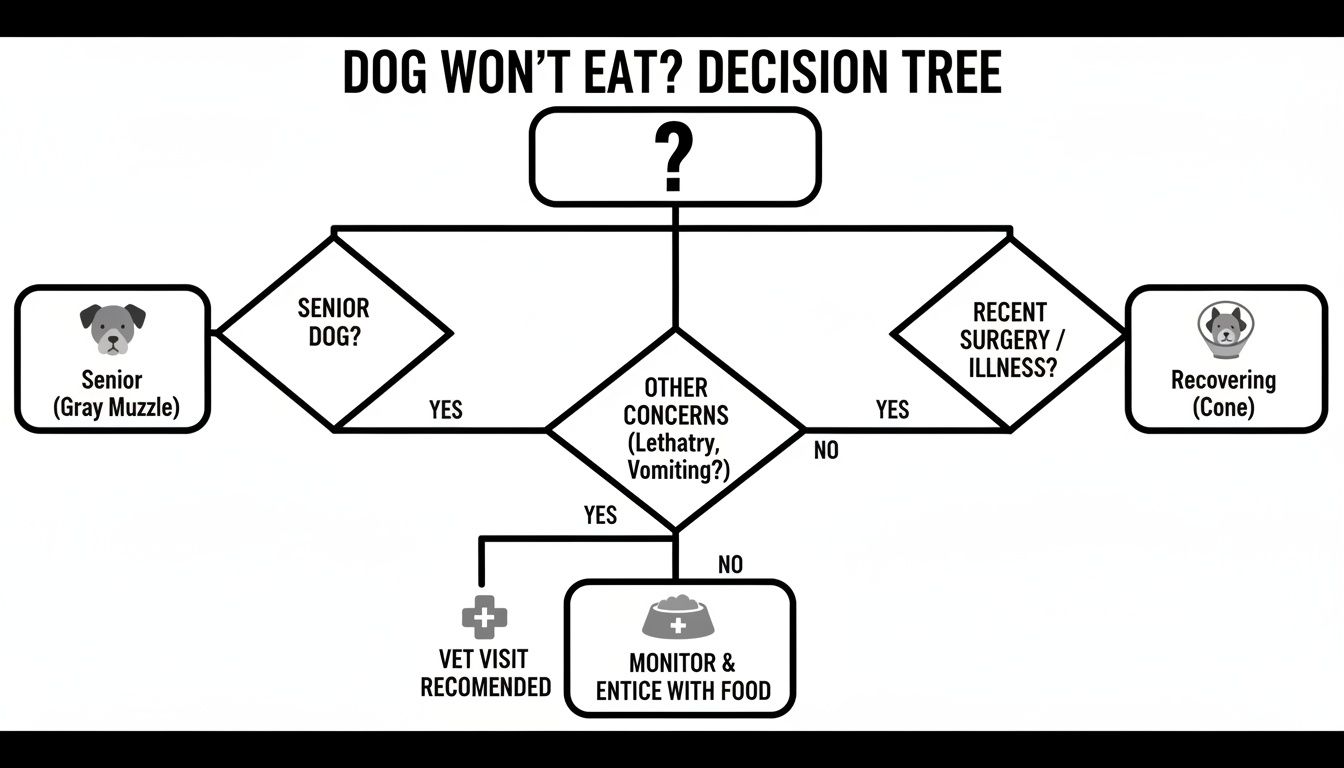
As you can see, factors like age and recovery status often mean we just need to make food more tempting and easier to eat.
Here are a few simple things to try:
- Gently Warm Their Food: A few seconds in the microwave (just make sure to stir it and check that it's warm, not hot!) or even a splash of warm water can unlock the food's aroma, making it instantly more interesting to your dog's powerful nose.
- Try Hand-Feeding: It might sound silly, but for some dogs, the comfort and one-on-one attention of being fed by hand is all it takes to get them started. This can help rebuild a positive feeling about mealtime, especially if they're feeling a bit off or stressed.
- Add an Irresistible Topper: This is often the easiest and most effective first move. Sprinkling something delicious over their usual kibble can be the game-changer that piques their interest and gets them eating again.
Your easiest and most powerful tool is a high-quality meal enhancement. It boosts flavor and nutrition without disrupting their established diet, making it the perfect first-line solution for a reluctant eater.
This is exactly where ChowPow shines. It’s designed as a meal supplement, not a replacement, to make their current food irresistible. You can sprinkle it on dry for a concentrated flavor punch or mix it with a little water to create a savory gravy that coats every piece of kibble.
This simple step can transform a boring bowl into a feast they can't wait to dive into. It leaves you feeling confident and relieved, knowing you've helped your best friend get back to their happy, food-loving self.
Common Questions About Your Dog's Eating Habits
It’s completely normal to have questions when your dog suddenly turns their nose up at their food bowl. Let's tackle some of the most common concerns dog owners face, giving you clear, straightforward answers to help you navigate mealtime struggles with more confidence.
How Long Can My Dog Safely Go Without Eating?
While a healthy adult dog might be able to go a day or two without food, you should absolutely contact your vet if they've refused to eat for more than 24 hours. That window shrinks dramatically for puppies, senior dogs, and those with existing health issues like diabetes—in those cases, you need to call your vet much sooner.
Think of it this way: a sudden loss of appetite is often the very first, and sometimes only, clue that something isn't right. It's always better to be safe than sorry.
Will Using a Topper Make My Dog Pickier?
This is a big worry for many pet parents, but the short answer is no. Using a high-quality, consistent meal enhancer like ChowPow doesn't teach your dog to hold out for something better, like table scraps. Instead, it does the opposite.
Because it's a supplement designed to boost their main diet, it makes their regular kibble more exciting. It helps prevent the food boredom that often leads to picky eating in the first place.
A great topper adds value to your dog's existing food. It reinforces the idea that their bowl is where the good stuff happens, rather than training them to wait for a different meal entirely.
What Should I Do if My Dog Won't Drink Water Either?
A dog refusing both food and water is a serious red flag. This situation is an emergency that requires an immediate call to your veterinarian. Dehydration is a major health risk that can escalate very quickly and should never be ignored.
For less urgent situations where you just want to encourage a bit more hydration, mixing a supplement like ChowPow with water to create a savory broth is a fantastic trick. It gives the water an enticing flavor that encourages them to drink up while also adding a little nutritional boost.
Beyond health, celebrating our dogs is one of the joys of being a pet parent. If you're ever on the hunt for fun ideas, you can always explore some thoughtful gifts for the animal lovers in your life.
Can I Use a Meal Topper to Hide Medication?
Absolutely. This is one of the best tricks in the book. The powerful, savory aroma and rich flavor of a supplement like ChowPow are perfect for masking the bitter or strange taste of pills and liquid medicines.
You can mix the powder with a tiny bit of water to create a paste to wrap around a pill, or just sprinkle it over their food to hide the medication completely. It’s a simple hack that can turn a stressful daily chore into a positive, easy experience for both of you.
Ready to turn every meal into a feast your dog will love? Try ChowPow today and see the difference a sprinkle of pure, whole-ingredient nutrition can make. Boost their appetite, support their health, and bring excitement back to the bowl.
Shop Now at chowpownow.com
-
Product on sale
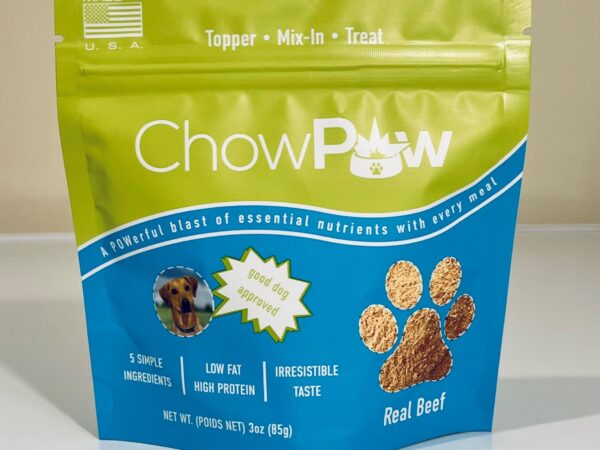 Dog Food Topper - Beef HeartOriginal price was: $14.99.$10.95Current price is: $10.95. - or subscribe and save up to 20%