

A Guide to All Natural Dog Joint Supplements for 2026
You notice it in a small moment first. Your dog pauses before getting up from the rug. They look at the stairs, then back at you. They still want the walk, still wag for dinner, still light up when you grab the leash, but something feels different.
That change can make any dog owner uneasy. You don't want to overreact, but you also don't want to wait until discomfort becomes part of your dog's daily routine. That's why so many people start looking into all natural dog joint supplements. They want a gentler way to support movement, comfort, and long-term mobility while keeping the whole dog in mind, including diet, appetite, and mealtime habits.
The Proactive Path to Your Dog's Joint Health
A lot of joint care starts before a dramatic limp ever shows up. It starts with the dog who's a little slower after naps, a little less eager to jump into the car, or a little more careful on hard floors.
That instinct to act early makes sense. Natural joint support has become a normal part of how many people care for aging or active dogs. In fact, the global dog joint supplements market was valued at approximately USD 1.1 billion in 2025 and is projected to reach about USD 2.0 billion by 2035, which represents roughly 81.8% cumulative growth according to Fact.MR's dog joint supplement market analysis. That tells you this isn't a fringe idea. It's mainstream pet care.
Why owners look for natural options
Those searching for natural support aren't trying to play veterinarian at home. They're aiming to do something sensible and low pressure while observing their dog closely and consulting with their vet.
Natural supplements usually aim to support the body's normal joint function rather than force a short-term change in the way some medications do. For many owners, that feels like a good fit for daily use, especially when they're thinking about long-term comfort.
Practical rule: Early support is often easier than catch-up care. If your dog is starting to slow down, it's worth paying attention now.
Comfort is bigger than one supplement
Joint health isn't only about one chew or one powder. It also connects to body weight, muscle maintenance, hydration, activity level, and the main diet your dog eats every day. Good joint care is usually a stack of small habits done consistently.
If you also like learning from human wellness parallels, these wellness tips for joint pain offer a useful reminder that movement, nutrition, and steady daily support matter across species too.
Decoding the Term All Natural
“All natural” sounds reassuring, but it can also be fuzzy. On a pet supplement label, it doesn't automatically tell you how strong the formula is, how clean the sourcing is, or whether the active ingredients are present in meaningful amounts.
That doesn't mean the term is useless. It means you need to read past the front of the bag or jar.
What natural usually means in this context
In dog joint care, “natural” usually refers to ingredients derived from food, marine oils, shellfish, plants, or compounds that occur in the body. Common examples include fish oil, green-lipped mussel, glucosamine, chondroitin, turmeric, and Boswellia.
A natural supplement is different from a prescription anti-inflammatory drug. A medication is typically used to directly manage pain and inflammation in a stronger, more immediate way. A supplement is usually used to support the joint environment over time.
What to look for on the label
The smartest way to shop is to ignore the marketing language for a minute and inspect the details.
- Recognizable actives: Look for named ingredients, not vague phrases like “joint blend” with no breakdown.
- Exact amounts: A quality product should tell you how much of each active ingredient is in a serving.
- Weight-based directions: Dogs don't all need the same amount. Clear dosing by body size matters.
- Simple supporting ingredients: Less filler usually makes it easier to judge what you're paying for.
- Transparent sourcing: If a brand tells you where the oil, shellfish, or plant ingredients come from, that's useful.
What “natural” does not guarantee
A product can be natural and still be weak, overdressed with flavoring, or hard to dose correctly. It can also be hard for a picky dog to eat every day, which turns a good idea into an inconsistent routine.
That's where many owners get tripped up. They buy for ingredient list alone, then discover the product doesn't fit real life. For joint support, consistency matters just as much as ingredient choice.
A supplement your dog won't eat regularly is usually less helpful than a simpler one you can give every day without a fight.
A Breakdown of Common Natural Joint Ingredients
A joint supplement label can feel like a crowded toolbox. The question is not which formula has the most tools. It is which tools match your dog's needs, and whether you can get those ingredients into your dog consistently at mealtime.

Some ingredients support the joint environment itself. Others are used to help with inflammatory pathways around the joint. That distinction helps prevent confusion, because two products can both say “joint support” while working in very different ways.
Omega-3s from fish oil
If I were building a joint support plan from the ground up, omega-3s would sit near the foundation. EPA and DHA from fish oil are among the better-studied options for dogs with osteoarthritis. Cornell's review explains that these fats help reduce inflammatory signaling involved in joint damage and discomfort, and it discusses a practical target of about 100 mg/kg/day of combined EPA and DHA for dogs with osteoarthritis, as outlined in Cornell's review of joint supplements for orthopedic conditions.
That matters for a simple reason. Many soft chews and “all-in-one” treats include fish oil, but not enough to reach a meaningful daily amount.
For picky eaters, this is often where routines break down. A good ingredient only helps if your dog eats it. Mixing a measured topper into the main meal can work better than relying on a chew your dog decides to refuse by day three. Used that way, a topper becomes a delivery system, not just an extra flavor.
Glucosamine and chondroitin
These are the familiar names in dog joint care. They are usually included to support cartilage structure and the cushioning materials inside the joint.
The idea makes sense on paper. Glucosamine is used as a building block for cartilage-related compounds, and chondroitin is often described as helping protect cartilage from breakdown. The harder part involves real-world evidence. A summary from Canine Arthritis Resources and Education on whether joint supplements for pets actually work explains that studies on glucosamine and chondroitin have shown inconsistent results for pain relief and mobility.
So these ingredients are not useless. They are just not ingredients I would treat as automatic stand-alone answers. They often make more sense as part of a broader food-first plan that also pays attention to body weight, omega-3 intake, and whether the supplement can be fed daily without a struggle.
Green-lipped mussel, MSM, turmeric, and Boswellia
This group shows up often in blended formulas because each ingredient brings a slightly different angle.
Green-lipped mussel is a marine ingredient that naturally contains omega-3s and other compounds linked to joint support. Many owners like it because it feels closer to a whole-food ingredient than an isolated compound.
MSM is commonly added for connective tissue and comfort support. It is usually better viewed as one part of a formula than the star of the show.
Turmeric and Boswellia are usually included for inflammatory support. They are often paired with other ingredients rather than used alone, which is why the full formula matters more than a flashy front label. If you want a closer look at one of those plant options, this guide on Boswellia for dogs explains how owners often use it in practice.
For readers comparing structural support ingredients more broadly, it can also help to discover collagen powder supplements and see how they're positioned in wellness conversations, even though the main evidence discussion for dog joints still depends on the specific ingredient and formula.
Natural Joint Supplement Ingredient Cheat Sheet
| Ingredient | What It Does | Level of Evidence |
|---|---|---|
| Omega-3s | Helps modulate inflammation and support joint comfort | Stronger support |
| Glucosamine | Supports cartilage-related structure in theory | Mixed support |
| Chondroitin | Helps support cartilage integrity in theory | Mixed support |
| Green-lipped mussel | Provides marine joint-support compounds | Promising support |
| MSM | Often used for connective tissue support | Supportive but less clear |
| Turmeric | Used for inflammatory support | Supportive but formula-dependent |
| Boswellia | Used for inflammatory support | Promising in blends |
A useful joint supplement is one your dog will eat day after day. Meaningful ingredients, realistic dosing, and an easy meal routine usually beat a long label with poor palatability.
Signs Your Dog May Need Joint Support
Some dogs limp. Many don't. They change their habits.
That's why owners often miss the early signs. They assume slowing down is just “getting older,” when it may be a sign that movement has become less comfortable.

Everyday clues that matter
Watch for patterns like these:
- Slower rising: Your dog takes longer to stand after resting.
- Jump hesitation: They stop jumping on the couch or need encouragement to get into the car.
- Stiff starts: The first few steps after sleep look careful or awkward.
- Changed walks: They lag behind, shorten the walk, or seem less bouncy.
- Less play: Fetch, stairs, or roughhousing lose their appeal.
- Sensitivity: They seem irritable when touched near the hips, elbows, or shoulders.
These signs don't prove joint disease on their own. They do tell you your dog deserves a closer look.
For a broader owner-friendly walkthrough, this article on how to relieve arthritis pain in dogs with a practical guide may help you connect behavior changes with next-step care.
Why acting early is normal
A peer-reviewed study found that 40% of adult dogs were given at least one form of joint supplement, with use increasing with age and body size. The same study reported no evidence of long-term harm from common ingredients at standard doses, which supports the idea that joint supplementation is a generally low-risk, widely used strategy when done thoughtfully, according to this peer-reviewed review of canine supplement use.
That matters because owners often worry they're overreacting. Usually, they're not. Paying attention is part of good care.
A quick visual can help you compare what you're seeing at home:
What to note before your vet visit
Keep your observations simple. You don't need a spreadsheet.
- When it happens: After naps, after long walks, during cold mornings, or on stairs.
- Which movements change: Rising, jumping, trotting, sitting, turning, or getting into the car.
- What still looks easy: Tail wagging, appetite, short walks, or gentle play.
Those notes help your veterinarian separate a temporary off day from a pattern worth treating.
How to Choose a High-Quality Supplement
The best supplement for your dog is the one that checks three boxes. It has a sensible formula, a clear dose, and a format your dog will take every day.
A lot of owners focus only on the first box and forget the other two.
Read the label like a filter
Start with the active ingredients. You want to know what the formula is built around. If omega-3s are included, look for the actual EPA and DHA amount. If glucosamine or chondroitin is included, look for exact milligram amounts rather than vague marketing language.
Then check the directions. Good products make it easy to match the serving to body weight. If the label is hard to interpret, daily use will probably be hard too.
Match the form to your dog
Different forms solve different problems.
- Powders: Often easiest to adjust and mix into food. Helpful when you want precise control over the amount.
- Liquids or oils: Useful when the key ingredient is fish oil and the product needs to deliver meaningful potency.
- Chews: Convenient for dogs who treat them like snacks, but less useful if your dog is suspicious of treats or needs a very specific dose.
If you like seeing how manufacturers talk about production standards, these rigorous quality processes give a useful example of the kind of behind-the-scenes quality thinking worth looking for in any supplement category.
Key takeaway: Don't judge a joint product on front-label promises. Judge it on active amounts, dosing clarity, and whether your dog will take it consistently.
Give it enough time to work
Many owners quit too early. Joint supplements usually work slowly.
A 40-dog clinical trial found that after 60 days of consistent use, owners reported significant improvements in lameness and mood, with no adverse effects observed during the study period, as reported in this clinical trial on a dietary joint supplement for canine osteoarthritis. That's a strong reminder to give a new product a full trial before deciding it failed.
If your dog is getting older overall, this guide to the best supplements for aging dogs can help you think beyond joints alone and look at the full support picture.
Making Supplements Work for Picky Eaters and Seniors
Your dog seems interested at first. You sprinkle a joint powder over dinner, they sniff the bowl, take two bites, and walk away. The supplement may be well chosen, but it still does no good if it stays in the dish.
That problem shows up often with senior dogs, dogs recovering from illness, and selective eaters. Older dogs may have a weaker sense of smell, sore teeth, or less patience for anything unfamiliar. Picky dogs often notice even small changes in texture or taste.

Why Compliance is a Key Challenge
A joint routine only helps if your dog accepts it day after day. That sounds obvious, but it is where many good plans fall apart. Owners may buy a quality powder, oil, or chew, then discover their dog refuses the taste, spits out the chew, or eats only part of the meal.
For seniors, partial dosing can become a pattern. They may eat more slowly, leave food behind, or avoid hard textures. For picky eaters, one bad experience can make the bowl suspicious the next time too.
A useful goal is consistency, not perfection.
A better mealtime strategy
Meals work well as the delivery system. Instead of treating joint support like a separate event, fold it into a food routine your dog already trusts.
For many households, that looks like this:
- Start with your dog's normal complete diet. Keep the familiar base in place.
- Add the supplement in the form your dog handles best, often a powder or oil.
- Mix in a flavorful topper so the scent and taste spread through the whole bowl.
- Add a small spoonful of warm water if needed to help the supplement coat the food evenly.
That last step helps more than many owners expect. Warmth can increase aroma, and smell matters a lot to dogs, especially older ones. If the bowl smells like dinner instead of medicine, acceptance often improves.
Why toppers matter
A good topper does more than make food interesting. It helps carry the supplement across the meal so your dog is less likely to sort around it or hit one strong-tasting pocket and quit.
That makes toppers especially helpful for dogs who:
- Refuse plain powders
- Spit out chews
- Have sensitive teeth
- Need softer meals during recovery
- Eat around anything unfamiliar
This is also where a product like ChowPow fits the daily routine well. It is not just another item to add to the bowl. It works as a practical way to deliver helpful add-ons through a taste and texture many dogs accept more readily. For owners, that can mean less bargaining, less hiding, and a better chance that the full serving gets eaten.
Whole-food toppers can support the meal beyond flavor too. Ingredients such as organ meats add aroma and nutrients that may help maintain interest in food, which is useful for older dogs and dogs whose appetite has dipped.
Keep the base diet in place
The main diet still does the heavy lifting. Your dog's regular food should remain the nutritional foundation, and the topper should support that meal rather than replace it.
That matters because joint care works best as part of a bigger daily pattern. Complete food covers baseline nutrition. The supplement adds targeted support. The topper helps with taste, texture, and follow-through.
For a picky senior, that three-part setup is often easier to live with than a stand-alone tablet or chew that becomes a daily struggle.
Some of the best joint routines are simple: a complete main meal, a targeted supplement, and a topper that helps your dog finish the bowl.
Always Partner with Your Veterinarian
Natural support can be helpful, but it shouldn't happen in isolation. Your veterinarian needs to know what your dog is taking, especially if your dog already uses pain medication, has digestive sensitivity, or has other health issues that could affect supplement choice.
A good joint plan usually combines several things. Thoughtful observation at home. A realistic supplement choice. A form your dog will readily eat. A main diet that still covers the basics. Sometimes medication too. These pieces work best together, not as competitors.
Questions worth bringing to your appointment
Bring the product label and ask practical questions:
- Does this formula fit my dog's age and condition?
- Is the dose meaningful for my dog's weight?
- Can this be used alongside current medications?
- Should I choose fish oil, a blended joint formula, or both?
- How should I track whether it's helping?
The goal isn't to chase every trendy ingredient. It's to build a steady, sustainable routine your dog can live with.
Joint care tends to work best when owners stay observant, stay patient, and stay flexible. If your dog seems slower, stiffer, or less interested in normal movement, you don't need to panic. You do need a plan, and your vet should be part of it from the start.
If your dog needs help finishing meals or you're trying to make powders, oils, or medications easier to give, ChowPow can help as a practical meal enhancer. It's not a replacement for your dog's current kibble or main food. It's a topper designed to boost the nutritional value and palatability of that meal, which can be especially useful for picky eaters, seniors, and dogs recovering from illness. When a dog enjoys the bowl, daily support gets much easier to deliver consistently.
-
Product on sale
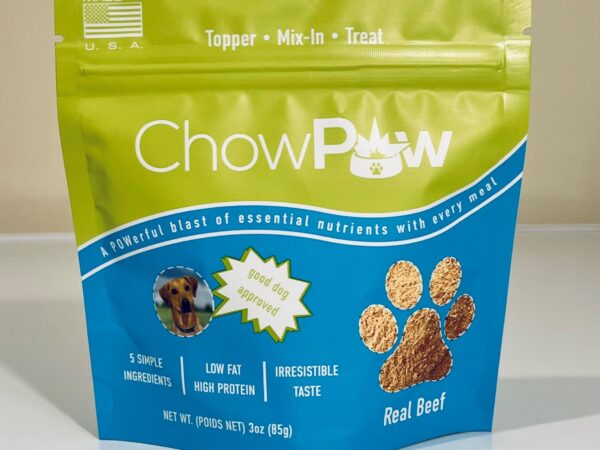 Dog Food Topper - Beef HeartOriginal price was: $14.99.$10.95Current price is: $10.95. - or subscribe and save up to 20%