
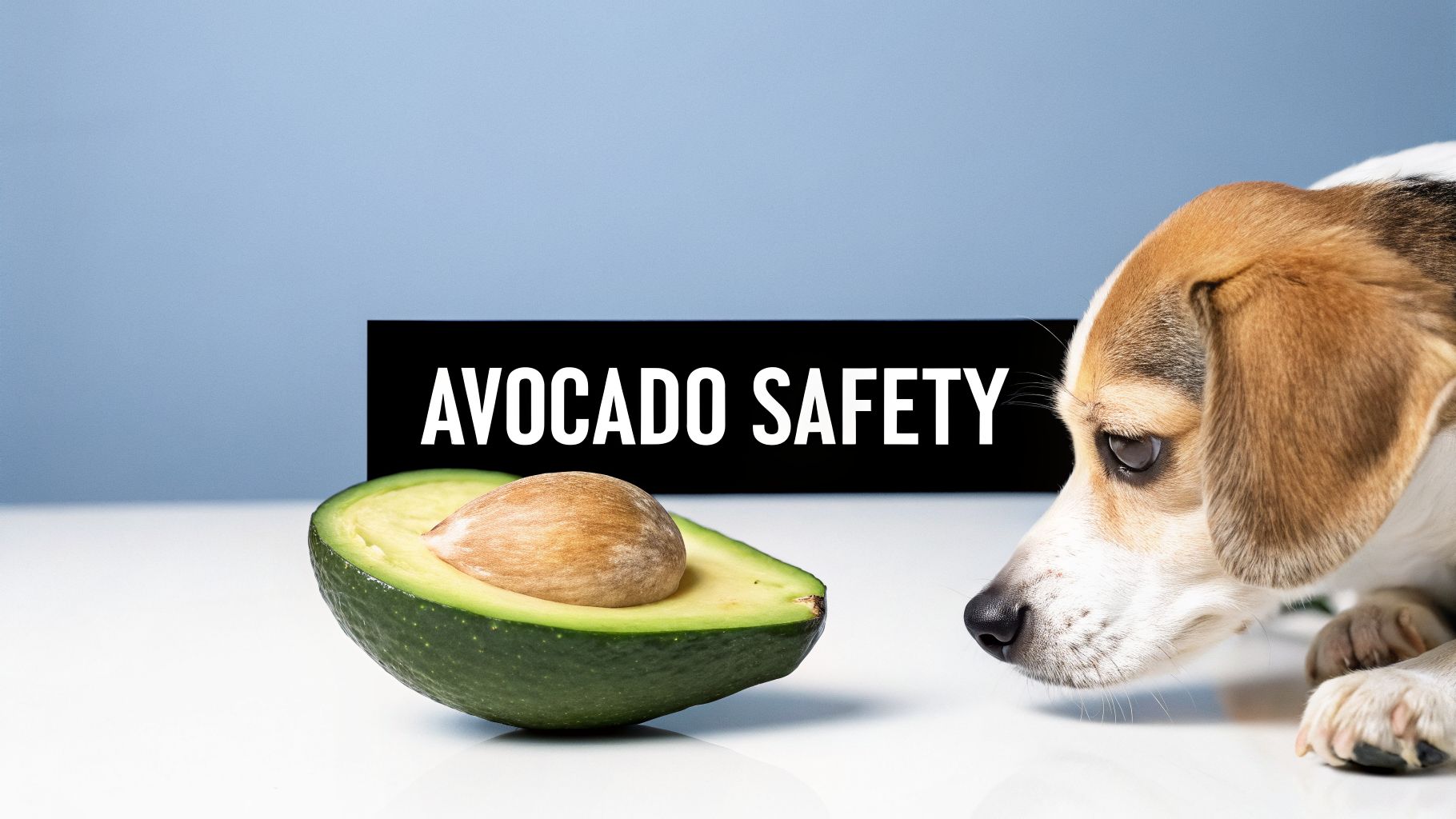
Are Avocados Good for Dogs? A Simple Guide for Pet Parents
So, can you share a slice of your avocado toast with your furry friend? It’s a question many pet parents ask, and the answer isn't a simple yes or no. The truth is, it's complicated, and the risks usually outweigh the benefits.
While a tiny nibble of the green, fleshy part probably won't hurt most dogs, other parts of the avocado—like the pit, skin, and leaves—are a definite no-go.
Why Avocados Are a Risky Treat
When you're enjoying a creamy, delicious avocado, it feels natural to want to share the goodness with your four-legged best friend. But before you do, it's really important to understand the full picture. The conversation around dogs and avocados isn't just about nutrition; it's mostly about safety.
The worries go beyond a simple upset tummy. We're talking about a toxin called persin, a super high fat content that can trigger serious health problems, and the very real physical danger of the pit. Getting a handle on these risks will help you make the best choice for your pup.
The Main Dangers to Consider
So, what are we really worried about here? There are three big reasons to be cautious before letting your dog near an avocado.
- Persin Toxicity: This is a fungicidal toxin found all over the avocado plant. It’s most concentrated in the leaves, skin, and pit—the parts your dog should absolutely never get their paws on.
- High Fat Content: Avocados are packed with fat. For a dog's system, a sudden flood of high-fat food can be a shock, potentially leading to pancreatitis. This is a painful and sometimes life-threatening inflammation of the pancreas.
- Choking and Blockage Hazards: That big, slippery pit is a major problem. It’s the perfect size to get lodged in a dog's throat or cause a dangerous intestinal blockage, which almost always means a trip to the emergency vet for surgery. The tough skin is also hard to digest and can cause issues.
Avocado Safety for Dogs At a Glance
To make it simple, here’s a quick breakdown of which parts of the avocado are safe versus dangerous.
| Avocado Part | Risk Level | Primary Concern |
|---|---|---|
| Flesh (Fruit) | Low to Moderate | High fat content; potential for persin contamination |
| Skin | High | Concentrated persin; difficult to digest; blockage risk |
| Pit | Very High | Choking hazard; intestinal blockage risk; persin toxin |
| Leaves & Stem | Very High | Highest concentration of persin toxin |
As you can see, the only part that might be okay is the flesh, but even that comes with a warning label due to the fat.
Given all this, most vets and pet experts will tell you to just skip the avocado altogether. Even though the fleshy part is less toxic, it’s right next to all the dangerous stuff, making it a bit of a gamble. It's always better to stick with snacks you know are safe. For more ideas, check out our complete guide to fruits dogs can and can't eat.
The Real Dangers: Persin, Fat, and Physical Hazards
To get to the heart of the avocado issue, we need to look past the creamy green part we love and focus on three specific risks for our dogs: a toxin called persin, a surprisingly high fat content, and some serious physical dangers.
While a tiny taste of the fruit's flesh is unlikely to spell disaster, the other parts of the avocado are a completely different story.
This image breaks down exactly where the dangers lie.

As you can see, the flesh gets a question mark because of its fat, but the pit and skin are definite no-gos. Let’s break down why.
The Problem with Persin
First up is persin. This is a fungicidal toxin found all throughout the avocado plant—not just the fruit, but also the leaves, stem, and bark.
For our dogs, the highest, most dangerous concentrations are in the very parts they might be tempted to chew on: the tough skin and the big, round pit. While dogs seem to handle persin better than other animals like birds or horses, it can still cause a nasty bout of digestive upset, like vomiting and diarrhea. For those curious about where this compound comes from, you can learn more about the avocado tree and its cultivation.
High Fat and the Pancreatitis Connection
Here’s the bigger issue for most dogs: the fat. Avocados are one of the fattiest fruits out there, containing about 15 grams of fat per 100-gram serving.
Think of it like giving your dog a big, greasy meal they aren't used to. Their digestive system, especially the pancreas, can get completely overwhelmed trying to process all that fat at once.
This sudden fatty overload can trigger pancreatitis, a very painful and potentially life-threatening inflammation of the pancreas. This is a serious medical emergency that almost always requires a trip to the vet.
The high fat content is especially risky for:
- Small breeds: Their little bodies simply can't handle a sudden fat bomb.
- Overweight dogs: They are already at a higher risk for developing pancreatitis.
- Dogs with a history of digestive problems: Their systems are just more sensitive to rich foods.
Pancreatitis is something every dog owner should be aware of. You can learn more about what causes pancreatitis in dogs in our detailed guide on the topic.
The Physical Dangers: Choking and Blockage
Finally, we have the most immediate and obvious dangers—the physical parts of the avocado itself. The pit and skin create major mechanical risks that can turn a "harmless" snack into an emergency in seconds.
The avocado pit is smooth, slippery, and perfectly sized to get lodged in a dog's throat, causing them to choke. Even if they manage to swallow it, it can easily create a life-threatening intestinal blockage, which often means expensive and invasive surgery.
The skin isn't much better. It's tough and leathery, making it nearly impossible for a dog's digestive system to break down. If your dog swallows large pieces, that skin can also lead to a dangerous gastrointestinal blockage. It’s simply not worth the risk.
Why Some Animals Get Sicker Than Others
If you've ever heard dire warnings that avocados are straight-up deadly for animals, you're not alone. That panic isn't entirely unfounded, either. The harsh reality is that the persin in avocados can be severely toxic to certain species, which has led to a widespread—and understandable—sense of alarm among pet owners.
This is why the general advice is often a hard "no." But when it comes to dogs, the situation is a bit more nuanced.

The trick is understanding that different animals react to persin in dramatically different ways. For some, even a small nibble can be catastrophic.
The Spectrum of Sensitivity
Think of persin sensitivity like a peanut allergy in humans. One person might have a life-threatening reaction to a single peanut, while someone else can happily eat the whole jar. Animals have a similar range of responses to the persin found in avocados.
Birds, horses, goats, and rabbits are on the extremely sensitive end of this spectrum. For them, eating parts of the avocado plant can lead to severe consequences, including respiratory distress, fluid buildup around the heart, and even death. This is where most of the fear about avocados and pets comes from.
In fact, research shows a massive 100-fold variation in how different species tolerate persin. Some pets are just far more vulnerable. For instance, budgies (a type of parakeet) have died within 48 hours after eating just a small bit of mashed avocado. It's for reasons like this that the American College of Veterinary Pharmacists specifically flags birds and horses as high-risk. You can dig into more animal poison control warnings on vetmeds.org.
Where Do Dogs Fit In?
So, where do our canine pals land on this scale?
The good news is that dogs are significantly less susceptible to persin poisoning than birds or livestock. Their bodies seem to handle the toxin more effectively, which means they are far less likely to suffer the severe toxic effects seen in other animals.
This is a critical distinction. While dogs are more resilient to persin, they are not immune to the other serious dangers we've discussed. "Less risky" for dogs absolutely does not mean "risk-free."
Even if persin toxicity isn't the main concern for your dog, the risk of pancreatitis from the high fat content and the potential for a life-threatening blockage from the pit are still very real threats. The blanket warnings exist because it’s much simpler—and safer—to tell all pet owners to avoid avocados, rather than explaining the complicated differences between species. This context helps show why the question "are avocados good for dogs" has such a tricky answer and why a safer alternative is always the best bet.
What the Research Actually Says About Dogs and Avocados
When you start digging into the actual science, the whole "can dogs eat avocado?" question gets even more interesting. You'd think there would be piles of studies confirming how dangerous they are, but the opposite is true. The hard evidence directly linking avocado to severe persin poisoning in dogs is surprisingly scarce, which goes a long way in explaining all the confusion.
Most of the dire warnings out there are based on well-documented cases in other animals—like birds, horses, and goats—that are far more sensitive to persin. This has created a gap between general pet safety advice and what we actually see happening with dogs. So, let’s peel back the layers and look at what the research really tells us.
Sifting Through the Scientific Evidence
When it comes to formal, documented proof, the case for severe avocado toxicity in dogs is remarkably weak. In fact, veterinary literature has only a single case report of two dogs that suffered heart muscle damage after chowing down on avocados.
In stark contrast, a controlled study fed processed avocado meal to beagles for two weeks as a dietary fiber source. The result? Absolutely none of the dogs showed any signs of toxicity or illness. You can read more about these toxicology findings in the MSD Veterinary Manual.
Now, this might sound like a green light to start sharing your avo-toast, but it's critical to see the full picture here.
A controlled scientific setting using processed avocado meal is worlds away from tossing your dog a chunk of raw avocado from your kitchen. The studies suggest dogs can tolerate processed avocado, not that the whole fruit is a safe and recommended treat.
This research doesn't give avocados a free pass; it just helps us refocus. It suggests that for dogs, the biggest boogeyman probably isn't a severe toxic reaction to persin in the fruit's flesh. Instead, it brings the conversation right back to the more immediate, real-world dangers we've already covered.
The Real Conclusion from the Data
So, what's the final takeaway from the science? Even if persin isn't the main villain for our canine friends, the other hazards make avocado a gamble that just isn't worth taking. The scientific community hasn't proven avocados are a safe snack, but it has repeatedly confirmed the very real dangers of pancreatitis and physical blockages.
The data points to a clear conclusion:
- The High-Fat Content is a Known Risk: This is an undisputed fact. High-fat foods can trigger painful, and sometimes fatal, pancreatitis.
- The Pit is a Proven Choking Hazard: This is a straightforward mechanical risk that can become a life-threatening emergency in seconds.
- The Skin is an Indigestible Blockage Risk: It offers zero nutritional value and can easily cause a serious internal obstruction.
At the end of the day, the research supports a "better safe than sorry" approach. Why risk a pancreatitis flare-up or an emergency surgery for a food that offers no unique nutritional benefit for your dog? The most logical conclusion is to skip the avocado and choose safer, more beneficial alternatives to boost your dog's diet.
A Better Way to Boost Your Dog's Bowl
After weighing all the risks of avocados—from the scary threat of pancreatitis to serious choking hazards—it’s pretty clear that there are safer, better things you can add to your dog's bowl. So, what if you could add a little excitement and a lot of powerful nutrition to their meals, without any of the worry?
That’s where a dedicated meal enhancement like ChowPow really makes a difference. Instead of rolling the dice with human foods, you can give your dog a boost that was made just for them.

Upgrade Their Kibble Safely
ChowPow was designed to be a super simple, totally safe way to elevate your dog’s everyday food. It is not a meal replacement. Think of it as a nutrient-packed supplement that you just sprinkle over their existing kibble to boost the nutritional value and, of course, the taste.
Made from high-quality, simple ingredients like beef heart, ChowPow delivers a serious protein punch. It does this without any of the high fat, toxins, or choking hazards that make avocados a questionable choice. This makes it a perfect solution for picky eaters who turn their nose up at mealtime or for senior dogs who’ve lost some of their old enthusiasm for their food.
With a topper like ChowPow, you get all the benefits you were hoping for from a food addition—like better nutrition and more flavor—with none of the risks. It’s an easy, reliable way to make every meal better.
Figuring out how to best incorporate these kinds of additions can make a real difference in your dog's health and happiness. You can dive deeper into the benefits of adding food toppers to your dog's diet in our handy guide.
Avocado vs ChowPow: A Nutritional Topper Comparison
Let's break down why a purpose-built meal enhancer is a much smarter move than tossing some leftover avocado into your dog's bowl.
| Feature | Fresh Avocado | ChowPow Meal Enhancement |
|---|---|---|
| Safety | Contains persin, a toxin harmful in large amounts; pit is a choking hazard. | 100% dog-safe ingredients. No toxins, no choking hazards. |
| Fat Content | Very high in fat, which can trigger pancreatitis in sensitive dogs. | Low in fat, high in lean protein. |
| Nutritional Profile | Offers some healthy fats and vitamins, but isn't balanced for a dog's needs. | Formulated specifically for dogs, packed with protein, vitamins, and minerals they need. |
| Convenience | Requires pitting, peeling, and mashing. Goes bad quickly. | Simple to use—just scoop and sprinkle. It's shelf-stable and ready anytime. |
| Picky Eater Appeal | Hit-or-miss. Some dogs dislike the texture. | Made with irresistible beef heart to entice even the fussiest eaters. |
When you choose a purpose-built enhancement, you're not just dodging the potential dangers of foods like avocado; you're actively giving your dog targeted support for their well-being. It’s a simple switch that can transform their ordinary kibble into a delicious, nutrient-dense meal, ensuring they clean their bowl every single time.
Your Questions About Dogs and Avocados, Answered
Alright, let's wrap this up by tackling some of the most common questions dog parents ask. Think of this as your quick-reference guide to making smart, safe choices for your furry friend.
What Should I Do If My Dog Eats an Avocado Pit?
First, don't panic—but act fast. If you know or suspect your dog swallowed an avocado pit, contact your veterinarian or an emergency pet poison hotline immediately.
The pit is a major choking hazard and can easily cause a life-threatening intestinal blockage. A vet is the only one who can tell you the right next step based on your dog's size and the situation. Whatever you do, don't try to make your dog throw up unless a professional specifically tells you to.
Are Products Like Avocado Oil Safe for Dogs?
Generally, yes. When you see avocado oil or processed avocado in commercial pet foods, the persin has been removed during manufacturing, making them safe from a toxicity standpoint. Avocado oil itself is persin-free.
But that doesn't make it a free-for-all. These products are still incredibly high in fat. For dogs with sensitive tummies or those at risk for pancreatitis, moderation is absolutely key.
Can I Use Avocado to Tempt My Picky Eater?
While it might seem like a clever trick, using a risky, high-fat food to coax a picky eater is a strategy that can easily backfire. There are much safer and more effective ways to get them interested in their dinner.
A meal enhancement designed for this exact purpose is a far better bet. You get all the flavor excitement your dog is looking for, plus a boost of healthy nutrients, without any of the risks that come with avocados.
How Much Avocado Is Actually Dangerous for a Dog?
This is the million-dollar question, and the honest answer is: there is no scientifically established 'safe' amount. Every dog is different. A tiny amount might not faze a Great Dane, but it could cause serious issues for a Yorkie.
Sensitivity varies wildly depending on a dog's size, breed, and individual health. Between the persin, the serious risk of pancreatitis, and the potential for a blockage, it's simply safest to keep avocados off your dog's menu entirely.
Instead of gambling with risky human foods, give your dog a nutritional boost you can feel good about. ChowPow is the perfect way to make mealtime exciting, adding a blast of savory flavor and high-quality protein to their existing food without any of the worries. Elevate their kibble and watch them clean the bowl every single time. Give it a try today at https://chowpownow.com.
-
Product on sale
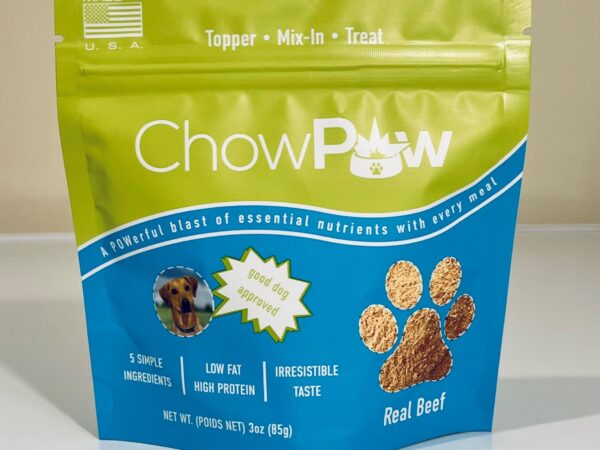 Dog Food Topper - Beef HeartOriginal price was: $14.99.$10.95Current price is: $10.95. - or subscribe and save up to 20%