
Are Bones Bad for Dogs? A Guide to Risks and Safer Alternatives in 2026
We’ve all seen it, right? That classic cartoon image of a happy dog, blissfully chewing on a bone. But is that picture accurate, or is it a dangerous myth?
The simple answer is that both cooked and raw bones carry serious risks every dog owner needs to know about. That seemingly harmless treat can lead to choking, devastating internal injuries, and frighteningly expensive emergency vet visits. The truth is, there are far safer—and better—ways to treat your best friend.
The Hard Truth About Bones for Dogs
So many pet parents ask, "are bones really that bad for dogs?" It’s a fair question, especially with decades of pop culture telling us otherwise. But when you look at the evidence, the reality is much more dangerous than most people realize. The consensus among veterinary experts is crystal clear: giving bones to dogs is a gamble not worth taking.

This isn’t just about a little tummy upset, either. We’re talking about dangers that range from fractured teeth to life-threatening emergencies. Both cooked and raw bones present their own unique, and equally alarming, set of problems that can turn a treat into a trauma.
A Clear Consensus from The Experts
Your vet will tell you the same thing: bones are a bad idea. According to veterinary guidance, both types of bones come with their own list of hazards.
Cooked bones are especially dangerous because the cooking process makes them brittle. They can easily splinter into sharp, dagger-like shards that can pierce your dog’s mouth, throat, or intestines. This can cause choking, internal bleeding, and blockages that often require emergency surgery.
What about raw bones? While they are less likely to splinter, they bring a different set of risks. Raw bones are notorious for carrying bacteria like Salmonella and E. coli, which can make your dog incredibly sick and even spread to the human members of your family. On top of that, their hardness is a leading cause of painful tooth fractures, and since bone isn't digestible, it can cause severe constipation or obstructions.
Quick Risk Comparison Raw vs Cooked Bones
To really see the dangers side-by-side, this chart breaks it down. While you might think one type is "safer," you'll see that both carry the potential for serious harm.
| Risk Factor | Cooked Bones | Raw Bones |
|---|---|---|
| Splintering | Very High Risk. Brittle and shatters into sharp fragments that can cause internal punctures. | Lower Risk. More flexible but can still break, especially smaller or weight-bearing bones. |
| Dental Fractures | High Risk. Hardened by cooking, they can easily crack or break teeth. | Very High Risk. Extremely dense, a primary cause of slab fractures on molars. |
| Choking Hazard | High Risk. Small pieces or whole bones (like chicken wings) can become lodged in the throat. | Moderate Risk. Dogs may try to swallow large pieces, leading to blockages. |
| Bacterial Contamination | Low Risk. Cooking kills most bacteria like Salmonella and E. coli. | Very High Risk. Commonly contaminated with pathogens that can sicken dogs and humans. |
| Digestive Blockage | High Risk. Bone shards can accumulate and cause a blockage in the intestines. | Moderate Risk. Undigested bone fragments can lead to constipation or obstruction. |
As you can see, the risks are real no matter which type you choose.
The key takeaway is that no bone is a completely safe treat. The potential for a veterinary emergency far outweighs any temporary enjoyment your dog might get from chewing one.
Giving your dog a special treat is one of the joys of being a pet parent, but their safety has to come first. Instead of reaching for a risky bone, why not enhance their mealtime with something that’s both delicious and genuinely good for them?
A high-quality meal enhancement like ChowPow delivers a burst of flavor and nutrition without any of the dangers that come with bones. It’s the perfect way to turn their everyday kibble into a nourishing feast they’ll absolutely love. ChowPow is not a replacement for your dog's current food, but a powerful supplement designed to boost the nutritional value of their existing diet.
Why Cooked Bones Are a Splintering Hazard
It’s a scene every dog owner knows: you’ve just finished a delicious roast chicken or steak, and your dog is giving you that look. It feels so natural to want to toss them a bone, but this is one of the most dangerous things you can do. The cooking process completely changes a bone, turning it from a potential chew into a genuine hazard.
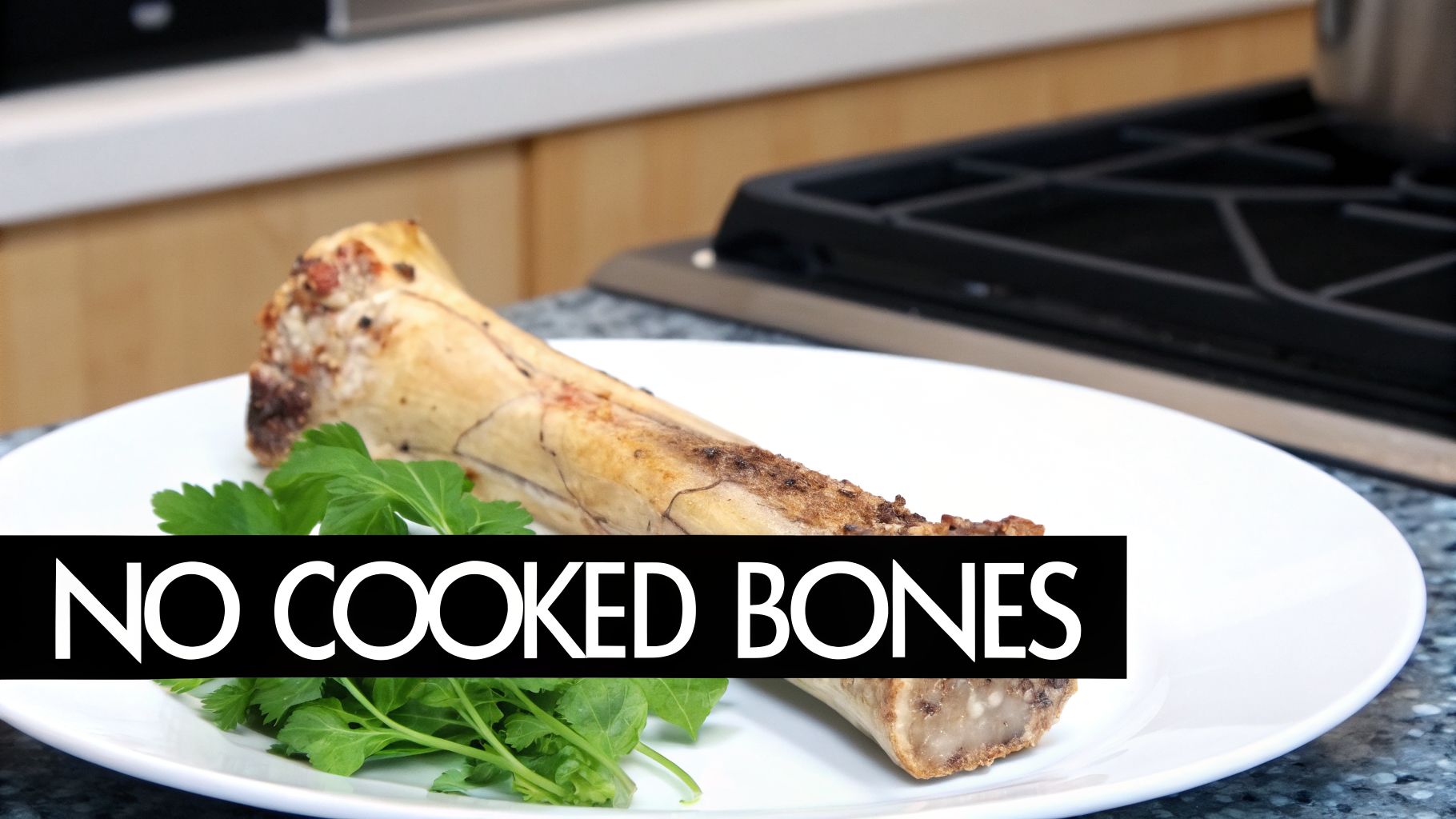
Think of a raw bone like a fresh, green tree branch. It's got moisture and flexibility, so it can bend and give under pressure. Now, picture that same branch after it’s been left out to bake in the hot sun for weeks—it’s now dry, brittle, and snaps into sharp shards. That's exactly what cooking does to a bone.
The high heat strips away all the moisture and collagen, which is what gives the bone its slight elasticity. You’re left with a hardened, brittle structure that doesn't just break when your dog chews on it; it shatters into razor-sharp fragments.
The Anatomy of a Disaster
Once a cooked bone splinters, it can set off a terrifying chain reaction of injuries anywhere along your dog’s digestive tract. This is the number one reason the answer to "are bones bad for dogs?" is a resounding yes when it comes to cooked ones. The journey from a tasty "treat" to a veterinary emergency can happen in a flash.
Even a single sharp piece can cause immediate, agonizing pain. It can turn a simple leftover into a life-threatening situation that demands urgent medical care.
Potential injuries from cooked bone fragments include:
- Mouth and Tongue Lacerations: Those sharp edges can easily slice into your dog’s gums, tongue, and the roof of their mouth, causing a lot of pain and bleeding.
- Esophageal Perforation: A splinter can get wedged in the throat or, even worse, puncture the esophagus on its way down. This is an incredibly painful and dangerous injury.
- Stomach and Intestinal Punctures: If a fragment makes it further down, it can pierce the stomach or intestinal wall. This allows digestive fluids and bacteria to leak into the abdomen, causing a severe infection called peritonitis, which is often fatal without emergency surgery.
- Intestinal Blockage: Even if they don’t puncture anything, bone pieces can pile up and create a solid blockage. Nothing can pass through, which is another surgical emergency.
Imagine a happy-go-lucky Golden Retriever named Max who snagged a leftover rib bone from the kitchen trash. Just an hour later, his owner found him gagging and in distress. An emergency X-ray showed a sharp piece of bone lodged in his esophagus, requiring a delicate and expensive procedure to remove it. Max got lucky; many dogs in that situation don't.
A Costly Mistake
An emergency like this isn't just emotionally devastating; it's also incredibly expensive. The cost for X-rays, anesthesia, emergency surgery, a multi-day hospital stay, and follow-up care can easily spiral into thousands of dollars. The true cost of a "free" leftover bone becomes painfully clear when you're facing that vet bill.
Instead of offering a risky bone as a special treat, you can give your dog that same feeling of joy and excitement in a much safer way.
By adding a nutritious meal enhancement like ChowPow to their regular food, you're not just boosting their diet—you're making every single meal feel like a special occasion. This simple act lets you "treat" your dog daily while keeping them healthy and safe, making mealtime the highlight of their day without any of the hazards.
The Hidden Dangers of Raw Bones
Lots of caring dog owners know that cooked bones are a big no-no because they splinter. So, they turn to raw bones, thinking it's the “natural” and safe way to go. After all, wolves chew on bones, right? The problem is, what’s “natural” for a wild animal isn’t always safe for our furry family members.
While raw bones are softer and less likely to shatter into dangerous shards, they bring a whole new set of serious risks to the table. That “natural” label can give us a false sense of security. When people ask, "are bones bad for dogs?" the answer is still a resounding 'yes,' even when they're raw.
The Bacterial Battleground
First and foremost, raw bones are a playground for nasty bacteria. Raw meat products are often teeming with pathogens like Salmonella and E. coli. Your dog's stomach isn't a magical, acid-proof vault; they can get just as sick from food poisoning as we can.
This isn’t just a risk for your pup—it's a risk for your entire family. Think about where those germs travel. From the bone to your dog's mouth and paws, then all over your floors, your couch, and potentially to the hands of anyone in your home.
- For Your Dog: A bacterial infection can quickly escalate to severe vomiting, diarrhea, and dehydration, often landing you in an emergency vet clinic.
- For Your Family: The chance of cross-contamination is incredibly high. This puts young children, older adults, and anyone with a compromised immune system at serious risk.
If you’re exploring raw feeding, it's critical to go beyond bones and understand how to build a complete and safe diet. A comprehensive raw dog food diet guide is a good place to start.
The High Cost of Dental Damage
Another major issue is the very real danger of breaking a tooth. Even though raw bones are softer than cooked ones, many types—especially the popular, weight-bearing "marrow bones"—are still harder than your dog's teeth. When a dog's powerful jaw clamps down on something that won't give, it’s the tooth that often loses. Want to learn more? Check out our specific guide on whether marrow bones are good for dogs.
A fractured tooth is brutally painful and won't just heal on its own. This kind of injury almost always means a trip to the veterinary dentist for a pricey and complicated procedure, like an extraction or root canal.
The belief that 'natural' is always better needs careful examination, especially in pet nutrition. Education about health risks is critical. For instance, in cultures where dog meat was traditionally consumed, increased awareness of disease transmission, like rabies, led to a dramatic drop in the practice. Discover more about how health education has changed consumption habits on Wikipedia. This shows how understanding risks fundamentally changes behavior.
Instead of rolling the dice with your dog's health, you can give them that special treat they crave in a way that’s both safe and delicious.
It's easy to turn their regular meal into something exciting. A simple sprinkle of a high-quality meal enhancer like ChowPow can transform everyday kibble into a nutrient-packed feast. You're giving them a boost of nutrition and showing them some love, all without the hidden risks of raw bones. It’s a win-win that makes every meal a safe and rewarding experience.
Choosing Safe and Satisfying Chew Alternatives
After digging into the serious risks of both cooked and raw bones, it's pretty clear they aren't the safe treat we once thought. But that absolutely doesn't mean your dog has to miss out on the joy of a good chew session. That urge to chew is a powerful, natural instinct that’s vital for their mental and physical well-being. The real key is to point that instinct toward something much safer.
Thankfully, the pet world has come a long way from just tossing a dog a bone. Today, we have tons of vet-approved options designed specifically for your dog’s safety and enjoyment. These modern chews let you satisfy your dog's needs without gambling on their health.
Exploring Vet-Approved Chew Options
Finding the right chew is all about matching it to your dog. You have to consider their size, age, and just how intensely they like to chew. Getting this right means finding the perfect, safe outlet for all that energy.
Here are some of the most popular and safest categories you can explore:
- Durable Rubber Toys: These are a fantastic go-to for most dogs. Toys made from tough, non-toxic rubber are built to last and are much gentler on their teeth. Many are even designed to be stuffed with dog-safe treats, which turns chew time into a fun puzzle that keeps them busy for ages.
- Specially Formulated Dental Chews: These chews pull double duty by cleaning teeth while your dog chews. Their unique textures are made to help scrape away plaque and tartar, which can really help freshen their breath—all without the fracture risks that come with real bones.
- Nylon Chew Toys: Got a real power chewer on your hands? Nylon toys can be a lifesaver. They are engineered to stand up to even the most aggressive chewing. Instead of shattering into dangerous shards, they slowly break down into tiny, bristle-like pieces that are generally safe for your dog to pass.
Many dog owners are also curious about other natural chews. If you're thinking about options like bully sticks, it’s really important to do your homework first. For a deep dive, you can check out our guide on whether bully sticks are safe for dogs.
The Growing Market for Safe Chews
This shift away from bones isn't just a fleeting trend; it's a huge movement. It's driven by pet owners like you who are more educated and are demanding safer products for their dogs.
You can see this change reflected in the global pet dental health market. The dog dental chews market alone was valued at around $369.25 million in 2023 and is projected to explode to $628.29 million by 2030. This incredible growth shows that pet parents are overwhelmingly choosing products backed by science to support their dog's oral health instead of relying on risky, old-fashioned bones. You can read the full research on Grandview Research to learn more about these market trends.
Choosing a safe chew alternative is one of the most responsible decisions you can make as a pet owner. It satisfies your dog's instinctual needs while actively protecting them from the pain, suffering, and expense of a bone-related injury.
Ultimately, providing a safe outlet for chewing is a must. But you can also make their everyday meals more satisfying, too. Instead of a single, risky "treat," you have the power to elevate every single meal.
By simply sprinkling a meal enhancement like ChowPow over their daily kibble, you can transform their food from basic to brilliant. It’s an easy way to boost the nutritional value and flavor of their diet, turning mealtime into an exciting event they'll look forward to. This approach lets you "treat" your dog safely at every meal, nourishing them from the inside out.
Boost Nutrition Safely With a Meal Topper
Let’s be honest, a big reason we’re tempted to give our dogs a bone is for that look of pure joy. We love to see them happy. But knowing the risks, what if you could get that same tail-wagging excitement with something that’s not just safe, but genuinely good for them?
This is where a simple shift in thinking can make all the difference. Instead of a risky treat, think of it as a rewarding nutritional boost. By adding a high-quality meal topper like ChowPow to your dog's regular food, you turn mealtime into that special moment you're looking for, all while supporting their health.
A Safe Treat for Every Meal
First things first, ChowPow is not a meal replacement. Think of it like you adding a scoop of protein powder or fresh berries to your morning smoothie. You aren't replacing the meal; you're just making it better. That's exactly what ChowPow does for your dog's kibble—it’s a supplement designed to enhance their existing food.
Just a sprinkle over their food transforms a normal meal into something they’ll go crazy for. You get to satisfy that urge to give them something extra, but without any of the worries that come with bones. For other safe ways to add nutrients, some owners also consider options like bone broth powder to enrich their dog’s diet.
The Power of Simple Ingredients
We built ChowPow on a simple belief: dogs do best on real food with ingredients you can actually pronounce. That’s why it’s made in small batches with just four locally-sourced ingredients. The star of the show? Dehydrated beef heart.
Beef heart isn’t just some random tasty morsel; it's a true superfood for dogs. It's packed with:
- High-Quality Protein: The absolute foundation for strong, healthy muscles.
- Essential Amino Acids: These are the crucial building blocks for your dog’s entire body and overall health.
- Vitamins and Minerals: It’s loaded with nutrients like iron and B vitamins, which are vital for energy and proper organ function.
With a short, clean ingredient list, you know exactly what your dog is getting: pure nutrition, not fillers or artificial junk. This is why ChowPow is such a fantastic supplement to their regular diet.
Adding a food topper is one of the easiest ways to enhance your dog’s diet. You’re not just adding flavor; you’re adding targeted nutrition that can make a real difference in their health, from their coat to their energy levels.
A Gentle Solution for Sensitive Dogs
While any dog would be thrilled with the taste, ChowPow can be a real game-changer for pets with specific needs. The dangers of bones are magnified for seniors, picky eaters, or dogs recovering from an illness, making a safe topper an even better choice.
- Picky Eaters: Is your dog a professional food critic? The rich, savory scent of beef heart is often too tempting to resist, encouraging even the fussiest eaters to clean their bowl.
- Senior Dogs: Older dogs often have waning appetites and sensitive teeth. The fine, powdery texture of ChowPow is gentle on their mouths and easy to digest, delivering key nutrients without the struggle of a hard chew.
- Recovering Dogs: When a dog is healing from surgery or sickness, proper nutrition is non-negotiable. A sprinkle of ChowPow can help kick-start their appetite and provide easy-to-absorb nutrients that support the recovery process.
Instead of searching for a "safe" bone, you can give them something truly beneficial that they'll love at every single meal. You can learn more about the benefits of food toppers in our detailed article.
What to Do If Your Dog Eats a Bone
That heart-stopping moment when you realize your dog has gotten ahold of a bone—especially a cooked one—is enough to send any dog parent into a panic. But the most important thing you can do is take a deep breath, stay calm, and act fast. Your clear-headed decisions can make all the difference.
The very first, most critical step is to call your veterinarian or an emergency vet clinic immediately. Do this right away, even if your dog seems perfectly fine. They're the pros who can give you specific advice based on your dog's size, the type of bone they ate, and how much you think they swallowed.
First Steps and Immediate Actions
This isn't a "wait and see" situation. That wastes precious time that could be critical. And whatever you do, never try to induce vomiting unless your vet specifically tells you to. Forcing your dog to vomit could cause a sharp bone fragment to get stuck in their esophagus, turning a bad situation into a much, much worse one.
Instead, calmly take away any leftover bone pieces so your pup can't eat more. Then, stick close to your dog and watch their behavior while you're on the phone with the vet or heading to the clinic. Your vet is going to need as much information as you can give them to figure out the best plan.
This decision tree gives a great visual of how to think through treat choices.
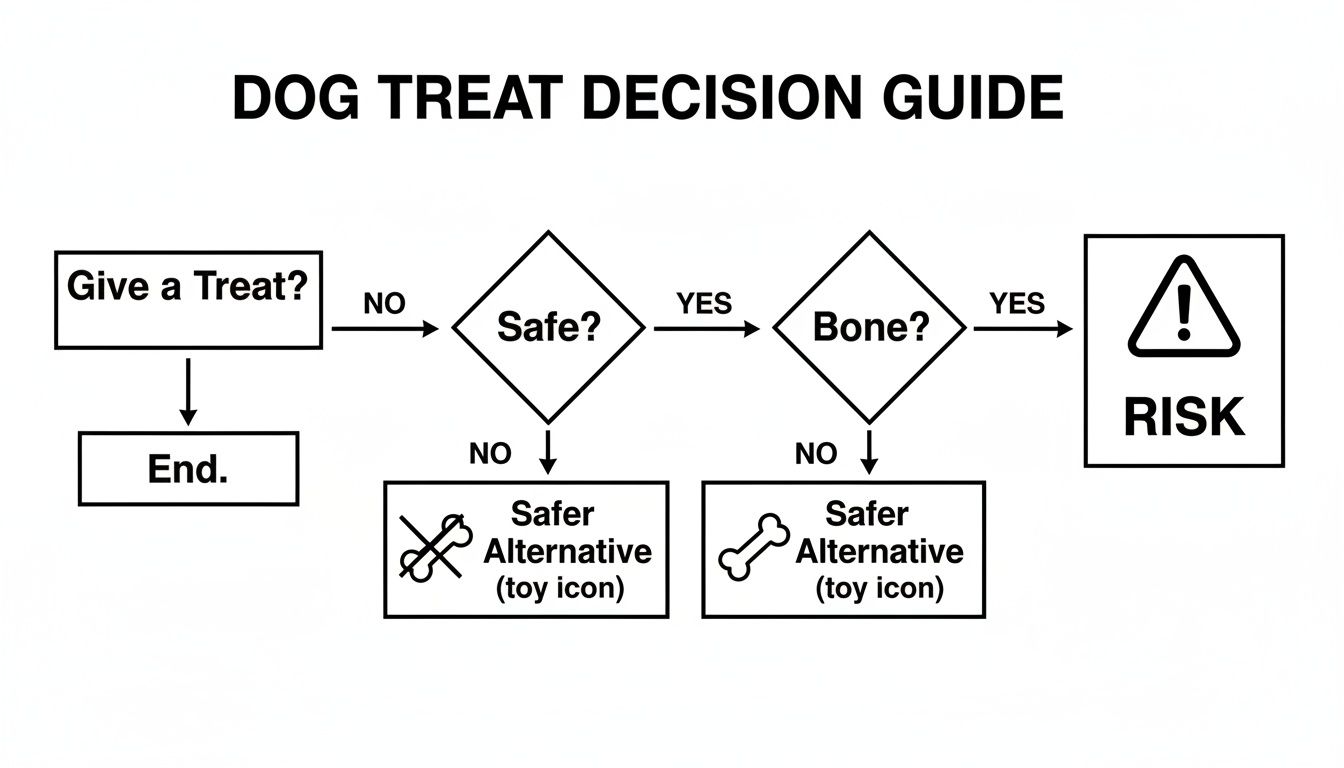
As you can see, giving your dog a treat is a wonderful way to show love, but choosing a bone introduces serious risks. The chart wisely guides you toward much safer alternatives.
Warning Signs of an Emergency
After you talk to your vet, they will likely tell you to be on high alert for specific symptoms that signal an emergency. If you spot any of the following, it’s time to head to the vet right away.
Critical symptoms that require an emergency vet visit:
- Gagging, Choking, or Retching: This is a classic sign that a piece of bone might be stuck in their throat.
- Vomiting or Straining to Vomit: A bone fragment could be causing irritation or a dangerous blockage in the stomach.
- Lethargy or Restlessness: A sudden shift in your dog's energy level is often a sign of internal pain or serious distress.
- Straining to Defecate or Bloody Stool: This could mean an intestinal blockage or that a sharp fragment is causing internal cuts.
- Loss of Appetite: When a dog refuses to eat, it's a universal sign that they're in pain or feeling very unwell.
Ultimately, your veterinarian is your best resource in a crisis. Trust their expertise and follow their instructions precisely to give your dog the best chance at a safe outcome.
Understanding the real risks of bones and knowing how to handle an emergency just reinforces how important it is to choose safer options from the get-go. A nutritious meal topper like ChowPow offers a delicious and exciting way to "treat" your dog with every single meal. It gives them all the joy you want them to have, with none of the terrifying risks, turning their food into both a reward and a source of fantastic nutrition.
Your Top Questions About Dog Bone Safety, Answered
Even with all the warnings, it's natural to have lingering questions. You see bones in pet stores and butcher shops, and you just want to do what’s best and safest for your dog. Let's clear up some of the most common concerns we hear from pet parents.
Are Marrow or Knuckle Bones a Good Choice?
You see them in the butcher case, and they look like the perfect, long-lasting chew. While marrow and knuckle bones are often promoted as "safer" because they're too big to swallow, they come with their own set of serious problems.
Their incredible density is a major culprit behind painful, cracked teeth. A dog's jaw is strong, but these bones are often even harder, leading to expensive and stressful dental surgery. Plus, the very thing that makes them so enticing—that rich, fatty marrow—can wreak havoc on a dog's digestive system. For some pups, it's enough to trigger a nasty bout of pancreatitis, a painful and serious inflammation.
What Can I Give My Dog for Mental Stimulation Instead of Bones?
Chewing is a deep-seated instinct for dogs; it's how they de-stress and keep their minds busy. The great news is, you can satisfy that urge with plenty of safer options.
- Durable Rubber Toys: A classic for a reason! Toys like the KONG can be stuffed with kibble, a bit of plain yogurt, or peanut butter and then frozen. This turns a simple toy into a long-lasting puzzle that keeps them happily occupied.
- Puzzle Feeders: These toys make your dog use their brain to get to their food. It’s a fantastic way to provide a mental workout and slow down fast eaters.
- Nylon Chews: For the power chewers in your life, tough nylon toys are a fantastic choice. They are specifically designed to be scraped away in tiny, rice-sized pieces that pass safely, rather than splintering into dangerous shards.
Another amazing way to make their day more exciting is by making mealtime an event. Adding a delicious and nutrient-rich meal topper like ChowPow can turn a plain bowl of kibble into an enriching experience, no risky bones required.
What About Those Bone-Shaped Treats at the Store?
Walk down the treat aisle and you'll see a wall of "bone-shaped" goodies. Most of these aren't real bone at all; they’re typically made from things like compressed starches, rawhide, or even vegetable matter.
While they are generally safer than actual animal bones, they aren’t completely risk-free. If your dog breaks off and swallows a large chunk, it can still become a choking hazard or cause a digestive blockage. The golden rules are to always supervise, choose a size that’s appropriate for your dog, and read the ingredient list to pick treats made with simple, digestible components.
At ChowPow, we believe that treating your dog should be all joy and no worry. By making their everyday meals special with our nutrient-packed meal enhancement, you give them that "special treat" feeling safely, every single day. Find out how you can boost your dog’s nutrition and happiness at https://chowpownow.com.
-
Product on sale
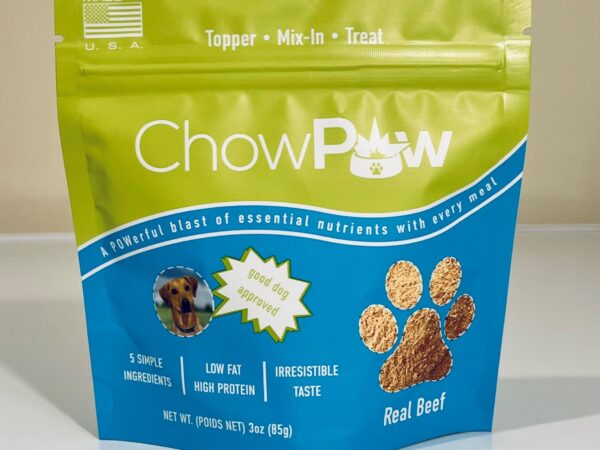 Dog Food Topper - Beef HeartOriginal price was: $14.99.$10.95Current price is: $10.95. - or subscribe and save up to 20%