
Are Dogs Allowed to Eat Popcorn? the 2026 Safety Guide
Yes, but only plain, air-popped popcorn in moderation, and all treats should stay within 10% of your dog's daily caloric intake. Most popcorn people eat is dangerous for dogs because it's covered in butter, salt, oil, sugar, flavorings, or other additives that can make a simple snack risky fast.
If you're on the couch with a bowl in your lap and your dog is staring at you like you've betrayed them, you're not alone. This is one of the most common food-sharing moments pet owners face. The confusing part is that the answer isn't a simple yes or no. It depends on what kind of popcorn you have, how much you give, and whether your dog has sensitivities that many owners don't even know to watch for.
Your Dog Movie Night and That Bowl of Popcorn
You're halfway through a movie, your hand is in the bowl, and your dog has appeared at your knee. That hopeful look makes it tempting to toss down a piece or two.
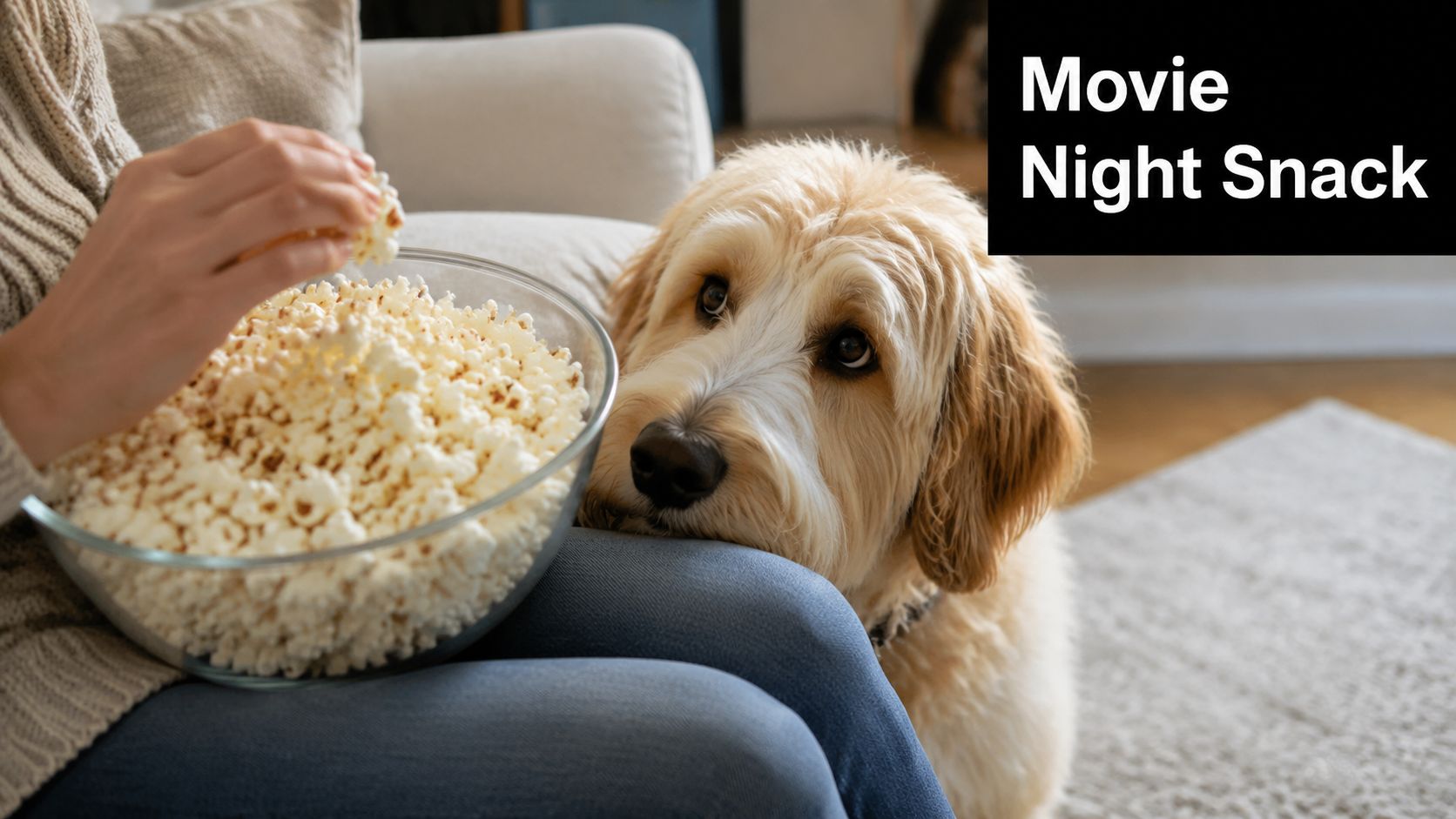
The basic rule is simple. A few pieces of plain, fully popped, air-popped popcorn can be safe for some dogs. That doesn't mean the average bowl of movie popcorn is shareable. Most of the popcorn people eat has ingredients dogs shouldn't have.
What owners usually get wrong
Many people hear that dogs can have popcorn and stop there. That's where trouble starts. Safe popcorn for dogs isn't buttered popcorn, cheese popcorn, kettle corn, caramel corn, or microwave popcorn. It's the plainest version possible.
According to the American Kennel Club's popcorn guidance, plain air-popped popcorn can be offered in small amounts, but treats should make up no more than 10% of a dog's daily calories. The same guidance also warns that unpopped kernels can cause choking or dental damage.
Simple rule: If you'd describe the popcorn as tasty, savory, buttery, sweet, cheesy, or flavored, it probably isn't safe to share.
Why this question matters
Popcorn sounds harmless because corn itself doesn't seem dramatic. But the risk usually isn't the puffed corn. It's everything added to it, plus the hard bits left behind in the bowl.
If you want a broader look at which people foods belong in the “maybe,” “rarely,” and “never” categories, this guide to human foods for your dog is a useful next read.
Safe Popcorn vs Unsafe Popcorn for Dogs
A good way to sort popcorn is to treat it like plain chicken versus fried chicken. The basic ingredient may start in a harmless place, but preparation changes the safety picture fast.

The version that can be okay
Plain, air-popped popcorn is the only type that belongs in the "sometimes" category for dogs. It is not poisonous by itself, and it has a little fiber along with small amounts of minerals.
That said, "safe" does not mean "healthy treat worth reaching for often." Popcorn gives your dog very little nutritional benefit compared with a purpose-made dog treat. It is better viewed as an occasional crumb-sized extra, not a snack to rely on.
The versions that are not okay
Once popcorn is flavored, sweetened, buttered, or bagged for the microwave, it stops being a simple puffed grain and starts acting more like junk food. Some forms are obviously risky, like caramel corn. Others fool owners because they look harmless at first glance.
| Type of popcorn | Safe for dogs | Why |
|---|---|---|
| Plain air-popped | Sometimes | Only if it is fully popped and has no butter, oil, salt, sugar, or flavoring |
| Buttered popcorn | No | Added fat can upset digestion and create bigger health concerns |
| Salted popcorn | No | Salt adds unnecessary strain, especially for small dogs |
| Cheese popcorn | No | Powders, dairy, and fats make it a poor choice |
| Caramel or kettle corn | No | Sugar and sticky coatings are a bad mix for dogs |
| Microwave popcorn | Usually no | It often contains oils, salt, artificial flavorings, and other additives |
| Gourmet flavored popcorn | No | Seasonings may include onion, garlic, or even xylitol in sweet coatings |
The Chewy nutrition guide on popcorn for dogs makes the main point clearly. Plain, air-popped popcorn in small amounts is the only version generally considered acceptable.
Two safety checks owners often miss
Ingredients matter, but so does the individual dog.
A dog with a corn sensitivity may react poorly even to plain popcorn. Corn is not a problem for every dog, but if your dog gets itchy skin, ear trouble, or stomach upset after corn-based foods, popcorn is not a wise experiment.
Gourmet popcorn also deserves extra caution. Sweet glazes, dessert drizzles, and "sugar-free" flavor mixes can contain xylitol, which is highly toxic to dogs. That risk is easy to miss because the popcorn itself does not look dangerous.
A quick test before you share
Use this checklist before one piece leaves your bowl:
- Is it plain air-popped?
- Is every piece fully popped?
- Does it have zero toppings or powders?
- Does your dog do well with corn?
- Did it come from a simple home batch, not a gourmet or sugar-free mix?
If any answer is no, skip the popcorn.
For many dogs, the smarter choice is to use a treat made for canine digestion and portion control, such as ChowPow, instead of trying to turn a people snack into a dog snack.
Easy rule to remember: plain, fully popped, and rare.
Why Common Popcorn Can Be Dangerous for Dogs
The danger in popcorn usually comes from toppings and texture, not from the idea of corn alone. Once butter, salt, and hard kernels enter the picture, the snack changes from mildly acceptable to medically concerning.
Butter and oil can stress the pancreas
Buttered popcorn isn't just “a little rich.” The high fat in buttered popcorn can trigger acute pancreatitis, according to PetMD's explanation of popcorn risks for dogs. Pancreatitis is painful, can cause vomiting and lethargy, and in severe cases becomes an emergency.
If your dog has ever had pancreatitis, has a sensitive stomach, or tends to get digestive flare-ups after fatty foods, popcorn with butter or oil is a bad gamble. For a deeper look at that condition, this article on what causes pancreatitis in dogs can help you understand why even “small treats” matter.
Salt affects more than thirst
Owners often think salt just makes dogs thirsty. The bigger concern is that excessive salt may lead to sodium ion poisoning, which PetMD notes can cause cerebral edema and seizures in serious cases.
That sounds extreme because it is. Dogs don't need heavily salted snack food, and small dogs are less forgiving of portion mistakes than large dogs.
Medical takeaway: A buttery, salty handful isn't one problem. It's two separate risks at the same time.
Kernels are a physical hazard
Hard, unpopped kernels and partially popped pieces can get stuck in a dog's throat, crack teeth, or wedge between teeth and gums. PetMD also warns that unpopped kernels can cause dental abscesses or intestinal blockages requiring surgery.
This is one reason owners get caught off guard. A dog may seem to chew popcorn just fine, but one sharp piece can still cause trouble.
A few specific hazards to remember:
- Choking risk: Small dogs and fast eaters are especially vulnerable.
- Dental injury: Hard kernels can crack teeth or lodge under the gumline.
- Gut problems: Rough pieces can irritate the digestive tract or contribute to blockage.
If your bowl has that usual layer of half-popped debris at the bottom, that part should never be shared.
Hidden Popcorn Dangers Even Savvy Owners Miss
A lot of articles stop after saying “skip the butter and salt.” That's helpful, but it leaves out two problems that matter in real homes.
Corn allergy can change the answer
Even if the popcorn is plain, some dogs still won't handle it well. Purina notes that corn is a common canine food allergen and that it can cause digestive issues such as stomach upset, gas, and diarrhea in affected dogs, as explained in Purina's dog popcorn article.
That means the answer to “are dogs allowed to eat popcorn?” isn't universal. A dog with a corn sensitivity may react to a snack that seems harmless on paper.
Watch for signs like:
- Gas after eating
- Loose stool or diarrhea
- Mild stomach upset
- A pattern of not tolerating corn-based foods
Gourmet and sugar-free popcorn can hide xylitol
This is the risk many careful owners never see coming. “Health-conscious” or sugar-free popcorn products may contain xylitol, and xylitol is highly toxic to dogs. Purina specifically warns that sugar-free popcorn varieties may contain this sweetener, even in very small amounts.
That matters because owners often assume specialty snack brands are cleaner and safer than movie popcorn. Sometimes the opposite is true for dogs.
Don't trust front-of-package words like “light,” “smart,” “sugar-free,” or “better for you.” Read the ingredient list before a single piece gets near your dog.
If there's any chance the popcorn contains xylitol, don't offer it at all. If your dog may have eaten xylitol-containing popcorn, contact a veterinarian right away.
Safe Serving Sizes and Smarter Treat Alternatives
If you decide to share popcorn, think in pieces, not handfuls. Dogs don't need a snack-sized serving the way people do. They need a tiny taste, if they get any at all.

How much is reasonable
Pumpkin advises that portion control is critical, especially for small dogs, and that a serving should be limited to just a few pieces because they're more susceptible to choking. Pumpkin also notes that popcorn hulls can irritate a dog's digestive system, so moderation matters for all breeds in its popcorn safety article for dog owners.
A practical way to think about serving size:
- Tiny dogs: A few individual pieces at most.
- Medium dogs: A very small amount, offered one piece at a time.
- Large dogs: Still keep it light. Bigger dogs can handle more volume, but that doesn't make popcorn a useful treat.
What to do before offering any
Run through this short checklist:
- Check every piece. Remove unpopped kernels and hard fragments.
- Keep it plain. No butter, no salt, no powders, no sweeteners.
- Stop after a small taste. Popcorn should be occasional, not routine.
- Watch afterward. If your dog gets gassy, uncomfortable, or develops loose stool, don't offer it again.
For owners who want safer ideas than snack-sharing, this guide to single-ingredient dog treats can help you compare options that are simpler and easier to evaluate.
A better way to make food feel special
The problem with popcorn isn't just safety. It's that even when it's allowed, it doesn't add much to your dog's bowl. It's mostly a “fun because we're eating it too” food.
That's why many owners do better with dog-specific additions that support the main meal rather than distract from it. A meal enhancement approach makes more sense for picky eaters, seniors, and dogs recovering from illness because it turns regular kibble into something more appealing without pretending the topper replaces the base diet.
Here's a quick look at that difference:
| Option | Main purpose | Best use |
|---|---|---|
| Plain popcorn | Occasional novelty | Tiny shared treat |
| Dog treat | Reward | Training or short snack moments |
| Meal enhancer or supplement | Boost flavor and nutrition | Mixed into current kibble |
A short visual can help if you're exploring ways to upgrade mealtime without relying on human snack foods.
Worth remembering: The best “treat” isn't always extra food. Sometimes it's making the food your dog already eats more nourishing and more enjoyable.
Make Every Treat Count for Your Dogs Health
So, are dogs allowed to eat popcorn? Sometimes, yes. But only the plain, air-popped kind, only in small amounts, and only after you've removed the risky bits.
That answer is reassuring, but it's also narrow. Most popcorn in real kitchens isn't plain enough to share safely. And even when it is, some dogs still won't do well with it because corn can be an allergen and specialty popcorn products may hide xylitol.
The bigger takeaway
A good treat decision asks two questions. Is it safe? And does it help my dog?
Popcorn barely passes the first question under strict conditions. It doesn't do much for the second. For boarding stays, travel, or routine care changes, it's smart to keep your dog's diet steady and avoid random snacks. If you're planning time away and want continuity in your pet's routine, these Statesboro dog boarding options are a useful resource to review ahead of time.
When owners shift from “Can I share this?” to “What supports my dog's health best?”, feeding choices get easier. That's a better long-term mindset than negotiating over movie snacks.
If you want a smarter alternative to random human treats, ChowPow is worth a look. It's a meal enhancement and supplement, not a replacement for your dog's current kibble. You add it to the food they already eat to boost flavor and nutritional value, which makes it especially helpful for picky eaters, seniors, and dogs who need extra support at mealtime.
-
Product on sale
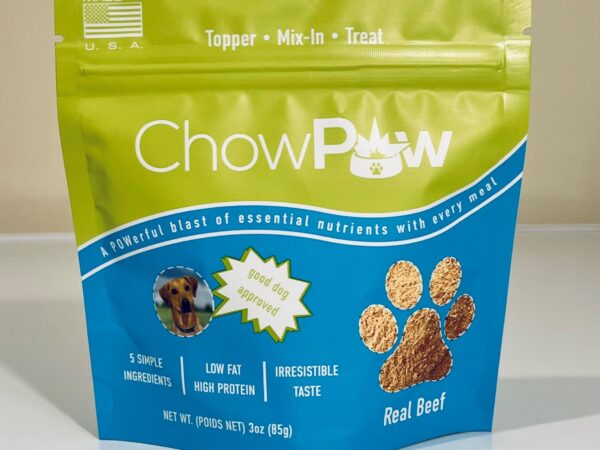 Dog Food Topper - Beef HeartOriginal price was: $14.99.$10.95Current price is: $10.95. - or subscribe and save up to 20%