
Are pinto beans good for dogs: Safe tips for healthy canine meals
So, you're eyeing that can of pinto beans in your pantry and wondering if you can share some with your dog. I get it. We're always looking for healthy, interesting ways to liven up our pup's bowl.
The short answer is yes, dogs can eat pinto beans, but with a few very important rules. Think of them less as a meal and more as a little bonus treat. Before you start dishing them out, let's walk through how to do it safely.
Are Pinto Beans Good for Dogs?
When it comes to adding human foods to your dog's diet, the answer is rarely a simple "yes" or "no." Pinto beans fall right into that gray area. While they pack a nice nutritional punch, they also come with some risks if they aren't prepared just right.
They’re a decent source of fiber and minerals, but they can't hold a candle to meat when it comes to the complete protein your dog truly needs to thrive.
So, this guide is here to clear things up. We'll cover the good, the bad, and the right way to serve pinto beans, and why a high-quality animal protein will always be the top choice for boosting your dog's meals.
For a quick overview, the table below breaks down the essentials. It’s a great starting point for making the right choice for your dog. If you're curious about other people foods, check out our broader guide to navigating the dos and don'ts of human foods for your dog.
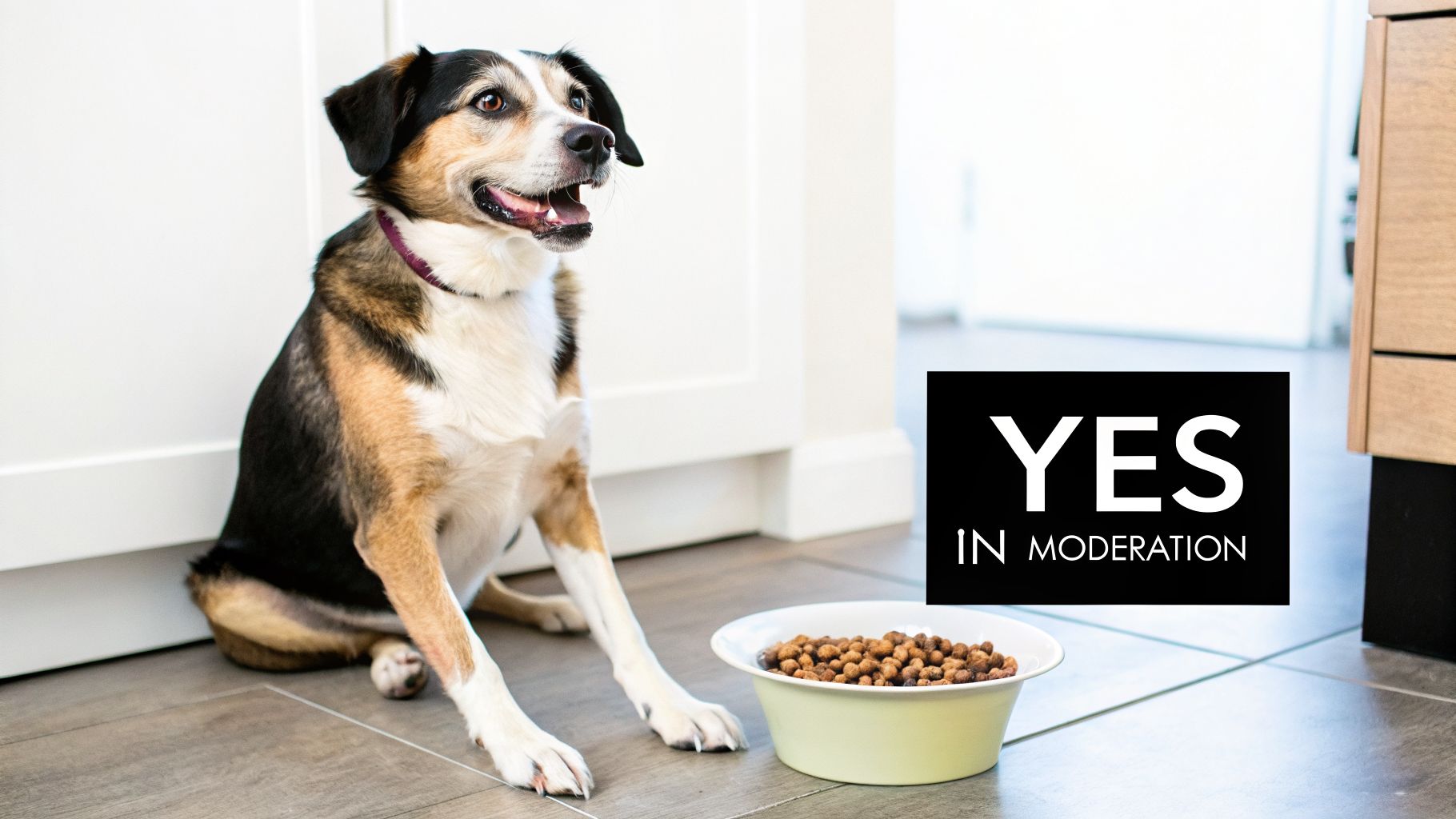
Pinto Beans for Dogs Quick Facts
Here’s a handy cheat sheet with the most important things to remember before you share.
| Guideline | Recommendation | Reason |
|---|---|---|
| Can Dogs Eat Them? | Yes, in moderation | Offers fiber and minerals but can cause digestive upset if overfed. |
| How to Prepare | Cooked and completely plain | Raw beans are toxic. Canned beans must be low-sodium and thoroughly rinsed. |
| Proper Serving Size | Follow the 10% treat rule | Prevents nutritional imbalances and avoids excess calories. |
| Best Way to Use | An occasional food topper or treat | Should never replace essential, high-quality animal protein in their diet. |
These quick facts give you the basics, but let's dive into the details so you can serve them with complete confidence.
Decoding the Nutritional Value of Pinto Beans
So, you're wondering if pinto beans are actually good for your dog. Let's pull back the curtain on what's inside these little legumes and what it all means for your furry best friend. At first glance, they pack a surprising amount of good stuff that can definitely support your dog's overall health.
You can think of pinto beans as tiny nutritional powerhouses. For starters, they're loaded with dietary fiber, which acts like a mini scrub brush for your dog’s digestive tract. This helps keep things moving along smoothly and promotes a healthy gut. If you want to dive deeper, you can learn all about the critical part fiber plays in canine digestion in our detailed guide.
But the benefits don't stop with fiber. Pinto beans also serve up some other key micronutrients.
- Magnesium: This is crucial for energy production at a cellular level and keeping their nervous system running smoothly.
- Folate: An essential player in creating healthy blood cells and supporting normal cell growth.
- Potassium: Vital for proper muscle function and maintaining the right fluid balance in the body.
Another big plus is that pinto beans are low on the glycemic index. What does that mean? They release energy slowly after your dog eats them, which helps keep their blood sugar levels nice and stable. This is a much better alternative to the quick sugar rush—and subsequent crash—that you get from sugary treats.
The Protein Puzzle
Now, let's talk about protein. While pinto beans do contain plant-based protein, it's really important to understand its limits. The protein from beans is "incomplete," which means it doesn't have all the essential amino acids your dog needs to build and repair their muscles and tissues. A dog's system is built to get these critical building blocks from animal sources.
Because of this, pinto beans should be seen as a helpful sidekick but not the main hero of their nutritional story. Their diet must remain centered around high-quality, complete animal protein for optimal health.
This actually makes pinto beans a handy tool for weight management, especially considering that around 70% of dogs are obese and could use better blood sugar stability. The combination of fiber and protein helps your dog feel full and satisfied. The fiber expands in the stomach, and some research even suggests this can boost fullness hormones by up to 28%—a huge win for pups who are always begging for more.
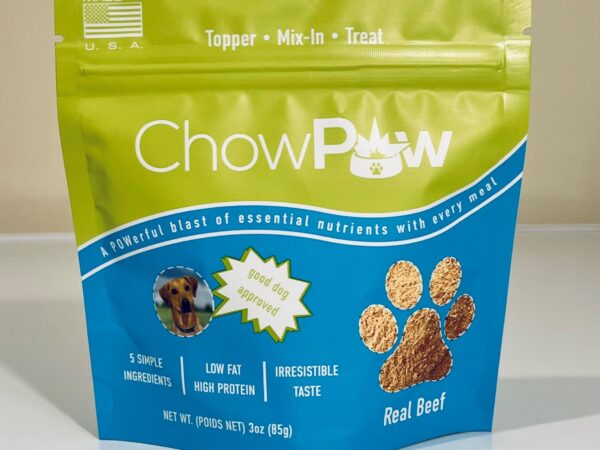
Still, even with these perks, pinto beans just can't replace the superior, more bioavailable protein found in meat. That's exactly why a meal enhancement like ChowPow is a far more effective way to boost the nutrition in your dog's daily kibble. It delivers the complete amino acid profile that pinto beans are missing, directly supporting muscle health and vitality. So while beans can be a nice treat now and then, a meat-based supplement like ChowPow ensures their core nutritional needs are always met.
Real-World Benefits of Adding Pinto Beans to Your Dog's Bowl
So, what happens when you actually add a few properly prepared pinto beans to your dog's diet? It's not just about the numbers on a nutrition label; for many dogs, these little legumes can offer some real, noticeable perks when used as a small meal-enhancer.
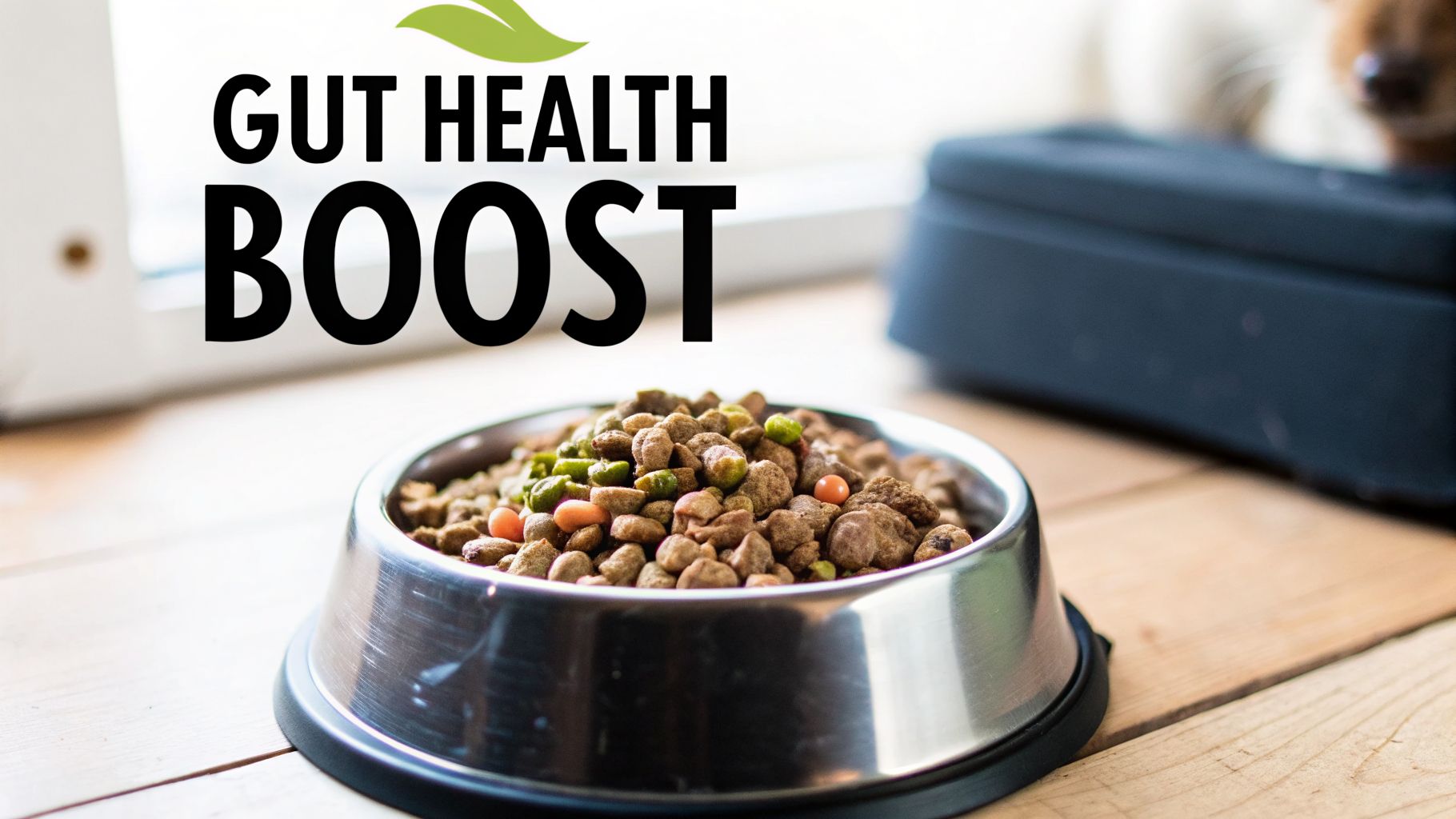
The biggest win with pinto beans is their fiber content. If you have a senior dog or one that struggles with constipation, a spoonful of mashed beans can be a game-changer for keeping their digestive system moving like clockwork.
This fiber also doubles as a prebiotic, which is basically food for the good bacteria already living in your dog's gut. A happy, thriving gut microbiome is the foundation for everything from better nutrient absorption to a stronger immune system.
Helping with Weight Management and Picky Eaters
That combination of plant-based protein and fiber also helps your dog feel fuller for longer. This can be a secret weapon for weight management, curbing that constant begging and helping to prevent the overeating that packs on unhealthy pounds. It simply makes their regular meal feel more satisfying.
A spoonful of pinto beans can make a world of difference for a picky eater. The unique texture and earthy flavor can make their regular kibble suddenly more appealing, encouraging them to clean their bowl and get the balanced nutrition they need.
This is exactly where pinto beans shine—as a meal booster, not a meal replacement. Think of them as a way to add a little flair and function to your dog's existing food. But it’s crucial to remember they can't provide the complete, high-quality animal protein your dog truly needs to thrive long-term.
Supporting a Healthy Digestive System
When fed in moderation, pinto beans are a fantastic digestive aid. Their fiber content is great for promoting regular bowel movements and keeping constipation at bay. Even a small amount of cooked, plain pinto beans provides enough fiber to help produce beneficial short-chain fatty acids in the gut. These fatty acids are the good guys, helping to fight off harmful bacteria and maintain a healthy intestinal environment. For dogs with occasional tummy troubles, this can lead to much better stool quality. You can find more expert insights on dog-safe beans at spotpet.com to dig deeper.
While beans offer a nice digestive boost, a purpose-built meal enhancement like ChowPow takes nutrition to the next level. As a supplement, it's specifically designed to deliver bioavailable animal protein and essential amino acids that a simple bean just doesn't have. ChowPow isn't just about tempting a picky dog; it's about enriching their entire meal and turning standard kibble into a powerhouse of targeted nutrition.
The Downside: How Pinto Beans Can Go Wrong
While pinto beans can offer some nice perks, how you prepare and serve them is a huge deal. A simple slip-up can quickly turn this seemingly healthy treat into a source of serious trouble for your dog. Knowing the risks is the first step to making sure pinto beans are a safe, occasional addition to their bowl.

The biggest danger by far comes from raw or undercooked beans. They’re armed with a natural toxin called phytohaemagglutinin, which is basically the bean’s self-defense mechanism. If your dog eats it, this compound can cause a world of gastrointestinal hurt, leading to severe vomiting and diarrhea. Always, always cook beans until they are completely soft.
Watch Out for Canned Beans and Sneaky Additives
Canned pinto beans might seem like a convenient shortcut, but they come with their own set of red flags. Most canned goods are loaded with sodium to keep them shelf-stable. This extra salt is a big no-no for dogs and can cause dehydration or, in worse-case scenarios, sodium ion poisoning.
If you absolutely have to use canned beans, look for a “no salt added” or “low sodium” version. Even then, you’ve got to drain the can and give the beans a good rinse under cool water to wash off as much of that leftover sodium and gunk as possible.
On top of that, you should never give your dog pinto beans that were cooked for people. So many of our favorite recipes include ingredients that are downright toxic for dogs.
Here are the top offenders to keep out of their bowl:
- Onions and Garlic: These are part of the allium family and are highly toxic to dogs. They can wreak havoc on their red blood cells.
- Oils and Fats: A greasy meal can trigger pancreatitis, a very painful and serious inflammation of the pancreas.
- Spices and Seasonings: Many common spices can irritate your dog’s stomach. Some, like chili powder, can cause some serious discomfort.
At the end of the day, while pinto beans can be okay for dogs in very limited, carefully prepared amounts, the risks really highlight why a purpose-built meal supplement is a much safer and more effective choice. A product like ChowPow is formulated specifically for a dog’s needs, giving them high-quality animal protein and nutrients without the gamble of toxins, high sodium, or harmful extras. It's designed to boost their kibble, delivering reliable nutrition you can trust every single time.
How to Prepare Pinto Beans for Your Dog Safely
So, you've weighed the pros and cons and want to give pinto beans a try. Great! But getting the preparation right isn't just a suggestion—it's an absolute must to keep your dog safe and their tummy happy.
Think of it this way: prepping beans for your dog is the complete opposite of how you'd cook them for yourself. The goal is bland, bland, bland. Let's walk through how to do it correctly.
From Dried Beans to Dog-Safe Treat
If you're starting with a bag of dried pinto beans, you’ll need to do a little planning. The first step is to soak them overnight in a big bowl of water. This isn’t just about making them softer; it’s a crucial step that helps break down some of the complex sugars that can give your dog gas.
Once they've had a nice long soak, discard that soaking water. It contains the very compounds you're trying to get rid of. Give the beans a thorough rinse, then pop them in a pot with fresh water.
Boil them until they’re super soft—soft enough to mash easily with a fork. Most importantly, do not add a single thing. No salt, no spices, no garlic powder, no onions, and no oil. They need to be completely plain.
The Canned Bean Shortcut (and How Not to Mess It Up)
Using canned beans is definitely faster, but it comes with a major warning label: sodium. You absolutely must look for cans that are clearly labeled 'no salt added' or 'low sodium.'
Even then, your job isn't done.
Your mantra for canned beans should be: 'Drain and rinse, then rinse again.' Tip the entire can into a colander and run cool water over them for at least a full minute. This simple action is your best defense, washing away a huge amount of the leftover sodium and preservatives.
When it comes to portion sizes, think of beans as a tiny, occasional garnish, not a meal. A good guideline is the 10% rule: treats should never make up more than 10% of your dog’s daily calorie count.
For pinto beans, that translates to a very small amount:
- Small breeds: Just a teaspoon of mashed beans.
- Large breeds: A tablespoon at most.
Always start small the first time. Mix a tiny bit into their food and keep an eye out for any digestive trouble like gas, bloating, or diarrhea.
While beans can be a fun, fibrous little extra, they don't hold a candle to a purpose-built meal enhancement. A supplement like ChowPow provides a much more powerful and reliable nutritional punch. You get high-quality animal protein and vital nutrients without any of the prep work or the risks that come with legumes, easily turning their standard kibble into a meal they'll go crazy for.
Why a Meat-Based Topper Is the Superior Choice
So, while pinto beans can be a nice, fibrous treat, they just don't hold a candle to high-quality animal protein when it comes to really boosting your dog's diet. A dog's body is built to run on meat. Even though beans have their perks, their plant-based protein is 'incomplete'—it simply doesn't have the full set of essential amino acids your dog needs for strong muscles, healthy organs, and their daily zoomies.
This is exactly where a dedicated meal supplement like ChowPow comes in. It's important to know that ChowPow isn't a replacement for your dog's regular kibble. Think of it as a nutritional supercharger, designed to take their everyday meals from good to great.
Complete vs. Incomplete Protein
We see a lot of trends in human diets, from plant-based eating to making your own homemade vegan hot dogs, but we have to remember that dogs have very different nutritional needs. They aren't just small, furry people; their entire system is optimized to get the most out of animal-based nutrients.
This simple graphic breaks down the essential difference between pinto beans and a meat-based topper for your dog's nutrition.
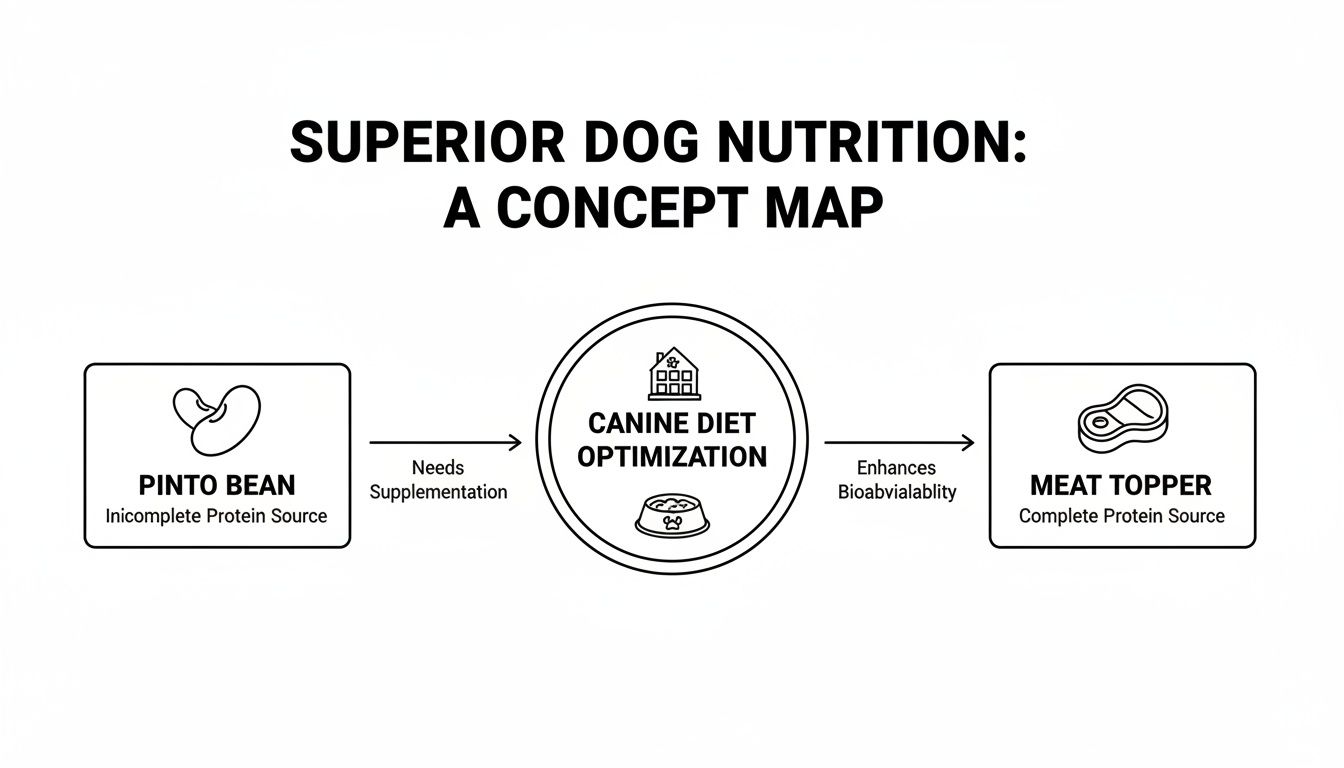
The main point? Pinto beans offer some protein, but a meat-based topper delivers the complete, bioavailable protein that’s truly fundamental to your dog’s health.
Think of it like building a house. Pinto beans give you some of the materials, like wood and nails, but you’re still missing the bricks and windows. A meat-based topper hands you the complete blueprint and all the materials needed to build a strong, sturdy structure.
ChowPow is made with simple, powerhouse ingredients like dehydrated beef heart, carrots, and celery. Beef heart, especially, is a goldmine of complete protein and other key nutrients. If you're curious, you can learn more about why adding beef heart to your dog’s diet can be beneficial in our other article.
This targeted formula delivers the exact building blocks that plant proteins, like the ones in pinto beans, just don't have.
So, while asking "are pinto beans good for dogs?" gets you a "sure, sometimes," the much better question is, "what's best for my dog's nutrition?" The answer to that is pretty clear:
- Pinto Beans: A fun, occasional snack for a little fiber boost.
- ChowPow: A reliable, daily supplement for supercharging their kibble with complete, easy-to-digest protein.
By opting for a meat-based enhancement, you're not just adding a tasty flavor; you are actively investing in your dog’s long-term muscle development, organ health, and overall vitality. It’s the smartest way to make sure their kibble is giving them everything they need to live their happiest, healthiest life.
Got More Questions About Pinto Beans?
Let's tackle some of the most common questions dog owners have. We'll clear up any lingering doubts so you can feel confident about what goes into your dog's bowl.
Can My Dog Eat Canned Pinto Beans?
Yes, but you have to be very careful. If you're going to use canned beans, they must be the "no salt added" or "low sodium" variety. No exceptions.
Even then, you need to drain the can and give the beans a thorough rinse under cool water. This helps wash away any lingering preservatives and excess sodium that can be harmful to your pup.
How Many Pinto Beans Can My Dog Eat?
Remember the 10% rule: treats, including pinto beans, should never make up more than 10% of your dog’s daily calorie intake.
For most dogs, this translates to a very small serving. A large dog might get a single tablespoon of mashed beans, while a smaller dog should have no more than a teaspoon. And this should only be an occasional thing, maybe a few times a week at most.
Think of pinto beans as a rare garnish, not a regular meal component. Keeping portions tiny and infrequent is the best way to prevent any digestive issues.
What Happens if a Dog Eats Raw Pinto Beans?
This is a serious one: raw pinto beans are toxic to dogs. They contain a nasty compound called phytohaemagglutinin that can cause severe vomiting and diarrhea.
If you even suspect your dog has snatched some raw beans, don't wait. Call your veterinarian immediately for advice.
Are Pinto Beans a Good Protein Replacement?
Absolutely not. While pinto beans do have some plant-based protein, it's what we call an "incomplete" protein. This means they lack the full range of essential amino acids your dog needs to build and maintain healthy muscles and organs.
A dog's primary protein source must always come from high-quality animal products. A bean just can't do that job. This is exactly why a meat-based meal supplement is a far better way to boost your dog's kibble—it provides the complete, bioavailable animal protein they were built to thrive on.
For a powerful nutritional boost without any of the risks or prep work, try ChowPow. Our dehydrated beef heart supplement is designed to enhance your dog’s meal with the complete, high-quality animal protein they truly need. Learn more and see the difference it can make at https://chowpownow.com.
-
Product on sale
 Dog Food Topper - Beef HeartOriginal price was: $14.99.$10.95Current price is: $10.95. - or subscribe and save up to 20%