
Are Tomatoes Poisonous to Dogs? A Complete Guide
So, can dogs eat tomatoes? The short answer is a classic “yes and no.” It really depends on what part of the tomato plant we’re talking about.
While a slice of a juicy, ripe, red tomato is generally fine for your dog in small amounts, the green parts of the plant are a different story. The stems, leaves, and even unripe green tomatoes contain compounds that can be toxic to our furry friends. It all comes down to knowing the difference.
A Clear Guide to Tomatoes and Your Dog
If you’re out in the garden or chopping veggies in the kitchen, you’ve probably seen your dog’s curious nose start sniffing around. The question of whether tomatoes are poisonous to dogs comes up all the time, and the answer isn’t as simple as you might think.
The key is understanding that different parts of the tomato plant have completely different effects on your dog.
Think of it like an apple. You happily munch on the sweet, fleshy fruit but know to toss the core and seeds. It’s a similar deal with tomatoes. The ripe, red part can be a harmless and tasty treat, but the rest of the plant contains a toxin called solanine.
Safe vs. Toxic Parts of a Tomato Plant
Solanine is most concentrated in the green, growing parts of the plant—the leaves, stems, and unripe fruit. It’s the plant’s natural defense mechanism. As the tomato ripens and turns that beautiful shade of red, the solanine levels drop dramatically, making the mature fruit safe for your dog to eat in moderation.
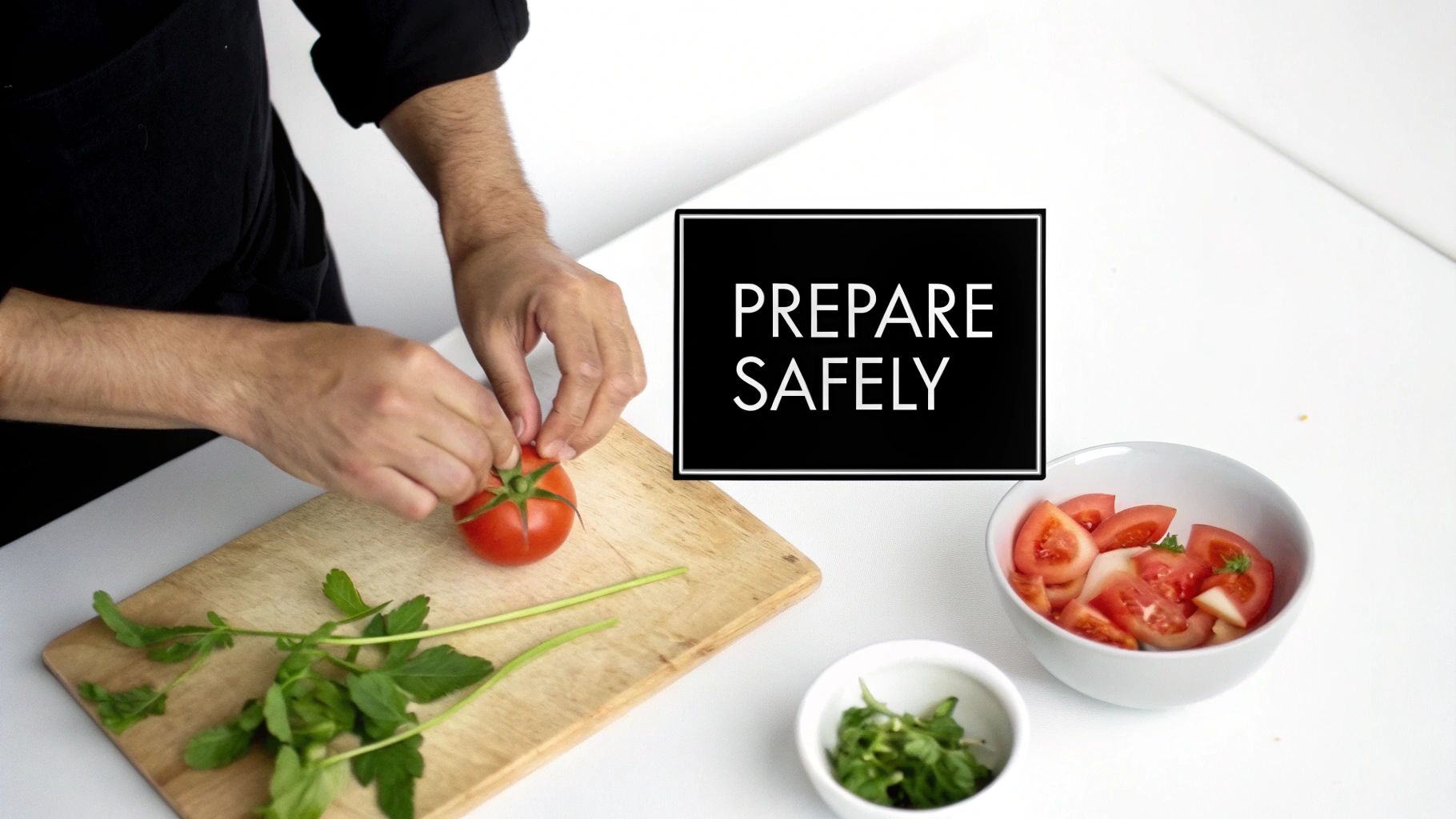
This simple visual breaks it down perfectly.
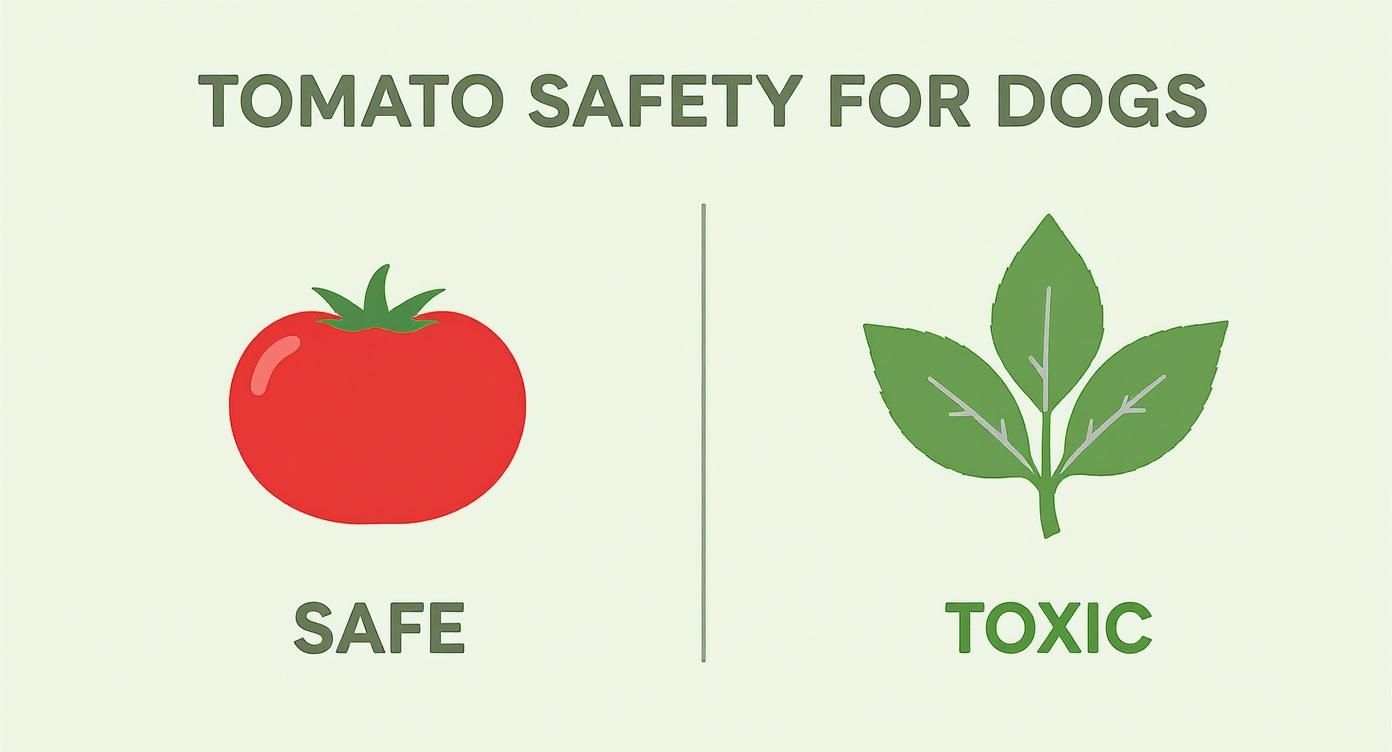
The picture tells the whole story: red fruit is okay, but green plant parts are a no-go. It’s always good to be informed about what your dog can and can’t eat. To learn more, check out our complete guide on which fruits dogs can and can’t eat.
For a quick reference, here’s a simple table to keep things straight.
A Quick Guide to Tomato Safety for Dogs
| Part of the Tomato | Safety Level for Dogs | Key Concern |
|---|---|---|
| Ripe, Red Fruit | Safe (in moderation) | The fleshy part is generally harmless. |
| Unripe, Green Fruit | Toxic | Contains high levels of solanine. |
| Stems & Vines | Toxic | Very high concentration of solanine. |
| Leaves | Toxic | The most dangerous part of the plant. |
This table makes it easy to see what’s safe to share and what you need to keep far away from your dog.
Key Takeaway: Before offering a small piece of tomato, always remove every bit of stem and leaf. And if you have a garden, never let your dog get curious and start chewing on the tomato plants themselves.
Understanding Solanine: The Toxin in Tomato Plants
So, what’s the real story behind the “tomatoes are toxic” rumor? It all comes down to a naturally occurring compound called solanine.
Think of solanine as the tomato plant’s built-in security system. It’s a bitter-tasting chemical designed by nature to tell insects and other animals, “Hey, don’t eat me while I’m still growing!”
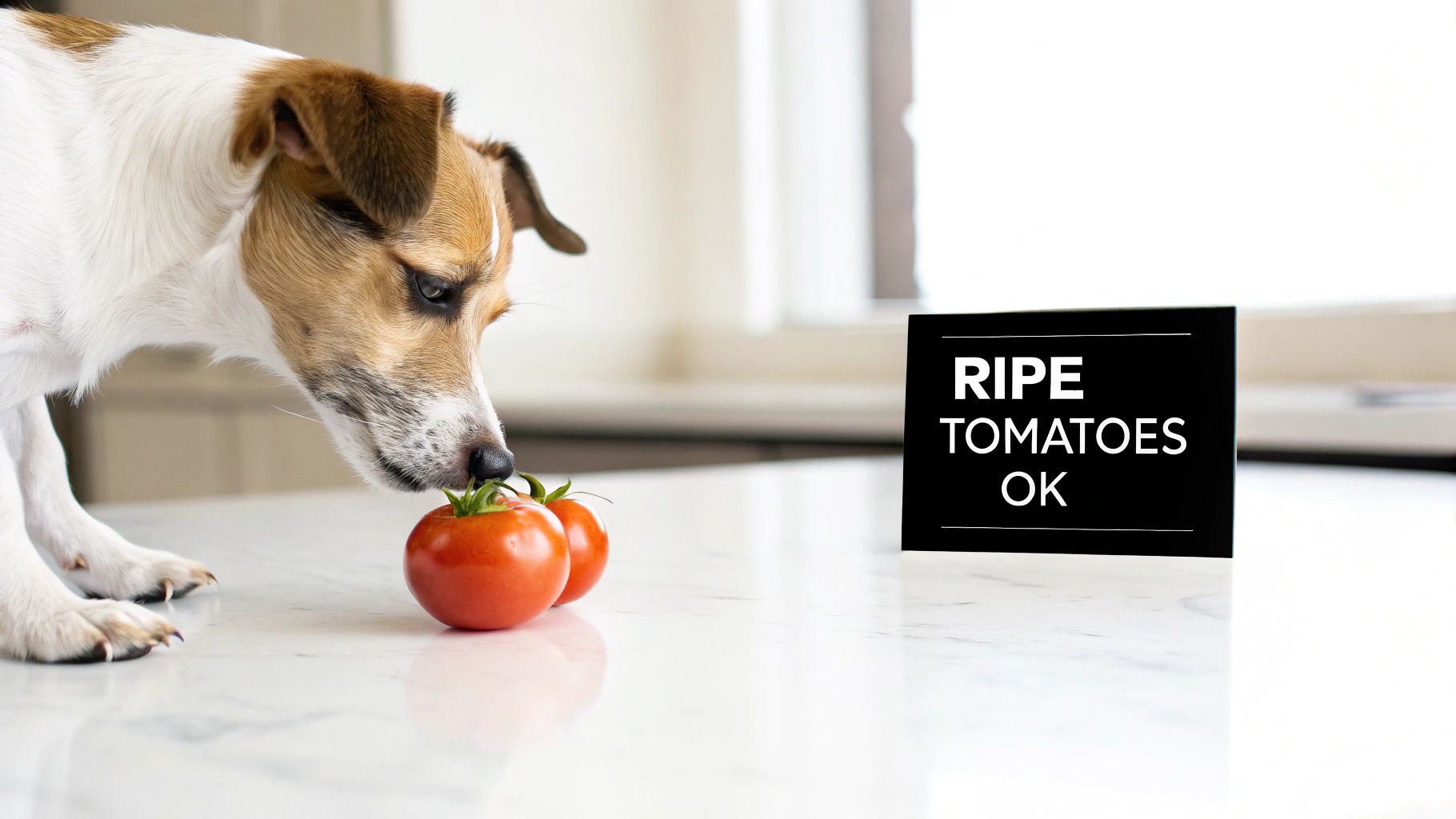
While this chemical bodyguard is great for the plant, it can spell trouble for a dog who decides to munch on the greenery. Solanine is most potent in the leaves, stems, and unripe green tomatoes. This compound is a hallmark of the nightshade family, which also includes potatoes and eggplants.
But here’s where the magic happens. As a tomato ripens on the vine, a wonderful transformation takes place. The solanine levels plummet, while that beautiful red color and sweet flavor take over. This is exactly why a ripe, red tomato is perfectly fine for your dog, but the green, leafy parts of the plant are a no-go.
Where Is Solanine Most Concentrated?
Knowing where the danger is hiding is the key to keeping your pup safe, especially if you have a garden. A curious dog isn’t going to know the difference between a tasty fruit and a toxic leaf.
The highest concentrations of solanine are found in:
- The Leaves: These pack the biggest punch and are the most dangerous part of the plant.
- The Stems and Vines: Just like the leaves, the stems are loaded with this toxic compound.
- Unripe Green Tomatoes: A green tomato is still full of solanine, making it unsafe for dogs to eat.
This is precisely why you need to keep a close eye on your dog around tomato plants. Don’t let them treat your garden like a personal chew toy! The question isn’t just “are tomatoes poisonous to dogs,” but rather which parts are the problem.
It’s a similar idea to other common foods we have around the house. For instance, many pet owners are shocked to learn about the serious risks of grapes, another seemingly innocent fruit. You can dive deeper into the surprising truth about why grapes are a toxic treat.
Veterinary experts have pretty much settled the tomato debate. If a dog eats a large amount of the green plant material, the solanine can cause an upset stomach, lethargy, and even confusion. Thankfully, the risk disappears as the fruit turns red, making the tomato itself safe. Even the Pet Poison Helpline rates the plant’s toxicity level as mild for dogs.
The Simple Rule: The redder the tomato, the safer it is. As the fruit ripens, the risk from solanine diminishes almost entirely, leaving behind a juicy, nutrient-rich treat.
This natural breakdown is what turns a potential hazard into a perfectly healthy snack for your furry friend.
Recognizing the Signs of Tomato Plant Poisoning
Knowing what to look for is the first step in keeping your dog safe from a nasty run-in with a tomato plant. If you even suspect your dog has been chewing on the greenery, you’ll want to watch them like a hawk for any signs of solanine poisoning, especially within the first few hours.
A severe reaction is thankfully pretty rare. It usually only happens if a dog manages to eat a lot of the plant material. Still, being prepared can make all the difference, and spotting the symptoms early helps you take action right away.
Common Symptoms to Watch For
The first red flags of tomato plant poisoning usually show up in the gut as your dog’s body tries to get rid of the toxin. If they ate a significant amount, the symptoms can become more serious from there.
Keep an eye out for these common signs:
- Gastrointestinal Distress: This is almost always the first sign. Think vomiting, diarrhea, and a sudden loss of interest in their food bowl.
- Lethargy and Weakness: Your pup might seem totally wiped out, weak, or just not into their favorite games or walks.
- Excessive Drooling: Also known as hypersalivation, this is a good indicator of nausea or irritation in their mouth.
- Confusion or Drowsiness: A dog dealing with toxicity might seem dizzy, disoriented, or just unusually sleepy.
It’s crucial to remember that the severity of these symptoms is a direct result of how much of the plant your dog actually ate. A tiny nibble on a leaf might just lead to a mild tummy ache, but swallowing several leaves could cause much bigger problems.
When You Need to Contact a Vet
Knowing when to escalate from “watch and wait” to “call the vet” is absolutely vital. While mild symptoms can sometimes pass on their own, some signs are an immediate signal to get professional help from your veterinarian or a pet poison hotline.
You should seek veterinary attention right away if you notice any of these more serious symptoms:
- A Slowed Heart Rate (Bradycardia): This is a more advanced and serious sign of solanine poisoning.
- Dilated Pupils: Unusually large, wide-open pupils can point to a neurological issue.
- Tremors or Seizures: Any kind of uncontrolled muscle movement is an emergency and requires immediate care.
Being ready for any pet emergency is just part of being a responsible dog owner. Having the numbers for your vet and a poison control center saved in your phone is a fantastic start. For more tips, check out our guide on the 8 essential items you should have in your dog’s emergency kit. Taking quick action can stop a minor scare from turning into a major crisis.
The Good Stuff: Unpacking the Health Benefits of Ripe Tomatoes
Now that we’ve cleared the air about the risky green parts of the tomato plant, let’s talk about the good stuff. When they’re ripe and red, tomatoes can be more than just a safe occasional snack—they’re actually a surprisingly healthy treat for your dog. Think of them as a fantastic, low-calorie way to sneak a little extra goodness into their diet.
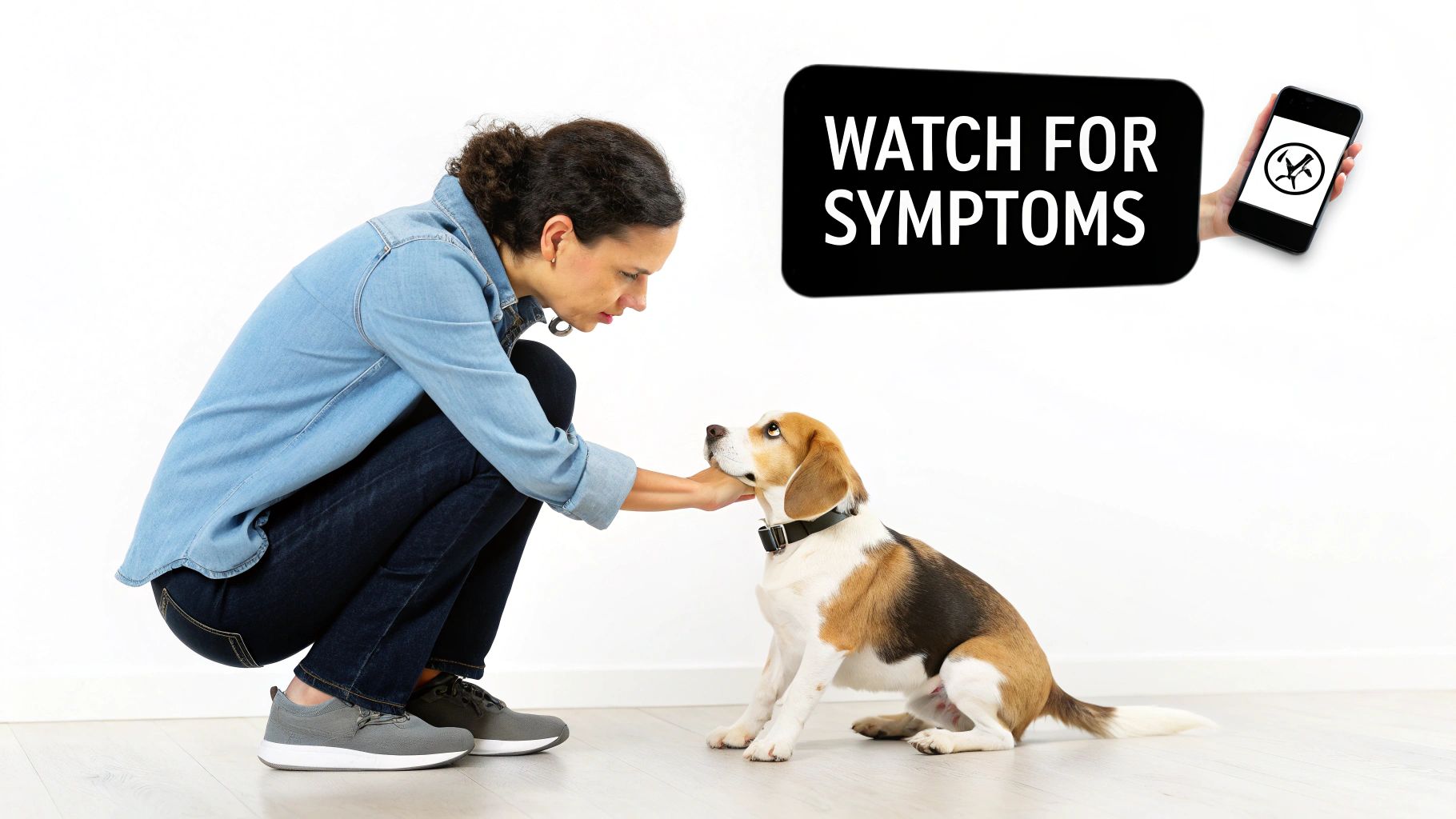
A small piece of tomato is like a little health bonus. It’s full of soluble fiber, which is great for supporting healthy digestion, and it comes packed with nutrients that contribute to your dog’s overall well-being.
A Powerhouse of Vitamins and Antioxidants
Ripe red tomatoes are loaded with beneficial compounds that help your dog from the inside out. They’re a natural source of vitamins and powerful antioxidants that work to protect their body on a cellular level.
Here’s a look at some of the key nutrients hiding inside a ripe tomato:
- Lycopene: This is the antioxidant that gives tomatoes their brilliant red hue. It’s like a tiny bodyguard for your dog’s cells, helping to fight off damage from free radicals and supporting long-term health.
- Beta-carotene: The body cleverly converts this into Vitamin A, which is absolutely vital for sharp vision, a robust immune system, and healthy cell function.
- Vitamin C: Another important antioxidant, Vitamin C helps reduce inflammation and keeps your dog’s immune response strong.
- Potassium: This essential mineral is a key player in maintaining healthy muscle function and proper fluid balance in the body.
The advice on dogs and tomatoes has been a bit of a rollercoaster over the years, with older guidance often blowing the dangers way out of proportion. The real issue has always been the solanine in the green plant parts. Ripe tomatoes, on the other hand, are considered non-toxic and can be a great snack. For a deeper dive into how expert advice has evolved, you can learn more about dogs and tomatoes on AKC.org.
A small slice of ripe tomato is a healthy, hydrating treat that adds a little nutritional boost to your dog’s day without adding a lot of calories.
Rounding Out Your Dog’s Nutrition
While a slice of tomato is a fantastic and healthy treat, it’s not a complete meal. Your dog’s daily kibble is the foundation of their diet, but even the best foods can sometimes have nutritional gaps.
This is where a high-quality meal enhancement like ChowPow can really make a difference. It’s designed to boost the nutritional power of your dog’s existing food. Think of it not as a replacement for their regular kibble, but as a powerful supplement that fills in those nutritional gaps with essential vitamins and minerals.
Think of ChowPow as a daily superfood boost that turns a standard meal into an optimized one, ensuring your dog gets the comprehensive support they need, every single day.
How to Safely Prep Tomatoes for Your Dog
So, you’re ready to share a juicy red tomato with your pup? Great choice! Prepping it the right way is super simple, and it guarantees the tomato stays a healthy treat instead of becoming a problem. A few quick steps will give you total peace of mind.
First things first, always grab plain, ripe, red tomatoes. The more vibrant the red, the less solanine it has, making it the safest bet. Before you even reach for a knife, give that tomato a good wash under cool running water. This gets rid of any leftover pesticides or dirt it might have picked up along the way.
The Single Most Important Step
The most critical part of the whole process is getting rid of every last bit of the green stuff. That means the stem, the little leafy cap, and any attached leaves need to be completely cut away. These parts are where the solanine is most concentrated, and even a little bit can cause an upset stomach. A quick, careful trim is all it takes to remove the risk.
Once it’s clean and trimmed, chop the tomato into small, bite-sized pieces that are right for your dog’s size. A tiny Chihuahua will need a much smaller dice than a big Golden Retriever. This little step is a simple way to prevent choking and make the treat easier for them to digest.
Tomato Products to Keep Away From Your Dog
While a fresh tomato is perfectly fine, processed tomato products are a completely different story. You should never, ever give your dog:
- Ketchup or Tomato Sauce: These are almost always packed with sugar, salt, and artificial preservatives that dogs just don’t need in their diet.
- Tomato Soup: The canned stuff is usually loaded with sodium and often contains toxic ingredients like onions or garlic.
- Salsa or Pasta Sauce: It’s a safe bet these contain onions, garlic, and other spices that are flat-out dangerous for dogs.
The science on dogs and tomatoes has really zeroed in on the green parts of the plant being the real danger. You might hear stories, like the one about Bobi, a dog who was once the world’s oldest and reportedly ate human food with tomato sauce, but it’s always smarter—and safer—to stick with fresh, plain preparations for your own furry friend. You can find more great insights into canine diets and tomatoes on peterdobias.com.
The Golden Rule: Always serve fresh, plain, ripe tomato, and always in moderation. Treats should only make up about 10% of your dog’s daily calorie intake, and a small piece of tomato fits perfectly into that budget as a healthy, low-calorie option.
Round Out Your Dog’s Nutrition with ChowPow
Healthy, whole-food treats like a juicy, ripe tomato are a fantastic addition to your dog’s diet. A little slice offers a nice pop of antioxidants, but let’s be honest—it’s just one small piece of a much bigger nutritional puzzle. Making sure your dog gets everything they need to truly thrive requires a more consistent, day-in-day-out approach.
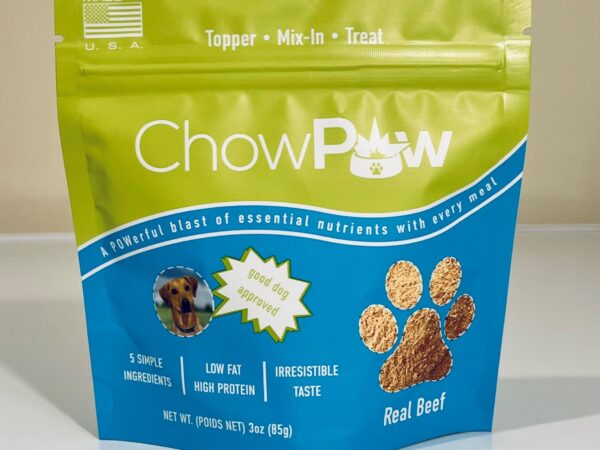
That’s where ChowPow steps in. Think of your dog’s daily kibble as a solid foundation. ChowPow is the supercharger that takes a good meal and makes it great. It’s a meal enhancement, not a replacement for their food. A scoop of ChowPow boosts their current kibble by filling in any nutritional gaps with essential vitamins, minerals, and high-quality protein from beef heart.
Why Boost Their Kibble?
Adding a scoop of ChowPow is like giving your dog their own personal superfood boost. It helps build health from the inside out, supporting everything from their energy levels to their digestion. While a bit of tomato is a wonderful snack, ChowPow makes sure their core nutrition is on point every single day, with every single bite.
This is especially helpful for:
- Picky Eaters: The irresistible taste can convince even the fussiest dogs to finally clean their bowls.
- Senior Dogs: The easy-to-digest powder is gentle on older systems while delivering crucial nutrients.
- Active Pups: That extra protein and vitamin kick helps support muscle health and sustained energy for all their adventures.
So, you’ve got the facts on the “are tomatoes poisonous to dogs” question and know how to share them safely. Now you can take the next step by making sure their daily meals are just as beneficial as those healthy treats.
With ChowPow, you’re not just adding flavor; you’re adding targeted nutrition that works alongside their regular food. It makes their kibble work harder by delivering a balanced blend of ingredients that support long-term health and vitality. When you boost their everyday food, you give them the best foundation possible.
Got Questions About Dogs and Tomatoes? We Have Answers.
To make sure you’re leaving with total peace of mind, we’ve rounded up some of the most common questions we hear from dog owners about tomatoes. Let’s clear up any lingering confusion so you can feel confident about what’s safe and what’s not for your furry friend.
Can Dogs Eat Tomato Sauce or Ketchup?
That’s going to be a hard no. While a fresh, ripe tomato is perfectly fine, the stuff you find in jars and bottles is a completely different story.
Processed products like tomato sauce, soup, and ketchup are often packed with ingredients that are definite no-gos for dogs. We’re talking about high levels of salt, sugar, and artificial preservatives. Even worse, many of these sauces contain onion and garlic, which are part of the allium family and are downright toxic to dogs. It’s always best to just skip the sauce and stick to plain, fresh tomatoes.
How Much Ripe Tomato Is Actually Safe?
When it comes to any treat, moderation is the name of the game. For a big dog, a small slice or two of ripe tomato is plenty. For a little pup, just a tiny piece will do the trick.
A great rule of thumb to follow is the 10% rule. Treats of any kind should never account for more than 10% of your dog’s daily calorie intake. Since tomatoes are nice and low-cal, they’re a fantastic, healthy option when served in the right amount.
Are Cherry Tomatoes Safe for Dogs?
Yep, cherry tomatoes get the green light, but with a couple of important conditions. They must be fully ripe (that means bright red, no green spots!) and served up safely.
Because of their small, round shape, they can be a serious choking hazard, especially for smaller dogs who might gulp them down whole. The easy fix? Just slice them into smaller, more bite-sized pieces before you offer them up. It’s a simple step that makes this little treat much safer to enjoy.
What If My Dog Ate a Green Tomato?
First, don’t panic. If you’re pretty sure your dog only snagged a small piece of an unripe, green tomato, just keep a close eye on them. You’ll be watching for any signs of an upset stomach, like vomiting or diarrhea.
However, if they’ve eaten a large amount of a green tomato or you think they might have chewed on the leaves or stems of the plant, it’s time to act. You should call your veterinarian or a pet poison hotline immediately. Getting professional advice right away is the safest bet in this situation.
Your Quick-Reference Guide to Common Questions
To wrap things up, here’s a handy table with quick answers to the most frequently asked questions about dogs and tomatoes.
| Question | Answer |
|---|---|
| Are tomatoes poisonous to dogs? | Ripe, red tomatoes are safe in moderation. However, the green parts of the tomato plant (stems, leaves, unripe fruit) contain solanine and are toxic. |
| Can dogs have tomato sauce or ketchup? | No. These often contain harmful ingredients like salt, sugar, onions, and garlic, which are toxic to dogs. |
| How much ripe tomato can my dog have? | A small slice or two is a good amount. Treats should follow the 10% rule, making up no more than 10% of their daily caloric intake. |
| Are cherry tomatoes okay for dogs? | Yes, as long as they are fully ripe and cut into smaller pieces to prevent choking. |
| What should I do if my dog eats a green tomato? | If it’s a small amount, monitor them for an upset stomach. If they ate a lot or any part of the plant, contact your vet or a pet poison hotline immediately for guidance. |
Hopefully, this clears up any worries you might have had! A little bit of knowledge goes a long way in keeping our pups safe and happy.
While a fresh tomato slice is a great treat, ensuring your dog’s core nutrition is consistently excellent is even more important. ChowPow is designed to boost the nutritional value of your dog’s existing kibble, turning every meal into a powerhouse of health. It’s not a replacement, but an enhancement that fills in the gaps. Learn more and give your dog the daily support they deserve at the official ChowPow website.
-
Product on sale
 Dog Food Topper - Beef HeartOriginal price was: $14.99.$10.95Current price is: $10.95. - or subscribe and save up to 20%