
A Practical Guide to Managing Arthritis in Dogs
If you've ever watched your once-bouncy dog struggle to get up after a nap, you know it’s more than just a sign of them "getting old." You're likely seeing the early signs of arthritis, a progressive disease that quietly steals their mobility and comfort.
What's Actually Happening Inside Your Dog's Joints?
To really understand what's going on, think of the cartilage in your dog's joints as the perfect shock absorbers on a brand-new car. This smooth, slick tissue creates a cushioned surface, letting bones glide past each other without any friction. In a healthy joint, movement is completely effortless and pain-free.
The Slow Breakdown of Joint Cartilage
Osteoarthritis is the villain that starts to break down this crucial cartilage. As it thins out and deteriorates, that once-smooth surface becomes rough and pitted. The "shock absorber" is essentially failing.
This breakdown kicks off a cascade of painful problems:
- Bone-on-Bone Grinding: Without that protective cartilage, bones start to rub directly against each other. Ouch. This causes significant pain and inflammation.
- Joint Inflammation: The body tries to respond to this friction, which unfortunately leads to inflammation in the joint lining. This brings on swelling, stiffness, and even more pain.
- Reduced Mobility: The mix of pain and stiffness makes it tough for your dog to move like they used to. You’ll notice them hesitating to play, jump up on the couch, or even just go for their daily walk.
This isn't a rare problem. The scope is staggering—studies show that arthritis affects a whopping 20% of all dogs over one year old. That means millions of our best friends are living with chronic discomfort, often silently, because their symptoms get written off as normal aging.
For older dogs, the numbers are even more stark. Osteoarthritis is the primary cause behind over 80% of lameness cases in seniors.
Hearing that your dog has arthritis can feel overwhelming, but it's important to know this is a manageable condition. Taking a proactive approach can make a world of difference in your dog's comfort, mobility, and overall happiness.
Becoming your dog’s best advocate starts right here, with understanding the basics of their joint health. By learning what’s happening inside their joints, you've already taken the most important step toward giving them the support they need. You can also explore our guide to joint health for dogs for more foundational knowledge.
The goal isn't to reverse the condition—it's to manage it effectively so your loyal companion can still live a full, happy life.
Learning to Spot the Subtle Signs of Joint Pain
Dogs are masters at hiding their pain. It’s an ancient survival instinct—showing weakness in the wild made them vulnerable. While your pampered pup isn't fending off predators, that stoic nature can make it incredibly hard to spot the early signs of arthritis.
The trick is to become a keen observer of the small stuff. You're looking for subtle, consistent shifts in their daily routine and movement. These are often the very first whispers that their joints are starting to ache.
Catching these signs early is everything. Think of it like a tiny crack in a windshield. If you catch it right away, you can get it filled and stop it from spreading. But if you ignore it, you’ll end up with a huge spiderweb crack that compromises the whole thing. The same goes for your dog's joint health—early intervention can dramatically slow down the disease and keep them comfortable for years to come.
This timeline shows how a dog's joint health can change over their lifetime, from puppyhood through their senior years.
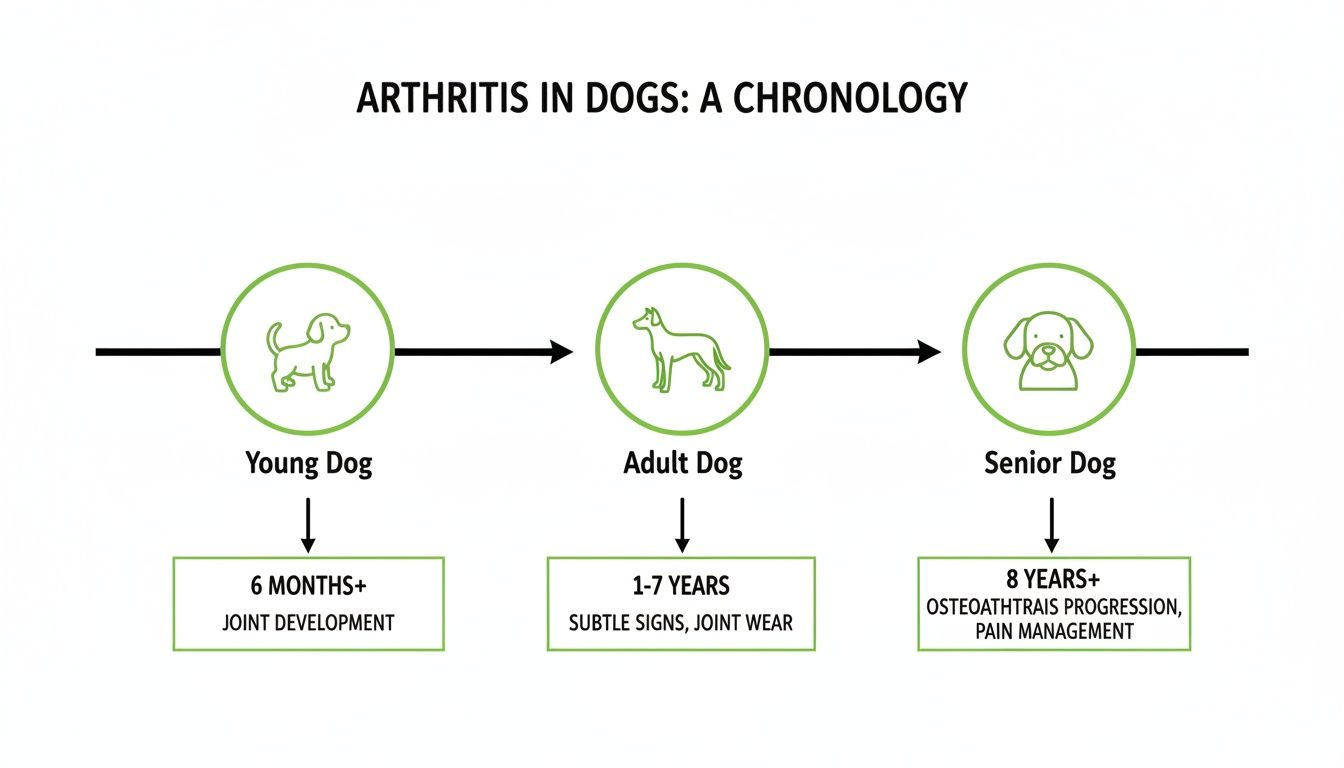
As you can see, the first subtle signs often appear when a dog is still in its prime adult years, long before we might think of them as "old."
To help you know what to look for, here’s a breakdown of the common physical and behavioral changes you might see as arthritis progresses.
Symptoms Of Dog Arthritis By Stage
| Stage | Common Physical Signs | Behavioral Changes |
|---|---|---|
| Early | Stiffness after resting (especially in the morning), slight hesitation before jumping, occasional lameness after heavy exercise. | Less enthusiasm for long walks, lagging behind, seems to have an "off day" more often. |
| Moderate | Noticeable and more consistent limping, difficulty with stairs or getting into the car, visibly slowed down on walks. | Increased irritability or grumpiness, reluctance to be petted on sore spots (like hips), less interest in playing. |
| Advanced | Obvious and persistent limp, muscle wasting (atrophy) in the affected leg(s), trouble getting up from a lying position. | Withdrawing from family activities, loss of appetite, may cry out when touched or moving, uncharacteristic aggression due to pain. |
Let's dig a little deeper into what these stages look like in your day-to-day life with your dog.
Early Stage Signs
In the beginning, the signs are so subtle you might just brush them off. It’s easy to think your dog is just having a lazy day or getting a little older.
- Morning Stiffness: Does your dog seem a bit creaky when they first get out of bed? They might stretch for a long time or take a few tentative steps before they get going. This stiffness often seems to "walk off" after a few minutes.
- A Moment's Pause: You might notice a brief hesitation before they hop on the couch or into the car—things they used to do without a second thought.
- Slowing Down on Walks: Maybe they start lagging on that last block home or seem less amped up when you grab the leash.
These are your first clues. Paying attention now gives you the power to step in and support their joints before things get worse.
Moderate Stage Signs
As arthritis moves into the moderate stage, the signs become more obvious and much harder to ignore. The "off days" start outnumbering the good ones.
- A Real Limp: What used to be an occasional limp after a long hike might now be a consistent limp after any real activity.
- Struggling with Obstacles: Stairs can become a major challenge. Your dog might start avoiding them or take them one painful step at a time.
- Changes in Temperament: Pain changes behavior. A once easy-going dog might become grumpy or snap when you try to pet a sore area like their back or hips. They might also lose interest in their favorite games.
At this point, the pain is clearly affecting their quality of life. It’s definitely time for a conversation with your vet.
Advanced Stage Signs
In the advanced stages of arthritis, the signs of chronic pain are constant and unmistakable. Your dog's mobility is seriously limited, and their world has become a lot smaller and more painful.
The hallmarks of advanced arthritis are visible muscle atrophy (where the muscle on the sore leg looks smaller and weaker), a persistent, obvious limp, and a significant struggle to rise from a lying-down position. Some dogs may even whimper or cry out when they move.
You’ll likely see major behavioral shifts, too. They might retreat from family life, lose their appetite, or even show uncharacteristic aggression because they're constantly hurting and afraid of being touched. This isn't your dog being "bad"—it's a dog in desperate need of a comprehensive pain management plan from your vet.
What to Expect at the Veterinarian's Office
A trip to the vet can feel overwhelming, especially when you suspect your dog is in pain. But knowing what’s coming can help turn that worry into confidence. This visit is the single most important step you can take to get a clear diagnosis for your dog’s arthritis and build a solid plan to manage it.
Your veterinarian will start by simply listening to you. Be ready to share all the little changes you’ve noticed, from that bit of morning stiffness to a new hesitation about jumping on the couch. This history you provide is a critical piece of the puzzle.
The Physical Examination
After hearing your story, your vet will perform a thorough hands-on physical exam. This isn't just a routine check-up; it's a careful, deliberate assessment looking for tell-tale signs of joint pain.
During this process, your vet will:
- Observe Your Dog's Gait: They’ll watch how your dog walks and stands, looking for any limping, stiffness, or unusual ways they might be shifting their weight.
- Assess Joint Flexibility: By gently moving your dog’s limbs, they will check the range of motion in key joints like the hips, knees, and elbows to see if it’s restricted.
- Check for Pain Responses: Your vet will carefully palpate (feel) the joints, checking for swelling, warmth, or any signs of discomfort your dog shows.
This hands-on approach is a low-stress way to gather a ton of information and helps zero in on which joints are causing the most trouble.
Diagnostic Imaging and Confirmation
While a physical exam gives some strong clues, imaging is often the next step to confirm an arthritis diagnosis. X-rays are the gold standard here.
An X-ray lets your veterinarian see exactly what’s happening inside the joint. They can actually visualize the extent of cartilage loss, spot any bone spurs, and see other changes that scream "osteoarthritis." Just as importantly, it helps them rule out other potential causes for your dog's pain, like an old injury or even a tumor.
Think of the physical exam as identifying the problem area on a map. The X-ray is the detailed satellite view that shows you exactly what’s wrong. Together, they give the complete picture, ensuring the treatment plan is perfectly matched to your dog’s needs.
Discussing Medical Treatments
Once arthritis is confirmed, the conversation will shift to making your dog comfortable. The number one goal is to reduce inflammation and give your dog their quality of life back.
The most common starting point is a prescription for non-steroidal anti-inflammatory drugs (NSAIDs). These are specifically formulated for dogs—you should never use human NSAIDs—and they are fantastic at knocking down the swelling and pain that make movement so hard. Your vet will go over the right medication and dose for your dog, along with any routine monitoring that's needed.
Depending on how severe the arthritis is, other pain relievers or even injectable treatments might be on the table. Your veterinarian is your best partner in navigating these options to build a multi-layered plan that keeps your loyal companion as comfortable and happy as possible.
Boosting Your Dog's Diet for Joint Support
When you're dealing with arthritis in a dog, vet-prescribed treatments are just one piece of the puzzle. What you put in your dog’s bowl every day is one of the most powerful tools you have to support their aching joints and make them more comfortable. The right nutrition works from the inside out to cool inflammation, support what's left of their cartilage, and—maybe most importantly—manage their weight.
Think of your dog's joints like the shocks on a truck. If that truck is constantly overloaded, the shocks are going to wear out fast. It’s the same with your dog; every extra pound puts a ton of unnecessary stress on their already sensitive joints, speeding up cartilage damage and dialing up the pain.
Why a Lean Body Weight Is Your Top Priority
Keeping your dog at a lean, healthy weight is the single most effective thing you can do with their diet to manage arthritis. It's not just a nice idea—it's a game-changer. Landmark studies on Labrador Retrievers showed a staggering difference; dogs on a calorie-restricted diet had only a 13% chance of developing hip arthritis by age five. The group allowed to eat as they pleased? 52% of them had it.
That really drives the point home: a healthy diet isn’t just about adding special ingredients. It's about controlling their total calorie intake to keep them slim. The less weight their joints have to carry, the less pain they'll feel. Simple as that.
Key Nutrients for Joint Health
Beyond just managing weight, certain nutrients can give targeted support right where your dog needs it. Getting these into their diet can help calm inflammation and give their body the building blocks for healthier cartilage.
- Omega-3 Fatty Acids: You'll find these in things like fish oil. They are powerful, natural anti-inflammatories that can help soothe sore joints.
- Glucosamine and Chondroitin: These are literally the components of cartilage. Supplementing with them can help support the cartilage your dog still has and improve joint lubrication.
On top of standard vet care, it can be helpful to look into natural anti-inflammatory supplements to give your dog's joints even more support.
Overcoming the Challenge of a Poor Appetite
One of the most frustrating problems owners face with arthritic dogs is a crummy appetite. When a dog is in constant pain, food often becomes the last thing on their mind. This is a huge issue, especially for seniors or dogs recovering from an illness, because it makes it tough to get the nutrition they desperately need.
This is where a high-value meal enhancement can be a lifesaver. You need something that smells and tastes incredible to get them interested, but it also has to be good for them.
ChowPow was created for this exact situation. It’s a nutrient-dense meal enhancement you sprinkle over their existing food, not a whole new diet you have to switch to. The super palatable, small-batch beef heart formula boosts the nutritional value of their current kibble, making it more appealing.
The rich, meaty aroma is usually enough to convince even the fussiest eaters to clean their bowl. More importantly, it adds a boost of high-quality protein to support the muscles around their joints, all without a dramatic diet change. It's an easy way to make sure they're getting the support they need, one meal at a time. For more ideas, check out our guide on the best foods for dogs with arthritis.
Creating a Comfortable Home for Your Arthritic Dog
While medical treatments and diet are the cornerstones of managing your dog's arthritis, don't overlook the massive impact their daily environment has on their comfort. Simple, thoughtful changes around your house can dramatically reduce their pain and help prevent injuries, turning your space into a true sanctuary for them. The goal is to minimize the strain on their sore joints during everyday activities like sleeping, eating, and just moving from room to room.

Take a moment and walk through your dog's daily routine. Do they have to navigate slippery hardwood or tile floors? For a dog with unstable, painful joints, those surfaces are like walking on an ice rink. One bad slip can cause a serious injury, leading to a major setback in their pain management.
By making just a few key adjustments, you can remove these daily obstacles and provide immense relief. It truly makes a world of difference in their quality of life.
Upgrade Their Sleeping Space
A good bed isn't a luxury for an arthritic dog; it's a necessity. Think about it: just like a quality mattress is a game-changer for a person with a bad back, a supportive orthopedic bed is crucial for a dog's aching joints.
Choosing the right bedding is a big deal, and the principles behind a human memory foam mattress for arthritis apply here, too. These beds are designed to cushion pressure points—like their hips and elbows—allowing for deeper, more restorative sleep. The result? Less stiffness when they wake up.
Create Safer Pathways and Surfaces
Your dog’s confidence is directly tied to how secure they feel on their feet. Preventing slips and falls is one of the most powerful things you can do to help them.
Here are a few practical ways to boost their traction:
- Non-Slip Rugs and Runners: Lay these down on any slick floors your dog uses often. High-traffic areas like hallways or the path from their bed to their water bowl are perfect spots. Just make sure the rugs have a non-skid backing so they don't slide around.
- Keep Nails Trimmed: Long nails can prevent your dog's paw pads from making full contact with the floor, acting like tiny stilts that reduce their grip. Keeping their nails short gives them much better stability.
- Paw Grips or Booties: For dogs who are really struggling with mobility, non-slip socks or adhesive paw grips can provide that extra bit of traction they desperately need.
A dog with arthritis is already working hard to compensate for pain. By giving them secure footing, you remove the extra physical and mental stress of navigating a slippery floor. They can move with more confidence and less fear of falling.
Make Everyday Activities Easier
When joints hurt, even simple things like eating a meal or hopping onto the sofa can become a huge challenge. Thankfully, a few simple tools can make these daily tasks much less of a struggle.
Raised Food and Water Bowls are a must-have. Bending down to eat from a bowl on the floor puts a ton of strain on an arthritic dog’s neck, shoulders, and back. Elevating their bowls to about chest height creates a more natural posture that’s way more comfortable.
Ramps and Pet Stairs are absolute lifesavers. Jumping on and off furniture or into the car creates a massive, jarring force on their joints. A sturdy ramp gives them a gentle incline to access their favorite spots without the painful impact of a leap. This simple addition can restore a little of their independence and keep them right in the middle of the family action.
Gentle Exercise and Therapies for Better Mobility
When your dog has arthritis, the thought of exercise might feel counterintuitive. But the right kind of movement is actually a cornerstone of managing their condition and keeping them comfortable.
While high-flying games of fetch are probably a thing of the past, gentle, consistent exercise is crucial. It keeps their joints lubricated and strengthens the muscles that support those aching joints. Without it, those muscles weaken, leading to even more instability and pain. The goal is to find that sweet spot: a sustainable, low-impact routine that helps, not hurts.
Low-Impact Exercises for Joint Health
The mission here is to build strength without the jarring impact of running or jumping. Think smooth, controlled movements that help maintain flexibility and muscle tone.
Here are a couple of fantastic options:
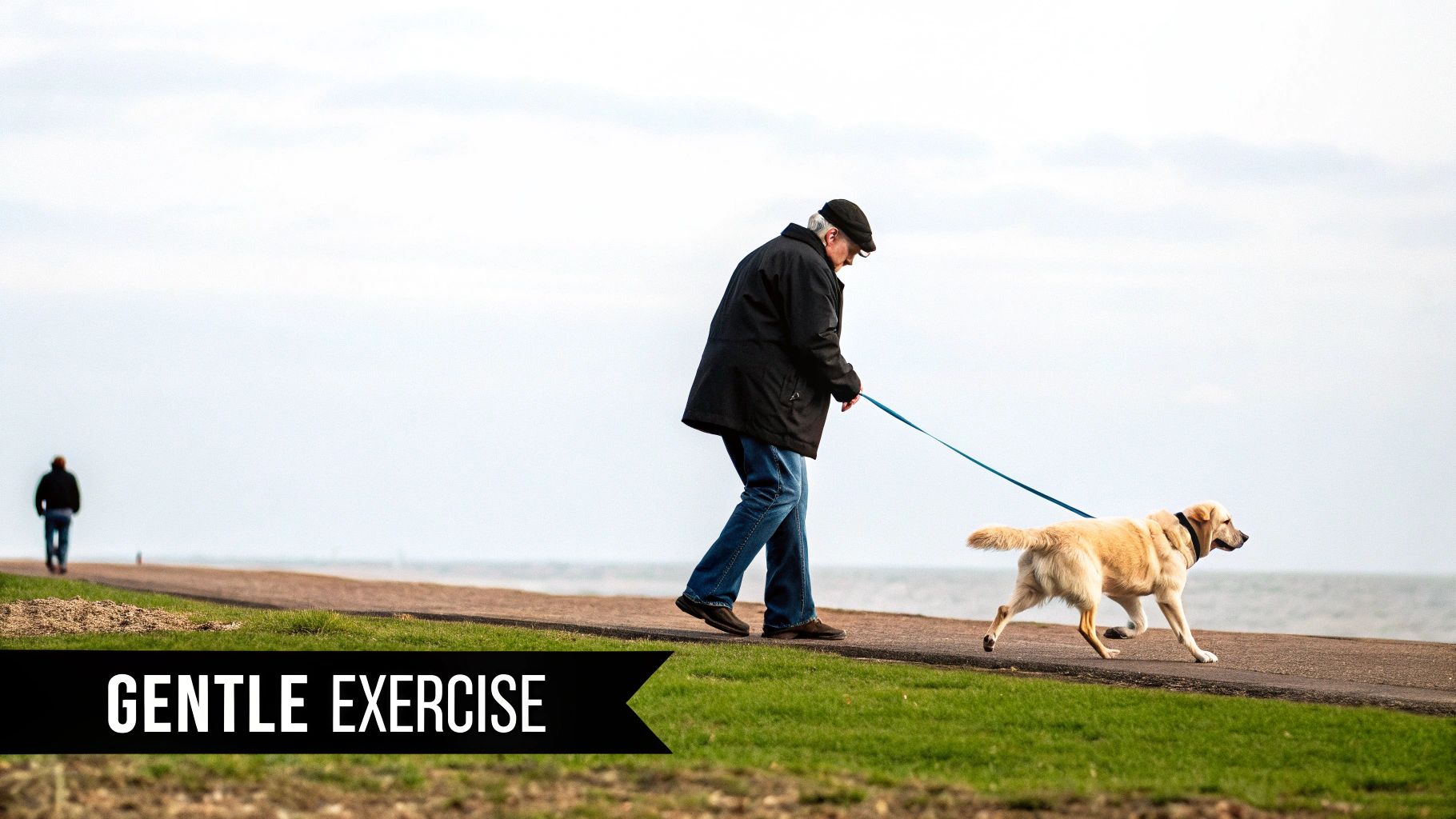
- Gentle Leash Walks: Short, frequent strolls on soft surfaces like grass or a dirt trail are perfect. This keeps your dog moving without putting a ton of stress on their joints. The key is to watch your dog closely—end the walk before they start looking tired or sore.
- Swimming: This is often called the perfect exercise for arthritic dogs, and for good reason. It’s a non-weight-bearing activity, meaning the water supports their body completely. They can move their joints through a full range of motion and build muscle with literally zero impact.
Remember, consistency beats intensity every time. Several short, gentle walks throughout the day will do far more good than one long, strenuous hike on the weekend.
Complementary Therapies for Added Relief
Beyond daily movement, several professional therapies can offer significant pain relief and improve your dog's mobility. Think of these as a support crew for your veterinarian's treatment plan. They tackle pain and stiffness from different angles, creating a more holistic approach to your dog’s comfort.
These therapies work best as part of a team effort. When combined with proper medical care and a supportive home environment, they can help manage pain, improve function, and seriously boost your dog's overall quality of life.
Some of the most effective options include:
- Canine Physical Therapy: A certified canine rehab therapist can design a custom program for your dog. This might include treatments like therapeutic ultrasound, electrical stimulation, or sessions on an underwater treadmill to build strength in a safe, controlled way.
- Acupuncture: This ancient practice isn't just for people! It involves placing tiny needles at specific points on the body to stimulate nerves, boost blood flow, and trigger the release of the body's own natural pain-relieving chemicals. Many dogs find it incredibly relaxing and show noticeable improvement.
- Canine Massage: When a dog has a sore joint, they often compensate by overusing other muscles, which then get tight and sore themselves. Therapeutic massage helps relieve that built-up muscle tension, improves circulation, and can reduce stiffness, providing some wonderful, immediate comfort.
Finding the right mix of gentle exercise and supportive therapies is a proactive strategy. It's how we help manage arthritis in dogs by keeping them as strong, flexible, and pain-free as possible for years to come. Of course, maintaining a healthy weight is another huge piece of the puzzle, as we cover in our guide on why weight management matters for your dog.
We Answer Your Questions About Arthritis in Dogs
When your dog gets an arthritis diagnosis, a million questions probably pop into your head. It’s completely normal. We’ve put together answers to some of the most common worries we hear from pet parents, giving you clear, simple information to help you feel ready to support your best friend.
Can I Prevent My Dog from Getting Arthritis?
While you can't totally prevent arthritis—especially if genetics or an old injury are in the picture—you can absolutely take steps to push back its arrival and lessen its impact. The single best thing you can do is keep your dog at a healthy, lean weight for their entire life.
Every extra pound is like a constant, unnecessary backpack of stress on their joints. Keeping them trim is the kindest thing you can do for their long-term comfort.
Beyond weight, a proactive plan includes:
- Consistent, Low-Impact Exercise: Think regular walks and swimming. These activities build up the muscles around the joints, which act like natural shock absorbers.
- A High-Quality Diet: Food rich in anti-inflammatory ingredients, like omega-3 fatty acids, helps fight joint inflammation from the inside out.
- Early Supplementation: If your dog's breed is known for joint problems, chat with your vet about starting joint-supporting supplements at a younger age. It’s a great preventative move.
Are Certain Dog Breeds More Prone to Arthritis?
Yes, unfortunately, genetics can play a big part. Some breeds are just more likely to have developmental issues like hip or elbow dysplasia, which are major stepping stones to arthritis down the road.
Large and giant breeds often get the spotlight here because of their rapid growth and the sheer weight their frames have to support. Breeds you’ll want to watch closely include:
- German Shepherds
- Labrador Retrievers
- Golden Retrievers
- Great Danes
- Rottweilers
But don't get a false sense of security if you have a smaller dog. Arthritis doesn't discriminate based on size. Little guys can develop joint problems from things like luxating patellas (kneecaps that pop out of place) or from previous injuries. The bottom line is that every owner needs to stay vigilant and know the signs of arthritis in dogs, no matter the breed.
Is It Old Age or Is It Arthritis Pain?
This is probably one of the most critical questions a pet parent can ask. It’s easy to see a dog slowing down and chalk it up to getting older, but pain is not a normal part of aging. Confusing arthritis pain with "just being old" is a huge reason so many dogs suffer quietly.
Here’s the key difference: Normal aging is a gradual, overall decrease in energy. Arthritis often shows up with "good days and bad days" and comes with specific physical struggles that are clear signs of discomfort.
Be on the lookout for these red flags that point to arthritis pain, not just age:
- Stiffness that’s much worse after a nap, especially in the morning.
- Hesitation or outright refusal to use stairs, hop on the couch, or get in the car.
- A noticeable, persistent limp, no matter how minor it seems.
If you’re seeing these behaviors, it’s not just your dog getting on in years. It’s a signal that they’re hurting and it’s time to see the vet for a real diagnosis and a pain relief plan.
Should I Give My Dog Human Pain Relievers?
No, absolutely not. This is incredibly dangerous. The common pain relievers in our medicine cabinets, like ibuprofen (Advil) and naproxen (Aleve), are highly toxic for dogs.
Even one dose can cause devastating—and sometimes fatal—damage to their stomach, intestines, and kidneys. You should never give your dog any medication, human or otherwise, without the green light from your veterinarian.
Your vet has access to pain medications, like specific NSAIDs, that are formulated and dosed just for dogs, making them both safe and effective. When it comes to managing pain, always, always trust your vet’s guidance.
At ChowPow, we know that managing a long-term condition like arthritis means focusing on all the little details, especially what’s in the food bowl. A nutrient-rich diet is vital for muscle health, but a dog in pain often loses their appetite. Sprinkling our tasty beef heart topper over their food can be a simple fix, enticing them to eat while adding a powerful nutritional boost. It’s an easy way to give your loyal friend the support they need to feel their best. Learn more about how ChowPow can help.
-
Product on sale
 Dog Food Topper - Beef HeartOriginal price was: $14.99.$10.95Current price is: $10.95. - or subscribe and save up to 20%