
Best Dog Breath Treats: A 2026 Buyer’s Guide
Your dog hops up for a close hello, licks your hand, and then you catch that smell. Not just “dog breath,” but the kind that makes you pull back for a second and wonder if something's off.
That moment is why so many owners start searching for the best dog breath treats. They want something easy, safe, and effective. Usually they also want something their dog will readily eat.
The tricky part is that bad breath isn't one problem. Sometimes it's simple plaque buildup. Sometimes it's diet-related. Sometimes it's your first clue that your dog needs a veterinary exam, not a minty chew. That's especially true for older dogs, tiny breeds, and picky dogs who can't just be handed any hard dental stick from the pet store.
This guide takes a cause-first approach. You'll see which types of breath treats can help, which ingredients deserve a closer look, and how to choose an option that fits your dog's age, mouth, and appetite. If your dog's breath has changed recently, it may also help to read ChowPow's guide on bad breath in dogs alongside the ideas below.
That Loving Lick Suddenly Smells Awful
Most owners don't notice bad breath during a formal “health check.” They notice it in ordinary moments. Morning cuddles. A car ride. A happy face pressed into your lap after dinner.
At first, it's easy to shrug off. Dogs eat strange things, lick stranger things, and rarely smell like peppermint. But persistent bad breath usually has a reason. That's what makes this topic worth slowing down for.
A young, eager chewer may develop smell from food stuck around the teeth. A senior dog may have more fragile teeth and gum irritation. A picky dog may only accept soft treats, which means many common dental chews aren't a good fit. The product that helps one dog can be a poor choice for another.
Here's the big shift that makes shopping easier. Don't ask, “Which treat masks odor best?” Ask, “What is causing the odor?”
| Dog situation | Most likely need | Better first step |
|---|---|---|
| Mild breath odor, otherwise acting normal | Daily oral maintenance | A properly sized dental chew or softer oral-care option |
| Senior dog with tender mouth | Gentle support | Soft texture, supervised chewing, vet input if chewing seems painful |
| Picky dog rejects minty chews | Better acceptance | Simpler ingredients, milder flavor, whole-food options |
| Sudden strong odor with other symptoms | Health evaluation | Veterinary exam before trying breath treats |
| Small dog with delicate teeth | Safety first | Avoid very hard chews, choose size-appropriate options |
Many “best of” lists blur together freshening, chewing, and true dental care. That's where owners get stuck. A breath biscuit may smell pleasant, but that doesn't tell you whether it helps remove buildup. A hard chew may look effective, but if it's too tough for your dog, it may not be the right answer either.
Good breath products support oral care. They don't replace common sense, daily habits, or a vet visit when something seems wrong.
That cause-first mindset matters most for dogs who are easy to overlook in generic roundups. Seniors. Small breeds. Sensitive stomachs. Dogs recovering from illness. Dogs who turn up their nose at anything strongly flavored.
Those are the dogs that need a more thoughtful answer than “buy the top-ranked chew.”
Is It Just Bad Breath or a Health Warning
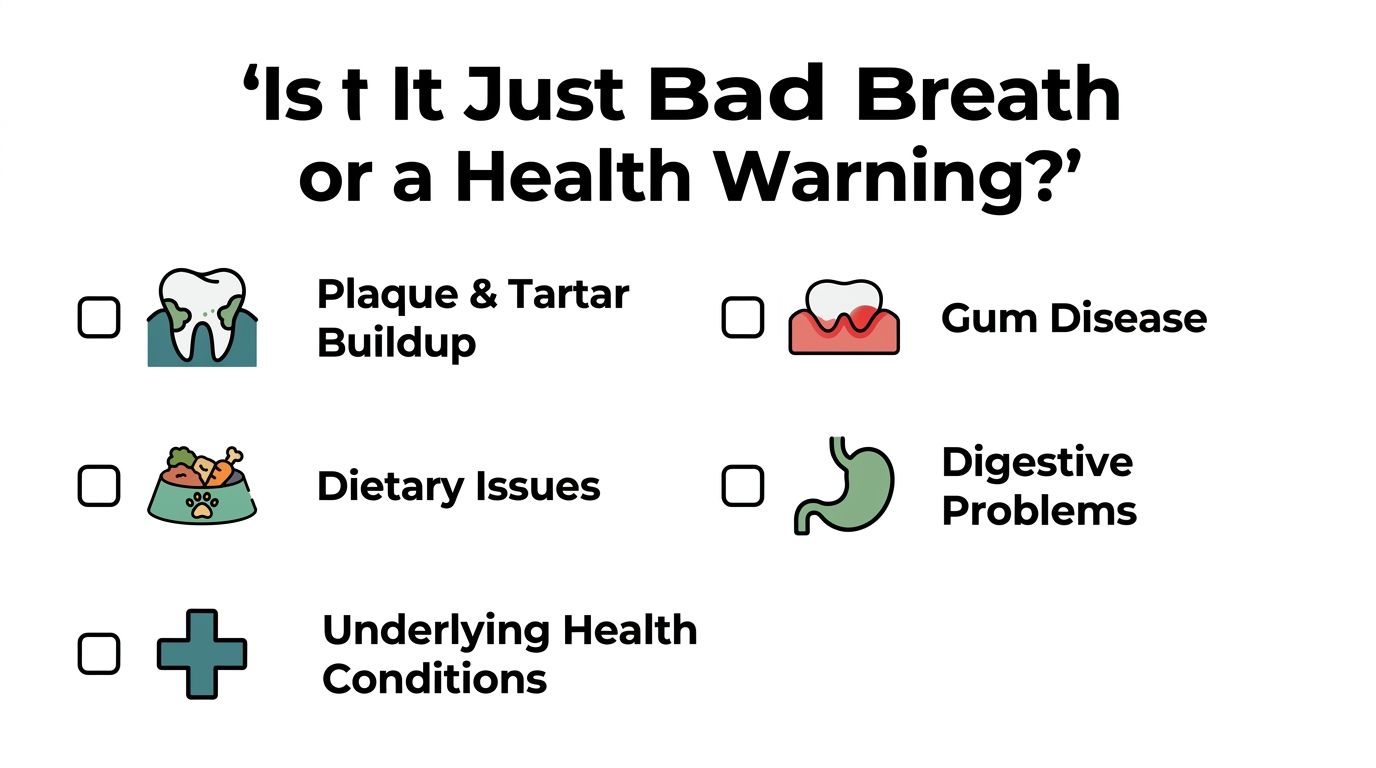
Bad breath often starts in the mouth, but it doesn't always stay there as a simple mouth problem. That's why a treat should be viewed as an adjunct, not a cure-all. The AKC notes that bad breath is often a symptom rather than a standalone issue, and also warns that chews that are too hard may increase risk, especially for senior dogs and small breeds with more fragile teeth. Their safety guidance is worth reading in full at AKC's dog dental treat safety guide.
Signs that point to the mouth
The most common everyday cause is buildup on the teeth and around the gums. Food debris, plaque, and tartar create a surface where odor-causing bacteria thrive. If your dog still eats normally, acts like themselves, and mainly has a chronic “dirty mouth” smell, oral hygiene is a reasonable place to start.
Some dogs also get smell after eating things they shouldn't. That includes scavenging outdoors or grazing on odd items in the yard. If your dog is a dedicated grass-eater, the behavior itself isn't always alarming, but context matters. ChowPow's article on why dogs eat grass can help you think through when it's harmless and when it deserves more attention.
Signs that need a vet visit
Treats are not the right first response if the breath change is sudden, severe, or paired with other changes.
Watch closely if you notice:
- Eating changes such as chewing on one side, dropping food, or refusing harder foods
- Mouth discomfort including pawing at the face, visible gum irritation, or reluctance to let you look
- Body-wide changes like low energy, vomiting, increased thirst, or unexplained weight change
- A very unusual odor that smells sharply different from your dog's normal breath
Those clues can point beyond simple plaque.
Practical rule: If your dog's breath smells worse than usual and your dog also seems uncomfortable, don't test random treats first. Book the exam.
When a treat may be enough
A breath treat is more likely to help when your dog seems healthy overall, the odor is mild to moderate, and you can reasonably connect it to plaque, routine diet, or inconsistent oral care.
That doesn't mean any treat will do. Size, texture, supervision, and purpose matter. A chew that's meant for oral care is different from a crunchy snack with a breath-freshening label.
For many owners, the confusion starts because they're trying to solve two different problems at once. They want fresher breath today, but they also want safer long-term oral support. Keep those goals separate in your head, and your decisions get clearer.
Decoding Ingredients on Dog Breath Treat Labels
The front of the package usually promises fresh breath. The back of the package tells you whether the product has a real job to do.
Many owners flip the bag over and get lost in a long ingredient panel. That's normal. Breath treats sit in a crowded category where packaging often sounds smarter than the formula.
Ingredients that make practical sense
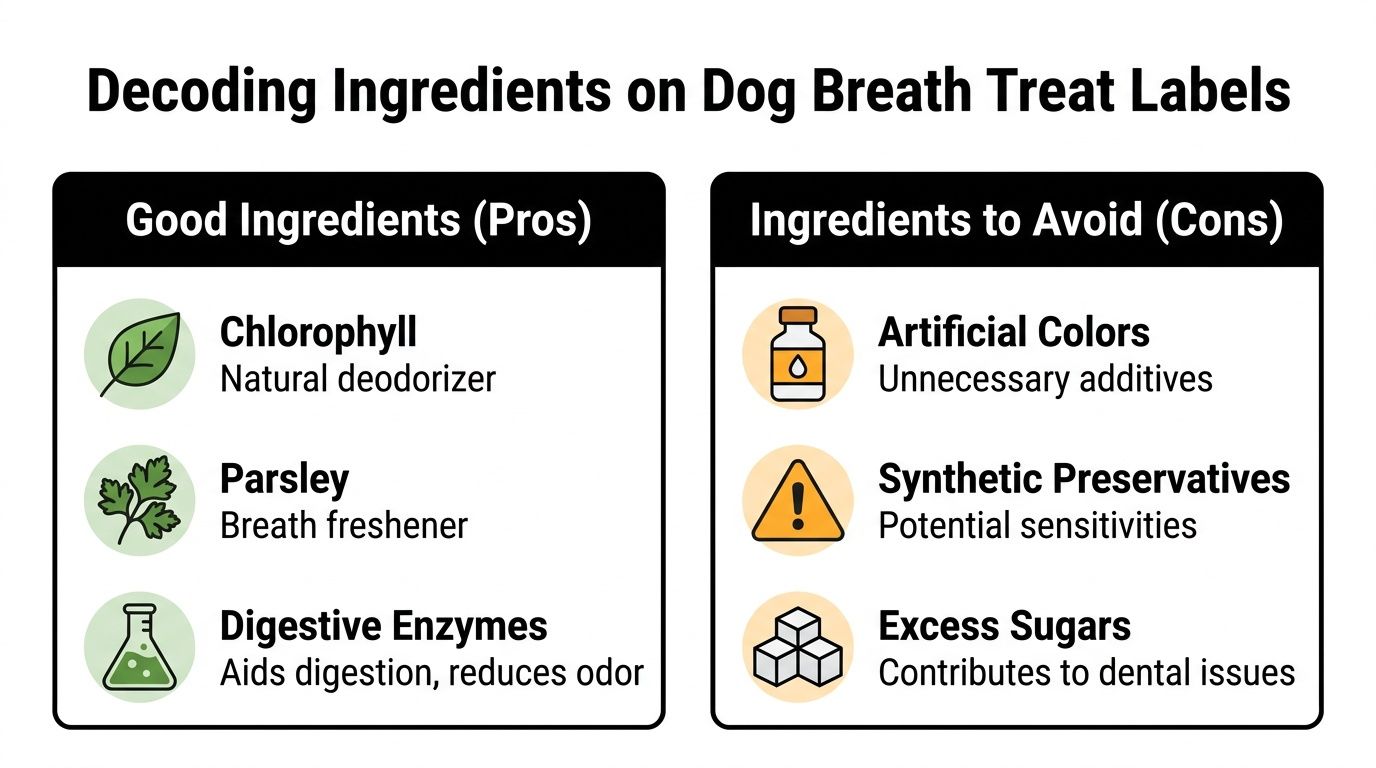
The recent direction of the category has moved toward more plant-based and functional dental chews, including formulas with ingredients like sweet potato, carrots, pumpkin, sea kelp, and alfalfa, as noted in PetMD's roundup of best dental chews for dogs. That matters because ingredient choice affects more than marketing. It affects tolerance, texture, and whether a picky or older dog will accept daily use.
A few label features are usually helpful:
- Simple whole-food ingredients can be easier to understand and often work well for dogs with sensitive appetites
- Functional plant ingredients such as sweet potato or carrots may appeal to owners looking for gentler daily options
- Shorter ingredient lists can make it easier to spot likely triggers if your dog has food sensitivities
- Texture matched to the dog is as important as ingredients. A lovely formula won't help if the chew is too hard to use safely
Ingredients that deserve caution
A long label isn't automatically bad, but it should make you more curious. Ask yourself whether the product is built for oral support or just flavor and shelf life.
Be careful with:
- Artificial colors that add visual appeal for humans, not value for dogs
- Heavily flavored mint profiles if your dog already rejects strong-smelling treats
- Overly hard formats that may be unsuitable for small breeds, seniors, or dogs with tender mouths
- Crowded formulas when your dog already has known diet restrictions
Here's a useful way to think about labels. The more complicated your dog's needs are, the simpler the ingredient panel usually ought to be.
This short video gives a practical visual overview of what to look for when shopping.
What picky and senior dogs often need
Picky dogs often refuse breath treats for reasons owners misread. It's not always the flavor. Sometimes the piece is too large, too dry, too hard, or too strongly scented.
Senior dogs create a second layer of complexity. They may want flavor but need softness. They may enjoy chewing but tire quickly. They may also do better with oral support that doesn't rely on forceful chewing.
If your dog has to “power through” a chew, it's probably not the right chew.
That's where whole-food leaning formulas can shine. Not because every natural ingredient is automatically better, but because simpler textures and milder flavors often improve day-to-day acceptance.
Comparing The Top Types of Dog Breath Treats
The phrase best dog breath treats covers products that work in very different ways. Some scrape the teeth. Some mainly freshen odor. Some help owners who can't get a chew into their dog at all.
The key is matching the product type to the dog in front of you.

| Treat type | What it mainly does | Texture | Best fit | Main caution |
|---|---|---|---|---|
| Dental chews | Mechanical cleaning while chewing | Chewy to firm | Dogs who enjoy chewing and can handle the texture | Must be size-appropriate and supervised |
| Softer functional chews | Gentle daily support with simpler chewing effort | Soft to medium | Seniors, picky dogs, dogs with sensitive mouths | May provide less scraping action |
| Water additives or sprays | Freshening without much chewing | Liquid or mist | Dogs who refuse chews | Doesn't replace physical tooth cleaning |
| Whole-food crunchy options like carrots or green beans | Crunch and simple ingredients | Crunchy | Owners who want uncomplicated snack-style support | Not a substitute for full oral care |
Dental chews with real oral purpose
This is the category commonly referred to when searching for a breath treat. When the chew is designed for oral benefit, chewing can reduce buildup rather than just perfume the mouth.
That distinction matters because the strongest factual support in this space is for daily dental chews. A 2020 peer-reviewed dog study found that after 27 days, dogs given daily chews had 12.3% to 13.3% lower plaque coverage and 14.1% to 20.7% lower calculus coverage than control dogs. The same study also found lower volatile sulfur compounds, which are a major cause of bad breath. You can review the study details in the 2020 dental chew research article.
That's useful because it ties fresher breath to a reduction in the compounds causing odor, not just masking.
Brand examples and daily-use reality
Mainstream commercial products also give owners a practical benchmark. For example, Milk-Bone Brushing Chews are marketed as being as effective as brushing a dog's teeth twice a week when fed daily, and the large chew is recommended only for dogs 50 lb or more, reinforcing how much size and geometry matter in both effectiveness and safety, according to the product page for Milk-Bone Brushing Chews Fresh Breath Large.
That last point gets overlooked. A chew isn't just an ingredient list. It's also a shape, thickness, and resistance level.
Better matches for harder-to-fit dogs
Not every dog belongs in the classic dental-stick bucket.
A senior Chihuahua with delicate teeth may do better with a softer functional chew and regular vet oversight. A Labrador who loves to chew may do well with a properly sized dental chew. A dog who hates chewing entirely may need a different oral-care routine plus another strategy for overall wellness and appetite support.
If you want a broader look at the chew category itself, ChowPow's article on whether dental chews work for dogs is a useful companion read.
A simple way to sort your options
Use this quick filter before you buy:
- Choose dental chews when your dog enjoys chewing, has healthy enough teeth for the format, and can be supervised.
- Choose gentler chews when your dog is older, pickier, or reluctant to work through firm textures.
- Choose non-chew breath helpers when compliance is your biggest problem, not enthusiasm.
- Choose whole-food crunch when you want ingredient simplicity and snack-like acceptance, while remembering it's a support tool rather than a full dental plan.
Improving Breath from the Inside Out with Natural Nutrition
A dog's mouth matters, but so does everything behind it. Breath can worsen when a dog's diet isn't sitting well, when appetite is off, or when meals are so uninspiring that owners rely on extra treats to keep the dog interested in food.
That's why some of the most helpful breath support starts outside the treat aisle.
Food quality changes the daily baseline
When a dog eats well, digests well, and stays interested in meals, daily care gets easier. Owners can be more consistent with oral routines because they aren't constantly negotiating over food, snacks, and supplements.
Whole-food additions can help here. Carrots and green beans are still relevant because they're simple, recognizable, and often easier for owners to evaluate than heavily processed products. If you're reviewing your dog's overall diet, Get Pet Vet's dog feeding guide is a practical resource for thinking through balanced feeding in plain language.
The cleanest breath plan is usually a combination plan. Better meals, safer oral care, and more consistency.
Why meal enhancers can complement oral care
For picky eaters, senior dogs, and dogs recovering from illness, the challenge often isn't only breath. It's getting enough useful nutrition into the bowl without replacing the diet they already tolerate.
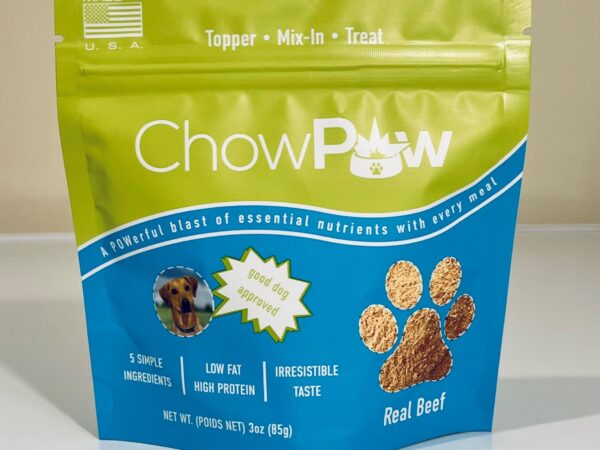
That's where a meal enhancer can make sense. ChowPow is a dog food topper made to be added to existing food, not used as a substitute for kibble or a full meal on its own. Its role is straightforward: it adds a nutrient-dense boost to the current bowl and can be sprinkled over food, mixed with water, or used when a dog needs more encouragement to eat.
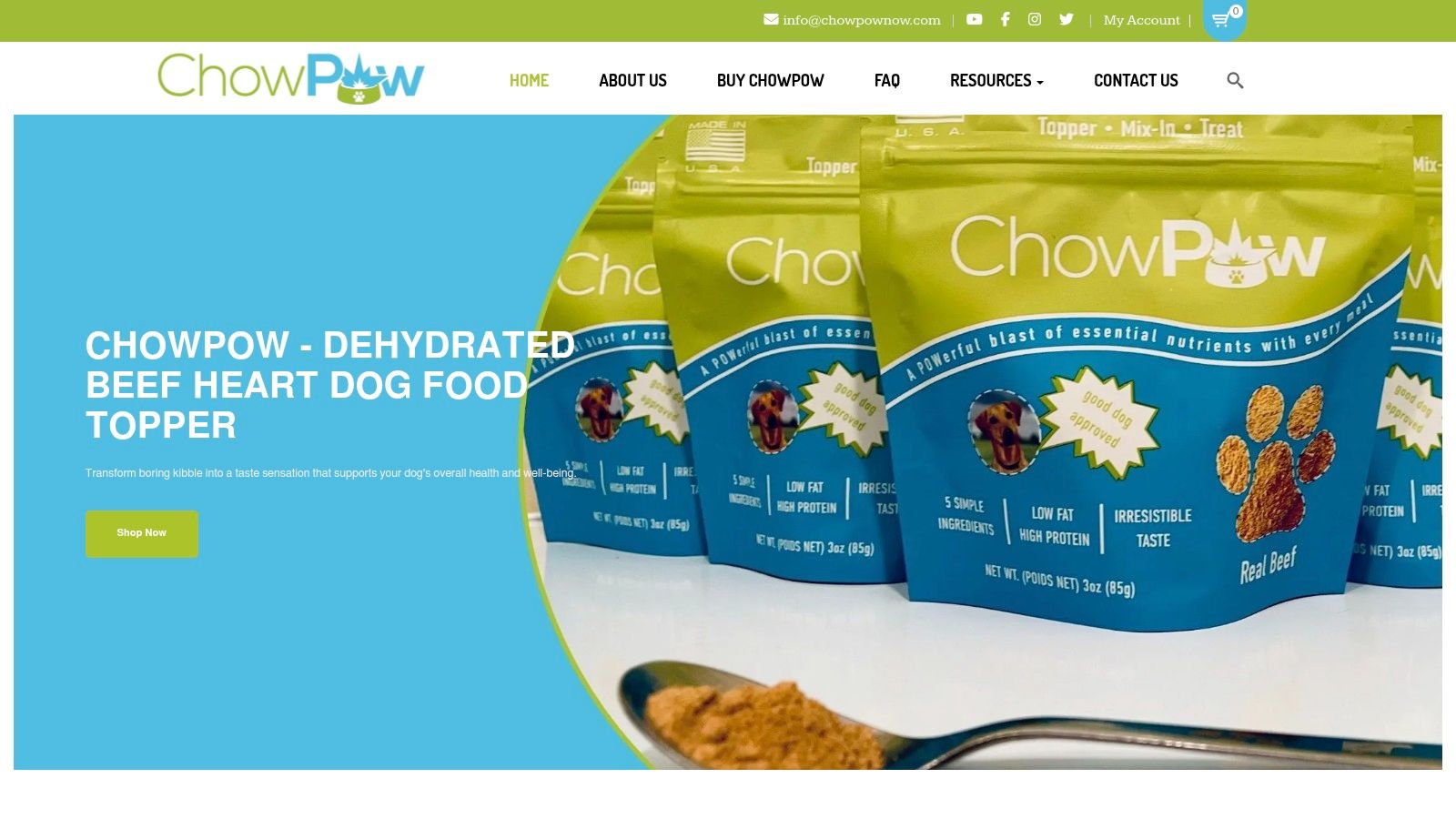
That won't scrub plaque off teeth, and it shouldn't be sold as a dental chew. But it can support the larger goal many owners are chasing: a dog who eats better, tolerates meals well, and has fewer daily stress points around feeding.
Natural support works best when expectations are clear
Whole-food leaning support is often strongest when you stay honest about what each tool can and can't do.
A chew can help with oral buildup.
A topper can improve meal acceptance and support nutrition.
A vet can identify disease.
Trying to force one product to do all three jobs is where disappointment starts.
For sensitive or older dogs, that separation is freeing. You can choose a gentle oral-care product for the mouth and a separate nutrition tool for the bowl, instead of expecting one hard “breath treat” to solve every problem.
How to Choose the Right Breath Solution for Your Dog
The right pick usually becomes obvious when you stop shopping by brand and start shopping by dog.
Start with mouth safety
First, think about size, age, and chewing style. A treat that's too hard, too large, or too small can create the wrong kind of challenge. Small dogs and seniors often need gentler textures. Big, enthusiastic chewers usually need a product that matches their body size and chewing force.
Then think about compliance
The best product is the one your dog can use safely and consistently. If your dog spits out minty sticks, a milder formula may work better. If your dog gulps everything, supervised chew time matters more than clever ingredients. If your dog has diet restrictions, ingredient simplicity moves up the priority list.
Use this decision filter
- If your dog is young and healthy: A properly sized dental chew may be a practical daily option.
- If your dog is older or tooth-sensitive: Look for softer formats and ask your vet before offering anything firm.
- If your dog is picky: Focus on acceptance first. Flavor, aroma, and texture all matter.
- If your dog's breath changed suddenly: Pause the shopping and book the exam.
- If you already feed a stable diet: Add support tools that complement it rather than replacing foods that already work.
The best dog breath treats aren't universally “best.” They're the safest, most realistic fit for your dog's mouth, habits, and tolerance.
Frequently Asked Questions About Dog Dental Health
How often should I give my dog a dental treat
Follow the product directions. Some dental chews are intended for daily use, and consistency matters more than occasional use. If the treat is calorie-dense, adjust the rest of the day's intake so you're not accidentally overfeeding.
Are breath-freshening treats safe for puppies
Some are, some aren't. Puppies need age-appropriate products and softer options that won't stress developing teeth. If a chew seems very hard or large for your puppy's mouth, skip it and ask your vet what fits your pup's stage and size.
Can I just brush my dog's teeth instead
Brushing is still the gold standard for home oral care. Breath treats and chews can help, but they work best as part of a broader routine. If your dog won't tolerate brushing, start with small wins. Better chew choices, gentler daily habits, and smarter feeding support can still move things in the right direction.
If you're trying to support fresher breath while also helping a picky, senior, or recovering dog eat better, ChowPow can be added to your dog's current food as a meal enhancer. It isn't a replacement for kibble or a dental chew. It's a simple topper option for owners who want to boost the bowl while keeping oral care and nutrition in their proper lanes.
-
Product on sale
 Dog Food Topper - Beef HeartOriginal price was: $14.99.$10.95Current price is: $10.95. - or subscribe and save up to 20%