Black Poop Dog: Emergency Guide & What It Means
You scoop the yard, glance down, and stop. The stool isn't just dark brown. It looks black. Maybe shiny. Maybe sticky. If you're searching “black poop dog” right now, you're probably trying to answer one urgent question: Is this an emergency, or did my dog just eat something that changed the color?
That worry is reasonable. Paying attention to your dog's stool is one of the most useful at-home health checks you can do. Black stool can be a serious warning sign, but not every dark stool means internal bleeding. The details matter. Color matters, yes, but so do texture, smell, duration, appetite, and how your dog is acting overall.
I’m going to walk you through the difference in plain language, the same way I would explain it to a worried owner in a clinic exam room. The goal isn't to make you panic. It's to help you observe the right things, know when to call your vet, and feel more confident about what you're seeing.
That Alarming Discovery Why You Are Right to Be Concerned
You bend down to pick up after your dog, and something feels off right away. The stool is not just dark brown. It looks black, glossy, or sticky, and your mind jumps to the worst-case scenario.
Your concern is the correct response. Panic does not help, but careful observation does.
Black stool can mean two very different things. One is simple stool darkening after a diet change, such as iron-rich foods or organ meat toppers like beef heart. The other is melena, which means digested blood. From a few feet away, those can look similar. Up close, they often do not.

What owners often notice first
Owners usually notice more than color once they slow down and look. Stool linked to melena often seems:
- Black all the way through, not just dark on the surface
- Sticky or smeary when picked up
- Shiny, like tar or wet paint
- Stronger-smelling than usual
- Paired with changes in the dog, such as tiredness, poor appetite, or vomiting
Diet-related darkening tends to read differently. The stool may be very dark brown or nearly black, but it still looks like stool. It keeps its usual shape. It is easier to pick up. The dog is acting normal, eating well, and did just start a rich topper, dark treat, iron supplement, or medication.
A simple home check can help. Ask yourself, "Did the color change right after a known food or supplement change, and does the stool still look formed rather than tarry?" That does not replace a veterinarian, but it gives you a more useful starting point than color alone.
One more practical note. If the stool is sticky enough to leave a dark smear on carpet or fabric, treat it like a possible blood-containing mess and use a guide for professional blood stain removal while you focus on your dog's health.
The big takeaway is this: a single dark stool after a clear diet change can be watched closely, but black, tar-like stool or repeated black stools deserve prompt attention. Owners do not need to guess perfectly. They need to notice the pattern, check how the stool looks and feels, and respond early.
Understanding Melena The Science Behind Black Stool
Melena means digested blood in the stool. That definition matters because it explains why this type of stool gets so much attention from veterinarians.
When bleeding happens in the stomach or proximal small intestine, blood doesn't stay bright red. As it moves through the digestive tract, hemoglobin is exposed to gastric acid and intestinal enzymes. That process breaks it down into dark pigments, including hematin, which gives the stool its black color and often its sticky, foul-smelling quality, as explained in this overview of black dog poop.
Why it turns black instead of red
Think about how some materials darken after a chemical change. Blood in the digestive tract goes through that kind of transformation. It starts red, but after acid and enzymes work on it, the end result can look black, tacky, and almost tarry.
That is different from stool that is merely dark because of what your dog ate.
A practical way to approach this:
- Dark stool can happen from diet, supplements, or medication.
- Melena has a more specific look and feel. It tends to be black, sticky, and unusually pungent.
Why location matters
Bright red blood usually points owners toward the lower digestive tract or the area near the rectum. Black stool points higher up, where the blood had time to be digested before it left the body.
That distinction is why veterinarians don't treat melena as simple diarrhea or cosmetic discoloration. It can be associated with ulcers, inflammation, tumors, foreign body injury, toxin-related clotting problems, or medication-related irritation in the upper GI tract.
Blood changes after exposure to stomach acid. That chemical change is the reason melena looks different from stool that is only darkened by food.
If the mess has also left a spot on carpet or fabric while you're dealing with a sick pet, guidance on professional blood stain removal can be useful for cleanup while you focus on your dog.
What melena is not
Melena is not "poop that looks darker than normal." Many owners get tripped up here. If the stool is deep brown, formed, and otherwise normal, that may not be melena. If it's black, sticky, leaves a smeared residue, and smells especially bad, that deserves more urgency.
This is also why stool photos can help. In practice, owners often struggle to describe shade and texture accurately. A clear photo in good light can help your veterinary team decide how concerned to be.
Dietary Darkening Versus Medical Melena
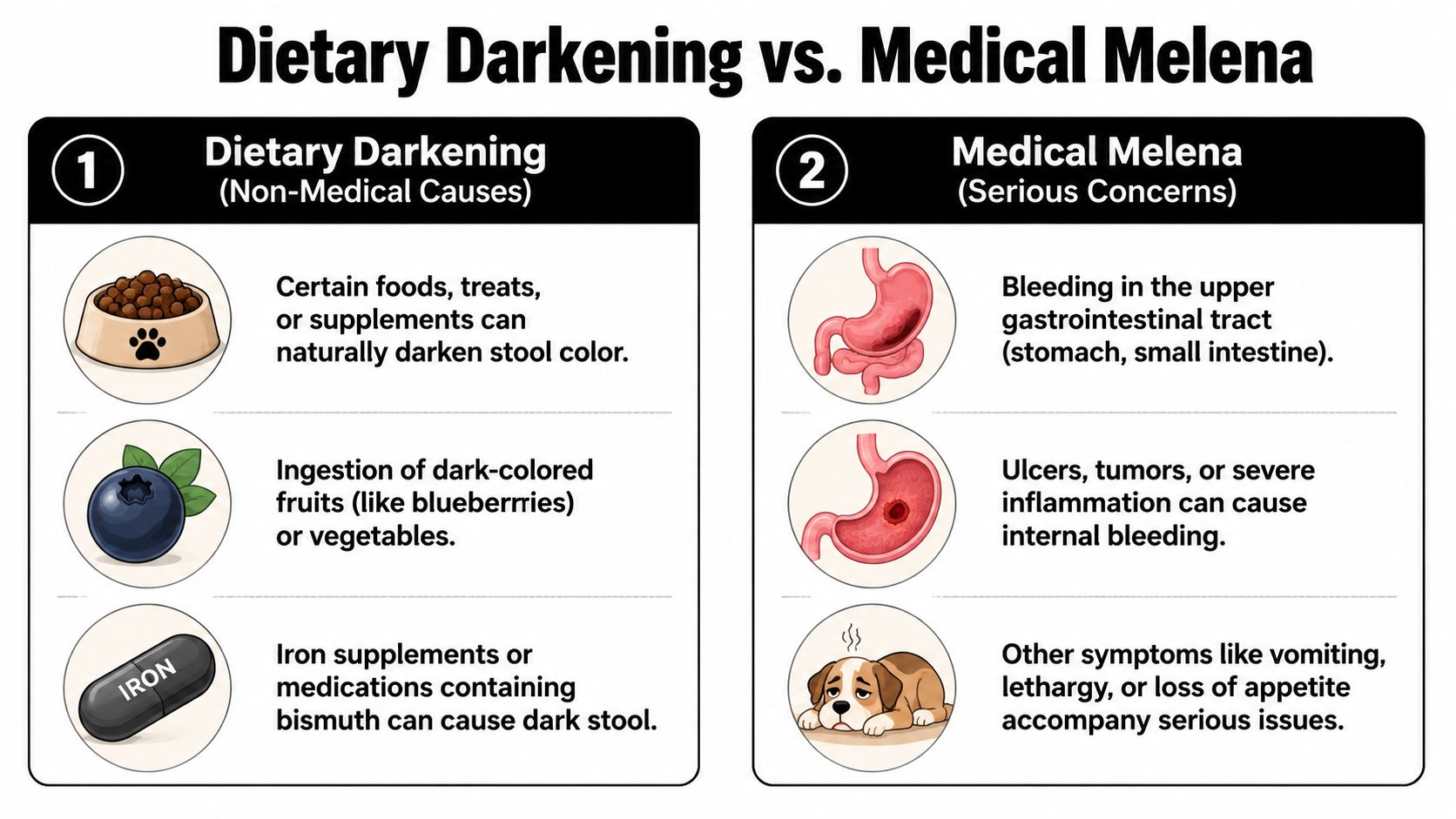
Many owners get stuck here. Your dog ate something rich, dark, or iron-heavy, and the stool changed color. That can happen. The challenge is that many online guides say "food can darken stool" but stop there. As noted in this discussion of black stool in dogs, there is a real gap in practical guidance for telling harmless dietary darkening apart from genuine melena.
That gap matters for dogs eating nutrient-dense foods, especially organ-meat based toppers.
Common non-medical reasons stool gets darker
Dark stool does not always mean bleeding. Things that may darken stool include:
- Organ meats and iron-rich foods that naturally produce a deeper stool color
- Iron supplements
- Bismuth-containing products that can darken stool
- Activated charcoal
- Dark treats or scavenged items
If you're wondering about over-the-counter stomach remedies, this guide on whether dogs can have Pepto-Bismol is worth reading before giving anything at home.
What to check at home
Don't focus on color alone. Use a simple nose-eyes-texture check.
Look at the shape
A stool that holds its shape and looks like a formed bowel movement, even if quite dark, leans more toward dietary darkening. A stool that looks smeared, glossy, or tar-like raises more concern.
Notice the surface
Melena often looks sticky or tacky, not just dark. If it leaves a thick residue when you pick it up, take that seriously.
Smell matters
Owners often notice the smell before they know how to describe the texture. Stool from melena is often described as more foul-smelling than usual.
Check the dog, not just the poop
A dog with harmless stool darkening usually still acts like themselves. A dog with a medical problem may also show changes in energy, appetite, comfort, or vomiting.
Dietary Darkening vs. Medical Melena A Quick Check Guide
| Symptom | Likely Dietary Darkening (Non-Urgent) | Possible Medical Melena (Contact Vet) |
|---|---|---|
| Color | Very dark brown or darkened stool after known food or medication change | Jet black or black with a tar-like look |
| Texture | Formed, scoopable, normal consistency for your dog | Sticky, shiny, smeary, tacky |
| Odor | Similar to your dog's usual stool | Noticeably stronger or unusually foul |
| Timing | Appears after a clear diet or supplement trigger | Appears without a clear reason, or keeps recurring |
| Dog's behavior | Bright, hungry, active, comfortable | Lethargy, weakness, vomiting, poor appetite, discomfort |
| What to do | Monitor closely and note what was eaten | Contact your veterinarian promptly |
Practical rule: If you can explain the color change but can't explain a change in texture, smell, or behavior, don't assume it's only the food.
The hardest part
There is no clearly established at-home timeline in the available consumer guidance for how long diet-induced blackening should last. That's part of why this issue causes so much confusion for owners using nutrient-dense toppers or organ-rich foods. If the stool keeps looking black, sticky, or abnormal, or if your dog seems unwell, call your vet rather than trying to "wait it out" based on guesses.
When Black Stool Is a Veterinary Emergency
You glance at the yard, see a stool that looks almost black, and your mind jumps straight to the worst-case scenario. That reaction makes sense. Some dark stools come from food choices, especially rich organ meats or iron-containing products, but true black, tarry stool can mean digested blood higher up in the digestive tract and needs prompt medical attention.
A simple way to frame it is this. Dark from diet often stays in the "very dark brown" range and still looks like your dog's usual poop. Melena usually looks more like tar than stool. It tends to be black, glossy, sticky, and hard to scoop cleanly. If the color worried you in the last section, texture is the next clue to check.

Call a vet right away if you see black stool with any of these signs
These signs suggest the body may be losing blood, reacting to a toxin, or dealing with a stomach or intestinal injury:
- Weakness or collapse
- Pale gums instead of normal pink gums
- Vomiting, especially repeated vomiting or vomit that looks dark
- Refusing food or acting nauseated around meals
- A painful belly, hunched posture, or trouble settling down
- Marked low energy or unusual sleepiness
- Possible toxin, medication, or foreign object exposure, including ibuprofen, naproxen, rodent poison, bones, or something swallowed from the trash
Household products matter here too. If your dog may have licked or eaten something unexpected, this article on toxic ingredients in dog cough drops is a useful reminder that ordinary human items can trigger serious stomach irritation or poisoning.
Cases that should be treated as urgent even if your dog seems fairly normal
Some dogs with internal bleeding do not look dramatically ill at first. Call your veterinarian the same day, or an emergency clinic after hours, if:
- The stool is jet black and tar-like, not just dark brown
- You cannot link the change to a food, topper, supplement, or medication
- The black stool happens more than once
- Your dog is on a medicine known to irritate the stomach, such as an NSAID
- Your dog has a history of ulcers, clotting problems, liver disease, or swallowing things they should not
This is the part many owners get stuck on. If you recently added a nutrient-dense topper like beef heart and your dog is acting completely normal, one dark stool may be a monitor-and-call situation rather than a midnight emergency. If the stool is black and sticky, keeps happening, or comes with any sign that your dog feels unwell, stop comparing and start calling.
Don't wait for "one more poop" if the dog looks sick
Owners often hope the next bowel movement will answer the question. In a dog who is weak, pale, vomiting, painful, or suddenly quiet, waiting can cost time your veterinary team may need.
When you call, have a few details ready:
- A photo of the stool in good light
- A fresh sample, if you can collect one safely
- A short list of recent foods, treats, toppers, supplements, and medications
- The time you first noticed the change
- Any possible access to trash, toxins, table scraps, or human medications
This short video may also help you recognize warning signs and organize your next step.
If your dog is weak, pale, vomiting, or painful, skip home experiments. Call the veterinary clinic or emergency hospital.
What to Expect at Your Vet Visit
The veterinary visit usually feels less overwhelming once you know what the team is looking for. Black stool doesn't lead to the exact same workup every time, but there are common steps.
Globally, the World Small Animal Veterinary Association classifies melena as a red flag symptom, and large European hospital databases suggest melena is involved in roughly 8 to 12% of all endoscopic GI evaluations in dogs, as summarized in this visual guide to unhealthy dog poop. That helps explain why vets take it seriously even when the dog still seems fairly normal.
The questions your vet will ask
Expect your veterinary team to ask about:
- Recent diet changes
- Supplements or medications
- Any vomiting, weakness, or appetite loss
- Possible access to toxins or foreign objects
- Whether the stool was black once or repeatedly
Clear, specific answers help more than long explanations. "Started a new topper three days ago" is useful. "Maybe he got into something in the garage" is also useful.
Common tests and why they matter
Bloodwork
A complete blood count can help look for anemia or signs of blood loss. A chemistry panel helps assess organs and overall body status.
Fecal testing
This checks for parasites, hidden blood, and other clues that help narrow the cause.
Coagulation testing
If your vet is concerned about clotting problems or toxin exposure, they may assess how well your dog's blood is clotting.
Imaging or endoscopy
X-rays, ultrasound, or endoscopy may be recommended if the team needs to look for ulcers, foreign material, masses, or inflammation in the GI tract.
Bring the packaging for any supplement, chew, or medication your dog has had recently. Ingredient lists often answer questions quickly.
What treatment might involve
Treatment depends on the cause. Some dogs need stomach-protective medication and monitoring. Others need hospitalization, fluids, imaging, or more advanced care. The important part is this: the workup isn't about overtesting. It's about finding out whether the stool change is cosmetic, medication-related, or tied to bleeding that needs treatment.
Boosting Digestive Health and Monitoring at Home
Owners often ask the same practical question after the urgent moment passes. "How do I support my dog's gut without missing something serious?" That's a smart question, especially during food changes or recovery after illness.
One reason this topic is confusing is that consumer content often doesn't explain what to expect during dietary transitions. As noted in this discussion of black stool during food changes, there is a gap in guidance around how the gut microbiome adjusts to high-quality protein and what should count as a normal transition versus a warning sign.
A steady routine helps more than constant tweaking
When dogs are switching foods, adding toppers, recovering from stomach upset, or regaining appetite, the biggest mistake I see is changing too many things at once. New topper, new treats, probiotics, broth, and medication. Then stool changes, and nobody can tell what caused what.
Keep the plan simple.
- Change one variable at a time so you can connect cause and effect
- Watch stool, appetite, and energy together, not separately
- Write down what was added and when
- Pause nonessential extras if your dog develops GI signs
If you're looking for broader support strategies, this guide on diet and probiotics for dogs offers useful background on gut health habits.
What to monitor at home
Use a short daily log for a few days whenever you introduce a new food or topper.
Stool notes
Write down color, shape, texture, and whether it's easy to pick up. "Dark but formed" means something different than "black and sticky."
Whole-dog notes
Track whether your dog is eager to eat, acting bright, drinking normally, and moving comfortably. These details often matter more than stool color by itself.
Trigger notes
List any recent changes in food, medication, scavenging, supplements, or stress.
Recovery foods and bland feeding
If your veterinarian recommends a temporary simple diet after stomach upset, follow their instructions closely and keep it boring on purpose. Mixing in multiple rich add-ons too early can muddy the picture. This practical guide to the bland diet for dogs can help you understand how and why vets use that approach.
Where owners should be careful
A nutrient-dense topper or meal enhancer can be helpful for picky eaters, seniors, or dogs recovering from illness, but it should be introduced thoughtfully. It is not a replacement for your dog's complete base diet. It should be an addition used with observation, especially in dogs with sensitive stomachs or a history of GI problems.
New food should make stool predictable over time, not increasingly alarming. If black stool becomes persistent, sticky, or paired with vomiting or low energy, stop guessing and call your vet.
Frequently Asked Questions About Dog Stool Color
Can food make my black poop dog concern turn out to be nothing serious
Yes, food can darken stool. Iron-rich foods, organ meats, certain supplements, and some medications can all make stool look darker. The key is whether the stool is just dark, or whether it also looks tarry, sticky, and unusually foul-smelling.
Is one black stool always an emergency
Not always. A single dark stool after a known diet or medication change may not mean bleeding. But if you don't have a clear explanation, or the stool repeats, or your dog seems off in any way, contact your vet.
How can I tell dark brown from true black
Check the stool in good natural light. Very dark brown may still show brown tones at the edges. Melena often looks jet black or black with a shiny, tar-like finish. Texture helps as much as color.
Can stress play a role
Stress by itself doesn't create black stool, but dogs under physical stress or dealing with other health problems can develop digestive irritation or ulcers. If your dog is stressed and now has black stool, don't assume stress is the whole story.
Should I keep a stool photo
Yes. A photo can help your vet assess color and texture faster than memory can. If possible, also note what your dog ate, any medications given, and how they acted before and after the bowel movement.
Where can I learn more about what's normal
If you want a broader overview of what stool can reveal about digestion, this guide to your dog's digestive health report card is a helpful next read.
If my dog seems fine, can I just watch and wait
Sometimes brief monitoring is reasonable when there is a clear, harmless explanation. But if the stool is black and tarry, keeps happening, or your dog develops vomiting, weakness, pale gums, poor appetite, or belly pain, don't keep waiting.
If you're trying to support a picky eater, a senior dog, or a dog recovering from illness, ChowPow can be a useful meal enhancer to boost the nutritional value and appeal of your dog's current food. It's meant to complement kibble, not replace it, and it works best when introduced thoughtfully while you keep a close eye on stool, appetite, and overall comfort.
-
Product on sale
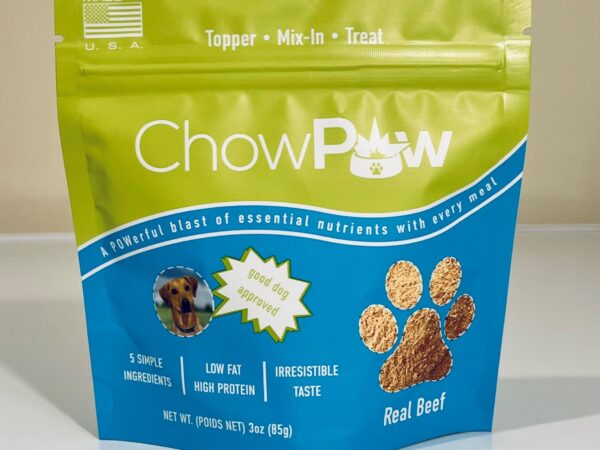 Dog Food Topper - Beef HeartOriginal price was: $14.99.$10.95Current price is: $10.95. - or subscribe and save up to 20%