
Your Guide to Understanding Your Dog’s Body Condition Score
When we want to check if our dog is at a healthy weight, the first thing most of us do is reach for the scale. But that number doesn't tell the whole story. A lanky Greyhound and a stocky Bulldog could weigh the exact same, yet one could be underweight and the other just right.
This is where the Body Condition Score (BCS) becomes your most valuable tool. Think of it less like a number on a scale and more like a tailor’s fitting—a hands-on check of your dog’s actual body fat and muscle tone. It's the single best way to get a true picture of their health.
Why Your Dog's Body Condition Score Is a Game-Changer
Learning how to check your dog's BCS gives you a superpower. You can spot potential weight issues long before they turn into serious health problems. It's a proactive way to stay on top of their well-being, because a healthy score is directly tied to better energy, healthier joints, and even a longer life.
The system sorts dogs into three basic categories using a 9-point scale: Underweight, Ideal, or Overweight. Each one has clear visual cues and a different feel to the touch.
This chart is a fantastic visual guide to help you see the difference.

As you can see, the goal is that "Ideal" middle ground. The dog has a clear waist and you can feel their ribs under a light layer of fat, but they aren't jutting out, nor are they buried under excess padding.
Breaking Down the 9-Point Scale
The most common system vets use is a 9-point scale, where a BCS of 4 or 5 is the sweet spot. This is what "ideal" looks like: you can easily feel their ribs without pressing hard, and when you look at them from the side, you’ll see their belly tucks up towards their hind legs.
Here’s a quick reference to help you get familiar with the full range of scores.
The 9-Point Body Condition Score Scale at a Glance
| BCS Score | Category | Key Visual & Touch Cues |
|---|---|---|
| 1-3 | Underweight | Ribs, spine, and hip bones are highly visible from a distance. Obvious loss of muscle. No palpable fat. |
| 4-5 | Ideal | Ribs are easily felt with a slight fat cover. Waist is visible behind the ribs from above. Abdominal tuck is visible. |
| 6-7 | Overweight | Ribs are difficult to feel under a moderate fat layer. Waist is barely visible or absent. Abdominal tuck is slight. |
| 8-9 | Obese | Ribs are very difficult or impossible to feel under a thick layer of fat. No waist. Heavy fat deposits on the spine and tail base. |
This table makes it easy to see where your dog might fall and what to look for during your at-home check.
Unfortunately, many of us have a skewed perception of what a healthy dog looks like. We've gotten used to seeing pudgy pups.
The Association for Pet Obesity Prevention's 2022 survey revealed a shocking statistic: an alarming 59% of dogs in the U.S. were classified as overweight or obese.
This epidemic is exactly why vets focus on the body condition score. A dog with a BCS of 6 is already carrying about 10% extra weight. By the time they hit a 9, they’re more than 40% overweight—the equivalent of clinical obesity in a person. Learning why weight management matters is key to helping your dog achieve a healthy weight.
When you're adjusting portions to guide your dog toward that ideal score, you want to make sure their meals stay exciting and nutritionally sound. This is where a meal enhancement like ChowPow can be a huge help. It’s not a replacement for their current kibble, but a simple way to boost the flavor and nutritional value of their food, making their healthy diet something they truly look forward to.
How to Check Your Dog's Body Condition Score at Home
Ever wonder if your dog is at their ideal weight? It’s easier to find out than you might think. Forget the scale for a moment—the real story is told through a hands-on method called a Body Condition Score (BCS).
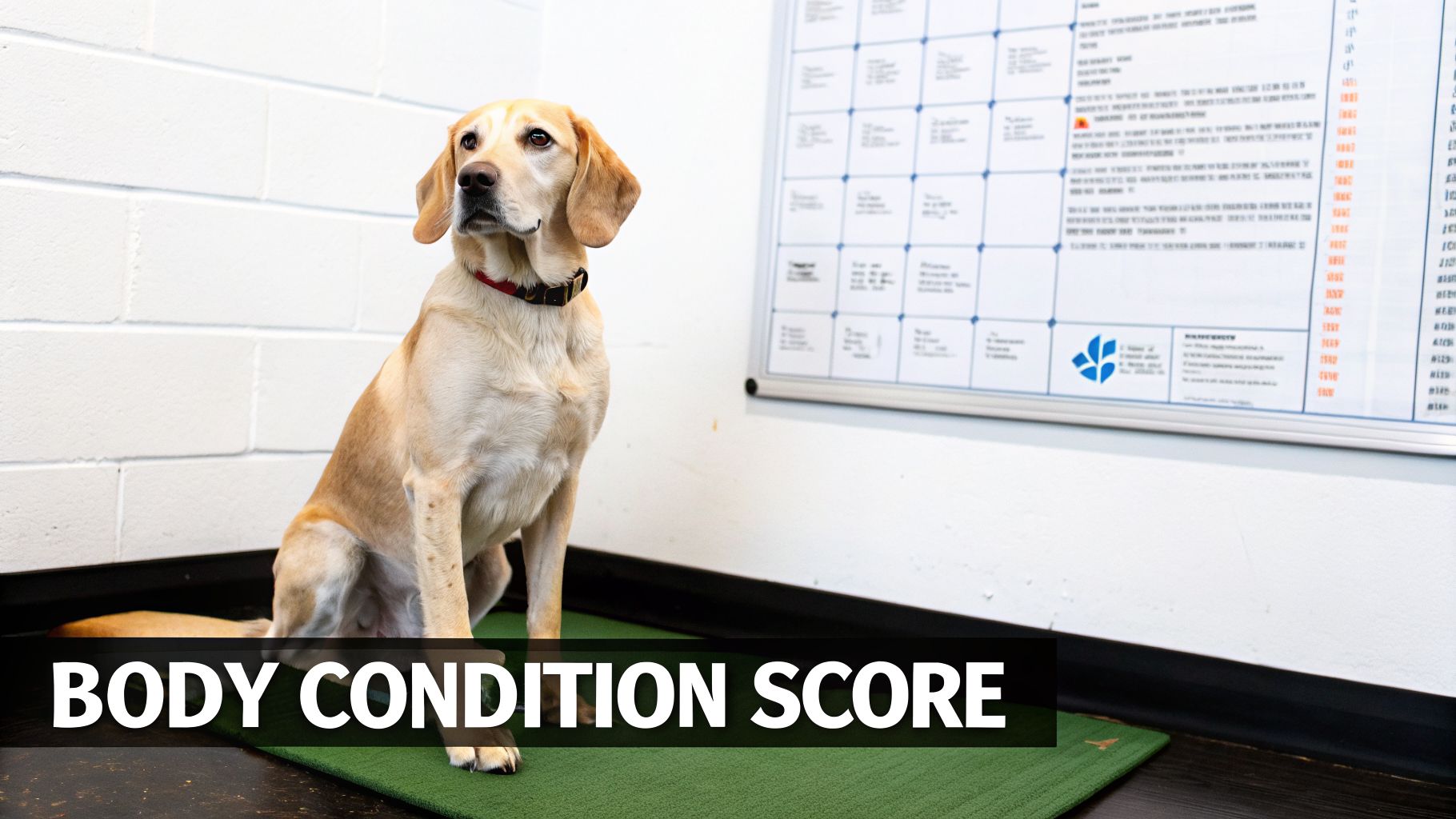
Mastering this simple, three-step check right in your living room will give you a much clearer picture of your dog's health. It’s all about using your eyes and hands to understand their body shape and fat coverage, helping you catch potential weight issues early on. No special tools needed, just a few minutes with your best friend.
Step 1: The Rib Check
First up is the rib check, and it's probably the most telling part of the assessment. Gently run your hands over your dog's sides, right along their rib cage. With just light pressure, you should easily feel their individual ribs under a thin, smooth layer of fat.
To get a better sense of what you're looking for, try the "knuckle test." Make a relaxed fist and feel the knuckles on the back of your hand. That's about how your dog's ribs should feel—you can feel the bones, but they’re not sharp.
- If their ribs feel sharp and stick out, like the knuckles on a tightly clenched fist, your dog might be underweight.
- If you have to press down hard to feel the ribs, like feeling the fleshy part at the base of your thumb, they’re likely carrying extra padding.
This hands-on check is a game-changer, especially for fluffy dogs whose coats can easily mask their true body shape. You can’t just trust your eyes; you have to get your hands on them.
Step 2: The Profile Check
Next, take a step back and look at your dog from the side. Get down to their level if you need to. You're looking for what we call an "abdominal tuck."
This just means their belly should curve upward from the bottom of their chest to their hind legs. A dog at a healthy weight will not have a straight line running from their chest to their hips.
A visible tuck is a classic sign of a dog in great shape. If it's missing, that often points to excess belly fat, a common red flag for an overweight dog.
The tuck doesn't have to be super dramatic, but it should definitely be there. If their belly hangs low or is level with their chest, it's a strong hint they may be carrying extra weight.
Step 3: The Overhead Check
For the final step, stand over your dog and look down at them. What you’re looking for is a subtle "hourglass figure." Their body should be widest at the chest, taper into a defined waist just after the ribs, and then flare out again at the hips.
This bird's-eye view gives you a fantastic overall picture of their body composition.
- Ideal Shape: You'll see a clear waist.
- Overweight Shape: The waist is barely there or gone completely, making their body look more like a sausage or an oval.
- Underweight Shape: The hourglass shape will be extreme, with the spine and hip bones looking very prominent.
Of course, some breeds like Bulldogs or Rottweilers are naturally stocky, so their hourglass will be less defined. That's perfectly normal! For these pups, you should still be able to feel a slight dip for their waist, making the rib check even more crucial for an accurate score.
Making these three quick checks a monthly habit will empower you to keep your dog in their best shape and feeling great.
What Each Body Condition Score Means for Your Dog
So, you’ve done the hands-on checks and have a number in mind. What does it actually mean for your dog’s day-to-day life and long-term health? That number on the 9-point scale is more than a label—it's a snapshot of their current well-being and a peek into their future.
We’ll break down the three main categories: Underweight (BCS 1-3), Ideal (BCS 4-5), and Overweight/Obese (BCS 6-9). Understanding where your pup lands makes that abstract number tangible and shows why even small shifts on the scale matter so much.

The Underweight Dog (BCS 1-3)
A dog in this range is visibly thin. Their individual ribs, spine, and hip bones are easy to see, even from a distance, with very little fat to cover them. They'll also have a dramatic abdominal tuck and you'll notice a clear loss of muscle.
While some breeds are naturally lanky, a score of 1 to 3 is a red flag that they're below a healthy weight. This can point to a few potential problems:
- Inadequate Nutrition: They might not be getting enough calories or the right nutrient balance from their food.
- Underlying Health Problems: Issues like dental pain that makes chewing difficult, internal parasites, or digestive disorders can all cause unintentional weight loss.
- High Stress or Anxiety: A chronically stressed dog may lose their appetite, causing their body condition to drop.
An underweight dog just doesn't have the energy reserves for normal play. Their immune system can also take a hit, leaving them more vulnerable to getting sick.
The Ideal Dog (BCS 4-5)
This is the sweet spot! A dog with an ideal BCS of 4 or 5 is the picture of health. You can easily feel their ribs with a gentle touch—they aren't sharp, but you don't have to dig for them under a thick layer of fat.
When you look at them from the side, you’ll see a clear abdominal tuck, and from above, they’ll have a defined, hourglass waist. This is the physique that sets them up for a long, active, and happy life.
A dog in the ideal range has more energy for walks, a stronger immune system, and significantly less strain on their joints and organs. Celebrating and maintaining this score is one of the greatest gifts you can give your companion.
Think of this score as the foundation for vitality. It’s not about being "skinny"—it's about being lean, strong, and ready for all of life's adventures.
The Overweight and Obese Dog (BCS 6-9)
Unfortunately, this is where a huge number of dogs in the U.S. fall. A dog with a BCS of 6-7 is considered overweight, while a score of 8-9 means they are obese. The signs are pretty clear: it’s difficult or even impossible to feel their ribs, their waist has disappeared, and you might see fat pads near the base of the tail and along their back.
It’s easy to shrug off a little extra fluff, but even one point above ideal carries serious health risks. A score of 6 means your dog is already carrying 10-15% extra body weight.
This extra weight puts a massive strain on their entire body, contributing to:
- Painful Arthritis: Every extra pound puts more pressure on their joints, which can cause or worsen arthritis and reduce mobility.
- Diabetes: Obesity is a major risk factor for developing diabetes mellitus.
- Heart and Respiratory Problems: The heart and lungs have to work much harder to pump blood and oxygen through a larger body mass.
- A Shorter Lifespan: Studies have shown that lean dogs can live up to two years longer than their overweight pals.
The good news? This is totally reversible with the right plan. If your dog is overweight, making their meals exciting is key to success. A sprinkle of a flavorful meal enhancement like ChowPow can make a smaller, calorie-controlled portion feel like a feast. This keeps them happy and satisfied while you work toward achieving that ideal score, ensuring they get the nutritional support they need without empty calories. Remember, ChowPow is a supplement to their existing food, not a replacement.
Your Action Plan for Achieving the Ideal Score
Alright, so you’ve figured out your dog’s body condition score. That’s the hard part done. Now, let's turn that number into a real plan. Whether your dog is a little too ribby or carrying a bit of extra fluff, we’ve got a clear path to get them to that sweet spot: an ideal score of 4 or 5 on the 9-point scale.
This isn’t about crash diets or force-feeding. Think of it as making small, smart tweaks to their lifestyle that will pay off for years to come. We'll walk through two different game plans: one for helping an underweight dog pack on healthy pounds, and another for helping an overweight dog slim down safely.
Helping an Underweight Dog Reach Their Ideal Score
If your dog landed in the 1-3 range, our goal is simple: get more high-quality, nutrient-packed calories into them. It’s not just about piling more food in their bowl; it’s about making sure every single bite is working to rebuild healthy muscle and fat.
One of the biggest hurdles with underweight dogs is often a finicky appetite. Maybe they’re recovering from an illness, feeling stressed, or have just become a picky eater. This is where a little extra encouragement can make all the difference, and a meal enhancement like ChowPow is a fantastic tool for the job.
- Tempting the Pickiest Eater: A simple sprinkle of ChowPow adds a rich, beefy smell and taste that can convince even the most stubborn dog to finish their meal.
- Powering Up Their Kibble: It’s designed to add a serious nutritional punch to their regular food. You’re adding high-quality protein and key nutrients to boost their existing kibble, not just empty calories, which is exactly what a dog needs for healthy weight gain.
- Making Every Meal Matter: When a dog needs to gain weight, you want to get the most out of every meal. ChowPow delivers a concentrated dose of the good stuff to support their recovery and growth.
Another great strategy for weight gain is to offer several smaller meals throughout the day instead of one or two big ones. This is often much easier on their digestive system and helps keep their energy from crashing.
Slimming Down an Overweight Dog Safely
For a pup scoring a 6 or higher, our strategy shifts to two key things: smart portion control and gentle, steady exercise. We’re aiming for gradual weight loss because it’s healthier and much more likely to stick.
The first, most important step is to dial back their daily calories. To get this just right, a Dog Food Portion Calculator Guide can be a lifesaver. It takes all the guesswork out of figuring out exactly how much to feed for their ideal weight, not their current one.
But let’s be real—a smaller scoop of kibble can feel like a major downgrade to your dog. The begging, the sad puppy eyes… it’s enough to make any owner cave. This is where ChowPow plays a brilliant role for dieting dogs, too.
A tiny sprinkle of ChowPow on a smaller meal completely changes the game. It turns a "diet dinner" into what feels like a gourmet treat, adding a huge burst of flavor that leaves your dog feeling happy and satisfied, even with less food in the bowl.
It’s a simple trick that helps you stick to the plan without feeling like you’re depriving your best friend. Because ChowPow is a meal enhancement, you continue to use their regular food, just in a more controlled portion size.
The Long-Term Benefits of an Ideal Body Condition Score
Keeping your dog at their ideal body condition isn't just about looking good—it's one of the single most powerful things you can do to give them a longer, happier life. The science on this is crystal clear.
A groundbreaking study, the Purina Life Span Study, found that dogs kept at a lean body condition (around a 5/9) lived a median of two years longer than their littermates who were allowed to be heavier (around a 7/9). Even though both groups of dogs eventually developed arthritis, the leaner dogs stayed active and pain-free for much longer.
That’s a powerful motivator. Managing your dog’s weight isn’t just a chore; it’s a direct investment in more years of fetch, snuggles, and happy companionship. It’s why putting in the effort to create and stick to your plan is so incredibly worth it.
Hitting that ideal body condition score is all about what’s in the bowl. A balanced diet is non-negotiable, but sometimes plain old kibble doesn't quite get your dog to a perfect 4 or 5 on the scale. That's where a little boost can make all the difference.
Enter ChowPow. This isn't a replacement for your dog's meals, but a powerful food enhancer designed to supercharge the food they’re already eating.
Made with just a handful of simple, locally sourced ingredients like beef heart and carrots, ChowPow is the secret weapon for fine-tuning your dog's nutrition. It's surprisingly versatile, whether you need to help your dog gain, lose, or maintain their weight.
For the Underweight Pup or Picky Eater
One of the biggest hurdles with an underweight dog is a finicky appetite. Whether it's stress, recovery from an illness, or just plain fussiness, getting them to eat enough calories can feel like a constant struggle.
This is where ChowPow really shines. Its star ingredient, dehydrated beef heart, has a rich, meaty aroma that picky eaters find absolutely irresistible. Just a spoonful sprinkled over their regular food can turn a boring meal into a five-star dish, encouraging them to finish every last bite and get the nutrition they desperately need.
ChowPow does more than just tempt the taste buds. It delivers a serious dose of high-quality protein and amino acids—the essential building blocks for restoring healthy muscle, not just piling on empty fat.
This approach makes every meal count, supporting healthy weight gain and getting your dog back on track to their ideal body condition, all while enhancing their regular kibble.
For the Overweight Dog on a Diet
Helping a dog slim down almost always means smaller portions. Unfortunately, that often leads to a hungry dog who follows you around with sad, pleading eyes. It's tough to stick with a weight loss plan when your best friend seems so miserable.
ChowPow offers a clever way around this common roadblock. By adding a small sprinkle to their reduced-calorie meal, you crank up the flavor and satisfaction factor. The rich, savory taste makes them feel like they're getting a special treat, not a diet dinner. This keeps them happy and satisfied, which makes it infinitely easier for you to stay consistent with their new feeding plan.
This simple trick ensures they still love mealtimes, which is the key to long-term success in reaching their goal weight.
For Seniors and Dogs Needing Extra Support
As our dogs enter their golden years, their nutritional needs shift. Many seniors struggle with dental problems that make chewing hard kibble tough, or even painful. Since ChowPow is a fine powder, it’s incredibly easy for them to eat. You can sprinkle it on softened food or mix it with water to create a savory gravy they can lap up.
Even more importantly, older dogs are prone to muscle wasting (sarcopenia), which impacts their strength and mobility. The high-quality protein in ChowPow is perfect for combating this, giving their bodies the support needed to maintain that vital muscle mass.
It’s an amazing way to ensure your senior companion gets the nourishment they need to stay strong and comfortable. The versatility of dehydrated dog food toppers like ChowPow makes them an essential tool for any owner focused on their dog's lifelong health, helping you tailor their diet perfectly to their needs.
Partnering with Your Veterinarian for Optimal Health
Think of your regular at-home body condition checks as being your dog’s first line of defense. They’re an incredible tool for catching small changes early. But when it comes to a diagnosis and a professional game plan, your veterinarian is your most valuable player.
Your job is to be the observant one on the ground, day in and day out. Knowing when to pick up the phone and get your vet involved is just as important as the hands-on check itself.
When to Call Your Veterinarian
Some things just need a professional eye. It’s always better to play it safe and get an expert opinion when you spot a significant shift in your dog's weight or body shape.
Go ahead and book that appointment if you notice any of these red flags:
- Sudden or Unexplained Weight Changes: If your dog’s weight plummets or skyrockets without any obvious reason, it could be a sign of an underlying health problem that needs a proper diagnosis.
- Struggling to Gain Weight: You're doing everything right—maybe even adding a tasty topper like ChowPow to get them excited about their food—but they just aren’t putting on healthy weight. Your vet can investigate and rule out issues like parasites or a metabolic disorder.
- Reaching the Obese Range: A dog with a BCS of 8 or 9 is officially in the obese category. This isn't something to tackle alone; it calls for a medically supervised weight loss plan to ensure they slim down safely and without losing vital nutrients.
Before you start any new diet or exercise plan, it is always essential to talk to your vet first. This is non-negotiable for dogs with pre-existing conditions like heart disease, diabetes, or arthritis, where sudden changes could be genuinely harmful.
Your vet is the one who can create a truly customized plan that fits your dog’s unique history and health needs. We see ourselves as a powerful ally in that partnership, helping you follow through on your vet’s plan with tools like ChowPow that make meals more delicious and nutritionally sound. It's this team effort that gets your dog on the fastest track to their best health.
Common Questions About Body Condition Score
As you get the hang of checking your dog's body condition score, a few questions are bound to pop up. It's completely normal.
Here are some of the most common things pet owners ask, with straightforward answers to help you feel confident in keeping your dog in prime condition.
How Often Should I Check My Dog's Body Condition Score?
Making this a monthly habit is a fantastic idea. Checking once a month is the sweet spot for catching small weight changes before they turn into bigger health problems. It gives you plenty of time to tweak their food or exercise routine.
The only exception? If your dog is on a weight management plan from your vet. In that case, checking every two weeks will help you and your vet track their progress and make sure the plan is on the right track.
My Dog Is Very Fluffy—How Can I Get an Accurate Reading?
With a fluffy dog, your eyes can be deceiving. You absolutely have to rely on your hands. A thick coat of fur can easily hide a dog's true frame, so you need to physically feel for their ribs, spine, and waist.
The "knuckle test" is a great hands-on trick. Gently run your fingers over your dog's ribcage:
- Ideal: The ribs should feel like the back of your knuckles when your hand is flat and relaxed. You can feel them easily under a thin, smooth layer of fat.
- Overweight: If you have to press down to feel the ribs at all, it's a sign they're carrying extra weight.
- Underweight: If their ribs feel sharp and prominent, like the knuckles on a clenched fist, your dog may be too thin.
For long-haired breeds, this hands-on check isn't just a good idea—it's non-negotiable. Their coat can make an underweight dog look fine or an overweight dog look perfectly average.
Will ChowPow Make My Overweight Dog Gain More Weight?
Absolutely not—as long as it’s used correctly as part of a balanced weight loss plan. The key to successful weight loss is cutting total daily calories, not flavor. ChowPow is a nutrient-dense meal enhancement, not a high-calorie "bulking" supplement. It's designed to boost the nutritional value of your dog's current food, not replace it.
Think of it as a flavor booster. By sprinkling a small amount onto a slightly reduced portion of their regular food, you make the meal far more exciting and satisfying. This helps keep them happy on their diet while the high-quality protein supports their muscle mass, which is crucial during weight loss.
At ChowPow, we believe that good nutrition is the foundation of a long, happy life. By making meals delicious and nutrient-rich, we help you support your dog’s health, whether you're working towards an ideal body condition score or simply want to add a boost of wholesome goodness to their bowl. Explore how our meal enhancement can transform your dog's diet at https://chowpownow.com.
-
Product on sale
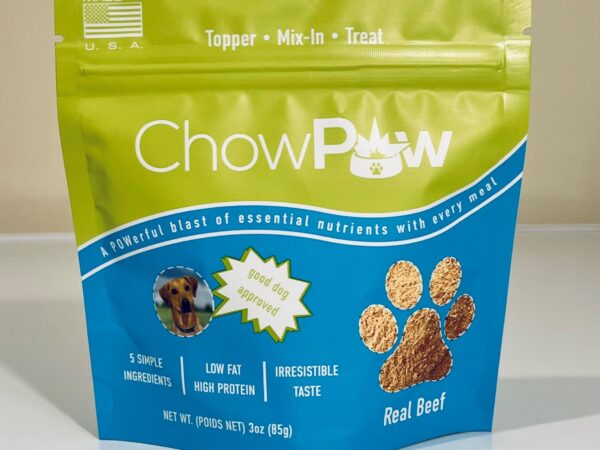 Dog Food Topper - Beef HeartOriginal price was: $14.99.$10.95Current price is: $10.95. - or subscribe and save up to 20%