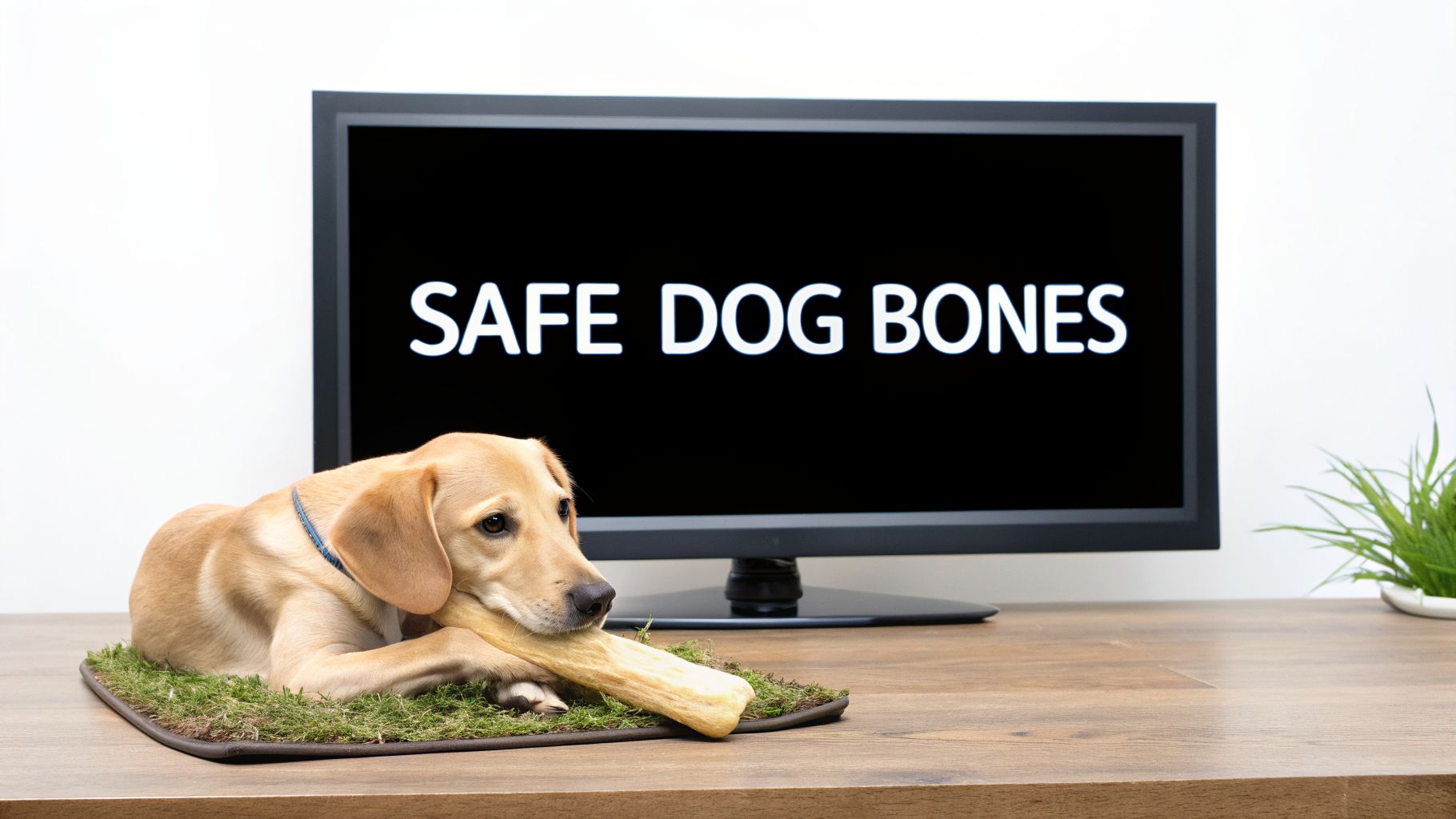
Bones Safe for Dogs A Complete Guide for Pet Parents
The hard truth about giving bones to dogs is that no bone is ever 100% risk-free. While some raw bones can be offered with a watchful eye, cooked bones should be avoided at all costs. Once cooked, they become brittle and can splinter into sharp shards, posing a life-threatening risk.
The Real Answer to the Dog Bone Debate
The classic image of a happy dog gnawing on a bone is something we all know and love. But the reality is far more complex and, frankly, a little scary. Every dog owner deserves to know the facts to make a truly informed decision.
The single most important factor is whether a bone is raw or cooked. This simple distinction can mean the difference between a happy, occupied pup and a panicked trip to the emergency vet.

Think of it like this: a raw bone is like a fresh, pliable tree branch. It has some give to it and is less likely to snap into sharp pieces. A cooked bone, on the other hand, is like a dry, brittle twig that shatters into dangerous daggers under the slightest pressure. Those fragments can cause devastating harm inside your dog’s digestive system.
Understanding the Dangers
Even though some owners successfully give specific raw bones to their dogs, it’s a practice that demands serious caution. Many veterinary experts advise against them entirely—cooked or raw—because of the risks of choking, splintering, and bacterial contamination.
A 2021 study highlighted that 12% of owners who fed bones reported constipation in their dogs, along with other problems like vomiting or diarrhea. It’s not just about physical injury; it’s about digestive health, too. This is why a lot of owners are shifting their focus from risky chews to safer nutritional boosts.
For a dog, the ideal treat enriches their diet without introducing unnecessary dangers. The goal is to provide mental stimulation and nutritional value in the safest way possible.
Quick Safety Check: Cooked vs. Raw Bones
To make the key differences crystal clear, here’s a quick comparison.
| Attribute | Cooked Bones | Raw Bones |
|---|---|---|
| Splinter Risk | Extremely high. Becomes brittle and shatters. | Lower. More pliable and less likely to break into sharp pieces. |
| Digestibility | Poor. Can cause blockages and constipation. | Higher. Natural enzymes aid in digestion. |
| Dental Benefit | Minimal. Often too hard, risking tooth fractures. | Good. Helps scrape away plaque and tartar. |
| Safety Verdict | AVOID. The risks far outweigh any potential benefits. | Use with caution. Requires strict supervision and proper sizing. |
This table shows why the "no cooked bones" rule is non-negotiable for your dog's safety.
A Safer Approach to Nutrition
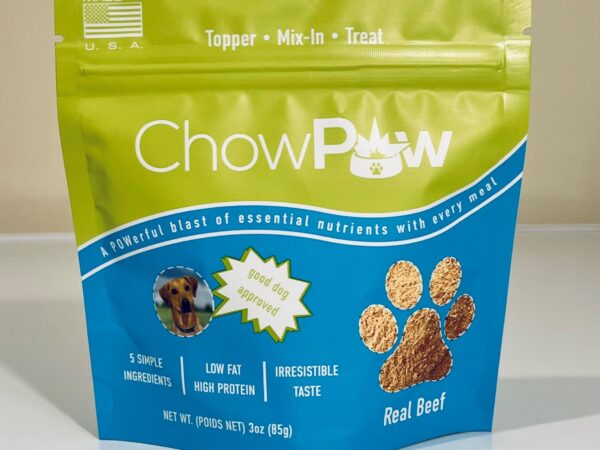
Instead of gambling with bones, you can easily elevate your dog's daily meal with a high-quality meal enhancement. A topper like ChowPow is a meal supplement that provides concentrated protein and minerals, making their regular kibble more exciting and nutritionally complete without replacing their current food.
This approach is a win-win because:
- It avoids all physical risks: No splintered pieces, no choking hazards, and no potential for broken teeth.
- It boosts nutrition simply: You're adding valuable nutrients to their already balanced diet, not just giving them a risky treat.
- It satisfies picky eaters: That extra burst of flavor can encourage even the fussiest dogs to clean their bowls.
This strategy ensures your dog gets the satisfaction they crave without the life-threatening dangers that can come with bones. You can also explore the differences between raw and cooked food for dogs in our detailed guide to learn more about building a safe and healthy diet. Our goal is to empower you to make an informed, safety-first decision for your best friend.
Why Cooked Bones Are a Strict No-Go
If there's one golden rule in the world of dog safety, it's this: never, ever give your dog a cooked bone. It might seem like a harmless way to share a little something from your own dinner, but the science behind this warning is deadly serious. The cooking process completely transforms a bone’s structure, turning a potential treat into a genuine hazard.
Here's what happens when a bone is cooked, whether it’s boiled, baked, or fried. First, the heat zaps all the moisture out, making it incredibly dry. At the same time, it destroys a protein called collagen, which is what gives raw bones their slight bit of flexibility. What you’re left with is a brittle, weak structure that’s just waiting to shatter under the pressure of your dog's jaw.
Instead of being gnawed down slowly like a raw bone, a cooked bone cracks and splinters into sharp, dagger-like pieces. And that’s where the real trouble begins.
The Life-Threatening Dangers of Splintering
Once a cooked bone shatters, those sharp fragments can cause absolute devastation as they travel through your dog’s digestive system. The potential for harm is severe, and the consequences can be fatal.
Just imagine one of those sharp pieces getting lodged in your dog’s throat or esophagus. It can cause immediate choking or create painful punctures that quickly lead to dangerous infections. It's just as bad if the splinters manage to travel further down.
A splintered bone fragment can act like a razor blade inside your dog's body, perforating the stomach lining or intestinal walls. This can lead to internal bleeding and a life-threatening infection called peritonitis, which requires emergency surgery.
And the risks don't stop there. Here are a few all-too-common scenarios veterinarians see in their clinics:
- Painful Blockages: A larger chunk of bone can get stuck in the intestines, causing a total blockage. This is an extremely painful condition that stops food and waste from passing through, and it almost always requires expensive and invasive emergency surgery.
- Broken Teeth: Cooked bones are unnaturally hard and have zero "give." A dog can easily fracture a tooth trying to crunch down on one, which means pain, potential infection, and costly dental work.
- Severe Constipation: A dog's body can't easily break down cooked bone matter. This often leads to severe constipation where your dog might strain painfully to go to the bathroom, and the compacted bone fragments can even cause rectal bleeding.
This isn't just friendly advice; it's a critical safety warning. Keeping cooked bones away from your dog protects them from completely preventable, and often tragic, harm.
A Smarter Way to Spice Up Dinnertime
We all want to give our dogs a special treat. It's natural! But their health has to be the top priority. That leftover bone from your Sunday roast is a serious threat, not a treat. Instead of risking a trip to the emergency vet, you can add that same excitement and nutrition to their meals in a much safer way.
A high-quality meal enhancement like ChowPow gives them that "something special" without any of the danger. As a supplement, its purpose is not to replace your dog's current kibble, but to boost its nutritional value. Just a sprinkle of this dehydrated, nutrient-rich topper over their regular food makes their dinner far more enticing. This is a game-changer for picky eaters or older dogs who need a little extra encouragement at mealtime.
ChowPow is designed to improve your dog's current diet. It satisfies their craving for real meat flavor and provides essential minerals, all while keeping them safe from the catastrophic injuries that cooked bones can cause. By choosing a safe alternative, you're making a conscious choice to protect your dog's life and well-being over a risky, outdated habit.
Are Raw Bones a Responsible Choice?
Okay, so we've established the hard-and-fast rule: no cooked bones. Ever. That naturally leads to the next question—what about raw bones?
Many dog owners wonder if raw bones are a safer alternative, and the answer is a cautious "sometimes," but only if you follow a very strict set of rules. It’s absolutely crucial to understand that not all raw bones are created equal.
The first step to keeping your dog safe is knowing the difference between the two main types: recreational bones and edible bones.
Recreational vs. Edible Bones
Think of recreational bones as nature's chew toys. These are the big, tough bones from large animals like cows—think beef femurs or hip bones. Their main job isn't to provide nutrition; it's to give your dog hours of satisfying gnawing, which is fantastic for cleaning teeth and keeping their mind busy. A dog shouldn't really consume a recreational bone, just scrape off the tasty marrow and connective tissue. We dive deeper into the specifics of marrow bones and whether they're good for dogs in another guide.
Edible bones, on the other hand, are much softer and more pliable. They are meant to be completely eaten as part of a meal. These are usually the non-weight-bearing bones from smaller animals, like chicken wings, necks, or turkey necks. They’re hollow and pack a great punch of calcium and phosphorus.
If you’re considering raw bones, it helps to see how they fit into a bigger nutritional picture. This comprehensive raw dog food diet guide can give you some valuable context.
Safety First: The number one goal with any bone is to minimize risk. Choosing the right type for your dog's size, age, and chewing style isn't just a suggestion—it's a non-negotiable part of responsible pet ownership.
The Strict Rules of Engagement
Deciding to give your dog a raw bone isn't a casual choice. It demands a safety-first mindset and a commitment to careful supervision. Think of it like a detailed safety manual—if you can't follow every single rule, it's genuinely better to skip the bone and find a safer alternative.
Here are the non-negotiable rules for offering raw bones:
- Rule #1: Size is Everything. The bone must be bigger than your dog's muzzle. This is the most critical rule to prevent them from trying to swallow it whole, which is a serious choking hazard.
- Rule #2: Constant Supervision. Never, ever leave your dog alone with a bone. You need to be right there, ready to step in immediately if a piece breaks off or if your dog starts to struggle.
- Rule #3: Know Your Chewer. An aggressive power-chewer might be more likely to crack a tooth on a hard recreational bone. A more delicate chewer might be a better candidate.
- Rule #4: Proper Handling is a Must. Raw bones can carry nasty bacteria like Salmonella and E. coli. Always handle them with care, wash your hands and all surfaces thoroughly, and store the bones properly in the freezer.
This simple flowchart really drives home why some choices, like cooked bones, are always off the table.

The key takeaway here is that clear "NO" path for cooked bones. It's a dead end that always leads to danger, reinforcing that the only potential for safety lies elsewhere.
Balancing Nutrition and Safety
For pet parents who feed a raw diet, edible bones are a cornerstone. A core principle in the raw feeding community is that a healthy adult dog's diet should contain about 10% edible bone for essential calcium and phosphorus. Raw meaty bones (RMBs) like chicken necks (about 36% bone, 64% meat) or turkey necks (45% bone, 55% meat) are common go-tos.
But even with these guidelines, raw bones aren't entirely without risk. The potential for bacterial contamination, an upset stomach, or even an accidental blockage is always there. This is exactly why many owners look for ways to provide those key nutrients in a safer, more convenient format.
This is where a meal enhancement like ChowPow comes in. It offers a powerful boost of protein and minerals without any of the risks that come with bones. As a topper, it’s not meant to replace your dog’s kibble, but to elevate its nutritional value—making every meal safer and more satisfying.
Boosting Nutrition Without the Bone-Chilling Risks
So many of us give our dogs bones with the absolute best intentions. We want to satisfy that deep, primal urge to chew, give them something to do, and maybe even help polish their pearly whites. These are all fantastic goals for a happy, healthy dog.
But here’s the rub: the very thing we offer as a treat can sometimes do more harm than good.
Chewing is absolutely a great way for dogs to scrape off plaque. No doubt about it. The problem is, a hard bone can turn a fun afternoon chew session into a trip to the emergency vet. One wrong chomp can lead to a cracked tooth, while a splintered piece can become a choking hazard or, worse, cause a dangerous internal blockage.
So, how do we give our dogs what they need without taking those kinds of risks?
A Smarter Way to Satisfy and Nourish
Instead of tossing them a bone, think about boosting their regular meals with a high-quality meal enhancement. This isn't about ditching their current food. A topper like ChowPow is designed to work with their kibble, making it more exciting and packing in extra nutrients. It’s a meal supplement, not a replacement for their current diet.
It’s a simple switch that lets you give them that "something special" they crave without any of the scary downsides. You're delivering concentrated protein and essential minerals to support their health, turning a boring bowl of kibble into a five-star dining experience.
The goal is to enrich your dog's life by satisfying their natural instincts in the safest way possible. A meal enhancement provides the flavor and nutritional boost they desire, while vet-approved chews can safely fulfill their need to gnaw.
Why Meal Toppers Are a Winning Solution
A sprinkle of a dehydrated topper like ChowPow does more than just add a burst of flavor; it's like finding the missing puzzle piece for your dog's daily satisfaction. It makes their meal more aromatically appealing and nutritionally complete, hitting those deep-seated cravings in a way that plain kibble just can't.
This is a game-changer for certain dogs:
- Senior Dogs: Older pups often have sensitive teeth or dental issues, making hard bones a definite no-go. A soft, flavorful topper offers all the enrichment without any risk of a painful crack.
- Picky Eaters: We all know one! That little boost of real meat flavor can convince even the fussiest dog to clean their bowl, ensuring they get the calories they need.
- Dogs Needing Extra Support: For dogs recovering from an illness or who are a bit underweight, a meal enhancer provides critical nutrients in a super easy-to-digest format.
While raw meaty bones can sometimes help with dental hygiene, the trade-offs are huge. It's a serious thing to consider, especially when you learn that over 80% of dogs older than three suffer from some form of periodontal disease. And even with careful supervision, the risks are real. Studies have shown that 12% of owners who regularly feed bones report constipation in their dogs, not to mention the constant threat of splinters, bacterial contamination from germs like Salmonella, and choking. You can find more great insights on the balance between benefits and risks of raw meaty bones for dogs at DrConorBrady.com.
The ChowPow Difference: A Commitment to Safety
When you choose a meal enhancement like ChowPow, you’re choosing safety and quality, period. It's a meal supplement, not a replacement, designed to elevate what’s already in their bowl. Made from simple, locally sourced ingredients like dehydrated beef heart, it provides a powerful punch of protein and minerals without any weird fillers or artificial junk.
By simply enhancing your dog's daily kibble, you’re giving them that rich, meaty experience they live for—without ever losing sleep over the dangers of splintering bones. It’s an easy, effective way to show your love and make sure every meal is a step toward better health. You get peace of mind, and they get a delicious, satisfying meal. Every. Single. Time.
Vet-Approved Alternatives for Safe Chewing
After laying out all the risks that come with both cooked and even raw bones, it becomes pretty clear that finding safer alternatives is the best path forward for your dog. The good news? There's a whole world of vet-approved options out there that can satisfy your dog's natural urge to chew without gambling with their health. Building your dog's "chew collection" is all about matching the right item to their personality and chewing style.
The goal here is to provide mental stimulation, boost their dental health, and give them a safe place to channel all that energy. A well-chosen chew can be the difference between a happy dog and a bored one who decides your new shoes look delicious. Let's dig into some of the best and safest choices on the market.

Durable Rubber and Nylon Toys for Power Chewers
For the dogs who treat every toy like a personal challenge and can destroy lesser options in minutes, durability is everything. This is where high-quality rubber and nylon toys really shine.
- Classic Rubber Toys: Brands like KONG are household names for a reason. Their tough, non-toxic rubber toys are built to withstand some serious chomping. Even better, many can be stuffed with treats, peanut butter, or your dog's own kibble, turning them into an engaging puzzle that keeps your pup busy for ages.
- Nylon Chews: These are another fantastic choice for the most aggressive chewers. They're incredibly tough and designed to fray slowly over time, rather than breaking off into big, dangerous chunks.
When looking at alternatives, some owners dive deep into how toys are made; you can even learn more about custom plush pet toy production to see the kind of safety standards and materials that go into quality products.
Dental Chews for Oral Health
Let's be honest, a big reason people give bones is for the supposed dental benefits. But there are far safer ways to keep your dog's teeth clean. Dental chews are made specifically to fight plaque and tartar buildup.
Keep an eye out for products that have the Veterinary Oral Health Council (VOHC) Seal of Acceptance. This seal is a big deal—it means the product has been scientifically proven to actually reduce plaque and tartar. These chews work by using a special abrasive texture to physically scrub the teeth as your dog gnaws away.
A solid oral care routine involves both the mechanical cleaning from safe chews and regular vet check-ups. Think of a VOHC-approved dental chew as a great daily tool to support your dog’s long-term dental health without the scary risk of a fractured tooth.
Natural Chews as Safer Alternatives
If you'd rather give your dog something more "natural" than a synthetic toy, there are several popular options that are generally much safer than bones, as long as you're smart about it.
- Bully Sticks: Made from a single ingredient (beef muscle), these chews are highly digestible and a huge hit with most dogs. They provide a long-lasting, satisfying chew. Just be sure to supervise and use a bully stick holder to prevent your dog from swallowing that last little piece.
- Beef Trachea: These hollow chews are made from a cow's windpipe. They're naturally rich in cartilage, which is a great source of glucosamine and chondroitin for joint health.
Even with these safer natural chews, supervision is non-negotiable.
The Two-Part Approach to Total Satisfaction
A truly happy and fulfilled dog needs more than just something to chew on. Real satisfaction comes from a blend of engaging activities and a delicious, nutrient-packed diet. This is where a simple two-part strategy can work wonders.
Think of it this way: vet-approved toys and safe chews take care of your dog's physical chewing instincts. They keep their jaws strong, their minds occupied, and their teeth a little cleaner. This is the physical fulfillment piece of the puzzle.
The other half is mealtime satisfaction. A bland, boring bowl of kibble can leave a dog looking for excitement elsewhere—which often leads to destructive chewing. By simply boosting their regular food with a high-quality meal supplement like ChowPow, you don't just add nutrition, you make their meal genuinely exciting. It's not a replacement for their kibble, but a powerful way to enhance it.
Sprinkling ChowPow over their food transforms a routine meal into a rich sensory experience, satisfying their natural craving for real meat. This deepens their mealtime fulfillment, which in turn reduces the odds of boredom-driven chewing. When you combine safe, engaging chews with nutritionally exciting meals, you're meeting your dog's needs from all angles. The result is a calmer, happier, and healthier best friend.
When Things Go Wrong: Recognizing a Bone-Related Emergency
Even with the most careful supervision, accidents can happen. When they do, knowing the signs of a bone-related injury can quite literally save your dog's life.
Time is absolutely critical here. A bone splinter or blockage can cause devastating internal damage in a shockingly short amount of time, so if you spot any of the following symptoms, treat it as a serious emergency and get your vet on the phone immediately.
Immediate Warning Signs
If your dog has recently had a bone—especially a cooked one—and suddenly shows any of these signs, it's time to act fast:
- Gagging or Constant Coughing: It might look like your dog is desperately trying to clear something from their throat that just won't budge.
- Vomiting: This is a classic sign of a blockage or severe irritation in the stomach or intestines.
- Straining to Poop: A bone fragment could be causing a painful blockage in the digestive tract. You might also see blood in their stool.
- Lethargy or Weakness: A sudden crash in energy or an unwillingness to move is a massive red flag that something is seriously wrong.
- Signs of a Painful Tummy: Look for a bloated or tender belly, yelping when you touch their stomach, or standing in a "hunched over" prayer-like position.
- Sudden Loss of Appetite: If your normally food-motivated dog turns their nose up at a meal, it’s a clear signal that they're in distress.
When you call the vet, be ready to tell them exactly what kind of bone your dog had and when they ate it. This information is vital for a quick and accurate diagnosis.
Being prepared for the unexpected is a cornerstone of responsible pet ownership. It’s always a good idea to be ready for a crisis, so check out our guide on the essential items for your dog's emergency kit. Having the right supplies on hand means you can act swiftly and protect your best friend when they need you most.
Your Top Questions About Dog Bones, Answered
Stepping into the world of dog chews can feel a little overwhelming, and it's natural to have questions. Let's clear up some of the most common concerns pet parents have when it comes to giving dogs bones. My goal is to help you feel totally confident in the choices you make for your furry best friend.
Are Antlers or Hooves a Safe Bet?
While you'll see them marketed everywhere as a "natural" option, both antlers and hooves are incredibly hard—dangerously so. This extreme density puts your dog at a serious risk for painful and expensive tooth fractures. It’s exactly why so many veterinarians will tell you to steer clear of them entirely.
A dog’s jaws are powerful, but they can easily crack a tooth on something that has zero give. Softer, more forgiving chews are a much safer way to satisfy that instinct to gnaw without putting their dental health on the line.
What’s the Right Size for a Raw Bone?
If you decide a raw recreational bone is right for your dog, getting the size right is the single most important safety rule. It's non-negotiable.
The bone must be larger than your dog's muzzle. This is crucial because it prevents them from even attempting to swallow it whole, which is a massive choking hazard. For a big dog like a Golden Retriever, you should be thinking about something substantial, like a beef femur bone. On the flip side, you'd never give a small bone, like a chicken wing, to a large dog—it could be gone in one gulp.
Can Puppies Chew on Bones?
It’s really best to hold off on giving any kind of bone to a puppy. Their baby teeth are coming in, and their adult teeth are still developing, making them much more fragile than a grown dog's. A hard bone can easily cause damage.
Instead of taking that risk, stick with chew toys made specifically for puppies. These are usually crafted from softer materials that are gentle on their mouths but still give them the chewing satisfaction and relief they desperately need while teething. Starting them with safe options like this builds a foundation for a lifetime of healthy habits.
Looking for a safe, simple, and seriously delicious way to boost your dog's daily meals without any of the risks that come with bones? Give ChowPow a try. Just a sprinkle of our dehydrated beef heart topper turns their regular kibble into an exciting, nutrient-packed meal. See the difference for yourself at https://chowpownow.com.
-
Product on sale
 Dog Food Topper - Beef HeartOriginal price was: $14.99.$10.95Current price is: $10.95. - or subscribe and save up to 20%