Can I Give My Dog Cat Food? a Vet-Reviewed Guide
A small amount of cat food is usually not an emergency for most dogs, but it shouldn't become a regular habit. A few bites are often tolerated, yet cat food is the wrong long-term choice because it's higher in protein and fat and doesn't provide the balanced nutrition dogs need.
If you're reading this because you just caught your dog with their face in the cat's bowl, take a breath. Most of the time, the immediate problem is not poisoning. The bigger issue is that cat food is rich, tempting, and easy for dogs to start seeking out.
That mix of panic and confusion is common. Many owners ask, can I give my dog cat food if my dog is picky, losing interest in kibble, recovering from illness, or just refuses dinner unless something "better" appears. The answer is more nuanced than a simple no. A stolen bite is one thing. Turning cat food into a strategy is another.
Your Dog Ate Cat Food Now What
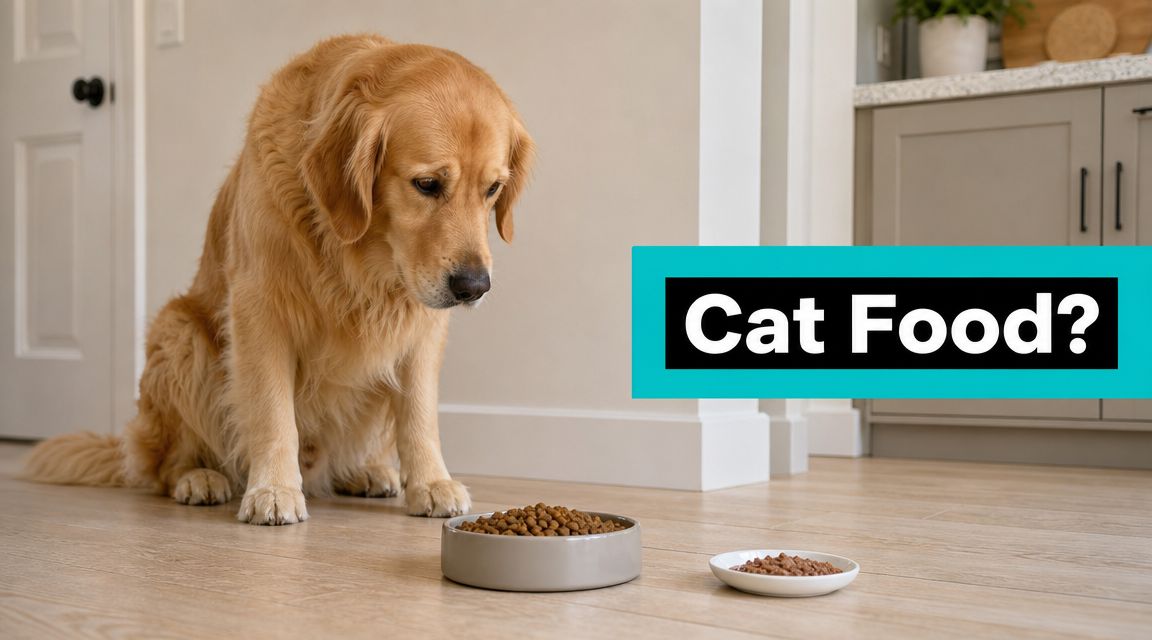
You hear suspicious bowl noises, turn around, and your dog is already halfway through the cat's dinner. That's upsetting, but for most dogs, a small amount of cat food isn't a catastrophe.
PetMD notes that a small amount of cat food will not cause health problems for most dogs, but it isn't recommended as a regular food source because it's higher in protein and fat and lacks the balanced nutrition dogs require. A few bites are often tolerated, but routine feeding is a dietary mismatch (PetMD on dogs eating cat food).
What should you do first? Remove access to the bowl, offer fresh water, and watch your dog for digestive upset over the rest of the day. Some dogs sail through without any trouble. Others react with vomiting, loose stool, or gas because the food is richer than what their stomach usually handles.
Practical rule: One accidental snack usually calls for monitoring, not panic.
If your dog already has a delicate stomach, it's worth paying closer attention. If loose stool shows up later, this guide on diarrhea in dogs can help you think through what may be going on and when to call your vet.
The main question isn't only "Will my dog be okay today?" It's also "Why is cat food a bad default for dogs?" That matters most when a dog is picky, under the weather, older, or already on a specific diet.
Why Dogs and Cats Have Different Dinner Plates
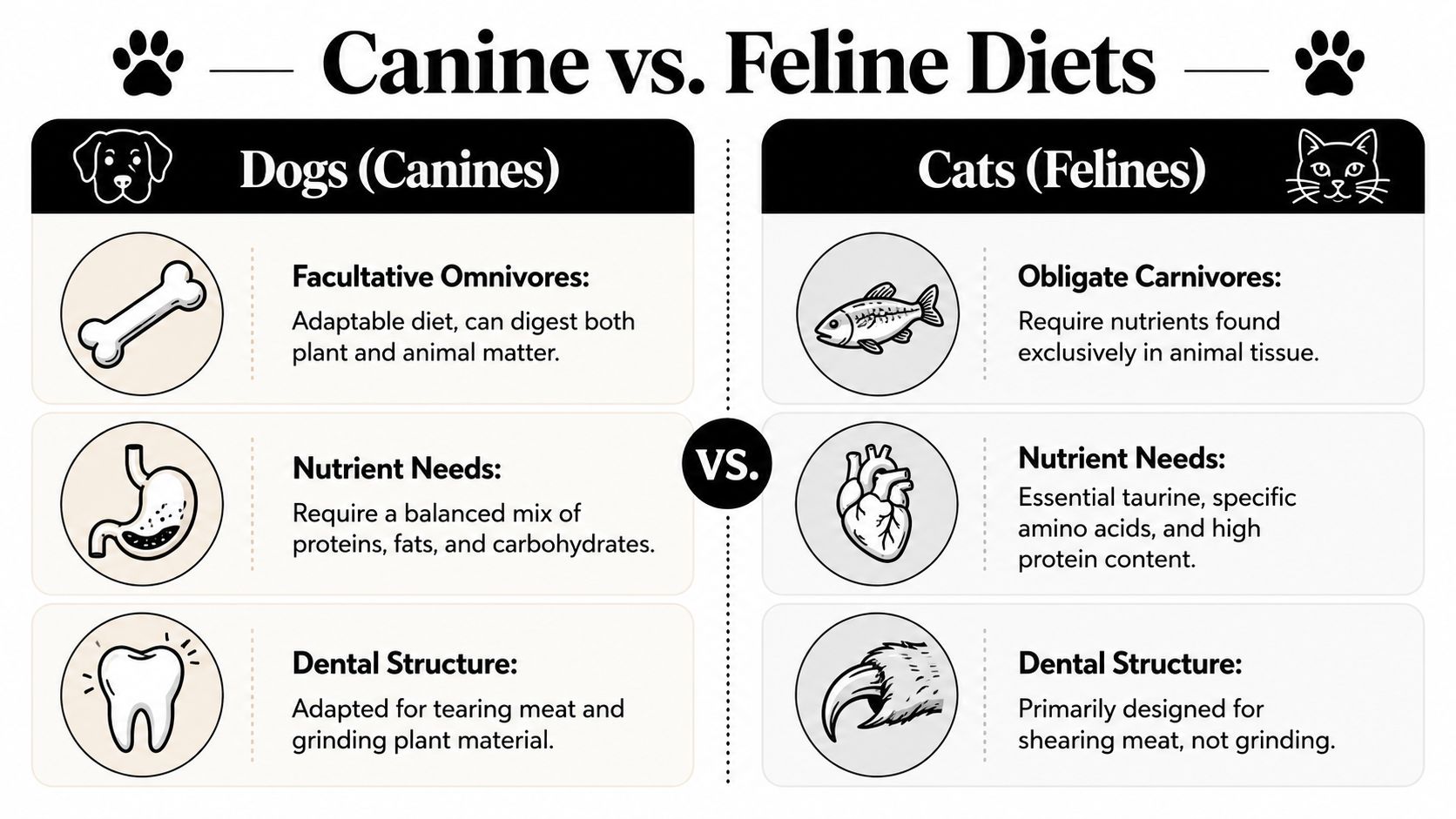
Dogs and cats may share your couch, but they aren't built to eat the same way. Cat food and dog food aren't separate products because of marketing. They're separate because the animals themselves have different metabolic needs.
A simple analogy helps. Think of a cat like a machine built to run on a narrow fuel type. A dog is more flexible. Dogs are omnivores and need a more varied diet than cats, which is why their foods aren't interchangeable in any reliable way.
What cat food is designed to do
Cats are obligate carnivores, so cat food is usually formulated with higher protein, higher fat, and nutrients such as taurine in concentrations that fit feline needs. Dogs don't need those same concentrations, and feeding them that profile day after day can crowd out the balanced nutrition they were meant to get from dog food.
GoodRx also points out that species-specific formulas exist for a reason. Dogs need a wider nutritional mix than cats do, so a bowl of cat food isn't just "richer dog food." It's a formula built for a different animal.
Why mismatch matters
The development of species-specific pet foods rests on decades of nutrition research. A peer-reviewed review in the National Center for Biotechnology Information says there is no strong evidence for many claimed benefits of alternative feeding approaches, but there are documented risks, especially malnutrition from inexpert diet formulation (NCBI review on pet feeding and diet risks).
That matters here because cat food can look appealing for all the wrong reasons. Dogs often love the smell. Owners see enthusiastic eating and think, "Maybe this works better." But palatability is not the same thing as nutritional fit.
A dog eating cat food can seem fine in the moment because the food is tasty. The problem shows up when a rich, species-mismatched food starts replacing a complete dog diet.
A useful way to think about it is this:
| Food question | Better answer |
|---|---|
| My dog likes cat food more than kibble | Preference doesn't mean suitability |
| My dog needs more appetite support | Use a dog-formulated topper or vet-approved plan |
| My dog stole a few bites | Monitor, then return to normal dog food |
Health Risks of a Feline Diet for Your Canine
The risks from cat food usually fall into two groups. First, there are the short-term stomach problems that make both dog and owner miserable. Then there are the longer-term consequences that can develop if cat food becomes a habit.

Short-term problems your dog might show
The most common immediate response is digestive upset. Because cat food is rich, some dogs react quickly with:
- Vomiting: especially after eating fast or eating more than a few bites
- Diarrhea: loose stool later that day or the next
- Gas: a very common sign after rich food
- Stomach discomfort: restlessness, licking lips, or acting "off"
Kwik Pets notes that the high fat and protein in cat food can be especially problematic for small dogs, seniors, and dogs prone to pancreatitis or with sensitive GI systems. Occasional ingestion may cause vomiting and diarrhea, while repeated intake can lead to nutrient imbalances and weight gain (Kwik Pets on what happens if a dog eats cat food).
That "rich food stomach" reaction is where many owners get confused. They assume the problem was an allergy or a toxin. Often, it's simpler than that. The meal was just too heavy for the dog's system.
Longer-term concerns if it keeps happening
If your dog starts raiding the cat bowl daily, the concern shifts. Repeated intake can create an energy-dense, unbalanced pattern that pushes aside a complete dog diet. Over time, that can mean unwanted weight gain and poor nutritional balance.
For dogs already at risk, higher-fat food may also make pancreatic stress more concerning. If you'd like a closer look at that condition, this page on what causes pancreatitis in dogs explains why rich foods can be a problem for some pets.
Here's a useful video primer on the topic:
Raw cat food adds another layer of risk
Some owners aren't dealing with dry or canned cat food at all. They're dealing with raw cat food. That changes the picture.
The CDC recommends feeding pets only cooked or heated foods that are complete and balanced, and warns against raw pet foods because they can carry pathogens such as Salmonella and Listeria. That means a dog stealing raw cat food doesn't just face a nutrition mismatch. There may also be a household food-safety concern.
If your dog ate ordinary cat food, think stomach upset first. If your dog ate raw cat food, think stomach upset plus hygiene and contamination risk.
An Action Plan for After the Snack Attack
When your dog gets into cat food, a calm routine helps more than guesswork.
Step 1 Don't panic
A small amount is usually not an emergency for most dogs. Start by taking the cat food away so the snack doesn't become a second helping. Then make sure your dog has access to fresh water.
Step 2 Watch for the signs that matter
The CDC recommends separating pets during meals and removing uneaten food promptly to prevent cross-eating. The same guidance says you should consult a veterinarian if your dog develops persistent vomiting, diarrhea, lethargy, or abdominal pain after ingesting another pet's food (CDC pet food safety guidance).
Over the next day or two, monitor for:
- Repeated vomiting: one isolated episode may be mild, but ongoing vomiting isn't
- Continuing diarrhea: especially if your dog can't settle or seems weak
- Lethargy: lower energy than usual, hiding, or not wanting to move
- Abdominal pain: a tense belly, hunched posture, or reluctance to be touched
- Poor appetite: refusing normal meals after the incident
Step 3 Decide between home monitoring and a vet call
A bright, comfortable dog who ate a small amount and has no symptoms can often be observed at home. A dog with ongoing digestive signs, clear pain, or unusual fatigue should be checked by a veterinarian.
If your dog has a history of digestive sensitivity, some owners also ask their vet about supportive options such as hydration strategies or products like Joyfull dog supplements when loose stool becomes part of a broader gut-health pattern. That doesn't replace veterinary advice after a concerning reaction, but it can be a useful discussion point.
Watch the dog, not just the bowl. The amount eaten matters, but your dog's behavior matters more.
Safer Ways to Tempt a Picky Eater
Dog owners don't ask, can I give my dog cat food, because they're trying to break rules. They ask because they're worried. Their dog won't eat. Their senior dog has lost enthusiasm for meals. Their recovering dog needs encouragement.
That concern is valid. The goal is not to shame the shortcut. The goal is to replace it with a safer one.
Why cat food feels tempting
Cat food smells strong, tastes rich, and often gets an instant response from dogs. In the short term, that can make it look like a useful appetite trick. GoodRx notes that some sources mention cat food might be used briefly to tempt a sick dog, but that this often overlooks safer, dog-specific alternatives. The better long-term solution for picky eating or appetite support is a dog-formulated topper or a diet plan approved by your veterinarian (GoodRx on dogs and cat food).
That distinction matters. There is a difference between emergency calories and a feeding plan.
Better options that fit a dog's needs
If your dog is snubbing kibble, try these in a practical order:
- Warm the meal slightly: aroma often matters more than owners expect
- Add water or broth approved by your vet: this can soften food and improve smell
- Use a dog-formulated topper: this keeps the meal in the dog's nutritional lane
- Review the base diet: sometimes the kibble itself is the problem
- Check for pain or illness: appetite changes can signal dental problems, nausea, or underlying disease
One dog-specific option is ChowPow, a meal enhancer made to be added to existing dog food rather than replace it. That's an important distinction. It's not a substitute for kibble. It's a topper or supplement that can be sprinkled on meals, mixed with water, or used to make food more appealing while keeping the bowl dog-focused. If your dog is selective at mealtime, this guide to dog food toppers for picky eaters may help you compare approaches.
A simple decision filter
Ask yourself this before reaching for the cat bowl:
| If your goal is… | Choose… |
|---|---|
| More smell and interest | A dog topper |
| Easier chewing | Softened dog food |
| Extra support during recovery | A vet-approved dog feeding plan |
| Long-term better eating habits | Consistent dog meals, not cat food rewards |
The safer path is usually the more boring one. But in pet nutrition, boring is often what protects your dog.
How to Prevent Future Cat Food Raids
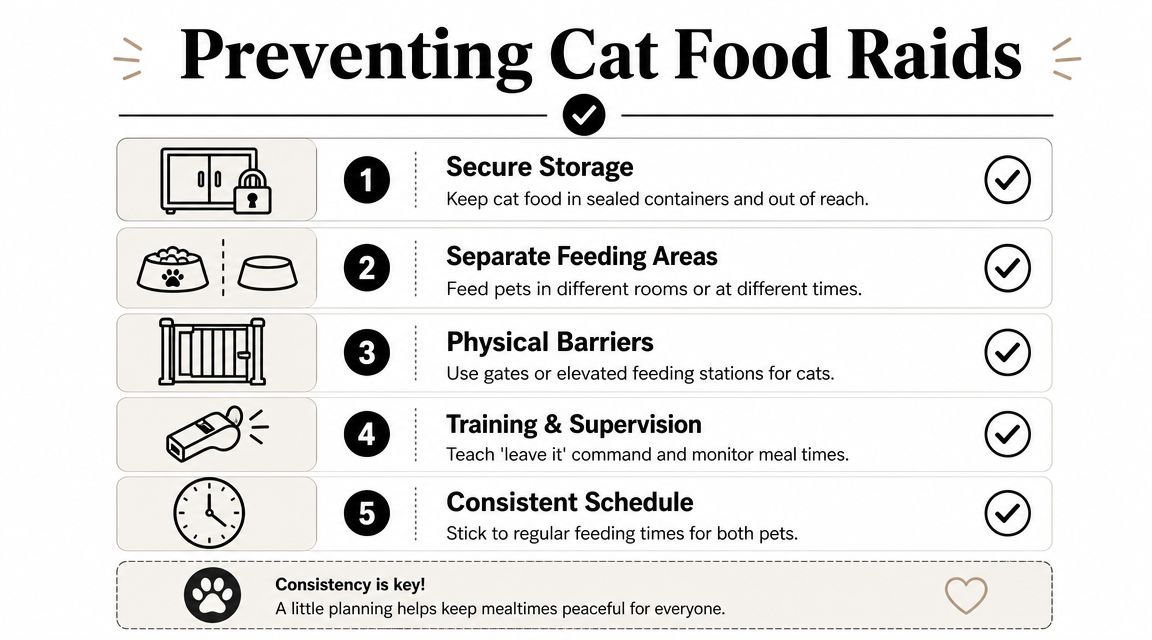
Prevention is much easier than cleanup. Once a dog decides cat food is a prize, you need to make access inconvenient.
Set up the house for success
The most effective fixes are usually physical ones, not behavioral ones.
- Feed in separate spaces: give the cat a quiet room or raised area
- Pick up leftovers fast: don't leave tempting food out after mealtime
- Use height to your advantage: many cats can eat where dogs can't reach
- Store food securely: sealed containers help with both freshness and theft prevention
- Keep a routine: pets learn meal patterns quickly
Match the plan to your pets
A slow senior dog and a young, athletic dog need different management. A cat that grazes all day may need a more protected feeding setup than a cat who finishes meals quickly. In some homes, a baby gate solves the whole problem. In others, an automatic feeder or a separate room is the cleanest answer.
The easier it is for your dog to practice stealing cat food, the harder it is to break the habit.
Training helps too. A reliable "leave it" cue is useful, but management should do most of the work. If your dog never reaches the bowl, you won't have to negotiate at every meal.
If your dog keeps turning away from kibble, the answer usually isn't cat food. A dog-specific meal enhancer can add smell, flavor, and feeding support without replacing the balanced food already in the bowl. Learn how ChowPow fits into a dog's normal meal as a topper, not a substitute, so you can make dinner more appealing without creating a new problem.
-
Product on sale
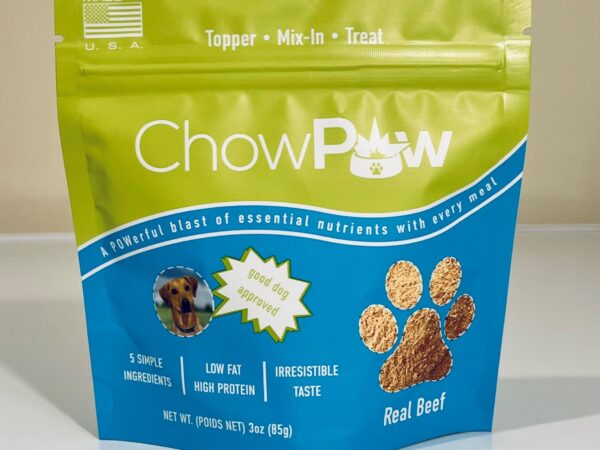 Dog Food Topper - Beef HeartOriginal price was: $14.99.$10.95Current price is: $10.95. - or subscribe and save up to 20%