
Can I Give My Dog Imodium for Diarrhea? Risks & Safe Steps
It’s 1 a.m. Your dog asks to go out again. Then again. The stool is loose, your dog looks uncomfortable, and you’re standing in front of the medicine cabinet wondering, can i give my dog imodium for diarrhea?
That question makes sense. Imodium is common, easy to find, and a lot of people already have it at home. When you’re tired and worried, grabbing a quick fix feels like the responsible thing to do.
But with dogs, this is one of those moments where the obvious answer can be the wrong one. Imodium can help in a narrow set of cases, yet it can also make the problem worse or even become dangerous depending on your dog’s breed, health status, and the actual cause of the diarrhea.
I’m going to walk you through this the way I would if we were talking at the clinic desk after a rough night. You’ll learn why vets are cautious, when diarrhea is a home-care problem versus a medical problem, and what to do instead to help your dog safely.
The Late-Night Dilemma with Your Dog's Diarrhea
A lot of owners land in the same spot. Their dog was fine at dinner, maybe stole a scrap off the floor, maybe started a new treat, and now there’s urgent diarrhea in the middle of the night.
You want relief fast. That impulse is loving, not careless.

What makes this tricky is that diarrhea is a symptom, not a diagnosis. One dog may have simple stomach upset from dietary indiscretion. Another may have a virus, parasites, inflammation, pancreatitis, medication side effects, or a problem that needs treatment right away.
That’s why the question isn’t just “Will Imodium stop the diarrhea?”
It’s “Is stopping the diarrhea what my dog’s body needs right now?”
Sometimes the gut is trying to push out something irritating or harmful. Slowing that process down can work against your dog instead of helping.
Why owners get mixed messages
Part of the confusion comes from how often people hear that dogs “can” take Imodium. That’s technically true in some vet-supervised cases. But “can” does not mean “should,” and it definitely doesn’t mean “safe for every dog.”
Vets use it selectively, not casually.
Practical rule: If you don’t know why your dog has diarrhea, don’t assume an anti-diarrheal is the safest first step.
A better first response is to pause, observe, and check for clues. Is your dog still bright and drinking water? Is there vomiting? Blood? Weakness? Belly pain? Those details matter much more than people realize.
You don’t need to panic over every loose stool. But you also don’t want to treat a serious problem like a minor one just because the medication is over the counter.
How Imodium Actually Affects Your Dog's System
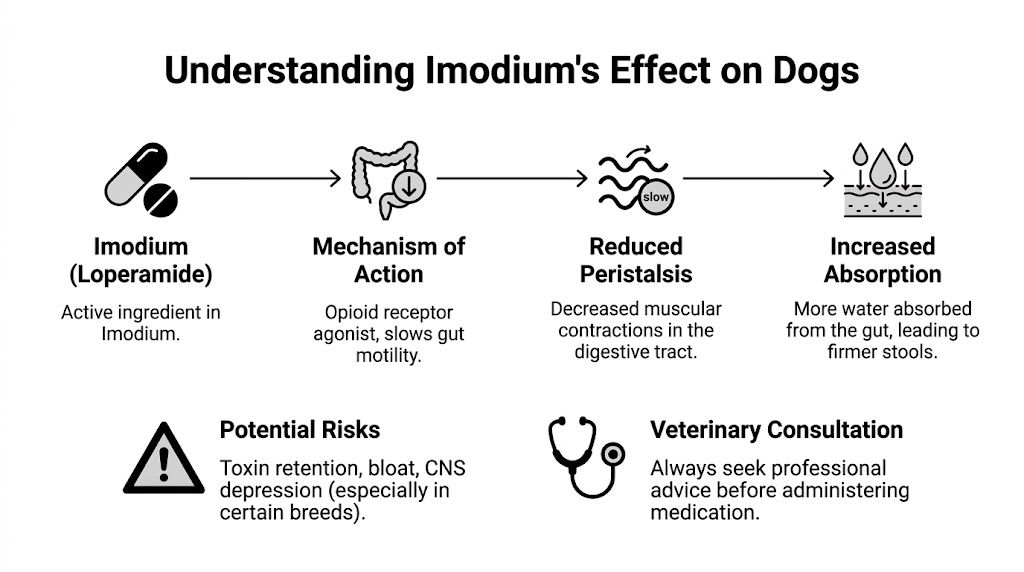
Imodium contains loperamide, a drug that slows the movement of the intestines. Your dog’s gut works like a conveyor belt. Food, fluid, bacteria, and waste are supposed to keep moving forward. Loperamide tells that belt to move more slowly.
That slowdown can make stool look better for a while. The colon has more time to pull water back into the body, so stool may come out firmer and less often.
What the drug is doing inside the gut
Loperamide acts on mu-opioid receptors in the intestines. In plain terms, it reduces the wave-like muscle contractions that push material through the digestive tract.
That can help in a narrow set of cases. It may reduce urgency, lower stool frequency, and improve control when a dog has loose stool from a mild, noninfectious problem.
But the symptom can improve while the cause stays the same.
A dog with simple stomach irritation may feel better with slower gut movement. A dog trying to clear spoiled food, bacteria, or a toxin may not benefit from pressing the brakes. This distinction is what people often miss. Firmer stool does not always mean the dog is safer or healing faster.
Why veterinarians use it selectively
Imodium is not FDA-approved for dogs. When vets prescribe it, that is called off-label use. Off-label does not mean unsafe by itself. It means the veterinarian is applying a human medication to a specific animal case after weighing the likely cause of diarrhea, the dog’s breed, age, hydration, medical history, and current medications.
That is the same basic logic behind the universal principles of safe medication administration. The right drug only helps when it is the right drug for the right patient, reason, and dose.
For pet owners, the hard part is that diarrhea can look similar on the surface while coming from very different problems underneath. One loose stool does not tell you whether the gut needs rest, fluids, testing, or time to clear something out.
Why symptom control can be misleading
Loperamide changes motion, not the underlying trigger. It does not kill parasites, treat infection, remove a dietary mistake, or correct dehydration.
That matters because diarrhea is sometimes a cleanup process. The body may be trying to move an irritant out quickly. Slowing the intestines in that moment can work against what the body is trying to do.
This is also why over-the-counter options should not be treated as interchangeable. If you have been comparing products, our guide on whether dogs can have Pepto-Bismol explains how a different medication affects the gut in a different way, with its own risks.
Here is the simple takeaway:
- Loperamide slows the gut
- Slower movement can reduce diarrhea symptoms
- Symptom relief does not reveal the cause
- The wrong case can get riskier when gut movement is suppressed
Used carefully, Imodium is a tool. Used casually, it can hide the underlying problem while your dog still needs the right kind of care.
The Serious Dangers of Self-Dosing with Imodium
The biggest problem with self-dosing isn’t just getting the amount wrong. It’s giving the wrong medication to the wrong dog for the wrong reason.
The MDR1 gene risk in herding breeds
Some dogs carry the MDR1 gene mutation. In those dogs, loperamide can cross into the brain more easily instead of being kept out where it belongs.
That’s why a dose that might seem routine in one dog can become toxic in another.
According to GoodRx’s veterinary explanation of Imodium for dogs, the MDR1 mutation is present in up to 70% of Collies and 50% of Australian Shepherds. In affected dogs, loperamide can lead to 20 to 30 times higher plasma concentrations.
That can cause:
- Profound sedation
- Ataxia, meaning wobbly or uncoordinated movement
- Neurologic toxicity
- Life-threatening breathing depression
- Death in severe cases
Breeds in the herding group deserve special caution. That includes Collies, Australian Shepherds, and related mixes. If you’re not sure whether your dog has this mutation, that uncertainty is exactly why home dosing is risky.
Trapping infection inside the gut
Diarrhea feels like the enemy, but sometimes it’s part of the body’s defense. The intestines are trying to move out bacteria, viruses, or irritating material.
When owners ask for Imodium, vets reject it in 85 to 90% of initial cases, and a major reason is the risk of trapping pathogens in bacterial or viral diarrhea, according to PetMD’s review of Imodium for dogs.
That matters because slowing the gut at the wrong time can worsen the illness instead of calming it.
This is especially important if your dog also has:
- Vomiting
- Blood in the stool
- Fever-like behavior
- Marked lethargy
- Abdominal pain
- A history of scavenging or possible toxin exposure
If the cause is infectious, the body may need support and treatment, not a traffic jam.
For owners who like having a basic safety framework, these universal principles of safe medication administration are a useful reminder that the right drug still has to match the right patient, right situation, and right reason.
Side effects that can become bigger than the diarrhea
Even in dogs without a known breed sensitivity, loperamide can cause its own set of problems.
Common concerns include:
- Bloating
- Constipation
- Sedation
- Pancreatitis risk in vulnerable dogs
These side effects can muddy the picture. A dog who already feels unwell may suddenly look sleepier, more uncomfortable, or more distended, and now you’re trying to sort out the original illness plus a drug reaction.
Some owners compare Imodium with bismuth-based products. If you’re weighing options, this guide on whether dogs can have Pepto-Bismol can help you understand why over-the-counter stomach remedies aren’t interchangeable.
A short video can also help if you’re trying to recognize when concern is shifting toward emergency territory.
Why “my friend gives it to her dog” isn’t enough
This is a common pitfall. They hear that another dog got Imodium and did fine, so they assume it’s a broadly safe remedy.
But dogs aren’t interchangeable.
One dog has uncomplicated stress diarrhea. Another has an infection. Another has an MDR1 mutation. Another is dehydrated, tiny, elderly, or on other medication. Same box of pills. Very different risk.
If you haven’t identified the cause of the diarrhea, self-dosing with Imodium is a gamble, not a treatment plan.
Red Flags That Require an Immediate Vet Visit
It is 11 p.m., your dog has already had several messy trips outside, and you are trying to decide whether this is a simple stomach upset or the start of something more serious. That decision matters more than the question of whether to give Imodium.
The safest first step is to read your dog’s whole body, not just the stool. Diarrhea can be the gut’s way of clearing out something irritating. It can also be an early warning sign of dehydration, infection, blockage, toxin exposure, or inflammation. Your job is not to diagnose the exact cause at home. Your job is to spot the signs that say, “This needs a vet now.”
Call your vet right away if you see these signs
Some symptoms move your dog out of the watch-and-wait category very quickly.
- Blood in the stool, whether it is bright red or black and tarry
- Repeated vomiting along with diarrhea
- Extreme lethargy, weakness, or collapse
- Refusing water or being unable to keep water down
- A painful belly, including a tense abdomen, whining, shaking, or a hunched posture
- Signs of dehydration, such as dry or tacky gums, sunken eyes, or skin that does not spring back normally
- Diarrhea that keeps going or gets worse instead of improving
- Very frequent small amounts of stool with straining, which can point to severe colitis or an obstruction
- Puppies, senior dogs, and dogs with diabetes, kidney disease, or other chronic illness, because they have less room for error
A simple way to think about it is this. Mild diarrhea in a bright, hydrated dog is often a stomach problem. Diarrhea plus whole-body symptoms is often a medical problem.
Puppies need extra caution. They can go downhill fast, and infectious disease belongs on the list of possible causes. If you are wondering how much protection vaccines provide in real life, this article on can a dog get parvo even after being vaccinated gives useful background.
You can also review common triggers, stool changes, and practical things to monitor at home in this guide on diarrhea for dogs.
Home Care vs. Vet Visit A Symptom Checklist
| Symptom | Okay for Initial Home Monitoring (24-48 hrs) | Call Your Vet Immediately |
|---|---|---|
| One or two loose stools | Yes, if your dog is otherwise acting normal | No, unless other red flags are present |
| Normal energy | Yes | No |
| Drinking water normally | Yes | No |
| Mild stomach upset after obvious diet slip | Often yes, with close monitoring | No, unless it worsens |
| Diarrhea with blood | No | Yes |
| Diarrhea plus vomiting | No | Yes |
| Marked lethargy or weakness | No | Yes |
| Refusing water | No | Yes |
| Signs of dehydration such as tacky gums or poor skin return | No | Yes |
| Ongoing diarrhea that isn’t improving | No | Yes |
If your dog looks sick overall, treat diarrhea like a symptom, not the whole problem.
Your Step-by-Step Plan for Safe At-Home Care
If your dog has mild diarrhea, is still bright, and isn’t showing the red flags above, home care can be reasonable for a short period. The goal isn’t to shut the gut down. It’s to support recovery without adding risk.
Step 1 Give the gut a short rest
For an adult dog, a brief 12 to 24 hour fast can give the intestines time to settle. During that time, keep water available.
This is not for very young puppies, fragile dogs, or pets with conditions that make fasting unsafe. If that’s your dog, call your vet before trying it.
A fast works like turning down noise in a room. You’re removing the steady stream of incoming material so the gut has a chance to calm down.
Step 2 Focus hard on hydration
Dogs with diarrhea lose fluid quickly. Your job is to make drinking easy and tempting.
Try simple options like:
- Fresh water in several spots
- Ice cubes for dogs that lick more than they drink
- A little plain broth if your vet says that’s appropriate
- Frequent small drinks instead of one large bowl all at once
Watch your dog, not just the bowl. A dog can have access to water and still become dehydrated if they aren’t taking in enough.
Step 3 Reintroduce food gently
Once the gut has had a little rest and your dog seems interested in food, start bland and small.
A classic bland meal is:
- Boiled, unseasoned chicken
- Plain white rice
Feed small portions more often rather than one big meal. Think snack-sized, not dinner-sized. A sore gut usually handles that better.
Step 4 Don’t rush back to normal food
Even when stools start looking better, the digestive tract may still be irritated. Keep meals plain for a short stretch, then transition back gradually.
Too many owners see one good poop and immediately go back to regular kibble, treats, chews, and table scraps. That often resets the problem.
Step 5 Track the pattern
Write down what you see. You don’t need anything fancy.
Make a quick note of:
- How often your dog is going
- Whether stool is improving or worsening
- Any vomiting
- Energy level
- Drinking
- Anything unusual eaten recently
Those notes help if you need to call the vet later. They also keep you from relying on memory when you’re tired.
A calm dog with mild diarrhea often needs rest, water, and simple food more than medication.
If you want more non-drug options for mild digestive upset, this ChowPow article on anti-diarrhea support for dogs is a useful next read.
Boosting Recovery and Appetite with Nutritional Support
The hardest part often comes after the worst stool has passed. Your dog may be tired, picky, or willing to eat only a few bites. That’s when owners start worrying that recovery has stalled.
A bland diet helps settle the gut, but it’s not meant to be a full long-term nutrition plan. Recovering dogs often benefit from gentle support that makes food more appealing and adds useful nutrients without turning the meal into something rich or irritating.

Why appetite support matters
Some dogs bounce back fast. Others need encouragement.
According to Native Pet’s discussion of Imodium alternatives and recovery feeding, a vet-approved recovery approach includes a 12 to 24 hour fast followed by a bland diet, and boiled chicken and rice resolved symptoms within 48 hours in 72% of cases. The same source notes that for dogs with poor appetite, nutrient-dense toppers like dehydrated beef heart provide high-quality protein, including about 25g per ounce, plus bioavailable taurine to support epithelial repair.
That matters because the gut lining recovers best when the dog eats.
What a topper should do during recovery
A useful meal enhancer for a dog coming off diarrhea should be simple and easy to use. It should support the meal that’s already working, not replace it.
Look for something that can:
- Make bland food more appealing for a dog who’s hesitant to eat
- Add concentrated nutrition without a huge serving size
- Mix easily with food or water
- Avoid the motility-altering risks of anti-diarrheal drugs
One option is ChowPow, a dehydrated beef heart meal enhancer made to be added to your dog’s existing food, not used as a substitute for it. Because it’s a topper, you can sprinkle a small amount over kibble or a bland recovery meal to boost flavor and nutrient density while keeping the base diet familiar.
A gentle way to use nutritional support
You don’t need to overhaul the bowl. Start small.
A practical approach is:
- Keep the base meal simple, especially early in recovery.
- Add a light sprinkle of topper if your dog seems uninterested.
- Mix with a little water if a softer texture helps.
- Watch stool quality and appetite together, not appetite alone.
That last point matters. A dog enthusiastically eating something very rich isn’t always a win if the stool gets worse again.
Recovery feeding works best when it supports the gut instead of trying to overpower the problem with richer treats or too many extras.
Your Action Plan for Your Dog's Next Tummy Upset
When your dog has diarrhea, the safest answer usually isn’t the fastest-looking one. Imodium can have a role in very specific vet-directed cases, but that’s different from home treatment after a surprise middle-of-the-night stomach upset.
Here’s the practical takeaway.
If your dog has mild diarrhea and is otherwise acting normal, start with the basics. Give the gut a short rest if appropriate, protect hydration, and use a bland diet in small meals. Watch closely.
If your dog has blood in the stool, vomiting, weakness, dehydration signs, obvious pain, or symptoms that aren’t improving, call your vet. Don’t wait for over-the-counter medication to sort out a problem it was never meant to diagnose.
And if you’re asking, can i give my dog imodium for diarrhea, the most responsible default answer is this: not unless your veterinarian has told you this specific dog, with this specific problem, should have it.
That mindset turns you into a much better first responder for your dog’s gut health. You stop chasing the nearest medicine and start asking the right questions.
Your dog doesn’t need guesswork. Your dog needs observation, calm care, and a plan.
If your dog is recovering, eating lightly, or turning picky after an upset stomach, ChowPow can be used as a simple meal enhancer to boost the nutritional value and palatability of their current food. It’s not a replacement for kibble or a prescribed diet. It’s a topper you can add to help support appetite and gentle recovery while keeping the rest of the meal routine familiar.
-
Product on sale
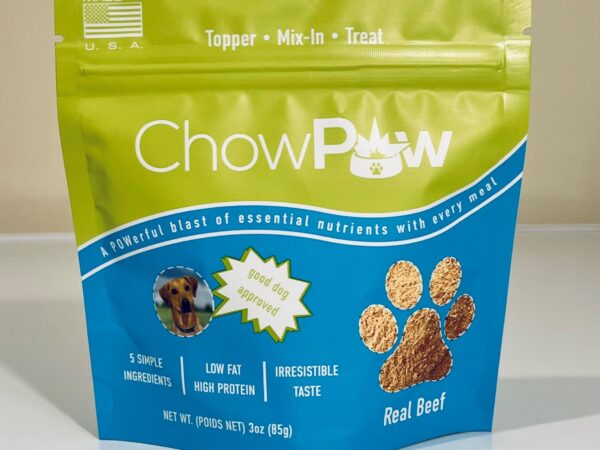 Dog Food Topper - Beef HeartOriginal price was: $14.99.$10.95Current price is: $10.95. - or subscribe and save up to 20%