Why Your Dog Eats Cat Poop: Stop It in 2026
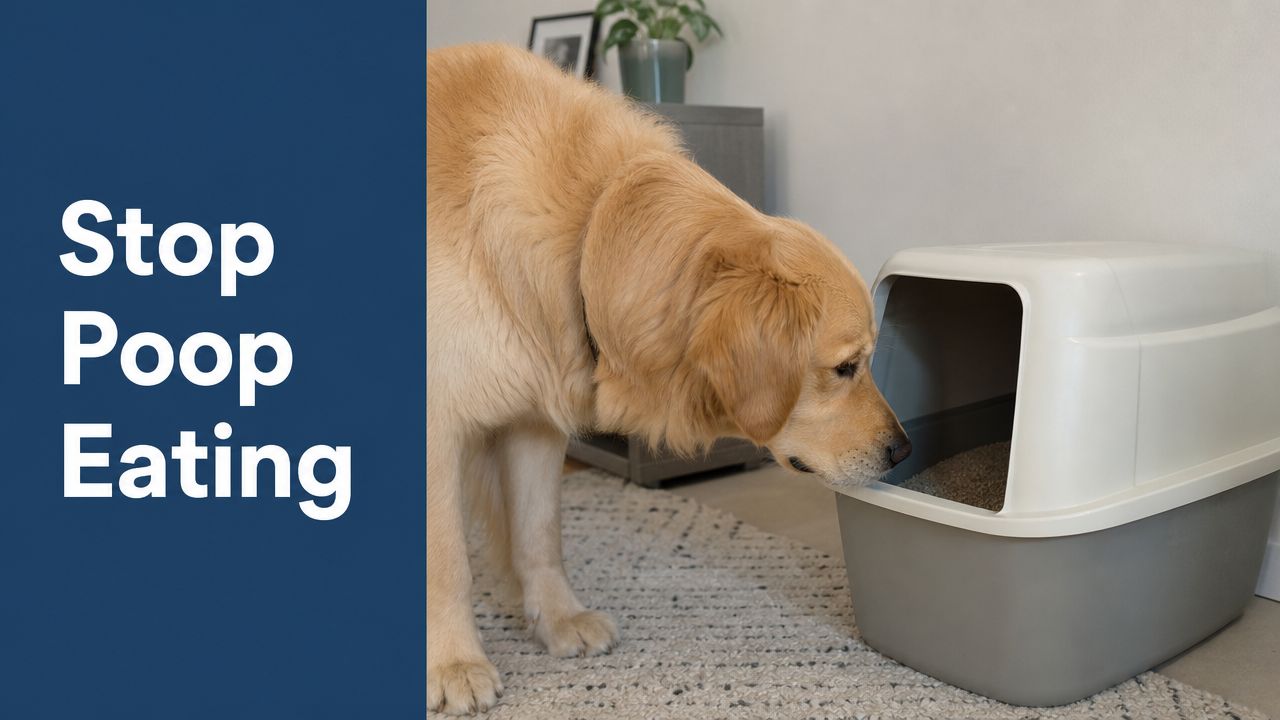
You scoop the litter box, turn around for one second, and your dog is already there. Nose deep. Tail wagging. Looking thrilled.
If your dog eats cat poop, your reaction is probably a mix of disgust, worry, and confusion. That's normal. Most owners want to know two things right away. Is this dangerous, and how do I make it stop?
The good news is that this behavior has a name, coprophagia, and it's common. In a large study published in the Journal of Veterinary Behavior, 16% of dogs sampled were observed eating stool frequently, defined as at least six times, and the first web-based survey in that study also found 16% of dogs in general were coprophagic (Journal of Veterinary Behavior study). So if this is happening in your house, you are far from alone.
That doesn't mean you should ignore it. Litter box snacking can expose your dog to parasites, bacteria, and one risk many owners miss completely: the litter itself. The behavior also frustrates people because it can happen even when a dog is fed regularly and seems otherwise healthy.
That Unsettling Moment of Discovery
A lot of multi-pet homes have the same setup. The cat has a litter box tucked into a bathroom, laundry room, or basement corner. The dog seems uninterested for weeks, maybe months. Then one day you catch them treating it like a snack station.
For many owners, that first moment feels personal. You may wonder if you're feeding the wrong food, missing a health issue, or somehow creating a bad habit. Most of the time, it isn't a sign that you've failed your dog. It's a mix of instinct, opportunity, and reward.
Why this feels so upsetting
Dogs explore with their mouths and noses, but cat feces crosses a line for most humans. It's unsanitary. It's unpleasant. And after it happens, every lick to your hand feels questionable.
Important perspective: Common doesn't mean harmless, but it does mean this is a familiar veterinary conversation.
Some dogs start this habit in puppyhood. Others discover the litter box later and keep returning because it's easy access to something they find highly rewarding. If the box stays available, the behavior often repeats.
What most owners get wrong at first
The first assumption is often, “My dog must be missing something in their food.” That can happen in some cases, but it's not the whole story. Many well-fed dogs still go after cat poop because they like it.
That's why quick fixes often disappoint owners. If the actual driver is attraction and access, changing the food bowl alone won't solve the litter box problem.
Why Dogs Find Cat Poop Irresistible
Many dogs are not making a nutrition calculation when they head for the litter box. They are following their nose.
To a scavenger, cat stool can smell like a concentrated meat-based snack. Cats eat diets that are naturally high in animal protein, and their stool may still carry odors and bits of undigested fat or protein that a dog finds rewarding. That is why this behavior can show up even in a dog who eats a balanced food every day. As one plain-language explanation notes, dogs are often responding to smell and taste, not just hunger or deficiency (Rover explanation of why dogs eat cat poop).

It isn't always about a bad diet
Many owners assume the problem is purely dietary. Sometimes food quality, poor digestion, or an increased appetite does play a role. But in many cases, the bigger driver is simple. The litter box offers a strong smell, easy access, and an immediate reward.
A useful comparison is a bag of chips left open on the counter. Your dog may not be nutrient-deficient. The food is just tempting, available, and memorable. Cat poop works the same way for some dogs, especially because the scent is so intense to a canine nose.
Cat poop often acts like a high-protein scent target. Once a dog learns where that reward is, the habit can repeat quickly.
Other reasons the behavior can show up
The behavior also becomes more likely when a dog's daily routine is not meeting their physical or mental needs. Common contributors include:
- Boredom: Dogs with too little enrichment often investigate anything novel or smelly.
- Stress or anxiety: Changes in routine can increase repetitive, odd, or comfort-seeking behaviors.
- Hunger or a bigger-than-usual appetite: Some dogs scavenge more aggressively when they feel unsatisfied.
- Medical causes: Conditions that increase hunger or interfere with nutrient absorption can push a dog toward unusual food-seeking.
Learning matters too. If a dog raids the box and enjoys what they find, the brain files that away as a successful foraging trip. From then on, the litter box is not just a bathroom spot. It becomes a place worth checking again.
The Hidden Dangers Beyond the Ick Factor
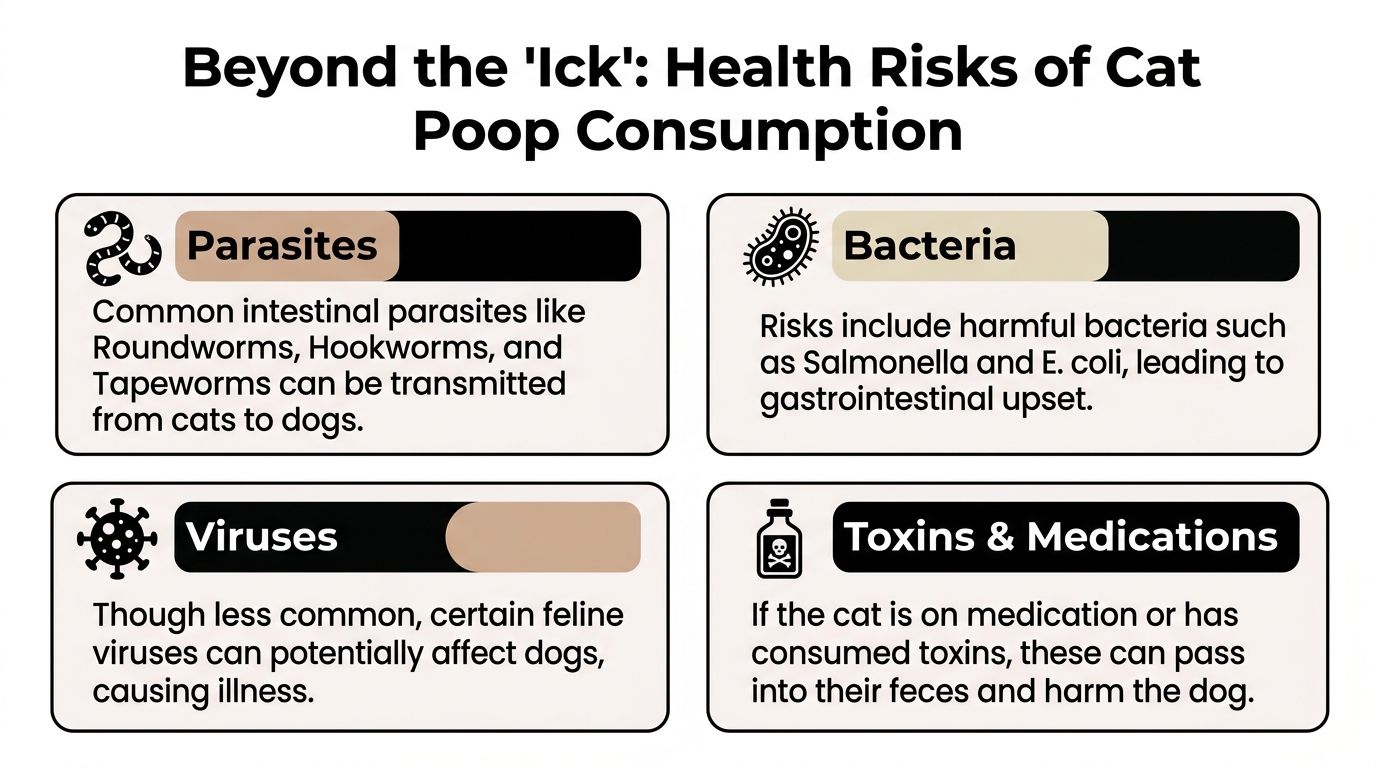
You may feel relieved if your dog seems fine after raiding the litter box. Sometimes the only result is a brief upset stomach. The part that deserves closer attention is what came along with the stool.
Recent veterinary guidance points to clumping litter as one of the biggest physical hazards after a litter box raid. While the feces itself may not always cause major illness, swallowed litter can contribute to constipation, impaction, or even a blockage that needs urgent care (veterinary guidance on clumping litter risks).
The danger many owners overlook
Clumping litter is made to do one job well. It pulls in moisture and forms a dense mass. Inside a litter box, that is helpful. Inside a dog, it can act more like wet cement than harmless dust.
That is why a dog who eats only a little stool can still have a bigger problem than you might expect. If litter granules were attached, they may swell after being swallowed and slow things down in the digestive tract. In some dogs, that means straining, hard stool, repeated vomiting, belly pain, or a true obstruction.
Small dogs, dogs that gulp food without chewing, and dogs that ate a larger amount deserve especially close watching.
Infectious risks from feces
Cat stool can also carry organisms that you do not want your dog ingesting. Veterinary behavior researchers have noted risks that include bacteria such as Salmonella and parasites such as roundworms, hookworms, and tapeworms from feces, with some household exposure risk for people as well, as discussed earlier in the article.
If you are sorting out the parasite side of the problem, this guide on whether tapeworms in dogs are contagious explains what can spread, what usually does not, and what hygiene steps help at home.
Most healthy adult dogs will not become seriously ill every time this happens. Puppies, senior dogs, and dogs with weaker immune systems have less margin for error.
When concern goes up
Some situations raise the stakes more than others:
| Situation | Why it matters |
|---|---|
| Outdoor or stray cat stool | Parasite exposure may be higher because these cats are less likely to be dewormed or regularly checked. |
| Clumping litter stuck to the stool | The main concern shifts from "gross" to a mechanical problem in the gut. |
| A large amount was eaten | More material means more chance of vomiting, constipation, or blockage. |
| Your dog is very young, very small, or already sick | These dogs can dehydrate or decline faster if stomach upset or obstruction develops. |
A useful way to frame it is this. The poop is the contamination risk. The litter is often the blockage risk. Both matter, but the litter is the part owners commonly miss.
If your dog eats cat poop once and acts normal, monitor closely for the next day or two. If you know clumping litter was swallowed, watch more carefully and have a lower threshold for calling your veterinarian.
Your Practical Prevention and Management Plan
The most reliable solution is simple, even if it takes some rearranging. Stop access. Experts recommend preventing access to the litter box as the most effective strategy, alongside cleaning the box daily or immediately after the cat uses it to reduce temptation, as available medications and poop-deterrent treatments are generally not effective in stopping the habit (Whole Dog Journal prevention guidance).
Start with the room, not the dog
Owners often spend too much energy correcting the dog after the fact. That rarely works well because the reward has already happened. You'll usually get farther by changing the setup.
A safer home layout matters here. If you want more ideas for separating pet spaces cleanly, this guide to creating a pet-friendly home is useful.
What works in real homes
Try a few of these at the same time:
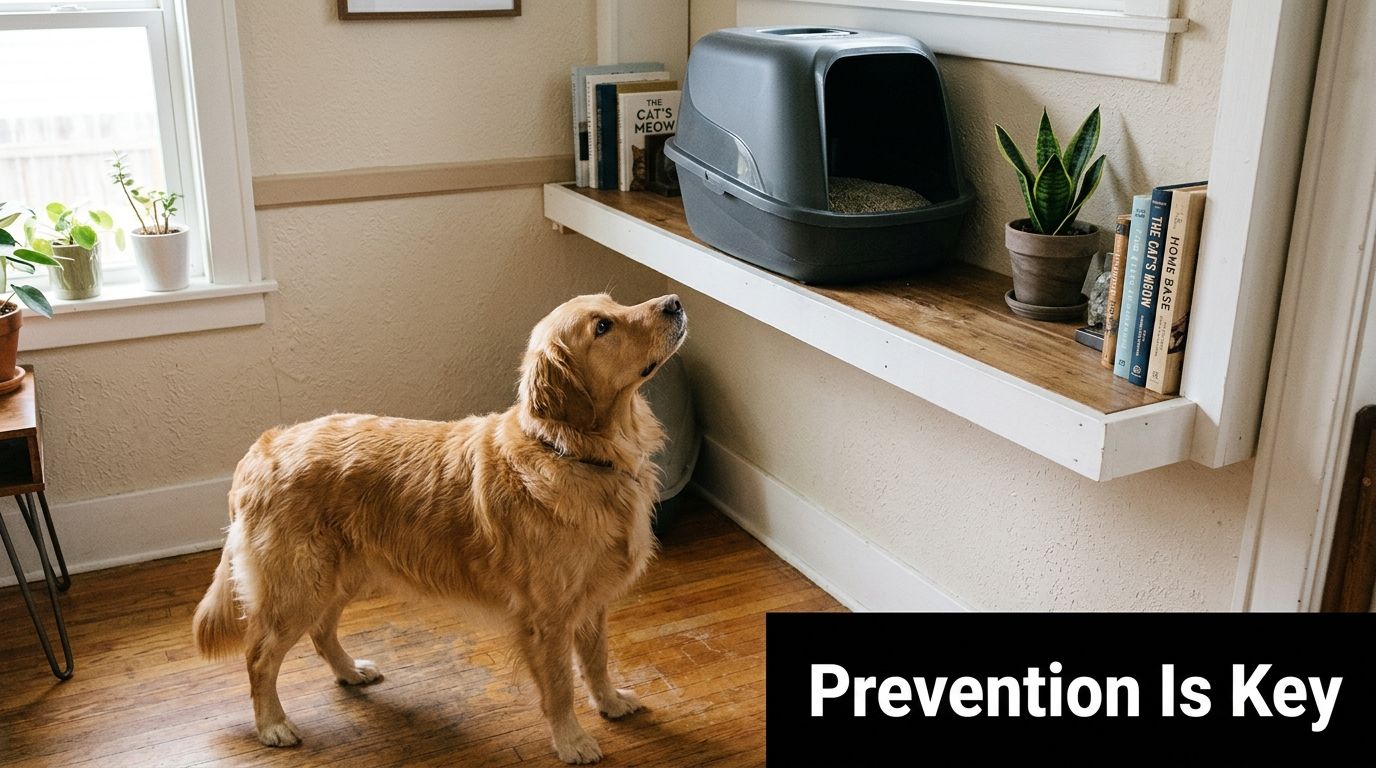
- Move the litter box: Put it behind a baby gate, in a cat-only room, or on a surface your cat can reach but your dog can't.
- Change the box style: Covered boxes and high-sided boxes can reduce access for some dogs.
- Use furniture strategically: Dog-proof litter box cabinets can hide the opening while preserving privacy for the cat.
- Scoop faster: The less time stool sits in the box, the fewer chances your dog gets.
- Supervise problem times: Many dogs target the box right after the cat uses it.
Training still helps, but management comes first
Training matters most when paired with environmental control. Useful cues include “leave it,” “come,” and a reliable interruption followed by redirection to something better, such as a toy, chew, or food puzzle.
What you want to avoid is chasing, yelling, or making the box feel even more exciting. Strong reactions can accidentally turn the whole event into a game.
This short video gives a practical look at litter box management and prevention ideas:
A simple home checklist
- Block access today. Don't wait for a training plan to start.
- Scoop on a tighter schedule. Immediate cleanup helps most.
- Add enrichment. Walks, sniffing games, and puzzle feeders reduce idle scavenging.
- Watch for patterns. Time of day, boredom, and routine changes often matter.
Boosting Nutrition to Satisfy Their Cravings
Some dogs don't just want “something gross.” They appear to want something rich, meaty, and rewarding. That's why nutritional support can make sense as part of a broader plan, especially if your dog seems intensely drawn to high-value smells and flavors.
Think enhancement, not replacement
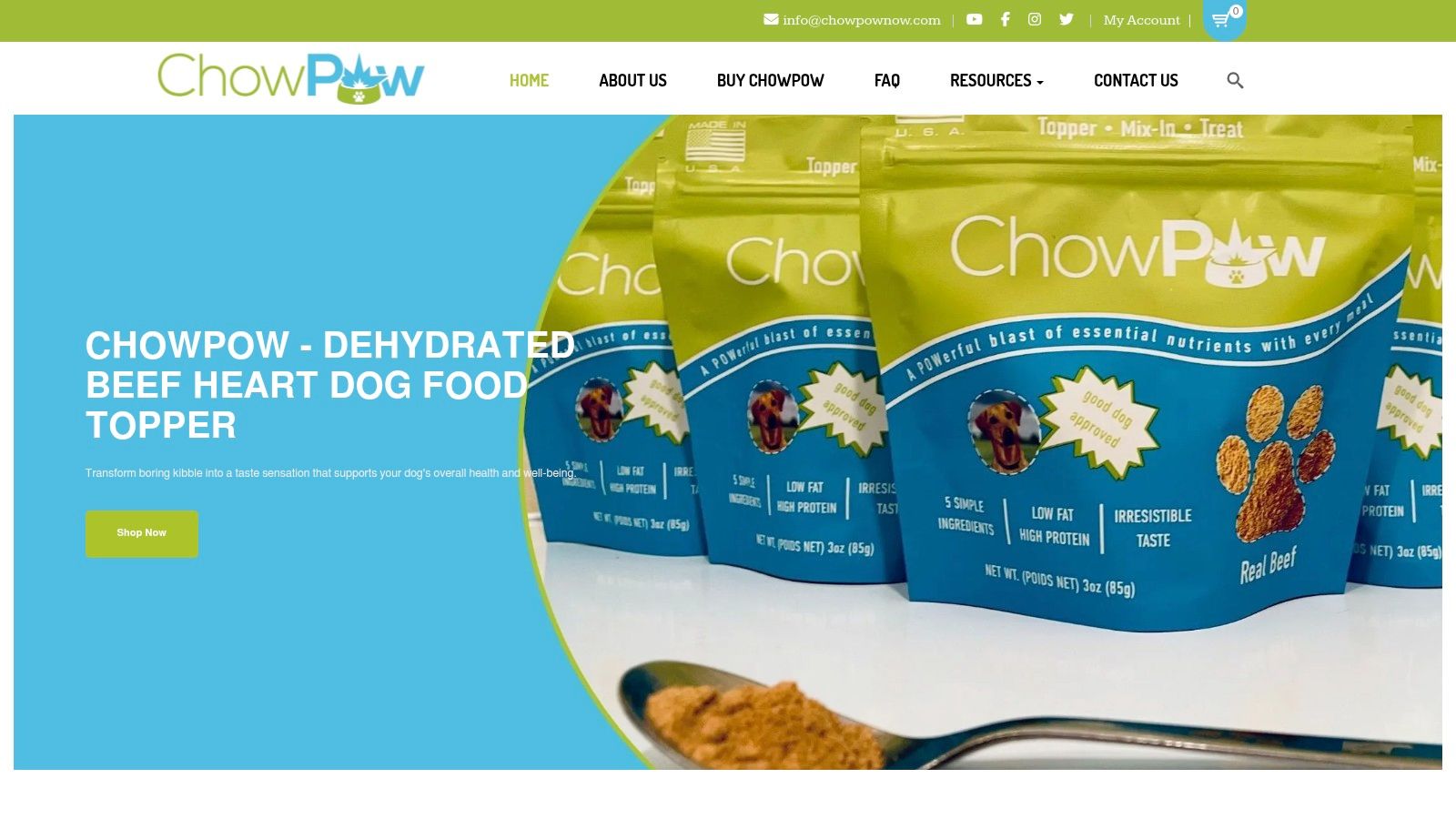
If you choose to improve the appeal and nutrient density of your dog's meals, the goal is to boost what they already eat, not throw out their current kibble overnight. A meal enhancer or topper can add smell, flavor, and protein without replacing the full diet.
Beef heart is one example of a nutrient-dense addition. It contains 17 to 20 grams of high-quality protein per serving, which supports muscle and tissue repair, and its protein density makes it a potent small-volume addition rather than a main meal replacement (beef heart protein details).
Why this approach can help
For a dog attracted to the scent and richness of cat stool, making regular meals more satisfying may help reduce the appeal of scavenging. It won't fix a litter box access problem by itself, but it can support the plan from the nutrition side.
A practical approach looks like this:
- Keep the base diet stable: Don't switch foods impulsively unless your veterinarian recommends it.
- Use toppers as supplements: They should add value to the meal, not replace balanced feeding.
- Choose high-quality ingredients: Dogs often respond strongly to whole-food protein sources.
- Make meals more rewarding: Better aroma and taste can matter for picky or novelty-seeking dogs.
If you're curious about how toppers fit into a routine, this article on the benefits of adding food toppers to your dog's diet explains the strategy well.
A richer bowl can help meet the dog where their instincts already are. It works best when paired with strict litter box management.
When You Should Call Your Veterinarian
Most litter box raids are more embarrassing than dramatic. But some situations deserve a veterinary call sooner rather than later.
Call promptly after ingestion if you notice symptoms
Watch for signs that could suggest irritation, infection, or a blockage:
- Vomiting that repeats
- Diarrhea or marked constipation
- Lethargy
- Belly discomfort
- Straining to pass stool
- Loss of appetite after eating litter or feces
If your dog may have swallowed a meaningful amount of clumping litter, don't take a wait-and-see approach for too long. Mechanical blockage is the concern.
Call if the behavior is new or suddenly worse
A sudden change in scavenging behavior can be a clue that something else is going on. The habit of eating non-food items is frequently linked to medical conditions such as diabetes, Cushing's disease, or vitamin B12 deficiency, which can increase a dog's appetite and lead them to consume items like cat poop. That association is described in veterinary guidance discussed by Whole Dog Journal, though the detailed prevention link appeared earlier in this article.
Bring useful details to the appointment
Your veterinarian will usually want to know:
- How often it happens
- Whether the cat goes outdoors
- What kind of litter you use
- Whether appetite, thirst, or weight have changed
- Any vomiting, stool changes, or low energy
That information helps separate a common behavioral issue from a medical problem that needs testing or treatment.
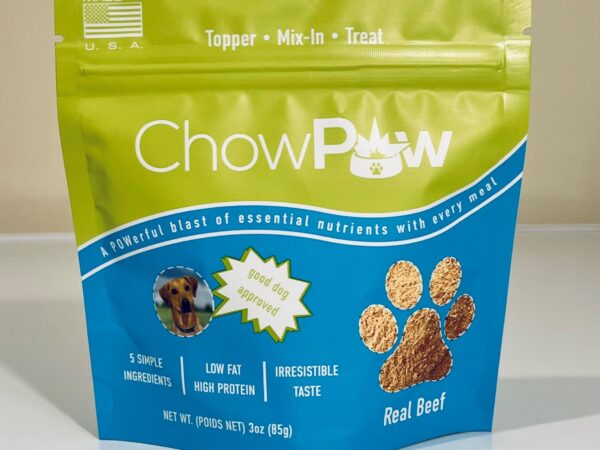
If your dog is drawn to high-value smells and you want a simple way to make meals more appealing, ChowPow is designed as a meal enhancer, not a replacement for your dog's current kibble. It's a dehydrated beef heart topper that can boost flavor and nutritional value, which is especially helpful for picky eaters, seniors, and dogs needing extra support at mealtime.
-
Product on sale
 Dog Food Topper - Beef HeartOriginal price was: $14.99.$10.95Current price is: $10.95. - or subscribe and save up to 20%