
Dog Food Allergy Elimination Diet: Your Complete Guide
When you suspect your dog has a food allergy, an elimination diet is the best way to figure out what’s really causing the problem. It’s a simple diagnostic tool that involves temporarily feeding your dog a special diet made of ingredients they’ve never had before. This gives their immune system a much-needed break and allows you to pinpoint the specific triggers behind all that itchy skin, chronic ear infections, or tummy trouble.
Is a Food Allergy Making Your Dog Miserable?
That relentless scratching, the constant paw licking, the frustrating head shaking—it’s not just a weird quirk. More often than not, it’s a clear sign your dog is uncomfortable. Many owners get stuck in a frustrating cycle of vet visits and treatments for skin issues, only to have the symptoms creep right back.
If this sounds familiar, you’re not alone. The first step toward relief is learning to recognize the signs for what they are. While itchy skin is the most famous symptom, a true food allergy can show up in some surprisingly subtle ways.
Beyond the Itch: Common Allergy Symptoms
It’s a common misconception that food allergies only cause skin problems. The reaction is actually systemic, meaning it can affect your dog’s entire body. And here’s the kicker: an allergy can develop to an ingredient your dog has been eating for years without any issue. It’s all about repeated exposure.
To help you connect the dots, here’s a quick-reference table of the most common signs.
| Key Symptoms of a Potential Food Allergy | |
|---|---|
| Symptom Category | Common Signs to Watch For |
| Dermatological (Skin) | Chronic itching, red or inflamed skin (especially on the belly, paws, and face), and stubborn hot spots that just won’t heal. |
| Ears | Recurring ear infections, often with a distinct yeasty smell. You might notice head shaking or dark, waxy debris. |
| Paws | Obsessive licking or chewing of the paws. Look for red, swollen paws or saliva staining (a reddish-brown discoloration of the fur). |
| Gastrointestinal (Gut) | Excessive gas, chronically loose stools or diarrhea, intermittent vomiting, and loud gut gurgling. |
As you can see, the symptoms can be pretty varied, which is why they often get mistaken for other problems. For instance, it’s easy to blame your dog’s itchiness on seasonal changes. If you want to dig deeper into the differences, you can learn more about managing spring-time allergies in dogs right here.
Trusting Your Instincts
You know your dog better than anyone. If you have a nagging feeling that something in their food bowl is the culprit, you’re probably right. In fact, research shows that owners are often the first to suspect a food-related issue.
A detailed survey revealed that 60% of dog owners first suspected a food allergy in their pets themselves, with symptoms most commonly appearing between 1 to 6 years of age. Owners reported licking paws (72%), bilateral ear infections (48%), and excessive gas (46%) as top indicators. Discover more insights from this pet owner survey.
This data confirms what vets have seen for years: those little changes you notice every day are significant clues. Recognizing these patterns is the most important first step. It empowers you to stop guessing and start a productive conversation with your vet about whether a dog food allergy elimination diet is the key to finally giving your best friend the relief they deserve.
Getting Ready for a Successful Diet Trial
Jumping into a dog food allergy elimination diet without a plan can be frustrating. A successful trial isn’t just about swapping one bag of food for another; it’s about being disciplined and creating a completely controlled environment for your dog. The whole point is to isolate every single variable so you can get clear, reliable answers about what’s really bothering them.

Honestly, this prep work is the most critical part of the entire process. Getting it right from the start saves you weeks of wasted effort and ensures the results you get are accurate.
Rule Out Other Culprits First
Before overhauling your dog’s diet, your first stop should always be the vet’s office. Itchy skin, ear infections, and digestive upset can be caused by many things that have nothing to do with food.
Your vet needs to do a thorough exam to rule out these common “itch-impostors.” This step is non-negotiable. Why? Because if your dog’s symptoms are actually from fleas or an environmental allergy like pollen, changing their diet won’t fix a thing.
Common Non-Food Causes of Allergy-Like Symptoms:
- Parasites: Fleas, ticks, and mites are notorious for causing intense irritation. For a sensitive dog, a single flea bite can trigger a massive reaction.
- Environmental Allergies (Atopy): Things like pollen, dust mites, and mold can cause symptoms that look identical to a food allergy.
- Skin Infections: It’s common for bacterial or yeast infections to pop up from all the scratching, and these need their own specific treatment to clear.
Once your vet gives you the all-clear and agrees a food trial is the next logical step, you can move forward with confidence.
Select a True Novel Protein
The idea behind an elimination diet is to feed your dog ingredients they have never been exposed to before. This is where the term “novel protein” comes from. A protein is only “novel” if your dog’s immune system has never encountered it.
For most dogs, common proteins like chicken, beef, and lamb have been in their food for years. Continued exposure is what allows an allergy to develop. That’s why switching from a chicken-based kibble to a beef-based one is rarely helpful for a diet trial.
You have to think outside the box. Great examples of novel proteins include:
- Kangaroo
- Venison
- Duck
- Alligator
- Salmon
Take a minute and think back through every food and treat you’ve ever given your dog. If you’ve handed them a dental chew that had “duck flavor” in it, then duck is no longer a novel option. This is why working closely with your vet is so valuable—they can help you review your dog’s dietary history.
Create a Food Clean Zone
Alright, this is where the real work begins—and it’s where most diet trials go wrong. For an elimination diet to work, your dog cannot eat anything other than their special food and water. Period. This means you need to do a full audit of your home and create a “food clean zone.”
An elimination diet is an all-or-nothing game. A single slip-up—a dropped piece of cheese from the counter, a lick of a dinner plate, or even a flavored chew toy—can completely ruin the trial and force you to start over from day one.
Start by tracking down and removing every potential source of contamination.
- Treats and Chews: Bag up all their current dog treats, dental sticks, rawhides, and bully sticks. Put them somewhere they absolutely cannot be accessed.
- Flavored Toys: You’d be surprised how many rubber or nylon toys are infused with chicken, beef, or bacon flavoring. These have to go into storage for the trial.
- Supplements & Meds: Scrutinize the ingredient lists on any supplements, like joint support chews or skin oils. Even pill pockets and some flavored medications can contain problem ingredients. Chat with your vet about diet-safe alternatives.
- Toothpaste: Many dog toothpastes are flavored with poultry or beef. You’ll need to switch to a non-flavored or vet-approved option.
Get the Whole Household on Board
Finally, a successful dog food allergy elimination diet requires a total commitment from everyone in the house. Your strict efforts can be completely undone in seconds by a well-meaning family member who doesn’t understand the rules.
Call a family meeting and explain just how important this is. Make it clear that this is a temporary diagnostic tool, not a punishment. For kids, you can even frame it as a game: “We’re all food detectives trying to help [Dog’s Name] feel better!”
Make sure everyone, including visitors and dog-sitters, knows the ground rules:
- No table scraps. Ever.
- Keep kitchen floors spotless to avoid dropped crumbs.
- Make sure all trash cans are secure.
- Only the prescribed food can be used for training rewards.
This unified front is non-negotiable. With your vet’s guidance, a carefully chosen novel protein, and a decontaminated home, you’re all set to begin the journey to a much happier, itch-free dog.
Navigating the 8-Week Elimination Phase
Alright, this is where your hard work pays off. For the next eight to twelve weeks, your dog’s diet will be incredibly simple and completely under your control. This phase is the heart of the dog food allergy elimination diet, designed to give your dog’s overactive immune system a much-needed break and establish a healthy baseline. The goal is to remove every potential trigger so their body has a chance to heal.
Sticking to the plan with 100% accuracy is the only way you’ll get clear, trustworthy results. Just one well-meaning treat from a visitor or a dropped piece of cheese from the counter can send you right back to square one. It’s crucial that everyone in the household is on board.
The Foundation: A Single Protein and Carbohydrate
During these weeks, your dog will eat one new protein and one new carbohydrate. That’s it. Nothing else. This isn’t about being mean; it’s about being methodical. By stripping the diet down to its bare essentials, you eliminate all the variables that could be causing their discomfort.
Choosing the right food here is a game-changer. While a homemade diet might seem like a good idea, it’s incredibly tough to balance nutritionally. This is the perfect time to lean on a purpose-built food. ChowPow’s limited-ingredient formulas were designed for exactly this situation, providing a complete, single-protein meal that makes the trial simple, safe, and reliable. It takes all the guesswork and stress out of meal prep.
This chart gives you a great visual of how the next eight weeks will flow.
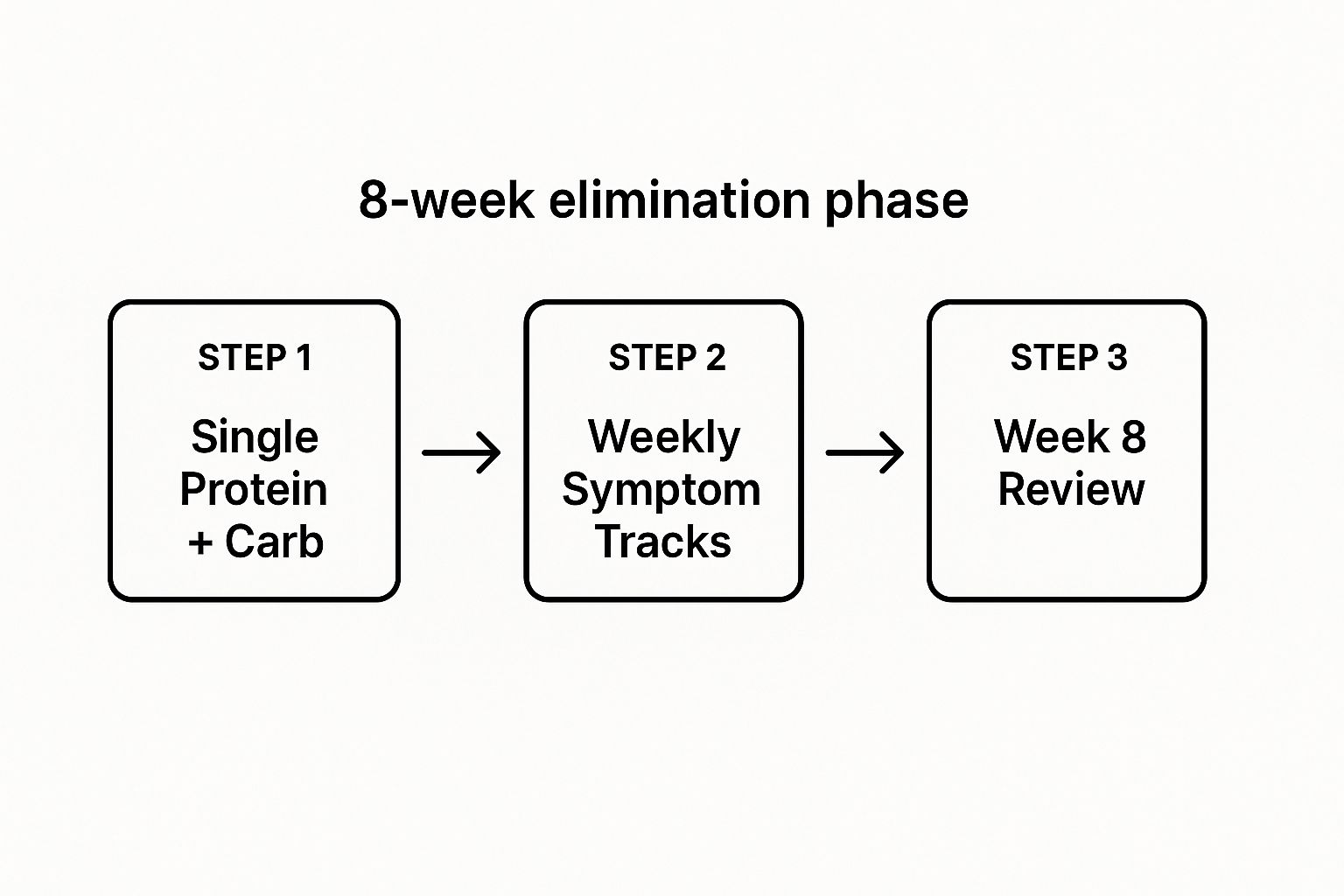
As you can see, it’s a clear progression: start with the strict diet, monitor everything closely, and then review your findings before you even think about the next step.
Keeping a Detailed Symptom Journal
Your eyes are your most important tool during this process. A symptom journal is how you’ll capture every small change and connect the dots. Don’t rely on memory—a subtle shift you might forget could be the clue that unlocks everything.
Your daily log should track:
- Itch Level: Use a simple 1-10 scale. Is the scratching better in the morning? Worse after a walk?
- Skin Condition: Make notes on any changes in redness, rashes, or hot spots. Tip: Take pictures once a week in the same spot with the same lighting to create a visual timeline.
- Ear Health: Are the ears less red? Is there less gunk or head-shaking?
- Digestive Health: Keep an eye on the consistency and frequency of their poop. Often, digestive improvement is one of the first signs you’re on the right track. You can check out our guide on your dog’s digestive health report card to get a better handle on what you’re seeing.
- Energy and Mood: A dog that feels better, acts better. Note their general vibe and energy levels.
Expectation Check: Progress is rarely a straight line. You’ll likely see good days and bad days, especially in the first few weeks. Some dogs show improvement in as little as three weeks, but for many, it can take the full eight weeks or even longer for their skin to fully heal. Be patient and stick with it.
Staying on Track in the Real World
Let’s be honest, keeping a diet this strict can be a challenge. The two biggest hurdles are multi-pet households and the need for training treats.
If you have other pets, preventing cross-contamination is your top priority.
- Feed pets in separate rooms. And don’t leave another pet’s food bowl down where your allergic dog might sneak a bite.
- Clean up right away. Wash all food bowls after each meal and wipe down the feeding area.
- Store foods separately. Keep the elimination diet food in a sealed, clearly marked container, far away from other pet foods.
Finding “legal” rewards is also a must for training. You can’t use their old treats, so you have to get creative with what’s on the approved list. Small, plain pieces of the new protein or carbohydrate from their special diet often work great. For instance, if you’re using ChowPow’s Duck & Potato formula, a tiny piece of plain, baked duck can become a high-value reward.
Uncovering the Allergen in the Reintroduction Phase
After weeks of sticking to the plan, your dog is likely feeling much better. The scratching has probably stopped, their ears look clear, and their energy is back. This is a massive victory, but the real detective work in your dog food allergy elimination diet is just getting started.
This next stage is called the “reintroduction” or “challenge” phase. It’s the only scientifically proven way to pinpoint exactly which ingredients are causing the trouble. If you rush this part, you risk undoing all your hard work. A slow, methodical approach is the only way forward.
The Logic of the Food Challenge
The whole point of the elimination phase was to get your dog to a symptom-free baseline. Now that their immune system has calmed down, it will react much more obviously when a problem ingredient is reintroduced.
Think of it like being in a perfectly quiet room—even the faintest whisper is easy to hear. Your dog’s calm, symptom-free body is that quiet room, and a trigger food is the whisper.
This process puts you in control. You’ll finish this phase with a concrete list of what’s safe and what needs to be avoided, taking all the guesswork out of their diet for good.
How to Reintroduce Ingredients Systematically
The golden rule here is simple: one new ingredient at a time. You’ll add a small amount of a single protein or carb you previously eliminated back into their diet while keeping everything else exactly the same. This isolation is crucial for getting clear answers.
Here’s a practical game plan for reintroducing a potential allergen, like chicken:
- Start Small: Begin by adding just a tiny bit of plain, cooked chicken to their elimination diet meal. For a medium-sized dog, that might be just a teaspoon.
- Stay Consistent: Keep feeding this small amount of chicken with their meals for a full 7 to 14 days. Do not introduce anything else new during this time.
- Watch Like a Hawk: This is where your symptom journal becomes your best friend again. Track your dog for any return of old symptoms—even a tiny increase in paw licking, a subtle head shake, or slightly softer poop is a major clue.
If symptoms pop up at any point during the challenge, you’ve found a trigger. Stop feeding that ingredient right away, wait for the symptoms to completely disappear, and only then can you move on to testing the next ingredient on your list.
What to Watch For During Reintroduction
A reaction isn’t always a dramatic flare-up. Sometimes, the signs are much quieter at first. Be on the lookout for any of these classic symptoms making a comeback:
- Skin Irritation: This is the most common one. Look for more scratching, new pinkness on the belly or in the armpits, or a return to obsessive paw chewing.
- Ear Issues: Notice any renewed head shaking or ear scratching? Check inside for any new redness or waxy gunk.
- Digestive Upset: Softer stools, more gas, or a gurgly tummy can all signal that the new food isn’t sitting well.
- Behavioral Changes: A dog that suddenly seems tired or cranky might be feeling the low-grade discomfort of an allergic reaction.
If your dog gets through the full 7-14 day challenge with a certain ingredient and shows zero signs of a reaction, you can confidently check that food off as “safe.” You can then stop feeding it, make sure your dog is back to their baseline, and start the whole process over with the next ingredient on your list, like beef or wheat.
This phase of the dog food allergy elimination diet requires patience, but the clarity you’ll gain is priceless. By methodically testing each ingredient, you’re building a custom dietary roadmap that will keep your best friend healthy and happy for years. Once you have your “safe” and “unsafe” lists, choosing a long-term food, like one of ChowPow’s transparent, limited-ingredient options, becomes simple and completely stress-free.
Crafting Your Dog’s Long-Term Healthy Diet Plan
You’ve made it through the elimination and reintroduction phases—take a moment to celebrate! Pinpointing your dog’s specific food triggers is a huge accomplishment, but it’s not the finish line. Think of this as a new beginning. You now have the knowledge to build a sustainable, symptom-free life for your best friend.
The goal now is to shift from a temporary diagnostic diet to a permanent, healthy one that keeps them comfortable for the long haul.
This next chapter is all about being vigilant and making smart choices. With your new list of “safe” and “unsafe” ingredients, you can confidently build a diet that nourishes your dog without causing those dreaded flare-ups.
Becoming an Expert Label Reader
From now on, you have a new superpower: reading pet food labels like a pro. Manufacturers can hide common allergens under vague terms that are easy to miss. You need to become a detective, scanning every ingredient list for potential troublemakers before anything goes into your dog’s bowl.
Keep a sharp eye out for these ambiguous terms:
- “Meat by-products”: This is a catch-all term that could contain any number of proteins, including the ones that trigger your dog’s allergies.
- “Animal digest” or “animal fat”: These are non-specific and often contain a mix of different proteins, making them a risky bet for a sensitive dog.
- Natural flavorings: Unless the source is specified (like “natural chicken flavor”), these can be derived from various proteins. It’s best to avoid them.
This is exactly why finding a food you can trust makes all the difference. With ChowPow’s transparent, limited-ingredient diets, you never have to guess what’s in the bag. Our single-protein options, like our salmon or kangaroo recipes, take the guesswork out of feeding time and give you peace of mind.
A well-managed dog food allergy elimination diet is clinically significant. In specialty vet practices focused on skin issues, up to 24% of dogs are diagnosed with a food allergy or intolerance. That number plummets to just 0.4% in general practice, which shows how easily this problem gets missed without a focused approach. Read the full research about these findings.
Choosing the Right Long-Term Food
With your list of safe ingredients in hand, you can start shopping for a commercial diet with confidence. The key is finding a food that not only avoids the problem ingredients but also provides complete and balanced nutrition for the long run.
Your dog’s new food should be built around one of the novel proteins that proved to be safe during the trial. For a deeper dive into your options, you can check out our guide on the best foods for dogs with allergies.
Maintaining a Safe Environment
Your dog’s diet doesn’t exist in a bubble. To prevent accidental flare-ups, you’ll need to get everyone who interacts with your pup on the same page. This is vital for their long-term health.
Here are a few final tips for success:
- Educate Family and Friends: Gently but firmly explain that even a tiny, well-intentioned treat can trigger a painful reaction.
- Talk to the Groomer: Let your groomer know about your dog’s allergies. Make sure they use hypoallergenic shampoos and don’t hand out any post-grooming treats.
- Alert Your Vet and Boarding Facility: Check that your dog’s dietary restrictions are clearly noted in their files at the vet’s office or any kennel they might stay at.
By combining careful label reading with a trusted limited-ingredient food and clear communication, you can create a lifestyle that keeps your dog feeling their absolute best.
Common Questions About the Elimination Diet
Starting a dog food allergy elimination diet can feel overwhelming. It’s normal to have questions pop up along the way. Feeling a little unsure is part of the process, but getting clear answers will help you feel confident and stick with it.
Let’s walk through some of the most common things pet parents ask.
How Long Until I See Results?
This is the big one, and the honest answer is: you have to be patient. While you might see small improvements in as little as three or four weeks, it’s far more common for the full picture to emerge over 8 to 12 weeks.
Why so long? It takes that much time for the old, problematic ingredients to work their way out of your dog’s system. It also gives their inflamed gut and irritated skin a real chance to heal.
If you don’t see a miracle overnight, don’t give up. The only way this works is with 100% compliance for the entire trial period. That’s how you’ll get results you can trust.
Are Blood or Saliva Tests a Shortcut?
You’ve probably seen ads for allergy tests that just need a blood or saliva sample. They sound easy, but the veterinary dermatology community is clear on this: a food elimination trial is the “gold standard” for a reason.
Frankly, other tests are known for having a high rate of false positives. They might tell you your dog is allergic to a dozen things that aren’t actually causing a problem, which just adds to the confusion.
The elimination and reintroduction trial remains the only definitive way to confirm a food allergy. It provides concrete, real-world evidence of which specific ingredients trigger a reaction in your individual dog.
What if My Dog Does Not Improve?
So, you’ve done everything right. You’ve been perfectly strict for at least eight weeks, and… nothing. Your dog’s symptoms are exactly the same. It’s easy to feel like you’ve failed, but you haven’t. This is actually incredibly valuable information!
A lack of improvement is a huge clue. It strongly suggests that your dog’s problems aren’t being caused by a food allergy at all.
This allows you and your vet to change gears. You can stop spinning your wheels on food and start investigating other common culprits with more confidence, like:
- Environmental allergies (atopy) from things like pollen, mold, or dust mites.
- Parasites like fleas or mites that might have been missed.
- Another underlying skin condition that needs a different type of treatment.
Instead of a dead end, think of it as narrowing down the suspects. You’re now one giant step closer to figuring out the real root cause and finding a solution that will actually work.
No matter what you discover, understanding your dog’s nutrition is fundamental to their long-term health. If you’re looking for a simple, transparent, and trustworthy food option that takes the guesswork out of mealtime, explore the limited-ingredient formulas from ChowPow. See how our clean recipes can support your dog’s well-being at https://chowpownow.com.
-
Product on sale
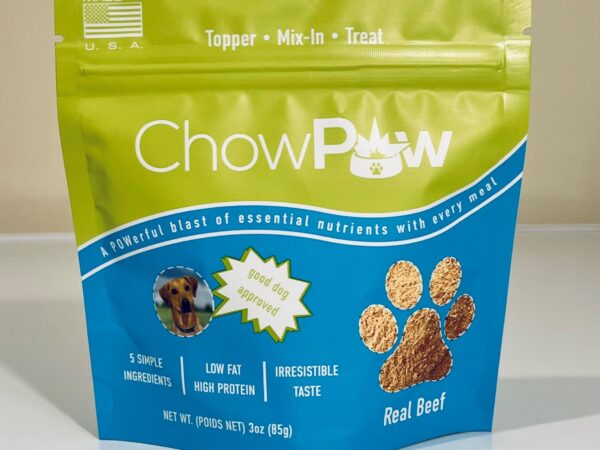 Dog Food Topper - Beef HeartOriginal price was: $14.99.$10.95Current price is: $10.95. - or subscribe and save up to 20%