Dog Not Drinking Enough Water? Real Reasons & Fixes
It’s a feeling that can make any dog owner's stomach drop—you keep checking the water bowl, and the level never seems to go down. When your dog is not drinking enough water, it's a quiet but clear signal that something might be off. This isn't something to brush aside; proper hydration is the absolute foundation of your dog's health, powering everything from their digestion to regulating body temperature.
A dog turning up their nose at water can happen for a lot of reasons, ranging from simple changes in their environment to more serious health issues hiding under the surface.
Why Proper Hydration Is a Big Deal for Your Dog
Water is the unsung hero of your dog's body, involved in nearly every single biological function. It's what helps flush toxins from the kidneys, ferries crucial nutrients into their cells, and keeps their joints lubricated for comfortable, happy movement.
Without enough of it, all these systems can get sluggish and struggle to do their jobs, potentially leading to a whole cascade of health problems.
Just like us, dogs can get dehydrated surprisingly fast. This is especially true in warmer weather or after a good, hard run at the park. Even what seems like mild dehydration can zap their energy, kill their appetite, and leave them feeling generally unwell.
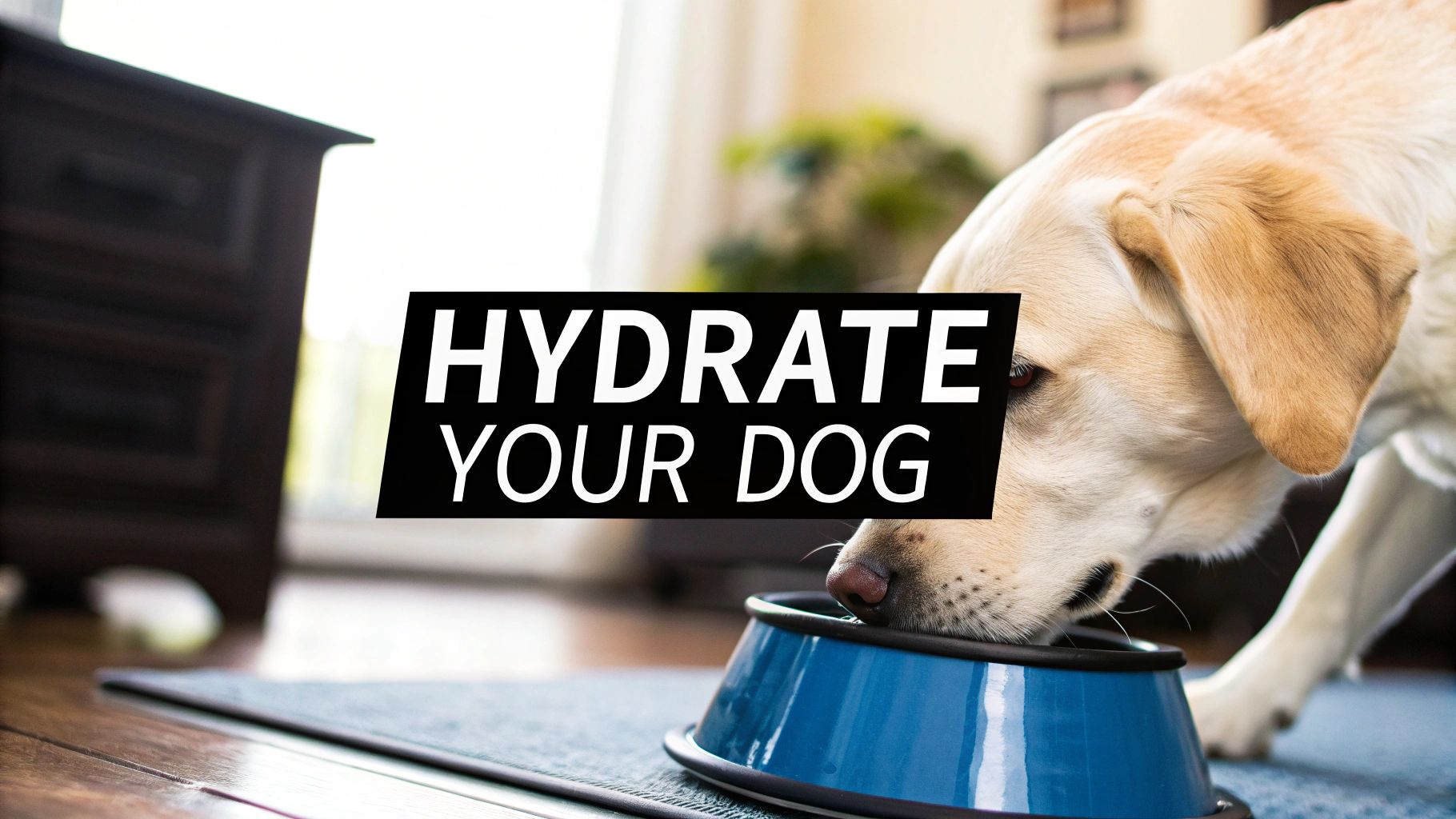
A happy golden retriever eagerly drinking water from a clean stainless steel bowl on a kitchen floor.
Understanding Your Dog's Daily Water Needs
One of the most common questions we hear is, "How much water should my dog actually be drinking?" The answer really comes down to their size and lifestyle.
As a general rule of thumb, veterinary experts suggest that a healthy dog should drink about one ounce of water per pound of body weight each day. So, if you have a 50-pound dog, they need around 50 ounces (that’s roughly 6.25 cups) of water daily to stay properly hydrated.
Of course, this number isn't set in stone. Factors like how active they are, the type of food they eat, and their overall health can shift that target up or down.
Common Reasons for Low Water Intake
Several things can make a dog suddenly go on a water strike. Sometimes, the fix is simple and obvious, but other times it pays to dig a little deeper.
Here are a few common culprits:
- Environmental Changes: Did you just move? Get a new water bowl? Even switching to a different brand of bottled water can make a picky dog hesitant to drink.
- Diet: If your dog eats a diet of wet or raw food, they're already getting a lot of moisture from their meals. This naturally reduces their thirst.
- Behavioral Issues: Sometimes a negative experience near the water bowl, like getting startled by a loud noise, can create a lasting aversion.
- Underlying Health Problems: This is the big one. Things like painful dental issues, nausea, or more serious conditions like kidney disease can completely suppress a dog's natural thirst drive.
Getting to the bottom of these potential causes is your first step. For pet parents struggling with this, our guide on the best way to hydrate your dog is packed with practical solutions and tips. By playing hydration detective, you can start connecting the dots and get your furry friend back on track.
How to Spot Dehydration Before It Becomes Serious
Knowing the signs of dehydration is a pet owner's superpower. It lets you step in early, turning a potential health crisis into a minor hiccup. Instead of just rattling off a list of symptoms, let’s walk through a few hands-on ways you can confidently check your dog at home.
The most trusted at-home method is the 'skin tent test.' Gently pinch the loose skin between your dog's shoulder blades and lift it. In a well-hydrated dog, that skin will snap right back into place the moment you let go. If it's slow to return or stays tented, your dog is likely dehydrated.
Another quick check is their gums. A healthy, hydrated dog has slick, wet gums. If you touch them and your finger sticks a bit, or they feel tacky and dry, that’s a pretty clear signal that your dog needs more fluids.
Going Beyond the Basics
While the skin and gum checks are great first steps, there are other physical clues that can paint a fuller picture of your dog's hydration status. Take a moment to look at their overall appearance and energy.
- Sunken Eyes: Serious dehydration can cause the fatty tissue around a dog's eyes to shrink, giving them a hollowed or sunken appearance.
- Dry Nose: A dry nose isn't always a red flag on its own, but if it's persistently dry or cracked—especially combined with other symptoms—it can definitely point to a lack of moisture.
- Lethargy: Is your usually playful pup acting sluggish or totally uninterested in their favorite ball? A sudden drop in energy is one of the most common signs that something is off.
It's important to realize these more obvious clinical signs often don't show up until a dog has already lost 5% to 8% of their body weight in water. By then, things are getting serious. This simple infographic can help you make a quick decision.
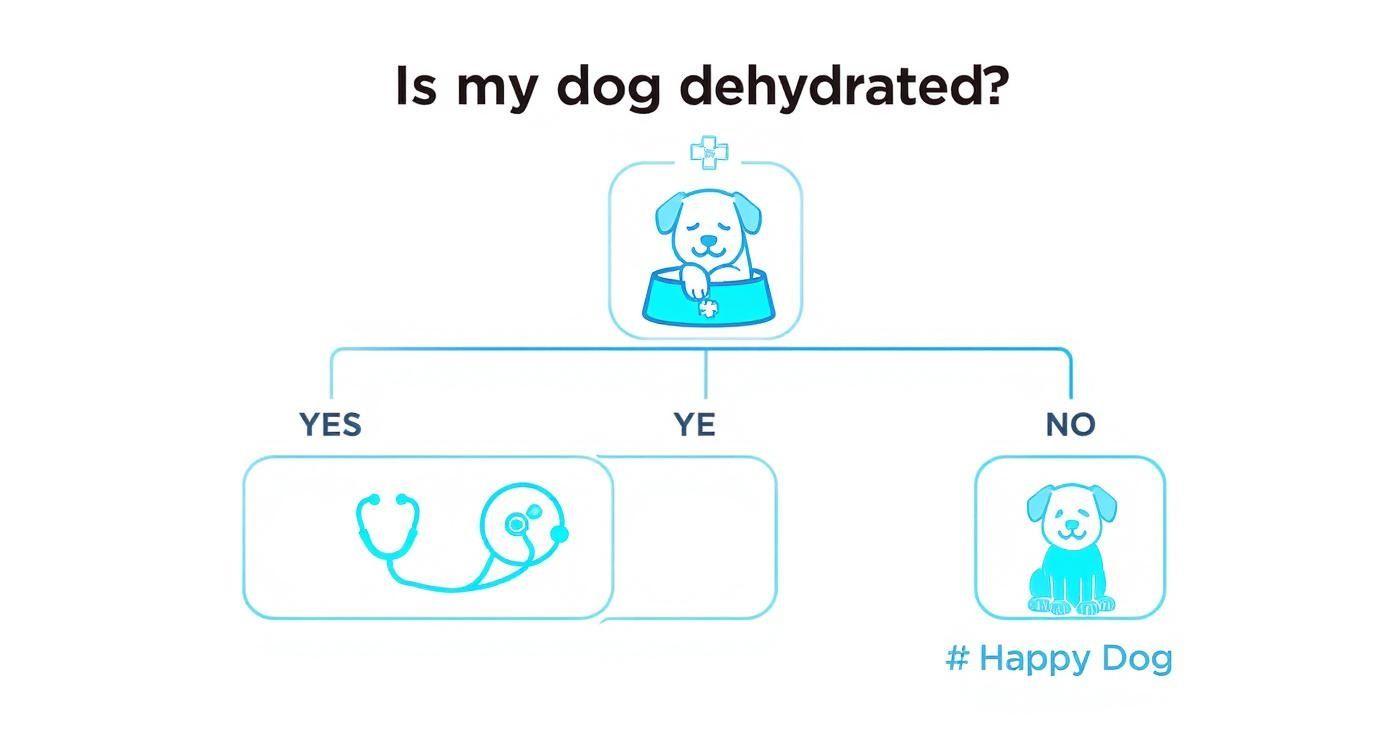
An infographic decision tree helping dog owners decide if their pet is dehydrated.
As the guide shows, if you suspect your dog isn't drinking enough, the next logical step is to check for these physical signs. If you see them, it's time to think about calling the vet.
Mild vs. Severe Dehydration
Knowing the difference between early warning signs and a true emergency is crucial. Mild dehydration can often be managed at home by encouraging your dog to drink, but severe cases demand immediate veterinary care.
Dehydration is often a secondary symptom of an underlying health issue throwing the body's fluid balance out of whack. In fact, clinical research shows that certain metabolic byproducts can even predict how severe the dehydration is, which just highlights how quickly a small fluid deficit can become a big problem.
To help you tell the difference at a glance, here’s a quick reference table.
Dehydration Symptoms At a Glance
This table breaks down the key symptoms to help you assess whether you're dealing with a mild issue or a veterinary emergency.
| Symptom | Mild Dehydration | Severe Dehydration (Seek Vet Care Immediately) |
|---|---|---|
| Skin Elasticity | Skin returns to its normal position slowly. | Skin remains 'tented' and does not return to position. |
| Gums | Slightly dry or tacky to the touch. | Very dry, sticky, and may appear pale. |
| Energy Level | Noticeably less active, slightly lethargic. | Extreme weakness, unwillingness to move, or collapse. |
| Eyes | May appear slightly dull. | Appear obviously sunken and dry. |
If your dog is showing any of the signs in the "Severe Dehydration" column, it's not a wait-and-see situation—it's time to get to the vet right away.
Easy Environmental Tweaks to Encourage Drinking
If your dog isn’t drinking enough, the fix might be simpler than you think. Before you start worrying or trying complicated solutions, take a good look at your dog's immediate environment. Sometimes, a few small, practical changes are all it takes to turn things around.
A dog drinks from a circulating pet water fountain, an easy way to encourage hydration.
Often, the problem (and the solution) starts with the water bowl itself. It's surprising how picky some dogs can be about where their water comes from.
Upgrade the Water Bowl
First, what kind of bowl are you using? If it's plastic, that could be the culprit. Plastic bowls are cheap, but they easily develop tiny scratches that trap bacteria and funky smells, even if you wash them regularly. For a dog with a powerful sense of smell, that's a major turn-off.
Making the switch to a stainless steel or ceramic bowl is a fantastic first step. These materials are non-porous, meaning they’re much easier to get squeaky clean and won't hang onto odors. Honestly, for some dogs, this one simple change is enough to get them drinking again.
Cleanliness is also huge. That slimy film you sometimes feel in the bowl? That's biofilm, and it can form in less than a day. Get into the habit of scrubbing the bowl with soap and hot water daily—don't just top it off.
A clean bowl with fresh water is the foundation of good hydration. If you wouldn't drink from it, you shouldn't expect your dog to.
Strategic Bowl Placement
It’s not just about the bowl, but where you put it. Is it in a chaotic, high-traffic spot, like next to a noisy appliance or in a busy hallway? A skittish dog might feel too exposed to stop for a drink there.
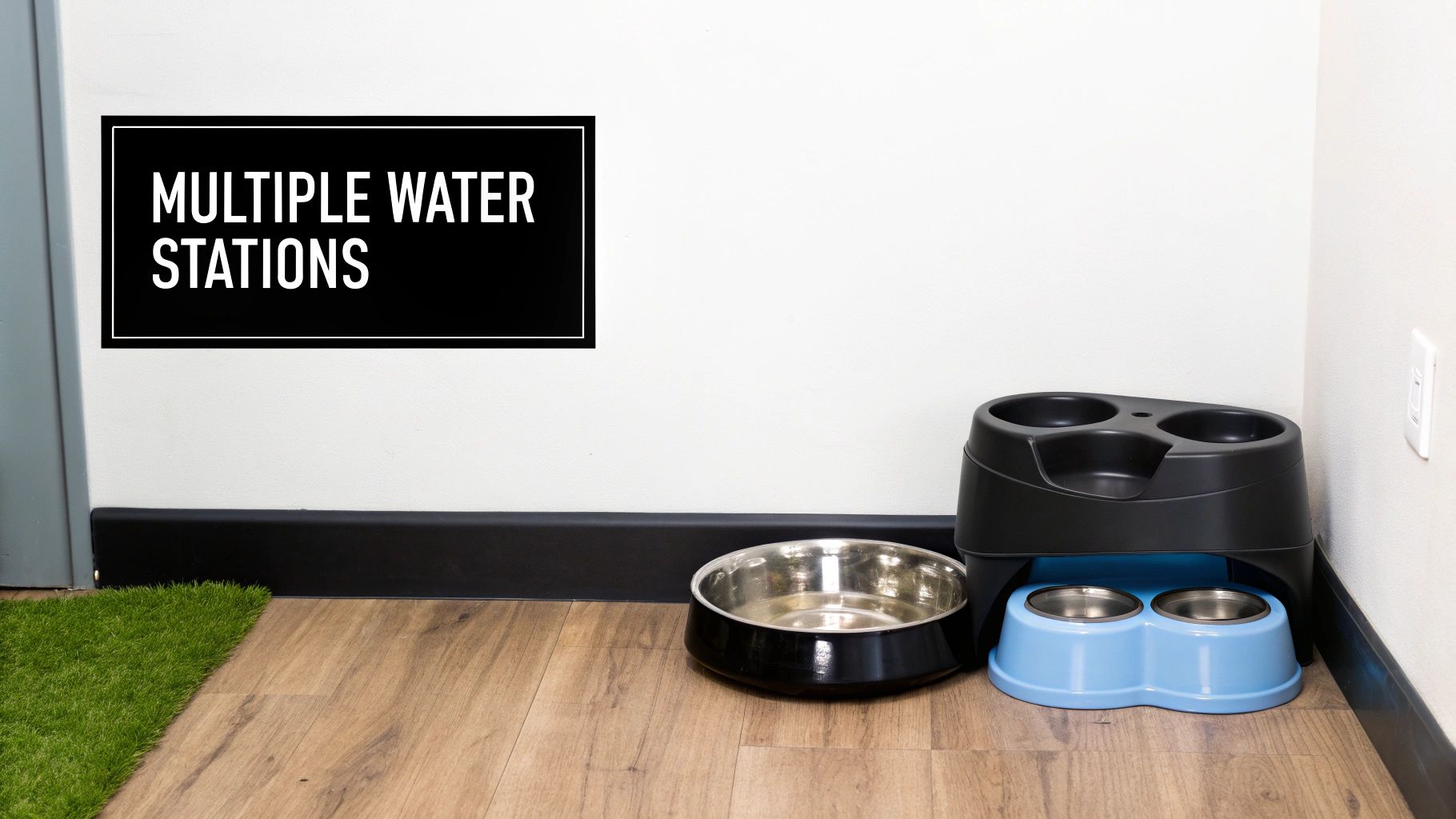
Try moving the water bowl to a quiet, calm corner where your dog can relax. And if you have a big house or multiple floors, set up a few water stations. This makes it super convenient for your dog to grab a drink whenever the urge strikes, no matter where they are.
Make Water More Interesting
Think like a dog for a second. In the wild, stagnant water is risky, but moving water is usually fresh and safe. This instinct is strong in many of our pets. If your dog ignores their bowl but tries to slurp from the toilet, a pet water fountain could be a game-changer.
The constant circulation keeps the water cool, oxygenated, and much more appealing. Plus, the gentle sound of trickling water can spark their curiosity and encourage them to drink more often throughout the day.
Finally, don't forget about taste. Tap water quality varies a lot, and some dogs are put off by the taste of chlorine or minerals. If you've tried everything else, it might be the water itself. Sometimes a little experimenting is all it takes to figure out what your dog prefers.
Making Hydration Irresistible with Flavor Boosts
So, you’ve tried all the environmental tweaks—fresh water, clean bowls, new locations—and your dog’s water dish still looks suspiciously full. What now? It's time to get creative.
Sometimes, a dog isn't drinking enough simply because they're bored. Plain water just isn’t exciting, especially if they're feeling a bit off or happen to be a picky connoisseur. The good news? Making water more enticing is easier than you think. You can turn their hydration station from bland to irresistible by appealing directly to their powerful senses of smell and taste.
Simple Flavor Hacks to Try at Home
Before making any big changes, start with what you might already have in your kitchen. A small splash of low-sodium chicken or beef broth can work wonders. The savory scent is often enough to spark immediate interest in a reluctant drinker.
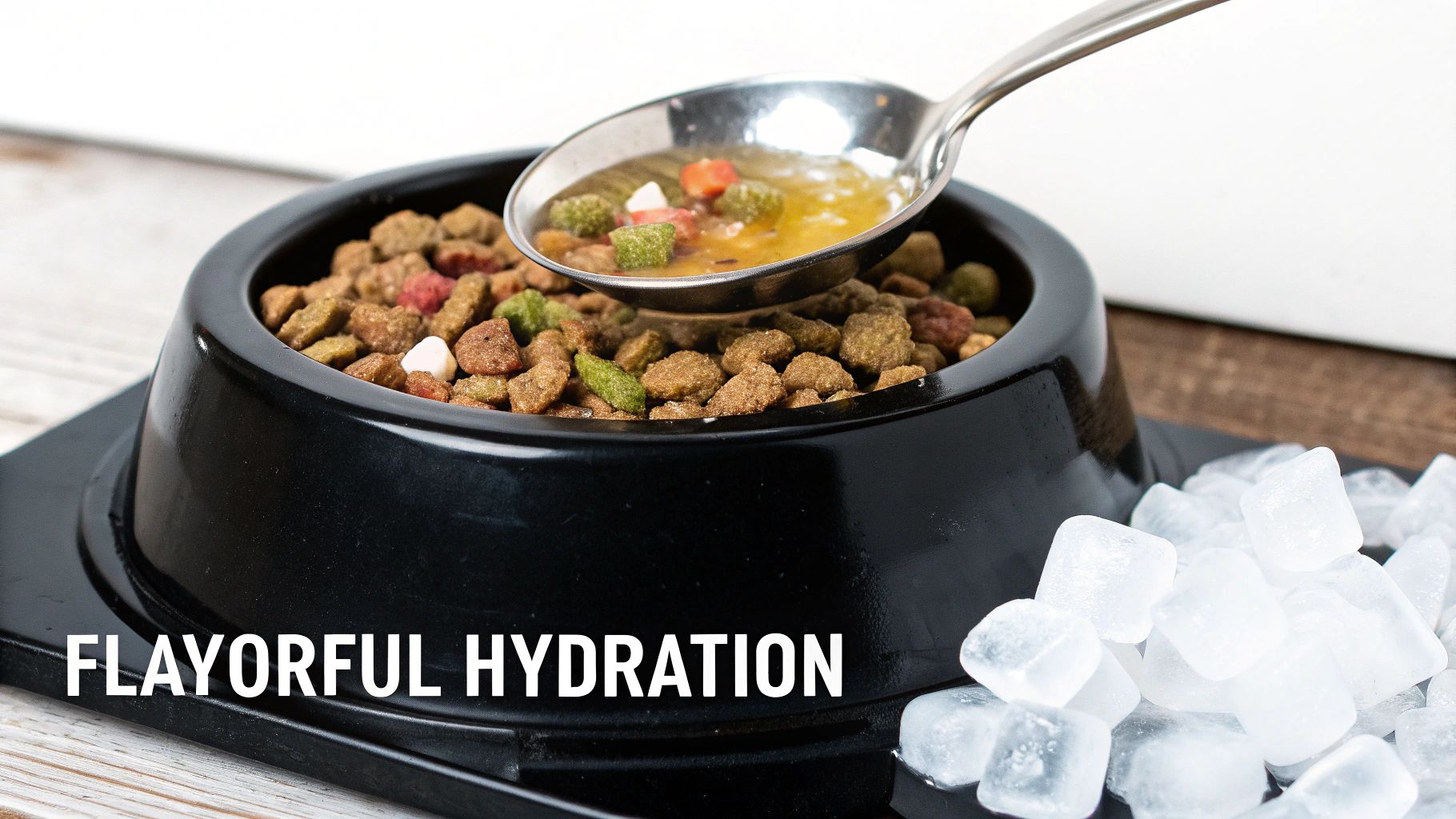
Another great trick, especially on warm days, is to freeze bone broth into ice cubes. These "pupsicles" are a refreshing treat that slowly releases flavor into the water as they melt, encouraging your dog to keep coming back for more.
A few other simple ideas include:
- The Treat at the Bottom: Drop one of their favorite small treats into the water bowl. They’ll have to drink their way down to get it.
- Fruit-Infused Fun: Add a few slices of dog-safe fruits like cucumber or watermelon for a subtle, refreshing taste.
The goal is to make drinking an experience, not just a necessity. A little bit of flavor can completely change your dog’s perception of their water bowl.
A Smart Solution for Nutrition and Hydration
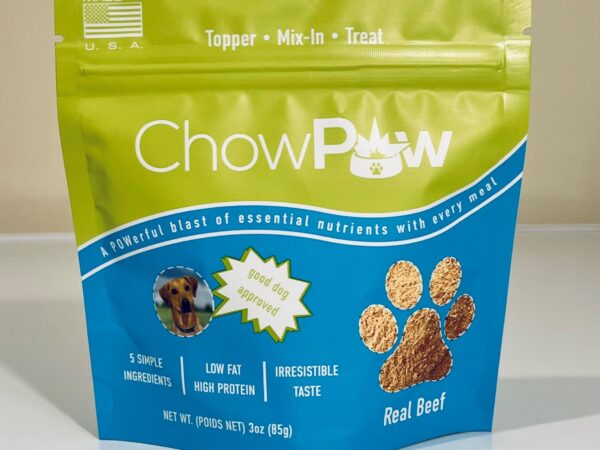
This is where a high-quality meal enhancement like ChowPow can really shine, bridging the gap between boring water and a delicious, hydrating meal. ChowPow is a supplement specifically designed to boost your dog’s existing diet with extra nutrition and flavor—it is not a replacement for their regular food.
The ChowPow beef heart dog food topper, a meal enhancement designed to add nutrition and hydration.
Our single-ingredient beef heart formula is made to be mixed with water, creating a savory and nutrient-dense gravy that you pour right over their regular kibble.
This approach is a total game-changer for a dog not drinking enough water. Instead of just trying to lure them to the water bowl, you’re adding essential hydration directly into their food. They get the moisture they need while enjoying a tastier, more appealing meal. This dual-action benefit makes it a smart supplement for tackling both picky eating and poor water intake in one simple step.
If you're looking for more ideas, explore our guide on hydration hacks with dog food toppers for even more creative solutions.
Hydration Needs for Puppies and Senior Dogs
When it comes to water, a dog's age really does matter. Puppies and seniors are on opposite ends of the spectrum, and both need a little extra attention to make sure they're staying properly hydrated. A one-size-fits-all approach to hydration just won’t cut it.
The reality is that dehydration hits older dogs much harder. Puppies and young, active dogs are made up of about 70% to 80% water. But as they age, that number drops to around 50–55% because of changes in their body composition. With less water in their system to start with, seniors don't have much of a buffer.
Caring for Energetic Puppies
Puppies are basically tiny, fluffy balls of chaos. They're always running, playing, and growing, and all that activity means they burn through water much faster than adult dogs, relative to their size. Your job is to make sure fresh, clean water is always available, especially after a good romp in the yard.
Because they’re still figuring things out, it's a good idea to keep an eye on how much they're drinking. You want to make sure they're getting enough without going overboard. And remember, what goes in must come out! Frequent potty breaks are your best friend while they learn to manage their hydration and bladder control.
Supporting Our Senior Companions
As our dogs move into their golden years, keeping them hydrated can get a bit more complicated. It’s common for senior dogs to have a lower thirst drive, meaning they just don't feel the urge to drink as often as they used to. This is often made worse by other age-related challenges.
Things like mobility issues can turn a simple trip to the water bowl into a difficult task.
- Joint Pain: Arthritis in the neck or back can make it genuinely painful for a dog to bend down to drink from a bowl on the floor.
- Cognitive Decline: Sometimes, older dogs can get a little confused and may simply forget where their water bowl is.
- Health Conditions: Underlying problems like kidney disease can also mess with their ability to regulate fluids.
Simple changes can make a huge difference. Try using a raised water bowl to take the strain off their joints, or place a few extra water stations in places they can easily get to.
Aging also brings changes in nutritional needs. It's wise to look into supplements that can support their overall health, like the best vitamins for senior dogs. A healthier dog is often a more interested-in-life dog, which can influence their appetite and thirst. For seniors with a flagging appetite or dental pain, adding moisture directly to their food with a hydrating meal enhancement like ChowPow is a fantastic way to sneak extra fluids into their diet.
Still Have Questions About Your Dog's Water Intake?
Even after trying a few tricks, you might still be wondering what’s normal and what’s not. That's completely understandable—it’s worrying when you think your dog is not drinking enough water. Let's tackle some of the most common questions we hear from fellow dog owners, so you can feel more confident about keeping your pup hydrated.
How Can I Tell If My Dog Is Drinking the Right Amount Daily?
The classic rule of thumb is about one ounce of water per pound of body weight each day. You can get a rough idea by measuring the water you put in the bowl in the morning and checking it again 24 hours later to see what’s gone.
But honestly, that’s just a guideline. A super active dog or one living in a hot, dry climate is naturally going to need more. And if you're adding moisture to their food by using a meal supplement like ChowPow, they'll get a good chunk of their hydration right from their meal, so they might not hit the water bowl as often.
The best way to tell? Look at your dog. High energy, normal peeing habits, and slick, moist gums are the real signs of a well-hydrated dog.
My Dog Prefers Drinking From Puddles What Should I Do?
Ah, the puddle connoisseur. This almost always points to one thing: your dog thinks the puddle water is fresher and cooler than the stuff sitting in their bowl. Dogs are instinctively drawn to what they perceive as fresh, clean water sources.
Start with the simple stuff. Wash their bowl every single day with soap and water to get rid of that slimy, smelly biofilm. Sometimes, just switching from a plastic bowl to stainless steel or ceramic makes a world of difference, since plastic can hang onto odors that turn your dog off.
A pet water fountain is a fantastic fix for a puddle-loving pup. The constant movement keeps the water cool, aerated, and appealing, tapping right into that instinct for fresh, running water.
In the meantime, do your best to stop them from drinking from puddles or toilets. They can be full of nasty bacteria, parasites, or chemical runoff you definitely don't want them ingesting.
When Is a Refusal to Drink a Serious Medical Issue?
A dog skipping a few sips here and there is one thing, but a complete and sudden refusal to drink any water is a huge red flag. This can be a sign of something serious, like kidney disease, pancreatitis, a painful tooth problem, or another underlying infection.
If your dog hasn't had a single drop of water for a full 24 hours, it’s time to act. And if that refusal to drink comes with other symptoms—like lethargy, vomiting, or a total loss of appetite—you need to call your vet immediately. When it comes to drastic changes like this, it's always better to be safe and get a professional opinion.
Is It Safe to Add a Meal Topper Like ChowPow to My Dog's Water?
Absolutely, and it's a great strategy when you do it right. ChowPow is a meal enhancement designed to boost the nutrition and flavor of their food, not just their water. The best way to use it for hydration is to mix the powder with water to create a savory, nutrient-rich gravy and pour it directly over their kibble.
This approach is a one-two punch: it gets essential moisture right into their meal while tackling picky eating at the same time. While you could add a tiny sprinkle to their water bowl to entice them, the real magic happens when you use ChowPow as it's intended—to enhance their food.
Just be sure that whatever you add is made for dogs and is low in sodium. Never use human broths—they’re often loaded with salt, onions, or garlic, which are toxic for dogs.
Ready to turn mealtime into hydration time? ChowPow makes it easy to boost your dog's nutrition and water intake with a delicious, beef-heart gravy they'll love. Give your picky or reluctant drinker the support they need. Visit ChowPow today to learn more.
-
Product on sale
 Dog Food Topper - Beef HeartOriginal price was: $14.99.$10.95Current price is: $10.95. - or subscribe and save up to 20%