
How to care for dog after surgery: Your Complete Home Recovery Guide
Bringing your dog home after surgery is a huge relief, but it’s also where the real work begins. Your job for the next 24-72 hours is to be your dog's dedicated recovery nurse. The goal is simple: create a calm, safe, and comfortable space that lets their body focus entirely on healing.
Your Dog Is Home. What Happens Now?
That car ride home from the vet clinic can be a weird mix of joy and nerves. Your furry best friend is back by your side, but this is the most critical phase of their recovery. For the first 24 to 72 hours, the lingering grogginess from the anesthesia will start to fade, and your dog will need your undivided attention to stay safe and comfortable.
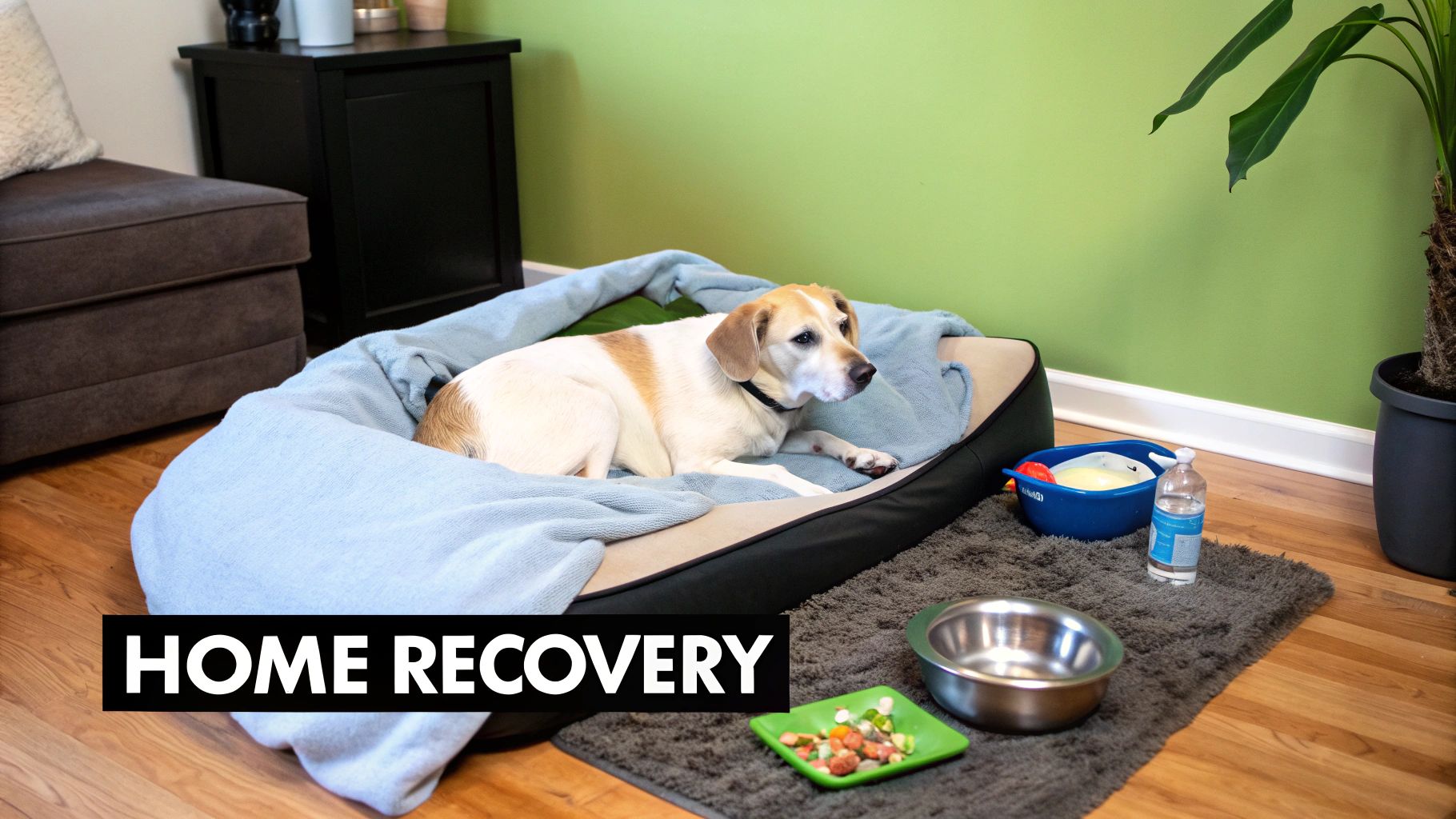
Think of yourself as the guardian of their peace. Your immediate task is to create a "recovery den"—a quiet sanctuary where they can rest without any interruptions. This means no welcome-home parties, no visitors, and definitely no roughhousing with other pets. Pick a quiet corner of your home, far from the usual family chaos, and make it as cozy as you can.
Setting Up the Perfect Recovery Den
The best recovery spot is small, secure, and incredibly comfortable. A spacious crate or a small room sectioned off with baby gates is perfect. The whole point is to prevent your dog from trying to jump on the sofa or tackle the stairs, either of which could pop a stitch in a heartbeat.
Line their den with clean, soft bedding that you don't mind washing if there's an accident. An orthopedic bed is a fantastic choice, especially for dogs who've had joint or bone surgery, as it gives them that extra bit of support. Make sure fresh water is always close by, but hold off on food until your vet gives you the green light.
Key Takeaway: The recovery den is all about enforcing rest. Even if your dog seems to be bouncing back after a day, restricting their movement is absolutely non-negotiable for proper healing.
What to Expect as Anesthesia Wears Off
As the anesthesia finally leaves their system, don't be surprised if your dog is groggy, a little wobbly, and maybe even whiny or agitated. This is all completely normal. They might shiver, pant, or look like they've had one too many. Your calm, reassuring presence is the best thing for their confusion.
Keeping them warm is also a huge priority. Post-op monitoring is so important—research has shown that careful observation in the first 24 hours can significantly reduce complications. In fact, a condition called hypothermia (low body temperature) happens in 85-97% of dogs after surgery, so piling on the blankets is a must. Keep them away from drafts and in a consistently warm spot. You can dig into the science behind immediate post-operative care in this detailed veterinary study.
To help you get everything ready, here's a quick checklist for setting up your home and managing that first crucial day.
Post-Surgery Home Prep Checklist
| Area of Focus | Key Actions and What to Look For | Why It Matters |
|---|---|---|
| Recovery Space | Set up a crate or gated area with comfy, washable bedding. Remove nearby hazards. | Prevents jumping, running, and climbing stairs, which can tear stitches and cause injury. |
| Temperature Control | Provide extra blankets and keep the space away from drafts. Monitor for shivering. | Anesthesia lowers body temperature. Keeping your dog warm prevents hypothermia and aids comfort. |
| Hydration & Food | Ensure fresh water is always within reach. Follow the vet's specific instructions for the first meal. | Dehydration can slow recovery. Waiting to feed prevents nausea as anesthesia wears off. |
| Medication Station | Have all prescribed meds organized with a clear schedule. Use a pill organizer or set phone alarms. | Missing a dose of pain meds or antibiotics can lead to pain, infection, and setbacks. |
| Bathroom Access | Plan for easy, assisted potty breaks on a leash. Use a sling if needed for support. | Avoids straining the incision site and prevents accidents in their clean recovery den. |
Having these things sorted before you bring your dog home will make the transition much smoother and less stressful for both of you.
Must-Ask Questions Before Leaving the Vet
Don't even think about walking out that clinic door until you have all your questions answered. Seriously, there's no such thing as a dumb question right now. Your confidence and preparedness are your dog's best line of defense.
Here are the absolute essentials to ask:
- Medication Details: What is each pill for? What's the exact dose and schedule? Are there any side effects I should look out for?
- Feeding Instructions: When is it safe to offer the first meal? Should I give a full portion or start with something small and bland?
- Activity Restrictions: How long does my dog need to be on "bed rest"? What specific things are off-limits (stairs, jumping, running)?
- Emergency Signs: What are the red flags that mean I should call you or an emergency vet immediately?
- Follow-Up Care: When do we need to come back for a check-up or to get stitches out?
Jot down the answers on your phone or in a notebook. Trust me, you'll be glad you did when you're tired and worried in the middle of the night. This initial period truly sets the stage for the entire healing journey. By creating a calm space and sticking to your vet's plan, you're giving your dog the best possible start.
Managing Your Dog’s Pain and Incision Site
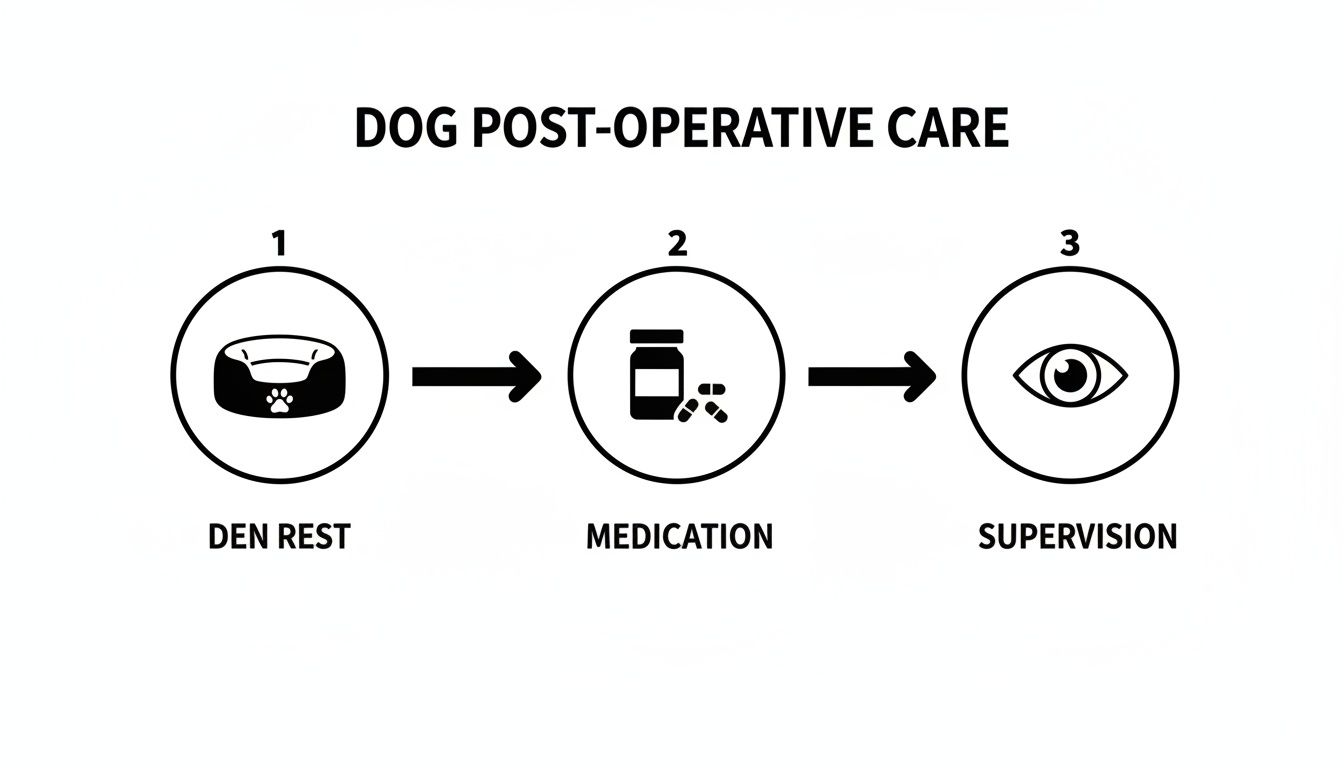
Once you’ve got your dog settled into their recovery den, your focus shifts to two absolutely critical jobs: managing their pain and protecting that incision site. A comfortable dog is a dog that heals faster, period. Your vet sent you home with pain medication for a reason, and it's your responsibility to make sure your dog gets every single dose, right on schedule.
Pain in dogs isn't always as dramatic as we'd think. They might not be crying or whimpering. Instead, you have to look for the quieter signs—things like restlessness, being hesitant to move, panting for no reason, or even getting a little grumpy when you get too close. Keeping their pain under control is honestly the kindest thing you can do for them.
Administering Pain Medication Correctly
Most likely, your vet prescribed a Non-Steroidal Anti-Inflammatory Drug (NSAID) or another pain reliever made specifically for dogs. Never, ever give your dog human pain medication like Advil or Tylenol. They can be incredibly toxic. Stick to the script—the exact dosage and schedule your vet gave you.
If your dog is a master at spitting out pills, you’ll need a few tricks. Hiding it in a little piece of cheese, a pill pocket treat, or a bite of plain chicken usually does the job. For the really clever ones, you might need to crush the pill (get your vet's okay first!) and mix it into something irresistible like a spoonful of yogurt or peanut butter.
Important Note: Unless your vet says otherwise, always give pain meds with a small amount of food. This helps buffer their stomach and prevent any upset, which is the last thing your pup needs right now.
Daily Incision Checks Are Non-Negotiable
Protecting the surgical site is just as crucial as pain management. An infected or busted incision can quickly turn a routine recovery into a serious emergency. Your mission is simple: keep it clean, keep it dry, and keep your dog's mouth away from it.
You need to check the incision at least twice a day. Make it a routine—once in the morning and again before bed. This isn't just a quick peek. You need to get a good, close look and watch for any changes, no matter how minor they seem.
Here’s your daily checklist for what to monitor:
- Redness: A little bit of pink around the edges is normal. Bright, angry red or redness that's spreading is not.
- Swelling: Some minor puffiness is to be expected, but significant swelling or hard lumps are a red flag.
- Discharge: The incision should stay dry. Any yellow, green, or stinky discharge means infection, and you need to call your vet immediately.
- Gapping: The edges should be sealed up tight. If you see any separation or a missing stitch, that’s an emergency.
While this surgical incision is your top priority, other little scrapes can happen. For tips on smaller wounds, you can check out our comprehensive guide on paw-sitive steps for treating your dog's cut paw.
The Cone of Shame and Its Alternatives
Let's be real—no dog likes the "cone of shame." But the Elizabethan collar is often the single most effective tool for stopping them from licking or chewing at their stitches. A dog's mouth is teeming with bacteria, and a few licks can introduce a nasty infection or pull those stitches right out. The cone has to stay on at all times unless you are right there, actively supervising them.
If the hard plastic cone is causing major stress or making it impossible for your dog to get around, there are other options you can talk to your vet about.
Cone Alternatives to Consider
| Option | Pros | Cons |
|---|---|---|
| Soft Fabric Cones | Much more comfortable for sleeping and navigating. | A determined dog might still be able to fold it back or chew it. |
| Inflatable Donut Collars | Allows for better peripheral vision and is less scary. | May not be long enough to protect incisions on legs, tails, or paws. |
| Surgical Recovery Suits | Covers the torso like a onesie, creating a physical barrier. | Not for leg or head incisions; must be kept perfectly clean and dry. |
Finally, medication is your primary tool for pain, but other things can help. Understanding the principles of heat and cold therapy for pain relief can be useful for other aches, but always get your vet's approval before applying anything hot or cold near a surgical site. Diligent care during this stage is a direct investment in a smooth, quick recovery for your best friend.
Fueling the Recovery: Nutrition and Hydration
Just like a construction crew can’t rebuild without the right materials, your dog’s body can’t heal properly without good fuel. Nutrition and hydration are the unsung heroes of post-op recovery, providing the energy and building blocks needed to repair tissue. But what happens when your dog takes one sniff of their food bowl and walks away?
It’s completely normal—and incredibly common—for dogs to lose their appetite after surgery. Anesthesia, pain meds, and general discomfort can make them turn their nose up at even their favorite meals. While a temporary food strike isn't a crisis, we can't let it go on for long. Without enough calories and nutrients, the healing process slows to a crawl, and their energy levels will tank. This is where you step in as their personal chef and chief hydration officer.

Enticing a Picky Post-Op Eater
Your vet will give you the green light on when to offer that first post-surgery meal. They’ll usually recommend starting small and bland to avoid upsetting a queasy stomach. Think simple comfort food: boiled, unseasoned chicken breast mixed with plain white rice. It’s easy on the digestive system and often just tempting enough to get them started.
If that doesn't do the trick, don't worry. There are a few simple strategies to make their meal more appealing.
- Warm it up. Gently warming their food for a few seconds in the microwave releases its aroma, making it much more enticing. Just give it a good stir to eliminate any hot spots.
- Add some moisture. A splash of warm, low-sodium chicken or beef broth can soften their kibble and add a savory flavor that’s hard to ignore.
- Try hand-feeding. Sometimes, the simple comfort of being fed by hand is all the encouragement they need. Your calm, reassuring presence can make a huge difference.
Nutritional support is a cornerstone of recovery. After surgery, dogs have a massive demand for protein to heal wounds and rebuild muscle. Research shows that good nutrition directly impacts how fast a dog heals and can even reduce the rate of complications. This is why many vets recommend easily digestible, nutrient-dense meal toppers that can kickstart their appetite while delivering the amino acids they desperately need for repair.
The Power of a Nutrient-Dense Topper
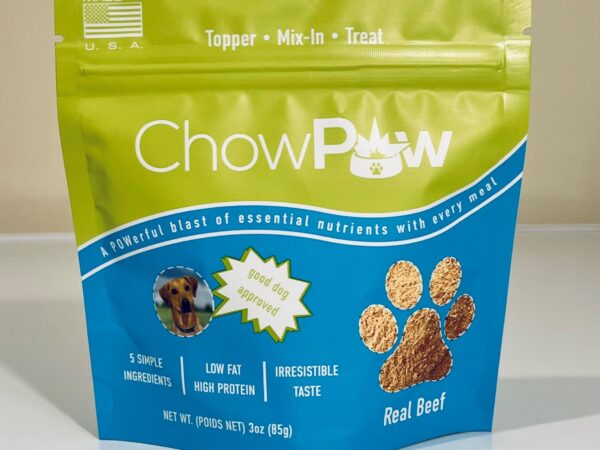
For a dog with a barely-there appetite, turning their boring kibble into something special is a game-changer. This is where a high-quality food enhancer like ChowPow becomes one of the most valuable tools in your recovery kit. Remember, ChowPow is a meal enhancement or supplement, designed to boost the nutritional value of their existing food, not replace it.
Sprinkling a topper made from a single, high-quality protein source like beef heart can tempt even the most stubborn patient. That rich, meaty smell is often enough to pique their interest.
Why It Works: ChowPow delivers a concentrated punch of protein and essential amino acids—the literal building blocks for tissue repair—in a simple, easy-to-digest powder. It adds serious nutritional value to their current kibble without adding a lot of bulk that might overwhelm a sensitive tummy.
This one simple step helps ensure your dog is getting the crucial nutrients needed to mend, even if they’re only managing to eat a few bites at a time.
Why Hydration Is Non-Negotiable
Hydration is just as critical as nutrition, if not more so. Water is vital for every single bodily function, from transporting nutrients to the surgical site to flushing out waste. Dehydration can set in fast and bring the healing process to a grinding halt.
Just like with food, your dog might be reluctant to drink. Make sure their water bowl is sparkling clean, always full of fresh water, and placed right next to their recovery spot so they don't have to go far. If they’re still not drinking, it's time to get creative.
A great trick is to make their water more interesting. You can mix a bit of ChowPow with water to create a savory, nutrient-rich gravy. This not only encourages them to eat but also sneaks in a significant amount of fluid with every bite—tackling both nutrition and hydration at once. For more ideas, check out our guide on the best ways to hydrate your dog. With a little patience, you can make sure your pup has all the fuel they need to get back on all four paws.
Balancing Rest And Gentle Rehabilitation
Your vet’s advice to "keep them quiet" sounds simple, right? But as any dog owner knows, that can feel like an impossible task. An energetic dog on mandatory bed rest can quickly turn into a frustrated, bored, and even destructive pup. The real trick isn't just about enforcing rest; it's about striking that delicate balance between necessary confinement and gentle mental engagement to keep their spirits from sinking.
How you approach this really hinges on the type of surgery your dog had. A minor soft tissue repair might just mean a week or two of no running or jumping. But a major orthopedic surgery, like a TPLO knee repair, demands a much longer and more structured period of strict confinement. The goal is always the same: prevent any sudden lunges, jumps, or twists that could damage the delicate healing tissues.
Making sure your dog has a super comfortable and stress-free spot to relax is a huge part of this. Investing in a good quality calming dog bed can be a lifesaver. A supportive, cozy bed placed in their designated recovery zone encourages them to settle down, which is honestly half the battle.
Crate Rest Realities
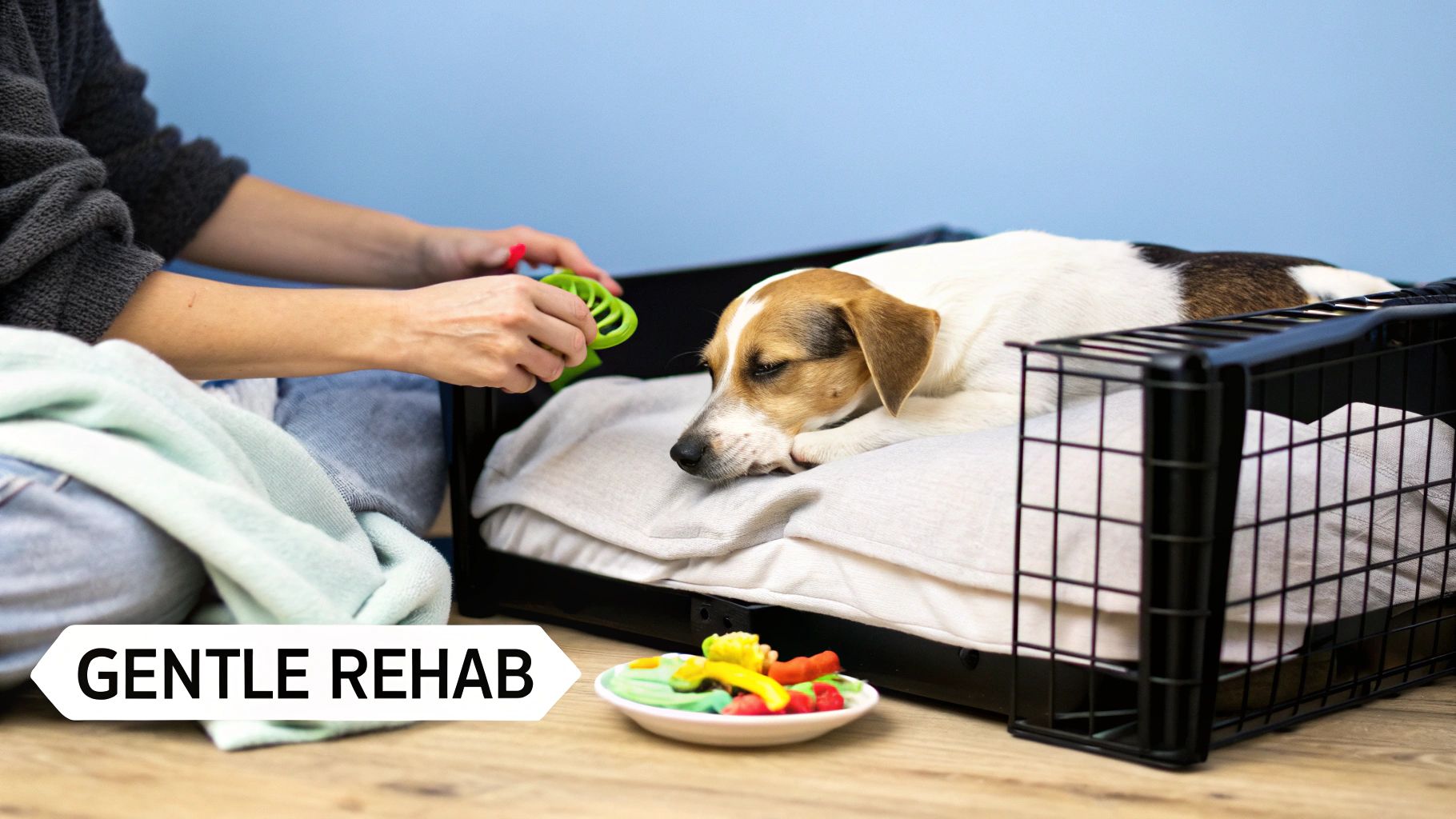
For the more serious procedures, crate rest is usually non-negotiable. Now, this doesn't mean locking your dog away and ignoring them. It simply means the crate becomes their safe space, and they only come out for short, controlled potty breaks on a leash.
This phase is often the toughest, both for you and your dog. A pup who’s used to being the life of the party won't understand why their world has suddenly shrunk to a few square feet. This is where your creativity comes into play to stop them from going stir-crazy.
Key Insight: Boredom is the enemy of a smooth recovery. A bored dog is far more likely to get into trouble—chewing at their incision, trying to bust out of their crate, or becoming overly anxious. All of these can lead to major setbacks.
Keeping Their Mind Busy
Just because their body needs to rest doesn't mean their brain has to shut down. There are plenty of vet-approved ways to provide enrichment without putting any strain on their healing body. Mental exercise can be just as tiring as physical exercise, making it the perfect outlet for all that pent-up energy.
Here are a few safe, low-impact ideas to try:
- Puzzle Toys: A frozen KONG stuffed with some dog-safe peanut butter or a snuffle mat with their kibble sprinkled in can keep them happily occupied. These toys make them use their powerful nose and brain.
- Scent Games: Try hiding a few high-value treats under a blanket in their crate or pen. The simple act of "hunting" for the scent is fantastic mental stimulation.
- Training New Tricks: You can work on simple, stationary commands. Think "touch" (having them touch your hand with their nose), "watch me," or even teaching new vocal cues. A few minutes of training engages their mind and strengthens your bond.
These activities are absolutely vital for your dog's emotional well-being and can make the long weeks of confinement much more bearable for everyone. For more inspiration, you can check out some great indoor and outdoor exercise options that you can adapt for their recovery phase.
The Gradual Return To Normal
As your dog heals, your vet will guide you on how to slowly and carefully reintroduce activity. This is a process that absolutely cannot be rushed. Pushing them too soon is a surefire recipe for reinjury.
The timeline can vary dramatically, especially after orthopedic surgeries. For instance, recovery from a common knee surgery (TPLO) shows that while 85-90% of dogs regain near-normal limb function, the entire process can take a full 3 to 6 months.
Interestingly, formal rehabilitation therapy plays a massive role in those success rates. Your vet will likely map out a phased plan for you. It usually starts with very short, slow leash walks on flat surfaces, gradually increasing the duration and intensity over many weeks. This structured, patient approach is what ensures the surgical repair heals strong, setting your dog up for a lifetime of happy, pain-free adventures.
Knowing When to Call Your Veterinarian
One of the most nerve-wracking parts of bringing your dog home after surgery is trying to figure out what’s normal and what’s a real problem. Is that little whimper just a sleepy groan, or a sign of serious pain? Is the incision supposed to look like that?
Knowing the red flags gives you the confidence to act fast when it matters. Trust your gut—if something just feels off, it’s always better to call the vet than to wait and wonder.
Distinguishing Normal Grogginess From Lethargy
For the first 24-48 hours, your dog will probably be very sleepy and a bit wobbly. This is totally expected as the anesthesia wears off. They might sleep more deeply than usual or seem a little confused by their surroundings.
The concern is when that grogginess crosses over into true lethargy. A groggy dog will still lift their head when you call their name or can be roused for a quick, gentle potty break. A lethargic dog, on the other hand, is unresponsive, extremely difficult to wake, or seems completely uninterested in everything—even you. If your dog is impossible to rouse or seems incredibly weak after that initial day, it’s time to call the vet.
Decoding Signs of Escalating Pain
Your vet sent you home with pain medication for a reason, and sticking to that schedule is critical. But sometimes, the prescribed dose isn't quite enough, or a complication is causing more pain than anticipated.
Be on the lookout for subtle signs that their discomfort is ramping up:
- Constant restlessness: They just can't seem to get comfortable or settle down.
- Unusual vocalization: Persistent whining, crying, or groaning that isn’t just a fleeting sound.
- Behavioral changes: Sudden crankiness, hiding, or growling when you get near the surgical area.
- Physical signs: Shaking, trembling, or holding their body in a strange, tense position.
If you're seeing these behaviors even after giving their meds on time, their pain isn't being managed well, and your vet needs to know.
Key Takeaway: You know your dog’s personality best. A major shift from their normal behavior is often the first and most reliable sign that something is wrong.
When to Worry About the Incision
Checking the incision daily is non-negotiable. A healing incision should look a little better each day—clean, dry, with the edges pulled neatly together. Some mild pinkness or minor bruising right around the stitches is normal.
But some changes are a clear signal to call your vet. This table breaks down what to look for.
Normal Healing vs Signs of Complication
This quick-glance table helps you spot the difference between what’s perfectly normal during recovery and what’s a red flag that warrants a call to your vet.
| Symptom Area | What's Normal and Expected | What's a Red Flag Call Your Vet |
|---|---|---|
| Swelling | Minor puffiness right at the incision site that slowly goes down over a few days. | Excessive, hard, or hot swelling that seems to be getting worse instead of better. |
| Discharge | The incision should be mostly dry. A tiny bit of clear or reddish-tinged seepage in the first 24 hours can be normal. | Any thick, cloudy, yellow, or green discharge (pus). Any discharge that has a foul odor is a sure sign of infection. |
| Color | Mild pinkness or some bruising around the edges of the incision. | Bright, angry redness spreading out from the incision, or dark purple/black skin edges. |
| Separation | The skin edges are held tightly together by sutures, staples, or glue. | Any gapping between the skin edges, or if you can see the tissue underneath. A missing stitch or staple also warrants a call. |
Ultimately, being an observant and proactive pet parent is the best way to ensure a smooth recovery. Keeping a close eye on these specific signs will help you provide the absolute best care for your dog.
Got Questions About Your Dog's Post-Op Care?
You’ve made it through the surgery, and your dog is finally home. Even with a folder full of instructions from the vet, real life happens, and questions always pop up. It's totally normal. Let's tackle some of the most common things pet owners worry about after bringing their dog home to recover.
Can I Bathe My Dog After Surgery?
That’s a hard no. The single most important rule of incision care is to keep it dry. Moisture is the enemy of a healing wound—it softens the skin, invites bacteria, and can lead to a nasty infection that’ll land you right back at the vet's office.
You'll need to wait for the official all-clear from your vet. This usually happens after the stitches or staples come out, typically around 10 to 14 days post-op. If your dog gets a little grubby before then, grab some pet-safe grooming wipes and do a careful spot-clean, staying far away from the surgical site.
How Do I Manage My Other Pets?
This is a tough one for anyone with a multi-pet household. Your other dog (or cat) has no idea their buddy is fragile and needs space. They just want to play, cuddle, or maybe "clean" the incision with a few licks, all of which can spell disaster for a fresh wound.
For the first week or two, separation is non-negotiable. Your recovering patient needs their own quiet, safe space—think of it as their "recovery den." A crate or a room blocked off with baby gates works perfectly. Your other pets should be kept in a separate area of the house. When you can't be there to supervise, this is the only way to guarantee an accident won't happen. It might feel a little mean, but it's a short-term step for a long-term healthy recovery.
Pro Tip: Make a point to spend some quality one-on-one time with your other pets. A separate walk, a game of fetch, or extra cuddles can help curb any jealousy or anxiety they might feel from the change in routine.
What If My Dog Pulls Out Their Stitches?
First, don't panic, but do act fast. If you see that your dog has managed to chew, lick, or pull out a stitch or staple, call your veterinarian immediately. This is a true veterinary emergency.
Don't try to be a hero. Resist the urge to clean it, put ointment on it, or slap a bandage over the area. You could accidentally trap bacteria inside and make the situation much worse.
Your vet will need to see the wound to figure out the next step. They might need to sedate your dog to re-stitch the incision, or they may decide to manage it as an open wound. The important thing is getting professional help right away to head off a serious infection. This is precisely why that cone of shame, as much as we all hate it, is so crucial.
A smooth recovery really boils down to three things: rest, proper wound care, and excellent nutrition. But getting a dog to eat after a procedure can be a real struggle when their appetite is low. ChowPow is a simple fix for this common problem. Just a sprinkle of this nutrient-dense beef heart topper adds an irresistible, meaty smell to their food that even the fussiest post-op pup can't ignore. It gives their meal a protein boost for tissue repair without messing with their vet-approved diet. Give your best friend the nutritional backup they need to heal stronger at https://chowpownow.com.
-
Product on sale
 Dog Food Topper - Beef HeartOriginal price was: $14.99.$10.95Current price is: $10.95. - or subscribe and save up to 20%