How to Improve Dog Gut Health for a Happier, Healthier Pup
Ever wonder why some dogs seem to have endless energy and a coat that shines, while others are sluggish or constantly scratching at itchy skin? The secret often lies buried deep inside their gut.
Think of your dog’s digestive system as a bustling internal ecosystem—what experts call the gut microbiome. This complex community of bacteria, fungi, and other tiny microbes is the powerhouse behind their total well-being. It's not just about digestion.
When this internal 'garden' is balanced and flourishing, it's doing a whole lot more than just processing food. A healthy gut is directly tied to:
- A Strong Immune System: It's a surprising fact, but roughly 70% of your dog's immune system actually lives in their gut. A balanced microbiome is their first line of defense against pathogens and illness.
- Mood and Behavior: The gut and brain are in constant communication. A healthy gut helps produce mood-regulating neurotransmitters like serotonin, which can lead to a calmer, happier dog.
- Nutrient Absorption: A gut that's working properly ensures your dog can actually absorb all the vital nutrients from their food, turning meals into the energy and building blocks their body needs.
- Skin and Coat Health: Persistent skin issues, hot spots, and a dull, flaky coat are often the outward signs of an internal imbalance. A healthy gut helps dial down the inflammation that can show up on their skin.
Why Your Dog's Kibble Might Need a Boost
Many commercial kibbles are convenient, but they can sometimes lack the whole-food nutrients needed to truly nourish your dog's delicate gut ecosystem. This is where a simple meal enhancement can make a world of difference. You don't have to overhaul their entire diet to see a change.
Adding a simple, whole-food supplement like ChowPow is an easy win. It’s a meal enhancement formulated with just four simple ingredients, like beef heart for high-quality protein to support the gut lining and carrots for prebiotic fiber to feed the good bacteria. This approach makes it clear that ChowPow is designed to work with your dog’s current food to boost its nutritional value, not completely replace it.
This focus on digestive wellness isn't just a fad. Pet owners are making the connection between diet and longevity, with 78% actively seeking nutrition that can extend their pets' lives.
This shift in awareness is changing the entire pet food industry. In fact, gut health has become a top priority for pet parents across the globe. Over 60% of new dry dog foods are now marketed to support digestive health, reflecting a huge change in how we think about canine nutrition. Discover more insights about these pet food trends on Global Pet Industry.
Understanding this connection is the first step toward a healthier, happier companion. For a comprehensive resource on enhancing digestive well-being through simple lifestyle tweaks, foods, and routines, explore how to improve gut health naturally.
Decoding the Subtle Signs of an Unhappy Gut
Your dog can't exactly tell you when their stomach feels off, but their body sends plenty of signals if you know what to look for. While obvious red flags like diarrhea, vomiting, or excessive gas are hard to miss, many gut health issues whisper before they shout. Learning to pick up on these quieter clues is the first step in truly understanding how to improve dog gut health from the inside out.
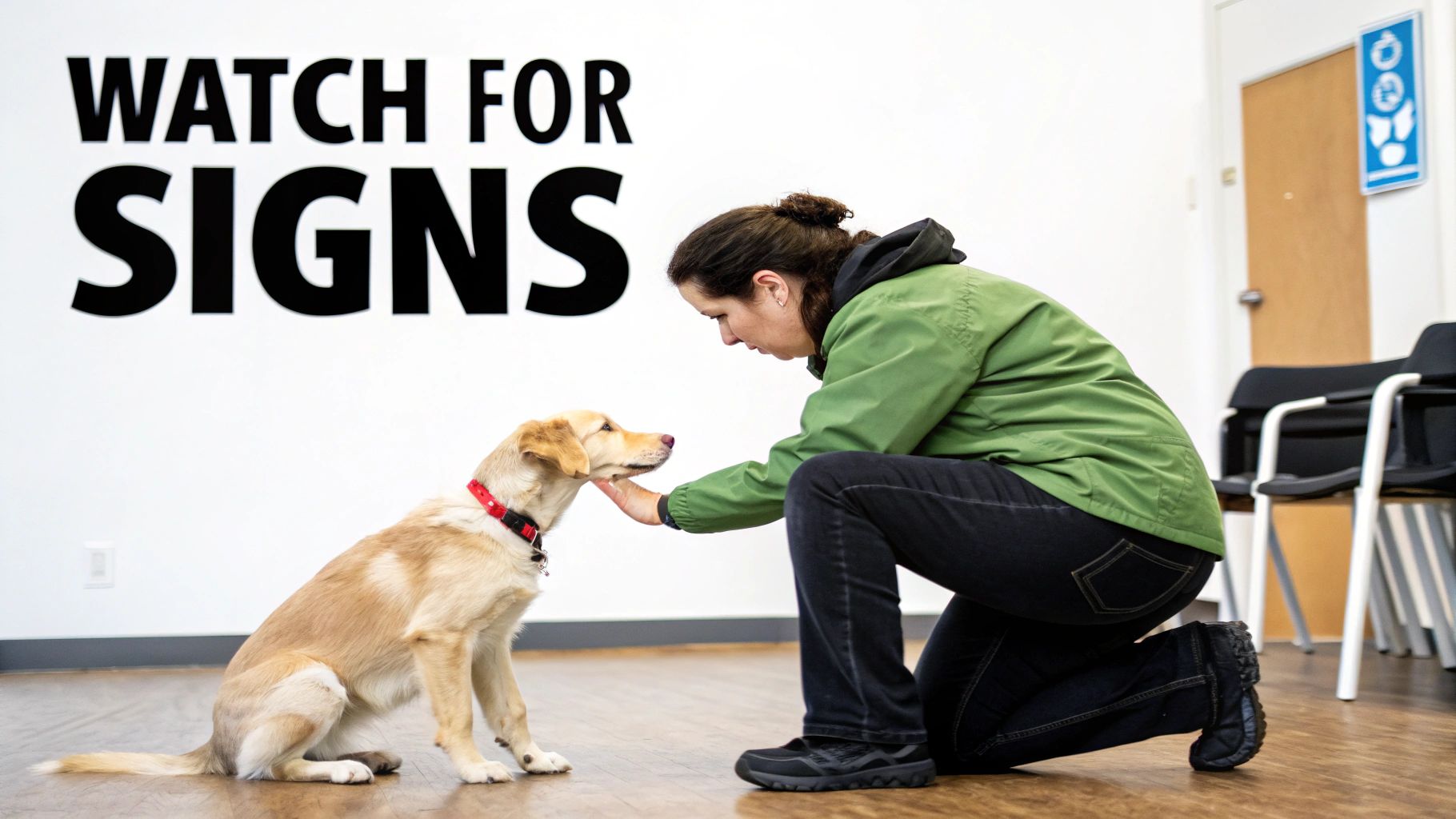
Think of yourself as a detective for your dog’s well-being. An imbalanced gut microbiome can show up in ways that seem completely unrelated to digestion at first glance. These less obvious symptoms are often your earliest warnings that something isn’t quite right.
Beyond the Belly: Obvious Signs vs. Subtle Clues
When we think of gut problems, we immediately picture an upset tummy. But an unhealthy gut can trigger inflammatory responses throughout the body, leading to a surprisingly wide range of issues.
Of course, you have the obvious digestive distress signals:
- Loose Stools or Diarrhea: This is the most direct sign that the digestive tract is irritated and struggling to absorb nutrients.
- Excessive Gas: All dogs get gassy, but a sudden increase in frequency or a particularly foul odor often points to poor digestion and fermentation in the gut.
- Vomiting: Frequent vomiting, especially of undigested food, is a clear sign of significant irritation.
But then there are the subtle, often-overlooked signs:
- Itchy Skin and Paws: Is your dog constantly licking their paws or scratching? Chronic inflammation that starts in the gut frequently manifests on the skin.
- Dull, Flaky Coat: A lackluster coat is a classic symptom of nutrient malabsorption. If the gut can't effectively pull vitamins and minerals from food, skin and hair health is one of the first things to suffer.
- Recurring Ear Infections: Those yeasty-smelling, gunky ears that just keep coming back are very often linked to an overgrowth of yeast that actually begins in the gut.
A dog’s outward appearance is a direct reflection of their internal health. Persistent skin problems or a poor coat are rarely just "skin deep"—they often trace back to an imbalance in the gut microbiome.
Gut issues can be confusing. To help you connect the dots, here’s a quick guide to what some common symptoms might be telling you.
Decoding Your Dog's Gut Health Signals
| Symptom | What It Could Mean for Gut Health | Actionable Tip |
|---|---|---|
| Constant Paw Licking | Systemic inflammation, often linked to a food sensitivity or gut yeast overgrowth. | Try an elimination diet to pinpoint potential trigger ingredients. Start with common ones like chicken or beef. |
| Scooting or Anal Gland Issues | Chronic soft stools aren't firm enough to express the anal glands naturally, leading to impaction. | Increase soluble and insoluble fiber with ingredients like pumpkin puree or steamed green beans to firm up stool. |
| Bad Breath (Not from Teeth) | An overgrowth of "bad" gut bacteria can produce smelly gases that travel up the digestive tract. | A quality probiotic can help rebalance the gut flora and crowd out the odor-causing bacteria. |
| Unexplained Lethargy | Poor nutrient absorption means your dog isn't getting the energy they need from their food, leading to fatigue. | Add a nutrient-dense whole food topper to ensure they're getting bioavailable vitamins and minerals. |
Seeing one of these signs occasionally might not be a major concern, but a consistent pattern is your dog's way of asking for help.
The Impact of Stress on Your Dog's Gut
It's not just about what your dog eats; it's also about how they feel. Big life changes like moving, bringing home a new pet, or even just separation anxiety can wreak havoc on their gut. This emotional stress can significantly reduce the diversity of good bacteria in their microbiome.
This stress-induced imbalance, known as dysbiosis, can actually weaken the gut barrier, leading to chronic inflammation and a whole host of health issues.
The Daily Wellness Check: Your Dog's Stool
One of the most powerful and simple tools you have for monitoring gut health is your dog's poop. Seriously. It provides a daily report card on their digestive wellness. A healthy stool should be firm, log-shaped, and easy to pick up.
Pay attention to these four key indicators:
- Consistency: It should be solid, not too hard or watery. Think "Play-Doh" texture.
- Color: A consistent chocolate-brown is the ideal. Strange colors like yellow, green, or black streaks can signal specific issues.
- Coating: There should be no mucus or a greasy film covering the stool.
- Content: Keep an eye out for anything unusual like worms, foreign objects, or large, undigested food particles.
By making a quick "poop check" part of your daily routine, you can catch potential problems early. For a more detailed breakdown, check out our guide on using poop as a digestive health report card. This simple habit can make you a more proactive and informed pet parent.
How to Build a Better Bowl for Gut Health
The idea of improving your dog’s gut health can sound pretty intimidating. You might picture yourself spending hours in the kitchen, trying to whip up complicated, homemade meals.
But here’s the secret: creating a gut-friendly meal doesn’t mean you have to toss out your dog’s current food. It’s all about making their existing bowl better.
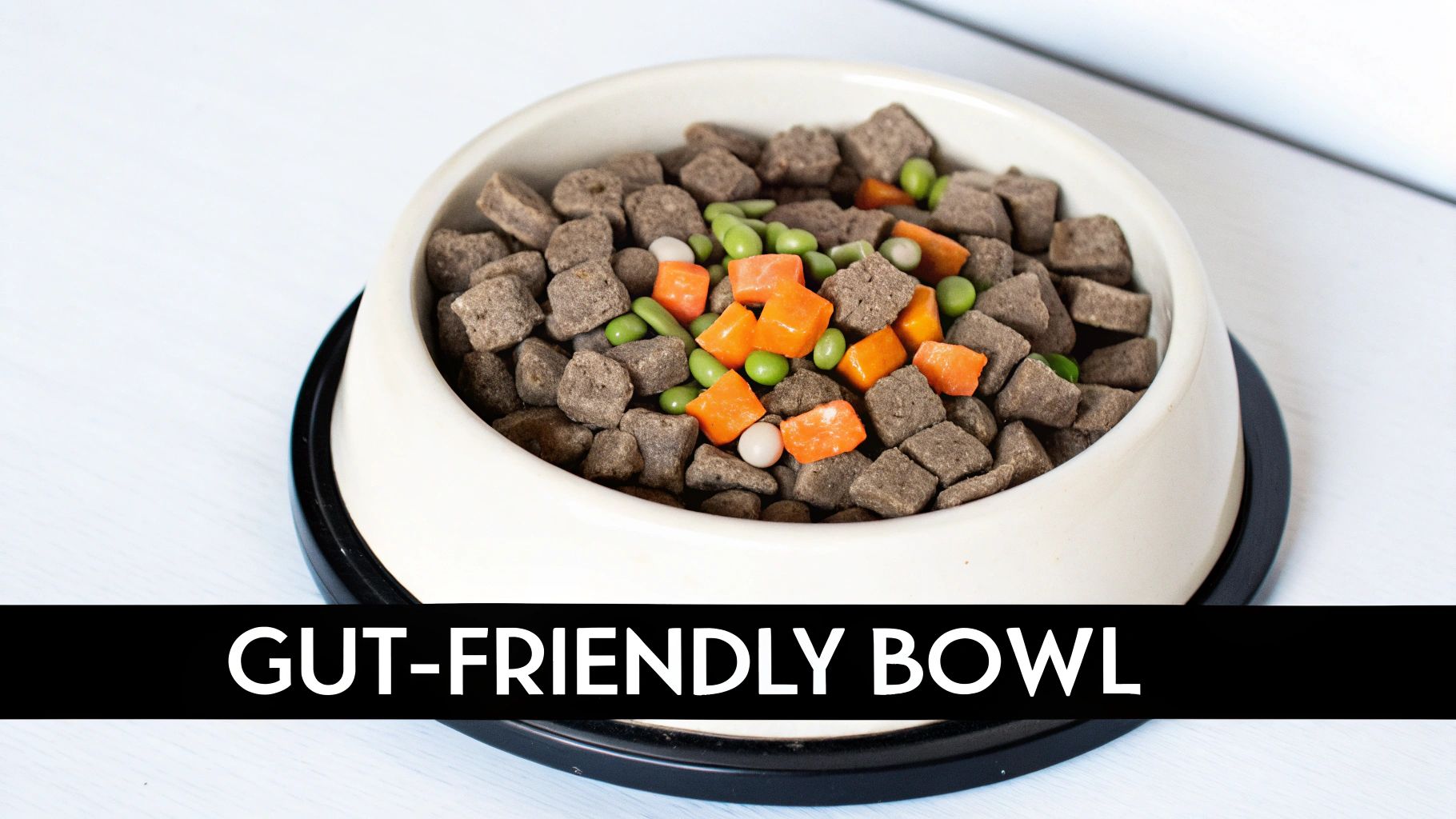
The easiest and most effective way to do this is by adding a high-quality meal enhancer to their regular kibble. This simple step boosts their diet with the key nutrients their gut microbiome is missing, giving you all the benefits of whole-food nutrition without the stress of a complete diet change.
The Power of Protein for Gut Repair
When a dog’s gut is irritated, the delicate lining of their intestines gets damaged. This is where high-quality, easily digestible protein comes in—it provides the essential amino acids needed to repair and strengthen this crucial barrier.
Think of these amino acids as the construction crew for the gut wall.
Ingredients like beef heart are perfect for the job. Not only is it a protein powerhouse that dogs go crazy for, but it’s also loaded with other vital nutrients like CoQ10, iron, and B vitamins that support overall energy and cellular health.
By adding a protein-rich supplement, you’re giving their body the direct building blocks needed to mend the gut lining. This helps stop undigested food particles and toxins from leaking into the bloodstream where they can cause problems.
Fueling the Good Guys with Prebiotic Fiber
Once you start reinforcing the gut wall, the next move is to nourish the good bacteria that live there. That’s a job for prebiotics.
Prebiotics aren't live bacteria themselves. Instead, they’re specific types of fiber that act as food for the good microbes already hanging out in your dog’s colon.
Prebiotics are like fertilizer for your dog’s internal garden. They don't introduce new seeds (probiotics); they nourish the native plants that are already there, helping them grow strong and crowd out the weeds (harmful bacteria).
This is why ingredients like carrots are so valuable. Carrots are packed with a specific prebiotic fiber that feeds beneficial bacteria, helping them produce short-chain fatty acids (SCFAs). These SCFAs are metabolic gold—they fuel the cells of the colon, reduce inflammation, and strengthen the gut’s defenses.
If you want to dig deeper into how fiber works, you can explore the benefits of fiber for canine digestion in our detailed guide.
Recent research highlighted just how effective carrot fiber can be. A groundbreaking study found that supplementing with carrot fiber helped balance the gut microbiome and significantly boosted the production of those all-important SCFAs. The study showed that carrots selectively feed the good guys, stabilizing the gut environment, especially in dogs dealing with stress. This isn't just a niche idea—it reflects a huge industry trend, with over 51% of recent digestive health pet foods now including prebiotics. Read the full research about these prebiotic findings to learn more.
Making It Easy with a Meal Enhancer
Knowing what your dog needs is one thing. Actually adding it to their bowl consistently is another challenge entirely.
That's the beauty of a well-formulated meal enhancer like ChowPow. It takes all the guesswork out of building a better bowl by combining these gut-supporting elements into one simple scoop.
Here's how it works:
- Start with your dog's regular kibble as the base.
- Sprinkle the recommended amount of ChowPow right on top.
- Want an extra boost? Mix it with a little warm water to create a savory gravy that adds flavor and hydration.
This simple action transforms an everyday meal into a gut-supporting feast. It's important to remember that ChowPow is not a replacement for their main food. It's a supplement designed to work with their current kibble, filling in the nutritional gaps that many processed foods leave behind and boosting its overall value.
This approach puts you in control. Your dog gets the benefits of high-quality protein and prebiotic fiber without the digestive upset that can come from a sudden diet switch. It’s the easiest, most practical way to give their daily meals a powerful, gut-focused upgrade.
Beyond the Bowl: Everyday Habits for a Happy Gut
A truly healthy gut is built both inside and outside the food bowl. While a nutrient-dense diet lays the foundation, you’d be surprised how much everyday habits can impact their internal ecosystem.
Overlooking these simple lifestyle factors can undermine even the best food you can buy. So, let’s go beyond the ingredients and look at how to create an environment where your dog's gut can really flourish.
The First Rule of Gut Health: Hydration, Hydration, Hydration
Proper hydration is completely non-negotiable for a healthy gut. Water is the unsung hero that helps break down food, absorb nutrients, and keep everything moving smoothly through the digestive tract. When a dog gets dehydrated, it's a fast track to constipation and a disrupted microbiome.
Many dogs, especially those on a dry kibble diet, just don't drink enough on their own. Here are a few simple hacks I use to encourage more sipping:
- Set up multiple water stations. Place fresh water bowls in different areas of your home. Sometimes, just having it nearby is enough to prompt a drink.
- Keep it sparkling clean. Nobody likes drinking from a slimy glass, and dogs are no different. Wash their water bowl daily and refill it with fresh, cool water.
- Whip up a tasty broth. This is where your meal enhancer can do double duty. Mix a sprinkle of ChowPow with warm water to create a savory, nutrient-packed broth. Pouring this over their kibble not only adds irresistible flavor but also sneakily boosts their daily water intake.
Taming the Gut-Wrecking Power of Stress
Just like with us, stress has a direct and nasty effect on a dog’s gut. When your dog experiences anxiety—from fireworks, separation, or even just a change in routine—their body pumps out stress hormones that can damage beneficial gut bacteria and weaken the gut lining.
I always think of the gut-brain axis as a two-way street. An anxious mind can lead to an upset stomach, and an upset stomach can absolutely contribute to feelings of anxiety. Supporting one often helps the other.
Managing your dog’s stress is one of the most powerful things you can do for their gut health. Try weaving some simple stress-busters into their day:
- Stick to a predictable routine. Dogs find comfort in consistency. Regular feeding times, walks, and playtime go a long way in reducing their background anxiety.
- Go on "decompression walks." Let them sniff! Allowing your dog to just explore the world with their nose on a loose leash is a fantastic mental workout that melts away stress.
- Break out the puzzle toys. Licking and chewing are natural calming behaviors for dogs. A frozen Kong or a lick mat can provide a soothing, engaging distraction when things get a little overwhelming.
Master Your Feeding Hygiene
How you serve your dog's food matters just as much as what's in the bowl. Good "feeding hygiene" is all about preventing harmful bacteria from getting into their system and ensuring they can digest their food safely.
First things first: wash their food bowl daily. A dirty bowl is a breeding ground for nasty bacteria like Salmonella and E. coli, which can easily throw their gut microbiome into chaos. A quick wash with hot, soapy water after every meal is all it takes.
Next, pay attention to how fast your dog eats. Dogs that wolf down their food in seconds also swallow a ton of air. This can lead to uncomfortable gas, bloating, and even a life-threatening condition called Gastric Dilatation-Volvulus (GDV), or bloat.
A slow-feeder bowl or a puzzle feeder is a fantastic tool to encourage slower, more mindful eating. It turns mealtime into a fun game and protects their tummy in the process.
These lifestyle adjustments are just as crucial as the food itself when you want to know how to improve dog gut health. By focusing on hydration, stress reduction, and clean feeding practices, you create a complete support system for their digestive well-being. For a deeper dive into other ways to support their system, check out our guide to digestive health supplements for dogs.
A Sample Daily Routine for Better Gut Health
So, how do you put all this information into practice? It might seem like a lot, but building a gut-friendly day for your dog is way simpler than you'd think. This isn't about some massive, stressful overhaul. It's about layering in small, consistent habits that add up to big results.
Let’s walk through what a day could look like. This sample routine shows just how easily you can weave these gut-supporting activities into your dog’s day, making the whole process feel natural and totally achievable.
The Morning Kickstart
7:00 AM – Breakfast with a Gut Boost
Time for the first meal of the day. Start with their regular kibble, but give it an upgrade. This is the perfect time to bring in a nutrient-dense meal enhancer.
Just sprinkle a scoop of ChowPow right on top of their food. The high-quality protein from the beef heart gets to work supporting their gut lining, while the prebiotic fiber from ingredients like carrots starts feeding all that good gut bacteria.
Got a picky eater on your hands? Mix the ChowPow with a splash of warm water to create a savory gravy they can't resist. This little trick not only makes the meal more enticing but also adds some crucial morning hydration.
Mid-Day Mental and Physical Wellness
12:00 PM – Hydration Check and Stress Relief
Time for a pit stop. Refill their water bowl with fresh, cool water to encourage drinking. If you're home, a quick walk or a few rounds of fetch is fantastic for blowing off steam. Even just a few minutes of focused playtime can help lower the stress hormones that can really mess with a dog's gut.
If your dog is home alone, a puzzle toy or a lick mat smeared with a bit of plain yogurt is a brilliant way to provide mental stimulation. Licking is a natural self-soothing behavior for dogs that helps dial down anxiety—a huge win for maintaining a balanced gut.
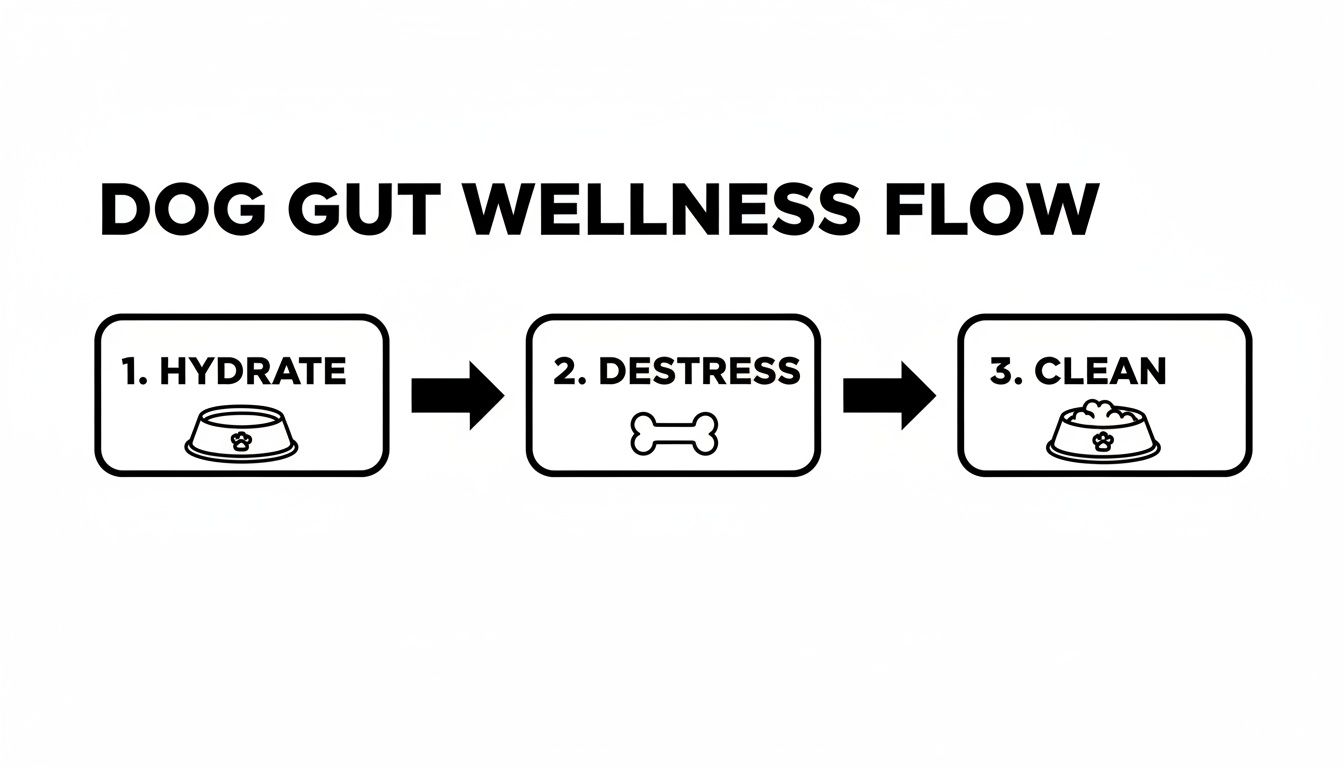
This simple flow chart really nails it down to three core habits: staying hydrated, keeping stress low, and maintaining a clean feeding space. These are the daily actions that form the backbone of a solid digestive health routine.
Winding Down in the Evening
6:00 PM – Dinner and a Soothing Broth
Dinner is another key opportunity to support their gut. Just like breakfast, serve their regular kibble enhanced with ChowPow. Creating that warm, hydrating broth by mixing the supplement with water is especially helpful in the evening. It aids digestion and makes sure they're well-hydrated overnight.
After they’ve eaten, take a minute to wash their food and water bowls with hot, soapy water. This simple act of "feeding hygiene" is so important. It prevents nasty bacteria from building up and causing trouble in their gut microbiome.
9:00 PM – Calm Down Time
As the day winds down, a few minutes of gentle petting or brushing can do wonders. This helps lower cortisol levels and promotes a state of calm, which benefits both their mind and their gut. A consistent, peaceful evening routine helps regulate all their body’s systems, including digestion.
Here’s a simple checklist to help you stay on track with these daily habits.
Your Dog’s Daily Gut-Support Checklist
| Time of Day | Activity | Gut Health Benefit |
|---|---|---|
| Morning | Add ChowPow to breakfast (mixed with water) | Provides protein for gut lining & prebiotics for good bacteria. Adds hydration. |
| Mid-Day | Refresh water bowl & offer a puzzle toy or short walk | Ensures hydration, reduces stress hormones (like cortisol) that harm gut health. |
| Evening | Add ChowPow to dinner & wash food/water bowls | Aids evening digestion, prevents harmful bacteria from accumulating. |
| Bedtime | Gentle petting or brushing session | Lowers stress and promotes a calm state, which supports healthy digestion. |
Think of this schedule as a blueprint, not a rigid rulebook. Feel free to adjust the times to fit your life. The real goal is to see how seamlessly these small, gut-friendly habits can be woven right into the routine you already have. You don't need to change everything at once to start seeing a real difference in your dog's health and happiness.
Common Questions About Your Dog's Gut Health Journey
Diving into the world of canine gut health can feel like you're learning a whole new language. It's totally normal to have questions as you start introducing new foods and routines. Getting clear, straightforward answers is the best way to feel confident you're making the right choices for your best friend.
We've gathered some of the most common questions from pet parents just like you. Our goal is to demystify the process, help you set realistic expectations, and give you the knowledge you need to handle any bumps in the road.
How Long Until I See Improvements In My Dog's Gut Health?
This is the number one question on every pet parent's mind, and the honest answer is: every dog is a little different. Still, there’s a general timeline you can watch for.
You'll often see the first positive changes—like firmer stools and less gas—within the first 1-2 weeks of a dietary shift. This could be something as simple as adding a prebiotic-rich supplement to their meals. These early signs are a great signal that their digestive system is responding well.
Deeper benefits, like a healthier skin barrier, a shinier coat, more energy, or less itchiness, take a bit longer to show up. These kinds of changes reflect a real rebalancing of the gut microbiome and typically become noticeable within 4-8 weeks.
The real secret to success is consistency. The gut microbiome doesn't change overnight. Sticking with a supportive routine, day in and day out, is what allows those good bacteria to really flourish and create lasting change.
My Dog Has a Sensitive Stomach—Is ChowPow Safe?
Absolutely. We formulated ChowPow with sensitive pups in mind. That's why it has just four simple, whole-food ingredients with zero common allergens or fillers. Since it's a supplement designed to boost their existing food, you have total control over how you introduce it.
The key is to go low and slow. For the first few days, start with just a tiny sprinkle on their meal—much less than the recommended amount. This gives their system plenty of time to get used to it. From there, you can gradually increase the amount over a week or two until you reach the suggested serving for their weight. This careful approach helps avoid any potential digestive upset and makes the transition seamless.
What If My Picky Dog Won't Eat Their Food with the Topper?
Oh, the picky eater struggle is real, and it can be incredibly frustrating. We get it. We specifically chose savory beef heart as the main ingredient in ChowPow because it's fantastic at enticing even the most selective dogs.
If your pup is particularly stubborn, try this trick—it almost always works wonders. Mix their serving of ChowPow with a splash of warm water and let it sit for a minute. It creates this rich, aromatic gravy. Pouring this over their regular kibble completely changes the game. The amazing smell and flavor make their everyday food suddenly seem like an exciting new treat. Most dogs find it irresistible.
Should I Use Prebiotics or Probiotics for My Dog?
This is a fantastic question that gets right to the heart of how to improve dog gut health. While both are beneficial, they work in very different ways.
Think of it like tending a garden:
- Probiotics are like adding new seeds (live, beneficial bacteria) to the garden. They can be helpful, especially after a round of antibiotics, but they are often just passing through and need to be replenished constantly.
- Prebiotics are like using high-quality fertilizer for the seeds and plants already growing in the garden. They are specific types of fiber that feed and strengthen the good bacteria that are already native to your dog's unique system.
Natural, food-based sources of prebiotics, like the carrots in ChowPow, are a wonderfully stable and effective way to support their existing microbiome. For most dogs, nourishing their own beneficial bacteria with prebiotics is the ideal and most sustainable first step toward a balanced gut.
If you have questions about other specific supplements, like the use of aloe vera for dogs, doing a little extra research can help you figure out what might be right for your individual pup's needs.
Ready to give your dog's daily meal a powerful, gut-supporting upgrade? With ChowPow, you can enhance their kibble with the simple, whole-food nutrition they need to thrive. Boost their appetite, support their digestion, and see the difference a healthier gut can make.
-
Product on sale
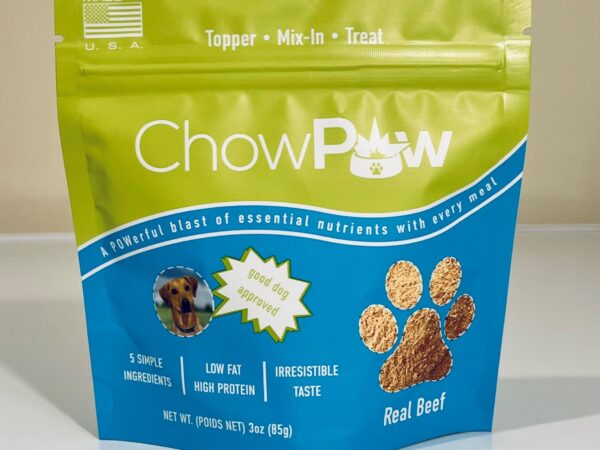 Dog Food Topper - Beef HeartOriginal price was: $14.99.$10.95Current price is: $10.95. - or subscribe and save up to 20%