
Old Dog Weak Back Legs: Causes, Care, and Solutions
It’s tough to watch—your best friend, who used to leap onto the bed without a second thought, now struggles just to stand up. If you've been noticing your old dog has weak back legs, you’re not alone. It’s one of the most common issues our dogs face as they get older, often caused by osteoarthritis (joint wear-and-tear) and sarcopenia (age-related muscle loss).
Why Your Senior Dog's Back Legs Seem Weak
Seeing your once-bouncy companion hesitate before jumping on the couch can be heartbreaking. It’s easy to feel helpless, but understanding why this is happening is the first step toward helping them.
Think of your dog's back legs like the suspension on a well-loved car. After years of adventures, the parts naturally start to show some wear. This isn't just one thing going wrong; it's usually a mix of factors. The two biggest players are the natural breakdown of joint cartilage and the slow, steady loss of muscle mass.
Both are a normal part of aging, but that doesn't mean we can't do anything about it. We can absolutely manage the effects to keep our dogs comfortable and mobile.
The Two Most Common Culprits
The wobble in your old dog’s walk usually comes down to two connected issues. Understanding them will help you have a much more productive chat with your vet.
- Osteoarthritis (OA): This is the gradual breakdown of the protective cartilage that cushions the ends of their bones. Without that cushion, joints like the hips and knees get inflamed, stiff, and painful, which makes getting around much harder.
- Sarcopenia: This is the age-related loss of muscle and strength. As dogs get older, they naturally become less active, and their muscles begin to shrink—especially in their powerful back legs. Weaker muscles mean less support for the joints, which can make the pain from arthritis even worse.
As dogs head into their golden years, it's no surprise that their activity levels drop. One study found that by age 17, a dog's activity score plummets. This is a direct result of time wearing down muscle strength and joint function, particularly in the back legs.
Making matters worse, osteoarthritis affects up to 80% of dogs over eight years old. This leads to inflamed joints, muscle loss, and that all-too-familiar wobble. You can read more about these findings from the Dog Aging Project.
Remember, weakness in your senior dog’s legs is often a sign of manageable discomfort, not just "getting old." Proactive care, from nutrition to home adjustments, can make a real difference in their quality of life.
Before you go to the vet, it helps to be a keen observer. Paying attention to small details can give you—and your vet—a clearer picture of what's going on.
Decoding the Wobble: Common Signs of Hind Leg Weakness
Use this simple guide to identify the subtle signs of weakening back legs and understand what they might mean before your vet visit.
| Symptom | What It Looks Like In Your Dog | Potential Underlying Issue |
|---|---|---|
| "Bunny Hopping" | Running with both back legs moving together instead of alternating. | Hip Dysplasia, Arthritis |
| Difficulty Standing Up | Pushing off with front legs, struggling to lift the hind end. | Arthritis, Sarcopenia, Nerve Issues |
| Slipping on Floors | Back legs splaying out on tile, hardwood, or laminate flooring. | Muscle Weakness, Neurological Decline |
| Hesitation with Stairs | Reluctance or refusal to go up or down stairs they once handled easily. | Joint Pain (Hips/Knees), Muscle Atrophy |
| Wobbly or Swaying Walk | The hind end seems to sway from side to side, or legs cross over each other. | Nerve Degeneration, IVDD, Arthritis |
| Scraping Toenails | You hear a dragging sound as they walk, especially on pavement. | Nerve Damage, Proprioception Loss |
Noticing any of these signs is your cue to take action. They are your dog's way of telling you something isn't right.
Good nutrition is the foundation for fighting back against these changes. While you can't turn back the clock, you can give their body the right tools to maintain muscle and support joint health. This is where a high-quality protein source becomes so important.
A meal enhancement like ChowPow is designed to boost the nutritional power of your dog's current food, not replace it. By sprinkling on this dehydrated beef heart topper, you enrich their diet with vital amino acids that support muscle maintenance. It turns every meal into an opportunity to help them stay stronger for longer.
The Main Medical Reasons for Hind Leg Weakness
When you see your old dog's back legs starting to weaken, it's a gut-wrenching moment. Your mind probably races with questions and worry. But getting a handle on the likely medical causes is the first step toward taking meaningful action. It’s how you go from feeling helpless to becoming your dog's best advocate alongside your vet.
While a few different things could be going on, most cases of hind leg weakness in senior dogs come down to a handful of common conditions. Let's walk through the big ones so you feel more prepared for that vet visit.
This simple decision tree is a great starting point. It helps you visualize those first subtle clues, like stiff joints or muscle loss, that often signal something is up.
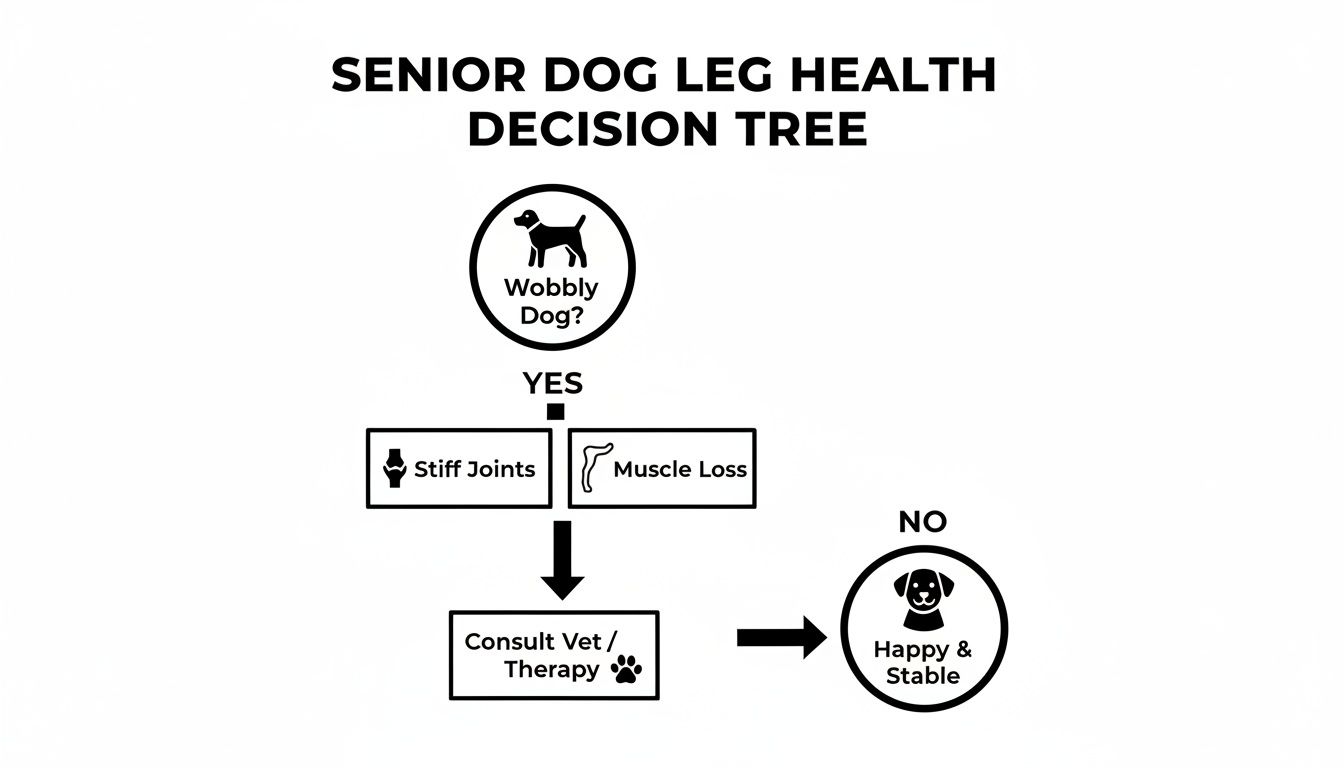
The flowchart shows how noticing a wobble should prompt you to think about whether it looks more like joint stiffness or muscle loss. This gives you a more focused way to describe what you’re seeing to your vet.
Osteoarthritis The Most Common Culprit
Osteoarthritis (OA) is, without a doubt, the number one reason for hind leg trouble in older dogs. It's the slow erosion of the protective cartilage that cushions the bones in a joint. Without that cushion, the bones grind against each other, causing pain, roughness, and inflammation.
That constant friction causes stiffness, chronic pain, and swelling. It's why an arthritic dog might struggle to get up, hesitate at the stairs, or just seem to be moving in slow motion. The hips and knees are prime targets for OA, which directly impacts the strength and stability of their back legs.
This condition affects a staggering 80% of dogs over eight years old and 20% of all dogs over the age of one. It’s the most common joint problem for dogs on the planet. The good news? It's manageable. One study on targeted therapies for geriatric dogs with OA showed an incredible 85.71% improvement rate.
Key Takeaway: If your senior dog is stiff after a nap, suddenly unwilling to jump on the couch, or just seems low on energy, arthritis should be at the top of your list of possibilities. Pain management and joint support are everything for their quality of life.
Intervertebral Disc Disease A Spinal Issue
Another major player behind an old dog's weak back legs is Intervertebral Disc Disease, or IVDD. Think of the discs between the vertebrae in the spine as tiny jelly donuts, acting as shock absorbers. With IVDD, something goes wrong with that "jelly."
It can either harden and burst (Type I) or slowly bulge out over time (Type II). When that disc material pushes against the spinal cord, it's like putting a kink in a garden hose—the nerve signals from the brain to the back legs get interrupted.
This pressure can cause anything from mild wobbliness to full-blown paralysis. The severity depends on how much the spinal cord is being squeezed. While long-backed breeds like Dachshunds are famously prone to it, IVDD can happen to any dog.
Keep an eye out for these signs of IVDD:
- A hunched or arched back
- Yelping in pain when you try to pick them up or touch their back
- Unwillingness to jump or turn their head
- Back legs that suddenly "give out"
- A wobbly, drunken-looking walk (this is called ataxia)
Degenerative Myelopathy A Progressive Nerve Condition
Degenerative Myelopathy (DM) is a different beast entirely. Unlike the painful conditions of arthritis or IVDD, DM is a painless, progressive disease of the spinal cord itself. It’s often compared to ALS, or Lou Gehrig's disease, in humans.
In a dog with DM, the "insulation" around the spinal cord nerves starts to break down. This scrambles the communication lines between the brain and the back legs, leading to a slow, steady loss of mobility. It often starts with a subtle scuffing of the back toenails on one paw, eventually progressing to a pronounced sway and weakness in both legs.
Because it doesn't hurt, dogs with early-stage DM don't act like they're in pain. They just get progressively more uncoordinated. It’s a heartbreaking disease to watch, as your dog’s mind stays perfectly sharp while their body begins to fail them.
Getting familiar with these conditions will help you have a much more productive conversation with your vet. You can also dig deeper into maintaining your dog's joint health in our detailed guide, which has more tips for proactive care. Whatever the diagnosis, the right nutrition—like a high-quality protein supplement—can help preserve the muscle mass your dog needs to stay as stable as possible.
What to Expect From Your Vet Visit
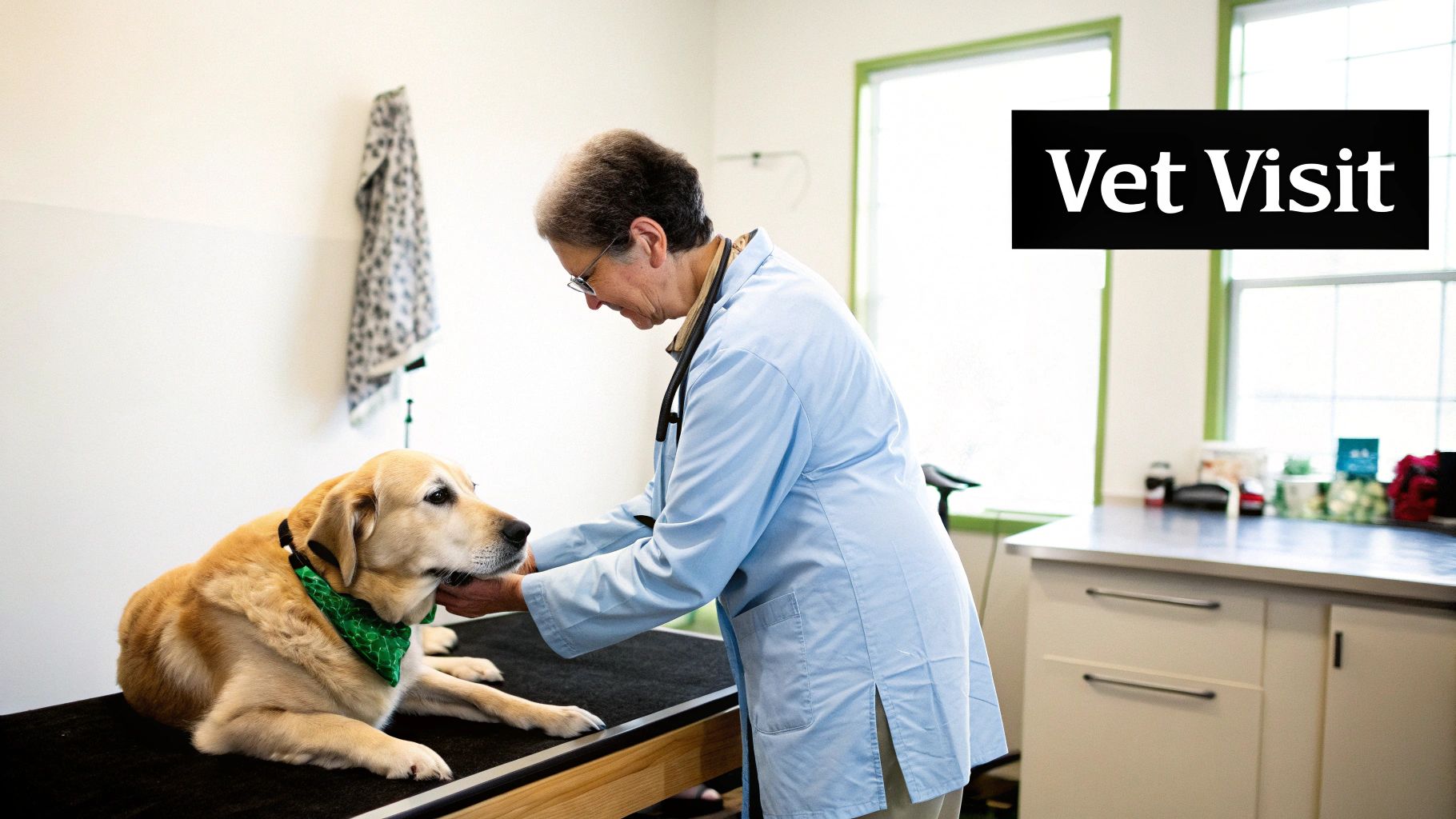
Walking into the vet clinic with your senior dog can be incredibly stressful. It helps to know what to expect, so you can feel more prepared and less anxious.
Your veterinarian is like a detective trying to solve a puzzle. Their job is to piece together clues to figure out exactly why your old friend's back legs are giving out. This is a team effort, and the information you bring to the table is the most important clue of all.
The visit will start with a detailed chat. Your vet will want to know everything: when you first saw the weakness, if it appeared overnight or came on gradually, and what specific things seem hardest for your dog now. Your day-to-day observations are gold here.
The Hands-On Physical Examination
After getting the full story, your vet will perform a comprehensive physical and neurological exam. This is much more than a quick pat-down; it's a deep dive designed to find the root of the problem.
Imagine a mechanic checking a car’s suspension and wiring—it's a lot like that. Your vet will watch your dog walk, looking for a wobble or any scuffing of the toes. They’ll also gently feel along the spine, hips, and legs, checking for sore spots or areas where muscle has started to fade.
A big part of this exam is testing your dog's reflexes. One common test is to gently flip a paw over to see how fast your dog rights it. A delay can point to a communication breakdown between the brain and the legs, hinting at a neurological issue.
Advanced Diagnostic Tools
Sometimes, the physical exam tells the whole story. But often, your vet will need to see what’s going on under the surface. That’s where imaging tools become so important.
- X-rays: These are the go-to for checking out bones and joints. X-rays are fantastic at revealing the classic signs of arthritis, hip dysplasia, or even bone tumors.
- MRI or CT Scans: If a spinal cord problem like IVDD is suspected, your vet might suggest more advanced imaging. An MRI gives a detailed view of soft tissues like the spinal cord, nerves, and discs—things an X-ray can't see.
Your vet will recommend the right tool for the job based on what they find during the exam. X-rays are usually the first step for suspected arthritis, while an MRI is the gold standard for issues like spinal cord compression.
Checklist For Your Vet Visit
To get the most out of your appointment, it helps to come prepared. In the stress of the moment, it's easy to forget key details, so maybe jot down a few notes on your phone about these points:
- When did the weakness first start?
- Did it happen suddenly, or has it been getting worse over time?
- Is one leg noticeably weaker than the other?
- Have you seen any stumbling, knuckling over, or dragging feet?
- Does your dog seem to be in pain (whining, yelping, flinching when touched)?
- Are they having trouble with stairs, jumping on the couch, or just getting up?
- Have you noticed any recent changes in their appetite or overall behavior?
Giving your vet clear, detailed answers helps them connect the dots much faster, which means getting to a solid diagnosis—and a treatment plan—for your best friend that much sooner.
Practical Ways to Improve Your Dog's Life at Home
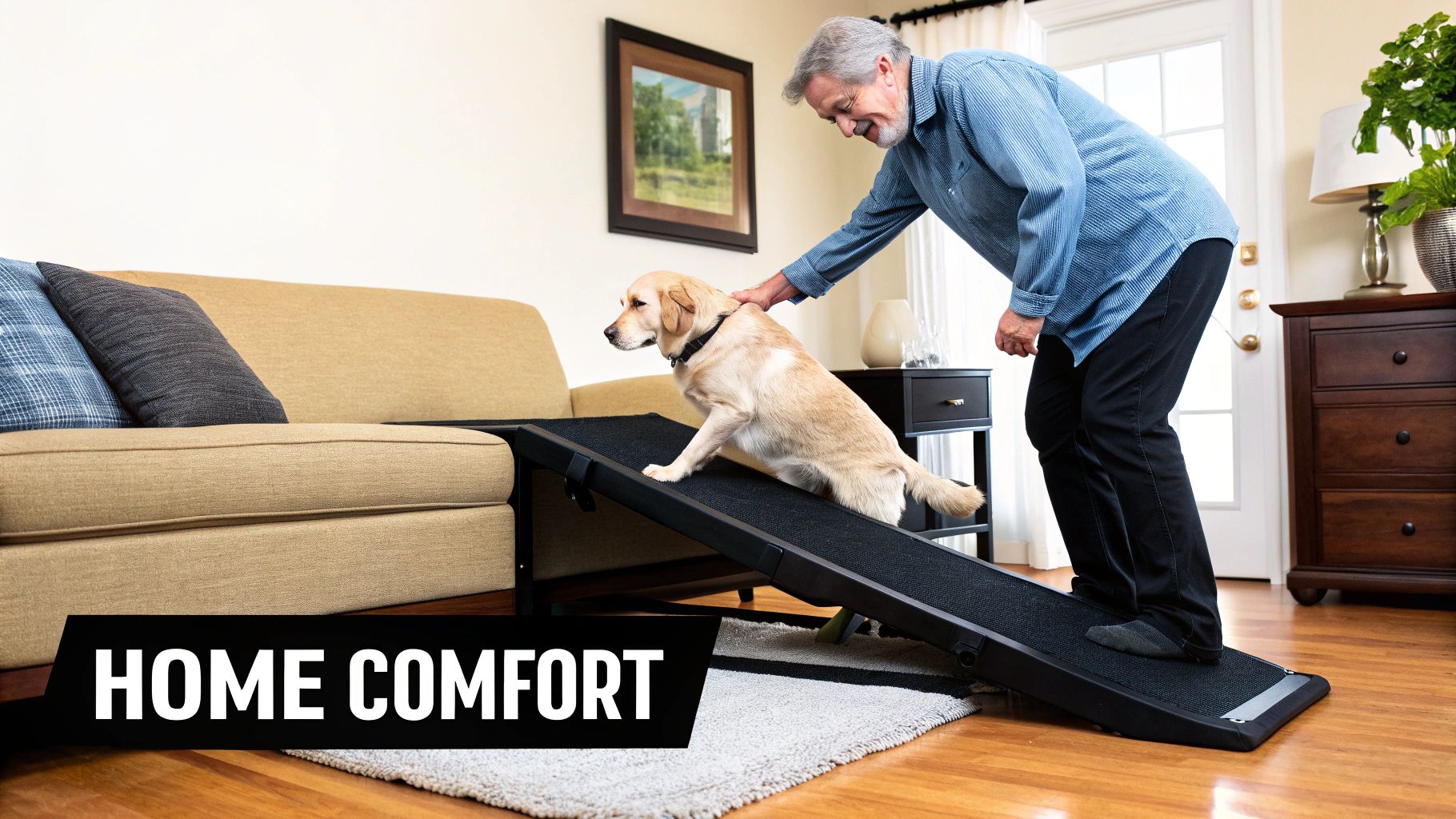
Getting a diagnosis from the vet is the starting point. The most significant and immediate difference you can make in your dog's comfort begins right at home. With a few smart adjustments, you can turn your living space into a safe haven that helps your old friend keep their independence.
These changes don’t need to be massive or expensive. Even simple, practical tweaks can make a huge impact for a dog with weak back legs, cutting down their risk of falls while easing the strain on their sore joints and tired muscles.
Create a Senior-Friendly Living Space
First, try to see your home through your dog's eyes. What used to be easy-to-navigate floors can suddenly feel like major hurdles. Your mission is to minimize these hazards and maximize comfort.
Think about the paths they walk every day—from their bed to their food bowl, and out to the yard. Slick surfaces like hardwood, tile, or laminate are a huge risk. For a dog with wobbly hind legs, these floors can feel like an ice-skating rink.
Here are a few simple but powerful changes you can make:
- Add Non-Slip Surfaces: Lay down rubber-backed runners or area rugs along their most-traveled routes. This gives their paws the grip they need to walk confidently without their legs sliding out from under them.
- Invest in an Orthopedic Bed: A quality orthopedic bed offers essential support for their spine and joints, providing a soft cushion against the hard floor. This can improve their sleep and reduce stiffness when they wake up.
- Elevate Food and Water Bowls: Raising their bowls to about chest height means they don’t have to strain their neck and back just to eat or drink. It’s a small adjustment that makes mealtime much more comfortable.
If your senior dog's issues stem from spinal problems, learning about approaches to treating chronic back pain can provide a ton of comfort. Many of the core ideas, like supportive surfaces and gentle movement, are just as helpful for our canine buddies.
A few easy home modifications can dramatically improve your senior dog's safety and quality of life. This checklist breaks down some of the most effective changes you can make.
Senior Dog Home Safety Checklist
| Home Modification | Why It Makes a Difference | Quick and Easy Tip |
|---|---|---|
| Non-Slip Flooring | Prevents dangerous slips and falls on slick surfaces like tile or hardwood, giving your dog confidence to move around. | Use inexpensive carpet runners with rubber backing in high-traffic areas. Yoga mats work great in smaller spots, too! |
| Orthopedic Dog Bed | Cushions aging joints, reduces pressure points, and provides proper spinal alignment for more restorative sleep. | Place the bed in a warm, draft-free spot where your dog loves to relax, away from the hustle and bustle. |
| Ramps or Pet Stairs | Eliminates the need for high-impact jumping onto furniture or into cars, protecting their back and legs from strain. | Look for ramps with a high-traction surface. Use treats to make their first few times using it a positive experience. |
| Elevated Food Bowls | Reduces strain on the neck and back during meals, making it easier and more comfortable for them to eat and drink. | You can buy an adjustable stand or simply place their bowls on a sturdy, appropriately sized box or step stool. |
| Gated-Off Stairs | Prevents accidental tumbles down the stairs, one of the most common and dangerous household accidents for senior pets. | Baby gates are perfect for this. Install them at both the top and bottom of staircases for complete safety. |
Taking these small steps shows your dog you're there for them, helping them navigate their golden years with as much comfort and safety as possible.
Incorporate Gentle Movement and Exercise
It might sound counterintuitive, but gentle, consistent exercise is vital for a dog with weakening legs. The trick is to skip high-impact activities and focus on movements that keep muscles toned and joints flexible without causing more strain.
Short, slow, leashed walks on soft ground like grass are ideal. It’s much better to take several brief strolls during the day than one long, exhausting trek. This keeps their muscles working and stops them from getting too stiff.
It's a common mistake to stop all activity, thinking it will prevent pain. But being inactive actually leads to more muscle loss, which just makes the problem worse. The real goal is "motion is lotion"—keeping everything moving in a safe and controlled way.
Ask your vet about specific exercises or easy range-of-motion stretches you can do at home. These gentle movements can help your dog hold on to the strength and flexibility they still have.
Utilize Assistive Devices for Better Mobility
These days, there are fantastic tools designed to help dogs with mobility issues. These gadgets can bring back a sense of freedom and make daily routines safer for both you and your furry best friend.
- Ramps and Stairs: Lightweight ramps are a game-changer for getting into the car or onto the couch. For indoor use, pet stairs can offer a safer way to get on and off the bed.
- Support Harnesses: A rear-lift harness is an amazing tool that lets you gently support your dog's back end. It's incredibly helpful for going up and down stairs, getting in the car, or just giving them a little extra stability on walks.
- Non-Slip Booties or Paw Grips: If you have super slick floors, special booties or adhesive paw pads can provide that extra traction your dog needs to feel secure on their feet.
Making these adjustments is one of the most powerful ways you can show your love. For even more ideas, check out creating a pet-friendly home in our comprehensive guide. These proactive steps put the power in your hands to truly improve your dog's quality of life, ensuring they feel safe, comfortable, and loved in their golden years.
How Nutrition Fights Back Against Weakness
Just as a house needs strong materials to stay standing, your dog's body needs the right nutritional building blocks to maintain muscle and support aging joints. This is one area where you can take a powerful, proactive role every single day.
While things like ramps and vet care are essential, what you put in their bowl is the fuel that powers their fight against weakness. It’s not about finding a miracle cure, but about giving their body the best possible tools to preserve muscle, manage inflammation, and keep their energy up.
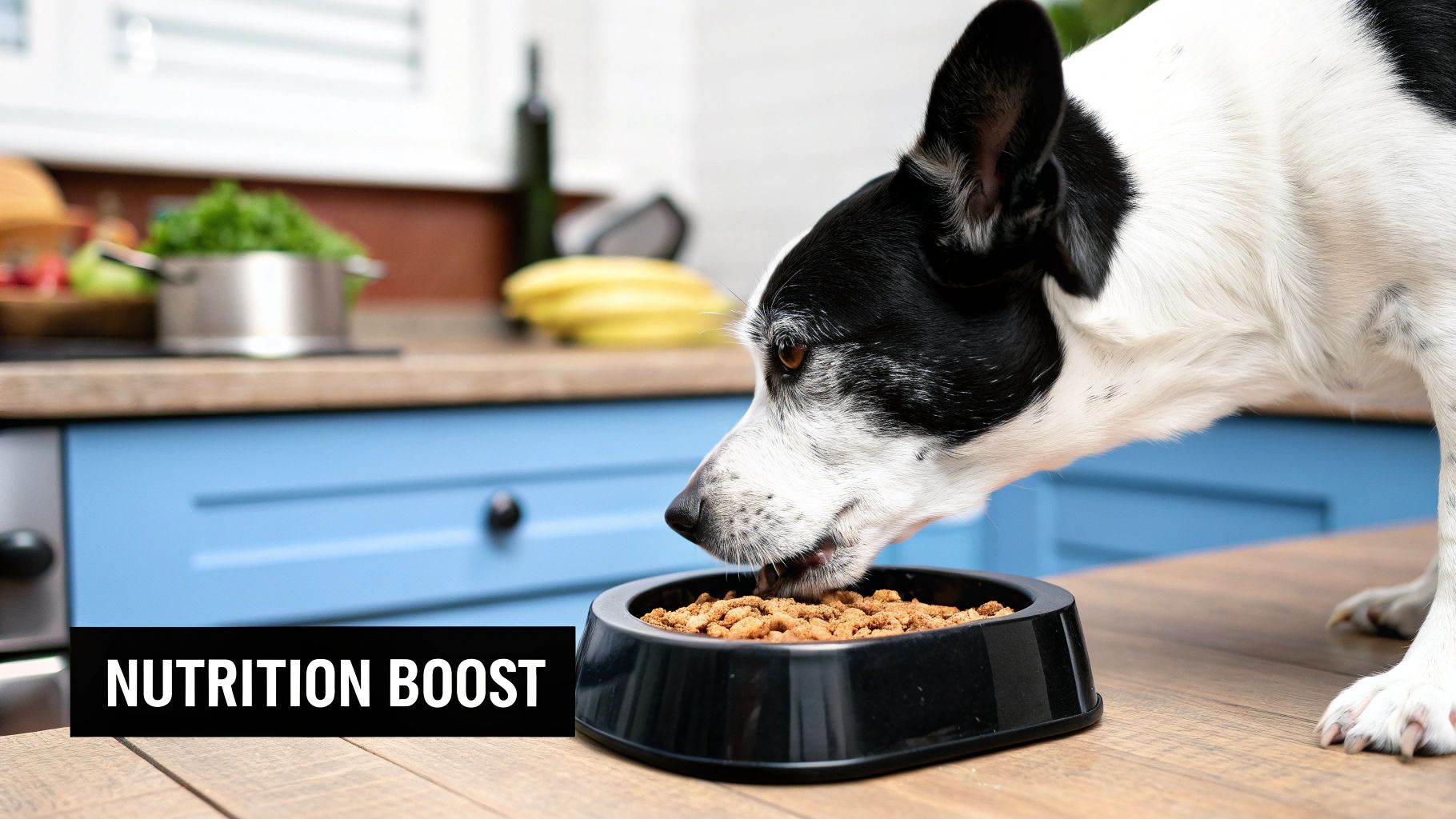
The Power of Protein for Muscle Maintenance
As dogs get older, they naturally experience sarcopenia—the gradual loss of muscle mass. This process can speed up when they're less active due to pain or weakness, creating a tough cycle. Weaker muscles offer less support to sore joints, which in turn causes more pain and even less activity.
High-quality protein provides the essential amino acids they need to counteract this decline. Think of amino acids as individual bricks used to build and repair a muscle wall. Without a steady supply of these bricks, the wall starts to crumble.
This is where a smart nutritional strategy becomes so important. By ensuring your senior dog gets enough top-tier protein, you're helping them:
- Preserve existing muscle mass, which is critical for stabilizing wobbly joints.
- Repair muscle tissue that breaks down from daily activity.
- Support overall strength and energy, making gentle exercise more manageable.
The Brain-Body Connection in Senior Dogs
It's also crucial to remember that physical decline and mental fog can go hand-in-hand. As dogs become less mobile, their mental stimulation often drops, which can hasten cognitive decline.
Research shows a strong link between these two sides of aging. Cognitive Dysfunction Syndrome (CDS) prevalence surges from 28% in 11-12-year-olds to a staggering 68% in 15-16-year-olds. Sedentary dogs are also over six times more likely to experience severe mental decline, tying brain health directly to hind leg weakness. You can discover more insights about these findings on MycoDog.com.
A nutrient-rich diet supports both brain function and muscle health—something that’s especially vital for picky senior dogs who might not be getting complete nutrition from their meals.
Introducing ChowPow: A Simple Nutritional Boost
We get it. Changing your senior dog's entire diet can be a real challenge, especially if they've become a picky eater. That’s why we created ChowPow—not as a replacement for their current food, but as a powerful meal enhancement designed to fortify it.
By simply sprinkling this supplement over their regular kibble, you’re adding a concentrated boost of key nutrients without the fuss.
ChowPow is a meal enhancement, a nutritional supercharger for the food your dog already knows and loves. Its purpose is to boost their meal, ensuring they get the targeted support they need for their aging body.
The star ingredient is dehydrated beef heart, a true powerhouse of nutrition. It’s naturally packed with the high-quality protein and complete profile of amino acids their body craves for muscle support. Beef heart is also a fantastic source of taurine for heart health and CoQ10 for cellular energy.
Why a Meal Topper Works for Senior Dogs
Senior dogs often face challenges that make mealtime difficult. They may have sensitive teeth, a diminished sense of smell, or a fading appetite due to discomfort. ChowPow is designed to overcome these hurdles.
Its incredible taste and aroma entice even the most reluctant eaters, ensuring they clean their bowl and get the full nutritional value of their meal. Because it's a fine powder, it's gentle on sensitive mouths and easy to digest.
You're not just making their food taste better; you're turning it into a more potent tool to help them stay as strong as possible. For more information on what goes into building a strong canine physique, you might be interested in our guide on muscle-building foods for dogs.
With every scoop, you're providing the essential building blocks to help fight back against the weakness that comes with age, supporting your loyal companion from the inside out.
Your Top Questions About Senior Dog Mobility
Once you start digging into the world of weak back legs in older dogs, it's natural for a bunch of new questions to pop up. This is a process, not a one-and-done fix. Getting some clear answers can give you the confidence you need to help your best friend. Let's tackle some of the most common things we hear from fellow dog parents.
Is It Pain or Just Old Age?
This is one of the toughest questions to answer. Is your dog just slowing down, or is something actually hurting them? While it’s true that dogs lose some muscle mass as they get older, the real culprit behind that frustrating weakness is often pain from an underlying condition like arthritis.
Dogs are absolute masters at hiding their pain—it's a survival instinct. That means you have to put on your detective hat. Look for the little things: does he hesitate for a split second before trying to stand up? Does she suddenly not want you to pet her around the hips? Do you catch her licking at her joints? Even a dog that seems "cranky" might just be dealing with chronic pain.
We often write off changes as "just old age," but what we're really seeing is a dog's strategy for coping with discomfort. A trip to the vet is the only surefire way to tell the difference between a normal decline and a treatable condition.
Should I Stop Walking My Dog?
Absolutely not! But you'll almost certainly need to change how you walk them. It's a common myth that total rest is the answer for an achy senior. The truth is, gentle and consistent movement is incredibly important for keeping their muscles engaged and their joints lubricated.
Think of it this way: motion is lotion for the joints. The trick is to trade those long, demanding hikes for several shorter, more relaxed strolls each day. If you can, stick to softer surfaces like grass or a dirt trail, which are much kinder to their body than unforgiving concrete. Your goal is to maintain their strength, not to push them to their limits.
What If My Senior Dog Is a Picky Eater?
It’s incredibly common for senior dogs to become fussy with their food, especially when they're not feeling 100%. This is where a high-value, tasty meal topper can make all the difference, helping you get those crucial nutrients into them to support their weakening muscles.
This is the exact reason we made ChowPow. As a meal enhancement, its single-ingredient base of dehydrated beef heart is a game-changer for picky eaters. The rich, meaty aroma is often enough to convince even the most reluctant dog to take a few bites. It’s not about tricking them into eating more; it’s about making every bite they do take more powerful and appealing.
- Tempts the Appetite: The irresistible smell and taste get dogs with a low appetite interested in their food again.
- Gentle on Old Mouths: It's a fine powder, making it perfect for seniors with sensitive teeth or dental problems.
- Packs a Nutrient Punch: It boosts their regular food with the high-quality protein and amino acids their muscles desperately need.
Can a Meal Enhancement Really Help Weak Back Legs?
Yes, a quality meal enhancement can play a huge supportive role in managing hind leg weakness. While it’s not going to cure a medical issue like arthritis or a disc problem, it gives your dog's body the raw materials it needs to fight back.
Think of it like trying to build a strong wall—you can't do it with a pile of sand and a few missing bricks. High-quality protein and amino acids are the "bricks" for muscle tissue. ChowPow delivers these essential building blocks in a super concentrated and easy-to-digest form as a supplement to their existing diet.
When the muscles holding the hips and spine are stronger, it takes a lot of strain off the skeletal system. This extra support can lead to better stability, less discomfort, and better mobility. You're giving your dog's body the fuel it needs to combat age-related decline from the inside, turning every meal into a proactive step towards better strength.
Here at ChowPow, we know that targeted nutrition is one of the best tools you have for supporting your senior dog's comfort and happiness. By simply sprinkling ChowPow on their food, you’re boosting their diet with the high-quality protein they need to maintain muscle and keep their appetite strong. Give your loyal friend the nutritional advantage they deserve by visiting us at https://chowpownow.com.
-
Product on sale
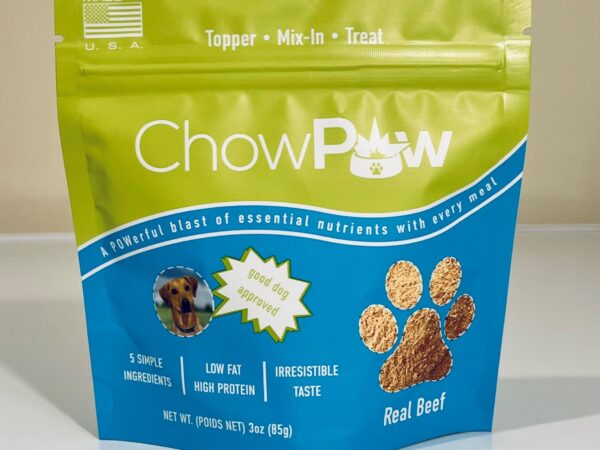 Dog Food Topper - Beef HeartOriginal price was: $14.99.$10.95Current price is: $10.95. - or subscribe and save up to 20%