Alopecia X in Dogs: Vet Guide to Signs & Treatment
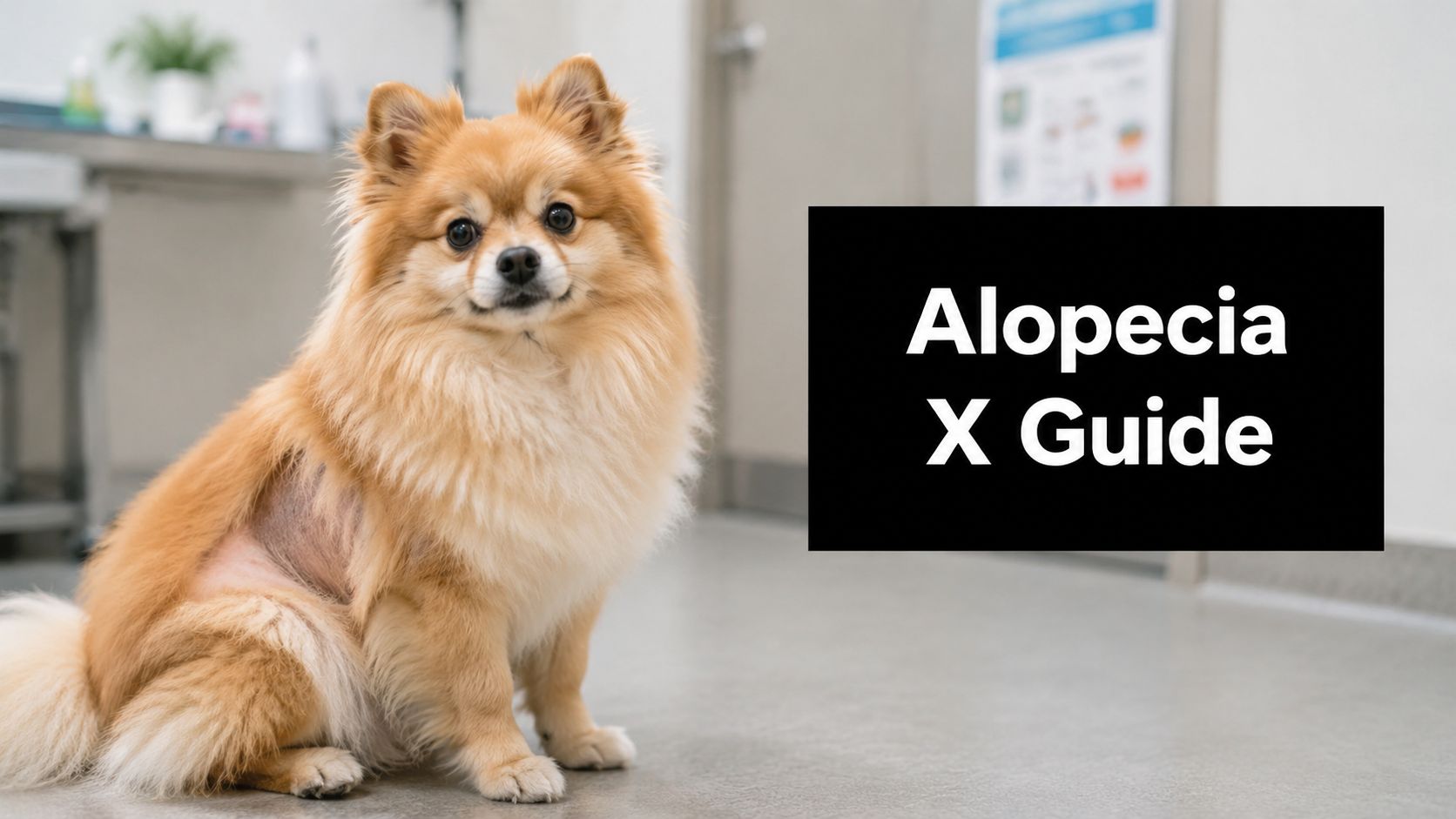
You notice it during a quiet moment at home. Your dog turns just right in the light, and there it is. A thin patch on the tail. A bare spot along the back. Maybe your fluffy Pomeranian suddenly looks less fluffy, and your mind goes straight to the worst possibilities.
That reaction is normal. Hair loss in dogs can look alarming, especially when the skin is showing through a coat that used to feel thick and plush.
The reassuring part is that alopecia X in dogs is often more of a hair-growth problem than a whole-body illness. It can look dramatic, but many dogs with this condition feel perfectly normal. They eat, play, sleep, and act like themselves. The challenge is figuring out whether the hair loss really is alopecia X, or whether something else is causing a similar pattern.
Noticing Hair Loss on Your Dog? You Are Not Alone
A lot of owners first spot this problem the same way. They're brushing their dog and notice the coat feels different. The fur on the tail seems sparse. The neck looks thinner. The sides of the body don't fill in after grooming the way they used to.
That early stage can be confusing because the dog usually isn't acting sick. There's often no itching, no redness, and no obvious pain. Your dog may seem completely comfortable while the coat changes month by month.
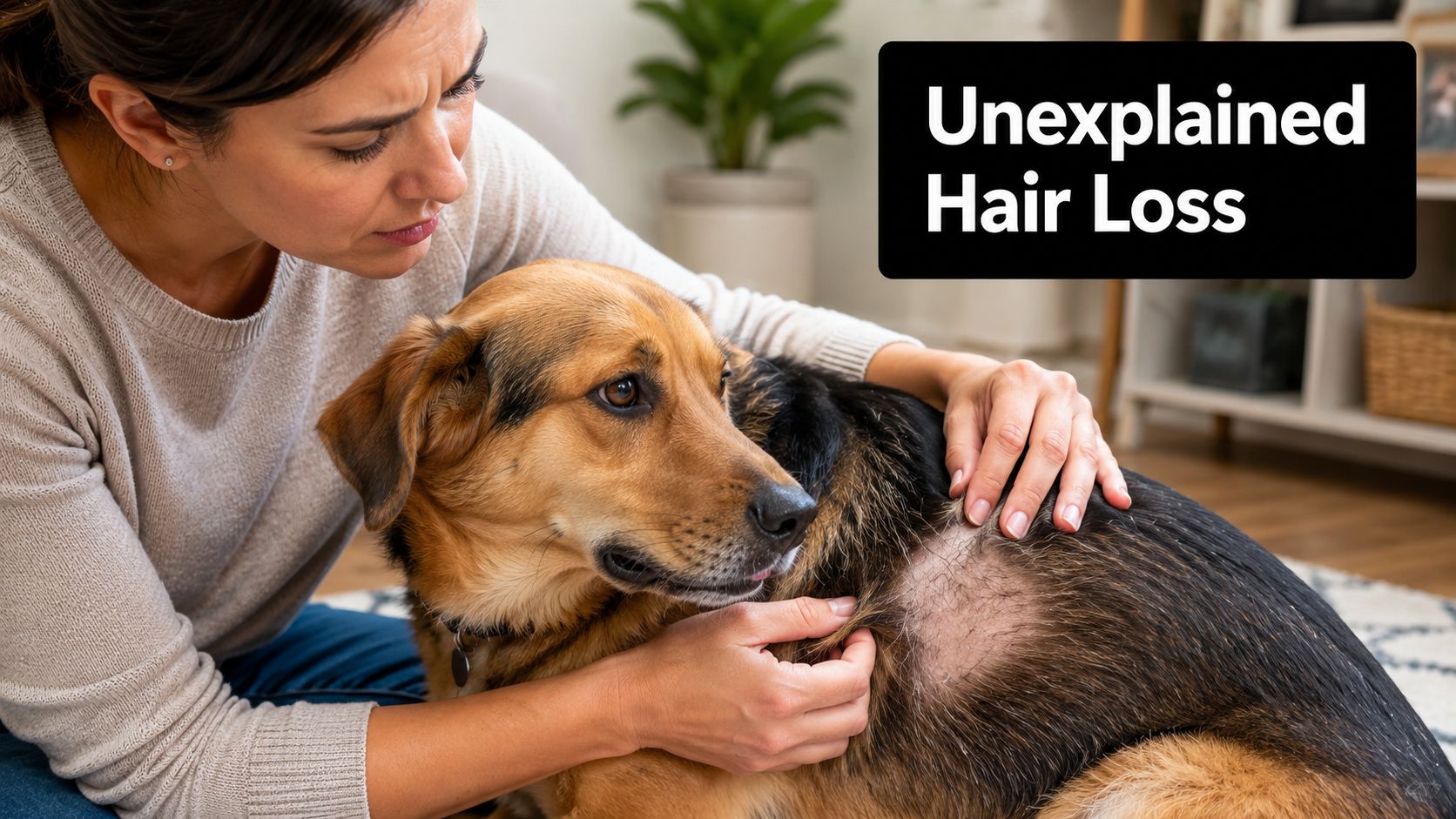
When a bald patch isn't an emergency
If you have a plush-coated breed, especially one with a very soft undercoat and a dramatic outer coat, alopecia X may be one of the conditions your veterinarian considers. The name sounds intimidating, but the “X” is there because the cause still isn't fully understood.
Practical rule: Sudden hair loss with itching, sores, odor, or discomfort needs prompt veterinary attention. Gradual hair loss without inflammation is a different pattern and often points your vet in another direction.
Owners often get stuck on one question right away. “Is this dangerous?” In many dogs, the answer is no. It may be primarily cosmetic. But that doesn't mean you should guess. Hair loss can overlap with hormone disorders, skin disease, and follicle problems that need a proper workup.
What concerned owners usually want to know
Many dog owners aren't just asking for a label. They want real-life answers:
- What is it exactly? Is this a skin disease, a hormone problem, or just bad luck?
- Will the hair come back? Sometimes yes, sometimes partly, and sometimes not in a predictable way.
- Does my dog need treatment? Not always, but some dogs do benefit from medical or procedural options.
- What can I do at home? Quite a bit, especially for comfort, skin care, and nutrition.
If you're staring at your dog's coat and feeling unsettled, you're not overreacting. You're paying attention. That's the right first step.
What Is Canine Alopecia X?
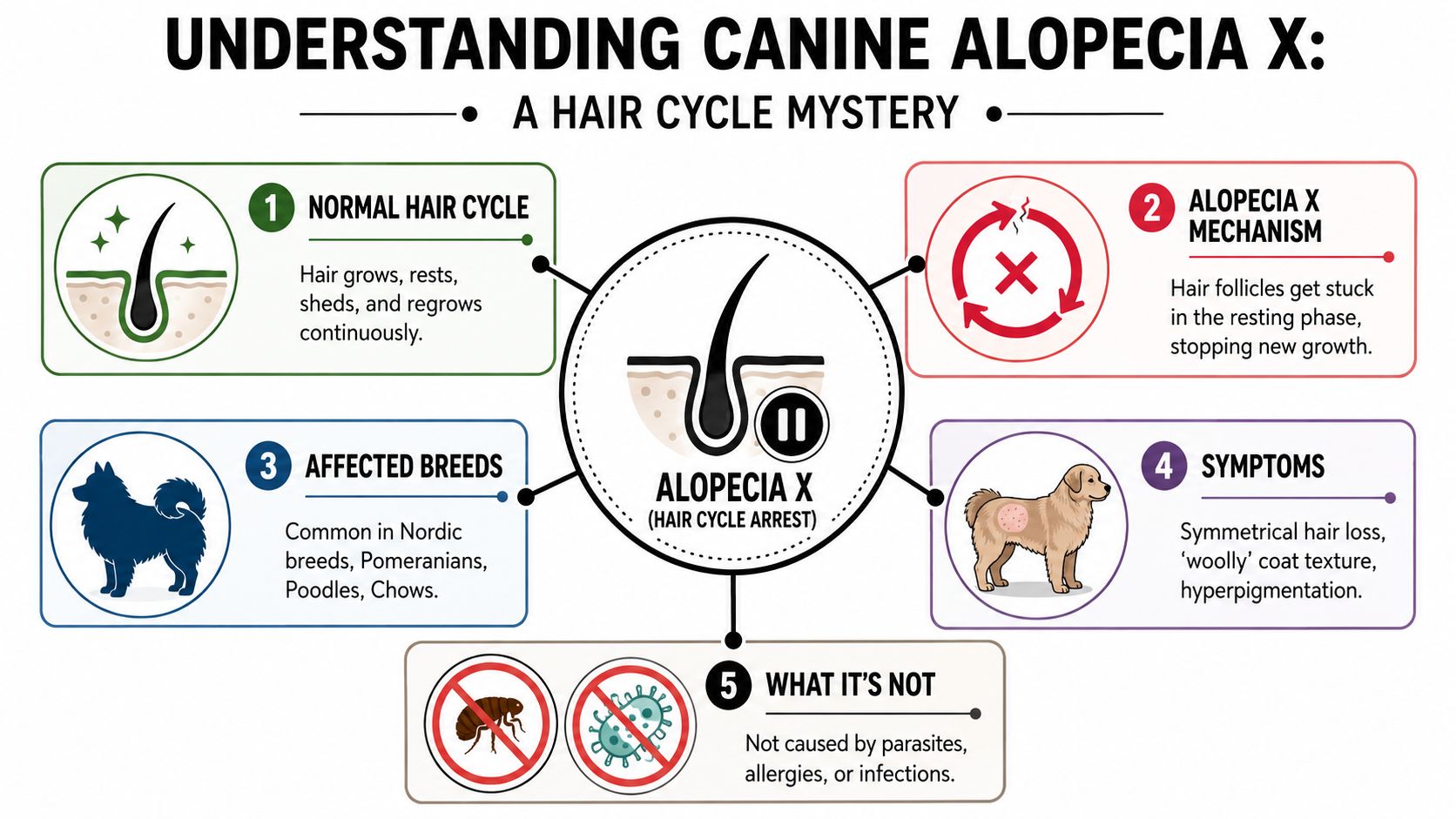
Alopecia X is a disorder of the hair-growth cycle. In plain language, the hair follicles are still there, but many of them stop progressing through their usual phases of growth, rest, shedding, and regrowth. That helps explain why the coat can fade dramatically even when the skin does not look infected or badly inflamed.
For many owners, that distinction is a relief. Hair loss looks alarming, but alopecia X often behaves more like a coat-production problem than a painful skin disease. Your dog can still feel normal, act normal, and enjoy daily life while the coat changes on the outside.
What owners often misunderstand
One confusing part of alopecia X is that dramatic hair loss does not always come with itching, redness, or obvious discomfort. The pattern is often gradual and fairly even on both sides of the body. In many dogs, the face and the lower legs keep their hair while the body coat thins.
That pattern gives veterinarians an important clue. Fleas, allergies, and skin infections usually create a different picture. Dogs with those problems often scratch, chew, lick, or develop irritated skin. Dogs with alopecia X often seem comfortable, which is one reason owners may wonder whether they should worry at all.
If some of the terminology sounds unfamiliar, it can help to learn hair loss vocabulary before your visit. Terms such as hair cycle arrest, hyperpigmentation, and follicular dysplasia are easier to follow once they are explained in everyday language.
Why the cause is still unclear
The exact cause has not been pinned to one single trigger. Veterinarians suspect a mix of genetic influence, hormone signaling, and follicle-level changes in how hair cycles are regulated. That is why the condition still carries an "X" in its name. It marks an unanswered piece of the puzzle, not a lack of knowledge about the condition as a whole.
This can feel frustrating when you want a simple reason and a simple fix. A better way to view it is this: your veterinarian is often solving a process-of-elimination case. The goal is to make sure the hair loss is not being caused by something more medically important, then decide whether treatment, monitoring, or supportive home care makes the most sense for your dog.
A short visual explanation can make the concept easier to grasp:
What it is not
Alopecia X usually does not start as an intensely itchy allergy problem.
It usually is not an infection that destroys the follicles first, although secondary skin issues can develop later if the skin becomes dry or irritated.
It also is not confirmed by one simple test. Diagnosis usually depends on the full picture: history, breed type, exam findings, and ruling out other causes of hair loss.
That matters for home care too. Because this condition is often cosmetic, owners sometimes feel stuck between doing nothing and chasing every possible treatment. In reality, there is useful middle ground. Protecting skin health, keeping the coat clean, supporting good nutrition, and watching for changes in comfort can all help your dog do well while you and your veterinarian decide what level of treatment is appropriate.
Is Your Dog at Risk? Breeds and Clinical Signs
You brush your dog and notice the coat is not bouncing back the way it used to. The tail looks thinner. The body seems less fluffy, but your dog still acts happy, eats normally, and is not scratching much. That combination is often what makes alopecia X so confusing for owners. A dog can seem perfectly well while the coat changes little by little.
Certain dogs fit the usual alopecia X pattern more closely than others. Veterinarians see it most often in plush-coated, double-coated breeds, especially Pomeranians, Keeshonds, Chow Chows, Siberian Huskies, and Alaskan Malamutes. If your dog has that soft undercoat with a fuller outer coat, alopecia X rises higher on the list of possibilities. In a short-coated dog, your veterinarian will usually look harder for other explanations first.
Coat type matters because the hair cycle in these breeds seems more likely to get "stuck." A useful way to picture it is a garden that pauses between growing seasons. The soil is still there, the roots are still there, but the plants stop coming up the way you expect. With alopecia X, the follicles are often still present, yet they are not producing normal visible hair.
The look veterinarians watch for
The classic pattern is gradual hair loss in areas where the coat should be thick, without much redness or itchiness early on. The skin often looks fairly calm at first, and the dog usually feels fine.
Hair loss often shows up on the neck, chest, trunk, backs of the thighs, and tail. The head and lower legs are commonly spared. That is why some dogs keep their fluffy face and fur on the feet while the body coat fades. Owners sometimes describe it as a dog wearing furry socks with a much barer jacket.
Common clues include:
- A thinning tail, sometimes called a rat tail appearance
- Symmetrical hair loss on both sides of the body
- Slow coat loss over months, rather than sudden bald patches overnight
- Darkening of the skin in areas that stay hairless for a while
- A dry or woolly texture change before the hair disappears completely
These details are helpful at home, too. If you are taking photos every few weeks, you give your veterinarian a much clearer timeline. That can make it easier to tell whether the pattern fits alopecia X or points somewhere else.
Breed risk is a clue, not proof
A breed tendency should never be the whole answer. A Pomeranian with thinning hair can still have hypothyroidism, adrenal disease, or another follicle disorder. Skin disease that starts with obvious itching may point your vet toward problems such as allergies instead, including conditions like canine atopic dermatitis, which usually follow a different pattern.
That is why the overall story matters so much. Your veterinarian is looking at breed, age, coat type, where the hair loss started, how quickly it spread, whether the skin looks healthy, and whether your dog seems comfortable.
When the pattern does not fit neatly
Some signs make alopecia X less likely. Heavy itching, greasy skin, strong odor, crusts, scabs, or open sores suggest that another problem may be present, either instead of alopecia X or along with it. Sudden patchy hair loss on the face, ears, or feet also deserves a different line of investigation.
Supportive home observation can really help. Owners often notice small changes before anyone else does. If the skin becomes dry, flaky, irritated, or infected, that is no longer just a cosmetic coat issue. Even when alopecia X turns out to be the diagnosis, watching skin comfort closely and supporting coat health at home can make a real difference in your dog's day-to-day wellness.
The Path to a Diagnosis
Alopecia X is often called a diagnosis of exclusion. That phrase can sound frustrating, but it means your veterinarian has to rule out more common or more medically important causes of hair loss before settling on this label.
This is one of the reasons owners sometimes feel caught off guard. They bring in a dog who seems bright and comfortable, only to hear that blood tests, skin tests, and sometimes a biopsy may be recommended.
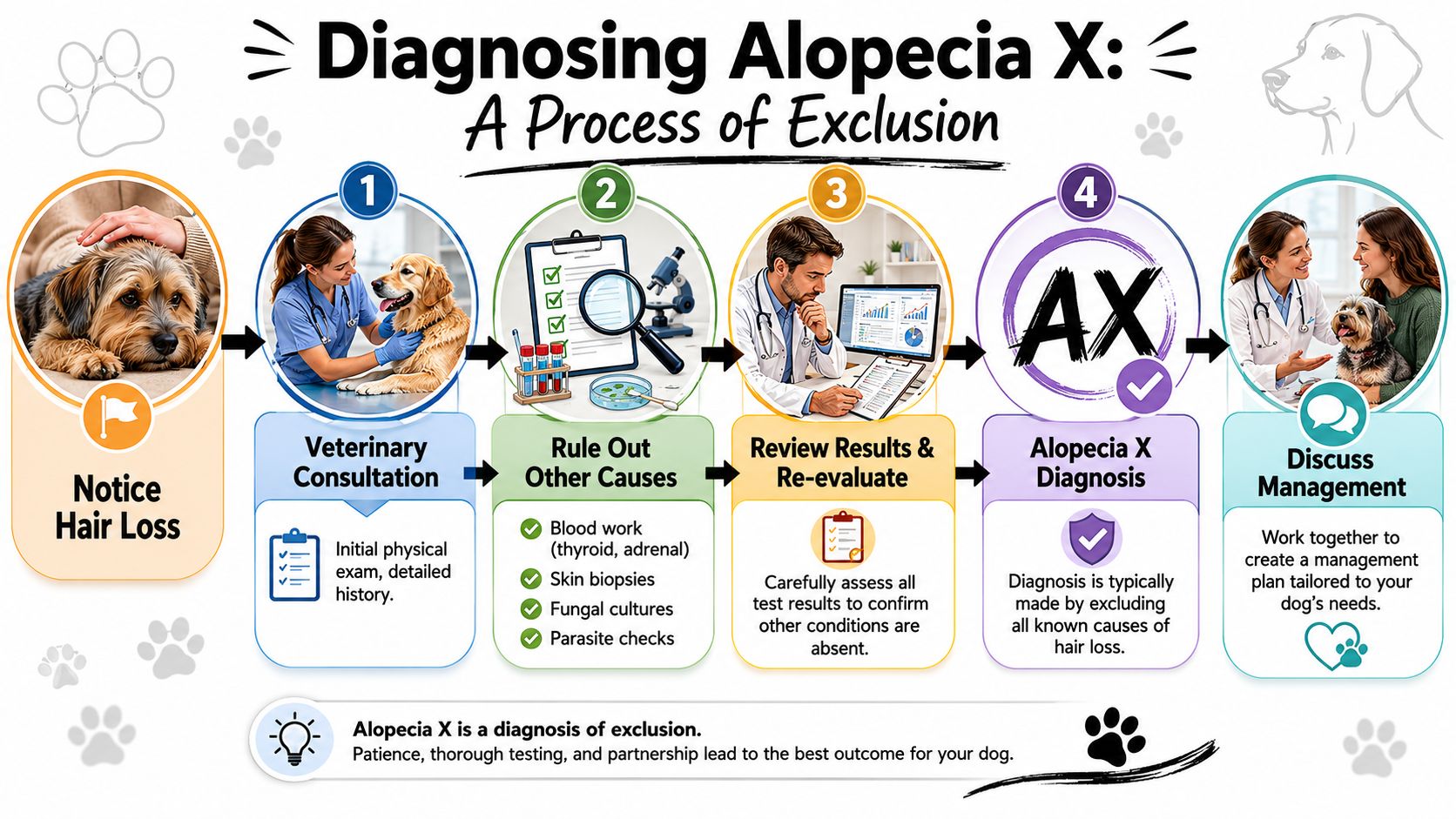
Why your vet can't diagnose it by sight alone
A veterinary clinical resource notes that a key unanswered question is whether alopecia X is always just cosmetic or whether it can sometimes be a clue to broader endocrine disease. That's why the workup is built on excluding hypothyroidism, hyperadrenocorticism, hyperoestrogenism, sebaceous adenitis, and follicular dysplasia, and some clinicians advise monitoring for later-onset endocrinopathies instead of assuming the dog is otherwise normal, as discussed in this canine dermatology article on diagnosing alopecia X.
That point matters in everyday practice. A dog can look well and still need careful screening.
What the appointment often includes
The process usually starts with a detailed history and physical exam. Your vet may ask when the hair loss started, whether it followed clipping or grooming, whether your dog is itchy, and whether there have been changes in weight, thirst, energy, or appetite.
From there, the workup may include:
- Basic lab testing to look for internal conditions that can alter the hair coat
- Skin sampling to check for parasites, infection, or other dermatologic problems
- Hormone-focused evaluation if the pattern suggests an endocrine cause
- Skin biopsy when the appearance is suggestive but not definitive
A biopsy can be especially useful when the pattern overlaps with other disorders that affect the hair follicle. In some cases, your primary veterinarian may recommend a dermatologist or a dermatopathology review of biopsy samples.
Why this process can feel expensive and slow
Owners sometimes worry that the vet is “doing too much” for what seems like cosmetic hair loss. These tests are aimed at protecting your dog from a missed diagnosis. If your dog has an endocrine disorder, sebaceous adenitis, or another skin condition, labeling it alopecia X too early could delay proper care.
If your dog also struggles with itchy, inflamed skin rather than just non-itchy thinning, it can help to compare patterns with another common condition like canine atopic dermatitis. The two problems can look very different in practice.
Hair loss is a symptom, not a final answer. The workup matters because several very different diseases can produce a similar first impression.
Questions worth asking your veterinarian
Bring a short list to the visit. It helps.
| Question | Why it matters |
|---|---|
| Is this pattern typical for alopecia X? | Pattern recognition helps guide the next steps |
| What conditions are you ruling out first? | You'll understand why each test is recommended |
| Do we need biopsy now or later? | Timing can affect cost and clarity |
| Should we monitor for future hormonal disease? | Some dogs need follow-up rather than one-time testing |
That conversation often brings more relief than the label itself.
Exploring Treatment Options and Outcomes
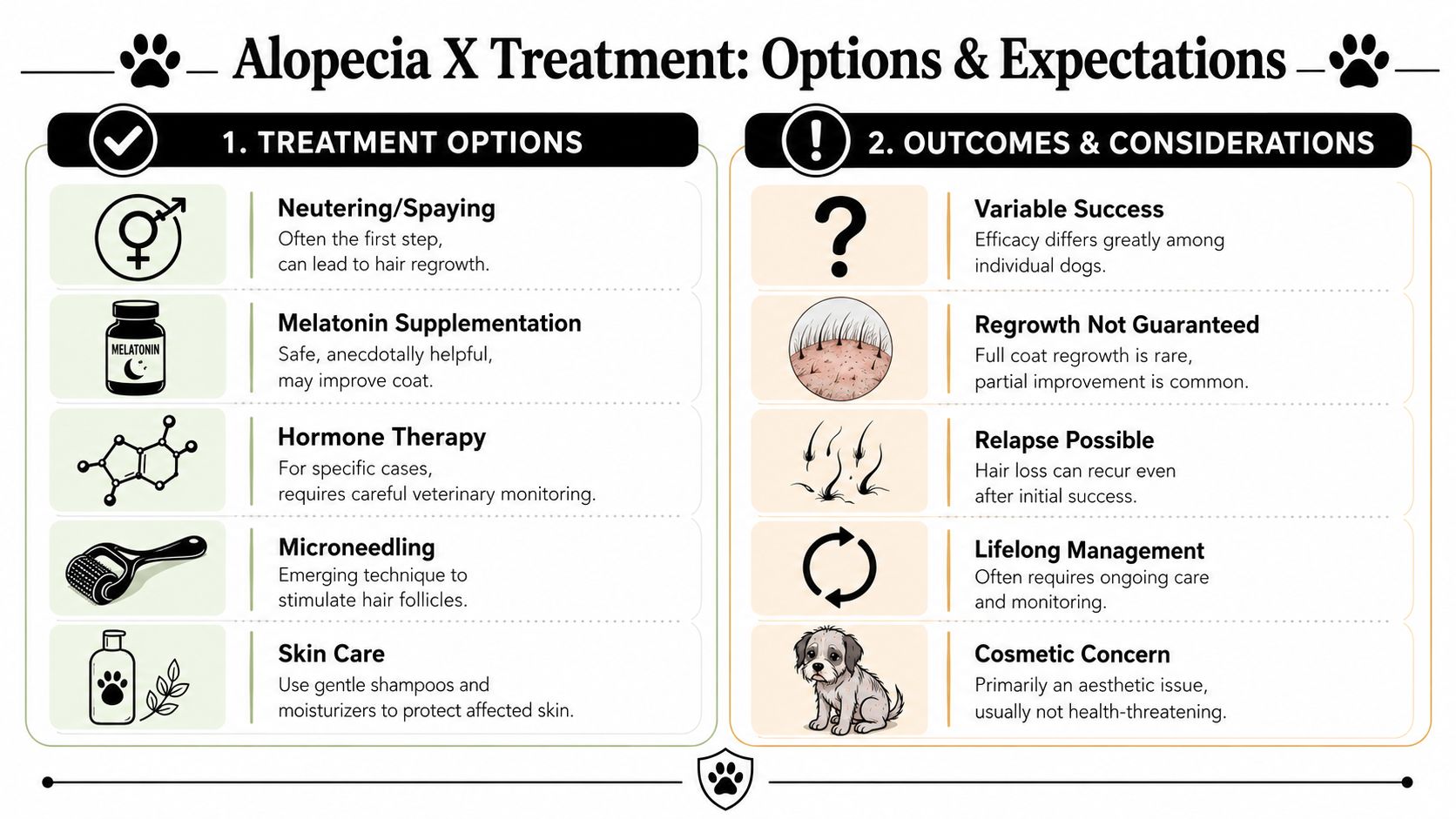
Once alopecia X is suspected or diagnosed, treatment becomes a quality-of-life and expectation-setting discussion. There isn't one universal cure. Some owners choose to monitor only. Others try medical support. If the dog is intact, reproductive status may become part of the plan.
That's why it helps to think of treatment as a menu of options rather than a fixed script.
When doing less is reasonable
Some dogs are completely comfortable and have only cosmetic coat changes. In those cases, watchful waiting can be a valid choice, especially if the diagnostic workup has ruled out more serious disease.
Owners sometimes feel guilty if they don't pursue every treatment. I don't think they should. If a dog isn't itchy, painful, or systemically unwell, the decision often comes down to coat appearance, skin protection, and owner preference.
Treatments your veterinarian may discuss
For intact dogs, neutering or castration is often recommended first. According to the AKC Canine Health Foundation grant summary on alopecia X, several studies report meaningful regrowth in a subset of patients after this step.
Melatonin is one of the most common medical options. The same AKC Canine Health Foundation source notes that response rates are variable. Some studies report about 30% to 40% of dogs improve, while others suggest roughly 50% show some response within 6 to 8 weeks. The same source also discusses a melatonin-implant study that found 60% regrowth within 3 months in unneutered males, with no response in spayed females.
Those numbers tell an honest story. Some dogs improve. Some don't. Sex status and breed appear to influence outcomes.
A simple comparison of common approaches
| Option | Best fit | Main limitation |
|---|---|---|
| Watchful waiting | Comfortable dogs with cosmetic hair loss | Coat may not regrow |
| Neutering or castration | Intact dogs | Regrowth isn't guaranteed |
| Melatonin | Dogs whose vets feel it's appropriate to try a low-risk option | Response is modest and variable |
| Other medications or procedures | Select cases under veterinary supervision | More monitoring and uncertainty |
What I tell owners before they start
- Expect variability. Two dogs of the same breed may respond very differently.
- Aim for improvement, not perfection. Partial regrowth can still be a good outcome.
- Keep follow-up realistic. If your dog develops new signs beyond coat change, the diagnosis may need to be revisited.
If you're also looking at broader skin-support strategies, some owners find it useful to read about omega-3 support for dogs. While that doesn't replace veterinary treatment for alopecia X, it can help frame a coat-health conversation with your vet.
There's nothing “wrong” with choosing a conservative plan when the problem is cosmetic and your dog feels well. There's also nothing wrong with trying treatment if coat regrowth matters to you.
The key is to match the plan to the dog, not to internet promises.
Home Care and Nutritional Support for a Healthy Coat
This is the part owners can control every day. You may not be able to switch the follicles back on by force, but you can support the skin, protect exposed areas, and make sure your dog's body has the raw materials it needs for normal coat maintenance.
That matters even when alopecia X is considered cosmetic. A thinner coat changes how the skin handles friction, dryness, sunlight, and weather.
Start with gentle skin care
Hairless or thin-coated areas need a softer touch than most owners realize. Overbathing, harsh shampoos, and aggressive brushing can make exposed skin more vulnerable.
A practical home routine usually includes:
- Gentle grooming with tools that don't scrape or pull at sparse areas
- Mild bathing only when needed, using products your veterinarian feels are appropriate
- Skin checks for dryness, darkening, irritation, or secondary infection
- Climate awareness because a dog with less coat may need more protection from cold or strong sun
Some owners make the mistake of treating every bald area like a “dirty” area that needs more scrubbing. Usually the opposite is better. Be gentle. Protect the skin barrier.
Nutrition supports the coat you do have
Hair is built from nutrients. The body needs enough high-quality protein, amino acids, vitamins, and minerals to support normal skin turnover and hair production. That doesn't mean food alone will cure alopecia X, but poor nutrition can make any coat problem harder to manage well.
If you want a broader framework for evaluating meals, this complete guide to dog food nutrition can help you think more clearly about what your dog is getting in the bowl. It's useful background when you're comparing feeding plans.
What to focus on in the bowl
Nutrition advice gets noisy fast, so keep it simple:
- Adequate protein matters. Hair growth depends on amino acid supply.
- Whole-diet quality matters too. A shiny coat can't be built from gaps elsewhere in the diet.
- Consistency counts. Constantly switching foods can make it harder to judge what's helping.
- Supplements should support, not replace, the base diet. Your dog still needs a complete feeding plan.
If you're interested in the relationship between nutrients and coat quality, this article on how nutrition impacts your dog's coat gives a useful overview of the food-fur connection.
Home care goals that are realistic
Owners often ask what “success” looks like at home if the hair doesn't fully return. I think success is broader than regrowth.
It can mean:
- Comfort because the skin stays clean and calm
- Protection because thin areas aren't getting rubbed raw
- Good body condition because the dog is eating well and maintaining health
- Coat support because the remaining fur is as healthy as it can be
That's not a small thing. Dogs don't judge themselves by hairstyle. They care about how they feel.
Your Alopecia X Questions Answered
Is alopecia X painful?
Usually, no. The classic form is not known for causing pain or itch on its own. If your dog seems uncomfortable, licks excessively, or has irritated skin, ask your veterinarian to reassess because that may suggest a different or additional problem.
Can the hair ever come back on its own?
Sometimes it can, but regrowth can be unpredictable. Some dogs show partial return of coat, some regrow after a treatment change, and some remain thin-coated. That unpredictability is one reason owners should be cautious about miracle claims online.
Will clipped hair grow back after grooming or a biopsy?
It may, but not always quickly or evenly in dogs with this condition. Owners often notice that hair clipped for a procedure seems slow to return. That delayed regrowth is part of why veterinarians think in terms of a hair-cycle problem.
How do I know when hair loss is more than cosmetic?
A good rule is to watch for other signs. Increased thirst, a change in weight, low energy, recurrent skin problems, or worsening pattern changes all justify another veterinary conversation. In people, articles on understanding hair loss causes often show how many different pathways can lead to hair thinning. The same broad principle applies to dogs. Hair loss is a sign with multiple possible explanations.
Should I keep rechecking with my vet even after a diagnosis?
In many cases, yes. Some clinicians recommend monitoring rather than assuming the story is permanently closed, especially if your dog develops new changes over time. Follow-up doesn't always mean more testing right away. Sometimes it just means staying observant and revisiting the plan when needed.
If you want an easy way to support your dog's daily nutrition while keeping their regular kibble in place, ChowPow can help. It's a dehydrated beef heart meal enhancer designed to boost the nutritional value of your dog's current food, not replace it. For dogs with coat concerns, picky appetites, or recovery needs, that kind of simple, nutrient-dense support can be a practical addition to an overall wellness routine.
-
Product on sale
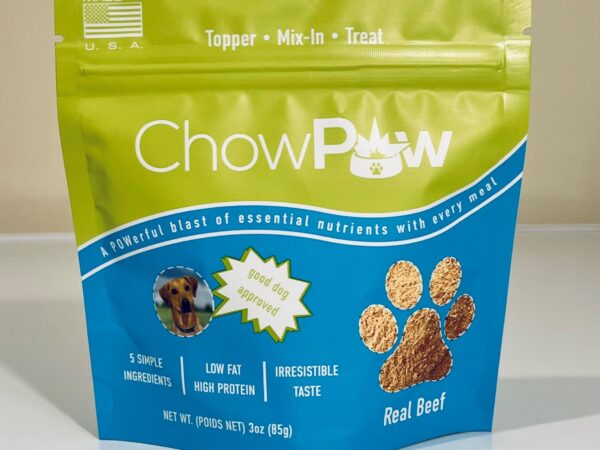 Dog Food Topper - Beef HeartOriginal price was: $14.99.$10.95Current price is: $10.95. - or subscribe and save up to 20%