
Amoxicillin for Dog: Safe Dosage & Uses
You're probably here because your dog just came home with a prescription label that says amoxicillin, and now you're standing in the kitchen with a lot of questions.
That's normal. Most dog owners feel two things at once in this moment: relief that the vet has a treatment plan, and worry about whether they're about to give the medicine correctly. If that sounds like you, take a breath. Amoxicillin is a very common veterinary antibiotic, and once you understand what it's for and how to use it, it becomes much less intimidating.
Your Vet Prescribed Amoxicillin Now What
Your dog is finally home, the vet visit is over, and now you are holding a bottle that says amoxicillin. This is the point where many owners pause and wonder, "Okay. What do I do with this, and how do I make sure I do it right?"
Start with the reason behind the prescription. Amoxicillin is used to treat a suspected or confirmed bacterial infection. Your vet chose it because it is a familiar antibiotic in canine medicine, it can be dosed by body weight, and many dogs tolerate it well when it is used correctly. The exact length of treatment depends on the problem your dog is being treated for, so the label and your vet's instructions should guide you.
Your job at home is a lot like being the person in charge of a care checklist. You do not need medical training, but you do need to know what to watch, when to give each dose, and when to speak up if something changes.
Keep these four priorities in mind:
- Understand what infection your vet is treating
- Give every dose exactly as directed
- Pay attention to your dog's comfort, appetite, energy, and symptoms
- Call your vet if you miss doses, see side effects, or notice your dog getting worse
One detail that helps many owners is this: the medicine and your observations work together. The prescription label tells you the schedule and amount. Your dog's day-to-day behavior shows whether treatment seems to be helping.
If your dog is healing from a wound, dental procedure, or another recent operation, good recovery care supports the antibiotic plan. This guide on post-surgery care for dogs can help you handle the rest of the healing routine at home.
It also helps to know why vets are careful about finishing antibiotics exactly as prescribed. Stopping early, skipping doses, or using leftover medication can make treatment less effective and can contribute to resistance over time. If you want the bigger picture, this guide to bacterial resistance for practitioners explains how that process happens.
The reassuring part is that you do not have to figure everything out at once. Focus on the label, keep track of how your dog is acting, and stay in touch with your vet if anything feels off. That is how you become an active, steady partner in your dog's recovery.
How Amoxicillin Fights Bacterial Infections
Your dog starts amoxicillin, and a fair question pops up right away. What is this medicine doing once it's swallowed?
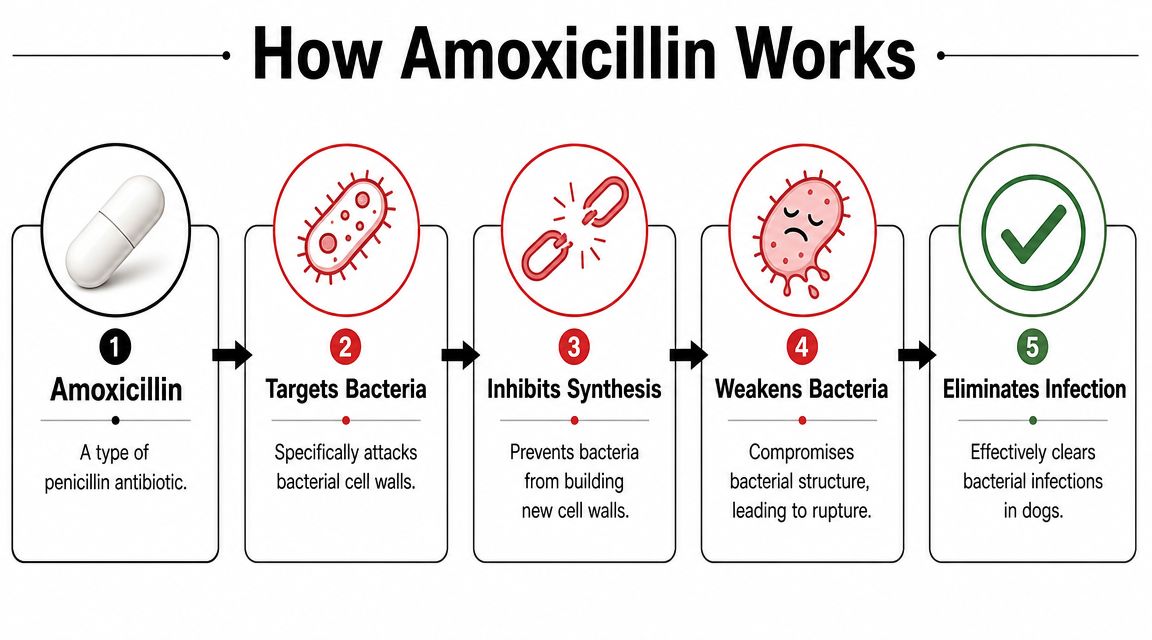
Amoxicillin is a penicillin-class antibiotic. Its job is to interfere with the outer wall certain bacteria need in order to stay intact. That wall gives the bacteria structure and protection. When amoxicillin blocks the wall-building process, the bacteria become weak and can break apart.
That matters because your dog's cells are built differently. They do not rely on that same bacterial cell wall, so the drug is aimed at the infection rather than working on your dog's body in the same way.
Why timing matters
Here is the part many owners do not hear explained clearly. Amoxicillin works best when there is enough of it in the body for long enough to keep pressure on the bacteria. If doses are spaced too far apart, the drug level can drop, and the bacteria get a chance to recover.
A simple way to picture it is this. Treating a bacterial infection is a lot like keeping steady pressure on a weed you are trying to pull out by the root. Consistent pressure helps finish the job. Repeated pauses can give it time to hold on.
That is why your vet pays attention to dose timing, not just the total amount prescribed. In more serious cases, that planning can get quite technical. A population pharmacokinetic study in dogs found that sick dogs handled amoxicillin-clavulanic acid differently from healthy dogs, with more variation in drug clearance. For you at home, the practical lesson is straightforward. The best schedule depends on the dog in front of the vet, so sticking to the prescribed timing really does matter.
Where amoxicillin helps, and where it does not
Amoxicillin is used for infections caused by susceptible bacteria. It will not solve every problem that looks like an infection from the outside. Coughing can come from irritation or viruses. Skin redness can come from allergies. Urinary signs can happen with stones or inflammation. The symptom may look familiar, but the cause still matters.
This is one reason vets do not choose antibiotics based on symptoms alone. They are matching the medicine to the most likely cause, and sometimes that means amoxicillin is a good fit, while other times a different treatment is needed.
If your dog has recurring infections or repeated antibiotic use, it helps to understand the bigger picture of resistance. This guide to bacterial resistance for practitioners gives a useful plain-language overview of how bacteria adapt when antibiotics are used the wrong way or for the wrong problem.
Common Canine Infections Treated with Amoxicillin
Your dog starts coughing, or you notice a red, tender patch of skin, or suddenly there are accidents in the house. It is completely normal to wonder whether amoxicillin will fix it.
The short answer is that amoxicillin can help with several bacterial infections in dogs, but only when your veterinarian believes the bacteria involved are a good match for this drug. Your job as a pet parent is not to guess the antibiotic. It is to notice the pattern, give your vet clear details, and watch closely once treatment starts.

Infections it may be prescribed for
Veterinarians commonly use amoxicillin for certain skin and soft tissue infections, respiratory infections, urinary tract infections, gastrointestinal bacterial infections, and infected wounds or bite injuries. The exact choice depends on the exam, your dog's history, and sometimes testing such as a urine sample, skin cytology, or culture.
A helpful way to view this is to think in terms of body systems. Amoxicillin may be used when bacteria are causing trouble in the skin, airways, bladder, or digestive tract. It is one tool in the toolbox, not a one-size-fits-all answer.
What these problems can look like at home
Here are common situations where your vet may consider amoxicillin and why your observations matter.
| Problem area | What you might notice | Why a vet check matters |
|---|---|---|
| Skin and soft tissue | Redness, swelling, tenderness, discharge, a hot spot, a wound, or an abscess | Skin trouble can start with bacteria, but it can also begin with allergies, parasites, yeast, or something stuck under the skin |
| Respiratory tract | Coughing, gagging, nasal discharge, noisy breathing, throat pain, low energy | Respiratory signs can come from bacteria, viruses, airway irritation, or heart and lung disease |
| Urinary tract | Frequent urination, straining, blood in urine, accidents, licking at the vulva or penis | A bladder infection is one possibility. Stones, crystals, inflammation, and other urinary problems can look very similar |
| Digestive tract | Diarrhea, belly discomfort, vomiting, poor appetite | Digestive signs have many causes, including diet issues, parasites, stress, toxins, and diseases that do not call for antibiotics |
At this point, you become a useful partner in treatment. The more specific you are about what you saw, when it started, and whether it is getting better or worse, the easier it is for your vet to choose the right next step.
Similar symptoms can come from very different problems
Dogs do not read the textbook. Two problems can look almost identical from the couch at home, yet need completely different care.
For example, red eyes can happen with infection, but they can also happen with allergies, dryness, irritation, a scratch on the cornea, or conditions that spread between dogs. If eye symptoms are part of the picture, these contagious dog eye infection facts can help you understand what deserves quick attention.
The same idea applies to coughing, itching, and urinary accidents. A cough may point to a bacterial infection, or it may be part of kennel cough, airway inflammation, or something else entirely. A sore on the skin may be infected now, but the original trigger may have been allergies or constant licking. That is why vets match the medication to the cause, not just the symptom you can see.
Veterinary guidance also stresses that amoxicillin should be used for susceptible bacterial infections, and that a proper diagnosis matters before starting treatment (PetMD overview of amoxicillin in dogs and cats).
So if your dog has a wound, cough, urinary signs, or stomach upset, the most useful question is, “What is my vet treating, and why is amoxicillin the right choice for this case?” That question helps you understand the plan and spot sooner if your dog is not responding the way expected.
Understanding Amoxicillin Dosage and Formulations
You pick up the prescription, look at the label, and suddenly the questions start. Why this amount? Why twice a day? Why did your dog get a liquid when another dog got tablets?
Those are smart questions. Amoxicillin is not a one-size-fits-all medicine, and understanding the plan helps you give it more safely and spot problems sooner.
Why your dog's dose may not match another dog's
Vets usually choose an amoxicillin dose based on your dog's body weight, then adjust for the infection being treated, your dog's age, overall health, and the exact product prescribed. Two dogs with the same weight can still get different instructions if they have different medical needs.
A prescription label is a recipe written for your dog only. Changing the amount on your own can throw off the treatment, much like changing the baking time halfway through and expecting the same result.
That is why you should never:
- Use human amoxicillin without veterinary guidance
- Give leftover antibiotics from another pet
- Increase or decrease the dose because your dog seems better or worse
- Skip or stretch doses to make the medication last longer
If anything on the label seems confusing, call your clinic and ask. A quick check is much safer than guessing.
The different forms you might bring home
Amoxicillin for dogs commonly comes as tablets, capsules, or a liquid suspension. Your vet picks the form that best fits your dog and the dose they need.
Here is the practical difference:
- Tablets or capsules are often convenient for medium and large dogs, especially if they take treats well.
- Liquid suspension can be helpful for small dogs, dogs that need a very specific measured dose, or dogs that refuse pills.
If your dog acts personally offended by tablets, ask whether a liquid version is available or whether your vet recommends easy ways to give a dog a pill.
When amoxicillin-clavulanate enters the picture
Sometimes your vet prescribes amoxicillin-clavulanate instead of plain amoxicillin. This combination includes clavulanate, which helps the medication work against some bacteria that can defend themselves against amoxicillin alone.
That does not mean the combination is automatically “better.” It means your vet is matching the medication to the kind of infection they suspect or confirmed. For some skin, soft tissue, and dental infections, this choice can make more sense than plain amoxicillin. The veterinary label for amoxicillin-clavulanate explains those approved uses and dosing directions (DailyMed veterinary label for amoxicillin-clavulanate).
Follow the label for the full course
It is reassuring when your dog starts feeling better after a few doses. But improvement is not the same as full clearance of the infection.
Stopping early can let some bacteria hang on and start trouble again. Missing doses can also make the treatment less reliable. Your job as a pet parent is not just giving the medicine. It is giving it on the schedule your vet chose and speaking up if something is not going as expected.
Use this simple checklist:
- Give each dose exactly as prescribed
- Finish the full course unless your vet tells you to stop
- Call the clinic if your dog vomits doses, refuses the medicine, or seems to be getting worse
- Ask before combining it with other medications or supplements
The more clearly you understand the why behind the prescription, the easier it is to carry out the plan with confidence.
Tips for Giving Your Dog Amoxicillin Without the Fuss
Some dogs swallow pills like little pros. Others act like you've asked them to solve a tax problem.
If medication time has already turned into a wrestling match, you're not failing. This is one of the most common frustrations in pet care.
Start with the least stressful method
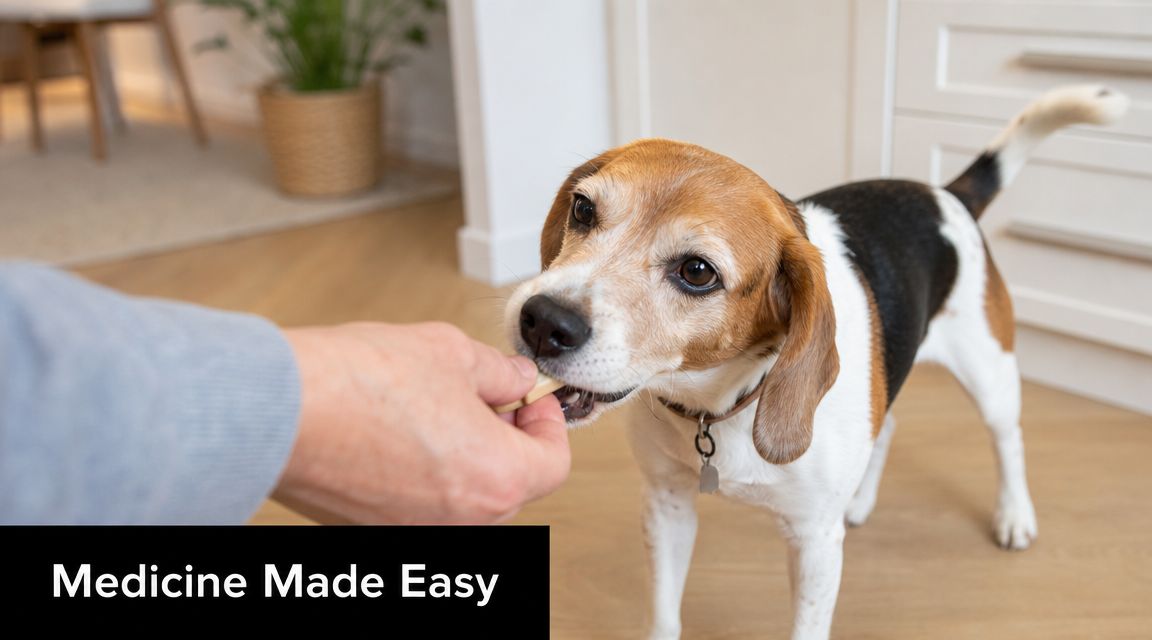
Your first goal is cooperation, not force. Many dogs do best when the pill is hidden in a small amount of food your vet says is okay to use with the medication.
Good options often include:
- A soft treat pocket that fully covers the pill
- A small bite of canned food if your dog already likes it
- A tiny food ball made from something soft enough to mold around the tablet
Give a plain “decoy” bite first if your dog is suspicious. Then give the medicated bite. Then follow with another plain bite. That quick sequence can help a dog swallow before they think too hard about it.
If your dog spots every hidden pill
Some dogs are masters at eating the snack and spitting out the tablet. For them, technique matters more than disguise.
Try these approaches:
- Use a pill giver if your vet or vet tech has shown you how
- Ask whether the medication comes as a liquid
- Follow the dose with a favorite treat, if allowed, so swallowing becomes the easiest option
- Stay calm and matter-of-fact, because dogs read tension fast
If you want a more detailed walkthrough, this guide on how to give a dog a pill with ease covers practical handling tips for reluctant dogs.
Keep the session short. Repeated chasing, pinning, or prying usually makes the next dose harder.
Giving liquid amoxicillin
Liquid can sound easier, but only if it's given correctly. Aim the syringe into the side of the mouth, not straight down the throat. Give a small amount at a time so your dog can swallow comfortably.
A few helpful reminders:
| Situation | Best move |
|---|---|
| Dog jerks away from the syringe | Pause, reposition gently, and give smaller amounts |
| Liquid dribbles out | Slow down and keep your dog's head level |
| Dog refuses after one bad experience | Ask your vet whether another formulation is available |
A short demo can make the process much less stressful:
Build a routine your dog can predict
Dogs usually do better when medicine happens the same way each time. Pick a quiet spot. Use the same cue words. Offer praise after the dose. Then move on.
Some owners also keep a simple medication log with the time given and any reaction they notice. That helps if more than one person is helping with care.
The smoother you make the process, the more likely you are to stay on schedule, and schedule is a big part of successful treatment.
Potential Side Effects and When to Call Your Vet
You give the first few doses, and then your dog has a soft stool or seems a little less interested in breakfast. That can be unsettling, especially when you are already worried about the infection. The good news is that many dogs handle amoxicillin well, and the side effects that do show up are often mild and temporary. Your role is to watch for patterns, not just one-off moments, so you can tell the difference between a bump in the road and a reason to call the clinic.
What you can usually monitor at home
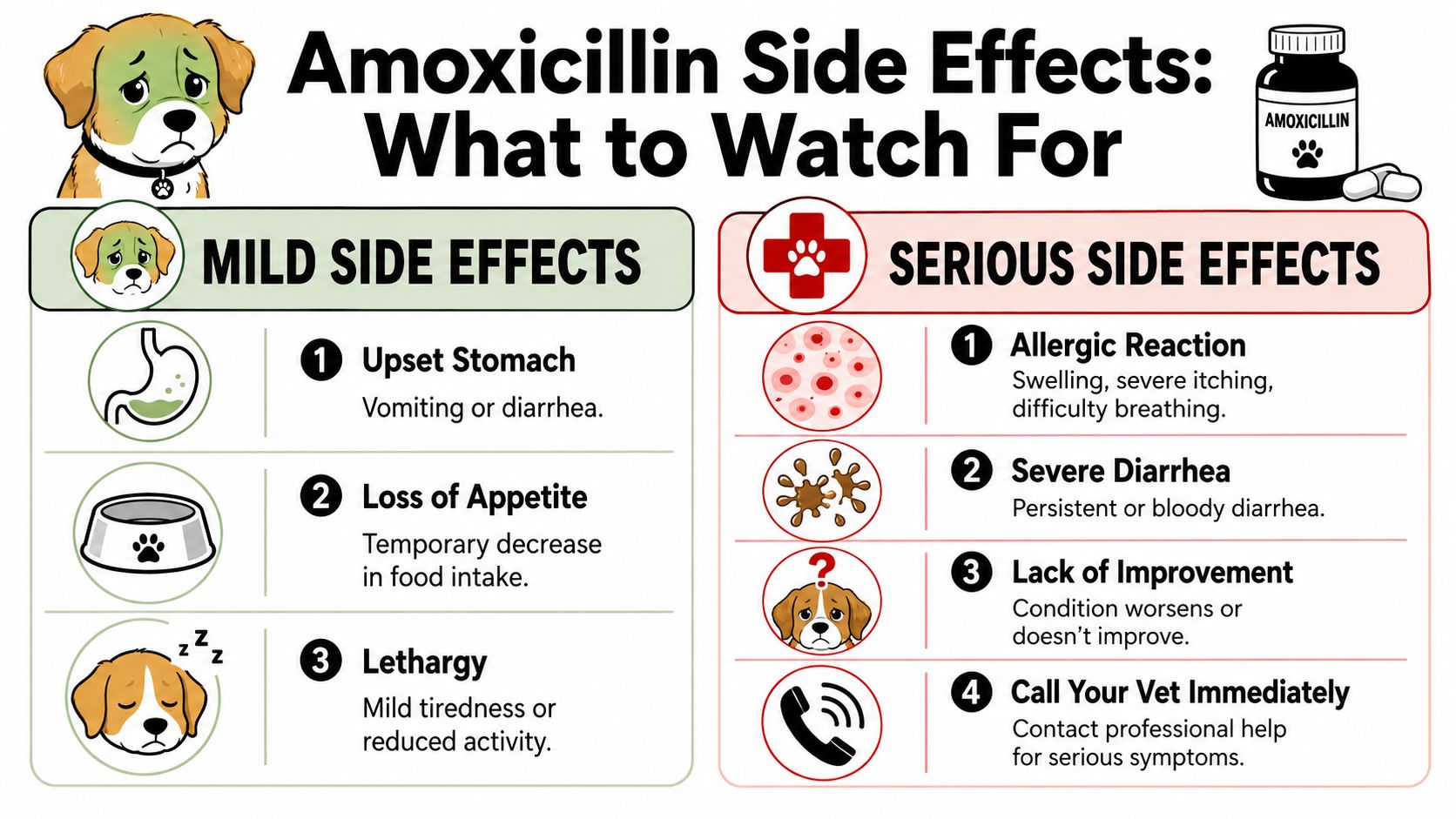
Amoxicillin can irritate the stomach and intestines a bit. In plain terms, the medicine is trying to target harmful bacteria, but the gut may get mildly upset along the way. That is why some dogs develop softer stool, mild nausea, or a temporary dip in appetite.
A simple daily check can help you spot whether your dog is staying on track:
- Appetite. Are they eating a little less, or refusing meals altogether?
- Stool quality. Is the stool slightly soft, or turning into frequent diarrhea?
- Energy level. Are they resting a bit more, or do they seem weak and hard to rouse?
- Progress of the original problem. Is the wound, skin irritation, cough, or urinary discomfort improving?
If your dog is still alert, drinking, and acting mostly like themselves, your vet may advise you to keep giving the medication and keep watching. Follow your own clinic's instructions, since the right answer depends on why amoxicillin was prescribed in the first place.
Some dogs also benefit from extra gut support during treatment. If you want background information to discuss with your veterinarian, this article on prevent antibiotic diarrhea with probiotics may be helpful.
Signs that mean call your vet promptly
Some reactions should never be watched for hours at home. They need a phone call right away, and in some cases urgent care.
Call your vet promptly if you notice:
- Facial swelling, hives, or sudden intense itching
- Trouble breathing
- Repeated vomiting
- Severe diarrhea or diarrhea that keeps getting worse
- Blood in the stool
- Marked weakness, wobbliness, or collapse
- The original infection looking worse instead of better
If you suspect an allergic reaction, stop and call before giving another dose. Continuing a medication through swelling or breathing trouble is not a wait-and-see situation.
When the medicine does not seem to be helping
A lack of improvement does not automatically mean amoxicillin is the wrong drug, but it does mean your vet may need more information. Sometimes the infection is deeper than expected. Sometimes the bacteria are not a good match for that antibiotic. Sometimes there is another problem going on that looks like infection but is not.
Your active involvement in your dog's care is essential. Keep notes on appetite, bowel movements, energy, and whether the original symptoms are improving. Those details help your vet decide whether to continue the plan, adjust the medication, or bring your dog back in for recheck testing.
For stomach and stool changes, this guide to diarrhea in dogs and what to watch for at home can help you track what is mild and what deserves faster follow-up.
The safest approach is simple. Give the medication exactly as prescribed, finish the course unless your vet tells you to stop, and call early if something feels off.
-
Product on sale
 Dog Food Topper - Beef HeartOriginal price was: $14.99.$10.95Current price is: $10.95. - or subscribe and save up to 20%