
Post Surgery Care for Dogs: A Vet-Approved Guide
Proper post-surgery care for your dog starts before they even get home. The absolute key is setting up a quiet, safe recovery space to minimize stress and prevent any accidental injuries right from the moment they wobble through the door. Think of it as their personal healing sanctuary—it’s the foundation for a smooth, drama-free recovery.
Creating a Safe Recovery Space at Home
Bringing your dog home after a procedure can feel a little nerve-wracking, but preparing their environment ahead of time makes a world of difference. Your dog will be groggy, maybe a bit confused, and will desperately need a peaceful spot to rest without being bothered. This isn't just about making them comfy; it’s a critical step in preventing complications like torn stitches or nasty falls.
The perfect recovery spot is tucked away from the main household chaos. A quiet corner of your living room or a home office works great. You want to avoid the busy hallway or the area near the back door where other pets and family members are constantly on the move. Temporarily shrinking their world is one of the kindest things you can do for their healing body.
alt text: A golden retriever with a post-surgery cone rests on a comfortable dog bed in a quiet room.
Building the Perfect Recovery Nest
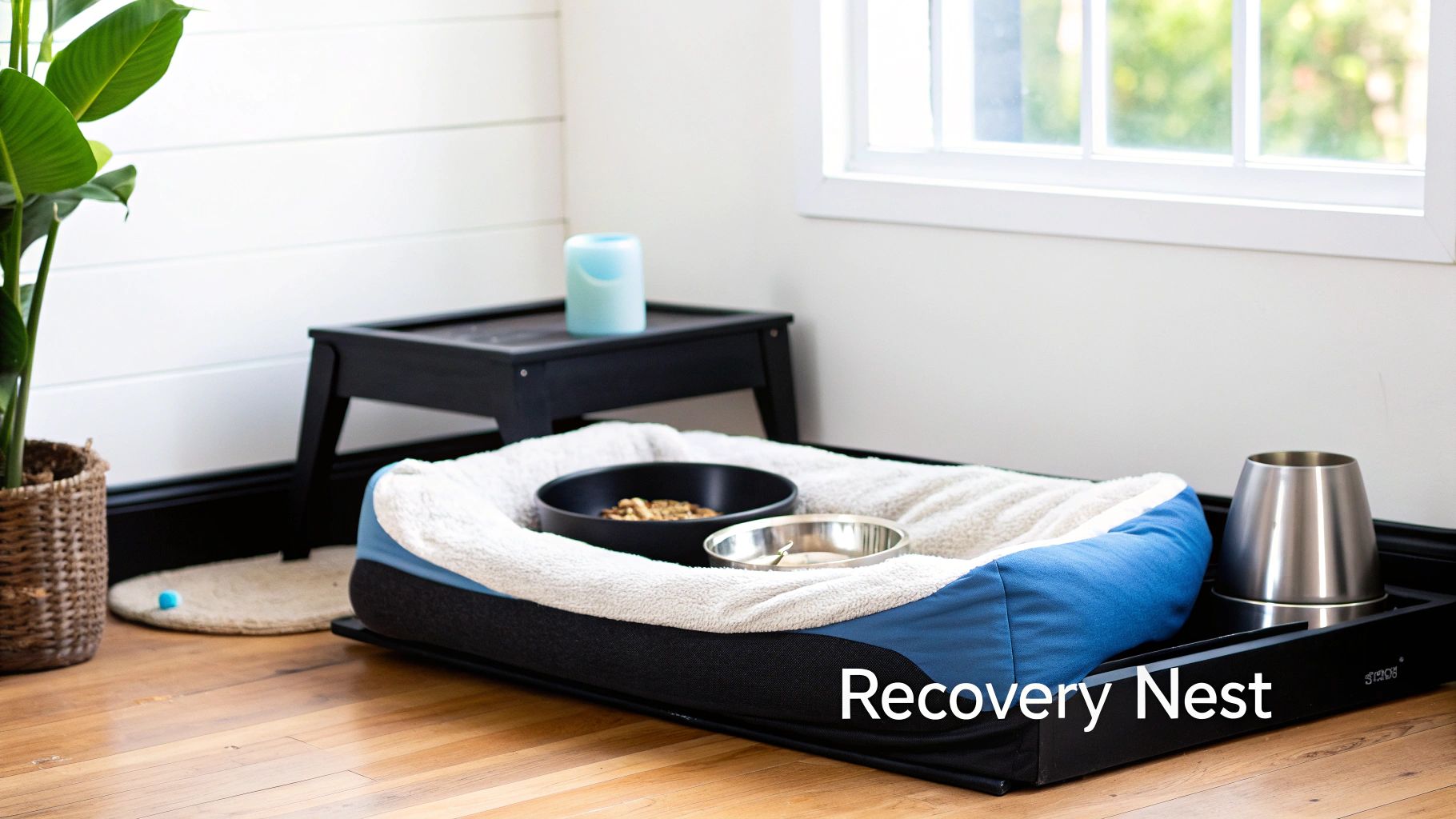
Your main job is to build a "recovery nest" that is both cozy and incredibly practical.
Start with a low, supportive bed. An orthopedic or memory foam bed is fantastic here, as it cushions sore joints and makes it way easier for your dog to get up and down without any straining.
Next, surround the bed with everything they'll need to keep movement to an absolute minimum. Place their water and food bowls right next to the bed so they don't have to trek across the room for a drink or a bite. Using non-slip bowls is a pro-move to stop them from sliding around on the floor.
Key Takeaway: The less your dog has to move, the better. By keeping food, water, and bedding all in one safe, easy-to-reach spot, you dramatically lower the risk of them overdoing it and messing with the surgical site.
Here are the essential supplies you'll want to have ready to go:
- Clean, Soft Bedding: Have extra blankets or towels on hand. Accidents can happen, and keeping their space clean and dry is non-negotiable for preventing infection.
- Puppy Pads: It's smart to place these under their bedding for extra protection, especially in the first 24-48 hours when they might be drowsy and have less bladder control.
- A Way to Confine Them: Use a crate, an exercise pen, or even just baby gates to create a small, contained area. This is your best defense against them wandering off, trying to jump on furniture, or tackling the stairs.
- Easy-Access Bowls: Make sure their food and water bowls are close by and won't tip over easily.
Before you head to the vet, take a moment to set up your dog's recovery area. This simple checklist covers the immediate essentials for those crucial first 24 hours back home.
Your Immediate Post-Op Care Checklist
| Care Item | Key Action | Why It's Important |
|---|---|---|
| Recovery Space | Set up a low, comfy bed in a quiet, low-traffic area. | Prevents over-stimulation and reduces the risk of your dog re-injuring themselves by moving too much. |
| Containment | Use a crate, pen, or baby gates to limit your dog's movement. | Stops them from jumping on furniture or using stairs, which could pop stitches or cause a fall. |
| Food & Water | Place non-slip bowls right next to their bed. | Minimizes the need for them to get up and walk, conserving their energy for healing. |
| Potty Pads | Line the area under and around their bed with puppy pads. | Anesthesia can cause temporary incontinence. This keeps their bedding clean and dry, preventing skin irritation and infection. |
| Comfort Items | Have a favorite (washable) blanket or toy nearby. | Familiar scents and objects can help reduce anxiety and make them feel more secure in a confusing time. |
Having these bases covered means you can focus all your energy on comforting your pup when they arrive. A little prep work truly goes a long way.
Creating a dedicated healing space is a proactive step that sets the stage for a successful recovery. For more ideas on making your entire house safer for your pet, check out our guide on creating a pet-friendly home.
How to Manage Your Dog's Pain and Discomfort
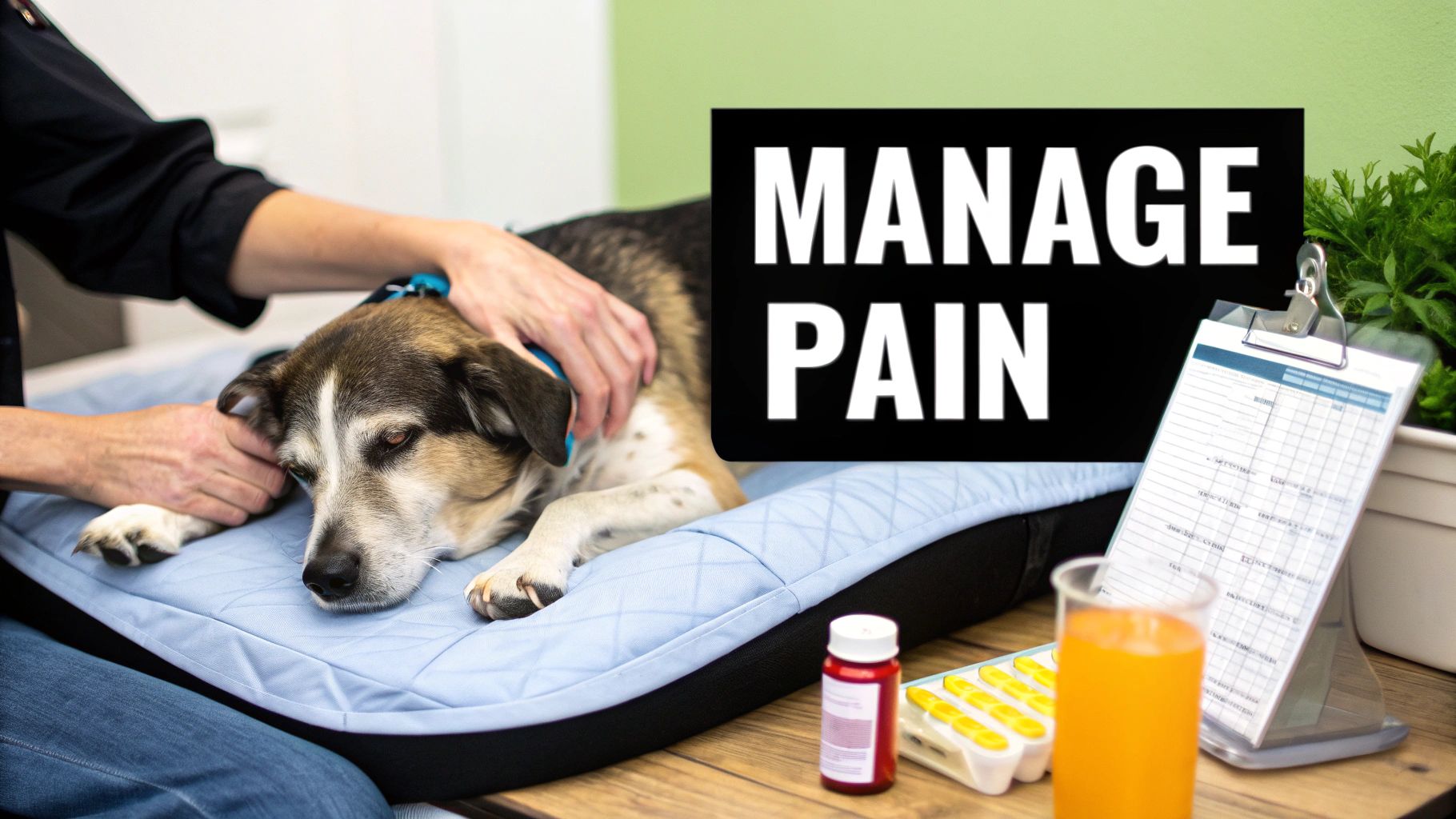
Bringing your dog home after surgery is a big deal, and one of the most important jobs you have is managing their comfort. Rest is crucial, of course, but making sure they're as pain-free as possible is what really speeds up healing. Since our dogs can’t just tell us what hurts, we have to become detectives, learning to read their subtle signals.
alt text: A sad-looking pug with a cone on its head rests on a couch after surgery.
Pain management is a huge focus in veterinary medicine today. With so many routine procedures like spays, neuters, and more complex orthopedic surgeries, vets have gotten serious about effective pain control. In fact, the market for post-op pain management in pets was valued at a whopping USD 133.5 million in 2023 and is still climbing. It just goes to show how vital this piece of the recovery puzzle is. You can read more about the growth of post-operative pain management in veterinary care if you're interested in the trends.
Recognizing the Subtle Signs of Pain
Let’s be honest, dogs are masters at hiding pain. It’s an old survival instinct that tells them not to show weakness. This means we have to be on the lookout for small changes in their behavior that whisper, "I'm not feeling so great."
These signs can be easy to miss if you're not paying close attention:
- Restlessness: Is your dog pacing? Can't seem to get comfortable or keeps shifting positions? That’s a classic sign of discomfort.
- Vocalization: Whining, whimpering, or maybe even a little growl when you get too close to a sensitive spot.
- Changes in Posture: A hunched-up back, a low-hanging head, or a tightly tucked tail are all ways a dog’s body language screams pain.
- Loss of Appetite: If your normally food-crazed pup suddenly turns their nose up at dinner, that's a major red flag.
- Licking the Incision: Some gentle licking is normal, but if it becomes obsessive, it’s often a sign of pain or irritation at the surgical site.
- Panting or Shaking: Trembling or panting when it’s not hot and they aren't anxious can be a direct physical response to pain.
Picking up on these cues is the first step. For a deeper dive, check out our guide on how to tell if your dog is in pain.
Following Medication Protocols Exactly
Your vet will send you home with specific pain medications for your dog, and this is one area where you absolutely cannot freelance. Following the dosage and schedule is non-negotiable. This isn’t a "give it if they seem like they need it" situation—pain is much easier to prevent than it is to control once it gets bad.
Crucial Reminder: Never, ever give your dog human pain relievers like ibuprofen (Advil) or acetaminophen (Tylenol). These are extremely toxic to dogs and can lead to kidney failure, liver damage, or worse. Only use what your vet prescribes.
I recommend setting alarms on your phone for each dose. It's the easiest way to stay on track. If you feel the medication isn't helping, or if your dog has a bad reaction like vomiting or diarrhea, don't wait. Call your vet right away.
Simple Comfort Measures You Can Provide
Medication is key, but there’s a lot you can do to make their recovery smoother. Creating a calm, cozy environment can be just as therapeutic as the medicine itself.
Here are a few practical tips I’ve learned over the years:
- Get a Good Bed: An orthopedic bed with a low entry is a fantastic investment. It supports their sore body and makes it easier for a groggy dog to lie down and get up without extra strain.
- Keep Things Quiet: Lower the volume on the TV, limit visitors for a few days, and keep other pets from pestering them. A stressful environment can actually make pain feel more intense.
- Try Cold Packs (With Vet Approval!): For some surgeries, especially on joints, your vet might suggest a cold pack. Wrap it in a towel and apply it to the area for 10-15 minutes at a time. This can work wonders for swelling, but only do this if your vet gives you the green light.
- Offer Gentle Reassurance: Sometimes, the best thing you can do is just be there. Sit quietly with your dog, speak in a calm voice, and offer a gentle scratch on the head (well away from the incision). Your presence alone is a powerful comfort.
Proper Wound Care to Prevent Infection
Once you’ve got your dog settled into their recovery nest, your focus will naturally shift to the most critical part of their at-home care: protecting the surgical site. Honestly, a clean, undisturbed incision is the quickest route to a smooth recovery. Your main job is to become a gentle but firm guardian of that area, stopping infection before it even gets a chance to start.
alt text: A close-up of a dog wearing a post-surgery cone, looking at the camera while it heals.
Think of yourself as the wound's personal security guard. Your daily checks are simple but absolutely vital. I always tell clients to inspect the incision at least twice a day—once in the morning and again in the evening. This simple routine helps you spot any subtle changes right away.
Knowing What a Healing Wound Looks Like
A healthy, healing incision has a pretty distinct look. For the first few days, you should expect some mild redness and maybe a little bit of swelling right along the suture line. Don't panic—this is just a normal inflammatory response as the body kicks into repair mode.
Over the next week or two, you’ll see that redness gradually fade. The edges of the wound will start to look like they're knitting themselves back together. It’s also common to see some minor bruising around the area, especially after orthopedic surgeries.
Here’s a quick checklist for what a normal, healing surgical site should look like:
- Clean and Dry: The area should be free of any significant ooze or discharge.
- Minimal Redness: A small pink or red line right on the incision is normal, but it shouldn't spread outwards into the surrounding skin.
- Slight Swelling: Some minor puffiness is expected, but it should be getting better over time, not worse.
- Closed Edges: The skin edges should be neatly tucked together, held by sutures, staples, or surgical glue.
The Cone Is Your Dog's Best Friend
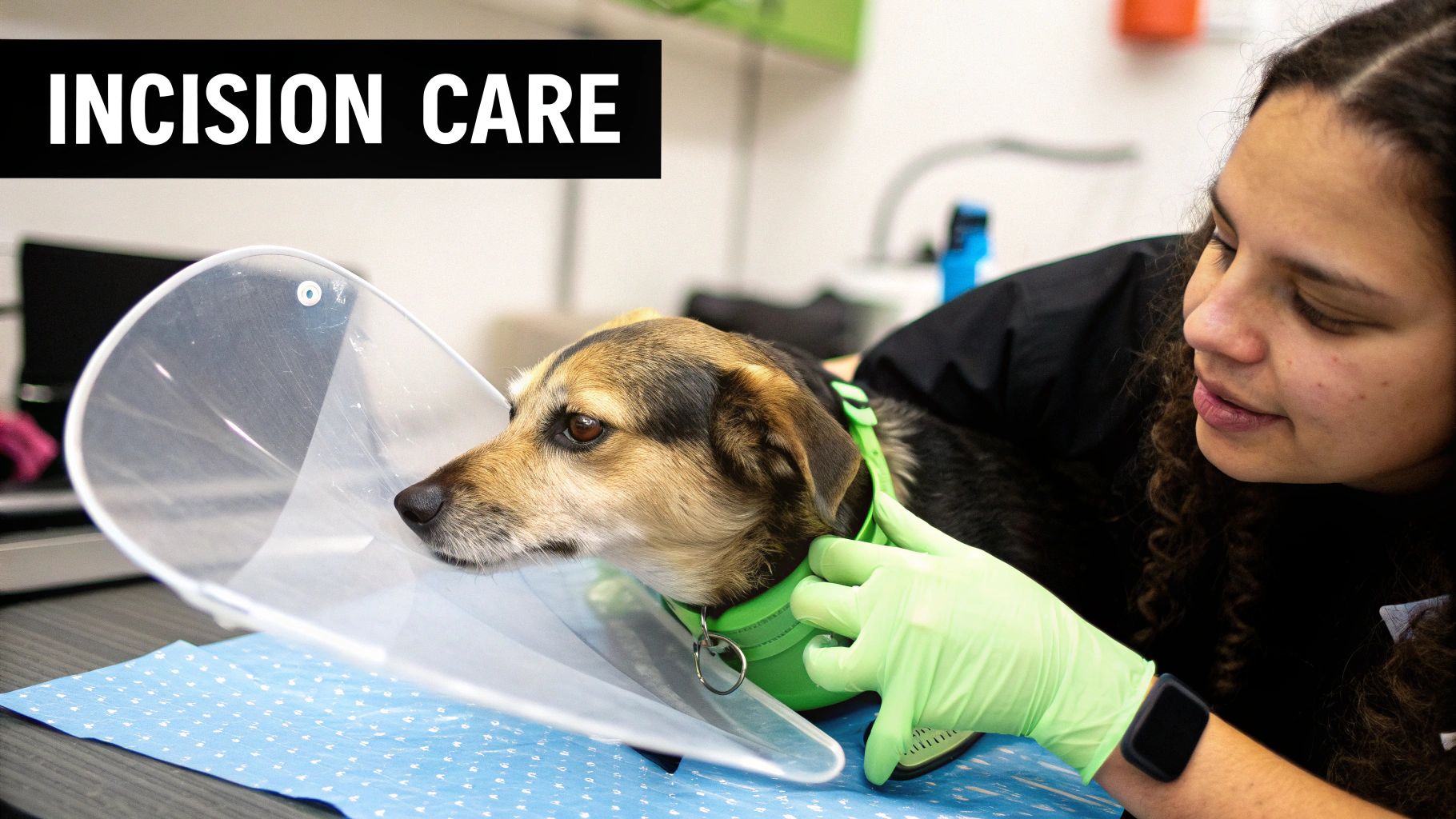
Ah, the dreaded "cone of shame." Our dogs hate it, and we feel like the worst pet parents in the world for putting it on them. But that Elizabethan collar (or a recovery suit alternative) is the #1 tool for preventing post-op disasters. A dog's instinct is to lick their wounds, but their mouths are teeming with bacteria.
Licking is the single biggest cause of incision infections and pulled stitches. Keeping that cone on at all times—unless you are directly supervising them for a few minutes—is the most important, non-negotiable rule for a safe recovery.
It takes just a few seconds of determined licking to introduce a nasty infection. A determined chewer can pull out their stitches in the blink of an eye. You have to resist the urge to take it off just because they’re giving you those sad puppy-dog eyes. It’s for their own good and can save you a very expensive, very stressful emergency trip back to the vet.
Red Flags That Warrant a Call to the Vet
Knowing what’s normal is half the battle; the other half is recognizing when something is off. Never hesitate to call your vet if you notice any of these signs. They could be the first indication of an infection or another complication.
- Excessive Swelling or Redness: If the area becomes very puffy, feels hot to the touch, or the redness starts spreading.
- Discharge from the Incision: Any yellow, green, or foul-smelling discharge (pus) is a major red flag.
- A Bad Smell: Infected wounds often have a distinct, unpleasant odor. You'll know it when you smell it.
- Gapping or Opening: If you see the edges of the wound pulling apart or, worse, can see the underlying tissue.
- Bleeding: A tiny bit of seepage on the very first day can be okay, but any active bleeding after that is not normal.
- A Hard Lump: While some firmness under the incision is normal as tissues heal, a painful, hard lump could be a sign of a seroma (a pocket of fluid) or something more serious.
Monitoring the surgical site is a straightforward but essential part of your dog's recovery. By doing your daily checks and using the cone religiously, you give your dog the absolute best chance to heal quickly and without any setbacks. You are their most important advocate right now.
Boosting Healing With Post-Op Nutrition
Proper nutrition is the fuel that powers your dog's recovery. After any surgery, their body kicks into overdrive, working hard to repair tissue, fight off potential infections, and bring down inflammation. This is a demanding process that requires a serious boost in energy and specific nutrients.
The tricky part? This increased need for fuel often happens right when their appetite takes a nosedive. As a pet owner, it's incredibly frustrating to watch them turn their nose up at food when you know they need it most.
Think of it like a construction site. To build a strong new structure (healed tissue), you need high-quality materials (nutrients) and plenty of energy to run the machinery. If the supply truck—your dog's appetite—stops delivering, the whole project grinds to a halt. That’s why supporting their nutritional needs is a critical part of a smooth recovery.
Why Is My Dog Not Eating After Surgery?
It's completely normal for a dog to show little interest in food for the first 24-48 hours after a procedure. Don't panic. There are a few very common reasons for this temporary hunger strike.
- Anesthesia Hangover: The lingering grogginess and nausea from anesthesia are usually the main culprits. It just makes them feel crummy.
- Pain and Discomfort: Even with good pain medication, some level of discomfort can make the simple act of eating feel like too much effort.
- Stress and Confusion: The whole vet experience is stressful. A car ride, a strange place, and waking up feeling sore and confused can easily suppress their appetite.
The key is to be patient but proactive. Your goal is to gently coax them into eating without adding more stress, ensuring their body gets the building blocks it needs to heal up strong. For a deeper dive, you can learn more about the common reasons a dog won't eat after surgery and what you can do to help.
The Power of Nutrient-Dense Foods
When your dog's appetite is low, every single bite has to count. This isn’t the time for empty calories. It's the time for nutrient-dense foods that deliver maximum healing power in the smallest, most appealing portions.
Their body is practically screaming for a few key things to help with the repairs.
Key Nutrients for Healing:
- High-Quality Protein: Absolutely essential for rebuilding tissues, repairing muscles, and creating the enzymes that fight infection.
- Healthy Fats: These provide a concentrated source of energy, which is a big deal when they're not eating very much.
- Vitamins and Minerals: Vitamins like A and C are vital for skin repair and immune function, while minerals like zinc play a direct role in wound healing.
A bland diet, like boiled chicken and rice, is what vets often recommend because it's easy on the stomach. But let's be honest—it can be a little too bland to tempt a dog who already feels unwell. This is where a high-quality meal enhancement can completely change the game.
Pro Tip: Gently warming up your dog's food can make a world of difference. A few seconds in the microwave (make sure to stir it and check for hot spots!) releases its aroma, making it much more enticing to a dog who isn't feeling hungry.
Making Meals Irresistible With ChowPow
So, how do you balance the need for a gentle diet with the need for powerful nutrition and an enticing flavor? This is exactly where a supplement like ChowPow becomes one of the most valuable tools in your post-op care kit.
It's really important to understand that ChowPow is not a meal replacement. You should stick with the diet your veterinarian recommended. Instead, think of ChowPow as a nutritional booster—a simple, powerful way to supercharge their existing food.
alt text: A bag of ChowPow dehydrated beef heart food topper displayed next to a bowl of dry dog food, illustrating its use as a meal enhancement.
By just sprinkling a scoop of ChowPow over their meal, you're accomplishing two critical things at once.
First, you’re adding a concentrated dose of high-quality protein and essential amino acids from its main ingredient, beef heart. This gives their body the direct support it needs for the tissue repair process.
Second, you're making the meal smell and taste amazing. The rich, meaty aroma of dehydrated beef heart is often irresistible, even to a dog who was just turning up their nose at plain kibble or rice. This simple act can be the nudge they need to start eating again, getting those vital calories and nutrients in for a strong recovery. It's a stress-free way to ensure they get the extra support their healing body craves, without a big diet change during an already sensitive time.
When You Should Call Your Veterinarian
Bringing your dog home after surgery means you've officially taken over the role of primary nurse. Your biggest job is learning to tell the difference between normal post-op grogginess and a genuine red flag that needs a professional’s eye. Knowing what to watch for gives you peace of mind when things are going smoothly and helps you act fast when they aren't.
Some sleepiness and mild discomfort are totally normal. But you know your dog better than anyone. If your gut tells you something is off, making that call to the vet is always the right move.
Watching for Post-Anesthesia Complications
Right after surgery, one of the biggest risks is a sudden drop in body temperature. Anesthetics mess with a dog's internal thermostat, making it hard for them to stay warm, which can lead to a dangerous condition called hypothermia.
This isn't a rare occurrence, either. Post-operative hypothermia actually happens in 85-97% of dogs and cats after surgery. This is why vets focus so heavily on active warming and monitoring until their temperature is stable above 37°C (98.6°F). Proper temperature regulation is a critical part of professional post surgery care for dogs, because a low body temp can seriously slow down the healing process. You can find more great insights on the importance of monitoring post-operative pets on cascopet.com.
If your dog is shivering uncontrollably, feels cold (check their ears and paws), or seems unusually weak and out of it, wrap them in some warm blankets and give your vet a call right away.
Recognizing Medication Reactions
Your vet will send you home with a care package of medications, likely for pain management and to prevent infection. These are vital for a good recovery, but just like with people, adverse reactions can happen.
Keep a close eye on your pup after giving them any new medication. Signs that something isn't right include:
- Serious Tummy Troubles: A little bit of nausea might be expected, but repeated vomiting or severe, watery diarrhea is not.
- Extreme Lethargy: Yes, they'll be tired. But they shouldn't be completely unresponsive or impossible to wake up.
- Hives or Facial Swelling: These are classic signs of an allergic reaction and need immediate veterinary attention.
- Loss of Coordination: If your dog seems way more dizzy than you'd expect, stumbles constantly, or can't get their footing.
Key Insight: Don't just write off a weird symptom as a "side effect." If you see any of these signs, hold off on the next dose and call your vet for instructions. They might need to switch to a different medication.
When to Seek Emergency Care
Some situations aren't "wait and see." They are clear emergencies that mean you need to head back to the vet or an emergency animal hospital immediately.
Get to the vet right away if you see:
- Bleeding from the incision that doesn't stop, is actively dripping, or soaks through a bandage.
- Pale gums, which can signal internal bleeding or shock.
- Difficulty breathing, like heaving sides, shallow panting, or coughing.
- A sudden collapse or a complete inability to stand up.
- A bloated, hard, or painful belly, which could point to a serious internal problem.
This chart can be a lifesaver when you're feeling worried and unsure. It's a quick way to check if what you're seeing is part of the normal healing process or something that needs a vet's input.
Post-Op Warning Signs Reference Chart
| Symptom / Observation | What's Normal | When to Call the Vet (Potential Complication) |
|---|---|---|
| Appetite | Decreased appetite for the first 24 hours. | Complete refusal to eat or drink for more than 24 hours. |
| Incision Site | Mild redness, slight swelling, and maybe a little bruising. | Excessive swelling, bright red color, foul odor, heat, or thick discharge (pus). |
| Energy Level | Lethargy, grogginess, and sleeping a lot for 24-48 hours. | Extreme weakness, unresponsiveness, disorientation, or inability to stand after 24 hours. |
| Pain Level | Mild whimpering or discomfort, managed by prescribed pain medication. | Constant crying, shaking, aggression when touched, or restlessness despite medication. |
| Vomiting/Diarrhea | Maybe one or two instances of vomiting right after coming home from anesthesia. | Repeated vomiting, persistent diarrhea, or blood in vomit/stool. |
| Bathroom Habits | May not have a bowel movement for 24-48 hours post-op. | Straining to urinate/defecate, no urination for over 24 hours, or obvious pain. |
Remember, this chart is just a guide. Your intuition as a pet parent is powerful. If you're concerned, a phone call to your vet is never a bad idea.
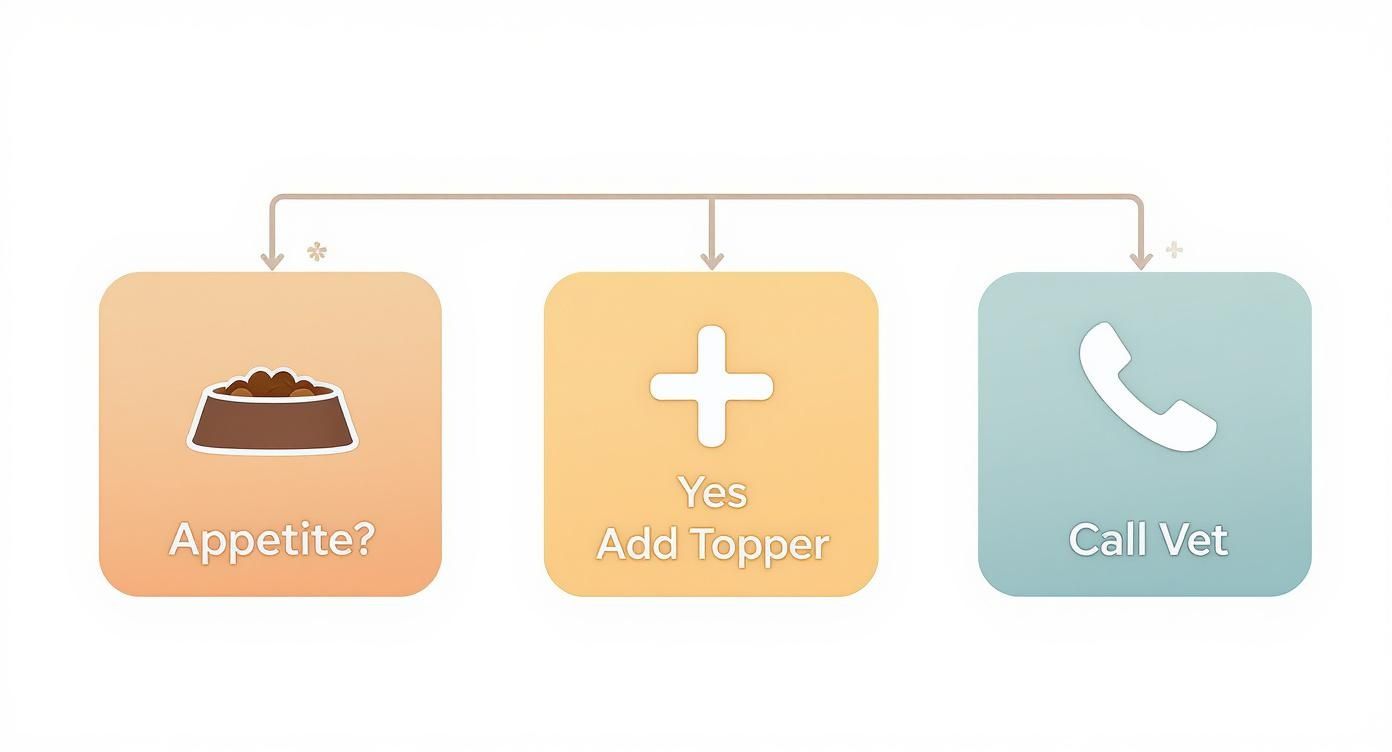
alt text: An infographic summarizing post surgery care tips for dogs, including when to call the vet.
The graphic above drives home a key point: a dog skipping a meal on the first day home is pretty common. But a complete refusal to eat beyond that point needs a professional opinion to make sure nothing else is going on. Staying vigilant is the cornerstone of effective post surgery care for dogs, ensuring they get the help they need, right when they need it.
Common Questions About Post-Surgery Care for Dogs
Bringing your dog home after surgery can feel a little overwhelming. Even with a folder full of instructions from your vet, questions always seem to surface once you're back in your own space. Getting a handle on the common concerns ahead of time can boost your confidence and make sure you're doing everything right to support their recovery.
The truth is, what you do at home is often just as critical as the surgery itself. One worldwide analysis found that a staggering 81% of anesthesia-related deaths in dogs happen during the recovery phase, not while they're on the operating table. That stat isn't meant to scare you—it's to show you just how vital your role is. Your careful watch and quick action are the biggest factors in a smooth, successful recovery.
You can learn more about how recovery protocols impact survival rates by reading the full analysis on post-anaesthetic risk factors.
Let's walk through some of the questions we hear most often from pet parents.
How Much Rest Is Enough?
This is the big one. And the honest answer is: it really depends on what kind of surgery your dog had. For something routine like a spay or neuter, your vet will likely prescribe 10 to 14 days of strict rest. But for major orthopedic procedures, like a TPLO surgery for a torn ligament, you could be looking at several months of very carefully managed activity.
So what does "strict rest" actually mean?
- No running, jumping, or roughhousing. This is the golden rule. No exceptions.
- Leash-only potty breaks. Keep them short and to the point.
- Block off stairs and furniture. Baby gates, exercise pens, or their crate will become your best friend.
Key Takeaway: It's common for dogs to start feeling better and acting like their energetic selves after just a few days. Don't fall for it! Their internal tissues are still knitting themselves back together. Stick to your vet's timeline to the letter to avoid a serious setback like torn stitches or re-injury.
When Can I Bathe My Dog?
The short, simple answer is to wait until your vet gives you the all-clear. Getting the incision site wet before it's fully healed is a huge infection risk. Moisture can easily trap bacteria right where you don't want it, seriously delaying the healing process.
Usually, you'll have to wait until after the stitches or staples are removed, which is typically around the 10 to 14 day mark. If your dog gets a bit grubby in the meantime, you can use pet-safe grooming wipes to spot-clean them, but be very careful to steer clear of the surgical area.
What Should I Do If My Dog Pulls Out a Stitch?
First things first: don't panic. Take a calm, close look at the incision. If just one stitch is loose or missing but the wound edges are still closed and look clean, it might not be a full-blown emergency. That said, you should still call your vet right away to let them know.
If the wound has actually opened up—even a tiny bit—that requires immediate veterinary attention. Cover the area with a clean, dry cloth or bandage to keep it protected and call your vet or the nearest emergency animal hospital immediately. Whatever you do, don't try to apply ointments or fix it yourself.
Is It Normal for My Dog to Sleep So Much?
Yes, absolutely. Expect your dog to be very groggy and sleep a ton for the first 24 to 48 hours after their procedure. The anesthesia needs time to fully work its way out of their system, and their body is pouring all its resources into healing. It's exhausting work!
The key is to watch the quality of their sleepiness. They should still be rousable and aware of you. If your dog is completely unresponsive, extremely difficult to wake up, or seems very disoriented when they are awake, that's not normal. Give your veterinarian a call. Think of your dog's recovery as a partnership—keeping that line of communication open is the best thing you can do for them.
At ChowPow, we know that your dog's health is your number one priority, especially during a tough recovery. A simple way to give their body the building blocks it needs to heal is by boosting their nutrition. Give them that extra support by sprinkling ChowPow on their next meal.
Visit chowpownow.com to give your healing pup a nutritional boost.
-
Product on sale
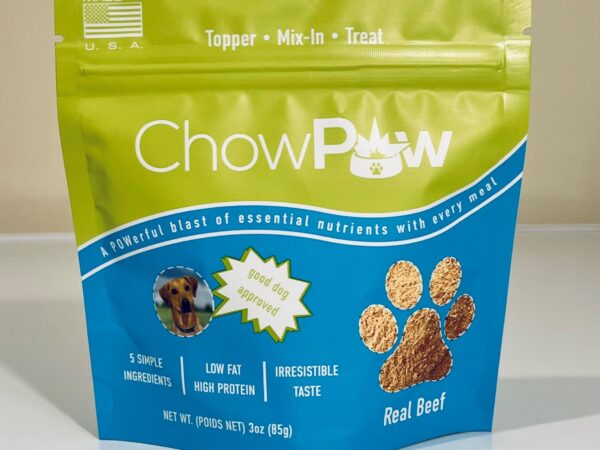 Dog Food Topper - Beef HeartOriginal price was: $14.99.$10.95Current price is: $10.95. - or subscribe and save up to 20%