
Anal Leakage in Dogs: Causes and Treatment
You notice it when your dog gets up from the couch. There's a small brownish spot on the blanket, and the smell is sharp, sour, and hard to ignore. Your first thought is usually, “Did my dog poop in the house?” Your second is often worry.
That reaction makes sense. Anal leakage in dogs is unpleasant, confusing, and easy to misread. Sometimes it really is discharge from the anal sacs. Other times it's soft stool residue, or a sign that your dog is leaking stool without realizing it. Those problems can look similar at a glance, but they don't mean the same thing and they aren't managed the same way.
Leakage is usually a symptom, not a diagnosis. Your dog's body is giving you a clue. The helpful question isn't just “How do I clean this up?” It's “What kind of leakage am I seeing?”
That Mysterious Spot and What It Means
A common version of this story goes like this. A dog has been licking the rear end more than usual. Maybe there's some scooting on the rug. Then one day you find a wet or greasy spot where your dog was sitting, and the odor is so strong you start checking every blanket in the house.

In many dogs, that mystery spot comes from the anal sacs, which are two small pouches near the anus. They normally release a small amount of fluid during bowel movements. Think of them as scent packets. When everything is working well, they empty and you never notice.
When they don't empty well, the fluid can build up, thicken, irritate the area, or leak out at random. That's why owners often describe a sudden fishy smell, a dark spot on bedding, or a dog who seems obsessed with the rear end.
What owners often confuse
Anal leakage in dogs gets lumped into one bucket, but several different things can cause that “wet spot” feeling.
- Anal sac discharge can look oily, brownish, or grayish and often smells especially strong.
- Diarrhea residue is more like stool smearing left behind after a loose bowel movement.
- Fecal incontinence means stool leaks because the dog can't keep the anus fully closed.
Practical rule: If the smell is intense and the amount is small, many owners are dealing with anal sac discharge. If the mess looks more like stool, stool-related causes move higher on the list.
None of this means you should panic. It does mean you should pay attention. The smell, the texture, your dog's behavior, and what the poop has looked like lately all help point to the cause.
Decoding the Common Causes of Anal Leakage
The most common reason for anal leakage in dogs is anal sac disease. In a 2021 study on non-neoplastic anal sac disease, researchers estimated an incidence of 15.7% in dogs, with impaction at 8.9%, inflammation at 4.05%, and abscessation at 2.75%. The same study described it as the most prevalent disease of the anal region in dogs.

How the sacs are supposed to work
The easiest way to picture anal sacs is as tiny scent “business cards.” A dog doesn't hand them out on purpose, but a firm bowel movement usually presses on the sacs and helps empty them naturally.
When that pressure doesn't happen well, the fluid stays behind. Over time, the material can become thicker and harder to pass. That sets up the most common chain of problems.
The usual progression
Impaction
This is the early traffic jam. The sacs fill, the fluid gets thick, and your dog may scoot, lick, or smell fishy. Some dogs leak a little because the sacs are overly full.
Inflammation
If the lining of the sacs gets irritated, the area becomes painful and more reactive. Your dog may suddenly dislike being touched near the tail or seem uncomfortable sitting down.
Abscess
If infection develops, pressure and pain rise fast. At that stage, the swelling can become severe, and some dogs may leak blood-tinged or pus-like material if the abscess opens.
A small amount of foul-smelling discharge can be messy but manageable. A swollen, painful rear end is a veterinary problem.
Other causes that can mimic gland leakage
Not every rear-end mess is a gland problem.
Loose stool can leave residue on the fur or furniture, especially in dogs with chronic soft poop, digestive upset, or long hair around the tail. If your dog has inconsistent stools, it helps to review what normal poop should look like in a practical way. ChowPow's guide to your dog's digestive health report card is useful for that kind of day-to-day observation.
Then there's fecal incontinence, which is different from irritated anal sacs. In that situation, stool leaks because control of the closing mechanism isn't working properly. Owners often assume all leakage means “full glands,” but that shortcut can delay the right treatment.
Why this matters at home
If the cause is overloaded anal sacs, the fix often focuses on expression, treating irritation or infection, and improving the conditions that help the sacs empty naturally. If the cause is soft stool or poor stool control, the plan changes.
That's why details matter. The smell, amount, timing, and what your dog was doing right before the leakage all help sort out the problem.
Is It Glands Digestion or Something Else
What confuses owners most isn't whether the rear end is messy. It's what kind of mess they're seeing.
Veterinary guidance for rectal and anal disorders notes that symptoms can overlap across anal sac disease, injuries, and other rear-end problems, which is why close observation matters. The Merck Veterinary Manual's guide to disorders of the rectum and anus in dogs is especially helpful on that point.
Start with what your senses tell you
Anal sac fluid usually has a very distinctive odor. Owners often describe it as fishy, metallic, rotten, or just shockingly strong for such a small amount. The material may be oily, thin, or slightly pasty.
Diarrhea residue smells more like stool because that's what it is. It often shows up after a loose bowel movement, sticks to the fur, and may leave smear marks rather than a small spot.
Fecal incontinence often looks less dramatic but more repetitive. You might find bits of stool, smudges on bedding, or leakage that happens when your dog is asleep, walking away, or unaware.
Symptom Checker for Anal Leakage vs Other Issues
| Symptom | Anal Gland Leakage | Diarrhea Residue | Fecal Incontinence |
|---|---|---|---|
| Odor | Strong, fishy, unusually sharp | Smells like stool | Usually smells like stool |
| Appearance | Small spot, oily or thin discharge | Smear or residue on fur | Smears, small stool pieces, or unnoticed leakage |
| Timing | Can happen suddenly while resting or startled | Often after a loose bowel movement | Can happen without the dog seeming aware |
| Behavior | Scooting, licking, turning toward rear | Urgency, repeated loose stools, messy cleanup | Reduced awareness, trouble controlling bowel movements |
| What it suggests | Anal sac problem is more likely | Digestive upset or soft stool issue | A control problem, not just a gland issue |
Behavior gives extra clues
Scooting points many people toward glands, and often for good reason. Rear-end licking, sudden sitting discomfort, and a fishy smell also fit that picture. If you want a simple backgrounder on gland anatomy and why expression sometimes becomes necessary, ChowPow's article on what dog anal glands are and when to express them gives a useful overview.
On the other hand, if your dog has been having soft stools all week and now the fur under the tail is dirty, digestive causes deserve more attention. If your dog leaves stool behind without straining, or seems unaware it's happening, think beyond glands.
If you can answer four questions for your vet, you'll speed things up: What does it smell like, what does it look like, when does it happen, and what has the stool been like lately?
When diet changes help and when they don't
Regarding this, owners often get mixed messages.
If the issue is soft stool residue or gland trouble made worse by poor stool quality, improving digestion and stool consistency can help a lot. But if the problem is true fecal incontinence, firmer stool may reduce mess without solving the underlying loss of control.
That difference is the reason some dogs improve with stool-focused support while others still need a deeper medical workup.
When to Call the Vet and What to Expect
Some cases can wait a day or two for a routine appointment. Some shouldn't.
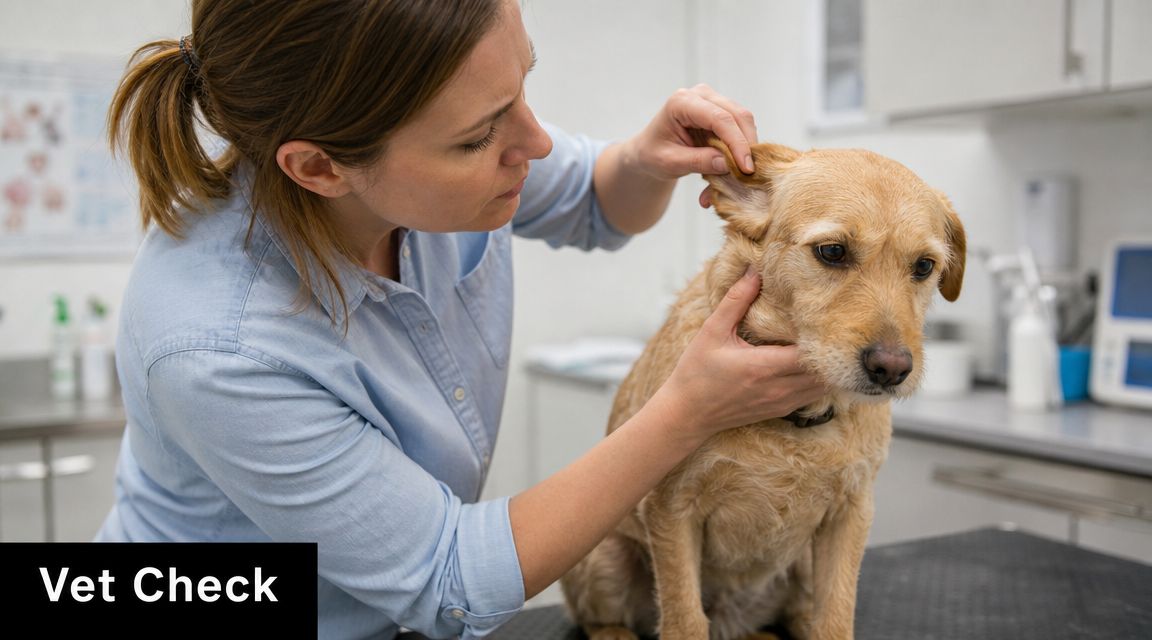
Signs that need prompt attention
Call your veterinarian promptly if you notice any of these:
- Visible swelling near one side of the anus
- Blood or pus in the discharge
- Pain signs such as crying, snapping, hiding, or refusing to sit
- A wound or draining hole beside the anus
- Lethargy or poor appetite along with rear-end symptoms
- Repeated leakage with no obvious stool issue, especially if your dog seems unaware
Those clues raise concern for infection, abscess, injury, or a problem other than simple gland fullness.
What the appointment usually involves
Your vet will usually start with a hands-on exam of the rear end and surrounding skin. If the glands are involved, they may gently express them to see whether the sacs are full and what the material looks like. That gives immediate information.
In some dogs, the next step is checking stool history, body condition, skin health, and whether diarrhea, constipation, allergy-related skin disease, or weight gain may be contributing. If the discharge looks abnormal, a sample may be examined to look for inflammation or infection.
Later in the visit, stool quality often becomes part of the conversation. If your dog has also been having digestive trouble, this guide on diarrhea in dogs can help you keep better notes at home before and after the appointment.
Here's a short video that may help you feel more prepared for the medical side of the issue.
Why diagnosis matters so much
Fecal incontinence isn't handled with one standard medication. VCA explains in its overview of bowel incontinence in dogs that treatment depends on the underlying cause, which may include anorectal lesions, neurologic disease, or reservoir problems from bowel disease.
That's a very different situation from an impacted anal sac.
One of the most helpful things you can bring to the visit is a plain description. “Fishy spot after resting” tells a different story than “soft stool leaking without my dog noticing.”
Home Care and Prevention for Long-Term Health
The best long-term strategy usually starts with one simple goal: better stool quality.
Cornell's canine anal sac disease reference notes that the sacs normally empty during defecation and identifies food allergy dermatitis, atopic dermatitis, chronic diarrhea, constipation, obesity, and a low-fiber diet as recognized risk factors. It also states that recurrence can be reduced by addressing underlying conditions and adding fiber.
That doesn't mean every leaking dog needs the same menu. It means the quality of each bowel movement matters more than many owners realize.
Why firm stools matter
A well-formed stool does mechanical work. As it passes, it can help press against the anal sacs and empty them the way the body intended. Soft stool often doesn't create enough pressure, so the sacs stay fuller than they should.
That's one reason prevention often includes nutrition, weight control, and digestive stability rather than repeated emergency-style cleanups.
Practical habits that help at home
- Track stool quality for a couple of weeks. Don't rely on memory. Write down whether stools are firm, soft, urgent, or inconsistent.
- Watch body weight because extra weight can make natural emptying less effective.
- Keep the rear end clean with gentle wiping if residue is collecting on the fur.
- Ask before expressing at home because rough technique can irritate sore tissue.
- Look for patterns such as flare-ups after diet changes, table scraps, or periods of diarrhea.
Skin support around the area
When the rear end has been damp or irritated, skin care matters too. Some owners also look into soothing topical options for surrounding skin, and this guide to aloe vera applications for canine health offers a useful overview of where aloe may fit and where pet-safe caution is still important.
Nutrition is part of prevention, not just cleanup
Owners often think of diet only after a dog starts scooting. It helps more to think of digestion as part of the plumbing.
If your dog's current kibble is generally working but stool quality isn't ideal, many families do well by improving consistency, meal routine, hydration, and the overall quality of what's going into the bowl. Some also use a meal topper or supplement to make regular food more appealing and support better eating habits, especially for picky dogs, seniors, or dogs recovering from illness.

That kind of product should be viewed as an addition, not a replacement for a complete diet. If your dog is turning away from meals, eating inconsistently, or doing better when food is more tempting and easier to enjoy, a topper can support the bigger goal of digestive regularity.
Don't overlook the dogs who recur
Some dogs have repeat episodes even when owners do many things right. A recurrence pattern deserves a real conversation with your veterinarian about what keeps setting the problem off.
Better stool quality can reduce recurrence in many dogs, but repeat leakage still needs a reason. The right question is “what is driving this?” not “how many times can I clean this up?”
For dogs with stubborn or severe anal sac disease, the medical plan may include scheduled gland checks, treatment of infection or inflammation, and in tougher cases, discussion of surgery if medical management keeps failing. That isn't the first step for most dogs, but it is part of the full picture.
Your Path to a Happier Healthier Dog
Rear-end leakage feels embarrassing, but it's common and manageable once you sort out what you're seeing.
The biggest takeaway is this: anal leakage in dogs is a clue, not a final answer. A tiny fishy spot points in one direction. Soft stool residue points in another. Leakage that happens without your dog seeming aware points somewhere else entirely.
Once you start observing the right details, things get easier. Notice the smell. Notice whether the material looks oily or stool-like. Notice whether your dog is scooting, straining, licking, or acting unaware. Those observations help your vet move faster toward the right treatment.
Long term, many dogs do best when owners focus on the basics that support normal function every day. Good stool quality, steady digestion, healthy body weight, and early attention to flare-ups can make a real difference in comfort and cleanliness.
You don't need to become a specialist to help your dog. You just need to become a careful observer and act early when the signs change. That's often what turns a stressful mystery into a solvable problem.
If you want an easy way to boost your dog's current meals without replacing their kibble, ChowPow is a simple option to consider. It's a dehydrated beef heart meal topper designed to add nutrient density and flavor to the food your dog already eats, which can be especially helpful for picky eaters, seniors, and dogs who need extra support staying interested in meals.
-
Product on sale
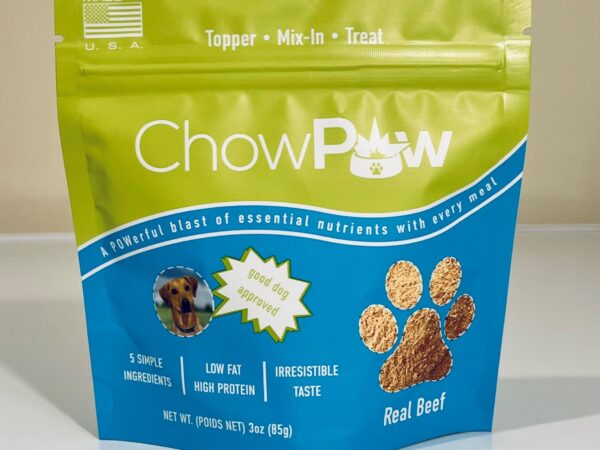 Dog Food Topper - Beef HeartOriginal price was: $14.99.$10.95Current price is: $10.95. - or subscribe and save up to 20%