
Are Peanuts Bad for Dogs? A Pet Parent’s Complete Guide
So, you're in the kitchen, snacking on some peanuts, and you see those big, hopeful puppy eyes staring up at you. The big question pops into your head: are peanuts safe for my dog?
The short answer is yes, they can be, but with some major caveats. The real danger isn’t the peanut itself but how we humans like to prepare them. Before you toss a handful to your furry friend, it's crucial to know the difference between a safe treat and a potential hazard.
The Surprising Truth About Dogs and Peanuts
It’s a classic scene: you’re enjoying some peanut butter, and your dog is practically begging for a lick. It feels harmless, right? While peanuts aren't toxic to dogs in the same way as grapes or chocolate, the additives and preparation methods we love can introduce serious risks.
Think of it this way—the journey from a safe snack to a dangerous one is pretty short. This simple decision tree shows you exactly what to look for.
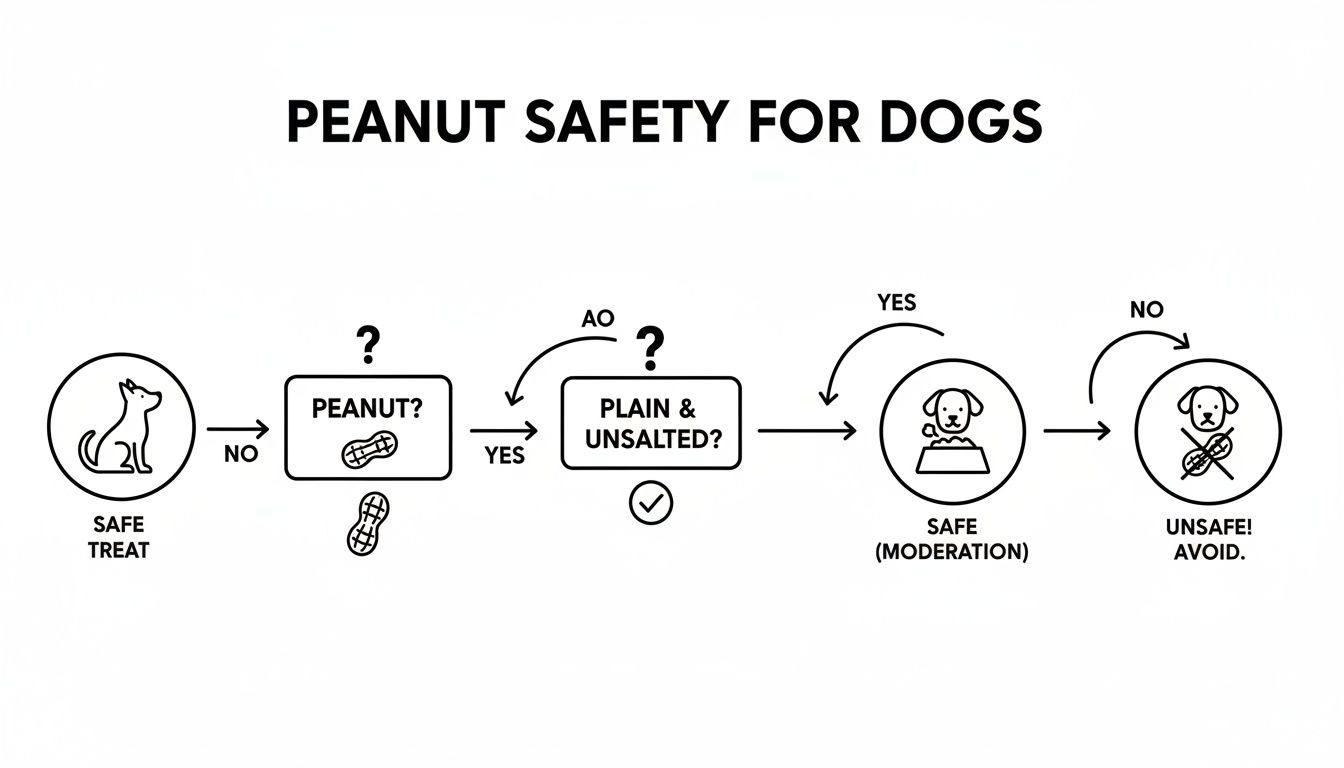
As you can see, the path to a safe treat is narrow. The most important takeaway? Stick to plain and unsalted.
Good Peanuts vs. Bad Peanuts
Let's use an analogy. A plain, cooked sweet potato is a fantastic, healthy treat for your dog. But a sweet potato pie loaded with sugar, butter, and spices? That's a definite no-go. The same logic applies here. The core nut is generally fine, but all the extras we add are where the trouble begins.
To make it easy, here's a quick reference guide to help you sort the good from the bad.
Peanut Safety Checklist for Dogs
Navigating the world of peanut products can feel like a minefield. This table breaks it down so you can quickly tell what’s safe to share and what to keep far away from your pup.
| Peanut Type | Is It Safe? | Key Considerations |
|---|---|---|
| Plain, Roasted, Unsalted | Yes | This is the gold standard. Roasting makes peanuts easier for dogs to digest compared to raw ones. |
| Salted or Flavored | No | Way too much salt can lead to dehydration or even sodium ion poisoning. Plus, seasonings can cause an upset stomach. |
| Peanut Shells | No | Shells are tough, abrasive, and a major choking hazard. They can also cause intestinal blockages if swallowed. |
| Dog-Safe Peanut Butter | Yes | Always read the label! Make absolutely sure it contains no xylitol, sugar, or high salt levels. |
As you can see, the safest options are pretty specific.
While a few properly prepared peanuts can be a nice occasional treat, constantly double-checking labels for hidden dangers like salt or xylitol can get old fast. If you're looking for a consistently safe and beneficial way to make mealtime more exciting, a dedicated meal enhancer is a much simpler choice.
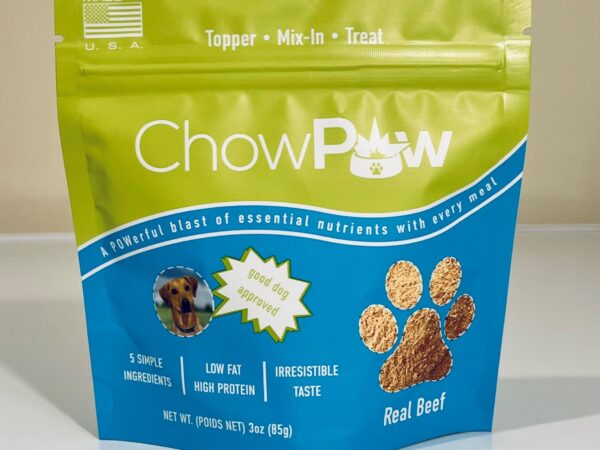
ChowPow is a meal supplement formulated specifically with your dog’s health in mind. It acts as a nutritious topper to boost the value of their regular kibble, not replace it. Adding ChowPow is a completely worry-free way to give them something special they'll love.
Decoding Peanut Products: What's Safe and What's Not
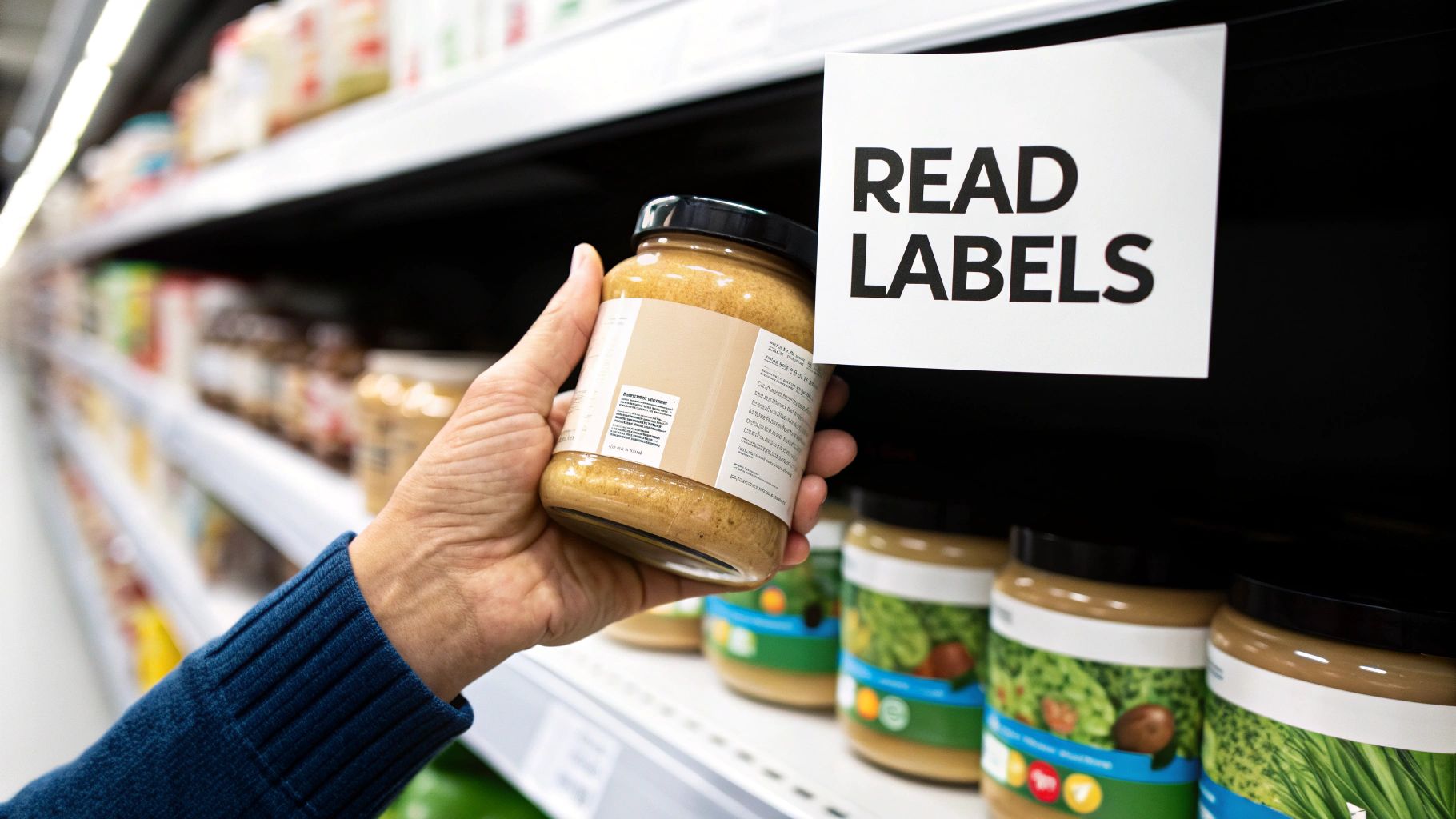
Walking down the grocery aisle for your dog can feel just as tricky as shopping for yourself. While plain peanuts are generally okay, the way they're processed and packaged can introduce some serious risks. Learning to read the labels is the best way to tell a healthy treat from a harmful one.
If you’re thinking about whole peanuts, your safest bet is always roasted, unsalted, and plain. Raw peanuts can sometimes carry a mold called Aspergillus flavus, which produces a nasty toxin called aflatoxin. While your commercial peanut butter is typically safe from this, raw peanuts from a health food store or farm stand could pose a risk, potentially leading to liver damage.
The Hidden Dangers in Peanut Butter
Peanut butter is a classic dog treat, right? But the jar you grab off the shelf might have more than just peanuts inside. A lot of brands add salt, sugar, oils, and preservatives to make it taste better and last longer for us humans. Unfortunately, these extras do nothing for your dog and can even cause health problems.
The absolute most critical ingredient to watch out for is xylitol, an artificial sweetener. While it's perfectly safe for people, it is extremely toxic to dogs. If ingested, it can trigger a rapid, life-threatening drop in blood sugar (hypoglycemia) and may lead to severe liver failure.
Xylitol is a veterinary emergency. It often hides under other names like "birch sugar" or "wood sugar," so you have to meticulously scan ingredient lists before sharing any peanut butter.
Becoming a label expert is your best defense. When you pick up a jar, flip it over and look for a short, simple ingredient list. Ideally, it should just say "peanuts." A little salt might be okay, but salt-free is always the better choice. You can find more tips on sharing people's food in our detailed guide on the dos and don'ts of human foods for your dog.
Your Dog-Safe Shopping List
To keep it simple, here’s a quick checklist for your next shopping trip. Look for peanut butter that avoids these common red flags.
- Xylitol: This is non-negotiable. If you see it on the label, put the jar back immediately.
- High Sodium: Too much salt is bad for dogs. It can lead to dehydration or, in severe cases, sodium ion poisoning.
- Added Sugars: Dogs don't need sugar. It just contributes to weight gain and dental problems down the road.
- Hydrogenated Oils: These are often added for texture but introduce unhealthy fats into your dog’s diet.
At the end of the day, the best peanut butter for your dog has a single ingredient: peanuts. When in doubt, it’s much easier to just reach for a treat designed specifically for them.
A nutritious meal topper like ChowPow gives them that special treat experience without you having to become a food detective. It boosts their kibble with simple, wholesome ingredients, making sure every bite is both delicious and completely safe. This approach removes all the guesswork, letting you focus on the joy of treating your pup.
The Hidden Risks Lurking in the Peanut Bowl
So, you've done your homework. You've picked out plain, unsalted, roasted peanuts and double-checked the peanut butter label for xylitol. Great start! But even when you’ve sidestepped the most obvious dangers, a few more subtle risks are worth knowing about. These concerns aren't about additives—they're about the peanut itself.
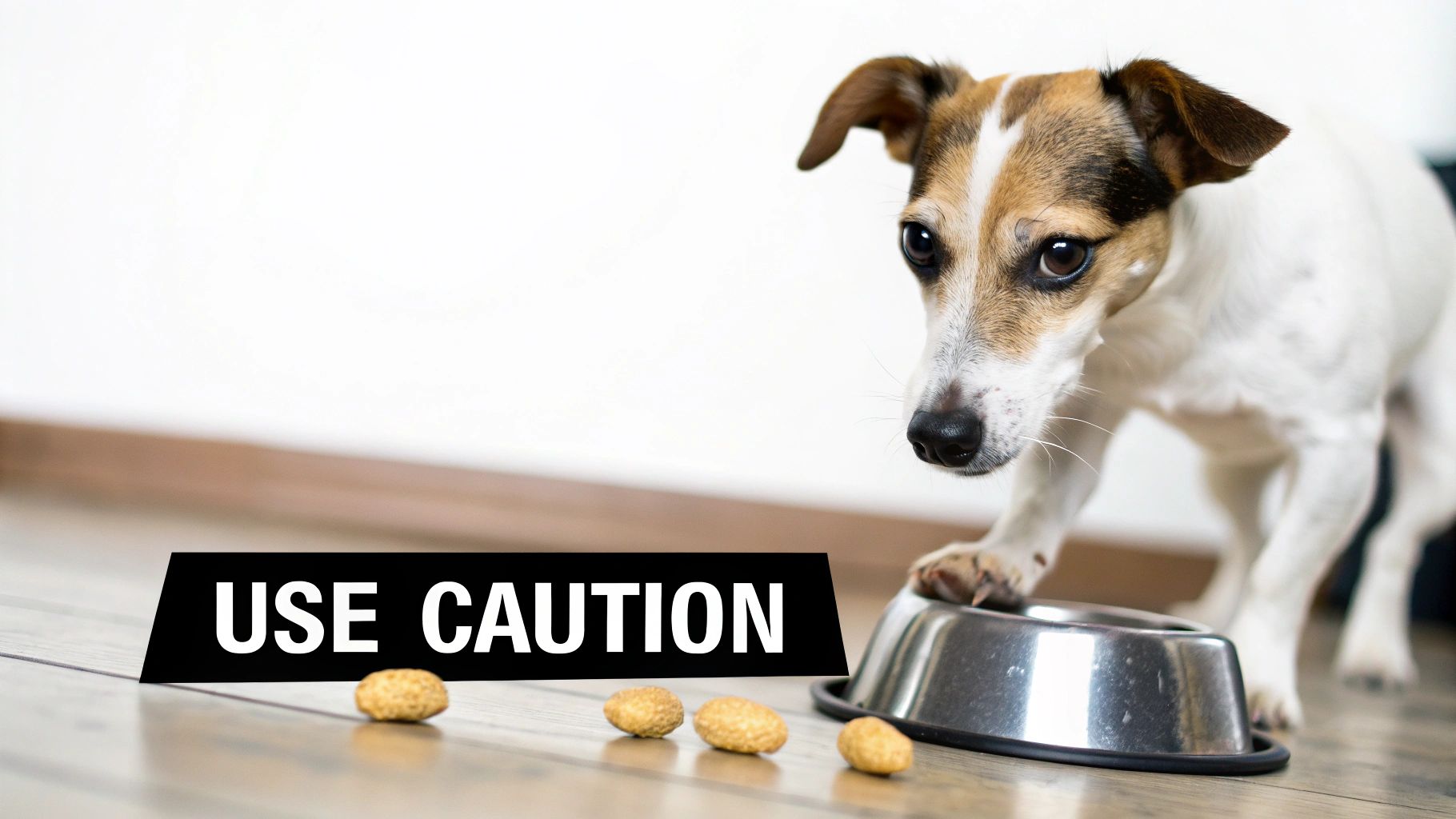
One of the biggest issues with peanuts is their high fat content. A little healthy fat is fantastic for your dog, but a sudden overload can really throw their digestive system for a loop. Imagine trying to fry an egg in an entire bottle of oil—it’s just too much for the pan to handle.
That fatty overload can trigger a painful and serious condition called pancreatitis, which is an inflammation of the pancreas. It often requires a trip to the vet and is a risk you don't want to take lightly, especially with certain breeds.
Physical Dangers to Watch Out For
Beyond the internal risks, peanuts can also pose a couple of physical threats, especially depending on your dog's size and how enthusiastically they eat.
- Choking Hazard: A whole peanut might not seem big, but for a small dog like a Chihuahua or a Yorkie, it's a real choking risk. It’s always best to supervise treat time and maybe even break the nuts into smaller, safer pieces.
- Intestinal Blockage: Peanut shells are a hard no. They're tough, fibrous, and your dog can't digest them at all. If swallowed, those shells can cause a dangerous blockage in the gut that might even require surgery. Always serve peanuts completely shelled.
It’s clear that even a "simple" snack can come with a surprising number of rules. If you're looking for an easier way to boost your dog's meal, a topper like ChowPow is a great solution. It adds fantastic flavor and nutrition right onto their kibble without any of the worries about pancreatitis or choking. It’s a simple, stress-free way to make mealtime more exciting.
But What About Peanut Allergies?
It's a fair question. With how common peanut allergies are in people, many pet parents naturally worry about their dogs. Here’s the good news: when it comes to our canine friends, the story is completely different. True, life-threatening peanut allergies in dogs are incredibly rare.
While it's always smart to watch your dog after trying any new food, the chance of a severe allergic reaction to peanuts is extremely low. Most food issues in dogs are actually sensitivities or intolerances, not true allergies.
In fact, peanuts don't even make the list of top allergens for dogs. Proteins like beef and chicken, which affect up to 40% of itchy dogs, are far more common culprits. An analysis from the Merck Veterinary Manual points to beef, dairy, chicken, wheat, and lamb as the most frequent triggers in Western countries. Peanuts are noticeably absent.
If you suspect your dog has food sensitivities, getting to the bottom of it requires a methodical approach. Our guide on how to conduct a dog food allergy elimination diet can walk you through the steps to pinpoint what’s really causing the issue.
How to Safely Share Peanuts with Your Dog
So, you know the basic rules. Now you can confidently share this nutty snack without all the guesswork. The most important thing to remember is that peanuts are a treat, not a meal. Think of them as a special dessert for your dog—something they get occasionally, not every day. Sticking to small portions is the surest way to dodge any tummy troubles.
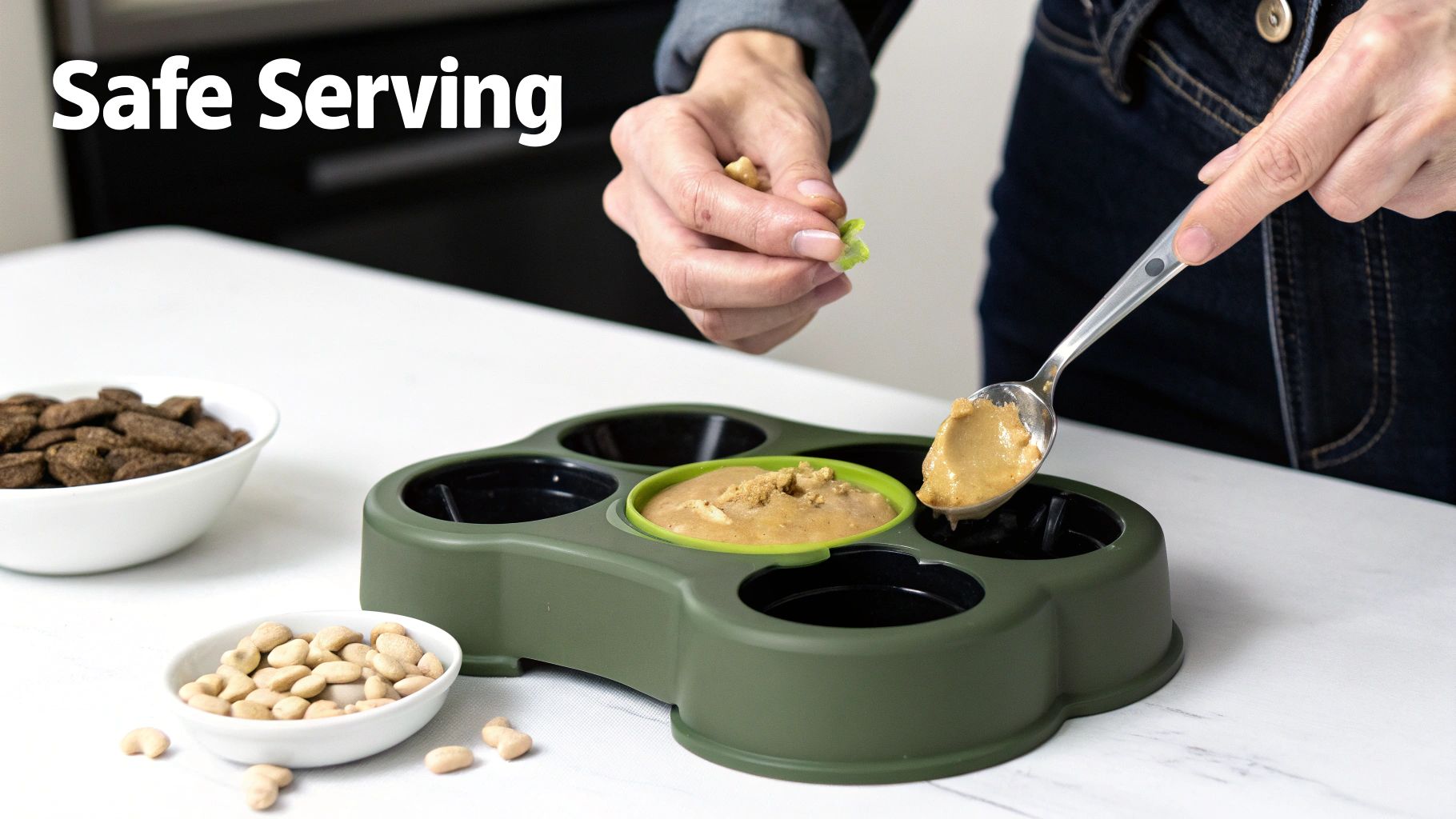
When it comes to treats, portion control is everything. A great rule of thumb is the 10% rule: treats should never make up more than 10% of your dog's daily calorie intake. For something as rich as peanuts, that means just a few nuts for a little dog and a small handful for a big one.
Smart Serving Sizes
To take the guesswork out of it, here are some practical serving suggestions based on your dog’s size.
- Small Dogs (under 20 lbs): Just 2-3 plain, unsalted peanuts are more than enough. If you’re using peanut butter, a tiny dab on your finger is perfect.
- Medium Dogs (20-50 lbs): A small handful of 4-5 peanuts works great as a reward. A half-teaspoon of dog-safe peanut butter is a solid limit.
- Large Dogs (over 50 lbs): You can offer up to a small handful, around 8-10 peanuts. For peanut butter, stick to a single teaspoon as a safe maximum.
While many owners get nervous about allergies, true peanut allergies in dogs are almost unheard of. In fact, veterinary literature has only ever reported a single confirmed case. This makes them a much safer bet than many other human foods. And while millions of people have to worry about peanut allergies, veterinary studies show that food allergies only affect 1-2% of dogs in general. You can get more insights from PetMD on how rarely peanuts cause issues for dogs.
Creative and Safe Serving Ideas
Sharing peanuts can be more than just tossing a nut to your pup. It can actually be an enriching activity that makes your bond even stronger.
A simple treat can become a powerful tool for mental stimulation. By incorporating a snack into playtime, you engage your dog’s mind and body, making treat time both fun and beneficial.
Here are a few creative ways to serve peanuts safely:
- Puzzle Toy Fun: Stuff a KONG or another puzzle toy with a small amount of xylitol-free peanut butter. This will keep your dog busy and provides fantastic mental exercise.
- Training Rewards: A single, plain peanut can be a super high-value reward during training sessions. Its strong smell and taste make it an awesome motivator.
- Medication Masking: A dab of peanut butter is the classic trick for hiding pills. Just double-check that you're using a dog-safe brand!
Even with fun ideas, preparing special treats can sometimes feel like a chore. If you want a simpler way to give your dog's meal a boost, a pre-portioned food topper like ChowPow is the perfect solution. It delivers that special treat excitement right on top of their regular kibble, adding extra nutrition without any prep work or safety worries.
A Better Way to Boost Your Dog's Bowl
After wading through all the rules and risks, you might be wondering if sharing peanuts with your dog is even worth the headache. Scrutinizing labels for salt and hidden xylitol, carefully measuring out tiny portions… it can really suck the joy out of treat time.
What if you could give your dog that same special boost—that exciting, delicious addition to their meal—without all the homework?
Introducing a Worry-Free Solution
This is exactly where a dedicated meal enhancer changes the game. Instead of trying to make human snacks work for your dog, you can use a topper made specifically for their nutritional needs.
Enter ChowPow, a powerhouse meal supplement designed to elevate your dog’s everyday food. It's not a replacement for their kibble. Think of it like sprinkling fresh berries and seeds on your own oatmeal—it just makes what's already there a whole lot better.
ChowPow is made with just four simple, locally sourced ingredients you can actually pronounce:
- Beef Heart: A fantastic source of top-notch protein and crucial amino acids.
- Carrots: Full of vitamins and fiber to support good vision and digestion.
- Celery: Offers key vitamins and minerals without a lot of calories.
- Apple Cider Vinegar: A great natural boost for a healthy digestive system.
Every single batch is lab-tested to guarantee it’s free from the salt, sugar, xylitol, and weird fillers you have to watch out for in people's food. No hidden dangers, no confusing labels to decode.
With a dedicated meal topper, the safety check is already done for you. You get all the benefits of a special treat with none of the risks, giving you complete peace of mind with every scoop.
The Perfect Boost for Every Dog
This nutrient-dense topper is a lifesaver for dogs who need a little extra encouragement to clean their bowl. That rich, meaty aroma is often all it takes to convince a picky eater that their kibble is suddenly an irresistible feast.
It’s also a gentle option for senior dogs with sensitive teeth or pups recovering from an illness with a low appetite. ChowPow’s fine powder form is easy to eat and easy on their system.
Ultimately, you get to give your dog a delicious, health-boosting treat that supports their digestion and fires up their appetite. You can learn more about why this approach works so well in our article on the benefits of adding food toppers to your dog's diet. It’s the perfect way to show your dog some love while enhancing their daily nutrition, safely and effortlessly.
Your Questions About Dogs and Peanuts Answered
Navigating the world of dog nutrition can feel like a minefield sometimes. To help you feel completely confident, let's tackle some of the most common questions and concerns that pop up when pet parents wonder if peanuts are a good idea for their dog.
What Should I Do If My Dog Eats Peanut Butter with Xylitol?
First, don't panic, but act fast. If you even suspect your dog has eaten something with xylitol, treat it as a medical emergency. This artificial sweetener is incredibly toxic to dogs and can trigger a life-threatening drop in blood sugar and severe liver damage in a very short amount of time.
Don't wait for symptoms to show up. Contact your veterinarian or an animal poison control center immediately. Getting professional help as quickly as possible is the single most important factor for a good outcome.
Can Puppies Eat Peanuts?
It's really best to hold off on giving peanuts to puppies. Their digestive systems are still under construction and are far more sensitive to high-fat foods. A handful of peanuts could easily lead to an upset stomach, vomiting, or diarrhea.
Beyond that, whole peanuts are a major choking hazard for any small or young dog. It's much safer to stick with treats that are specially formulated for a puppy's unique nutritional needs. When in doubt, always have a quick chat with your vet before adding new human foods to their diet.
Are There Healthier Alternatives to Peanuts?
Absolutely! If you're looking for a high-value treat that skips the risks, there are plenty of fantastic, dog-safe options. Many dogs go just as crazy for:
- Small bits of cooked chicken
- Crisp apple slices (just make sure to remove all seeds and the core)
- Crunchy baby carrots
- A few blueberries
These alternatives pack a nutritional punch without the high fat content and potential downsides of peanuts.
For a super simple way to make their everyday meals more exciting, a nutrient-dense meal topper like ChowPow can be a game-changer. Just sprinkle it over their kibble to boost both flavor and nutrition, no extra prep required.
How Can I Tell If My Dog Is Having a Bad Reaction?
While a true, life-threatening peanut allergy is extremely rare in dogs, sensitivities or intolerances are more common. After you give your dog peanuts for the first time, keep an eye out for any signs of tummy trouble, like vomiting or diarrhea.
Other signs of a food intolerance can be a bit more subtle, like itchy skin, constantly licking their paws, or even chronic ear infections. If you notice any of these signs crop up after a peanut snack, it's best to stop giving them and check in with your vet.
And while you're focused on their diet, sometimes it's fun to celebrate the bond you share in other ways. For those with a multi-dog household, you might even explore things like personalized dog books for your companions to capture their unique personalities.
Ultimately, being an informed and observant pet parent is the best tool you have. Choosing treats wisely ensures every snack is a moment of shared joy, not a source of worry.
Ready to make every meal a special occasion without the risks? ChowPow is the perfect way to boost your dog's daily kibble with pure, nutrient-dense ingredients. Give your pup the delicious, healthy topper they deserve. Click here to learn more about ChowPow.
-
Product on sale
 Dog Food Topper - Beef HeartOriginal price was: $14.99.$10.95Current price is: $10.95. - or subscribe and save up to 20%