Bad Dog Breath Treatment: A Complete How-To Guide
You’re snuggled on the couch, your dog looks delighted to see you, and then comes the affectionate lick. A second later, you recoil. The smell is sharp, stale, or just plain foul.
That moment is funny for about two seconds. After that, most dog owners start asking the same thing. Is this normal, or is something wrong?
Bad breath in dogs is common, but it isn’t something to shrug off. In many dogs, it’s the first visible sign that their mouth, digestion, or overall health needs attention. Good bad dog breath treatment doesn’t start with masking the smell. It starts with figuring out why it’s there in the first place, then building a plan your dog can stick with.
That Loving Lick Suddenly Stinks What Now
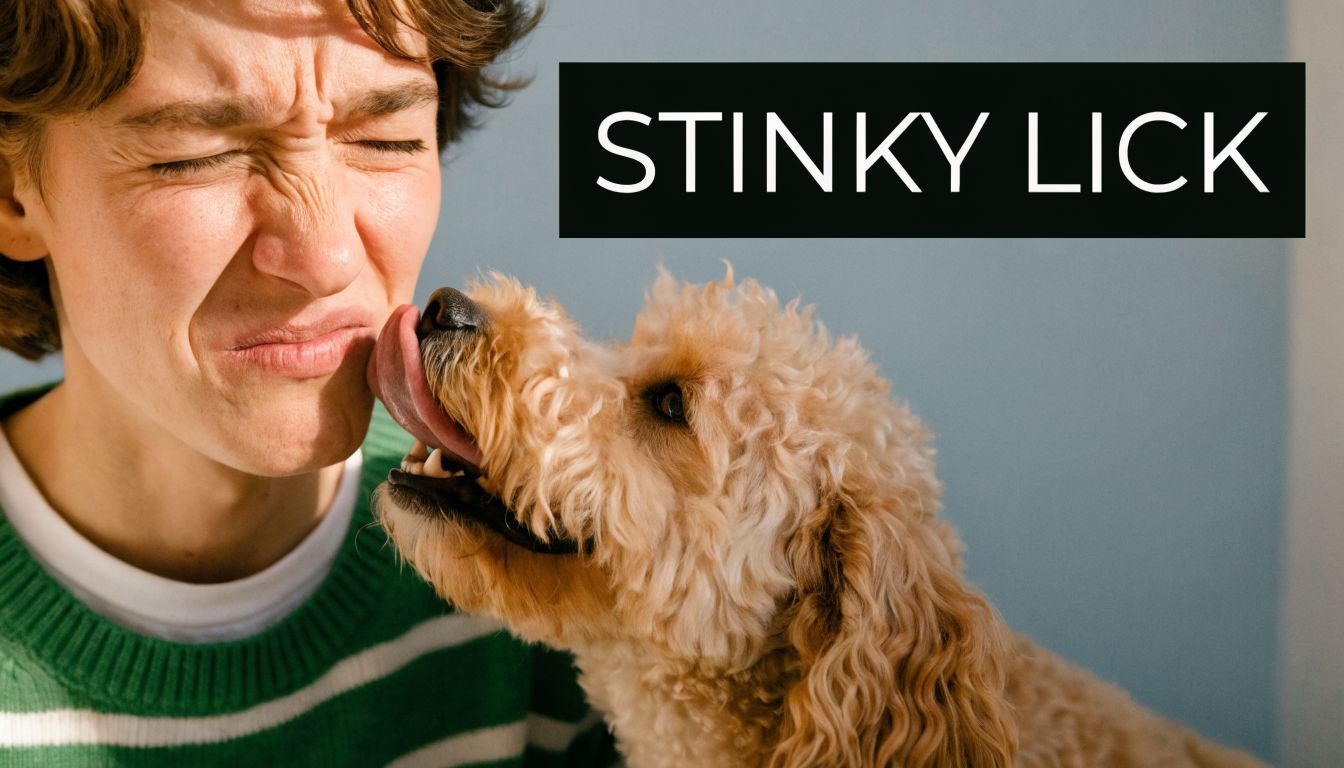
If your dog’s breath has gone from “doggy” to “please back up,” you’re not overreacting. Breath odor usually means bacteria are building up somewhere, most often in the mouth.
That matters because dental disease is extremely common in dogs. By three years of age, up to 80% of dogs will have some form of periodontal disease according to Well Pets. That’s a huge reason bad dog breath treatment deserves attention early, not after your dog is already uncomfortable.
Why smell is only part of the problem
Bad breath is annoying for you. For your dog, it can signal sore gums, infected teeth, trapped food, digestive upset, or a larger medical issue.
A lot of owners get stuck because they treat odor like a cosmetic problem. They try a minty additive, a random chew, or a home remedy, but the smell keeps coming back.
Practical rule: If the breath odor is persistent, assume there’s a cause worth finding.
Fresh breath usually takes a mix of habits
The most effective approach is layered.
You’ll usually need some combination of:
- Daily oral care to reduce plaque before it turns into tartar
- Diet support if digestion or food quality is adding to the odor
- Hydration to help the mouth stay naturally cleaner
- Veterinary care when there’s pain, infection, or hardened buildup at home care can’t fix
That’s good news. It means you don’t have to rely on one perfect product or one frustrating routine. You just need a plan that fits your dog.
Some dogs will happily tolerate brushing. Others won’t. Some can chew dental treats. Seniors, picky eaters, and recovering dogs often can’t. That’s where understanding the source of the smell makes all the difference.
Decoding Your Dog's Bad Breath Causes
Most bad breath falls into one of three buckets. Mouth problems. Digestive problems. Bigger health problems.
That’s helpful because treatment only works when it matches the cause. If your dog has tartar, changing food alone won’t solve it. If your dog has stomach trouble, brushing won’t fix the whole issue.
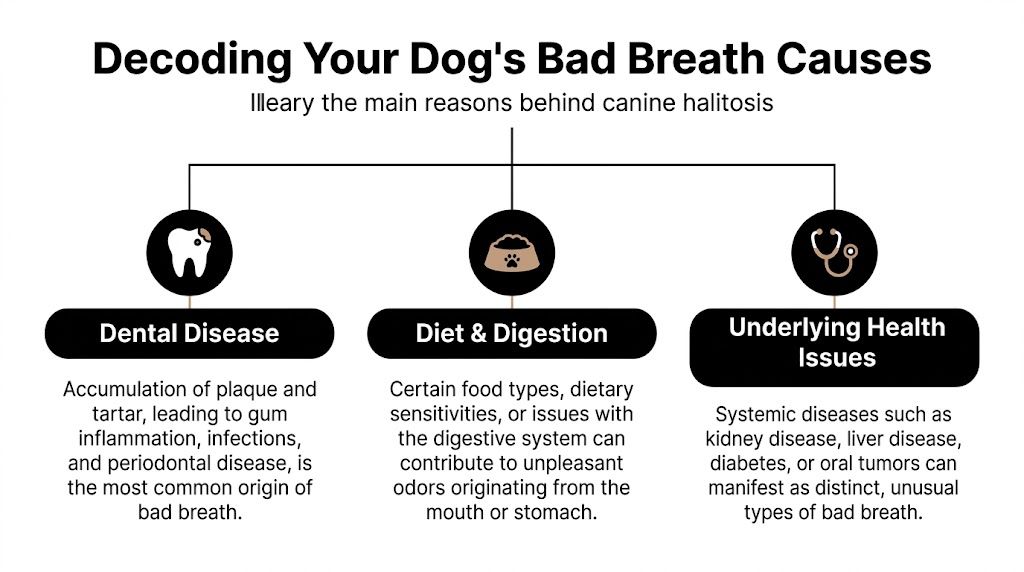
Dental disease is the first place to look
For most dogs, the smell starts in the mouth.
Plaque is a sticky film full of bacteria. It can start forming very quickly after a professional cleaning, and if it isn’t removed, it hardens into tartar. Once tartar builds up around the gumline, the gums get irritated, bacteria settle in deeper, and the odor gets stronger.
The smell often comes from the back teeth, especially the upper cheek teeth, where tartar tends to collect heavily.
Common clues that the mouth is the problem:
- Yellow or brown buildup on the teeth, especially near the gums
- Red gums that look puffy or irritated
- Drooling more than usual
- Reluctance to chew hard toys, treats, or kibble
- Pawing at the mouth or turning the head away when you touch the muzzle
If you want a simple human comparison, think of the common causes of bad breath people deal with in the morning. Bacteria, trapped debris, and dry mouth all make odor worse. Dogs deal with the same basic biology, just with fur, slobber, and a tendency to eat things they absolutely shouldn’t.
Diet and digestion can show up as mouth odor
Sometimes the mouth isn’t the whole story.
Dogs with digestive upset can develop unpleasant breath because food isn’t moving smoothly through the system, or because the balance of bacteria in the gut is off. Some owners notice this as a sour smell. Others describe it as stale, gassy, or “like something rotten.”
This can happen when a dog:
- eats garbage or spoiled food
- has frequent vomiting or burping
- struggles with food sensitivity
- has inconsistent stools
- is a rescue or foster dealing with stress-related digestive issues
Dogs that eat stool can have especially awful breath. Even when that behavior stops, the smell may linger if the deeper issue is nutritional imbalance or gastrointestinal irritation.
Bad breath that seems tied to meals, stomach upset, or stool-eating deserves a wider look than dental care alone.
Some breath smells point to larger medical issues
This is the category owners sometimes miss because they assume all bad breath is dental.
It isn’t.
A sudden change in odor, especially in an older dog, can be a signal that something beyond the mouth is going on. Kidney disease, liver disease, diabetes, oral tumors, and infections can all change how a dog’s breath smells.
Here's a simple way to consider it:
| Likely source | What you may notice |
|---|---|
| Dental issue | Tartar, red gums, chewing discomfort, chronic foul smell |
| Digestive issue | Burping, gas, vomiting, odd stool habits, odor that changes with meals |
| Medical issue | Sudden odor change, weight loss, low energy, unusual thirst, facial swelling |
You don’t need to diagnose your dog at home. You just need to notice patterns. Was the change gradual or sudden? Is your dog still eating normally? Do the gums look healthy? Is there anything else going on besides the smell?
Those details help you choose the right bad dog breath treatment, and help your vet if you need one.
Your At-Home Bad Breath Treatment Plan
Home care works best when it’s boring, repeatable, and low drama. You’re not trying to win a wrestling match with a toothbrush. You’re trying to reduce bacteria often enough that your dog’s mouth stays cleaner over time.
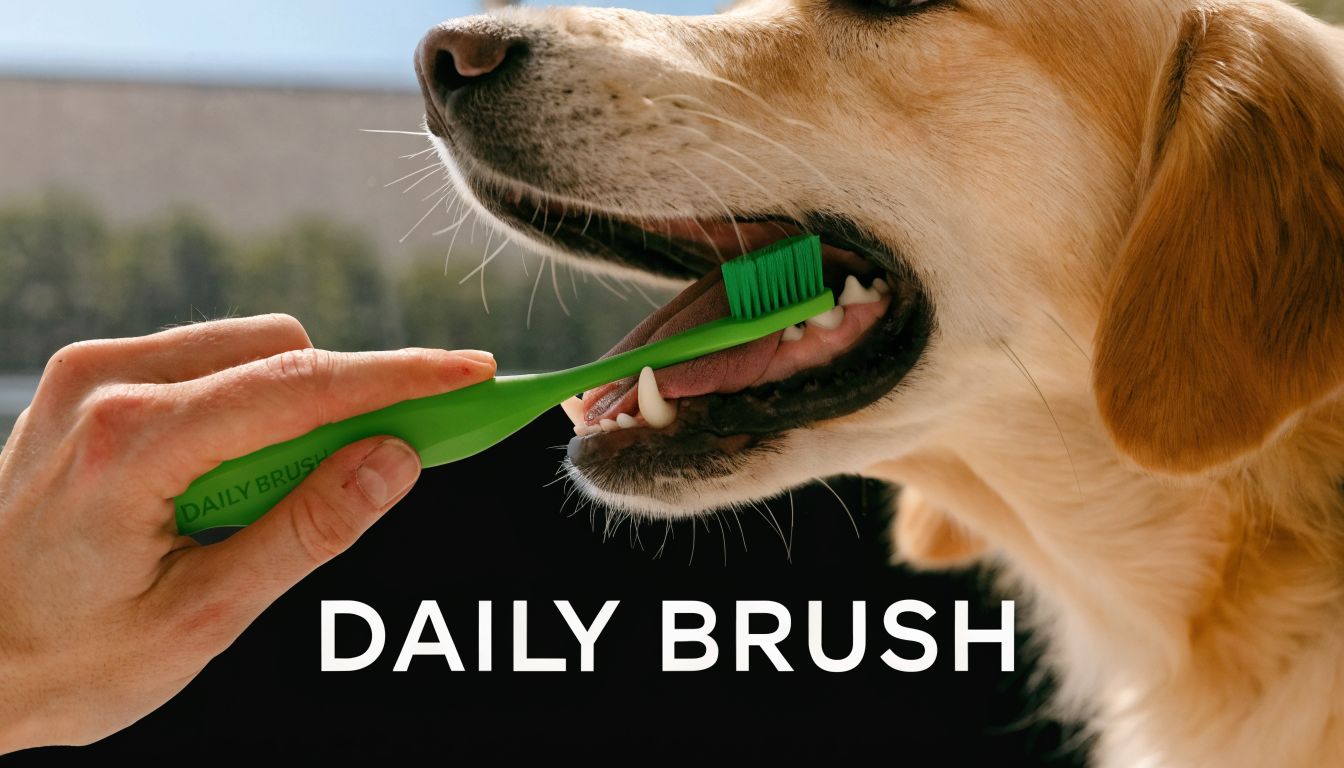
Start with brushing if your dog will allow it
Brushing is still the strongest at-home habit for many dogs.
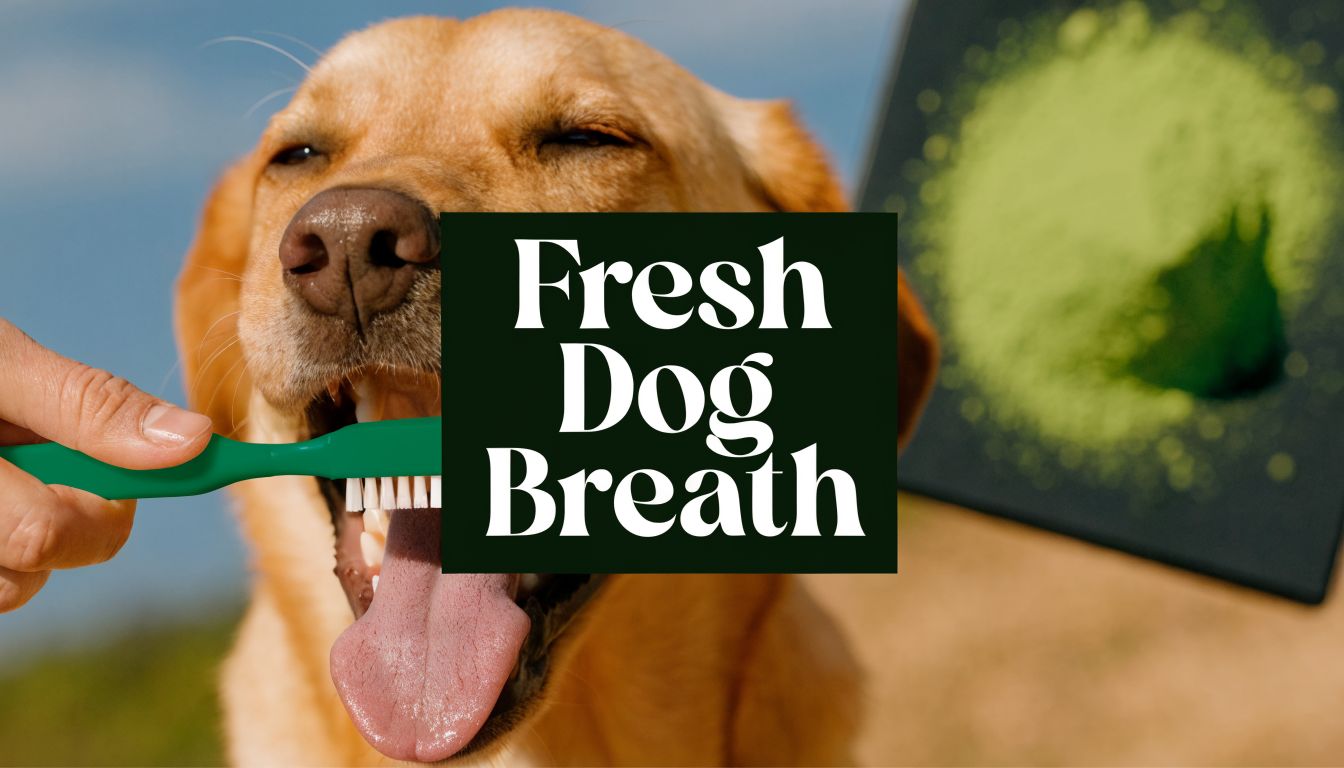
Use a dog toothbrush or finger brush and dog-safe toothpaste. Human toothpaste isn’t appropriate for dogs, so skip it even if it seems convenient.
Keep the first few sessions tiny. Lift the lip. Touch the teeth. Reward. Then stop.
A good starter sequence looks like this:
- Let your dog taste the toothpaste so the smell and flavor feel familiar.
- Touch the muzzle and lips gently during calm moments, not only “tooth time.”
- Brush the outer surfaces first because that’s where plaque tends to collect most.
- Aim for consistency over perfection. A short calm session beats a full panic session.
- End with praise or a reward so the routine doesn’t feel like a punishment.
A lot of owners get discouraged because they think brushing has to look polished right away. It doesn’t. It just has to become normal.
Know where brushing falls short
Brushing is excellent when you can do it well and do it often. The problem is compliance.
A clinical study on canine oral malodor found that specialized oral care chews with a long chew time had a mean of 12.26 minutes and significantly reduced key odor-causing compounds, while tooth brushing had a mean of 2.59 minutes and didn’t always meet the minimum effective duration in the study. You can see the details in the PMC study on oral care chews and volatile sulfur compounds.
That doesn’t mean brushing is useless. It means the best routine is the one your dog accepts and that you can maintain.
Some dogs need the ideal plan. Most dogs need the realistic plan.
For a broader look at the daily habits behind lasting freshness, this guide on how to get rid of bad breath permanently is useful because it frames breath care as a routine problem, not a one-time fix.
Good alternatives for brush-resistant dogs
If your dog hates brushes, don’t give up. Shift tools.
Try one or two of these instead:
- Dental wipes help remove soft debris from the tooth surface and gumline.
- Oral gels or rinses can support fresher breath, though they work best when your dog tolerates handling.
- Water additives for dogs may help some households, especially if your dog doesn’t object to the taste.
- Textured dental chews can offer mechanical cleaning for dogs that enjoy chewing safely.
Not every option suits every dog. A picky eater may reject flavored water. A senior with sensitive teeth may dislike firm chews. A recovering dog may need very gentle handling around the mouth.
That’s why routines need to be customized, not copied.
If you’re sorting through chew options and want a dog-focused breakdown, this article on do dental chews work for dogs is a helpful companion read.
Build a routine your dog can live with
The strongest home plans are simple enough to survive busy days.
Try this weekly rhythm:
| Day-to-day habit | Why it helps |
|---|---|
| Brush or wipe teeth | Reduces plaque before it hardens |
| Offer safe chewing time | Adds mechanical cleaning |
| Refresh water often | Supports saliva and mouth moisture |
| Check the mouth briefly | Helps you catch redness, odor changes, or buildup early |
Here’s a useful visual if you want to see brushing mechanics in action:
If your dog already has thick tartar, remember this part. Home care helps prevent buildup, but it doesn’t remove hardened calculus once it’s there. That’s where veterinary dental cleaning comes in.
Boosting Oral Health From The Inside Out
Plenty of bad breath articles stop at teeth. That misses something important. Dogs don’t live one body system at a time.
What’s happening in the bowl can affect what’s happening in the mouth.
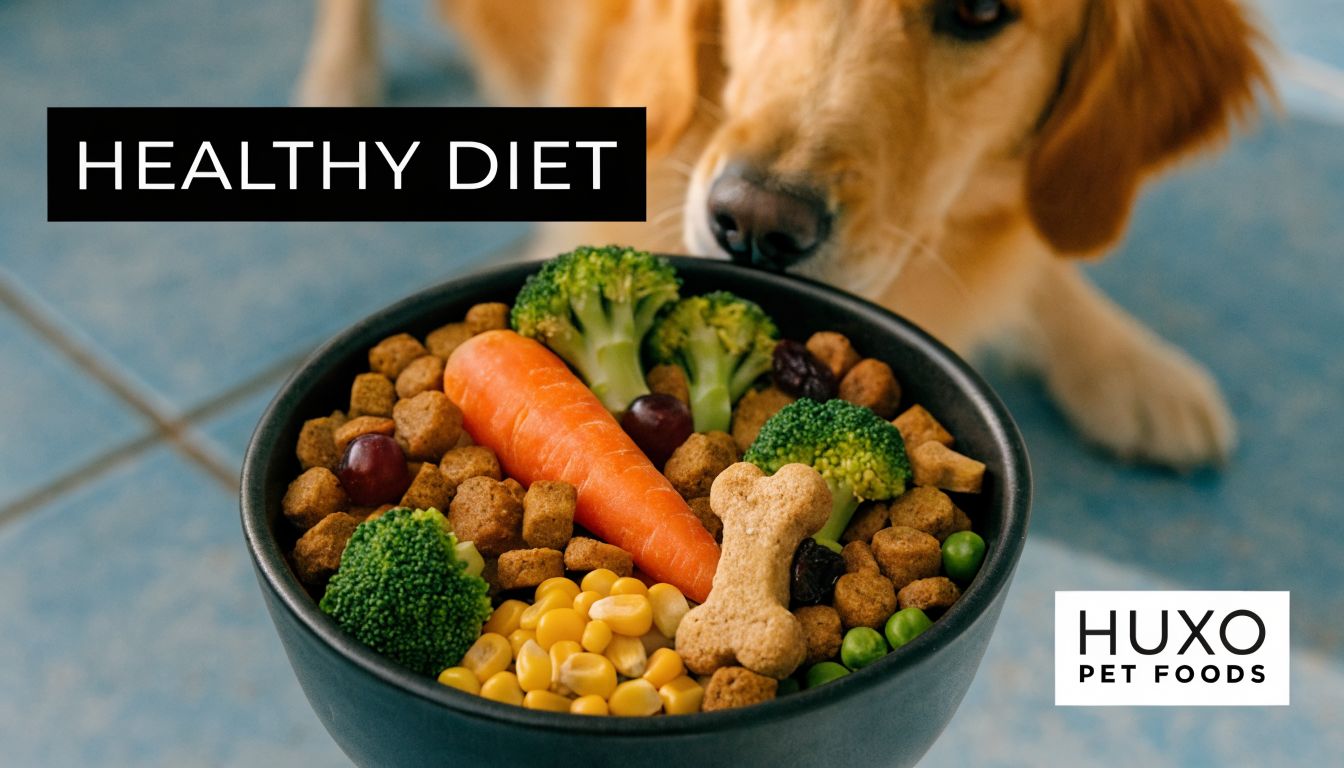
The mouth and gut affect each other
When a dog’s digestion is off, breath can change. Owners often notice it before they can name it. The smell may seem sourer, heavier, or more “body odor” than simple plaque breath.
This is one reason diet quality matters in bad dog breath treatment. According to PetMD, existing content often underplays how diet quality affects the gut-oral microbiome, especially for picky eaters and senior dogs. That same source highlights dehydrated meat-based toppers with ingredients like apple cider vinegar as an underserved option that can support digestion and provide antibacterial effects for dogs that reject traditional dental products.
That matters most for dogs who can’t follow the usual script.
Some dogs need gentler support
A healthy young dog who loves chewing may do well with brushing and dental chews.
But many owners are dealing with a different dog entirely:
- Picky eaters who refuse chews, powders, and anything unfamiliar
- Senior dogs with sensitive teeth or sore mouths
- Recovering dogs who need extra nutrition but can’t handle hard treats
- Rescue and foster dogs with stress, appetite changes, or a messy digestive history
For those dogs, diet support can be more practical than forcing another oral product they already hate.
What to look for in a meal topper
A topper should support the current diet, not replace it.
That point gets lost a lot, so it’s worth being clear. A meal topper is a booster. You sprinkle it over your dog’s existing food to improve palatability and nutritional density. You’re not tossing the kibble and starting from scratch unless your veterinarian tells you to.
A useful topper for breath-conscious owners should be:
| Feature | Why it matters |
|---|---|
| High-quality protein | Supports overall wellness and appetite |
| Easy to sprinkle or mix | Helps with picky dogs and medication routines |
| Gentle texture | Better for seniors and dogs avoiding hard chews |
| Simple ingredients | Easier to fit into a sensitive dog’s routine |
Food-based support can be especially appealing when a dog won’t cooperate with mouth handling. Instead of turning every day into a battle, you improve what goes into the bowl and make the whole plan easier to maintain.
Nutrition won’t scrape tartar off teeth. It can make the rest of your dog’s health support system stronger.
Better food support can improve compliance
This is the part many owners overlook. The best care plan is the one your dog will accept without a fight.
If your dog won’t chew dental treats and won’t let you brush properly, you need another place to make progress. Improving the diet can help support digestion, appetite, and daily consistency. It also gives you an option for disguising medication or encouraging food intake in dogs who are feeling off.
If you want more general guidance on oral care basics, this piece on keeping your dog's teeth clean pairs well with a nutrition-first approach.
Inside-out support won’t replace brushing, chews, or professional dental care when those are needed. It fills a gap for the dogs who don’t fit the standard advice. And for many households, that gap is exactly where progress starts.
Smart Hydration and Simple Home Remedies
A dry mouth tends to smell worse. Saliva helps rinse away debris and bacteria, so dogs that don’t drink well often end up with a stickier, smellier mouth.
That’s why hydration deserves a spot in any bad dog breath treatment plan.
Easy ways to encourage more drinking
Some dogs drink eagerly. Some barely touch the bowl unless they’ve just finished a walk.
Try these habits:
- Refresh water often because many dogs prefer a clean, cool bowl
- Wash bowls daily so odor and residue don’t build up
- Place extra bowls around the house if your dog tends to forget to drink
- Offer water after play and meals when your dog is already likely to engage
If your dog needs more encouragement, this guide on the best way to hydrate dog covers practical ways to make water intake easier.
Which home remedies are worth trying
Home remedies can support your main plan. They shouldn’t replace it.
A few commonly discussed options include:
- Parsley in food for a mild breath-freshening effect
- Dog-safe water additives when your dog tolerates the flavor
- Small food-based changes that make meals more appealing and easier to digest
Be careful with anything labeled “natural.” Natural doesn’t automatically mean safe, effective, or useful for your specific dog.
Skip the urge to throw five remedies at the problem at once. If the smell improves, you won’t know what helped. If your dog gets stomach upset, you won’t know what caused it.
Keep your experiments small. Add one supportive habit, give it time, and watch your dog closely.
What these remedies can and can’t do
Hydration and home remedies work best for mild support.
They may help with:
- Temporary odor
- Dry mouth
- Dogs who need a little extra encouragement to eat or drink
They won’t fix:
- Loose teeth
- Infected gums
- Heavy tartar
- Painful chewing
- Medical causes of odor
If the smell is intense, persistent, or changing fast, move past home remedies and get professional guidance.
When You Must See Your Veterinarian
A lot of dog owners assume bad breath is just part of dog ownership. Sometimes it is. Often it isn’t.
The hard part is knowing when you’ve crossed from “needs better home care” into “needs medical attention.”
Red flags you shouldn’t watch and wait on
Call your vet if bad breath shows up with any of these signs:
- Bleeding gums
- Loose, broken, or discolored teeth
- Difficulty chewing or dropping food
- Drooling more than usual
- Facial swelling
- Pawing at the mouth
- A sudden major change in odor
- Reduced appetite or weight loss
- Vomiting or obvious digestive upset
A dog can hide mouth pain surprisingly well. Many keep eating long after chewing has become uncomfortable. They may chew on one side, choose softer food, or stop playing with certain toys.
Pay attention to unusual breath smells
Not all bad breath smells the same.
If you notice a breath odor that seems distinctly sweet, chemical, rotten, or ammonia-like, don’t assume it’s “just teeth.” Those unusual smells can be clues that the issue goes beyond routine plaque.
You don’t need to identify the exact disease at home. Your job is simpler. Notice the smell, notice the timing, and notice what else changed.
Rescue dogs and stool-eating cases need a wider lens
Coprophagia can make breath smell awful, but the story doesn’t always end there.
Many guides focus on deterrent chews. That can be too narrow, especially for rescue and foster dogs dealing with stress, nutrition gaps, or digestive imbalance. According to Chewy’s educational guide on bad dog breath, high-protein diets have been shown to resolve coprophagia in 25% of cases, compared with 10% with chews alone. That’s a strong reason to involve your veterinarian in the plan instead of relying only on a stool-eating deterrent.
This is especially true if your dog is underweight, recently adopted, recovering from illness, or dealing with recurring stomach issues.
A rescue dog with bad breath may have a dental problem, a diet problem, a stress problem, or all three at once.
What a vet can do that home care can’t
Veterinarians can look below the surface.
They can:
- Check for dental disease below the gumline
- Identify infections, fractures, and oral masses
- Recommend professional cleaning when tartar is already hardened
- Assess whether kidney, liver, or metabolic disease might be involved
- Help you choose a safer nutrition plan for seniors or recovering dogs
Professional dental cleanings under anesthesia remain the gold standard when calculus is already stuck to the teeth. Home tools can help prevent buildup, but they can’t remove established tartar.
Many owners also notice a sharp improvement in breath after a professional cleaning. If your dog’s mouth has reached that point, no amount of brushing around the problem will equal getting it properly treated.
A Fresh Start for Your Dog's Health and Happiness
The best bad dog breath treatment usually comes down to three things. Clean the mouth. Support the body. Know when to call the vet.
That’s the framework I’d use with my own dog.
If the smell is mostly from plaque and early buildup, daily oral care gives you the best shot at staying ahead of it. If your dog is picky, older, or recovering, improving nutrition and hydration can make the whole plan easier to follow. If the odor is severe, strange, or paired with pain, don’t waste time trying every home fix on the internet.
Small habits matter more than heroic effort. A brief brushing session. A quick lip lift to check the gums. Cleaner water bowls. Better support in the food bowl. Those actions don’t look dramatic, but done consistently, they can make a real difference in comfort, breath, and quality of life.
And that’s the goal. Not minty kisses. A dog who feels better, eats better, and enjoys daily life more comfortably.
If your dog is a picky eater, a senior with sensitive teeth, or a pup recovering from illness, ChowPow can help you boost the nutritional value of their current meals without replacing their kibble. It’s a dehydrated beef heart meal enhancer designed to sprinkle over food, mix into water, or use to hide medication, making it a practical add-on for dogs who need extra support at mealtime.
-
Product on sale
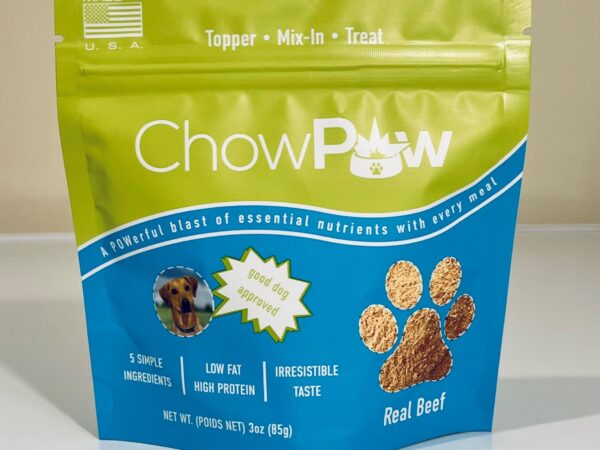 Dog Food Topper - Beef HeartOriginal price was: $14.99.$10.95Current price is: $10.95. - or subscribe and save up to 20%