Best Dog Ramps for Mobility & Joint Health
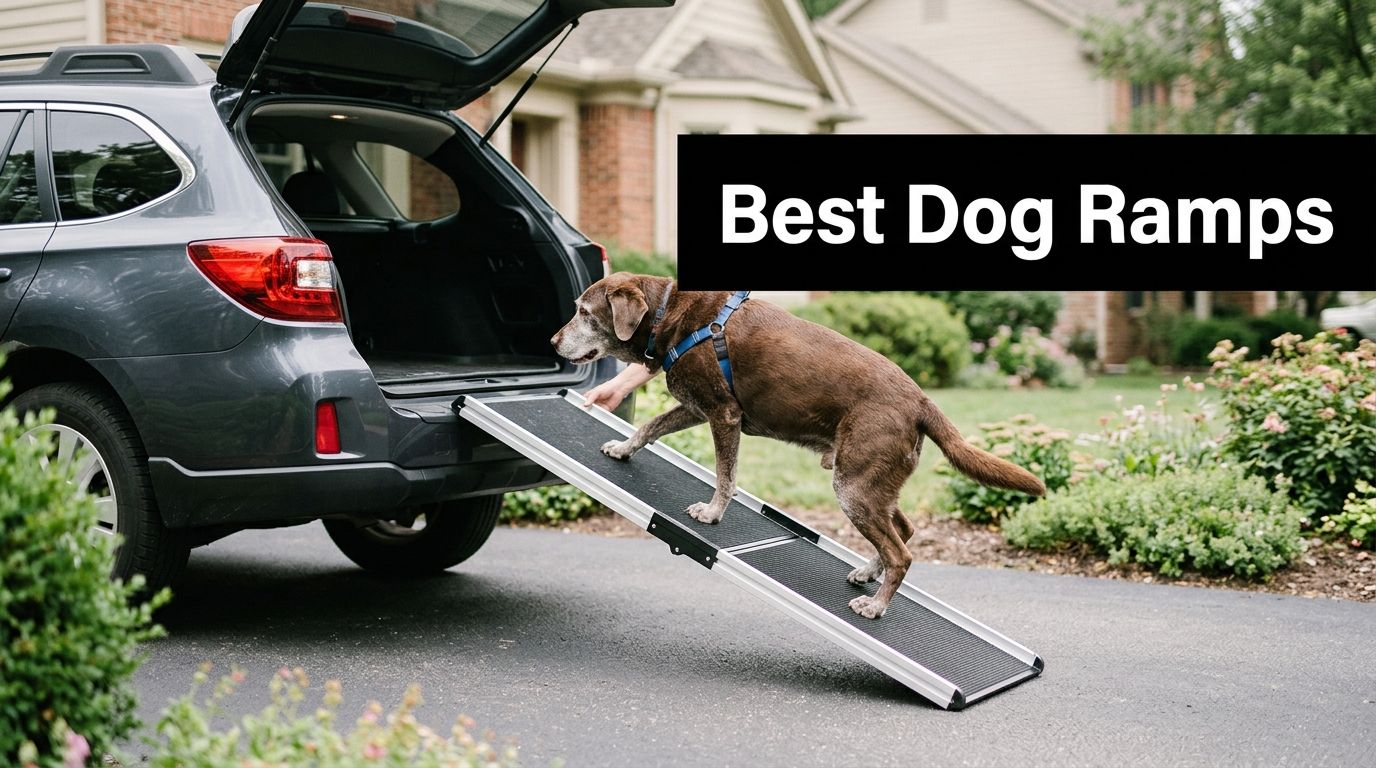
Your dog used to hop into the car without thinking. Now they pause, look up, and either scramble awkwardly or wait for help. If you're shopping for the best dog ramps, that moment is probably why.
For senior dogs, dogs with arthritis, big breeds, and pups recovering from surgery, a ramp isn't just a convenience item. It can become part of daily pain prevention. The tricky part is that many ramps look similar online, while the details that actually matter, like slope, traction, width, and stability, are easy to miss.
A good ramp should make your dog feel safer, not more nervous. It should match your dog's body, your car or furniture height, and the way your dog moves today, not the way they moved a few years ago. That's especially important for older dogs, because mobility changes gradually and owners often don't realize how much effort simple jumping has started to cost.
Why a Ramp Is a Game-Changer for Joint Health
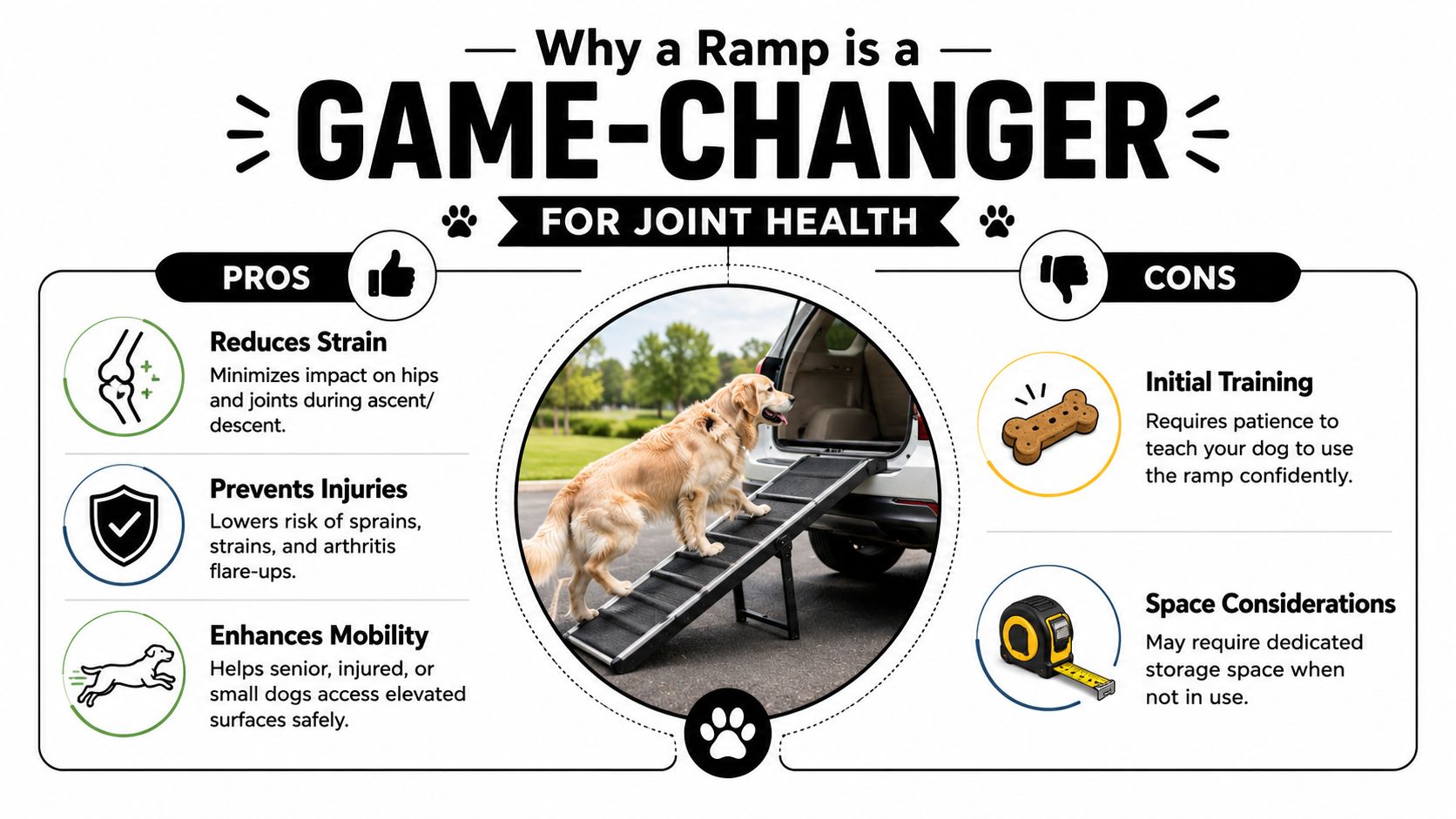
Jumping asks a lot from a dog's body in one fast movement. The dog pushes off, lands hard, and absorbs impact through the feet, wrists, elbows, shoulders, hips, and spine. A ramp changes that motion into a controlled walk.
That's why ramps are often the better choice for dogs with stiff joints or reduced confidence. PetMD notes that dog ramps are generally gentler on joints and better for larger dogs or those with arthritis, while stairs may suit smaller, more agile pets; ramps reduce the strain caused by jumping onto elevated surfaces like cars or couches.
What changes in the body
When a dog walks up an incline, their weight spreads more gradually across all four limbs. That matters for dogs with arthritis, post-surgery soreness, or age-related weakness. Instead of one explosive jump, they get a steady path.
For a young, agile dog, that difference might seem small. For an older Labrador, a recovering Dachshund, or a giant breed with sore hips, it can be the difference between moving confidently and avoiding the activity altogether.
A dog who hesitates before jumping is often telling you the movement has become uncomfortable, even if they're still able to do it.
Ramps versus stairs
Stairs can work for some dogs. Small, nimble dogs often handle short stairs well, especially at lower furniture heights. But stairs still ask for repeated lifting, stepping, and weight transfer from one level to the next.
A ramp creates one continuous motion. That's usually easier for dogs who:
- Have arthritis or joint stiffness
- Are recovering from surgery
- Struggle with balance
- Are large enough that lifting them isn't practical
- Have become cautious with age
If your dog is also dealing with digestive sensitivity during recovery, a gentle routine can help overall comfort. Some owners also look into supportive basics like dog probiotics to help keep meals easy on the stomach while they focus on mobility support.
Why early support matters
Many owners wait until their dog can't jump. In practice, the better time to introduce a ramp is when your dog is only starting to slow down. Early use helps preserve confidence and reduces repeated strain from daily jumps onto beds, couches, and vehicle cargo areas.
You can also pair mobility support with broader joint-care habits. This guide to joint health for dogs is a helpful companion read if you're trying to look at the whole picture, not just the ramp itself.
A Guide to Dog Ramp Types and Materials
Not every ramp fits every home. Some are built for car travel, some are better beside a bed, and some are best left in one place full-time. The best dog ramps usually make sense when you match the design to the job.
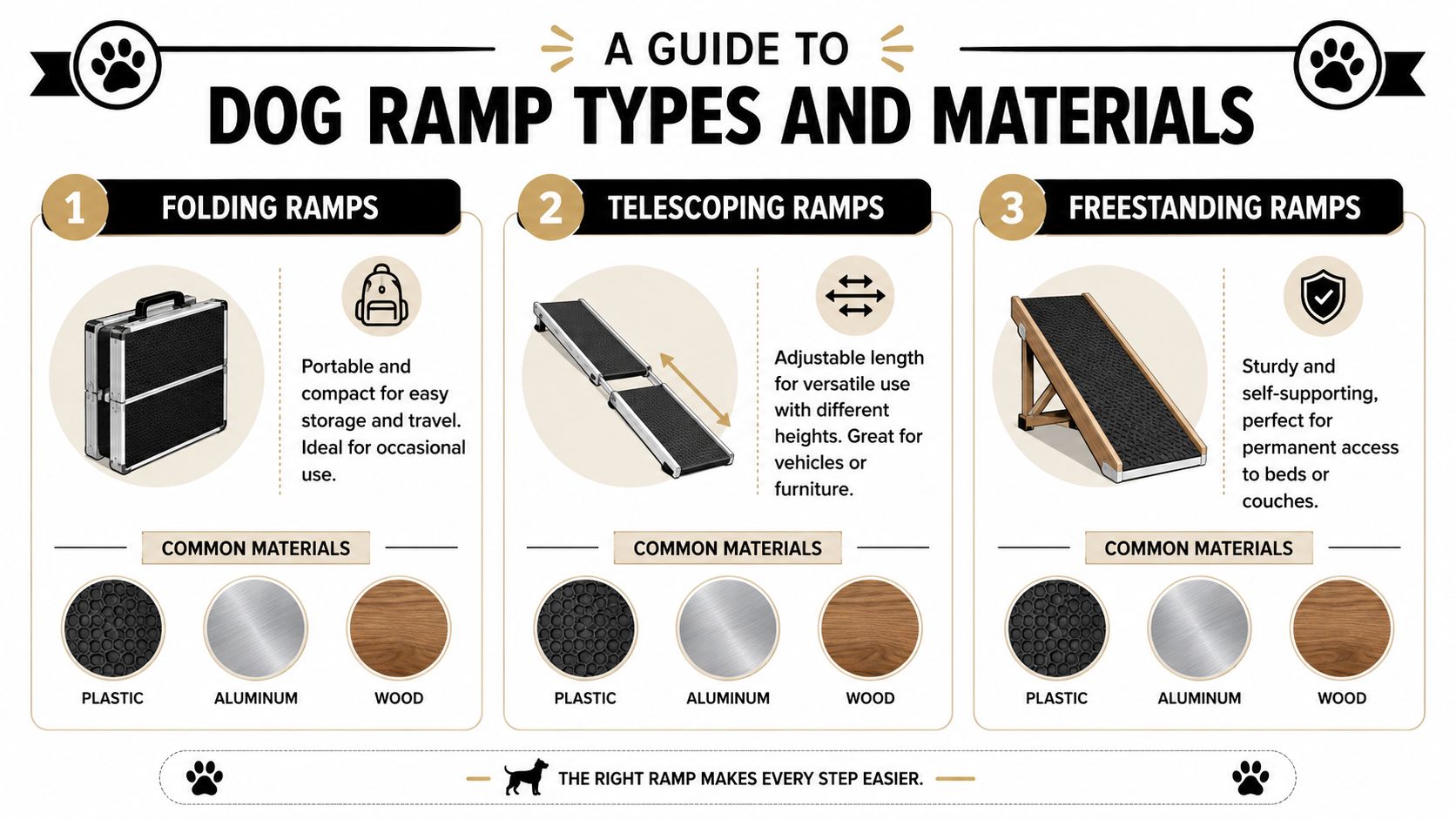
Folding ramps
A folding ramp bends in the middle for storage. These are popular for cars because they're fairly easy to stash in a trunk or garage.
They're a practical choice if you need something portable but don't want a permanent setup in the house. The tradeoff is that some folding models feel less solid underfoot than heavier home ramps, so build quality matters.
Telescoping ramps
A telescoping ramp slides longer or shorter. That adjustability is useful when you use the same ramp for different vehicles or surface heights.
Owners often like telescoping models because they can create a gentler approach without taking up as much room in storage. If your dog uses multiple access points, this style can be flexible.
Freestanding ramps
Freestanding ramps usually stay in one place. Think of a bed ramp, couch ramp, or porch access ramp.
These are often the easiest for nervous dogs because they don't get moved around much. A stable, familiar setup builds confidence faster than something that changes position every day.
Material matters more than many owners think
The ramp material affects weight, durability, and how easy the ramp is to carry. It also affects how solid the ramp feels under your dog's paws.
Here's a simple comparison:
| Ramp material | Typical strength | Best use | Main tradeoff |
|---|---|---|---|
| Aluminum | Lightweight and portable | Vehicles and travel | Can feel narrow or less substantial in lighter designs |
| Plastic | Often weather-friendly and easy to clean | Casual home or car use | Quality varies a lot |
| Wood or composite | Usually feels sturdy and stable | Permanent indoor setups | Heavier to move |
One useful benchmark is portability. High-quality aluminum constructions are standard for portability, with benchmarks indicating a maximum load capacity of 150 lbs for small-to-medium dogs, while specialized heavy-duty models support up to 300 lbs with dimensions of 67 x 15 x 3 inches and a total weight of only 12 lbs.
Buying shortcut: Start by choosing the use case first. Car, couch, bed, porch, or stairs. Then choose the ramp type. Material comes after that.
How to narrow the field
If you're overwhelmed by product pages, ask these questions in order:
- Where will the ramp live most of the time? A bedroom ramp and a travel ramp usually aren't the same product.
- Will you carry it often? If yes, lighter aluminum designs can be appealing.
- Does your dog spook easily? A heavier, more planted ramp often feels better to cautious dogs.
- Will it get wet? Outdoor use calls for surfaces and feet that keep traction in damp conditions.
Some dogs do fine on almost any sturdy ramp. Older dogs and dogs with pain usually don't. They notice wobble, noise, slick textures, and narrow walking space right away.
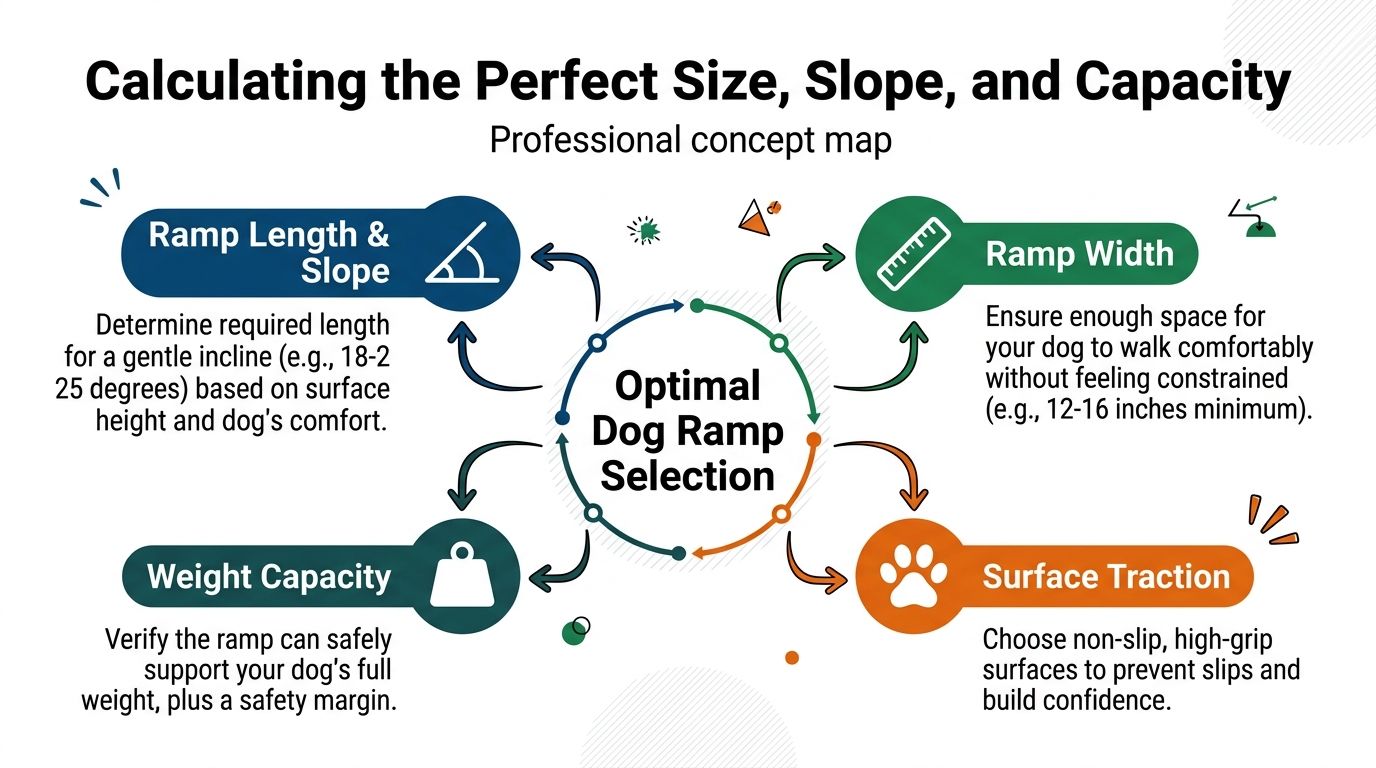
Calculating the Perfect Size Slope and Capacity
Many owners make the wrong purchase. They buy a ramp that looks fine in photos, then bring it home and realize it's too steep.
A ramp is only helpful if your dog can use it without straining. That means measuring the target height first, then checking whether the ramp length creates a manageable incline.
Start with the rise
Measure from the ground to the top of the surface your dog needs to reach. For a car, that might be the cargo floor. For a bed, it's the top of the mattress. For a porch, it's the landing where the ramp will sit flush.
Then compare that height with the ramp length.
For optimal mechanical function and safety, a dog ramp's length must be calibrated to the height of the target surface to maintain an incline angle between 18° and 30°. If the incline exceeds 30°, the risk of slipping or joint strain rises. Even though that linked resource discusses accessibility ramps more broadly, it gives a useful way to think about slope and why steep angles become harder to manage.
A practical way to think about slope
If your dog is young, balanced, and only using the ramp occasionally, they may tolerate a steeper setup. Senior dogs usually do better with a gentler climb.
Look for these clues:
- Too steep: your dog leans hard, shortens their steps, or rushes
- About right: your dog walks with even pacing and little hesitation
- Too shallow for your space: the ramp is comfortable, but it may be too long to fit safely
A longer ramp usually helps more than people expect.
This short video can help you visualize setup and handling:
Width and walking confidence
A ramp can be technically strong but still feel scary if it's too narrow. Dogs don't want to feel like they're balancing on a beam.
A useful rule from the verified guidance is to choose a ramp at least 3–5 inches wider than your dog's shoulder width. That extra room helps prevent the dog from feeling boxed in or tipping sideways, especially when arthritis affects balance and paw placement.
The same principle applies when you assess body size more generally. If your dog is carrying extra weight, this body condition score guide can help you judge whether their current condition might make climbing more tiring or less stable.
Capacity is not a detail
Weight rating isn't just a product spec buried at the bottom of the page. It's a safety limit. Verified guidance places typical dog ramp capacity in the 100 to 200 pound range, with heavy-duty use models explicitly supporting up to 200 pounds in many cases.
Use the manufacturer's rating as a minimum requirement, not a suggestion. If your dog is close to the listed limit, move up to a stronger ramp. A ramp that flexes under load often feels unsafe before it fails, and many dogs will refuse it.
Essential Safety Features and Training Your Dog
A safe ramp does two jobs at once. It supports the dog physically, and it helps the dog feel secure enough to use it.
That second part gets overlooked all the time. Owners buy a decent ramp, place it once, and assume the dog will understand immediately. Many won't, especially seniors who already feel unsure on slippery surfaces.
What to look for before you buy
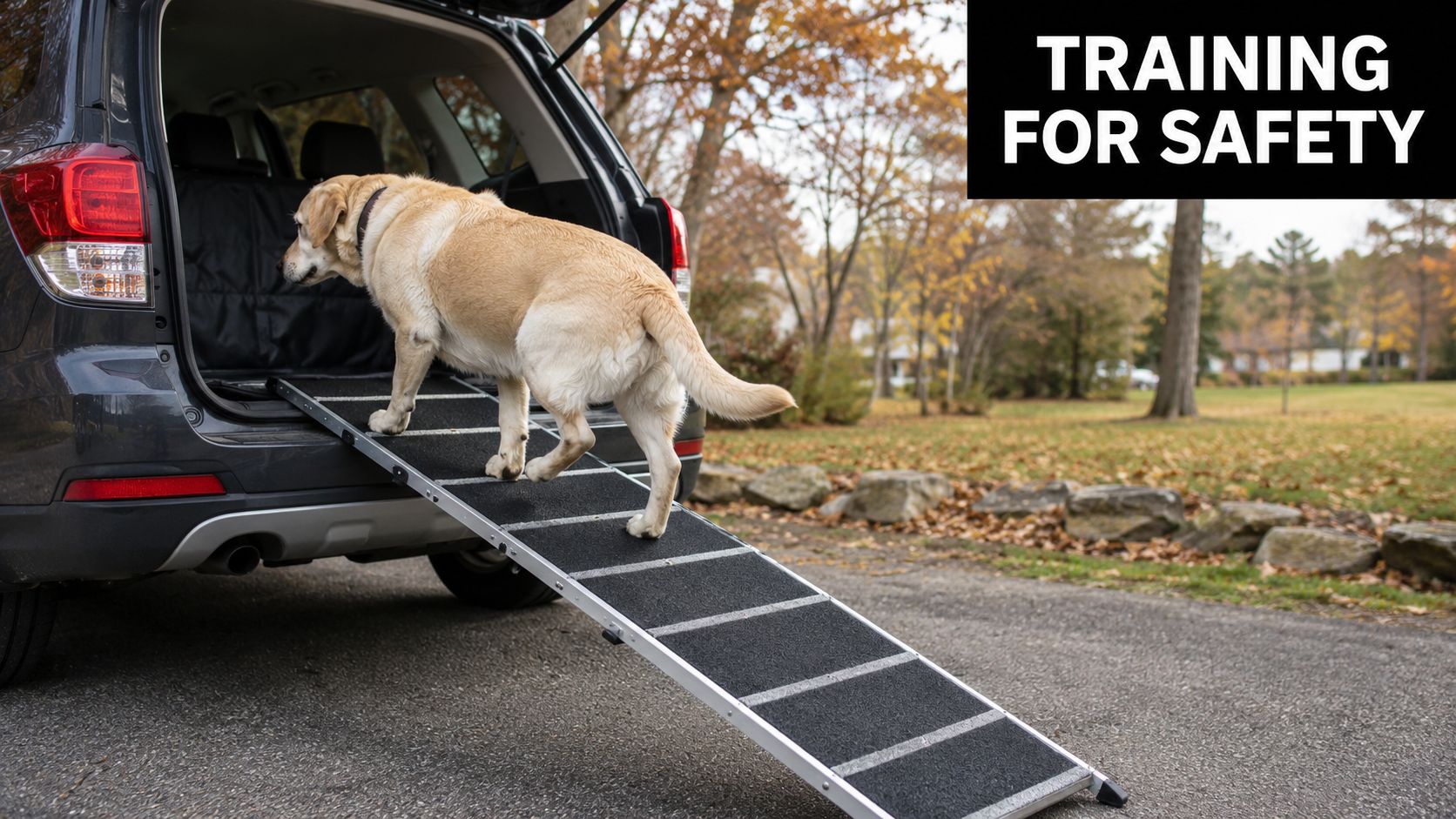
A few features matter more than flashy marketing copy:
- Traction first: The surface should feel grippy, not slick. Verified guidance specifically notes the value of a high-friction, rubberized texture because smooth surfaces don't provide enough resistance, especially in wet conditions.
- Stable contact points: The base should have rubber feet so the ramp doesn't slide sideways.
- Flush top edge: The top of the ramp should sit tight against the car, bed, or porch edge so there isn't a gap your dog has to step over.
- Anchor options: For taller surfaces, verified guidance says an anchor rope system is essential to secure the ramp.
- Enough width for the dog's build: This matters even more with age-related mobility decline.
One important gap in a lot of advice is age-specific fit. PetStep highlights that 60% of dogs over 10 years develop mobility issues, and notes that ramp width relative to shoulder size is a key factor for dogs with arthritis. That's why a ramp that seems fine for a young dog can still feel risky to an older one.
Senior dogs need a different kind of comfort
An older small dog may need more width and a gentler feel than people expect. A large senior dog may still be strong enough for a moderate incline, but only if the ramp feels planted and the weight rating is comfortably above the dog's body weight.
Watch how your dog turns, not just how they climb. If they drift sideways, place paws carefully, or stop halfway, the ramp may be too narrow, too steep, or too slippery.
Practical rule: If your dog looks like they're balancing instead of walking, the setup needs adjustment.
A simple training plan that works
Training goes better when the ramp starts as a neutral object, not a challenge.
- Let the dog inspect it flat on the floor. Reward sniffing, standing near it, or placing one paw on it.
- Walk across the flat ramp first. Many dogs need to trust the texture before they trust the height.
- Raise it slightly. Keep the first sessions easy and short.
- Guide, don't pull. Use treats or a favorite toy. Stay calm.
- Repeat in tiny wins. End before your dog gets frustrated.
This is also a good time to support overall comfort with calming body work. Gentle touch can lower tension before training sessions, and these canine massage techniques to soothe your dog can help some dogs relax around new movement tasks.
What not to do
Dogs usually lose confidence faster than they gain it. Avoid:
- Forcing them up the ramp
- Training on a slick floor
- Using the highest setup first
- Rushing because they “used to be athletic”
Some dogs take to a ramp in a day. Others need patience. What matters is that each repetition feels safe.
Common Mistakes to Avoid When Choosing a Ramp
Most ramp regrets come from buying with your eyes instead of your measuring tape.
The first mistake is ignoring capacity. Verified guidance puts typical industry standards in the 100 to 200 pound range, and heavy-duty ramps for larger vehicles may support up to 200 pounds. If your dog is large, or if the ramp will see frequent use, don't shop at the low end just because the product photos look sturdy.
Another common miss is choosing a ramp that's convenient for storage but awkward for the dog. Owners often accept a short ramp because it folds neatly, then discover the climb feels too sharp. A compact ramp isn't automatically a comfortable one.
A few more mistakes show up again and again:
- Buying for portability alone: Lightweight is nice, but not if the ramp shifts or flexes.
- Overlooking the walking surface: Poor traction can turn a good design into a bad experience.
- Skipping width checks: A dog that feels cramped may refuse the ramp even when the slope is acceptable.
- Rushing the first use: Fast introductions create fear that can be hard to reverse.
Some dogs don't reject the ramp itself. They reject one bad experience on the ramp.
If you keep those basics straight, you'll avoid most of the expensive trial and error that comes with finding the best dog ramps.
Frequently Asked Questions About Dog Ramps
What if my dog is afraid of the ramp
Start lower than you think you need to. Verified guidance states that beginning with a low-angle range of 10 to 15 degrees is the most effective method for building a dog's confidence and reducing anxiety during training. If your dog is nervous, go back to that easier setup and reward calm investigation before asking for a full climb.
Are ramps better than stairs for every dog
Not always. Small, agile dogs sometimes do fine with stairs. But if your dog is older, arthritic, recovering, or hesitant about jumping, a ramp is often the more comfortable option because it allows a smoother walking motion.
Can I use one ramp for both the car and the bed
Sometimes, but only if the length, traction, and stability work in both places. A ramp that feels great beside a bed may be awkward at a vehicle height. Check the fit in real life, not just on paper.
How do I know the surface is grippy enough
Run your hand over it. It should feel textured, not polished. Then watch your dog's paws during the first few tries. If they slide, shorten their steps sharply, or avoid placing full weight on the ramp, the surface may not be giving enough grip.
How should I clean and maintain a ramp
Keep the surface free of dirt, mud, and hair so traction doesn't fade. Check hinges, locks, feet, and anchor points regularly. If the ramp starts wobbling, stop using it until you fix the issue. Even a well-built ramp won't feel safe if one part loosens over time.
If your dog needs extra support at mealtime as well as during daily movement, ChowPow is worth a look. It's a dehydrated beef heart meal topper made to enhance your dog's current kibble, not replace it. For senior dogs, picky eaters, and dogs recovering from illness or surgery, it's a simple way to boost the nutritional value, flavor, and appeal of the food they already eat.
-
Product on sale
 Dog Food Topper - Beef HeartOriginal price was: $14.99.$10.95Current price is: $10.95. - or subscribe and save up to 20%