Best Food for Chihuahua Puppies: A Complete 2026 Guide
The first night with a Chihuahua puppy often looks the same. You set down a bowl, your puppy sniffs it, takes one tiny bite, then wanders off while you stare at the food and wonder if you already got something wrong.
You probably haven't.
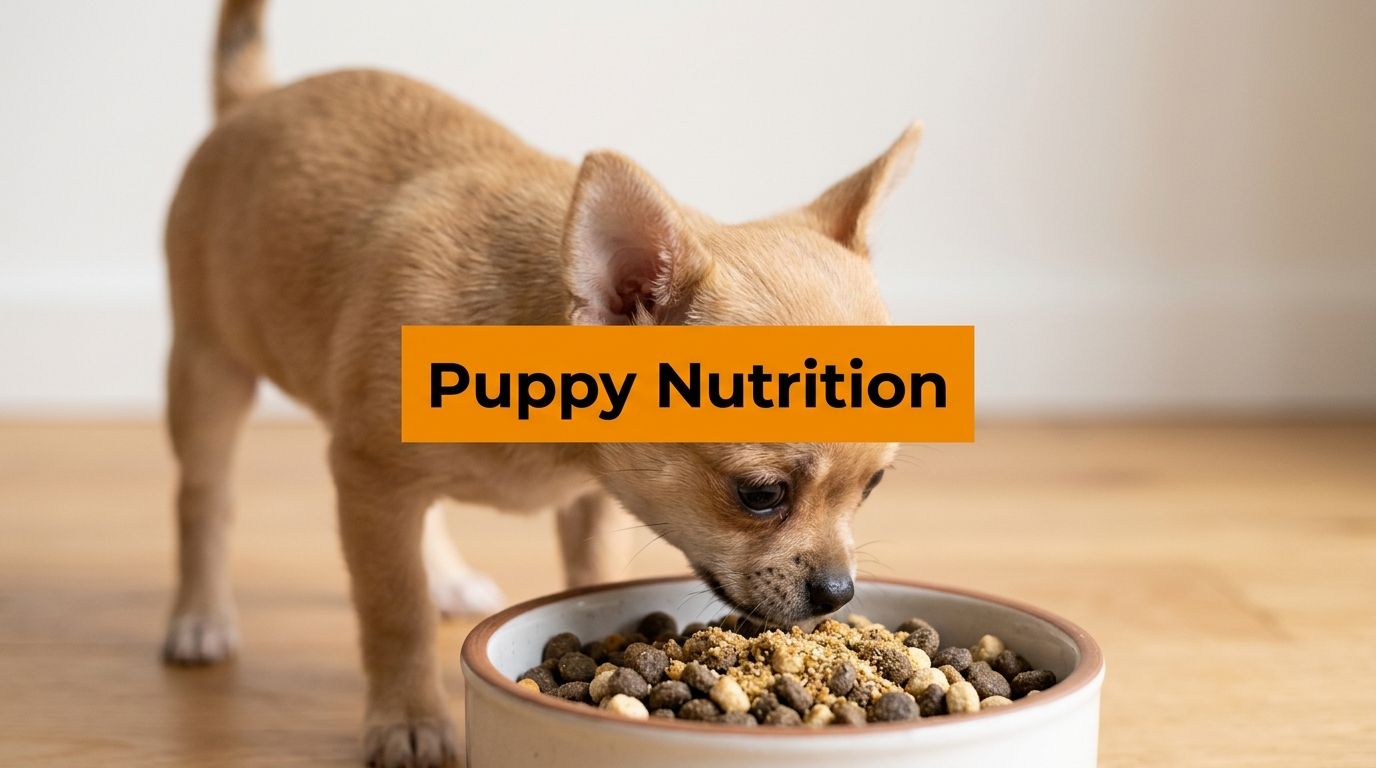
Feeding a Chihuahua puppy can feel strangely high stakes because everything is so small. A few extra bites matter. A skipped meal feels dramatic. A kibble that seems normal for one puppy can look huge in a Chihuahua's mouth. That's why finding the best food for Chihuahua puppies isn't really about chasing a trendy label. It's about choosing food that matches a toy breed's body, growth rate, and eating habits.
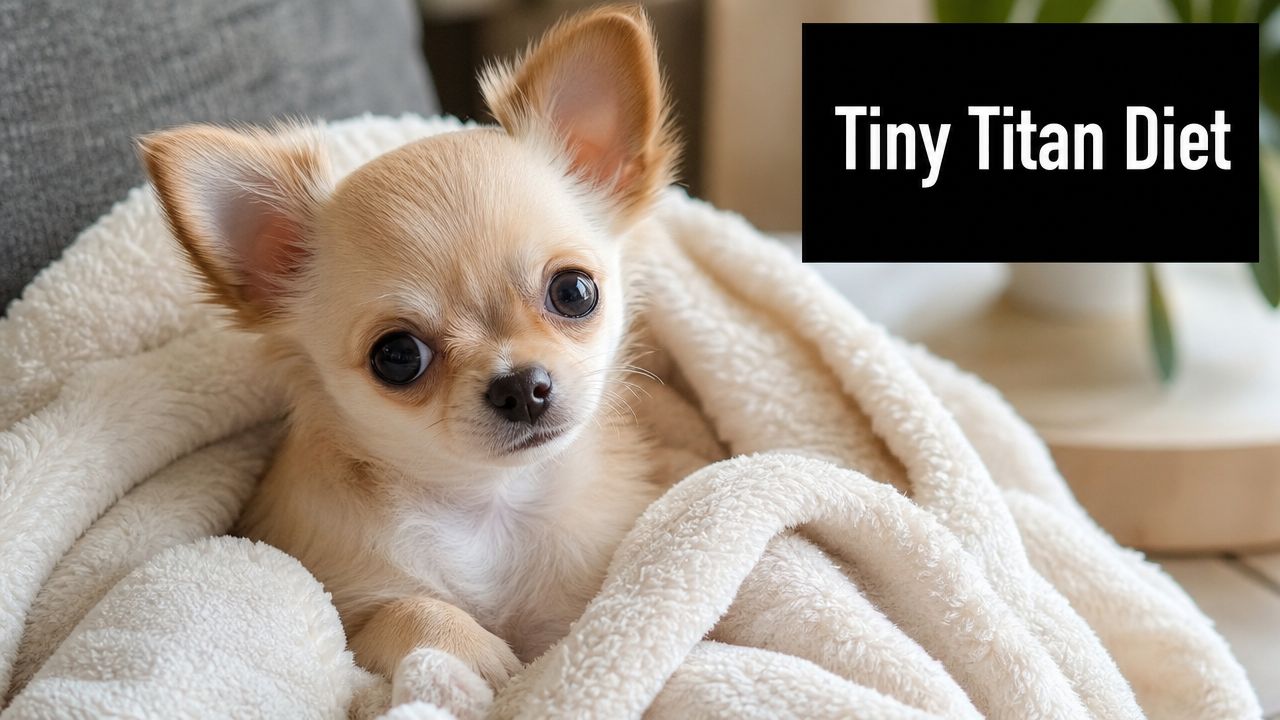
Bringing Home Your Tiny Titan A Chihuahua Puppy's Diet
By the end of day one, many new Chihuahua owners are kneeling on the kitchen floor, staring at a bowl and wondering whether one skipped bite means a real problem. That reaction is common. Feeding a puppy this small can feel intense because the portions are tiny, the signals are easy to overread, and your puppy is still adjusting to a new home, new smells, and a new routine.
A Chihuahua puppy may be little, but the job of feeding them is not mysterious once you know what to watch for. Small dogs have less room for error with portion size, treat overload, and kibble that is hard to chew. They also tend to show their opinions fast. One meal may disappear. The next may get a suspicious sniff and a dramatic walk-away.
Why tiny doesn't mean fragile
A Chihuahua puppy grows and plays in quick bursts, then needs to refuel before running low again. That is why food choice matters so much in this breed. The right puppy food supports steady growth and gives you a routine you can stick with, which matters just as much as the label on the bag.
Calories can sound complicated, but the basic idea is simple. They are your puppy's fuel. Since a Chihuahua puppy is working with a very small tank, food has to do a lot in a small serving. A bland, oversized, or poorly matched food can leave you with a puppy who seems fussy when the problem is that the meal is hard to eat, not very appealing, or too easy to overdo with extras.
That is also why toppers can help when used with care. They are not magic, and they should not cover up a poor base diet. But for a puppy who hesitates at mealtime, a small amount of topper can improve smell, texture, and interest enough to get the meal started. Used this way, a topper is a practical tool, not a shortcut.
Practical rule: Pick food for your puppy's size, age, and eating style. Cute packaging does not tell you whether the kibble is easy to chew or whether the formula fits a growing toy breed.
If you like learning as you go, Soulknit's thoughtful guide for dog owners is a helpful resource for the first-year learning curve. For Chihuahua-specific reading, ChowPow's own breed spotlight on Chihuahuas is also useful for understanding how this little breed thinks and eats.
What a Growing Chihuahua Puppy Really Needs
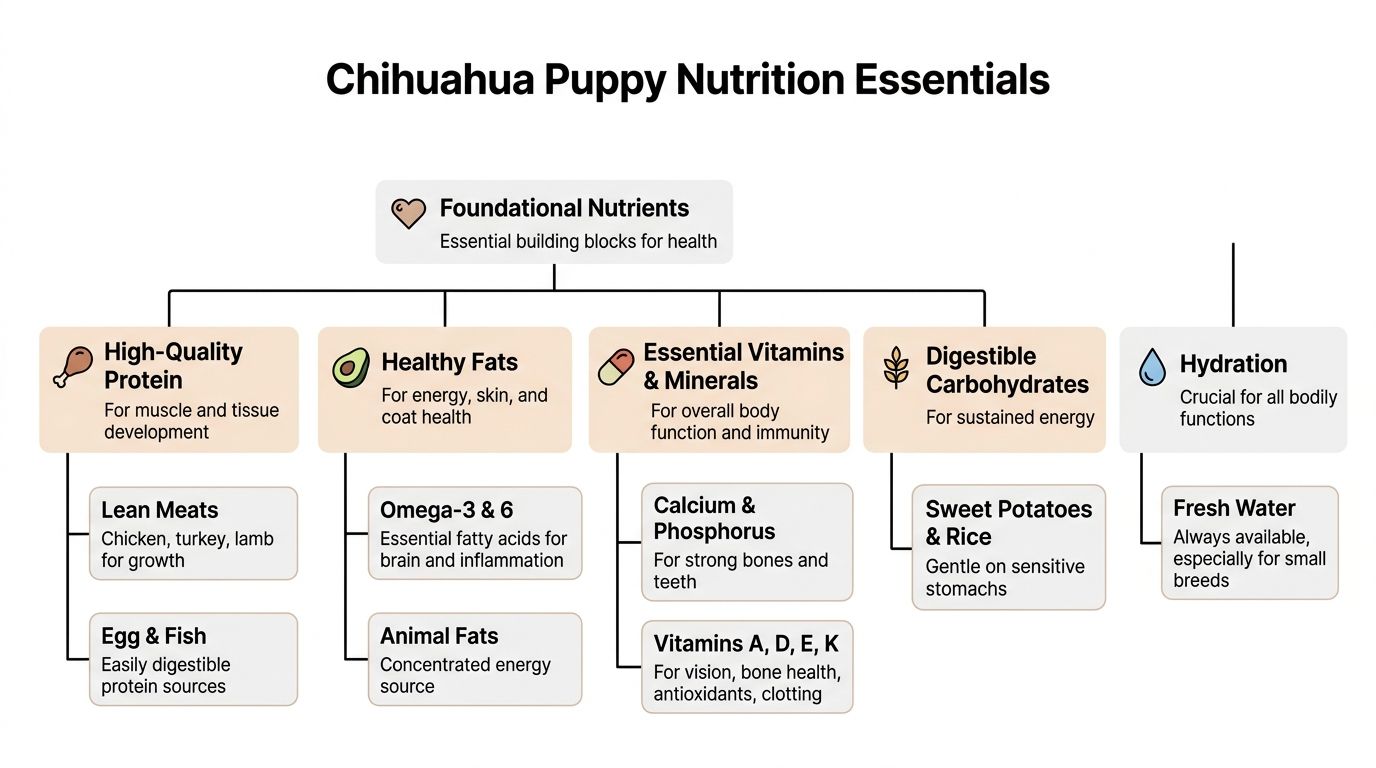
The best food for Chihuahua puppies starts with one simple idea. Growth diets are built differently from maintenance diets. Your puppy isn't just staying alive. They're building muscle, organs, bones, skin, coat, and a nervous system at high speed.
A good way to think about it is to picture a house under construction. Protein is the lumber. Fat is the fuel for the workers and the backup generator. Vitamins and minerals are the wiring and plumbing that help everything run correctly. Water keeps the whole job site functioning.
The nutrients that matter most
Chihuahua puppies are typically best served by a small-breed puppy formula with DHA, because DHA is associated with brain and vision development in puppies, and breed-specific Chihuahua products are formulated for the rapid growth window from about 8 weeks to 8 months (Purina's Chihuahua breed nutrition page).
When you read a label, these are the big-picture things to look for:
- Protein for growth: Puppies need protein to build and repair tissue. In plain terms, it helps your puppy turn food into body.
- Healthy fats for energy: Fat gives a toy breed concentrated energy in a small serving. That matters when your puppy can't eat a giant meal.
- DHA for development: This is one of the easiest label clues to spot when you're comparing puppy foods.
- Digestibility: Food only helps if your puppy can comfortably eat and use it.
- Hydration support: Tiny puppies can dry out faster than larger dogs, so water access matters every day.
Why small-breed puppy food is different
A Chihuahua puppy usually does better with food designed for small breeds, not a generic one-size-fits-all puppy product. The reason is practical, not fancy. The kibble is often smaller, easier to chew, and better suited to a tiny jaw.
That's also why owners often notice a big difference between “my puppy won't eat” and “my puppy can't comfortably eat this.” Those aren't the same problem.
Food should match your puppy's mouth as well as their metabolism.
If you want help comparing formats and formulas, ChowPow's guide to dry dog food for small breeds gives a useful overview of what small-dog owners should watch for.
Decoding the Dog Food Aisle
Standing in front of a wall of puppy food can make every bag look equally convincing. “Natural.” “Wholesome.” “Premium.” Those words don't tell you much by themselves. A better approach is to use a short shopping checklist.
Your quick store checklist
First, check the front of the bag for small-breed puppy wording. That narrows the field fast.
Then look for these practical signs:
- Kibble size: If the pieces look oversized for a tiny mouth, keep moving.
- Puppy formula: Adult food isn't the same thing as puppy food with smaller pieces.
- DHA mentioned on the package: This is one of the clearest signals that the food is formulated with puppy development in mind.
- Simple ingredient reading: You want a label you can evaluate calmly, not one that feels designed to confuse you.
What owners often misread
Many new owners focus only on the first ingredient and stop there. That's understandable, but it helps to look at the whole picture. Ask yourself:
| What to check | Why it matters for a Chihuahua puppy |
|---|---|
| Small-breed wording | Better fit for size and growth stage |
| Puppy-specific formula | Supports growth rather than adult maintenance |
| Tiny kibble | Easier chewing and safer eating |
| Digestibility cues | Helps a small puppy eat consistently |
A smart test is this: can you explain to yourself why this food fits your puppy? If the answer is only “the bag says premium,” keep shopping.
Labels are tools, not decorations. Use them to make decisions.
If label-reading still feels murky, this ChowPow article on how to read dog food labels breaks the process into manageable steps.
How Much and How Often to Feed Your Puppy
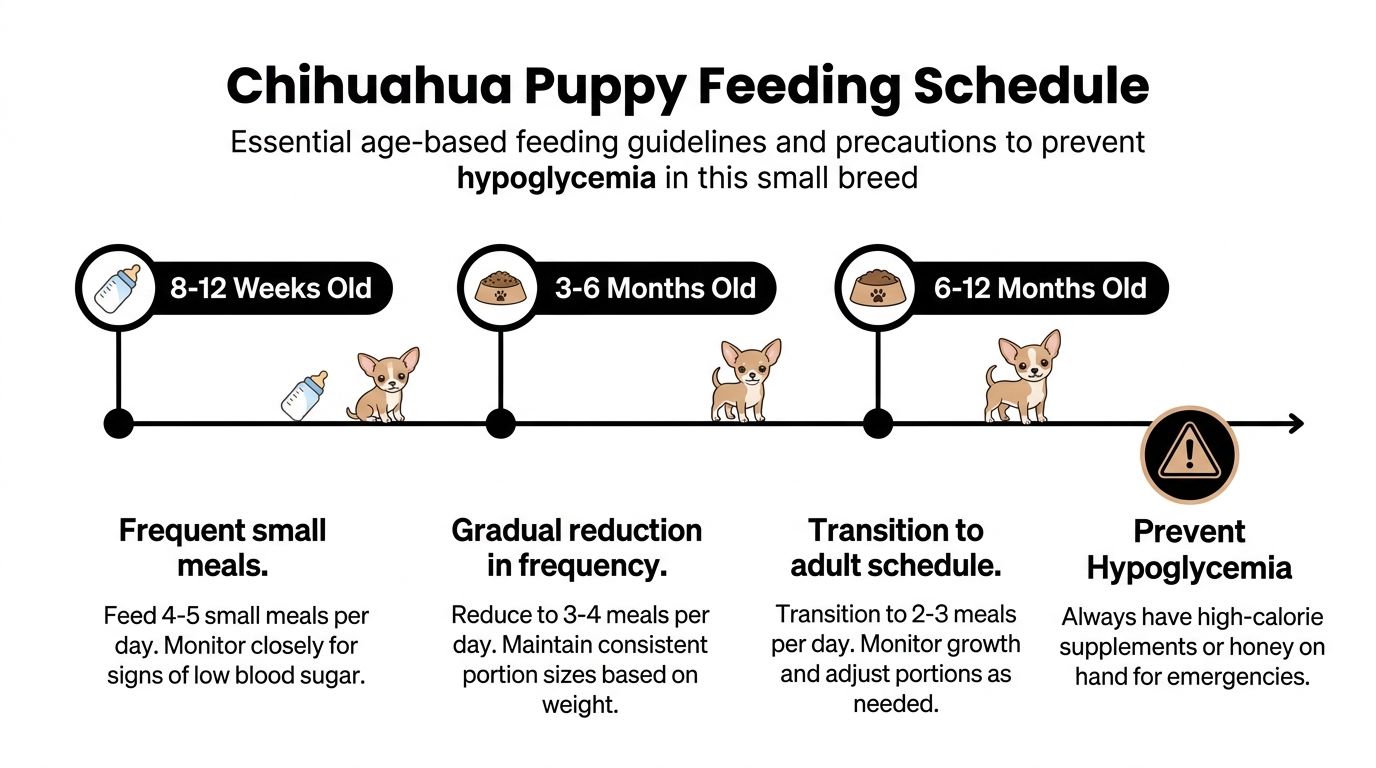
For Chihuahua puppies, feeding schedule matters almost as much as food choice. Their tiny size makes them more vulnerable to hypoglycemia, so regular meals help support steady energy. Guidance recommends feeding Chihuahua puppies four times a day until 3 months old, then three times a day until 6 months old, and then reducing to twice daily afterward (PetCareRx puppy feeding guidance).
A schedule like that can calm a lot of owner anxiety because it replaces guessing with rhythm.
A simple routine that works
Think in terms of small, regular meals, not one or two big bowls. That's usually easier on a Chihuahua puppy and easier for you to monitor.
A practical day often looks like this:
- Very young puppies: Frequent meals spaced through the day.
- Older puppies: Gradually fewer meals as they mature.
- Fresh water: Keep it available, because tiny puppies can dehydrate quickly.
This video offers a helpful visual overview of Chihuahua feeding basics:
How to judge amount without overthinking it
Portion charts on bags are a starting point, not a verdict. Two Chihuahua puppies can eat differently based on appetite, activity, and how steadily they're growing.
Watch your puppy, not just the bowl.
- After meals: Your puppy should seem satisfied, not frantic or uncomfortable.
- Over time: You want steady growth and a healthy-looking body condition.
- At the bowl: Consistent interest matters. A puppy who nibbles all day may need a different routine than one who eats eagerly at set times.
If you're unsure, your vet can help you judge body condition in a much more useful way than staring at the number on a scale.
When Your Picky Puppy Refuses to Eat
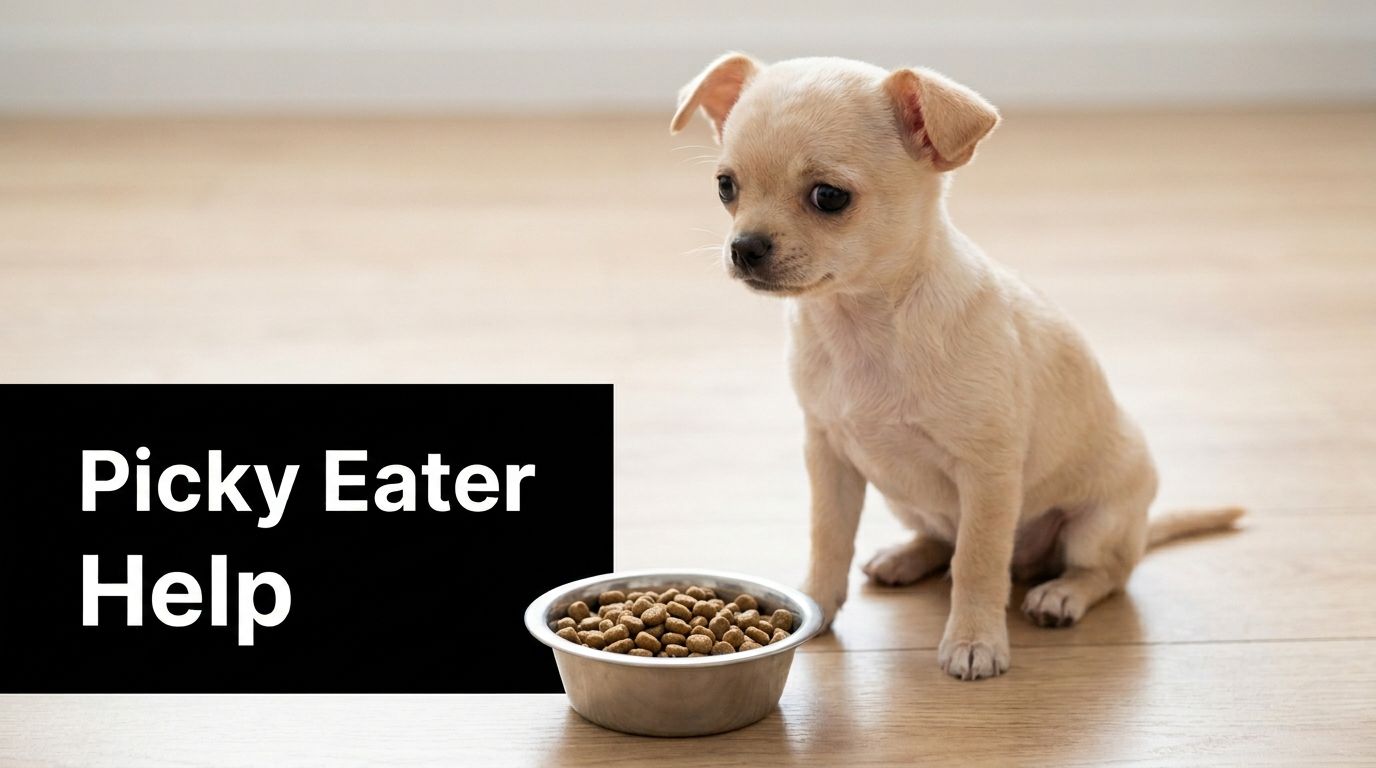
Some Chihuahua puppies are enthusiastic eaters. Others act like every meal requires a committee meeting. If your puppy sniffs, licks, walks away, then comes back later, you're not alone.
Picky eating often worries owners because it's hard to tell whether the puppy dislikes the food, feels distracted, is teething, or just wants something more interesting. With a tiny breed, that uncertainty feels bigger because missed calories matter more.
When a topper makes sense
Owners often wonder whether toppers are useful for picky toy-breed puppies. For a puppy struggling with appetite, a palatable and nutrient-dense topper can help make sure they eat enough for healthy growth, especially when standard kibble isn't enticing enough (Dog Food Advisor's Chihuahua feeding discussion).
That doesn't mean every meal needs to become a complicated recipe. It means a topper can be a tool.
Here's when it's especially practical:
- During transitions: A new home, new routine, and new food can lower interest in eating.
- When kibble seems boring: Some puppies eat better when aroma and taste improve.
- During stress or recovery: A more tempting meal may help a puppy keep eating consistently.
- If hydration needs encouragement: Mixing a topper with water can make food more appealing.
The difference between a topper and a replacement
Owners often get confused: a topper is not meant to take over the whole diet unless a veterinarian tells you otherwise. Your puppy still needs a complete and balanced small-breed puppy food as the foundation.
A topper works more like a booster seat than a new car. It supports the meal already doing the main job.
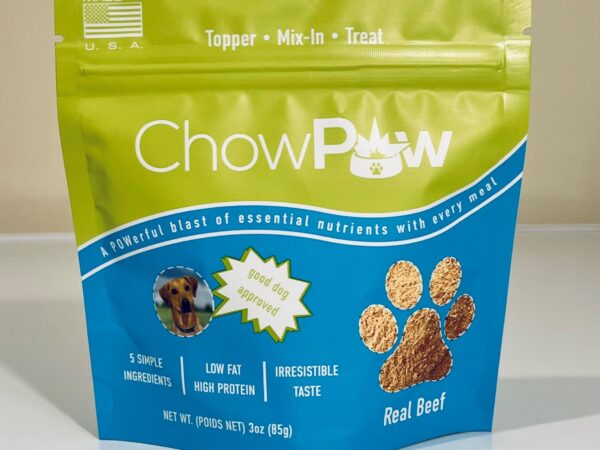
One example is ChowPow, a dehydrated beef heart meal enhancer made to sprinkle over existing kibble or mix with water. For a picky Chihuahua puppy, that kind of product can add smell and flavor to the bowl without asking you to throw out the complete puppy food your dog should still be eating.
A picky puppy doesn't always need a different diet. Sometimes they need the same balanced diet to become more appealing.
What to try before switching foods completely
Before you change brands again, try a calmer checklist:
- Check the kibble size. A tiny puppy may be avoiding effort, not food.
- Warm the meal slightly or add moisture. Aroma can make a big difference.
- Use a measured topper. Keep the base food consistent.
- Watch patterns, not one meal. Puppies can have off meals, just like people do.
If your puppy repeatedly refuses food or seems unwell, a vet visit is the right next step. Appetite problems can sometimes be behavioral, but they can also signal something that needs hands-on care.
Building a Foundation for a Long and Healthy Life
A lot of new Chihuahua owners reach this stage and wonder, "So what food is the right one for the long haul?" The answer is usually simpler than it feels. The best food for Chihuahua puppies is one your puppy can eat comfortably, digest well, and return to day after day without turning every meal into a struggle.
That kind of consistency matters because tiny puppies do best with steady support. A good feeding plan works like building a strong floor under a very small house. If the base is solid, everything on top is easier.
The habits that matter most
Long-term health usually comes from a few steady habits, repeated more often than any single brand switch:
- Choose a small-breed puppy formula that is made for growth and easy for a tiny mouth to manage.
- Keep meals on a reliable schedule so your puppy has a regular rhythm.
- Watch the whole puppy, not just the bowl. Energy, stool quality, body condition, and interest in food tell you more than one unfinished meal.
- Use support tools thoughtfully if your puppy is picky. A little warm water or a measured topper can make balanced puppy food easier to accept.
That last point can take pressure off anxious owners. If your puppy is eating a complete small-breed puppy food, you do not always need to start over with a new bag. Sometimes you just need to make the same food more inviting.
Looking ahead to adulthood
At some point, your puppy will switch to adult food, but the exact timing should match your dog's growth and your veterinarian's guidance rather than a rushed calendar decision. Chihuahua puppies mature quickly, yet they are still toy-breed dogs with small calorie budgets.
That is why extras add up fast. A few bites of treats or table food can take up space that should go to balanced puppy nutrition. For a Chihuahua, small portions matter in the same way pennies matter in a very small jar. It does not take much to fill it.
You do not need to memorize every ingredient rule on day one. You only need to understand the basic why. Chihuahua puppies need food that matches their size, growth stage, and eating habits. Once you understand that, it becomes much easier to choose calmly, stay consistent, and fix feeding problems without guessing.
If your Chihuahua puppy eats a complete small-breed puppy kibble but needs more encouragement at mealtime, ChowPow can be a simple add-on to boost aroma and variety without replacing the balanced food already in the bowl.
-
Product on sale
 Dog Food Topper - Beef HeartOriginal price was: $14.99.$10.95Current price is: $10.95. - or subscribe and save up to 20%