The Best Way to Give Dogs Medication Without the Struggle
If the sound of a rattling pill bottle sends your dog diving under the bed, you're not alone. For many of us, medication time can feel like a daily wrestling match. It’s stressful for you and your dog, leaving everyone anxious.
We’re here to change that.
Let’s be honest, dogs are smart. They have an incredible sense of smell and are experts at detecting—and skillfully avoiding—anything that seems off in their food bowl. We'll explore some gentle, practical methods that get past that struggle and actually work.
Why Is Giving Your Dog a Pill So Hard?
The truth is, even with the best intentions, many owners find it incredibly difficult to stick to their pet's medication schedule. It's not just you.
A revealing study of 151 dog owners found that a staggering 47% were noncompliant with their vet's instructions. That means nearly half of the dogs weren't getting the consistent treatment they needed. On the flip side, the study found that over 70% of successful owners hid pills in food, treats, or both.
This confirms what many of us have experienced firsthand: disguising meds is the key. But as you may have discovered, not just any disguise will do. A simple piece of cheese or a dollop of peanut butter might work once or twice, but a determined dog will quickly learn to eat the treat and spit out the pill.
The Power of a Meal Enhancement
This is where a high-quality meal enhancement can make a world of difference. Instead of just trying to hide a single pill, you can transform your dog's entire meal into an irresistible event. A nutrient-dense topper like ChowPow is a supplement designed to boost the nutritional value of their current kibble, not replace it. It elevates their regular food into something special.
- Boosts Nutritional Value: It’s a true supplement, not just a filler. It adds vital nutrients from real beef heart to your dog’s existing diet.
- Masks Unpleasant Scents: The rich, meaty aroma is powerful enough to overpower any weird medicinal smell, so your dog doesn't even get suspicious.
- Creates a Positive Association: When medication time is also the most delicious meal of the day, your dog starts to look forward to it. The battle is over before it even begins.
Of course, meal toppers aren't the only option. Let's look at a few of the most popular methods for getting that pill down the hatch.
Comparing Popular Medication Hiding Methods
Here's a quick look at common ways to give your dog medication, with their pros and cons.
| Method | Success Rate | Potential Issues |
|---|---|---|
| Pill Pockets/Treats | High | Can be high in calories; some dogs learn to eat around the pill. |
| Peanut Butter/Cheese | Moderate to High | Messy; not ideal for dogs with allergies or pancreatitis. |
| The "Down the Throat" Method | Moderate | Can be stressful and dangerous if not done correctly. |
| Meal Topper (like ChowPow) | Very High | Incredibly effective; also boosts meal nutrition and appeal. |
While each method has its place, using a powerful food topper often provides the most consistent success without adding junk calories or creating a negative experience for your dog.
How to Hide Pills in Food the Right Way
We’ve all been there. You wrap a pill in a piece of cheese, feeling smug, only to find the cheese gone and the pill sitting on the floor a moment later. To truly outsmart a clever dog, we need to move beyond simple tricks. It's about making the medication completely undetectable.
The real secret lies in finding the perfect "carrier" food—something that doesn't just hide the pill but completely masks its texture, taste, and, most importantly, its smell. This is where a high-quality, aromatic meal enhancer becomes your secret weapon for stress-free med time.
Choosing the Perfect Disguise
The best way to hide meds in food isn’t just about the food itself; it’s about making the entire meal an event. Instead of offering a single, suspicious lump of peanut butter, you're creating an experience your dog can't wait to dive into.
Here’s what you should look for in a good carrier food:
- A Strong, Appealing Scent: A dog's world is built on smell. A food with a powerful, meaty aroma will easily overpower the faint, strange scent of a pill.
- A Malleable Texture: You need something that can easily conceal a pill or capsule without crumbling or falling apart.
- High-Value Appeal: It has to be something your dog genuinely loves. This excitement makes them less likely to investigate and more likely to gulp it down.
This isn't just folk wisdom; it's backed by data. A recent analysis of 4,787 social media posts from X, Reddit, and Facebook found that hiding meds in food or treats was the number one most successful strategy among pet owners. It reinforces what we already know: food-masking is a practical and effective way to turn a chore into a positive moment. You can read the full research on pet owner medication strategies to see just how common this approach is.
Why a Meal Enhancer Like ChowPow Excels
This is exactly where a product like ChowPow shines. It’s not a meal replacement; it's a meal enhancement designed to make your dog's regular kibble irresistible.
When you sprinkle this dehydrated beef heart topper over their food, you’re not just hiding a pill—you're turning their entire meal into a five-star experience. Its powerful, all-natural scent is more than a match for any medicinal odor, making the pill just another delicious part of dinner.
Because it’s a fine powder, it coats every single piece of kibble. This makes it impossible for your dog to eat around the medicated part—a common problem with picky eaters who are masters at separating the good stuff from anything suspicious. If you need more ideas, you can also check out our guide on the best dog food toppers for picky eaters.
A key advantage of using a powdered topper is consistency. Unlike a pill pocket, where a dog can learn to extract the pill, a meal enhancer integrates the medicine into the entire meal, making separation nearly impossible.
Create a DIY Pill Pocket with a Topper
For pills that need a more direct disguise, you can create your own simple, nutrient-rich "pill pocket" using ChowPow. It’s a much healthier alternative to processed human foods that can be high in fat, salt, or sugar.
Here’s how to do it:
- Take a small amount of ChowPow powder, about a tablespoon.
- Add just a few drops of water and mix it into a thick, moldable paste.
- Press the pill firmly into the center of the paste.
- Roll it into a small, meatball-like ball, making sure the pill is completely covered.
What you get is a highly enticing, soft treat that’s easy for any dog to swallow, especially seniors who might have dental issues. The intense beef heart aroma ensures your dog is focused on the delicious treat, not the hidden passenger inside.
The "Three Treat" Method for Extra Sneaky Dogs
Got a canine detective on your hands? For the dog who inspects every single morsel, the "three treat" method can be a game-changer. This little psychological trick uses their own excitement against their suspicion.
First, give your dog a "dummy" treat—a small meatball made from the ChowPow paste but without a pill inside. Let them eat it and get excited for more.
Next, quickly offer the second treat, the one that does contain the medication. Because they just had a delicious, safe treat, they’re far more likely to swallow this one without a second thought.
Immediately follow up with a third dummy treat as a "chaser" and a reward. This rapid-fire sequence keeps their momentum going and prevents them from stopping to investigate what they just ate. It successfully turns medication time into a fun and fast-paced game.
When Hiding a Pill Won't Cut It: Direct Medication Techniques
Let's face it, sometimes sneaking a pill into a meatball just isn't an option. Some medications can't be crushed, or maybe you're dealing with liquids, creams, or drops. The absolute key here is to stay cool, calm, and confident. Your dog is an expert at reading your energy, so a steady, gentle approach makes all the difference.
This isn't about forcing anything. It's about learning a few simple handling techniques that build trust and get the job done without a big dramatic showdown. We'll walk through how to administer different types of medication directly, using your dog’s own anatomy to make it a smoother experience for both of you.
For a quick visual cheat sheet on handling pills, this little decision tree is a great place to start.
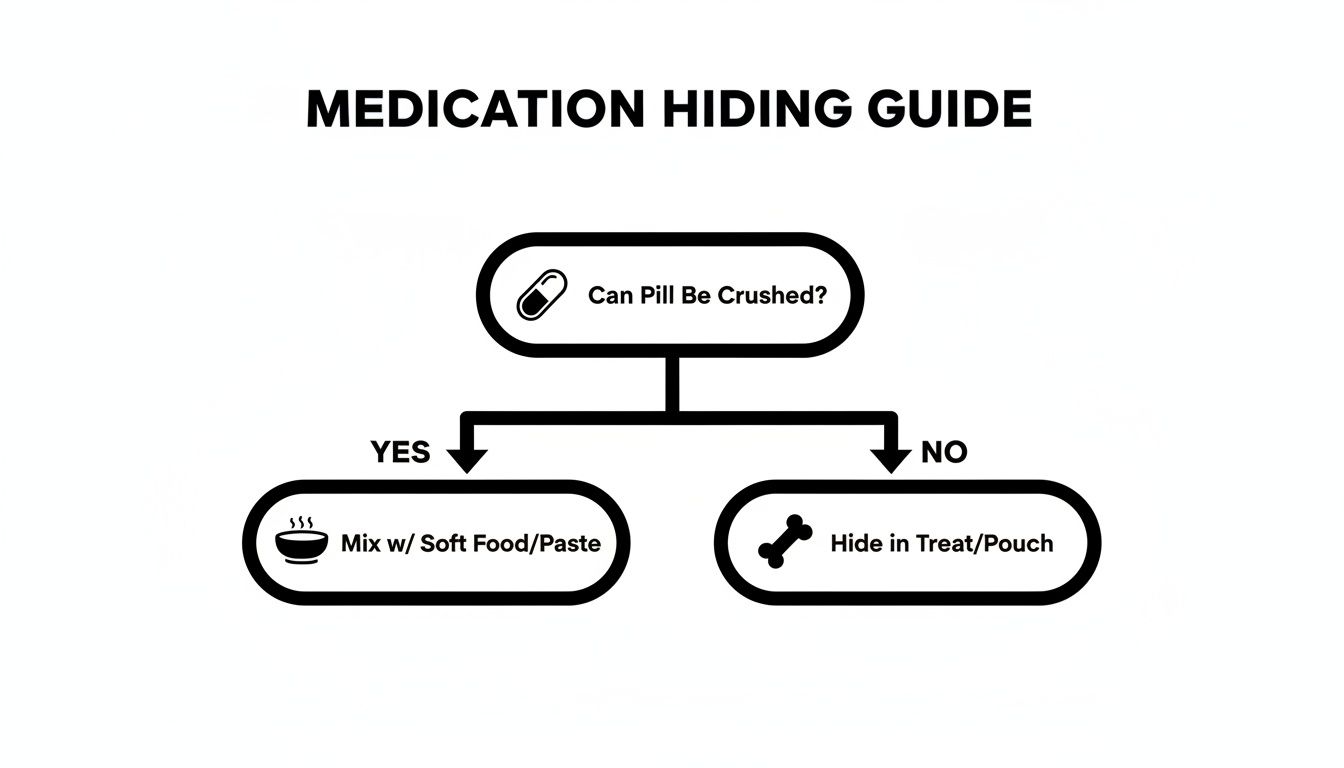
As the flowchart shows, the first question is always: can you crush it? If yes, mixing it into a tasty paste is your best bet. If not, you'll need to hide it whole or, if that fails, move on to the direct approach.
Giving a Pill Directly
When you absolutely have to give a pill whole and your dog is onto all your hiding tricks, it’s time for the direct method. The goal is to make this process fast, positive, and over before they know it.
Hold the pill between your thumb and index finger. With your free hand, gently cup your dog's muzzle from above, with your thumb and fingers resting just behind their big canine teeth.
Now, tilt their head back slightly. This will naturally cause their lower jaw to droop open. Use a finger from your pill-holding hand to gently press down on their lower lip to open their mouth fully, then quickly pop the pill as far back on their tongue as you can.
Immediately close their mouth and gently hold it shut. You can encourage them to swallow by stroking their throat or lightly blowing on their nose. The second they swallow, shower them with praise and a high-value treat. This helps build a positive connection—pill first, then something amazing happens!
Mastering Liquid Medications
Liquid medicine often looks more intimidating than it is. The big secret? Don't squirt it straight down their throat. That's a surefire way to cause choking or aspiration.
Instead, you're going to use their built-in cheek pouch.
- Start by filling the dropper or syringe with the correct dose.
- Gently hold your dog’s head steady.
- With your other hand, slide the tip of the syringe into the side of their mouth, right between their cheek and gums.
- Slowly push the plunger, giving your dog plenty of time to swallow as the liquid pools and trickles down.
This method is so much safer and less stressful because it works with their natural swallowing reflex instead of against it.
Pro Tip: If you’re dealing with a particularly bitter medicine, ask your vet if you can mix it with a tiny bit of something delicious, like low-sodium chicken broth. Some compounding pharmacies can even add flavors like chicken or beef to make it more appealing.
Applying Eye and Ear Drops Like a Pro
Drops require a steady hand and a calm dog. Trying to wrestle your dog into submission will only create a bad memory and make future doses even harder.
For Eye Drops:
- First, gently clean any gunk from around their eyes with a warm, damp cloth.
- Get behind your dog so they aren't staring down the bottle as it comes toward them.
- Tilt their head up with one hand. With the thumb of that same hand, gently pull down the lower eyelid to create a little pocket.
- Rest the hand holding the bottle on your dog’s head for stability. This is a game-changer! If they suddenly move, you won’t poke them in the eye.
- Squeeze the drops into that little pocket, not directly onto the eyeball itself.
For Ear Drops:
- Clean the outer part of the ear first, just as your vet instructed.
- Hold the ear flap up and out to straighten the L-shaped ear canal.
- Apply the drops right into the canal.
- Keep holding the ear flap up and gently massage the base of the ear for about 20-30 seconds. You’re listening for a little "squishing" sound—that's how you know the medicine is getting deep down where it needs to be.
No matter which type of drops you're using, always finish with tons of praise and a special treat. They need to learn that holding still for a moment leads to something great.
Using Topical Creams and Ointments
With medicated creams, the main goal is keeping your dog from licking it all off the second you turn your back.
If the area is furry, you might need to carefully trim the hair so the medication can actually reach the skin. Apply a thin layer as directed.
Now for the hard part: preventing the licking. An Elizabethan collar (the classic "cone of shame") or a recovery suit might be necessary, especially if the spot is easy for them to reach. A great trick is to apply the cream right before you feed them or take them for a walk. The distraction often provides just enough time for the medicine to absorb.
Remember, every time you have to give medication, it's an opportunity to reinforce your bond. Keep it positive, and always end on a high note. You’re their caretaker, not a source of stress.
Advice for Picky, Anxious, and Senior Dogs
Let's be real—not every dog is going to happily scarf down a pill, even if it's wrapped in a slice of cheese. Picky eaters, anxious pups, and our sweet senior dogs often present unique challenges that can turn medication time into a daily struggle.
Figuring out their specific hang-ups is the first step toward a more peaceful solution. A one-size-fits-all approach just doesn't cut it when you're dealing with a finicky palate, a nervous disposition, or age-related discomforts. The secret is a mix of patience, creativity, and tailoring your strategy to who your dog is.
Strategies for the Picky Eater
You know the type: the dog who inspects every single morsel like a bomb disposal expert. For these dogs, you have to outsmart their most powerful weapon—their nose. A picky eater can sniff out the faintest medicinal scent and will turn up their nose at even their most beloved foods if they suspect foul play.
The trick is to find a disguise with an aroma so irresistible it completely masks the medication. This is where a highly palatable meal enhancement like ChowPow can be a total game-changer. Sprinkling this aromatic beef heart supplement over their kibble doesn't just hide a pill; it turns their entire meal into a five-star dining experience their nose simply can't ignore.
Here’s why it works so well for the food critics:
- Irresistible Aroma: The rich, meaty smell of real beef heart is way more interesting to a dog's nose than the chalky scent of a pill.
- Total Coverage: Because it's a fine powder, it coats every nook and cranny of their food. No more eating around the medicated bits!
- Nutritional Boost: You're not just tricking them; you're actually enhancing their meal with vital nutrients. It's a true win-win.
Creating Calm for the Anxious Dog
Anxious dogs find comfort in routine. If medication time feels chaotic or stressful, their anxiety skyrockets, making them more resistant with every dose. Your goal is to transform this moment from something they dread into a calm, positive, and predictable part of their day.
Start by establishing a solid routine. Give them their meds at the same time each day, in the same quiet spot. Use a soft, reassuring voice and handle them gently but confidently. Chasing them around the house turns it into a stressful game they'll get better and better at winning.
Creating a positive association is everything. Immediately after they take their medicine, reward them with something they absolutely adore—a special toy, a quick game of fetch, or a high-value treat. Over time, they'll learn that the brief moment of medication reliably predicts something wonderful is about to happen.
Gentle Care for Senior Dogs
Our older companions often deal with a double whammy: a dwindling appetite and physical discomfort. Things like dental pain, stiff joints, or a weaker sense of smell can make them less interested in food, which is a big problem when they're on multiple medications.
For senior dogs, think soft and nutrient-dense. A hard pill pocket or crunchy kibble might be painful for them to chew. This is another situation where a soft food enhancer can be a lifesaver.
By mixing ChowPow with a little bit of water, you can create a soft, savory paste that easily conceals medication and is gentle on sensitive mouths. As a nutritional supplement, it also delivers a concentrated dose of high-quality protein, which is crucial for helping them maintain muscle mass in their golden years. If you're struggling with an older dog's appetite, we have more tips in our guide on how to get an old dog to eat. This approach ensures they get their medicine while also getting the vital nutrition they need to stay strong.
Knowing When to Call Your Veterinarian
Even with a pantry full of tricks, there are times when giving your dog their medicine feels less like a simple task and more like an impossible battle. While we always aim for a stress-free process, some situations just need a professional's touch.
Your veterinarian is your best partner in your dog's health, and knowing when to pick up the phone is a huge part of being a responsible owner.
If you’ve tried hiding pills in every food imaginable and your dog still spits them out, it’s time to call the vet. This isn’t always just stubbornness. A dog who flat-out refuses their meds might be feeling nauseous or uncomfortable from the medication itself. Forcing the issue can create serious anxiety and even damage the bond you have with your pup.
Spotting Adverse Reactions
Sometimes, the problem isn't how you're giving the medicine—it's the medicine itself. Always keep a close eye on your dog when they start a new prescription, watching for any out-of-the-ordinary side effects.
Get in touch with your vet immediately if you see any of these signs:
- Digestive Upset: This could be vomiting, diarrhea, or a sudden disinterest in food that lasts for more than a single meal.
- Behavioral Changes: Watch for unusual sluggishness, weakness, confusion, or even a sudden burst of agitation.
- Physical Symptoms: Things like rashes, hives, a swollen face, or any trouble breathing are urgent red flags that need immediate attention.
These symptoms can point to an allergic reaction or an intolerance to the drug. Your vet needs to know right away so they can either adjust the dose or find a better alternative.
When the Process Causes Extreme Stress
Giving your dog medication should never end with both of you feeling frazzled and defeated. If every dose turns into a wrestling match that leaves you both shaken, something has to change. Chronic stress is unhealthy for everyone involved.
Your veterinarian can be a fantastic resource for new strategies. They might suggest a different form of the medication—like a flavored chewable, a liquid, or even a transdermal cream—that completely bypasses the struggle.
The issue isn't always about the pill. If your dog suddenly starts fighting you when you go near their mouth, it could be a sign of dental pain. Learning how to tell if your dog is in pain can help you pinpoint underlying problems that have nothing to do with the medication itself.
Exploring Alternatives With Your Vet
Never be afraid to ask about other options. Your vet might be able to have the medication compounded by a special pharmacy, turning a bitter pill into a tasty, chicken-flavored liquid your dog will actually look forward to.
In some cases, a long-lasting injection given at the clinic can replace the need for daily pilling altogether. Your vet’s goal is to find a solution that works for your dog's health and your sanity.
Beyond medication, being ready for unexpected health problems is key. Taking a course in canine first aid and CPR training can give you the confidence to act quickly in an emergency. Never feel like you're bothering your vet with these kinds of questions—they are there to help you give your best friend the best care possible.
Got Questions About Giving Your Dog Meds? We've Got Answers.
Even when you know what you're doing, med time can still feel a little tricky. You want what's best for your dog, so it's only natural to have a few questions. Let's tackle some of the most common ones we hear from dog owners.
Getting this right isn't just about the medication—it's about making the process stress-free for both of you. It all comes down to finding what works for your pup.
"What if my dog finds the pill and spits it out?"
Ah, the classic spit-out. It's a signature move from a clever dog and a huge source of frustration for owners. When this happens, it's time to get a little craftier with your disguise. The trick is to make the medicated treat so irresistible they swallow it without a second thought.
A plain piece of cheese is easy for a dog to work around, but a flavor-packed meal enhancer like ChowPow is much harder to outsmart. Its powerful, natural beef heart scent completely masks any medicinal smell.
You can also try the "three treat" method:
- First, give them a plain treat (like a small meatball of ChowPow paste without a pill).
- Quickly follow it up with the real, medicated treat.
- Immediately give them a third plain one as a chaser.
This quick succession of treats keeps them from getting suspicious. If your dog is still giving you the runaround, it might be time to ask your vet the next big question.
"Can I crush my dog's pills to hide them in food?"
This is a really important one, and the answer is a firm maybe. You absolutely must ask your veterinarian before crushing any pill or opening a capsule. Never just assume it's okay.
Some medications have special coatings for a reason. They might be designed for slow, steady release throughout the day, or they could be there to protect your dog's stomach from irritation.
Crushing a time-release medication can cause the entire dose to hit their system all at once. At best, this makes the drug ineffective; at worst, it can be dangerous. Only your vet can give you the green light for a specific prescription.
Once your vet gives you the go-ahead, crushing a pill and mixing it into a tasty paste made from ChowPow and a little water is a fantastic strategy. It makes it nearly impossible for them to separate the medicine from the good stuff.
"How can I manage multiple medications for my dog?"
Juggling several prescriptions, especially for senior dogs or those with chronic conditions, can feel like a part-time job. A simple weekly pill organizer—the same kind people use—can be a total game-changer for keeping everything straight.
First things first, map out a clear schedule with your vet.
- Does a specific med need to be given with a full meal?
- Should another be given on an empty stomach?
- Can certain pills be given together?
To make life easier, see which approved pills can be combined. You might be able to roll them all into a single, tasty "meatball" using a meal enhancer. This cuts down on the number of times you have to give meds each day. Making it a predictable, positive routine really helps your dog become more cooperative over time.
Of course, your dog's health goes beyond daily pills. Many owners also have questions about preventative care, like how often your dog needs a rabies vaccine. Keeping an open line of communication with your vet about everything from daily meds to yearly shots is key.
Turning med time from a wrestling match into a simple, positive part of your day is completely doable. By making their meal the main event, you're not just hiding a pill—you're boosting their nutrition and making your bond even stronger. ChowPow makes it easy to give your dog the care they need with the flavor they can't resist.
Ready to make med time a breeze? Explore the benefits of ChowPow today.
-
Product on sale
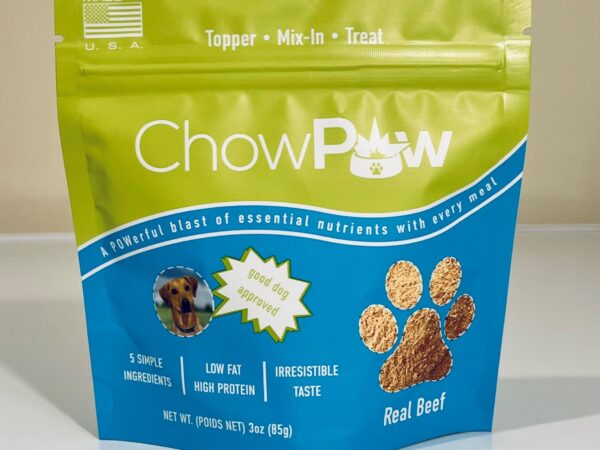 Dog Food Topper - Beef HeartOriginal price was: $14.99.$10.95Current price is: $10.95. - or subscribe and save up to 20%