How to Get an Old Dog to Eat Simple Tips for Worried Owners
It’s a tough sight for any dog owner: your once-enthusiastic eater now just sniffs their bowl and walks away. When an older dog stops eating, it's easy to jump to the worst conclusion, but the reason can be anything from a simple sensory change to a more serious health issue. Pinpointing the "why" is the first real step to getting them back on track.
Understanding Why Your Senior Dog Is Not Eating
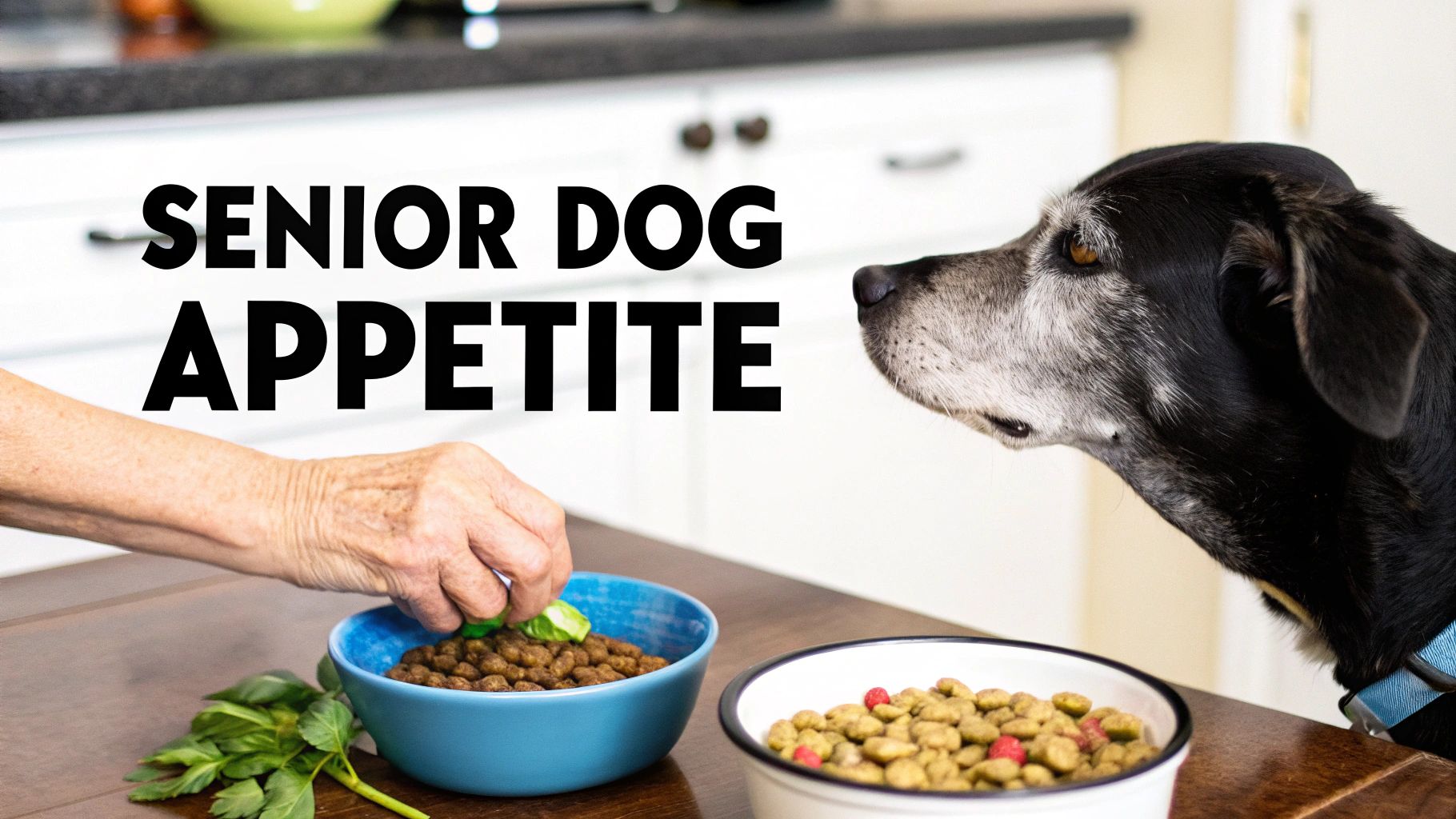
Watching your best friend lose interest in their food is a common—and stressful—challenge. Before you start swapping out foods or panicking, it helps to play detective and figure out what might be going on. This isn't just about stubbornness; it's often a direct result of the aging process or a quiet signal that something else is amiss.
By tuning into your dog's behavior and looking for clues, you can start to connect the dots and find a solution that actually works for them.
Age-Related Sensory Decline
Just like us, a dog's senses start to fade as they get older. The two most critical senses for mealtime—smell and taste—are often the first to go. A dog experiences the world through their nose, so when their food doesn't have a strong aroma, it just isn't very interesting anymore.
This sensory dulling can turn their favorite kibble into a bland, unappealing meal. What was once the highlight of their day is now just a bowl of boring pebbles. This is exactly why adding a meal enhancement with a more fragrant aroma to their food can make such a huge difference.
Dental Pain and Discomfort
Pain is a surefire appetite killer. Dental problems are incredibly common in senior dogs, from sore gums and loose teeth to painful abscesses. For a dog with a sore mouth, chewing hard kibble can feel like torture.
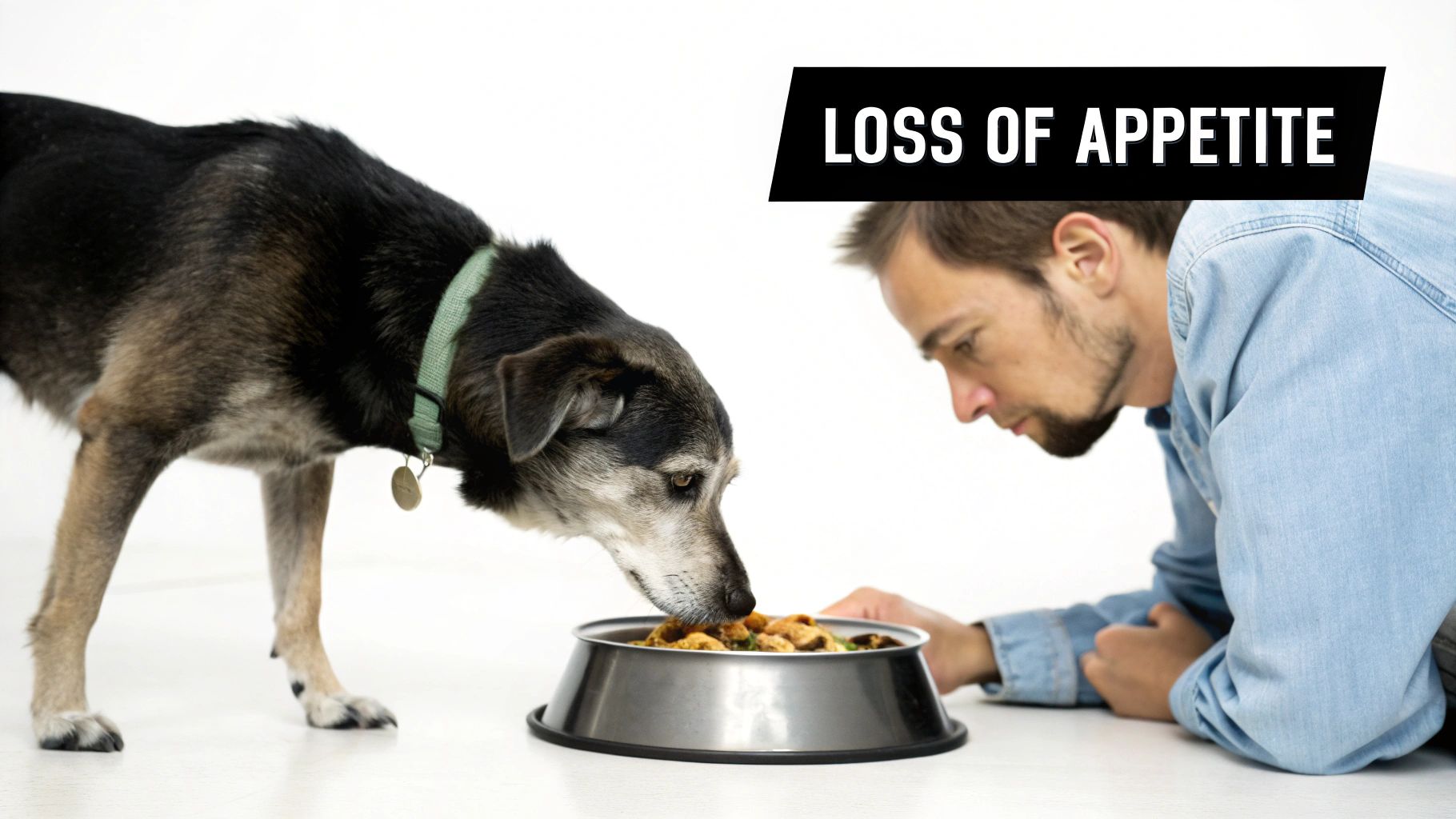
Have you noticed your dog approaching their bowl, maybe even looking hungry, but then backing away? Or maybe they drop food as they try to eat? Dental pain is a likely culprit. They want to eat, but the discomfort is just too much. Recognizing these subtle cues is crucial. If you're seeing other physical changes, our guide on the common signs of aging in dogs can offer more insight.
A dog’s reluctance to eat is often a form of communication. They might be trying to tell you they are in pain, feel nauseous, or simply can’t smell their food like they used to. Paying close attention is key to decoding their message.
Underlying Health Conditions
A sudden or ongoing loss of appetite can also be a red flag for a deeper health issue. There are several conditions common in older dogs that can directly impact their desire to eat:
- Arthritis and Joint Pain: It might not be the food itself. If your dog has stiff, achy joints, bending down to a bowl on the floor can be painful, creating a negative association with mealtime.
- Gastrointestinal Upset: Issues like inflammatory bowel disease, pancreatitis, or even just a sour stomach can cause nausea and make food seem completely unappealing.
- Kidney or Liver Disease: These conditions often cause toxins to build up in the body, leading to a general feeling of being unwell and a significant loss of appetite.
To help you sort through the possibilities, here’s a quick-reference table.
Common Reasons for Appetite Loss in Senior Dogs
Use this quick reference table to identify potential causes behind your senior dog's loss of appetite.
| Potential Cause | What to Look For | First Step to Take |
|---|---|---|
| Dental Issues | Dropping food, whimpering while eating, foul breath, avoiding hard treats. | Schedule a dental check-up with your vet. Soften food in the meantime. |
| Sensory Decline | Sniffing food and walking away, showing general disinterest in meals. | Warm up food to enhance aroma or add a fragrant meal enhancement. |
| Joint Pain | Hesitation to bend down, stiffness after lying down, slower movements. | Raise food and water bowls. Talk to your vet about pain management. |
| GI Upset | Vomiting, diarrhea, lip-smacking, excessive drooling, lethargy. | Offer a bland diet (plain chicken and rice). Call the vet if it persists. |
| Serious Illness | Sudden and severe appetite loss, increased thirst, weight loss, behavior changes. | Call your veterinarian immediately. |
This table is a starting point, but remember, a trip to the vet is always the best way to get a definitive diagnosis.
It's a reality that picky eating is incredibly common in older pets, affecting up to 40% of senior dogs, according to veterinary surveys. Since a dog's sense of smell can drop by 20-30% by age 10, high-protein, nutrient-dense meal enhancements can make all the difference. This is where ChowPow, with its dehydrated beef heart base packed with essential amino acids, can be a game-changer by boosting the nutritional value and aroma of their current kibble.
Simple Ways to Make Mealtime More Appealing
When your old friend starts giving their food bowl the cold shoulder, it’s natural to worry. But the good news is you often don’t need to completely change their diet. A few simple, thoughtful tweaks can be all it takes to reignite that dinner-time enthusiasm.
Many of these tricks work by appealing to a senior dog's sense of smell, which often fades with age. It's usually not that they aren't hungry; it's that their food just doesn't smell as tempting as it used to. A little kitchen creativity can make a world of difference.
Harness the Power of Scent
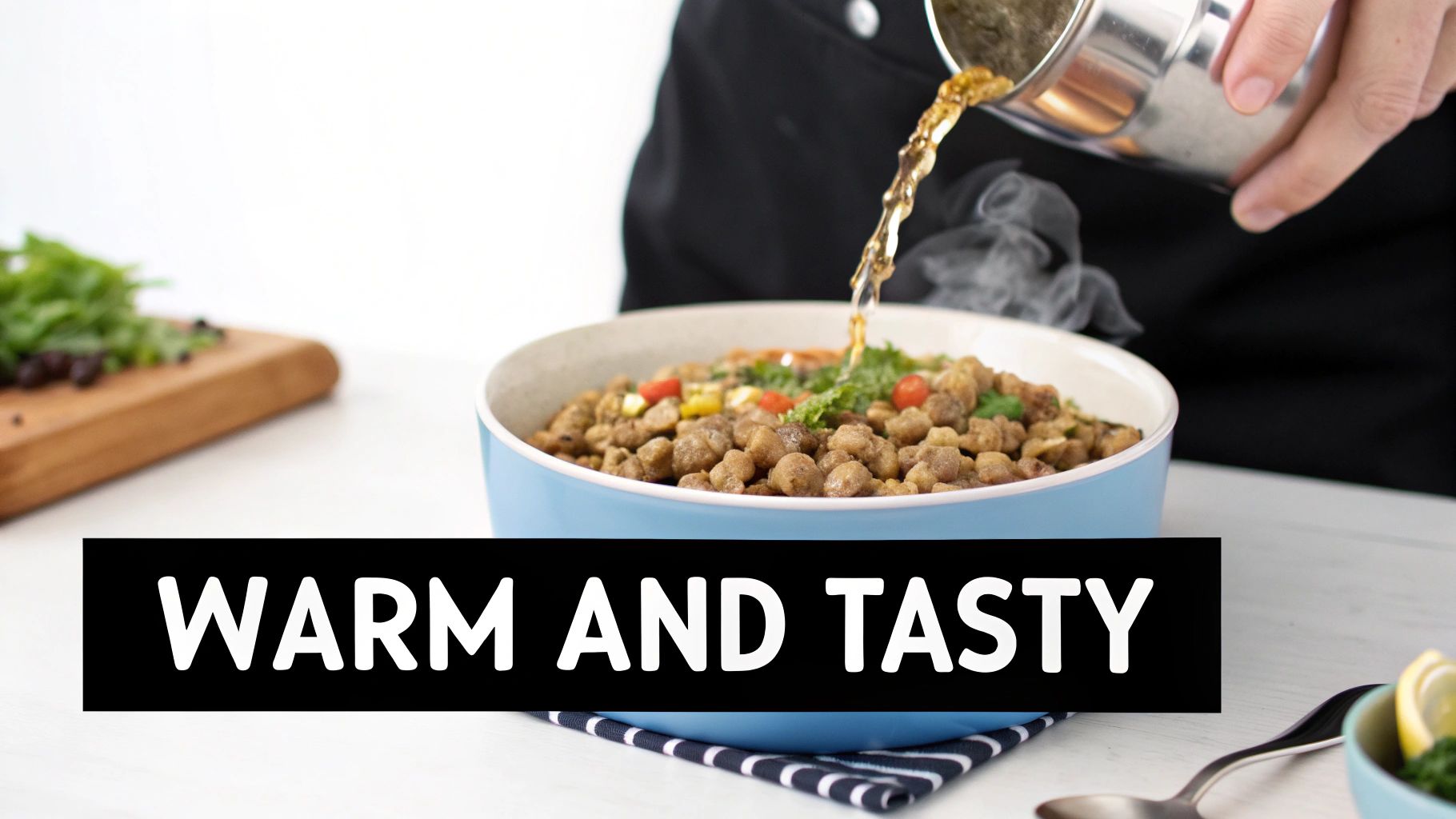
The fastest way to get a dog interested in their food is through their nose. Gently warming your dog’s food is one of the easiest and most effective tricks in the book. A few seconds in the microwave (just make sure to stir it and check for hot spots!) or adding a splash of warm water can release a powerful aroma that cuts right through a diminished sense of smell.
Another fantastic option is pouring a little warm, low-sodium bone broth or chicken broth over their kibble. This not only makes the meal smell incredible but also softens it up, which is a huge help for older dogs with sensitive teeth.
Elevate Their Kibble with a Meal Topper
Sometimes, all it takes is a little something special to turn a boring meal into a five-star experience. This is where meal toppers, also called meal enhancers, come in. They offer a concentrated burst of flavor and aroma that can entice even the most stubborn eater. It's a perfect solution for how to get an old dog to eat without a complete diet overhaul.
A high-quality, nutrient-dense meal enhancement like ChowPow is made for exactly this situation. Crafted from dehydrated beef heart, it has a rich, meaty scent that’s pretty much irresistible to dogs. You aren't replacing their kibble; you're just giving it a serious nutritional and flavor boost. A simple sprinkle is often all it takes to make their regular food exciting again.
Meal enhancers aren't just about taste. They provide a vital nutritional lift. A supplement like ChowPow adds high-quality protein and essential amino acids that support muscle maintenance in aging dogs, making every single bite of their regular food count.
This approach is backed by some serious trends in pet wellness. For picky senior dogs, food toppers can boost their food intake by 50-70%. This is a big reason why the U.S. market for dog treats, chews, and toppers is expected to hit USD 7.9 billion. For owners focused on clean ingredients, ChowPow's filler-free formula fits perfectly—it’s no surprise that dog mixers have grown 129% since 2018, with 16% of owners now buying them to improve their dog's meals. You can find more insights on the rise of these pet nutrition enhancers on EIN Presswire.
Adjust the Food's Texture
For an older dog, how the food feels can be just as important as how it tastes or smells. Hard, crunchy kibble can be a real struggle for dogs dealing with dental pain, sore gums, or missing teeth. If you notice your dog approaches their bowl, sniffs, but then backs away after one bite, painful chewing is a very likely culprit.
Moistening their food is an easy fix. Here are a few simple ways to soften up their meal:
- Warm Water: Mix in a few tablespoons of warm water and let it sit for five to ten minutes. The kibble will soften into a much more manageable, mash-like consistency.
- Low-Sodium Broth: Using bone or chicken broth works double duty, adding both moisture and an incredible aroma.
- Plain Yogurt or Canned Pumpkin: A spoonful of plain, unsweetened yogurt or pure canned pumpkin (not the pie filling!) can soften food while adding beneficial probiotics and fiber.
When you add a powder-based meal enhancer like ChowPow to moistened food, it creates a savory, gravy-like coating that clings to every piece of kibble. This ensures your dog gets that amazing flavor and added nutrition in every bite, without struggling to chew. By making these small adjustments, you’re catering to both their sensory needs and their physical comfort, turning mealtime back into an event they can actually look forward to.
Boosting Nutrition with a Meal Enhancer
When you’re trying to coax an older dog to eat, it’s tempting to grab whatever you think will taste good to them. But the real magic happens when flavor meets function. A great meal enhancer does more than just make food appealing; it should actively boost the nutritional value of their meal, filling in the gaps that an aging body desperately needs.
Think of it less as a replacement for their food and more as a powerful supplement for it. You’re not tossing out their familiar kibble, which still provides their core calories. You're elevating it. By adding a targeted supplement like ChowPow, you turn every bite of their existing food into a powerhouse of wellness, giving your old friend the extra support they need to thrive.
Why High-Quality Protein Is a Must for Seniors
One of the biggest hurdles for aging dogs is sarcopenia—the natural loss of muscle mass. It’s a quiet thief that can lead to weakness, shaky legs, and an overall dip in their quality of life. The best way to fight back is with high-quality, easy-to-digest protein to help maintain and repair that precious muscle tissue.
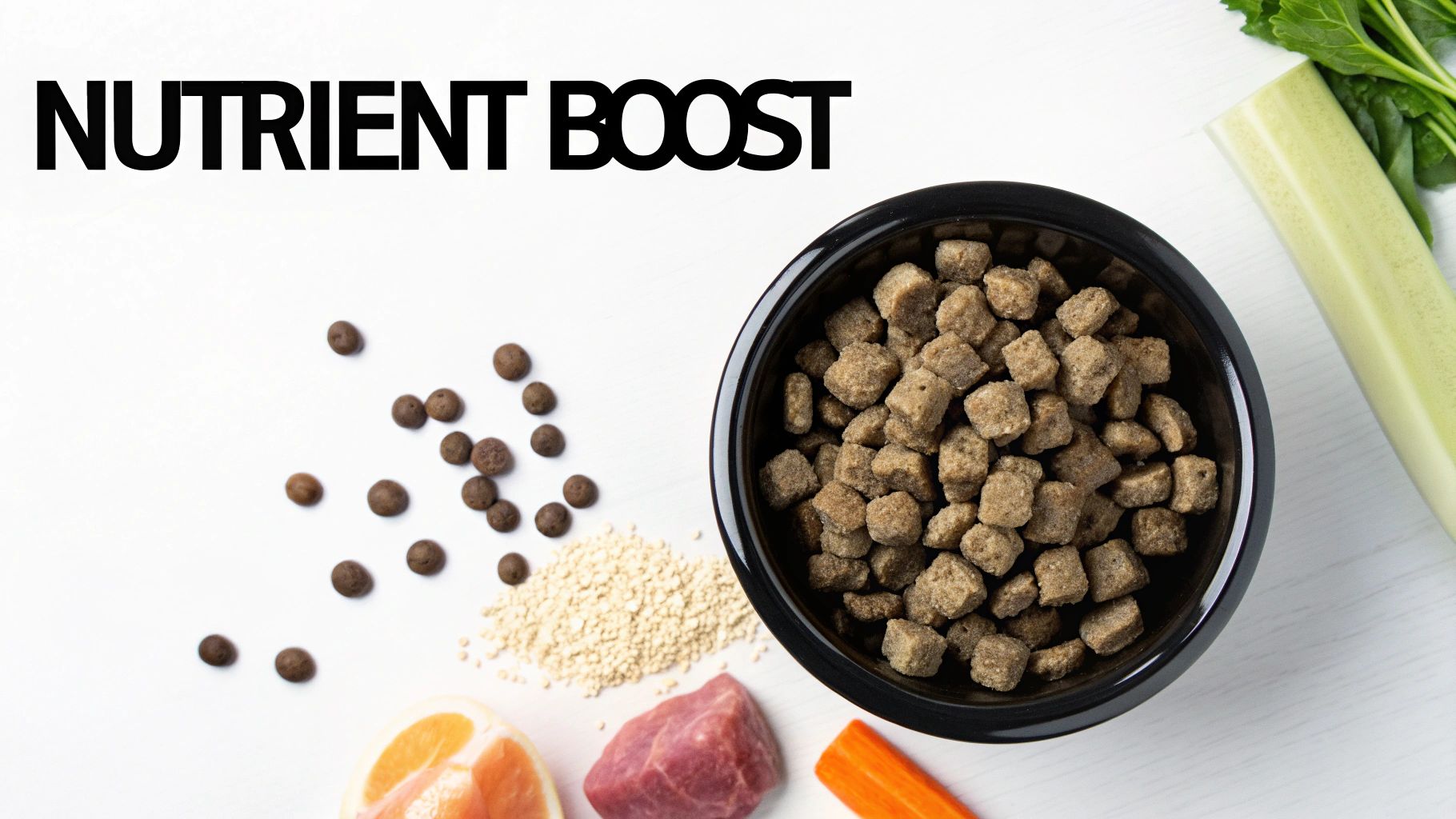
This is exactly why dehydrated beef heart is the number one ingredient in ChowPow. It’s not just some tasty flavoring; beef heart is a genuine superfood for senior dogs. It is incredibly dense in protein and packed with the essential amino acids that serve as the building blocks for strong muscles.
Plus, unlike some proteins that can be hard on an older dog’s gut, dehydrated beef heart is gentle and highly bioavailable. This means their body can absorb and use its nutrients with little effort, getting the maximum benefit from every single sprinkle you add to their regular food.
The Power of Simple, Recognizable Ingredients
When you look at a food label, you should be able to recognize everything on it. That’s our philosophy. Complicated chemical formulas and synthetic additives can sometimes cause more trouble than they’re worth, especially for a sensitive senior stomach. ChowPow is built on just four simple, locally sourced ingredients, each with a clear purpose to enhance your dog's meal.
- Dehydrated Beef Heart: The star of the show, providing concentrated protein for muscle support and an irresistible aroma that gets noses twitching.
- Carrots and Celery: These familiar veggies offer essential vitamins like Vitamin A and antioxidants to support immune health and vision. They also provide a gentle source of natural fiber.
- Apple Cider Vinegar: Just a touch is included to help support a healthy gut and aid in nutrient absorption.
That’s it. No fillers, no grains, no artificial junk. Just pure, functional nutrition designed to boost their current diet.
Your senior dog’s body is already working hard. Feeding them simple, whole-food ingredients reduces the digestive load, allowing them to absorb nutrients more efficiently and feel their best.
There's a reason the market for functional toppers has exploded. The use of dog food mixers and toppers has shot up a massive 129% since 2018, with 16% of dog owners now regularly buying them. With seniors making up about 25% of the pet population—and often dealing with 10-20% muscle loss—a declining appetite is a huge concern.
Research shows toppers can increase food consumption by up to 60%. This is where ChowPow really shines, as its beef heart base delivers vital taurine and B-vitamins for energy, directly combating the low vitality so common in older dogs. You can dig into more data on the value of functional pet toppers on DataHorizzon Research.
When we developed ChowPow, we focused on ingredients that deliver a direct, noticeable benefit for senior dogs.
ChowPow Ingredient Breakdown and Benefits
This table shows exactly what's inside ChowPow and why it matters for your old friend.
| Ingredient | Primary Nutrient | Benefit for Senior Dogs |
|---|---|---|
| Dehydrated Beef Heart | Protein & Taurine | Supports muscle maintenance to combat sarcopenia and promotes cardiovascular health. |
| Carrots | Vitamin A & Fiber | Boosts vision health and aids in gentle, regular digestion. |
| Celery | Antioxidants & Vitamins | Helps fight cellular damage and supports a healthy immune system. |
| Apple Cider Vinegar | Acetic Acid | Aids in nutrient absorption and supports a balanced digestive tract. |
Each ingredient was chosen to create a simple, powerful formula that enhances your dog's existing diet without adding anything unnecessary.
Making Every Single Bite Count
Choosing a meal enhancer is about more than just solving a picky eating problem today; it's a strategic investment in your dog’s long-term health. By choosing the best meal toppers for dogs with functional ingredients, you’re turning their standard kibble into a form of targeted nutritional therapy.
A sprinkle of ChowPow boosts protein, adds essential vitamins, and provides a rich, meaty scent that can cut through a dulled sense of smell, making mealtime exciting again. It’s one of the easiest and most powerful ways to show your senior dog you’re committed to their health and happiness for years to come.
Creative Feeding and Hydration Strategies
Sometimes, cracking the code of how to get an old dog to eat isn't just about what's in the bowl. It's about everything surrounding it—the environment, the physical setup, and even your own approach can make all the difference in their comfort and willingness to try.
Simple tweaks to how and where they eat can turn mealtime from a stressful standoff into a happy routine again. And we can't forget about hydration. Keeping your senior well-hydrated is just as vital as getting calories in, since even a little dehydration can sap their appetite and energy, creating a frustrating cycle.
Making Mealtime Physically Comfortable
For a senior dog, especially one dealing with arthritis or a stiff neck, bending down to a bowl on the floor can be genuinely painful. That discomfort can quickly create a negative association with eating, causing them to back away from their food even when they’re hungry.
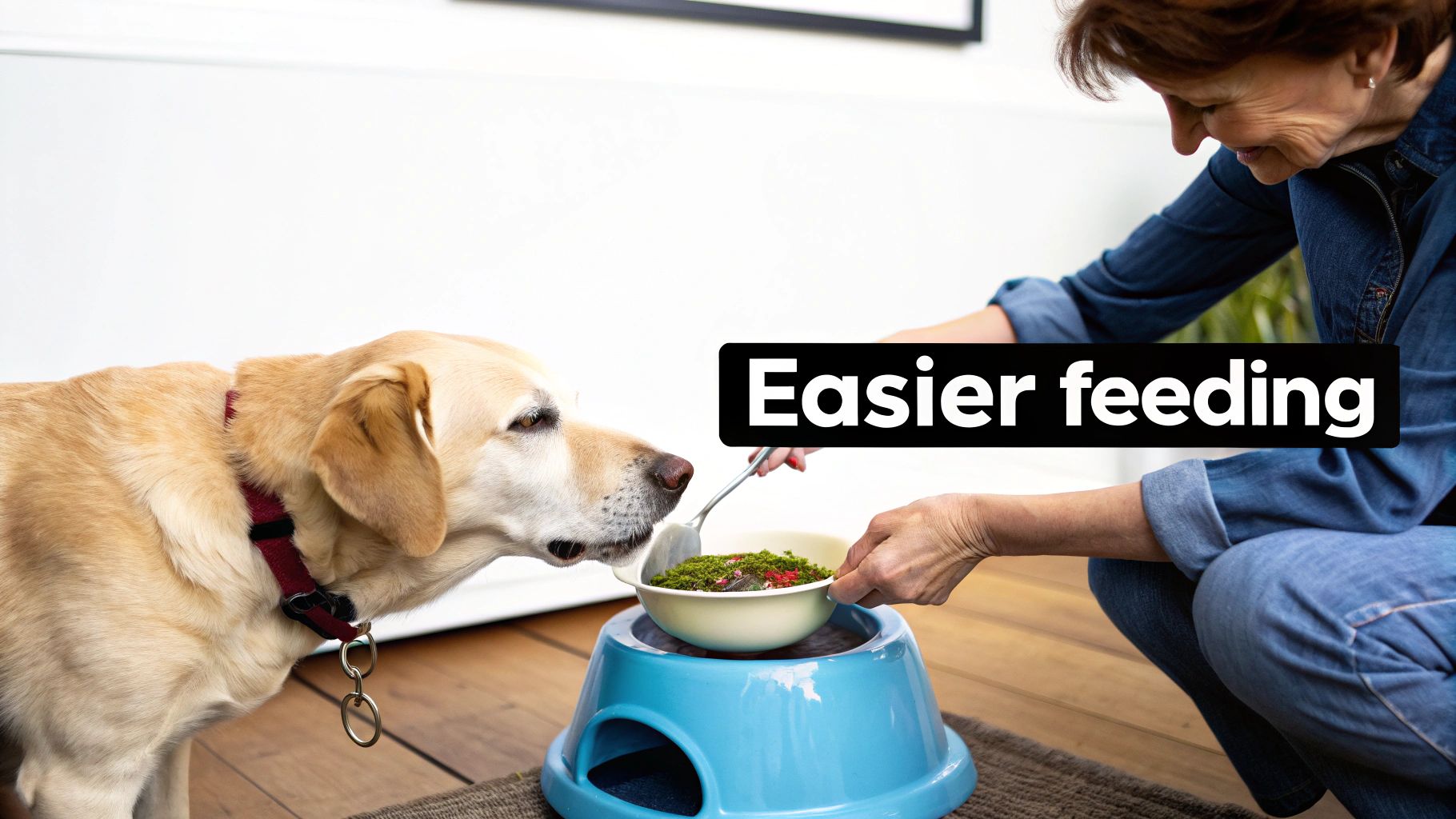
One of the easiest and most effective fixes is a raised food bowl. Bringing their dish up to chest height lets them eat in a more natural, comfortable posture, taking the strain off their neck and joints. For a dog with mobility issues, this simple change can be a game-changer.
Another gentle tactic is hand-feeding. While it might not be practical for every single meal, offering those first few bites of kibble by hand can be incredibly comforting and reassuring. It reinforces your bond, shows them you're there to help, and can be just the encouragement they need to get started.
Often, the biggest barrier to eating isn't the food itself, but the physical act of eating. By watching your dog's body language and making mealtime easier on their body, you're removing a major roadblock and helping them see that eating can be a comfortable, positive part of their day.
Turning Hydration into a Treat
Hydration is a cornerstone of a senior dog's health, but it's an easy one to overlook. A dehydrated dog is going to feel sluggish and unwell, which naturally kills their appetite. The problem is, a plain old bowl of water might not be tempting enough for a reluctant senior to drink.
This is where you get to be creative. An incredibly effective strategy is to make their water more interesting by turning it into a savory broth.
- Create a Savory Broth: Stir a small amount of ChowPow into a bowl of fresh water. The dehydrated beef heart dissolves to create a flavorful, beef-scented broth that most dogs can't resist.
- Offer Ice Cubes: Some dogs love licking or crunching on ice cubes. It's a fun way to get a little extra water into their system, especially when it's warm.
- Use a Pet Fountain: The moving water in a pet fountain can be far more appealing than a stagnant bowl, encouraging them to drink more often.
By turning plain water into a tempting treat, you can seriously boost their fluid intake. For more ideas, you can learn all about how to encourage a dog to drink water in our detailed guide.
Making Medication Time Stress-Free
Giving pills to a senior dog can feel like a daily battle of wills, creating stress for both of you. The goal is to make this routine as smooth and positive as possible, and food can be your best friend here. Hiding pills in a high-value treat is a classic for a reason, but a picky senior can still manage to eat the treat and spit out the medicine.
To win this battle, you have to make the treat absolutely irresistible. Try hiding the medication in a small piece of cheese or a pill pocket, and then sprinkle a little ChowPow over the top. The powerful beefy aroma helps mask any medicinal smell and turns a chore into a delicious reward they'll actually look forward to. This tiny extra step can end the daily struggle and make medication time a bonding moment instead of a stressful one.
Knowing When to Consult Your Veterinarian
Trying a few at-home tricks, like warming up your dog’s food or sprinkling on a tasty meal enhancer like ChowPow, can often be the simple fix you need. It’s a great feeling when you figure out how to get an old dog to eat again.
But it’s just as crucial to recognize when a poor appetite isn't just picky eating—it's a signal of a deeper problem that needs a professional. You know your dog better than anyone, and you should always trust your gut.
A veterinarian is your most important partner on your senior dog's health journey. While the tips we've discussed are fantastic first steps, they’re no substitute for a proper diagnosis. A trip to the vet isn't a sign you've failed; it's the most loving and responsible thing you can do when you're worried.
Clear Red Flags That Require a Vet Visit
Some symptoms are too serious to ignore. If you spot any of the following signs, it's time to stop the at-home troubleshooting and call your vet right away. These are often indicators of an underlying condition that needs urgent care.
- Sudden & Complete Appetite Loss: A dog who goes from eating normally to refusing all food for more than 24 hours is a major red flag.
- Vomiting or Persistent Diarrhea: This kind of digestive upset can lead to dehydration fast. It could also point to serious issues like pancreatitis, kidney disease, or even an intestinal blockage.
- Visible Signs of Pain: Is your dog whimpering, yelping when touched, hunching their back, or hesitant to move? They are likely in pain, and pain is a powerful appetite suppressant.
- Significant & Unexplained Weight Loss: Rapid weight loss is a classic symptom of many serious health problems, from metabolic diseases to cancer. Don't wait to get this checked out.
- Lethargy or Drastic Behavior Changes: If your normally social dog is suddenly hiding, listless, or seems confused, it’s a clear signal that something is medically wrong.
Think of your veterinarian as a key member of your senior dog’s care team. Open communication and regular check-ups allow them to catch potential problems early, creating a proactive health plan that ensures your companion’s comfort and well-being.
Partnering with Your Vet for a Solution
When you’re dealing with a senior dog’s stubborn appetite, you need to know when to bring in the pros. You can find excellent local veterinarians who can help get to the bottom of any underlying health problems.
When you go, be ready to share everything you’ve noticed—details about their eating habits, changes in energy levels, and any other symptoms. The more information you can provide, the better.
Your vet can run diagnostic tests to pinpoint the exact cause, whether it's painful dental disease, arthritis, or an internal issue. Once they have a diagnosis, they can create a targeted treatment plan. This might include medication, a prescription diet, or pain management. This professional guidance, combined with your loving care at home, gives your old friend the best possible chance to feel good and truly enjoy their golden years.
Common Questions About Your Senior Dog's Appetite
Even when you're trying everything, it's natural to have questions pop up about your senior dog’s changing eating habits. We get it. Let’s tackle some of the most common concerns we hear from dog owners just like you.
Is It Normal for an Old Dog to Stop Eating Altogether?
While a slowing appetite can be a part of aging, a complete refusal to eat for more than 24 hours is a big red flag. This isn't just a normal part of getting older; it often points to a more urgent health problem or significant dental pain that needs a vet's attention.
If your dog won't eat anything, your first move should be calling your veterinarian. While you wait for your appointment, you can try tempting them with something extra delicious—like their kibble warmed up into a soupy mash with a nutrient-dense topper like ChowPow—but this is a temporary measure, not a substitute for a professional diagnosis.
How Can I Tell If My Dog's Teeth Are the Problem?
Dental pain is one of the biggest reasons a senior dog might suddenly turn their nose up at food. They’re still hungry, but the simple act of chewing is just too painful to bear.
Keep an eye out for these subtle clues:
- Dropping food from their mouth as they try to eat.
- Chewing awkwardly on just one side.
- Flinching or pulling away when you try to touch their face.
- A sudden, noticeable increase in bad breath.
- Walking up to the bowl eagerly, only to back away after a sniff or a single bite.
Switching to softer food, like kibble soaked in warm water, can offer some quick relief. A powder-based meal enhancer like ChowPow is a fantastic choice here, too. It adds that savory, meaty flavor they crave without requiring any tough chewing, making it perfect for sensitive mouths.
My Senior Dog Is Just Picky. Will a Topper Really Help?
Absolutely. What we often label as "pickiness" in an older dog is usually something else entirely: a fading sense of smell and taste. That kibble they used to love just doesn't have the same aromatic appeal anymore.
A high-quality meal enhancer like ChowPow is designed to cut right through that sensory decline. Made from dehydrated beef heart, its concentrated, savory aroma is powerful enough to get their attention and reignite their interest in their food. It’s not about overhauling their diet; it's a supplement designed to make their current food exciting again. For many discerning seniors, that's all it takes.
Think of it this way: for a dog, scent is flavor. When their sense of smell fades, their world becomes less flavorful. A powerful aromatic supplement like ChowPow essentially turns the volume back up on their meal, making it irresistible once more.
How Much ChowPow Should I Use on My Old Dog's Food?
The great thing is that a little goes a long way, and you're in total control. We always suggest starting with just a small sprinkle and seeing how your dog responds. The goal is to enhance their food, not completely replace it.
Here’s a good starting point:
- For small dogs: Try about half a teaspoon per meal.
- For medium to large dogs: You can start with up to one tablespoon per meal.
You can mix the powder right into their food, whether it's wet or dry. Another trick we love is stirring it into a little warm water to create a rich gravy. This not only makes the meal more enticing but also sneaks in some extra hydration, which is always a win.
Ready to make mealtime exciting again? See how the simple, powerful ingredients in ChowPow can boost your senior dog's appetite and nutrition.
Learn more about ChowPow and transform your dog’s meal today!
-
Product on sale
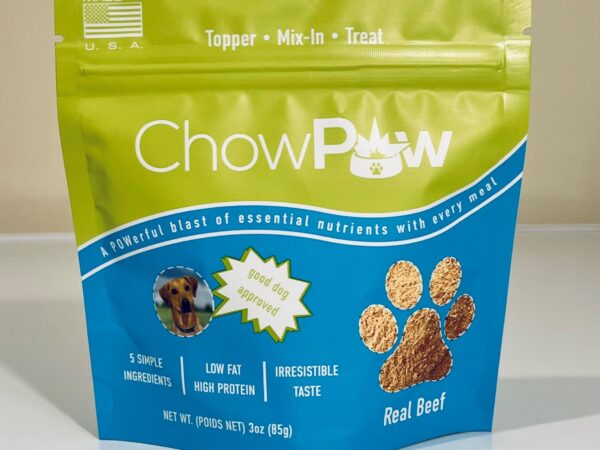 Dog Food Topper - Beef HeartOriginal price was: $14.99.$10.95Current price is: $10.95. - or subscribe and save up to 20%