

Can Puppies Eat Chicken? A Complete Guide for Pet Owners
You’re clearing the dinner table, there’s a little plain chicken left on the plate, and your puppy is sitting nearby with that hopeful stare that makes every food decision feel surprisingly important.
If you’ve asked yourself can puppies eat chicken, the short answer is yes, they can. But the safe answer is a little more specific. Puppies can eat properly cooked, plain, boneless chicken in moderation. That “in moderation” part matters just as much as the chicken itself.
A lot of new puppy parents reach for chicken for good reasons. It’s familiar, easy to find, and usually appealing even to picky eaters. It also sounds wholesome, which makes it feel like an obvious meal upgrade. Sometimes it is. Sometimes it creates problems because it’s served seasoned, fed in portions that are too big, or introduced too fast to a sensitive stomach.
The tricky part is that puppies aren’t just tiny adult dogs. Their digestive systems are still developing, and their regular food needs to stay balanced while they grow. So while chicken can absolutely fit into the picture, it shouldn’t replace a complete puppy diet. It works best as a careful add-on, not a free-for-all table scrap.
Simple answer: Chicken can be a safe food for puppies when it’s cooked thoroughly, served plain, and offered in the right amount.
That’s where many people get confused. They know chicken is protein, and protein is good. Both of those things are true. What they need next is the practical part. How to prepare it, how much to feed, when to stop, and how to tell if chicken isn’t agreeing with their pup.
Introduction The Chicken Question Every Puppy Parent Asks
Chicken has a reputation for being the “safe” people food for dogs, and that’s not completely wrong. Puppies can safely eat cooked chicken, and it can be a useful option when you want to add something tasty to a meal or tempt a puppy with a low appetite.
Still, chicken only stays safe when you handle it carefully. A puppy can’t sort out the difference between plain poached chicken and a buttery, heavily seasoned piece from your dinner plate. To them, it all smells amazing. To you, the job is deciding what belongs in their bowl and what doesn’t.
Why this question matters so much
New puppy parents usually ask this question for one of three reasons:
- Their puppy is picky. They want to make kibble more exciting.
- Their puppy is recovering. They’re looking for something gentle and appealing.
- They want to share food safely. It feels natural to include your puppy in family routines.
Those instincts come from a good place. Feeding is one of the first ways people bond with a new dog. But if you rely on plain chicken too often, it can start to crowd out the complete nutrition your puppy really needs from their main diet.
The real goal isn’t just feeding chicken
The aim isn't to make chicken the primary component of the diet. The goal is problem-solving.
Maybe the problem is low interest in food. Maybe it’s a sensitive stomach. Maybe you just want to add something fresh and high-value without making mealtime complicated. Once you look at it that way, the question becomes more useful: not just “can puppies eat chicken,” but “what’s the safest and smartest way to use it?”
Puppies do best when their base food stays complete and balanced, and any extras stay controlled.
That mindset takes a lot of stress out of the decision. You don’t need to fear chicken, and you don’t need to treat it like a miracle food either. You just need to use it with clear rules.
The Nutritional Power of Protein for Growing Pups
Puppies grow fast. Their bodies are building muscle, repairing tissue, supporting immune function, and developing organs, bones, and brains all at once. That kind of growth takes high-quality animal protein, not just calories.
Chicken gets attention because it does that job well. It provides essential amino acids that help support normal growth and development, and it’s widely accepted by many dogs because it tastes good and is easy to eat.
What chicken actually brings to the bowl
A useful way to think about chicken is as a lean, digestible protein source. According to Native Pet’s chicken nutrition guide, a 100g serving of cooked boneless chicken breast provides approximately 30g of protein, 111mg of choline, and has a biological value of 79/100. In plain English, that means the protein is both plentiful and usable by the body.
That matters for puppies because not all protein sources perform the same way. A growing puppy benefits from protein that contributes to:
- Muscle development
- Tissue repair
- Energy metabolism
- Normal brain and liver support
Chicken also supplies nutrients like B vitamins, phosphorus, and essential amino acids, which is one reason it shows up so often in commercial dog food.
Why puppy parents like it so much
Chicken feels approachable. It’s not exotic. It doesn’t require a major learning curve. If your puppy turns their nose up at kibble, a little plain chicken often gets your attention because it seems like a quick fix.
Sometimes that fix works well, especially when you use chicken as a topper rather than a substitute. But it helps to remember the difference between adding protein and building a complete meal. Those are not the same task.
Here’s a quick comparison:
| Goal | Can plain chicken help | Is it enough by itself |
|---|---|---|
| Add flavor to kibble | Yes | No |
| Increase meal appeal for picky pups | Yes | No |
| Provide a high-quality protein boost | Yes | No |
| Replace a complete puppy food | No | No |
A good protein source still needs context
Protein quality matters, but so does balance. Puppies need a complete diet, and extras should support that foundation instead of taking it over. If you want a broader look at what makes a strong protein choice for dogs, this guide to best protein sources for dogs is a helpful next read.
Nutrition lens: Chicken can be a strong supporting ingredient. It shouldn’t become the whole plan.
That’s the key idea many people miss. Chicken can be nutritious and still be the wrong answer if it replaces too much of a puppy’s actual food or if it’s prepared carelessly.
The Right Way to Prepare Chicken for Your Puppy
If you’re going to feed chicken, preparation is where safety starts. The safest version is simple: cooked thoroughly, plain, and completely boneless.
That sounds basic, but it's the point where most mistakes happen. People share chicken from their own plate, forget about seasoning, assume a tiny bone won’t matter, or think a little undercooked meat is harmless. For puppies, those shortcuts aren’t worth the risk.

The non-negotiable rules
Veterinary guidance summarized by Total Vet’s article on chicken for dogs notes that chicken remains highly digestible for dogs even after cooking, which supports its use when it’s prepared properly. The phrase to focus on is prepared properly.
Use this checklist every time:
- Cook it fully. Chicken should be thoroughly cooked with no pink remaining.
- Keep it plain. No sauces, no butter, no oils, no spice blends.
- Remove every bone. Cooked bones can splinter and create serious problems.
- Skip onions and garlic. They’re toxic to dogs and don’t belong in a puppy’s food.
- Cool it before serving. Warm is fine. Hot is not.
An easy home method
Poaching or boiling works well because it keeps the ingredient simple. Place boneless chicken in water, cook it until fully done, let it cool, then shred or dice it into puppy-safe pieces.
If the chicken is still frozen, use a food-safe method before cooking. If you need a practical kitchen reference, Dashi has a helpful guide on a quick way to thaw frozen chicken.
A lot of puppy parents also ask whether cooked or raw is better. For puppies, raw adds risk that most households don’t need to take on. This comparison of raw vs cooked food for dogs can help if you’re weighing that decision more broadly.
Before serving, it helps to see the process visually:
A simple do and don’t list
| Do | Don’t |
|---|---|
| Serve plain poached or boiled chicken | Serve fried or seasoned chicken |
| Shred into small pieces | Hand over chunks with bone attached |
| Mix a little into regular food | Replace the whole meal casually |
| Introduce slowly | Offer a large first portion |
Plain chicken for puppies should look boring to you. That’s usually a sign you prepared it correctly.
That “boring” version is the safe version.
How Much Chicken Is Safe for a Puppy
The biggest portion mistake people make is treating chicken like a free extra. It isn’t. Even healthy extras can throw off a puppy’s diet when they start taking over the bowl.
A good rule is to think of chicken as a small addition, not a major ingredient in every meal. Puppies still need their regular complete food to do the heavy lifting nutritionally.
Start with the moderation rule
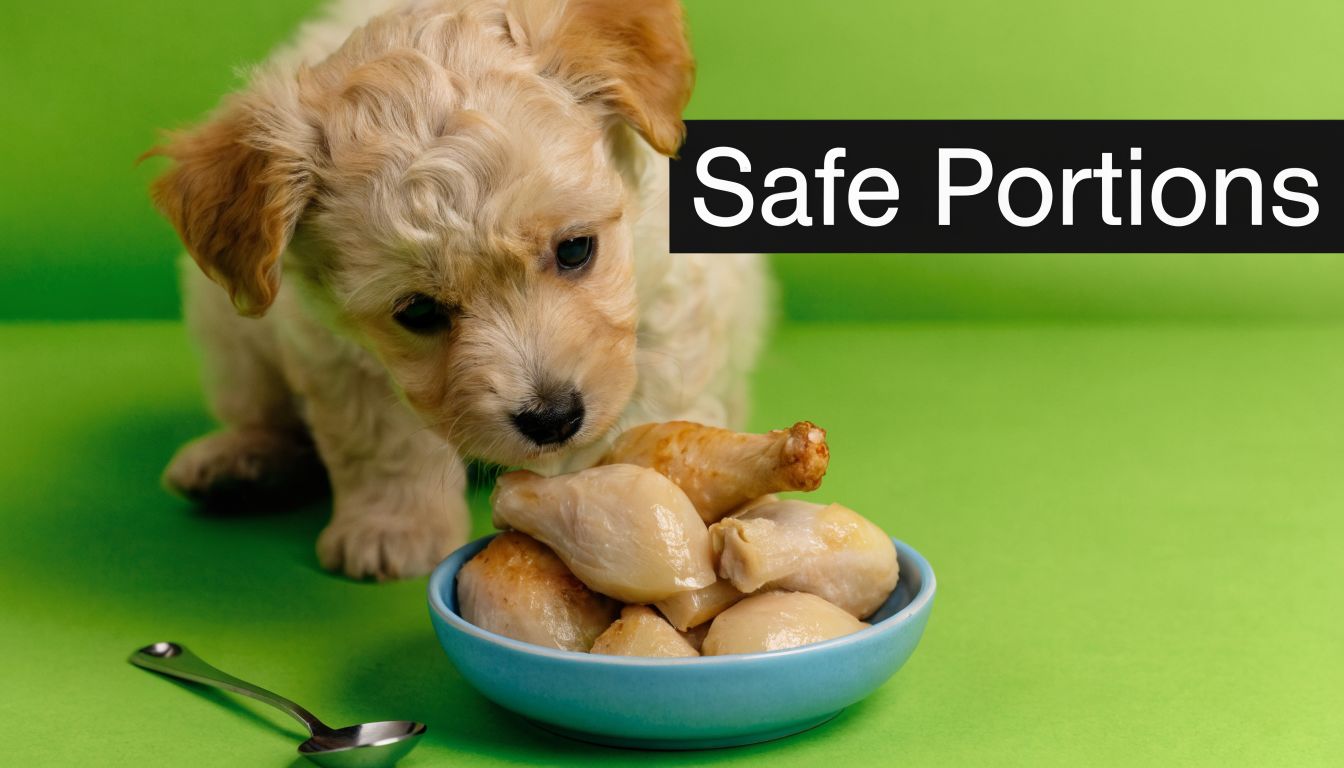
Chicken and other toppers should stay within 10% of daily caloric intake. That helps keep the rest of the diet balanced and reduces the chance that “just a little extra” turns into a habit that crowds out essential puppy nutrition.
For practical meal planning, PetMD’s chicken feeding guide notes a general recommendation of ¼ to ⅓ cup of cooked chicken per 20 pounds of body weight, with the reminder that puppies should be scaled down from adult amounts. The same source also notes that for a 25-pound dog, a common guideline is about 6 ounces, or roughly ¾ cup, daily as part of a meal, while warning that too much chicken can contribute to an omega-6 to omega-3 imbalance.
What that looks like in real life
These examples help make the guideline less abstract:
- Tiny puppy around 10 pounds: about ⅛ to ⅙ cup if chicken is being used as part of a complete meal approach.
- Puppy around 20 pounds: about ¼ to ⅓ cup.
- Puppy around 30 pounds: about ⅜ to ½ cup.
- Larger puppy around 60 pounds: about ¾ to 1 cup.
Those ranges come from the verified feeding guidance in the source material and still need common sense. A younger puppy, a less active puppy, or a puppy with digestive sensitivity may need less.
Smaller topper amounts are often smarter
If your goal is just improving meal appeal, you usually don’t need much. Verified guidance also supports very modest portions such as:
- Extra-small puppies: about 1 tablespoon
- Small puppies: about 2 tablespoons
- Medium puppies: up to ¼ cup
- Large puppies: about ⅓ cup
- Extra-large puppies: about ½ cup
Portion rule: If you’re using chicken to tempt appetite, start smaller than you think you need.
That approach helps you in two ways. First, it protects the balance of the diet. Second, it makes it easier to spot whether chicken agrees with your puppy before you serve more.
Keep the base diet first
If your puppy eats kibble or another complete puppy food, let that remain the center of the meal. Add chicken in a measured amount, observe how your puppy responds, and keep the rest of the feeding routine stable.
That steadiness matters more than many people realize. Puppies do best when their bowls are predictable, not reinvented every day.
Recognizing the Hidden Risks of Chicken
Chicken sounds simple, but it comes with a few risks that pet parents often underestimate. The obvious ones are bones and seasoning. The less obvious ones are allergies, digestive upset, and raw-food pathogen exposure.
A puppy can like chicken and still not handle it well. That’s why observation matters just as much as preparation.

Chicken isn’t a fit for every puppy
According to AKC’s guidance on chicken for dogs, puppies have a higher risk of severe illness from pathogens like Salmonella because they have underdeveloped immune systems and less acidic stomachs. The same source notes that chicken is a top 3 canine allergen, and that allergy-related atopic dermatitis can cause skin barrier disruption in up to 80% of affected dogs.
That doesn’t mean most puppies will have a problem. It does mean chicken shouldn’t get an automatic pass just because it’s common.
Signs that chicken may not be going well
Watch for changes after introducing chicken, especially if it’s new to your puppy’s diet.
Common warning signs include:
- Itchy skin
- Repeated ear issues
- Loose stool
- Vomiting
- Excess licking or scratching
- Lower interest in meals after the initial excitement
Some puppies react right away. Others show slower patterns that are easy to miss if you’re changing multiple things at once.
Why “plain and safe” can still cause trouble
Even when chicken is cooked correctly, a sudden new food can upset a puppy’s stomach. Richness, portion size, and frequency all matter. A puppy with a sensitive digestive system may do better with a very small test portion than with a full topper serving.
If you’re testing chicken, change one thing at a time. That makes it much easier to tell what your puppy is reacting to.
This is also where many owners hit a practical limit. They want to make meals tastier and more nourishing, but they don’t want to guess about allergies, prep meat constantly, or build a routine around cooking and storing small batches in the fridge.
That’s a fair concern. A feeding solution should help your life feel easier, not more complicated.
A Simpler Way to Boost Your Puppy's Meal
Owners adding chicken aren’t trying to become home cooks for every puppy meal. They want something more basic. Better appetite. Better enthusiasm at the bowl. A little extra nutritional support. Less stress.
That’s why meal enhancement works best when it’s consistent, easy to portion, and simple to use with a complete diet. Instead of relying on home-cooked additions every time your puppy seems bored, many pet parents do better with a topper made for that job.

Why a topper can make more sense than plain chicken
Plain chicken has limits. You have to buy it, store it, thaw it, cook it, cool it, shred it, portion it, and use it before it goes bad. If your puppy happens to be sensitive to chicken, you’ve done all that work for an ingredient that may not even suit them.
A topper built from nutrient-dense ingredients solves a different problem. It doesn’t replace kibble or complete puppy food. It enhances what’s already there. That distinction matters.
A strong meal enhancer can help with:
- Palatability for picky eaters
- Easy portion control
- No bone or splinter risk
- No seasoning mistakes
- Fast meal prep on busy days
Why beef heart stands out
Beef heart is a compelling alternative protein for pet parents who want something rich, savory, and nutrient-dense without depending on chicken. It gives variety, which can be useful for households trying to avoid making one common protein the default answer to every feeding challenge.
In powdered form, a topper also changes the experience of feeding. You can sprinkle it over kibble, stir it into a little water for extra aroma, or use it to make a meal more inviting without changing the entire diet.
That’s especially helpful for:
| Puppy situation | Why a powdered topper helps |
|---|---|
| Picky eater | Adds smell and flavor quickly |
| Recovering puppy | Easier to mix into familiar food |
| Sensitive mouth or teething stage | No chewing challenge from added meat chunks |
| Busy household | No cooking or shredding required |
The practical advantage is hard to ignore
A topper made with simple ingredients is easier to use consistently than home-cooked chicken. Consistency matters because puppies thrive on routines that don’t change wildly from one day to the next.
If you’re comparing options, this guide to best dog food toppers for puppies and boosting nutrition is a good place to look at what separates a useful topper from a random add-on.
A meal enhancer should support the diet you already trust, not replace it.
That’s the standard I’d use as both a nutrition educator and a small business owner. If a puppy is already eating a complete food, the smartest addition is one that improves appeal and adds nutrient density without creating new risks, extra prep, or confusion about portions.
If you want a simple way to make your puppy’s kibble more appealing without dealing with the prep, mess, and uncertainty of home-cooked chicken, take a look at ChowPow. It’s a dehydrated beef heart meal topper made to boost, not replace, your dog’s regular food. You sprinkle it on the meal you already serve, so your puppy keeps the balanced foundation they need while getting an easy, flavorful upgrade.
-
Product on sale
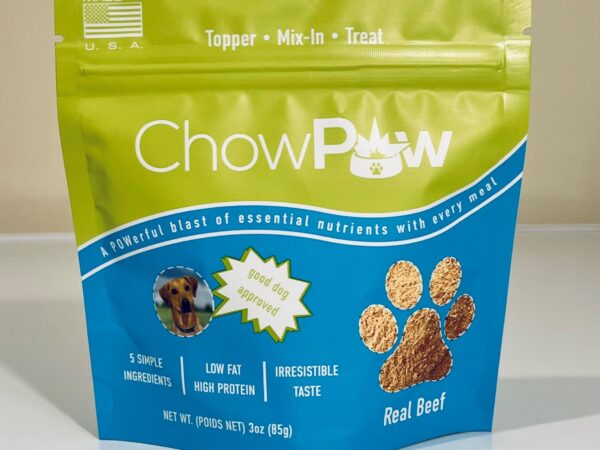 Dog Food Topper - Beef HeartOriginal price was: $14.99.$10.95Current price is: $10.95. - or subscribe and save up to 20%