
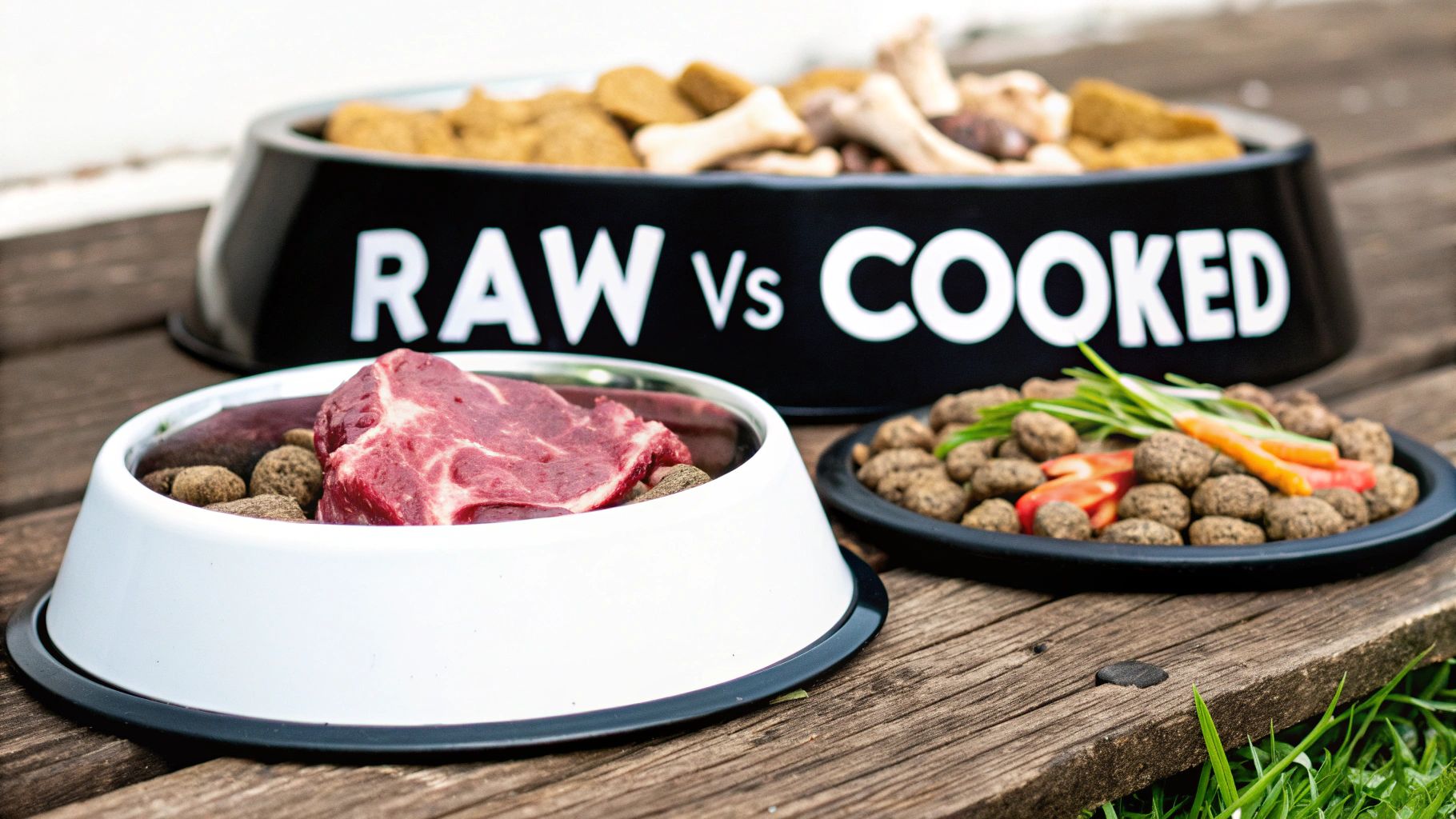
Raw vs Cooked Food for Dogs A Guide to Canine Nutrition
When it comes to feeding our dogs, the "raw vs. cooked" question is one of the biggest debates out there, and for good reason. It really boils down to a fundamental trade-off: maximum nutrient retention versus pathogen safety. Raw food advocates champion the idea of keeping nutrients in their most natural, unaltered state, while proponents of cooked food prioritize eliminating harmful bacteria like Salmonella and Listeria.
Ultimately, the right answer depends entirely on your dog's individual health, your comfort level with food prep, and your overall feeding philosophy.
The Great Debate in Canine Nutrition: Raw vs. Cooked
Trying to pick the best diet for your dog can feel overwhelming, with passionate arguments on both sides of the raw vs. cooked divide. It's a topic that brings out strong opinions.
On one side, you have the raw feeders. Many believe that a raw diet—often called BARF (Biologically Appropriate Raw Food) or PMR (Prey Model Raw)—is the most natural approach. The idea is to mimic what a dog's ancestors would have eaten in the wild, providing nutrients in their purest form.
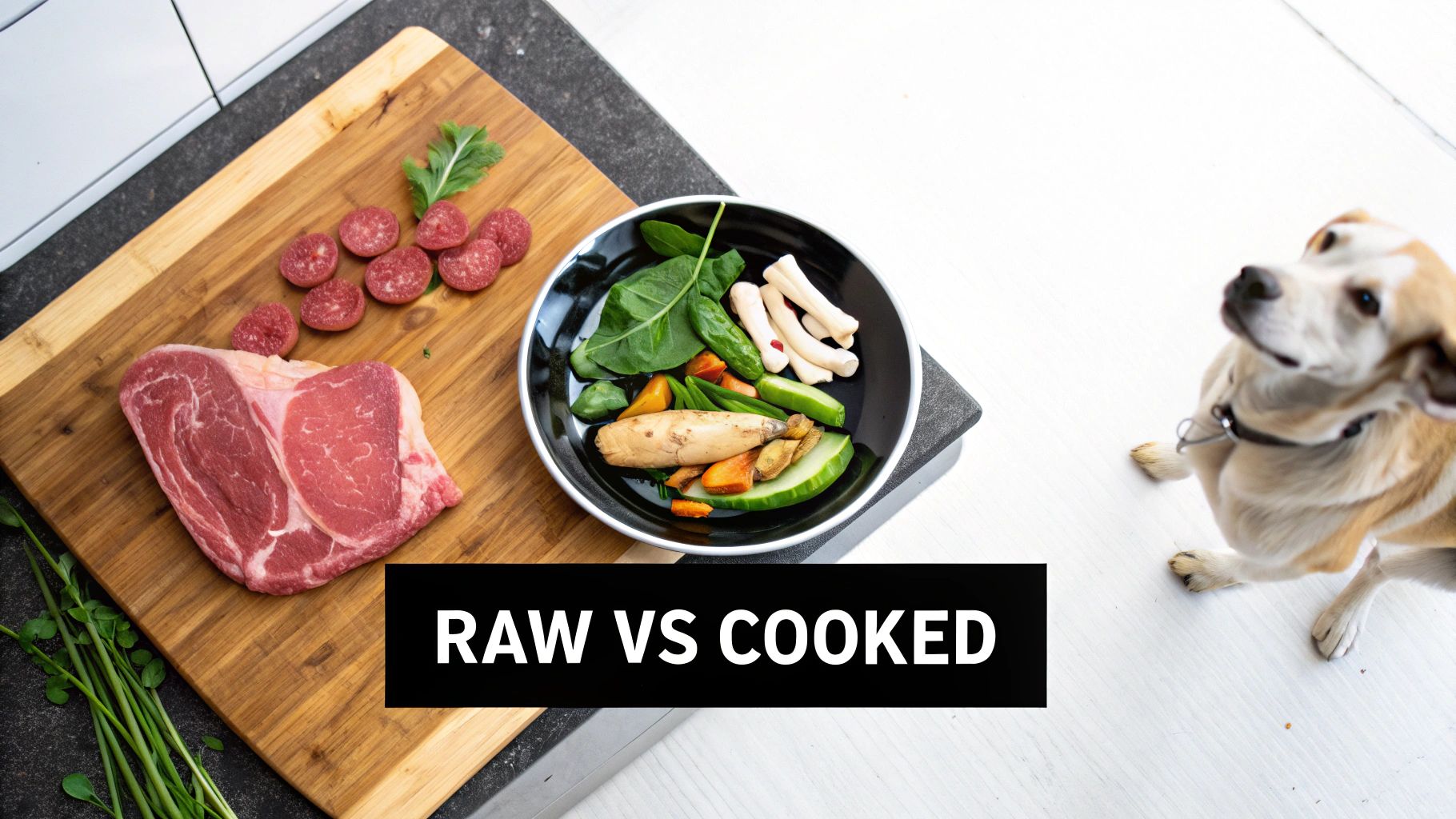
On the other hand, many dog owners and veterinarians lean towards cooked diets for their clear safety and digestibility benefits. Gently cooking the food kills off dangerous bacteria and can actually make some nutrients easier for a dog’s body to absorb. This is a huge plus for puppies, senior dogs, or any pup with a sensitive stomach.
At a Glance Comparison
To help clear things up, let's break down the core differences in a simple way. This table gives you a quick snapshot of what each approach involves, so you can see the trade-offs side-by-side.
Quick Comparison: Raw vs. Cooked Diets for Dogs
| Aspect | Raw Diet (BARF/PMR) | Cooked Diet (Homemade or Commercial) |
|---|---|---|
| Nutrient Profile | Keeps natural enzymes and vitamins intact, as they can be damaged by heat. Often seen as more nutrient-dense. | Cooking can reduce some heat-sensitive vitamins (like B vitamins) but may make proteins easier to digest. |
| Pathogen Risk | Carries a higher risk of bacteria like Salmonella and E. coli, which can affect both the dog and your family. | The cooking process is very effective at killing most harmful bacteria, making it a microbiologically safer choice. |
| Preparation | Demands strict handling of raw meat, freezer space for storage, and thorough sanitation to prevent cross-contamination. | Homemade meals require cooking time and effort. High-quality commercial cooked foods are convenient but often more expensive. |
| Suitability | Best suited for healthy, active adult dogs. It may not be the best choice for puppies, seniors, or dogs with weak immune systems. | An excellent option for dogs with sensitive digestion, compromised immune systems, or for owners worried about pathogens. |
At the end of the day, both raw and cooked diets can lead to a happy, healthy dog if they're properly balanced and prepared. The most important thing is understanding these differences and choosing the path that best fits your dog's unique needs.
And no matter which you choose, you can always give their meal an extra boost. A high-quality meal enhancement like ChowPow is a simple way to add nutritional value to any meal—kibble, cooked, or raw—without a complete dietary overhaul. Think of it as a powerful supplement to boost their existing food, not a replacement.
The Thinking Behind a Raw Food Diet
The whole idea behind feeding your dog a raw diet is refreshingly straightforward: it's all about mimicking what their ancestors ate in the wild. The core belief is that a dog's digestive system hasn't changed much from its wolf relatives, meaning it's still hardwired to thrive on uncooked, whole foods. The goal is to give them nutrition in its most natural, unprocessed form.
This movement generally follows two main paths: BARF (Biologically Appropriate Raw Food) and PMR (Prey Model Raw). They're slightly different, but both are built on a foundation of raw muscle meat, organs packed with nutrients, and edible bones. The endgame is a diet high in protein and healthy fats, with as little processing as possible.
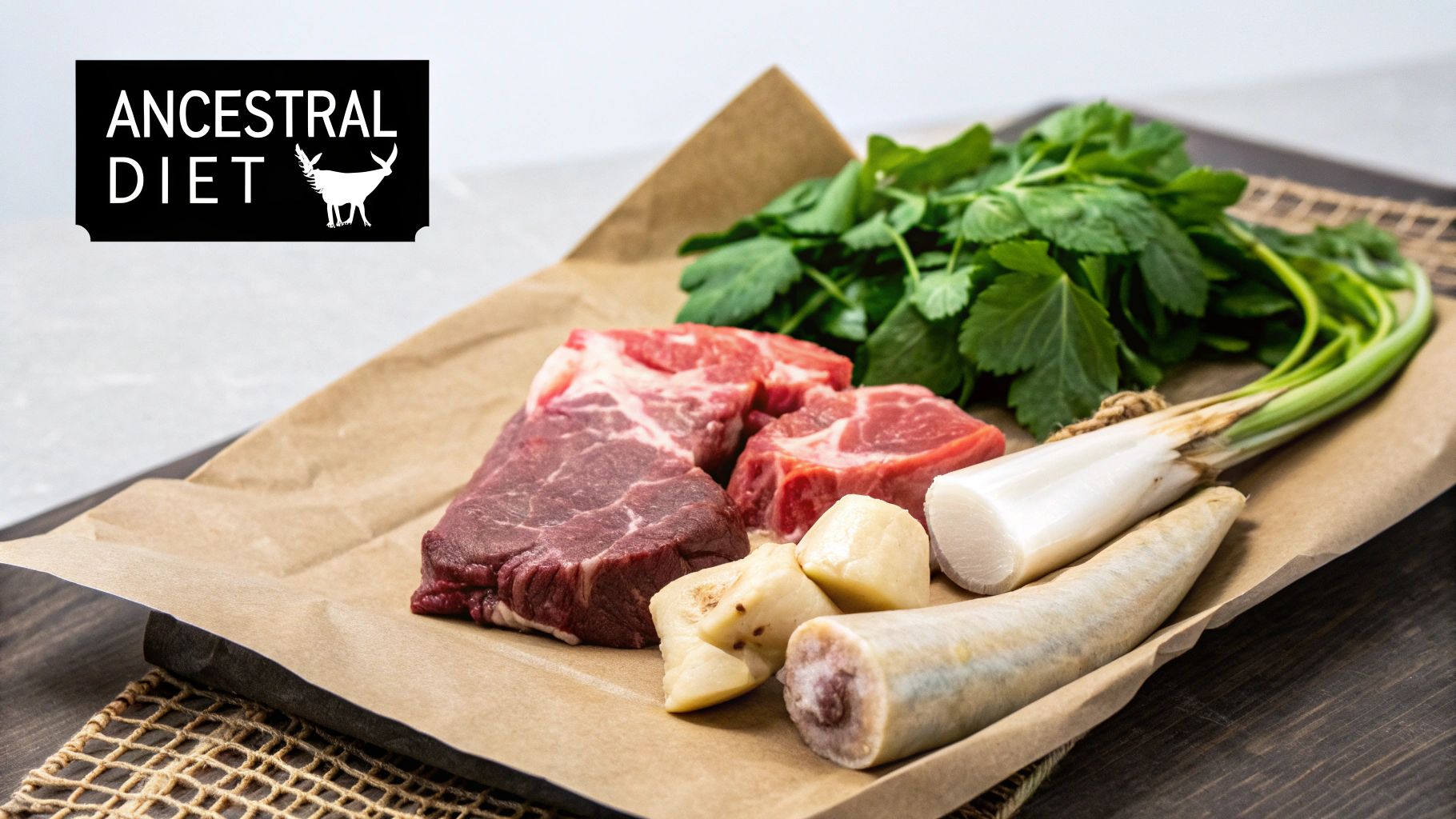
This back-to-basics approach is why so many dog owners are drawn to raw feeding—they see real, tangible benefits.
What Pulls Owners Toward Raw Feeding?
Ask anyone in the raw feeding community, and they’ll likely tell you about the incredible changes they’ve seen in their dogs. While every dog is different, a few benefits pop up time and time again:
- Glowing Coats and Healthy Skin: The unprocessed fatty acids in a raw diet often lead to a noticeably shinier, softer coat and can help clear up flaky skin.
- Cleaner Teeth: The simple act of gnawing on raw, edible bones is a natural toothbrush, scraping away plaque before it turns into tartar.
- More Get-Up-and-Go: A diet loaded with high-quality, easy-to-digest protein can give active dogs more consistent, stable energy levels.
- Smaller, Firmer Poops: When a diet is highly bioavailable, the dog's body absorbs more of the good stuff. The result? Less waste coming out the other end.
A key principle for raw feeders is that avoiding heat preserves the food's natural enzymes and amino acids. The thinking is that these delicate components help with digestion and support a more robust immune system, making it a more holistic way to feed your dog.
The Rise of Commercial Raw Options
Not too long ago, feeding raw was a serious DIY project that meant hours of research and prep. But as the raw vs. cooked food for dogs conversation has grown, convenient, pre-packaged commercial raw diets have hit the market. These products have made it infinitely easier for owners to serve up a balanced raw meal without the headache of sourcing and mixing it all themselves.
It’s still a niche market, for sure. A 2016 survey showed only about 3% of U.S. dog owners were buying commercial raw pet food, a tiny number compared to the almost 79% feeding kibble. But that niche is definitely growing as more people look for fresh alternatives. You can learn more about dog ownership dietary trends here.
Even with ready-made options, getting the nutritional balance just right can be a concern. This is where a quality meal enhancement like ChowPow can really shine. Sprinkling it over a raw meal helps bridge any potential nutritional gaps, adding a solid source of vitamins and minerals. It's a simple way to boost an already great diet, not replace it, giving you peace of mind that your dog is getting everything they need.
So, What About a Cooked Diet for Your Dog?
For plenty of dog owners weighing the raw vs. cooked debate, a gently cooked diet feels like the perfect compromise. You get all the goodness of fresh, whole-food ingredients but with the added safety and digestibility that comes from heating them up. It's a popular route for people who are a little nervous about the pathogens that can hang around in raw meat and want something they feel is safer and easier on their dog’s tummy.
The world of cooked dog food is pretty big, from home-prepped meals made with love to top-notch commercial brands. The main draw is simple: cooking kills off nasty bacteria like Salmonella and Listeria. This gives incredible peace of mind, especially in homes with young kids, elderly family members, or anyone with a weaker immune system. It just makes everything from storing the food to serving it feel safer and less complicated.
On top of that, the cooking process helps break down tougher proteins and starches. This can make them more bioavailable, meaning your dog’s body can absorb and use the nutrients more easily. This boost in digestibility is a game-changer for certain dogs who need a little extra TLC.
Who Benefits Most from Cooked Food?
While a healthy, active dog can do great on lots of different diets, cooked meals are a real lifesaver in specific situations. The gentle nature of cooked food makes it a go-to choice for:
- Dogs with Sensitive Stomachs: Because the heat makes nutrients easier to absorb, it puts less strain on the digestive system. This often translates to less gas and much firmer, more consistent poop.
- Senior Dogs: Our older friends might have more delicate digestive systems or dental problems that make chewing raw bones a no-go. A soft, warm, cooked meal is often far more appealing and kinder to their bodies.
- Pups Recovering from Illness: When a dog is bouncing back from being sick or having surgery, a super digestible and tempting meal is critical. Vets frequently recommend cooked food during these recovery periods.
- Picky Eaters: Let’s be honest, the smell of cooking food is hard to resist! That aroma can be a powerful trigger for a dog who usually turns their nose up at mealtime.
For owners who love the idea of fresh food but are wary of handling raw meat, a cooked diet is the ideal solution. It delivers many of the perks of a whole-food diet while putting microbial safety and easy digestion first.
Balancing a Homemade Cooked Diet
If you decide to go the homemade route, getting the nutrition right is your biggest hurdle. Just cooking up some chicken and rice won't cut it. Dogs have incredibly complex nutritional needs, and if those aren't met, you can cause serious health problems down the road.
It's absolutely essential to work with a veterinary nutritionist to create a recipe. They're the experts who can make sure the meal has the right balance of protein, fats, calcium, phosphorus, and all the essential vitamins and minerals. Without that professional guidance, you’re flying blind and could create dangerous nutritional gaps.
This is where a high-quality meal enhancer can be a lifesaver. Sprinkling a topper like ChowPow over a homemade cooked meal is a simple way to boost its nutritional power. It acts as a fantastic supplement to add back key nutrients that might be lost during cooking, ensuring your pup gets a well-rounded—and delicious—meal every time. Remember, it's a nutritional booster, not a substitute for a properly balanced recipe.
A Detailed Nutritional and Safety Comparison
When you dive into the raw vs. cooked food debate, the conversation always comes back to two things: nutrient quality and safety. Both approaches have their camps, and figuring out which is right for your dog means understanding the key trade-offs. The big one? Preserving every last natural nutrient versus eliminating nasty pathogens.
The biggest win for raw food is that it's completely unprocessed. Without heat, delicate goodies like natural enzymes and certain heat-sensitive vitamins (like thiamine and some B vitamins) stay perfectly intact. Fans of raw feeding argue this makes the nutrients more "bioavailable," meaning your dog's body can absorb and use them more easily.
On the flip side, cooking uses heat. While that's fantastic for killing off harmful bacteria, it can also degrade some of those same valuable nutrients. But it's not all bad news—cooking can also break down tougher proteins and plant fibers, which can actually make the food easier to digest for some dogs, especially older pups or those with sensitive stomachs.
The Safety Showdown: Pathogens vs. Nutrient Loss
Safety is where the debate really heats up. Let's be honest: raw meat diets come with a real risk of pathogens like Salmonella, Listeria, and E. coli. These aren't just a threat to your dog; they can cross-contaminate surfaces, bowls, and even spread to humans in the house through your dog's happy licks.
This infographic breaks down the primary benefits often linked to a cooked diet, centering on safety, easy digestion, and nutritional balance.
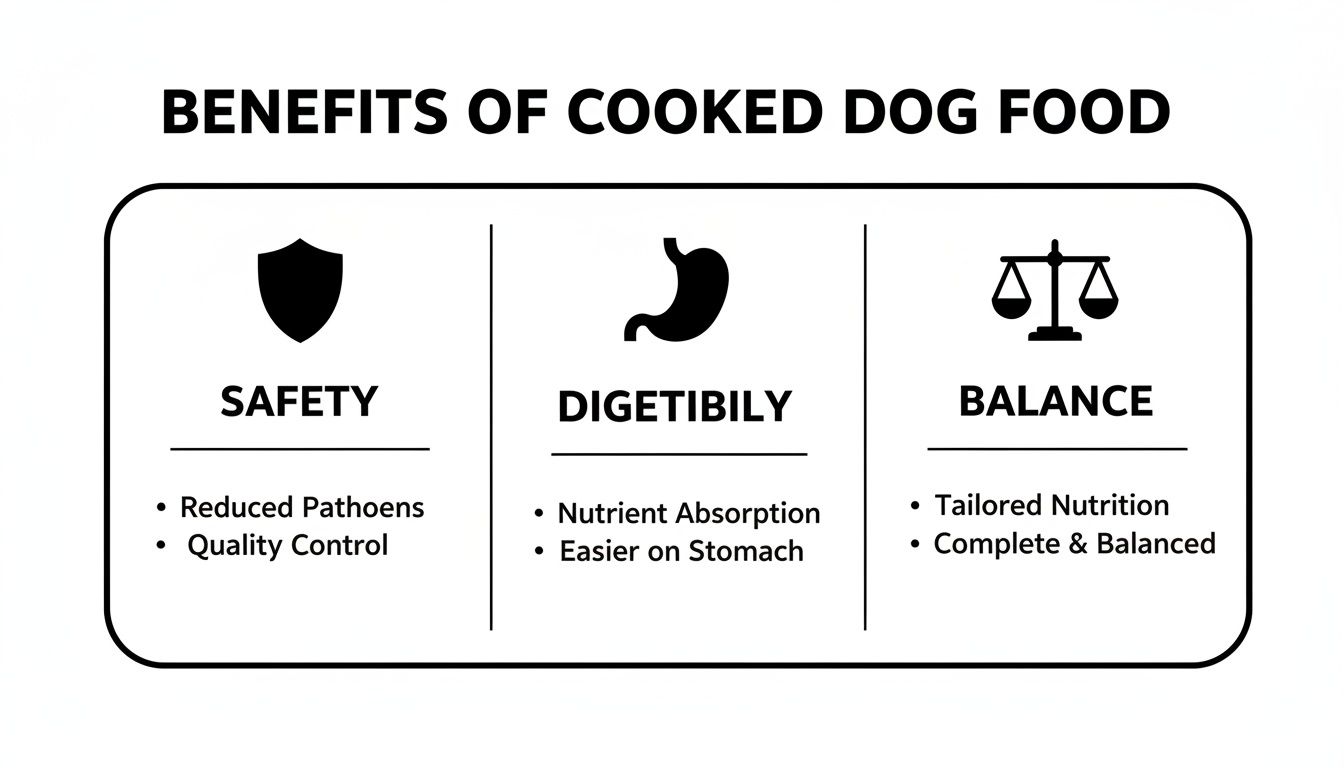
As you can see, the cooking process wipes out these microbial risks, which gives a lot of pet owners some serious peace of mind.
That said, the raw food world has come a long way. While the risks are still there, many commercial producers have stepped up their game. A lot of brands now use high-pressure processing (HPP), which is basically a non-thermal way to pasteurize the food. It kills pathogens without using heat, keeping the food's nutritional profile just as nature intended.
To help you weigh the options, here's a side-by-side look at how raw and cooked diets stack up.
Factor-by-Factor Breakdown: Raw vs. Cooked
| Evaluation Criteria | Raw Diet Analysis | Cooked Diet Analysis | Considerations for Dog Owners |
|---|---|---|---|
| Nutrient Retention | Excellent. Preserves natural enzymes and heat-sensitive vitamins. | Good to Moderate. Some nutrient loss from heat, but can improve digestibility of other components. | Your dog's specific health needs and digestive efficiency will determine which is more beneficial. |
| Safety (Pathogens) | High Risk. Potential for Salmonella, E. coli, Listeria. Requires strict handling. | Very Low Risk. Cooking effectively eliminates harmful bacteria. | Consider your household—do you have young children or immunocompromised family members? |
| Digestibility | Highly digestible for most healthy dogs due to natural enzymes. | Can be easier for seniors or dogs with sensitive systems as cooking breaks down fibers and proteins. | Observe your dog. Stool quality is a great indicator of how well they are digesting their food. |
| Cost | Can be very high for commercial brands. DIY can be cheaper but is time-intensive. | Commercial cooked foods are also premium-priced. DIY cost is comparable to raw. | Budget is a real factor. The best diet is one you can consistently afford to feed correctly. |
| Preparation Time | Significant. Requires careful portioning, sourcing, and sanitizing. | Significant. Involves chopping, cooking, cooling, and portioning. | Are you prepared for the daily or weekly commitment? Pre-made options exist but cost more. |
| Palatability | Often very high due to the natural aroma and texture. | Also very high. The aroma of cooked meat is a huge draw for many dogs. | This is a toss-up. Picky eaters may prefer one over the other, so it can take some trial and error. |
Ultimately, both paths require diligence. Whether you're carefully handling raw meat or ensuring a cooked recipe is nutritionally complete, you're taking on a big responsibility for your dog's health.
Practical Realities: Cost, Storage, and Prep Time
Beyond the science, there's the day-to-day reality of feeding your dog. A homemade diet—raw or cooked—is a serious commitment of time, energy, and knowledge. You have to get it right.
- Cost: High-quality commercial raw or cooked foods will almost always cost more than even premium kibble. A DIY raw diet can sometimes be easier on the wallet, but sourcing a variety of high-quality ingredients can add up quickly.
- Storage: Raw feeding demands a good amount of freezer space and a system to avoid cross-contamination. If you batch-cook meals, you'll also need dedicated freezer or fridge space.
- Preparation: Handling raw meat means getting serious about hygiene. Think dedicated utensils, separate cutting boards, and sanitizing every surface, every time. Even choosing ingredients requires research. For example, our guide on whether dogs can safely eat raw eggs digs into the pros and cons of just one common ingredient.
And don't forget about what you're storing the food in. It's worth learning about the importance of BPA-free materials in food storage to keep your dog's meals as safe as possible from prep to bowl.
At the end of the day, the best diet is one that's balanced, safe, and works for your lifestyle. For many dog owners, the perfect answer isn't "all or nothing"—it's a hybrid approach. Using a high-quality kibble as a base and sprinkling on a nutrient-dense topper like ChowPow can give you the best of both worlds.
This strategy keeps the convenience and safety of kibble while kicking its nutritional value and flavor up a notch with whole-food ingredients. ChowPow is designed as a meal enhancement, not a meal replacement. It’s the easiest way to make your dog’s current food better, adding a blast of concentrated protein and vitamins without the hassle of a full-on fresh food diet.
So, Which Diet is Right for Your Dog?
Deciding between raw vs. cooked food isn't about picking a "winner"—it's about finding the right fit for your individual dog. Their age, health status, activity level, and even their unique personality all play a huge role. The key is to take everything we've discussed and see how it applies to your furry best friend.
Before you make any big changes to their bowl, the most important first step is to chat with your veterinarian or a canine nutritionist. They know your dog's medical history and can offer personalized advice to ensure you're choosing a path that truly supports their long-term health.
For Dogs with Sensitive Stomachs
If your dog is constantly battling gas, loose stools, or just general tummy troubles, a gently cooked diet is often the best place to start. The cooking process essentially "pre-digests" the food, breaking down proteins and fibers. This makes the nutrients much easier for a sensitive gut to absorb and takes a lot of stress off their digestive system.
While some dogs with sensitivities can handle raw, the high fat content and potential bacterial load can sometimes overwhelm a compromised gut. A cooked diet offers a much safer, more digestible alternative that can help soothe their stomach and get things back to normal.
Senior Dogs and Their Unique Needs
As dogs enter their golden years, their dietary requirements shift. Senior dogs often have more delicate digestive systems, dental problems that make chewing a chore, and a weaker immune system. For all these reasons, a soft, gently cooked diet is usually the smarter choice.
The warm, savory smell of a cooked meal can be a powerful appetite booster for older dogs who might be losing interest in food. Plus, it's way easier on their teeth and gums than trying to crunch through raw bones.
What About the Picky Eaters?
When you're dealing with a fussy eater, both raw and cooked diets can be a game-changer. That strong, natural scent from a raw meal is often enough to pique the interest of even the most stubborn dog. On the other hand, the delicious aroma that fills the kitchen from a warm, cooked meal can be just as irresistible.
Honestly, with a picky dog, it often comes down to trial and error. Some dogs simply have a texture preference. The real goal is just to find a fresh food option that gets them excited for dinner again.
Health Conditions and Activity Levels
Your dog's overall health and how much they zoom around the yard are massive factors in this decision.
- High-Energy Dogs: Healthy, active dogs who are always on the go can often thrive on a properly balanced raw diet. The dense, high-quality protein is fantastic for supporting muscle maintenance and providing the sustained energy they need.
- Dogs with Health Issues: For dogs with specific conditions like pancreatitis or kidney disease, a cooked diet is almost always the safest bet. It allows for precise control over things like fat and phosphorus levels, which is critical for managing their illness. Likewise, any dog with a compromised immune system should steer clear of raw food due to the pathogen risk.
Getting a handle on what's in your dog's food is the first step to managing their health. For a deeper dive, check out our guide on how to read dog food labels and become a pro at decoding what's really in their bowl.
Ultimately, whether you lean towards raw or cooked, the goal is a diet that's complete, balanced, and right for your dog's situation. For many owners, the best solution isn't a total diet overhaul but a simple upgrade. Adding a scoop of ChowPow to their current kibble is an easy way to boost its nutritional value and flavor, making it a powerful supplement—not a replacement—that works with any feeding style.
Enhancing Any Diet with a Nutritional Topper
Whether you've landed on raw, cooked, or a top-shelf kibble in the great raw vs cooked food for dogs debate, the end goal is always the same: giving your dog the best nutrition you can. But here's the reality—every diet, no matter how perfectly planned, can use a little boost. This is where a great meal enhancer comes in, giving you a powerful way to elevate your dog’s bowl without a complete diet overhaul.
The key is to think of a topper as a supplement, not a substitute. It's not there to replace your dog's food, but to make that food fundamentally better. This approach lets you stick with the diet that works for you and your dog while adding a concentrated burst of whole-food goodness.
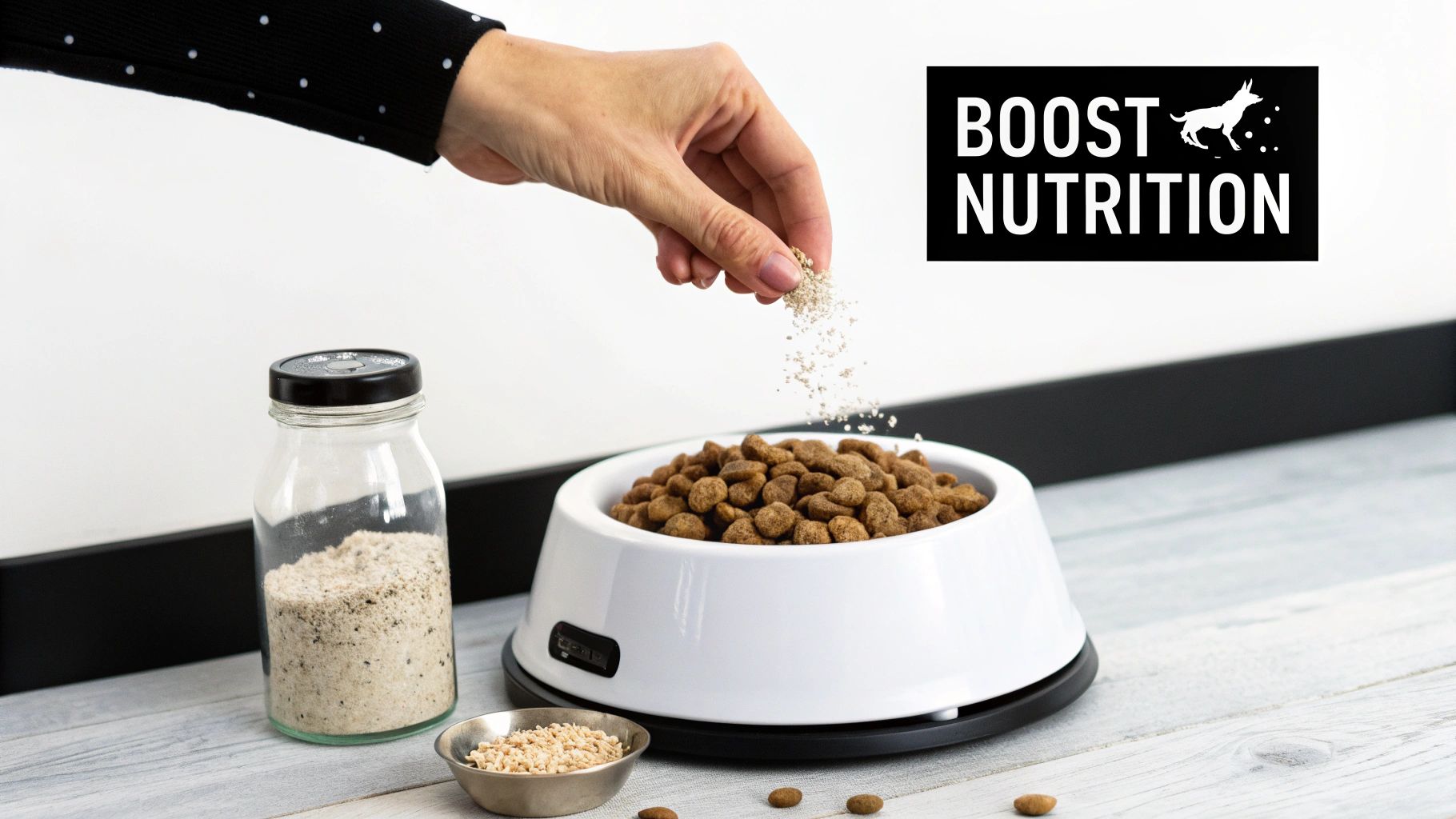
Bridging Nutritional Gaps with Ease
A high-quality topper like ChowPow is specifically formulated to fill common nutritional gaps that might exist in any feeding style. Its simple, dehydrated format packs a serious punch, offering shelf-stable convenience while preserving the integrity of every single ingredient.
A good topper serves a unique purpose depending on what's already in the bowl:
- For Kibble Feeders: It adds a layer of whole-food nutrition and a blast of flavor that can entice even the pickiest eaters. It helps restore nutrients that can be diminished during high-heat processing, giving their everyday kibble a powerful upgrade.
- For Homemade Cooked Diets: It helps replenish some of the heat-sensitive vitamins and minerals lost during cooking, giving you an extra layer of nutritional security.
- For Raw Diets: It provides a consistent and reliable source of key vitamins and minerals, helping to balance the meal and giving you peace of mind that all nutritional bases are covered.
ChowPow is designed to complement, not complicate. Just a sprinkle over your dog's existing meal adds a boost of high-quality protein, essential vitamins, and minerals that support everything from digestion to energy levels.
The Modern Way to Boost Nutrition
The growing interest in fresh and minimally processed diets isn't just a fad; it reflects a major shift in how we think about our pets' health. This trend is backed by some serious market growth—the global raw, fresh, and frozen dog food market was estimated at a whopping $17.7 billion in 2024. This boom is driven by owners like you seeking out premium, human-grade ingredients for their dogs.
A meal enhancer like ChowPow fits right into this movement. It gives you the benefits of whole-food ingredients in a simple, accessible format. For pet parents who are curious about fresh feeding but aren't quite ready to commit to a full homemade diet, it’s the perfect first step. Our guide on the benefits of adding food toppers to your dog's diet explores this in much more detail.
Ultimately, a topper gives you the flexibility to improve your dog's nutrition on your own terms. It’s a simple, effective way to make their good food even better.
Got Questions? Let's Talk Dog Diets
Stepping into the world of fresh dog food can feel like navigating a maze. Raw vs. cooked, homemade vs. store-bought… it’s a lot to take in! As you figure out the best path for your pup, questions are bound to come up. Here are some of the most common ones we hear, with straightforward answers to help you make the best choice.
Is a Raw Food Diet Safe for All Dogs?
Not always. While countless healthy adult dogs do incredibly well on raw diets, it's definitely not a one-size-fits-all approach. Think of it as a specialized tool, not a universal solution.
A raw diet might not be the right call for dogs with weaker immune systems, growing puppies whose bodies are still developing, or senior dogs with more delicate digestive tracts. You also have to consider the risk of pathogens like Salmonella, which is a serious factor in homes with young kids or immunocompromised family members. A chat with your vet is the best first step to see if it’s a good fit for your specific dog.
Can I Just Cook Human Food for My Dog?
This is a really common question, but it stems from a dangerous misconception. While you absolutely can—and many people do—prepare a cooked diet using fresh, human-grade ingredients, you can't just scrape your dinner plate into their bowl. Dogs' nutritional needs are wildly different from ours.
Plenty of human foods are downright toxic to them, like onions, garlic, and grapes. A truly balanced homemade diet needs to be carefully formulated, ideally by a veterinary nutritionist, to get the ratios of protein, fats, vitamins, and minerals just right.
An unbalanced diet can cause serious, long-term health problems, even if you’re using healthy ingredients. Getting professional guidance isn't just a good idea for homemade diets; it's essential.
How Do I Transition My Dog to a Fresh Food Diet?
Slow and steady wins this race. A gradual transition over 7-10 days is the secret to avoiding an upset stomach. If you switch too fast, you’re often just setting your dog (and your carpets) up for a bout of diarrhea.
Here’s a simple schedule that works for most dogs:
- Days 1-3: Start with a 75/25 split—that's 75% old food and 25% new food.
- Days 4-6: Move to an even 50/50 mix of their old and new meals.
- Days 7-9: Flip the ratio to 75% new food and just 25% of the old stuff.
- Day 10: You’ve made it! Go 100% with the new food.
Keep an eye on your dog’s stool and energy levels the whole time. If you spot any trouble, just slow the process down a bit.
How Can a Meal Topper Help a High-Quality Diet?
Even the best dog foods on the market can get a boost. A nutritional topper like ChowPow isn't about replacing the meal you already provide; it's about enhancing it. Think of it as a powerful supplement that adds a concentrated dose of whole-food nutrients to support your dog’s overall wellness. For kibble eaters, it brings much-needed moisture and a flavor boost that can entice even the pickiest dogs. For those on homemade diets, it helps fill in any potential nutritional gaps with key vitamins and minerals.
Of course, a great diet is just one part of a healthy life. A clean home environment is another pillar of responsible dog ownership. For more on that, you might want to read up on why regular carpet cleaning is important for pet owners.
Ready to give your dog's current meal an upgrade without a complete diet overhaul? ChowPow makes it simple to boost the nutrition and flavor of any food—kibble, raw, or cooked. See what a little sprinkle of whole-food goodness can do.
-
Product on sale
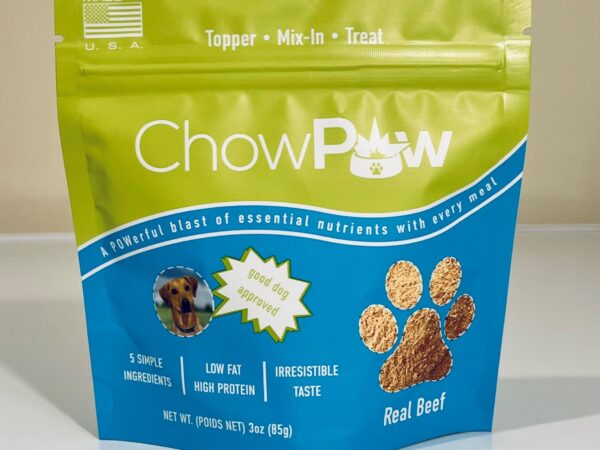 Dog Food Topper - Beef HeartOriginal price was: $14.99.$10.95Current price is: $10.95. - or subscribe and save up to 20%