
Guide: can you give a dog pepcid safely and effectively
Yes, you often can give a dog Pepcid (famotidine), but it's absolutely critical to do this only under the guidance of a veterinarian. While it's a common over-the-counter heartburn medicine for humans, giving it to your dog requires a professional's diagnosis and a precise dosage to be safe and effective.
What is Pepcid and Why is it Used in Dogs?
When your dog has an upset stomach, it’s natural to look in your medicine cabinet and wonder if you can share your own Pepcid. While famotidine—the active ingredient in Pepcid—can reduce stomach acid, you need a vet to make sure it’s the right choice for your dog.
Think of Pepcid like a special tool that turns down the flow of acid in your dog's stomach. It’s an H2 blocker, which means it slows down acid production. Though the FDA hasn't officially approved famotidine for animals, vets often prescribe it "off-label" for digestive issues like acid reflux and gastritis.
Why Your Vet's Input is Non-Negotiable
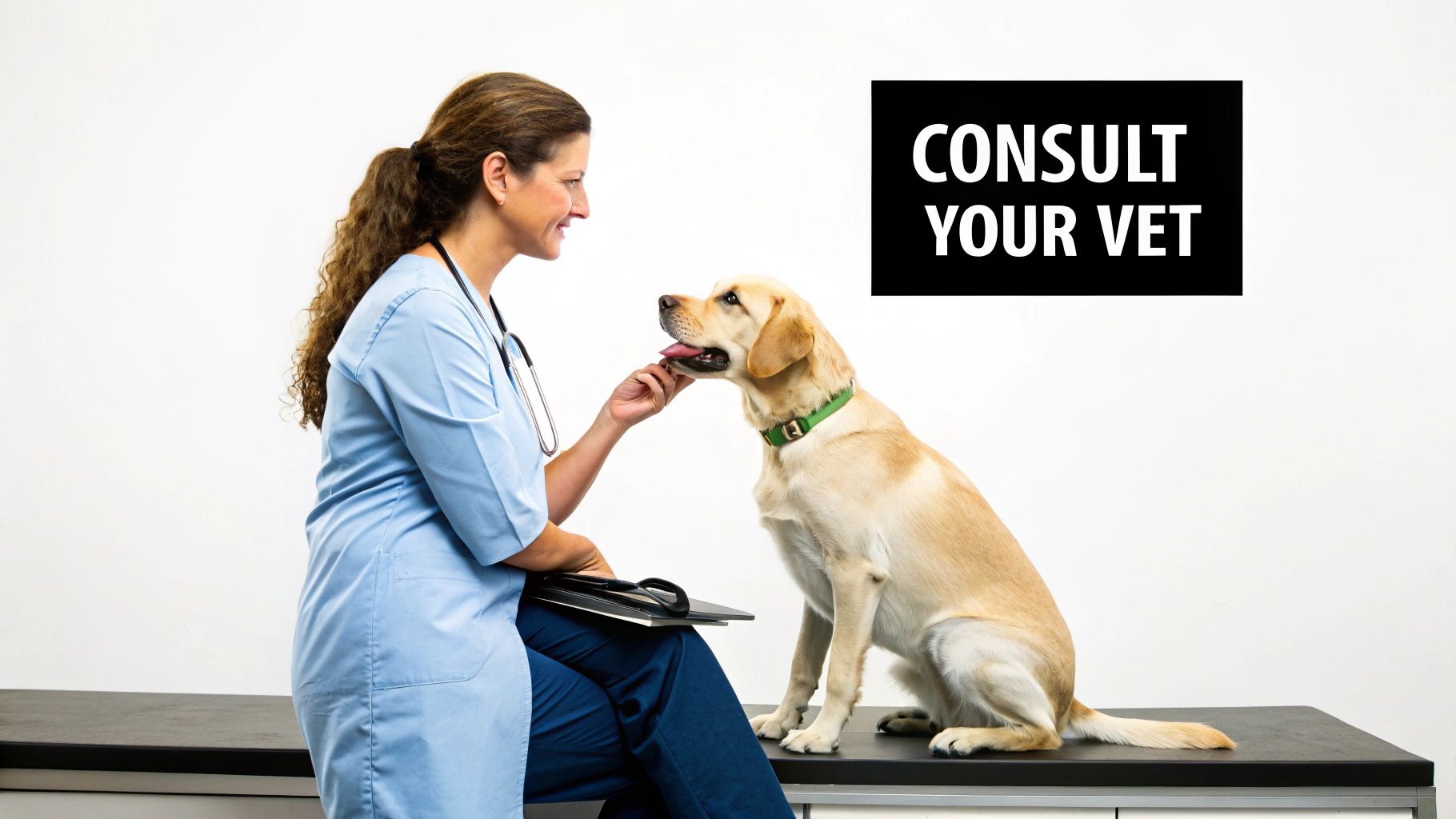
Not all tummy troubles are the same. Vomiting or a sudden loss of appetite could be simple indigestion—or signs of something more serious, like pancreatitis or a blockage. Giving Pepcid without a vet’s diagnosis can mask serious problems and delay proper treatment.
Your veterinarian will:
- Diagnose the real cause of your dog’s symptoms.
- Determine if Pepcid is the right treatment.
- Calculate the exact dose based on your dog’s weight, age, and health.
The golden rule for any over-the-counter medication is to never give it to your dog without professional veterinary approval.
Pepcid for Dogs at a Glance
| Aspect | Key Information |
|---|---|
| What It Is | Pepcid (famotidine) is an H2 blocker that reduces stomach acid. |
| Vet's Role | A vet must diagnose the issue and prescribe the correct dose. Never self-medicate your dog. |
| Common Uses | Acid reflux, gastritis, ulcer prevention. |
| Safety Rule | Always consult your veterinarian first. |
Why Vets Recommend Pepcid for Dogs
Pepcid tackles one specific problem: too much stomach acid. In your dog's stomach, histamine receptors act like faucets that release acid. Famotidine blocks these H2 receptors, turning down acid production but still allowing normal digestion.
Common Reasons for a Pepcid Prescription
- Soothing Acid Reflux: Reduces acidity when stomach contents splash into the esophagus. You can learn more about recognizing and managing acid reflux in dogs in our detailed guide.
- Healing Stomach Ulcers: Lowers acid to let painful sores in the stomach lining start to heal.
- Calming Gastritis: Eases inflammation in the stomach lining, reducing vomiting and discomfort.
- Protecting the Stomach: Often given alongside NSAIDs to prevent ulcers before they start.
By reducing stomach acid, Pepcid creates a gentler environment for healing.
Even with the right dose, the bitter taste of a pill can be a hurdle—especially for dogs with low appetites. This is why many pet parents add a nutritious meal topper. The cat-and-dog food toppers market hit USD 3.2 billion in 2024 and is expected to nearly double to USD 6.1 billion by 2033. Dogs are driving 60% of this growth, as more owners seek high-protein, palatable options. That's where ChowPow shines: a meal enhancement that boosts flavor and nutrition, not a substitute for your dog's regular kibble.
How to Determine the Correct Pepcid Dosage for Your Dog
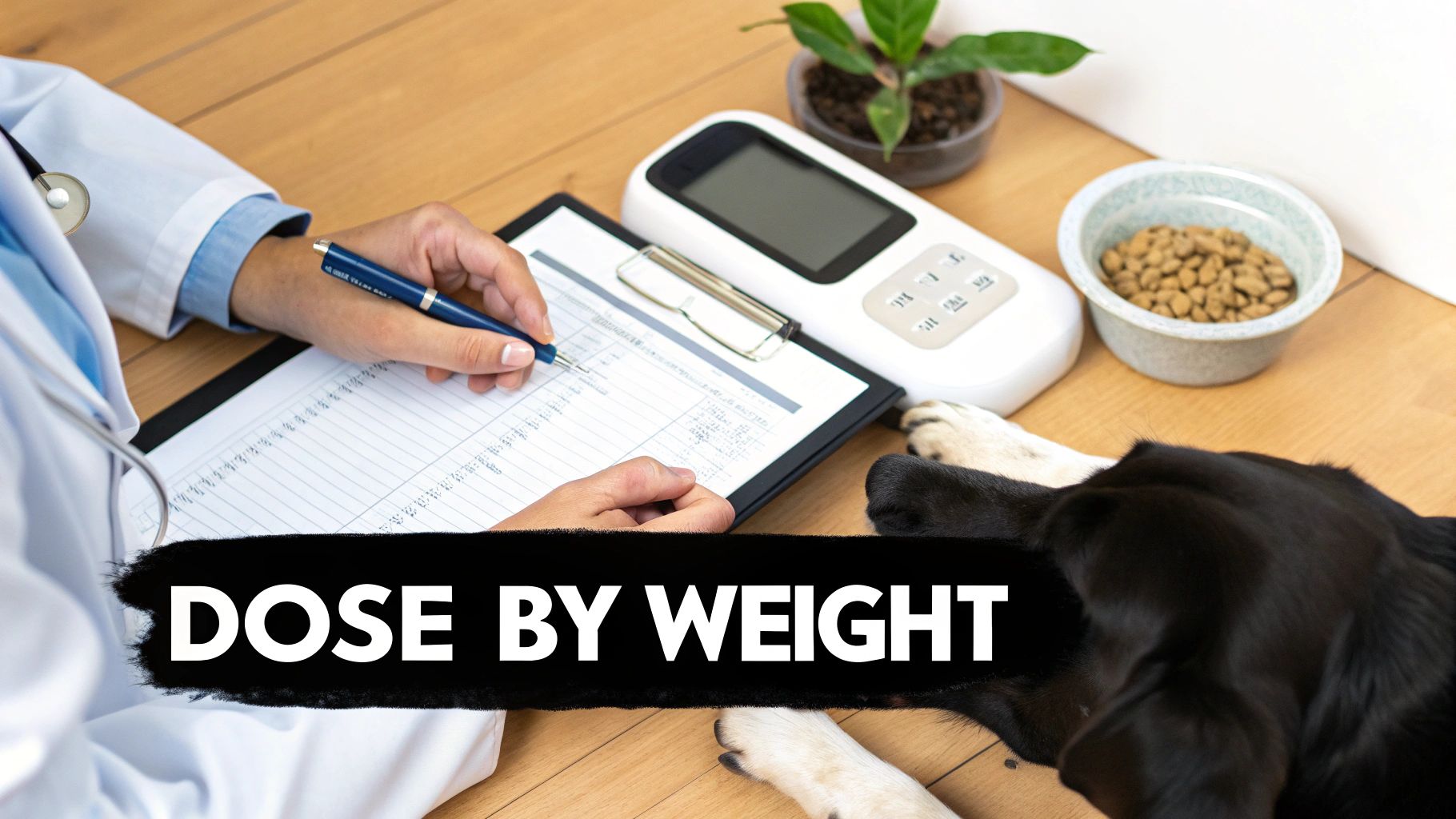
Figuring out the right Pepcid dose is critical and should only be done by a veterinarian. Every dog is unique, and a vet will consider factors like age, kidney function, and other medications before prescribing.
The Standard Dosage Range
Most vets recommend 0.25 to 0.5 mg of famotidine per pound of body weight, given once or twice daily. For example, a 20-pound dog might get 5–10 mg per dose. Always follow your vet’s exact instructions.
Estimated Pepcid (Famotidine) Dosage by Dog Weight
| Dog Weight (lbs) | Estimated Daily Dose (mg) | Example Dose (using 10mg tablets) |
|---|---|---|
| 10 lbs | 2.5 mg | One-quarter of a 10mg tablet |
| 20 lbs | 5 mg | One-half of a 10mg tablet |
| 40 lbs | 10 mg | One full 10mg tablet |
| 60 lbs | 15 mg | One and a half 10mg tablets |
| 80 lbs | 20 mg | Two full 10mg tablets |
Choosing the Right Product Is Crucial
When you shop, check the label to make sure famotidine is the ONLY active ingredient. Common options include:
- Pepcid AC (Original Strength): 10mg famotidine tablets—easy to split for small dogs.
- Pepcid Maximum Strength: 20mg famotidine—best for larger breeds, but tricky to dose for small dogs.
- Pepcid Complete (AVOID): Contains extra ingredients like calcium carbonate and magnesium hydroxide, which can harm dogs.
Always read the active ingredients list before buying any over-the-counter medication.
Once you have the right product and dose, the final step is making sure your dog actually takes it. A fine powder supplement like ChowPow can be a game-changer. Sprinkle it over kibble to add flavor, protein, and nutrients—then hide the pill in the mix. It makes medicine time part of a tasty meal rather than a separate, stressful event.
Administering Pepcid Without the Stress
Even a perfect dose won't help if your dog refuses to eat the pill. Tricks like peanut butter or cheese can work briefly but often fail with savvy dogs. Instead, make the medicine part of mealtime with a meal topper.
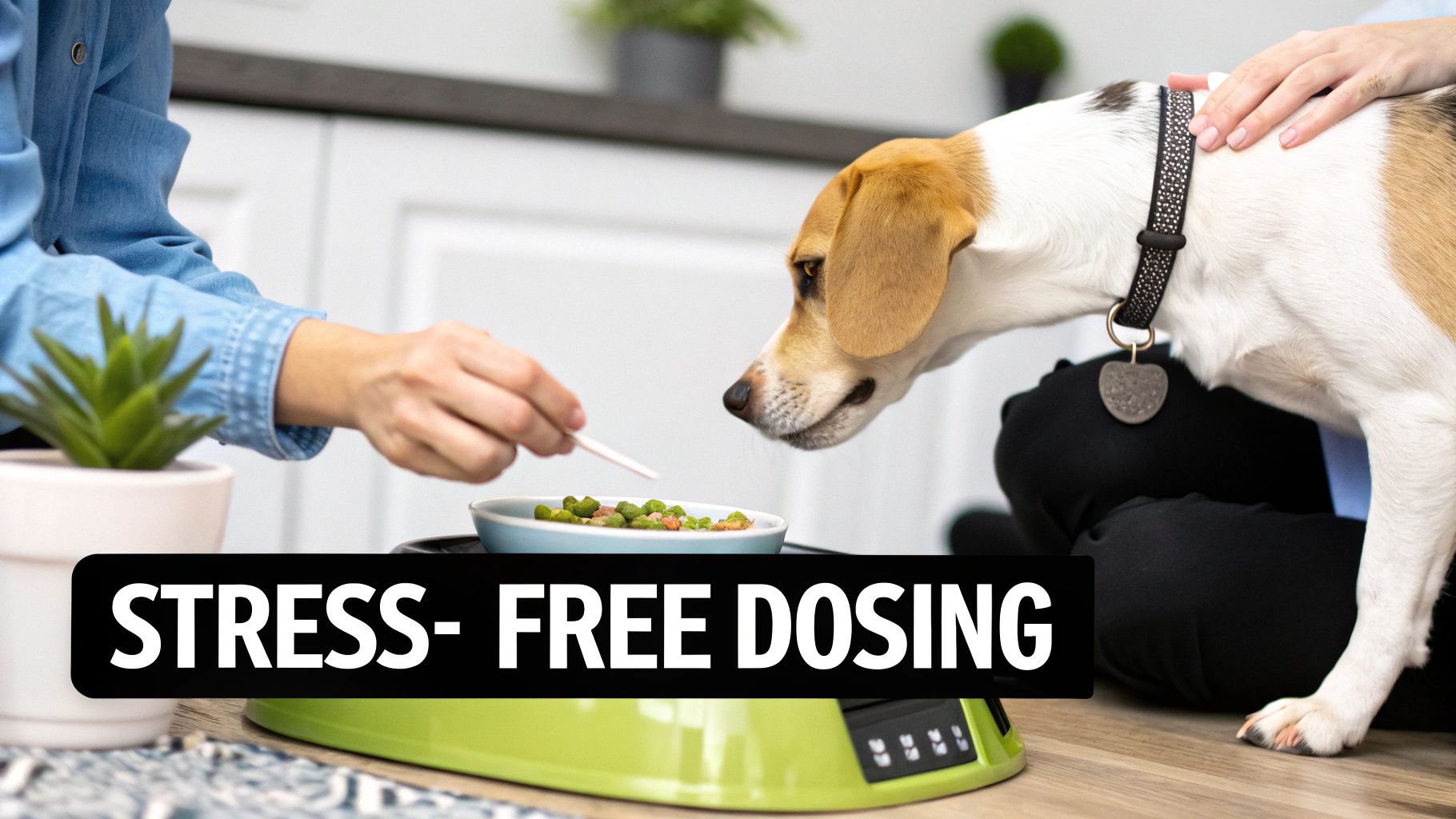
Transforming Mealtime into Medicine Time
ChowPow is a meal enhancer, not a replacement for your dog's kibble. It contains a dehydrated beef heart base with added vitamins and minerals. Here’s how to use it:
- Prepare Their Meal: Measure their usual kibble portion.
- Add the Topper: Sprinkle ChowPow over the food.
- Hide the Pill: Tuck the Pepcid tablet into the coated kibble. You can also crush the tablet (if your vet approves) and mix it in.
- Stir Gently: Ensure the medicine is fully disguised.
This method not only hides the pill but adds a nutritional punch that supports recovery. If you need more tips, check out our guide on mastering medication moments with ease.
Supporting Your Dog's Digestive Health Naturally
Pepcid is great for short-term relief, but long-term wellness comes from good daily habits and a balanced diet. Think of medication as a quick fix—it stops the immediate issue, but proactive measures help prevent flare-ups.
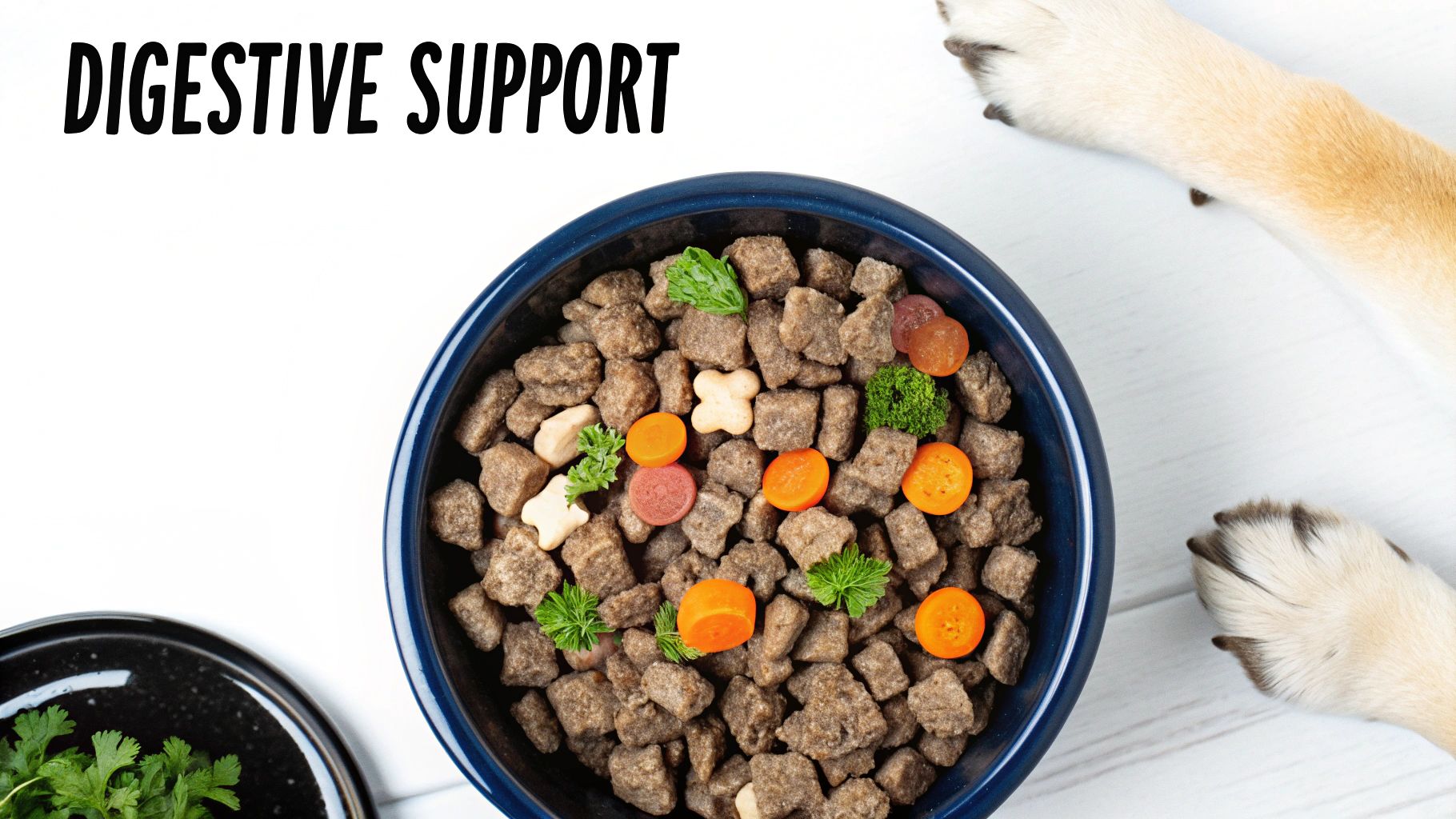
Boosting Nutrition for a Healthier Gut
Small, frequent meals can reduce acid reflux by preventing an overly full stomach. Always keep fresh water available. You can also enhance their diet with a supplement like ChowPow. Remember, ChowPow is a supplement to your dog’s regular food, not a substitute. A simple sprinkle of our blend—made from beef heart, carrots, and other whole-food ingredients—enriches kibble with protein, vitamins, and minerals while avoiding fillers and preservatives that can trigger stomach upset.
To learn more about natural gut support, read how to improve gut health naturally.
The global market for dog food toppers was valued at USD 6.1 billion in 2024 and is expected to hit USD 12.6 billion by 2034. This boom shows how many pet parents want smarter ways to boost nutrition and entice picky eaters.
A Proactive Path to Wellness
By upgrading your dog’s diet, you build a balanced digestive system that’s less prone to issues like acid reflux and gastritis. If your vet has prescribed a short-term Pepcid regimen, it’s the perfect time to add supportive strategies like a bland diet or a high-quality meal enhancer. Our guide on a bland diet for dogs can help you put together simple, gentle meals during recovery.
Pepcid for Dogs: Your Top Questions Answered
Can I Give My Dog Pepcid Every Day?
Only if your vet prescribes a daily regimen. Long-term use needs veterinary supervision to monitor kidney and liver function and to ensure no underlying issues are masked.
Which Type of Pepcid Is Safe for Dogs?
Choose products with ONLY famotidine as the active ingredient. Vets usually recommend "Pepcid AC" or "Original Strength Pepcid" in 10mg tablets. Avoid "Pepcid Complete" and other multi-symptom formulas with calcium carbonate, magnesium hydroxide, or pain relievers.
Always read the ingredient list on the product label. If you see anything other than famotidine, leave it on the shelf.
How Quickly Does Pepcid Work in Dogs?
Most dogs show relief within 1 to 2 hours. You may notice reduced signs of discomfort, such as less lip-licking or pacing. Pepcid manages acid while your dog's body heals.
Are There Any Side Effects I Should Watch For?
Side effects are rare but can include:
- Mild drowsiness or lethargy
- Temporary changes in appetite
- Mild constipation or diarrhea
Serious reactions are very uncommon but require immediate vet attention: nonstop vomiting, severe restlessness, or pale gums.
At ChowPow, we know a healthy gut is the cornerstone of a happy dog. While medications like Pepcid have their place, boosting your dog's daily diet is just as important. Our beef heart meal enhancer comes in convenient, resealable bags to keep the powder fresh. Just sprinkle it over their regular kibble to tempt picky eaters, add vital nutrients, and make mealtime exciting—especially when they're not feeling their best. Give your dog the simple, powerful nutritional boost they deserve.
-
Product on sale
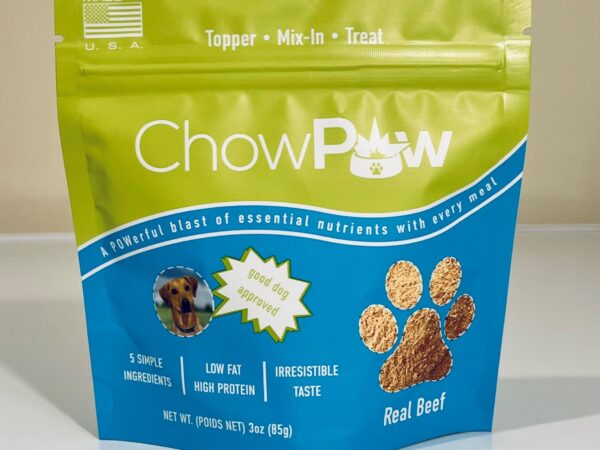 Dog Food Topper - Beef HeartOriginal price was: $14.99.$10.95Current price is: $10.95. - or subscribe and save up to 20%