
A Practical Guide to the Bland Diet for Dogs
When your dog's stomach is acting up, the last thing their sensitive gut needs is a complex, hard-to-digest meal. That’s where a bland diet comes in. It’s a simple, temporary food plan—think boiled chicken and white rice—designed to give their digestive system a much-needed break and a chance to heal.
The Purpose of a Digestive Reset
Think of your dog's regular kibble as a hearty, complex meal. When their gastrointestinal (GI) tract is inflamed from something like diarrhea or vomiting, trying to process that rich food is like asking a sprained ankle to run a marathon. It’s just too much work.
A bland diet for dogs effectively hits the "reset button" on their digestive system.
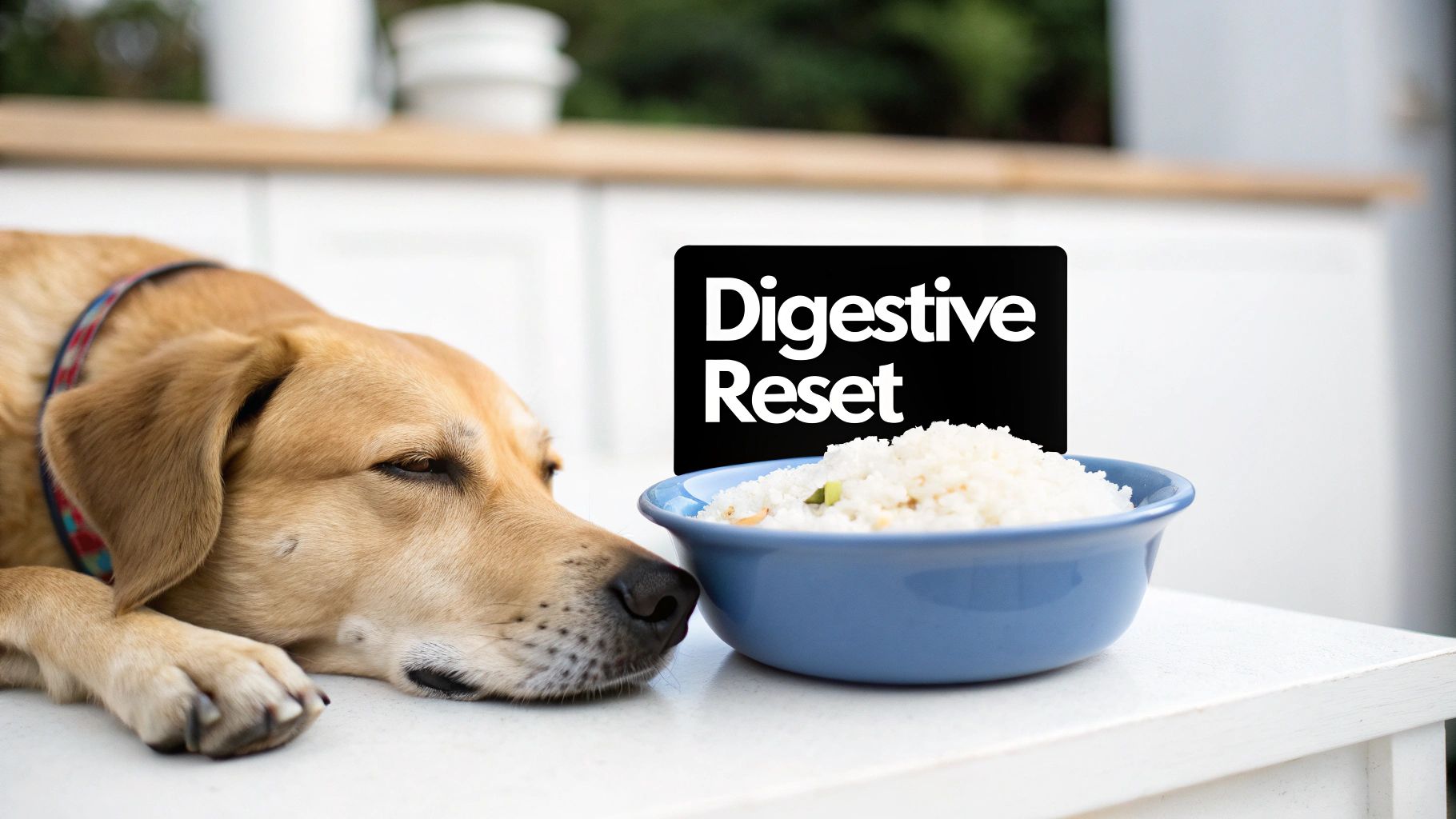
The whole idea is simplicity. By swapping out their regular food for something low in fat and fiber, you're minimizing the effort required for digestion. This simple switch allows the gut lining to calm down and start its natural healing process.
Why This Simple Approach Is So Effective
The magic of a bland diet is in its gentle nature. Foods like boiled, skinless chicken and plain white rice are incredibly easy for a dog’s body to break down and absorb. There are no fancy ingredients here; it’s all about giving the digestive system a vacation.
This temporary feeding strategy is a go-to for veterinarians managing common GI issues. Because the ingredients are so low in fat, fiber, and seasoning, they don't irritate the digestive tract. In fact, vets estimate these diets improve symptoms in 70-80% of dogs within just 24 to 48 hours.
The key benefits of this digestive reset include:
- Reduced Stomach Irritation: Simple, plain foods are far less likely to cause more inflammation.
- Easier Nutrient Absorption: Even a compromised gut can pull essential nutrients from these easy-to-digest foods.
- Promotes Hydration: Boiled foods have a high moisture content, which is a huge help for dogs who've lost fluids from vomiting or diarrhea.
- A Safe First Step: It’s a reliable and safe first response that you can manage at home for minor tummy troubles.
Here’s a quick look at the core components of a bland diet and what makes them so effective.
Core Ingredients for a Healing Diet
| Ingredient | Primary Role | Why It Works |
|---|---|---|
| Lean Protein | Provides essential amino acids | Easy to digest; supports tissue repair without adding heavy fats. |
| Simple Starch | Binds stool and provides energy | Low in fiber, which helps firm up loose stools and gives a gentle energy source. |
| Moisture | Hydrates the body | Replaces fluids lost during digestive upset, preventing dehydration. |
These ingredients work together to soothe the gut, firm up stool, and get your dog feeling better, fast.
Understanding the Diet's Limitations
While a bland diet is a fantastic short-term tool, it’s crucial to remember that it is not a complete and balanced long-term solution. It’s missing the full spectrum of vitamins, minerals, and fatty acids your dog needs to thrive. Think of it as medicine, not a permanent menu change.
A bland diet is designed for healing, not for long-term health. Its purpose is to get your dog back on their paws, after which a transition back to a balanced diet is essential for their overall well-being.
Keeping a dog on a bland diet for too long without proper supplementation can lead to nutritional gaps. For dogs with ongoing digestive problems, a different, more comprehensive approach is needed. If you're exploring options for a dog with a chronically tricky tummy, our guide on what to feed a dog with a sensitive stomach is a great resource.
This initial recovery phase sets the stage for a healthy return to their normal routine. By soothing their system first, you create the perfect foundation for reintroducing their regular food. Later, we'll talk about how to enhance their bland meals safely during recovery—especially for picky eaters who might turn their nose up at even the simplest food.
Preparing Simple and Effective Bland Meals
When your dog's tummy is in turmoil, the last thing you need is a complicated meal prep session. The whole point of a bland diet is to give their digestive system a much-needed break with something simple, gentle, and easy to process. Let's walk through the go-to recipes and the crucial details that make them work.
The absolute golden rule of a bland diet? Keep it plain. That means no salt, no oil, no seasonings, and definitely no spices. Adding any of these can irritate an already unhappy gut and completely defeat the purpose. Think boiled, basic, and boring—it’s exactly what they need right now.
The Classic: Boiled Chicken and White Rice
This recipe is the gold standard for a reason. It's gentle, easy to make, and most dogs will still eat it even when they feel crummy. Getting the details right is what makes it so effective.
- The Protein: Always use boneless, skinless chicken breast. It’s lean, easy to digest, and won't add unnecessary fat to the equation.
- The Starch: Plain white rice is your best friend here. While we usually praise brown rice for its fiber, that extra fiber is exactly what you don't want for a sensitive stomach. Low-fiber white rice helps bind things up and firm loose stool.
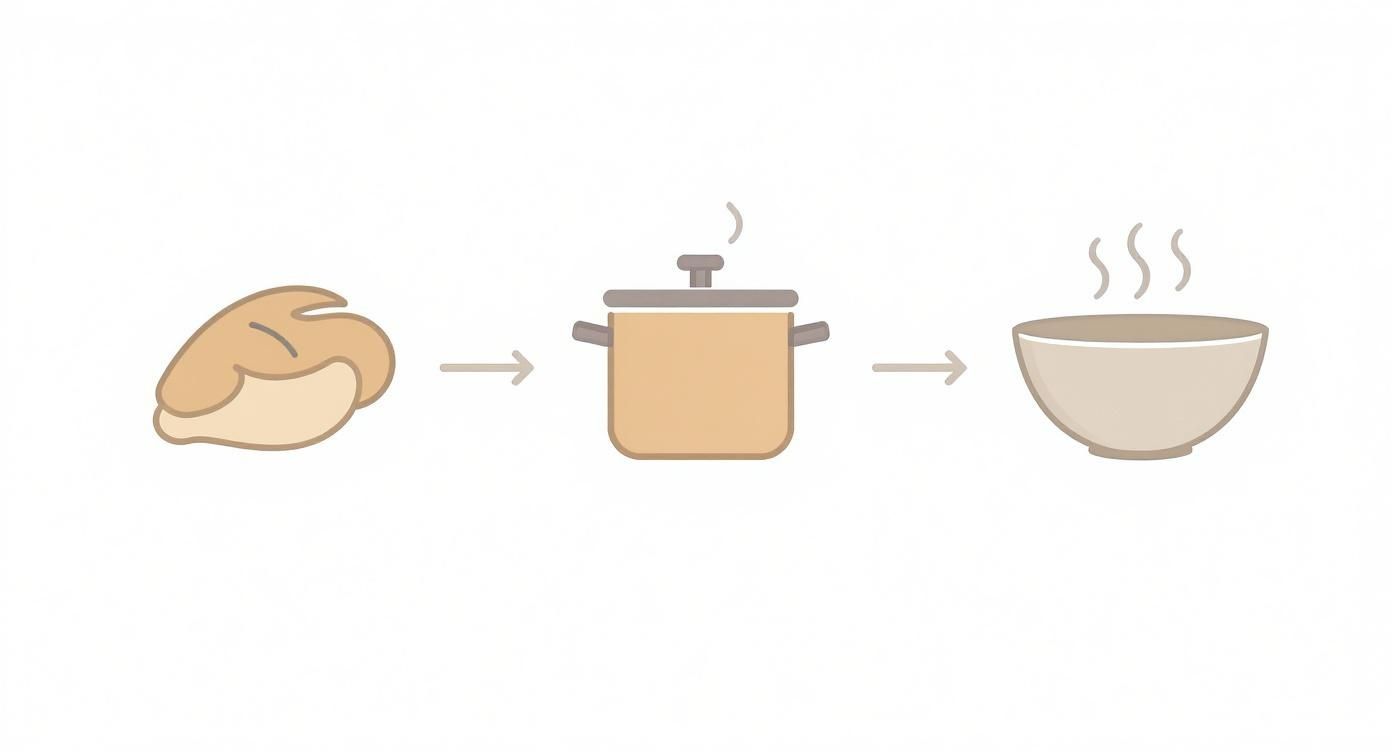
- The Method: Boil the chicken until it's cooked all the way through, with no pink remaining. Cook the rice separately in plain water. Once everything is done, shred the chicken into small, easy-to-manage pieces.
A great starting point for the ratio is one part shredded chicken to two parts cooked white rice. Mix it all together and, most importantly, let it cool down to room temperature before serving.
Practical Alternatives for Picky or Sensitive Pups
Of course, not every dog does well with chicken, or you might just not have any on hand. No problem. There are several fantastic, vet-approved alternatives that get the job done just as well. Just remember, the "keep it plain" rule still applies.
Here are a few solid substitutes:
- Lean Ground Turkey & Pumpkin: Grab some lean ground turkey—93% lean or higher is ideal. Boil it and then drain off every last bit of fat. Mix one part of the cooked turkey with two parts of plain, canned pumpkin. Make sure it's 100% pure pumpkin and not pumpkin pie filling, which is loaded with sugar and spices. Pumpkin is a powerhouse of soluble fiber, which is amazing for regulating digestion.
- Low-Fat Cottage Cheese & Potato: For a meat-free option, low-fat cottage cheese provides a gentle source of protein. Pair it with boiled and mashed white or sweet potatoes (peels removed). A good ratio to try is one part cottage cheese to two parts mashed potato.
- Lean Ground Beef & White Rice: If you're going with beef, it needs to be extra-lean. Boil it just like the turkey and drain all the fat thoroughly. This can be a lifesaver for dogs who turn their noses up at poultry.
A quick reminder: The goal is to be gentle. If you're trying a new ingredient for the first time, introduce it carefully and keep an eye out for any negative reactions. If your dog has known food allergies, it's best to stick with protein and starch sources you know are safe for them.
Why Preparation is Everything
How you cook the food is just as critical as what you cook. One small mistake can accidentally set your dog's recovery back.
The Do's:
- Boil proteins until they are completely cooked.
- Drain every bit of fat from ground meats.
- Shred or chop meat finely to make digestion easier.
- Let the food cool completely to room temperature before serving.
The Don'ts:
- Never add salt, butter, oil, or any seasonings.
- Stay away from garlic or onion in any form (including powders), as they are toxic to dogs.
- Don't serve the food hot; it can cause further irritation.
Getting these simple steps right ensures you're providing a safe, soothing meal that truly helps. But remember, while these recipes are perfect for a temporary reset, they aren't nutritionally complete for the long haul.
For a recovering dog whose appetite is lagging, a nutrient-dense meal enhancement like ChowPow can be a game-changer. A little sprinkle on their bland meal not only makes it more enticing but also adds a boost of vital nutrients without upsetting their sensitive system. It’s the perfect way to make their healing journey a little easier and a lot tastier.
How Much to Feed and When: A Gentle Approach
So you've cooked up a simple, soothing meal for your pup. Now for the million-dollar questions: "how much?" and "how often?" When your dog's digestive system is already upset, the last thing you want to do is overload it—even with something as gentle as boiled chicken and rice. Getting this part right is crucial for a speedy recovery.
Instead of their usual one or two big meals, the goal is to give their system a break. Think small, frequent meals spread throughout the day. A recovering gut is weak; asking it to digest a huge portion is like asking a sick friend to run a marathon. It’s just too much, too soon.
By breaking their daily food intake into four to six tiny meals, you give their digestive tract a chance to process everything without getting overwhelmed.
Getting the Portion Size Right
Figuring out the exact amount to feed can feel like a guessing game, but there's a good place to start. A general rule of thumb is to feed about 1/2 cup of the bland diet mixture for every 10 pounds of your dog's body weight, per day.
So, a 20-pound dog would get roughly one cup of food total for the day, which you’d then split into those four to six smaller servings.
But remember, this is just a starting point. Every dog's metabolism and needs are different, especially when they aren't feeling their best. To give you a clearer picture, here's a sample guide.
Sample Daily Feeding Guide by Dog Weight
This table offers a general guideline for total daily food amounts. Always double-check with your vet, as they can provide the most accurate recommendation for your dog's specific situation.
| Dog's Weight | Approximate Daily Amount (Total) | Serving Suggestion |
|---|---|---|
| 5 lbs | 1/4 cup | Split into 4-6 tiny meals (approx. 1 tbsp per meal) |
| 10 lbs | 1/2 cup | Split into 4-6 small meals (approx. 2 tbsp per meal) |
| 20 lbs | 1 cup | Split into 4-6 small meals (approx. 1/4 cup per meal) |
| 40 lbs | 2 cups | Split into 4-6 small meals (approx. 1/2 cup per meal) |
| 60 lbs | 3 cups | Split into 4-6 small meals (approx. 3/4 cup per meal) |
| 80 lbs | 4 cups | Split into 4-6 small meals (approx. 1 cup per meal) |
Again, these are just estimates. Factors like age, activity level (which is likely low), and the severity of their tummy troubles all play a role.
Crucial Tip: Your vet is your best resource. Give them a quick call to confirm portion sizes. They can give you precise advice based on your dog’s condition, age, and ideal weight, ensuring they get enough calories to heal without putting on extra pounds.
This simple process shows just how basic the preparation should be. You're just cooking and combining ingredients—no spices, no oils, nothing extra.
The Slow Transition Back to Normal Food
A bland diet is a short-term fix, not a forever food. It's typically only needed for three to five days. Once you see things moving in the right direction—firmer poop, no more vomiting, and a happy appetite—it's time to start bringing back their regular food.
This needs to be a slow, gradual process. Rushing this step is a classic mistake that can land you right back at square one with an upset tummy.
Here’s a simple, vet-approved schedule to follow over a week:
- Days 1-2: Mix 75% bland diet with 25% regular food.
- Days 3-4: Shift the ratio to 50% bland diet and 50% regular food.
- Days 5-6: Go to 25% bland diet and 75% regular food.
- Day 7: If everything is still looking good, you can go back to 100% of their regular diet.
Keep a close watch on your dog's stool and energy levels during this transition. If their digestive issues flare up again, just dial it back to the previous ratio for another day or two before trying to move forward.
This careful reintroduction gives their system time to readjust to the higher fiber, fat, and different proteins in their normal kibble. For pups who have become a bit picky or lost their appetite during their sickness, you might need a little something extra to entice them.
A sprinkle of a nutrient-dense supplement like ChowPow can be a game-changer here. It adds an irresistible flavor to both the bland meal and their regular food, making the transition much smoother. Plus, it provides a boost of high-quality protein and nutrients just when they need it most. It's the perfect partner for their recovery journey.
Boosting Nutrition and Tempting a Picky Eater
While a bland diet is a lifesaver for an upset tummy, it's really just a temporary band-aid. It’s designed to be gentle and easy to digest, but it’s definitely not a complete nutritional meal. This short-term fix is missing the full range of essential vitamins, minerals, and fatty acids your dog needs to feel their best and make a strong recovery.
Think of it this way: the bland diet stops the immediate problem, but your dog's body needs the right building blocks to truly heal. This is where a high-quality meal enhancement can make all the difference, filling in those nutritional gaps without upsetting a sensitive gut.
One of the most stressful parts of a dog being sick is their loss of appetite. When they turn their nose up at everything, it's tough to get the calories and hydration they desperately need to bounce back. A simple, targeted meal enhancement can be a game-changer.
Safely Bridging the Nutritional Gap
A temporary diet of boiled chicken and rice is notoriously low in key nutrients like calcium, iron, and essential fatty acids. While this isn’t a huge deal for a day or two, sticking to it for longer can slow down recovery and affect their overall health.
The trick is adding these nutrients back in without triggering another digestive flare-up. You can’t just drop a multivitamin into their bowl and hope for the best. The goal is to find an enhancement that is both nutrient-dense and incredibly easy to digest.
This is exactly where ChowPow comes in. As a simple, single-protein supplement made from dehydrated beef heart, it delivers a serious punch of high-quality protein, B vitamins, and iron. Most importantly, it's made to be gentle on the stomach, making it a perfect, safe addition to a bland meal.
A meal enhancement like ChowPow is a supplement, not a replacement for their current kibble. It’s designed to boost the nutritional value and appeal of your dog's food—whether that’s their bland diet or their everyday kibble.
This approach gives your dog the extra support they need for healing without undoing the benefits of their gentle recovery diet.
The Power of a Tempting Meal
A sick dog who won't eat is every pet parent's worst nightmare. No food means no energy for healing, and it can quickly spiral into dehydration and weakness. Ironically, the very blandness of their recovery diet can be what makes it so unappealing.
Sprinkling just a small amount of a highly palatable meal enhancement over their food can be the secret to reigniting their interest. The rich, meaty aroma of ChowPow can turn a boring bowl of rice and chicken into something they're actually excited to try. This simple act encourages them to get the calories and moisture they need, which is critical for a speedy recovery.
- Makes Food Irresistible: The savory, meaty scent is a game-changer for bland meals.
- Encourages Hydration: Mix a little ChowPow with water to create a tasty broth that can tempt even the most stubborn drinkers.
- Provides Key Nutrients: It adds a dose of high-quality protein and minerals to support their healing body.
If you're struggling with a sick dog who has gone on a hunger strike, our guide on how to get a sick dog to eat has more detailed tips and tricks. Sometimes, all they need is a little encouragement to get back on track.
The Growing Demand for Specialized Nutrition
Pet owners today are more invested in their dogs' health than ever before, treating them like full-fledged family members. This "pet humanization" trend has fueled massive growth in the specialized dog food market. The global dog food market was valued at around USD 44.4 billion and is projected to hit USD 56.0 billion by 2030. This growth is driven by owners seeking out specific diets, like options for sensitive stomachs, to manage their pets' health proactively. You can find more insights on this growing demand at MarketResearch.com.
By pairing a temporary bland diet with a targeted, high-quality supplement, you give your dog the best of both worlds: a meal that’s gentle enough for their gut to handle and packed with the extra nutrients and flavor they need to recover faster.
Knowing When to See Your Veterinarian
A bland diet is a fantastic tool to have in your dog-care arsenal for those mild tummy troubles, but it's important to remember it's just that—a tool, not a cure-all. Knowing its limits is just as crucial as knowing how to whip up a batch of boiled chicken and rice.
Think of it as your first line of defense for a simple upset stomach. It can't, however, fix bigger problems like infections, intestinal blockages, or chronic diseases. Your vet is the ultimate partner in your dog's health, and learning to spot the difference between a minor blip and a potential emergency is a key skill for any dog owner.

Red Flags That Demand a Vet's Attention
If your dog’s symptoms haven't started to improve within 24 to 48 hours on the bland diet, it’s time to pick up the phone. But some signs are too serious to wait on. If you see any of the following, don't hesitate—seek professional care immediately.
- Persistent Vomiting: If your pup vomits multiple times in a few hours or keeps vomiting for more than a day, that's a red flag.
- Blood in Stool or Vomit: Any sign of blood, whether it's bright red or looks dark and tarry, requires an urgent vet visit. No exceptions.
- Extreme Lethargy: A dog that is unusually weak, unresponsive, or can't even stand up needs immediate medical help.
- Signs of Dehydration: Check their gums. If they feel dry or tacky instead of wet and slick, your dog may be dehydrated. Another quick test is to gently lift the skin on their back—if it doesn't snap back into place right away, that's a sign.
- Refusal to Eat or Drink: If your dog won’t even touch the bland diet or water for more than 24 hours, it’s a major cause for concern.
- Abdominal Pain or Bloating: A swollen, hard belly or signs of pain when you touch their stomach (like yelping or guarding the area) could signal a life-threatening emergency like bloat.
By the way, keeping an eye on your dog's output is one of the best ways to track their digestive health. For a more detailed breakdown, check out our guide on The Scoop on Poop Your Dog’s Digestive Health Report Card.
Why Professional Care is Non-Negotiable
While home remedies are helpful, they can't replace a real diagnosis from a professional. There's a reason the veterinary therapeutic diet market is valued at approximately USD 4.3 billion globally—owners and vets alike rely on specific nutritional strategies for health issues. Dogs make up over 67% of this market, which just goes to show how often diets beyond standard kibble are needed to manage gastrointestinal disorders.
Your veterinarian has the tools and expertise to find the root cause of your dog’s illness. They can perform tests, diagnose the problem, and prescribe the right treatment—whether that's medication, a prescription diet, or another intervention.
At the end of the day, trust your gut. You know your dog better than anyone. If something just feels "off" or you're worried, making that call to your vet is always the right move. It’s far better to be safe and get professional reassurance than to wait and risk a small issue spiraling into a big one.
Common Questions About Bland Diets for Dogs
When your dog's tummy is upset, you're bound to have questions. It's totally normal. Getting clear, straightforward answers can give you some peace of mind while you focus on getting your best friend back on their paws. Here are a few of the most common things we hear from worried dog parents.
Can I Use Brown Rice Instead of White Rice?
It’s tempting to reach for the healthier option, but for a bland diet, you absolutely want to stick with white rice.
While brown rice is packed with fiber and great for a normal diet, that extra fiber is precisely what we need to avoid right now. The whole point of a bland diet is to be gentle and super easy to digest. White rice is low in fiber, which helps firm up stool without making an already irritated gut work any harder.
What Should I Do If My Dog Refuses to Eat?
Don't panic—a poor appetite is really common when a dog feels sick. The very thing that makes the diet work (its blandness!) also makes it pretty unexciting for your pup.
First, try gently warming the food. A little heat can release more of its aroma and make it way more appealing. You can also stir in a splash of plain, low-sodium chicken or beef broth to add some flavor and moisture.
If that doesn't do the trick, a nutrient-dense meal enhancement can be a game-changer. A little sprinkle of a quality supplement like ChowPow not only makes the meal smell and taste better but also adds in crucial nutrients without upsetting their stomach. But remember, if your dog turns their nose up at all food for more than 24 hours, it's time to call the vet.
How Can I Tell If My Dog Is Dehydrated?
Dehydration is a serious risk, especially when vomiting or diarrhea is involved. Luckily, there's a simple "skin tent" test you can do right at home.
Gently pinch and lift the skin on the back of their neck or between their shoulder blades. In a well-hydrated dog, it will snap right back into place. If it goes back slowly or stays raised in a "tent," they could be dehydrated. Also, check their gums—they should be moist and pink, not dry or tacky. If you suspect dehydration, call your vet immediately. They might need IV fluids to get rehydrated safely.
Is a Homemade Bland Diet Safe for Long Term Use?
Absolutely not. A simple diet of boiled chicken and rice is a temporary fix, designed to give the digestive system a break for a few days—usually three to seven days at most.
This kind of diet is not nutritionally complete for the long haul. It's missing a whole range of essential vitamins, minerals, and fatty acids your dog needs to thrive.
If your dog deals with chronic digestive problems, it's really important to partner with your vet. They can help you find a balanced, long-term therapeutic diet that meets all their nutritional needs without causing flare-ups.
Ready to make your dog's recovery meals both nutritious and irresistible? A sprinkle of ChowPow can tempt a picky eater and provide a gentle boost of high-quality protein and essential nutrients. Help your best friend feel better faster by visiting https://chowpownow.com to learn more.
-
Product on sale
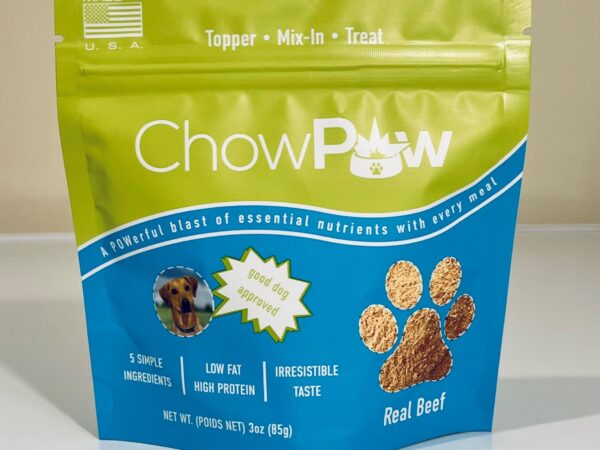 Dog Food Topper - Beef HeartOriginal price was: $14.99.$10.95Current price is: $10.95. - or subscribe and save up to 20%