
Can You Use Eye Drops on Dogs? A Complete Safety Guide
Your dog is blinking, the eye looks red, and you already have a bottle of eye drops in the bathroom cabinet. Most owners think the same thing in that moment: can you use eye drops on dogs if it's only a little irritation?
The safest answer is no, not unless your veterinarian specifically tells you to use that exact product.
That can feel frustrating when your dog seems uncomfortable and you want to help right away. But eye problems are one of those situations where a quick home fix can accidentally make things worse. Redness can come from something minor, but it can also come from a scratch, infection, dry eye, allergy, or a deeper eye problem that needs a very different treatment.
I'm going to walk you through the practical part most articles skip. Not just “ask your vet,” but which ingredients are risky, why dogs need different eye medications, what to do if your dog licks or swallows drops, and when it's an emergency.
Your Dog's Eyes Are Red Can You Use Your Eye Drops?
If your dog's eye is red, watery, or squinty, it's understandable to reach for your own drops first. For people, eye drops often feel simple and low-risk. For dogs, they aren't.
The problem is that “red eye” is only a symptom. It doesn't tell you the cause. A dog with allergies may have redness and discharge. A dog with dry eye may look similar at first. A dog with a corneal injury can also have redness, tearing, and squinting. Those conditions may look alike to you at home, but they are not treated the same way.
That's why the first rule is simple: don't use human eye drops on your dog without veterinary guidance.
Even when a product seems gentle, the medication may be the wrong strength, the wrong ingredient, or the wrong type for what is going on in the eye. Some drops meant to reduce redness in people can be harmful to dogs. Others may delay proper treatment because they temporarily change the appearance of the eye without fixing the cause.
Practical rule: If your dog has a new eye problem, treat it like a medical issue that needs identification first, not like a cosmetic irritation.
Owners also get tripped up by the fact that some human products sound harmless. “Moisturizing,” “redness relief,” and “allergy relief” can all sound interchangeable. They aren't. Those labels can contain very different active ingredients.
If you're wondering can you use eye drops on dogs in a pinch, the safe mindset is this: don't guess based on the label or on symptom similarity. Dogs need the right diagnosis before they need the right drop.
Why Most Human Eye Drops Are Unsafe for Dogs
Human eye drops aren't one category. Some are simple lubricants. Others are medicated products designed to constrict blood vessels, reduce allergy symptoms, or treat glaucoma. That difference matters a lot when the patient is a dog.
One of the biggest risks is the active ingredient in many “get the red out” products. Veterinary guidance warns that popular redness-relief drops often contain tetrahydrozoline hydrochloride, and similar concern applies to naphazoline and brimonidine. These ingredients can be harmful to dogs, not just ineffective.
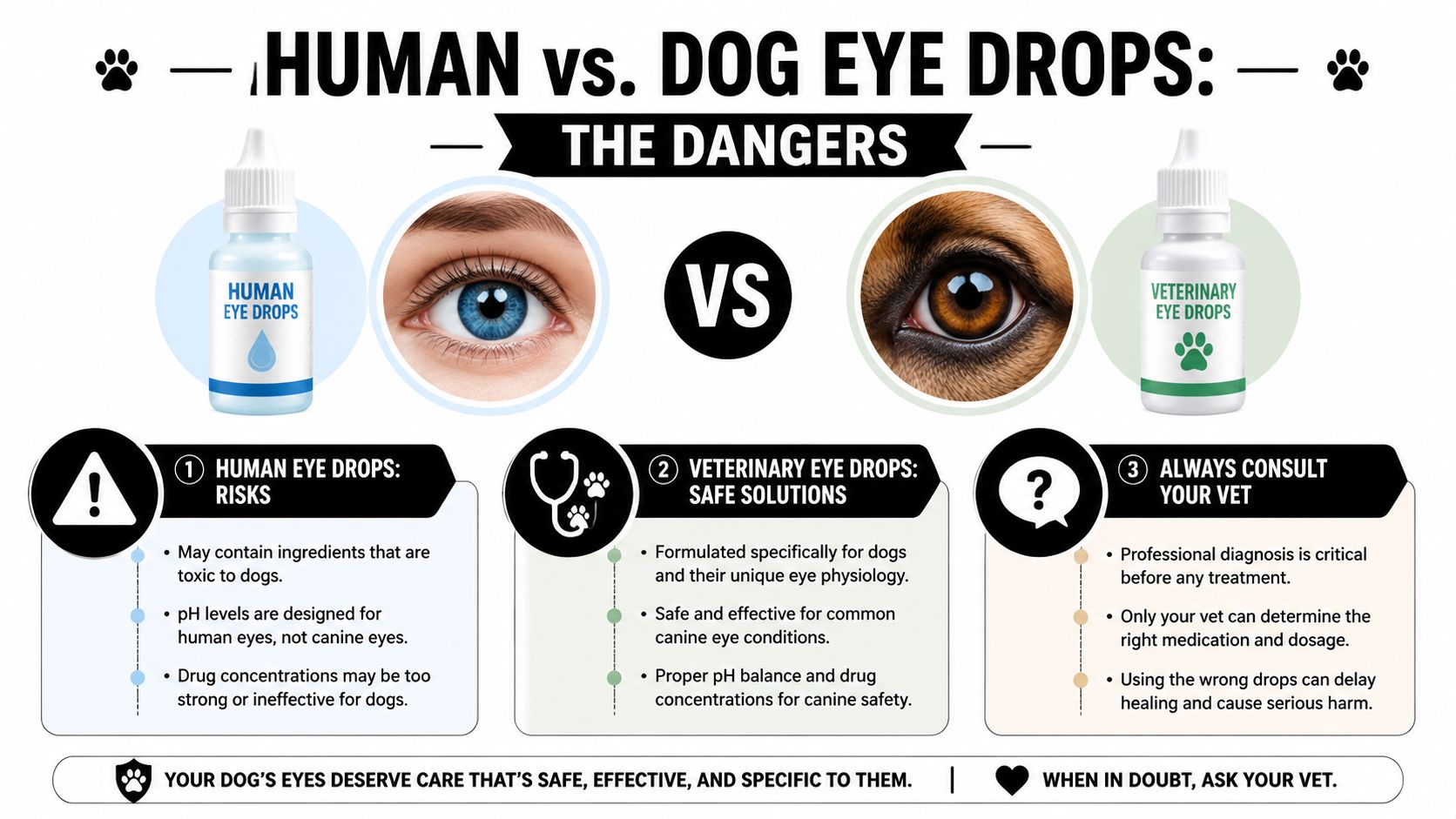
The ingredient problem
The issue isn't only that a human product might not help. Some ingredients can affect the whole body.
The FDA reported at least one adverse event in an animal linked to recalled human eye drops and warned pet owners and veterinarians about contamination risks and the need to watch for signs like eye rubbing, swelling, or discharge after exposure. The same FDA warning also notes that common redness-relief drops may contain ingredients that can cause significant drops in blood pressure and heart rate in dogs even after small exposures in products with tetrahydrozoline hydrochloride or similar compounds, as described in the FDA reminder about recalled human eye drops and animal safety.
Here's the part many owners don't hear often enough: the danger may happen after the drops go in the eye, then get licked off the fur or pawed onto the mouth. Dogs groom. Dogs rub their faces. A product that started as “just one drop” can become an ingestion problem.
Which human drops raise the most concern
A simple way to think about it:
| Product type | Why owners reach for it | Main concern for dogs |
|---|---|---|
| Redness-relief drops | To make a red eye look less irritated | May contain vasoconstrictors such as tetrahydrozoline, naphazoline, or brimonidine that can be harmful |
| Steroid-containing drops | To calm inflammation | Can worsen some eye problems if the cornea is damaged |
| Glaucoma medications meant for people | Because they are prescription eye medicines | Active ingredients may not be safe or appropriate for canine use |
| Lubricating drops | They seem gentle and simple | Still shouldn't be used unless a vet approves the exact product |
If the bottle says “redness relief,” “get the red out,” or contains a medicated active ingredient, don't use it unless your veterinarian has told you to.
If your dog may have swallowed eye drops, don't wait for internet reassurance. Call your veterinarian right away. If you've ever had to sort out another household medication question, you may also find it helpful to read this guide on whether dogs can have Pepto-Bismol, because the same basic rule applies: human OTC products are not automatically pet-safe.
What to do if exposure already happened
If you already used human drops or your dog licked some, stay calm and act in order:
- Take the bottle with you so the clinic can identify the active ingredient.
- Watch for eye signs like rubbing, swelling, or discharge.
- Watch your dog's whole body, not just the eye. Weakness, unusual sleepiness, or behavior changes matter.
- Call a veterinarian immediately for next-step advice.
That quick call can make a real difference.
Common Dog Eye Problems and Veterinary Solutions
The reason vets don't treat every red eye the same is simple. Different eye problems need different medications. What helps one condition can be useless, or even harmful, for another.
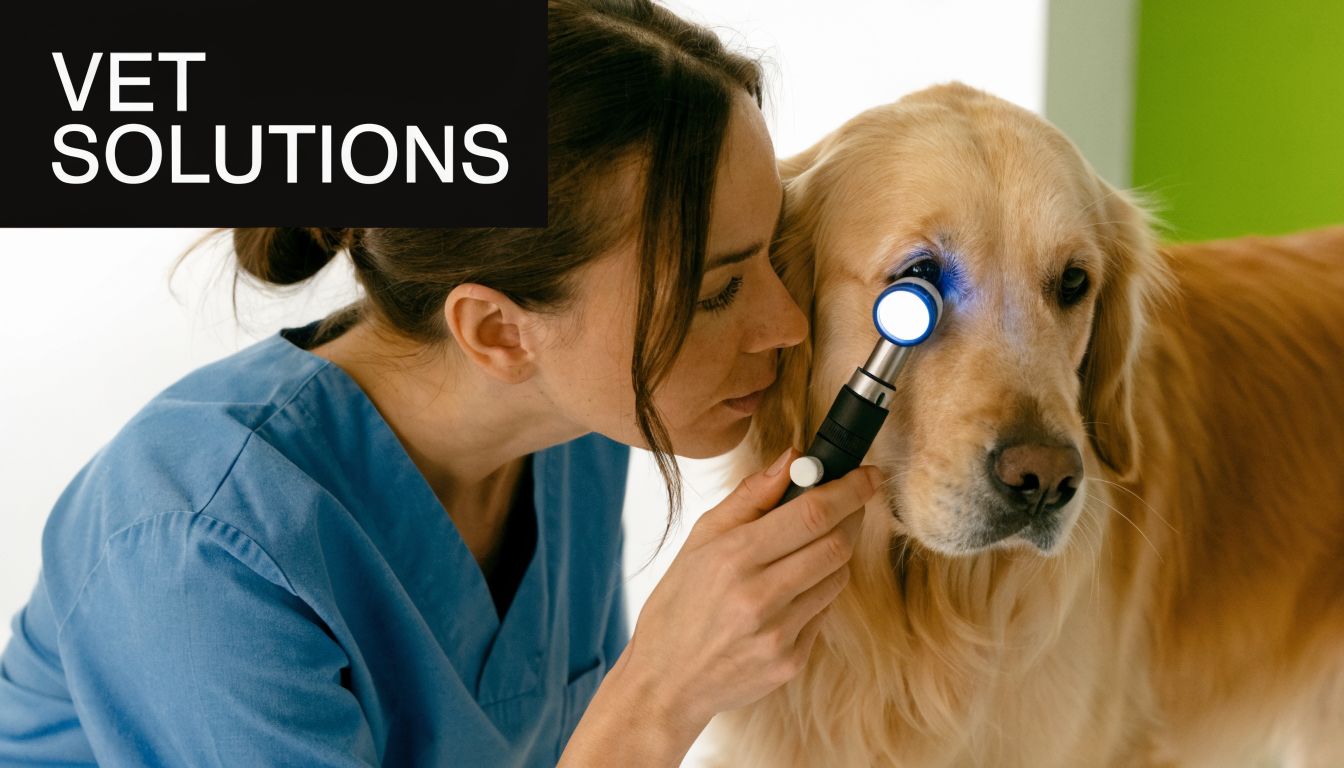
What a vet may be looking for
A veterinarian may consider several common causes when a dog comes in with eye redness or discharge:
- Allergic conjunctivitis. Often causes redness, irritation, and rubbing. These dogs usually need dog-specific medicated drops or ointments selected by a vet.
- Dry eye. The eye may look sticky, irritated, or dull because the tear film isn't normal.
- Corneal injury. A scratch or ulcer can cause pain, tearing, squinting, and light sensitivity.
- Infection or inflammation. The eye may have discharge, swelling, or a sudden change in comfort.
These can overlap in appearance. That's why diagnosis comes before treatment.
Why prescription eye care is different
Dogs often need different strengths, formulations, and dosing strategies than humans. One veterinary clinic notes that canine dry-eye treatment may use cyclosporine from the same drug class as Restasis, but dogs often need a higher concentration than human formulations. The same source explains that formulation changes matter too. In dogs, 1.0% fluorescein produced significantly higher tear-film concentrations than 0.3%, with a twofold greater area-under-the-fluorescein-time curve, and a 2025 study reported that hyaluronic-acid canine eyedrops increased antibiotic exposure by 2.4 times for cefazolin and 4.2 times for chloramphenicol versus traditional formulations, according to this veterinary discussion of species-specific eye medications.
That sounds technical, but the takeaway is simple. The exact drop matters. Not just the drug name, but the concentration and the way the medication is delivered to the eye.
A dog doesn't need “an eye drop.” A dog needs the right eye drop for the actual problem.
A quick comparison
| Eye issue | What you may notice at home | Why a human drop isn't a good shortcut |
|---|---|---|
| Allergies | Redness, rubbing, watery eyes | May need a prescription product chosen for canine use |
| Dry eye | Sticky discharge, irritation, chronic redness | Human dry-eye products may be the wrong concentration or not address tear production |
| Corneal scratch | Squinting, pain, tearing | Some drops can worsen the problem if the cornea is injured |
| Infection | Discharge, swelling, discomfort | Needs the right medication, not a general “soothing” product |
If your dog's eye problem started suddenly, looks painful, or isn't clearly improving, a vet exam is the safest move.
How to Safely Administer Eye Drops to Your Dog
Once your veterinarian has prescribed the right medication, the next challenge is getting it into the eye without turning the whole experience into a wrestling match.
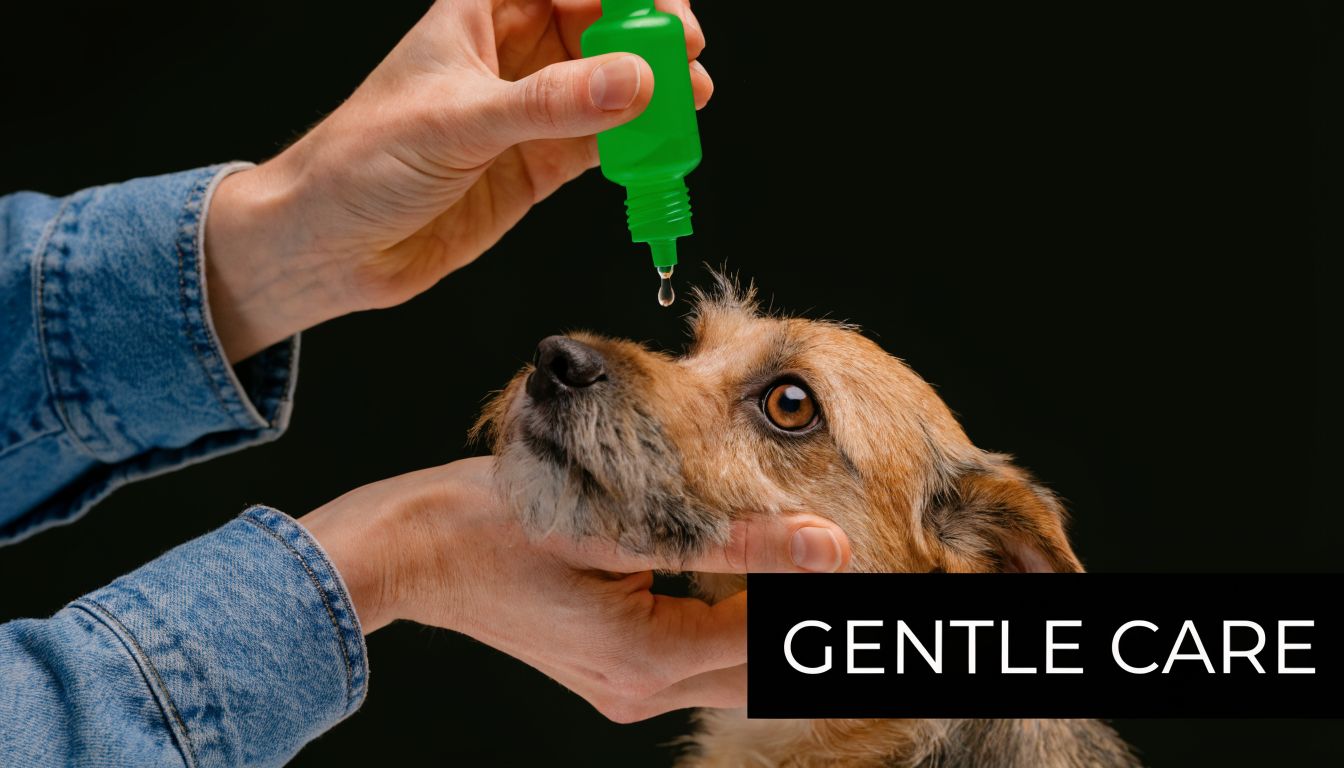
Set up before you touch the eye
Get everything ready first. Wash your hands, have the medication open, and bring a few treats within reach. Pick a calm, well-lit spot where your dog feels secure.
Small dogs often do well on a lap or stable surface. Larger dogs usually do better on the floor where they have traction and feel less trapped.
A simple step by step method
- Steady the head gently. One hand supports under the chin.
- Tilt the nose slightly upward so you can see the eye better.
- Use your fingers to open the eyelids carefully by lifting above and lowering below the eye area.
- Hold the bottle close, but don't touch the eye with the tip.
- Place the drop into the lower eyelid pocket.
- Let your dog blink, then reward right away.
Handling note: If the bottle tip touches the eye or fur, clean it as directed by your veterinarian or pharmacist before the next use.
If your dog fights the process, don't rush. A second person can help hold the body steady while you focus on the drop. For some dogs, short practice sessions without medication help them learn that handling around the face predicts praise and treats.
For a broader guide to home dosing techniques, this article on the best way to give dogs medication can help with positioning, rewards, and reducing stress.
A quick visual can make the process less intimidating:
Mistakes to avoid
- Don't touch the eyeball with the dropper tip
- Don't squeeze hard before you're in position
- Don't lean your face too close to your dog's face
- Don't skip the reward, especially if this will be a repeated treatment
If your dog keeps pawing at the eye after medication, call your vet. That can mean the eye is painful, the medication stings, or your dog may need protection like a cone.
Supporting Your Dog's Overall Health and Vision
Eye medication treats the immediate problem. Everyday care supports the dog behind the problem.
A dog's eyes depend on the rest of the body doing its job well. Good hydration, a balanced diet, routine checkups, and prompt care for allergies or skin irritation all help support normal comfort and healing. Nutrition won't replace eye treatment, but it does support overall wellness, including the tissues and immune function that help the body respond to stress.
Where nutrition fits
For owners who want to improve what goes into the food bowl, a meal topper can be one practical option. ChowPow is a dehydrated beef heart meal enhancement made to sprinkle over your dog's existing kibble or regular food. It's a supplement and topper, not a replacement diet. That matters because the goal is to boost the nutritional value of the current meal, not swap out a complete food.
If you're interested in nutrients tied to vision and whole-body function, this guide on vitamin A and your dog's vision, growth, and overall health is a useful place to start.
Better daily support doesn't replace a veterinary exam for eye trouble. It helps your dog maintain stronger baseline health between those moments.
A healthy routine won't prevent every eye issue. Dogs still get scratches, allergies, and infections. But strong general care gives you a better foundation for recovery and comfort.
Emergency Signs That Require an Immediate Vet Visit
Some eye problems can wait a short time for a same-day appointment. Others should be treated as urgent right away.
Veterinary guidance warns that signs like redness and discharge can mean anything from allergies to a serious corneal injury, and using the wrong drop, especially a steroid on a damaged cornea, can worsen the disease, as noted by Memphis Veterinary Specialists on dog eye drops and proper diagnosis.
Go now, not later
Call your vet or emergency clinic immediately if you notice:
- Your dog is squinting hard or holding the eye shut
- The eye looks cloudy, blue, or suddenly dull
- There is thick yellow or green discharge
- The eyelids or tissues around the eye are very swollen
- Your dog is pawing, rubbing, or acting painful
- You can see a foreign object
- The eye looks injured, scratched, or different in shape
- Your dog seems worse after any drop was used
What to do on the way
Keep your dog from rubbing the eye. If you have an e-collar and your dog tolerates it, that can help prevent more damage. Bring any medication bottle you used, including human products, so the veterinary team knows exactly what was given.
Don't try to test multiple drops at home. Don't use leftover medication from a previous pet problem. And don't assume “just redness” means it's mild.
Eyes can change fast. Waiting to see if things settle down can cost comfort, vision, and treatment options.
When in doubt, make the call. I'd always rather talk to an owner who turns out to be early than one who waited too long.
If you're working on your dog's recovery or just want to support day-to-day nutrition, ChowPow can be used as a meal topper to enhance your dog's current food with simple ingredients like beef heart, carrots, celery, and apple cider vinegar. It isn't a replacement for kibble or a treatment for eye disease, but it can be a practical way to add nutrient density and encourage appetite while you keep the focus where it belongs: safe veterinary care when your dog's eyes need help.
-
Product on sale
 Dog Food Topper - Beef HeartOriginal price was: $14.99.$10.95Current price is: $10.95. - or subscribe and save up to 20%