Is Cantaloupe Good for Dogs? A Safe Treat Guide
You're cutting up a cold cantaloupe on a warm day, and your dog is suddenly at your feet, staring like you've opened the world's most important snack. That moment sends a lot of dog owners to the same question. Is cantaloupe good for dogs?
Yes, it can be. Cantaloupe is generally a safe, hydrating treat for dogs when it's prepared correctly and served in small amounts. The key words are prepared correctly and small amounts. The fruit itself can offer useful nutrients, but the rind, seeds, and oversized portions are where problems start.
That's why the best way to think about cantaloupe is this. It's an extra. It's not a main food, and it's not a replacement for a balanced dog diet. It's a fresh add-on that can fit nicely into your dog's routine when you know how to serve it safely.
Your Dog Can Eat Cantaloupe But Safety First
If your dog is begging while you snack, you can share a little cantaloupe. But don't hand over a wedge straight from the rind. Dogs need the soft flesh only, cut into manageable pieces.
Most owners get tripped up because “safe fruit” and “safe serving” aren't the same thing. A dog might tolerate the fruit itself just fine, yet still struggle if the piece is too large, too fibrous, or served with the rind attached. That's especially true for eager eaters who gulp first and think later.
A simple rule helps. Treat cantaloupe like you would a toy with packaging. The good part is inside, but the outer layer and extra bits need to come off before your dog gets it.
Practical rule: If you wouldn't want your dog swallowing it whole, don't put it in the bowl.
This matters even more for dogs that get overexcited around food or stimulating environments. If your dog tends to be wound up after outings, this guide on assessing canine stress at dog parks can help you spot when arousal, panting, or frantic behavior might affect how safely they eat treats.
If you like offering fresh produce, it also helps to know which fruits belong in the “yes,” “sometimes,” and “never” categories. This practical guide to fruits dogs can and can't eat is a useful next read.
The short answer for pet parents
- Yes, dogs can eat cantaloupe
- Only the soft flesh should be served
- Remove the rind and seeds every time
- Keep portions modest
- Use it as a treat, not a meal
That's the core answer. The more interesting part is why this melon can be such a nice occasional extra.
The Nutritional Power of Cantaloupe for Canines
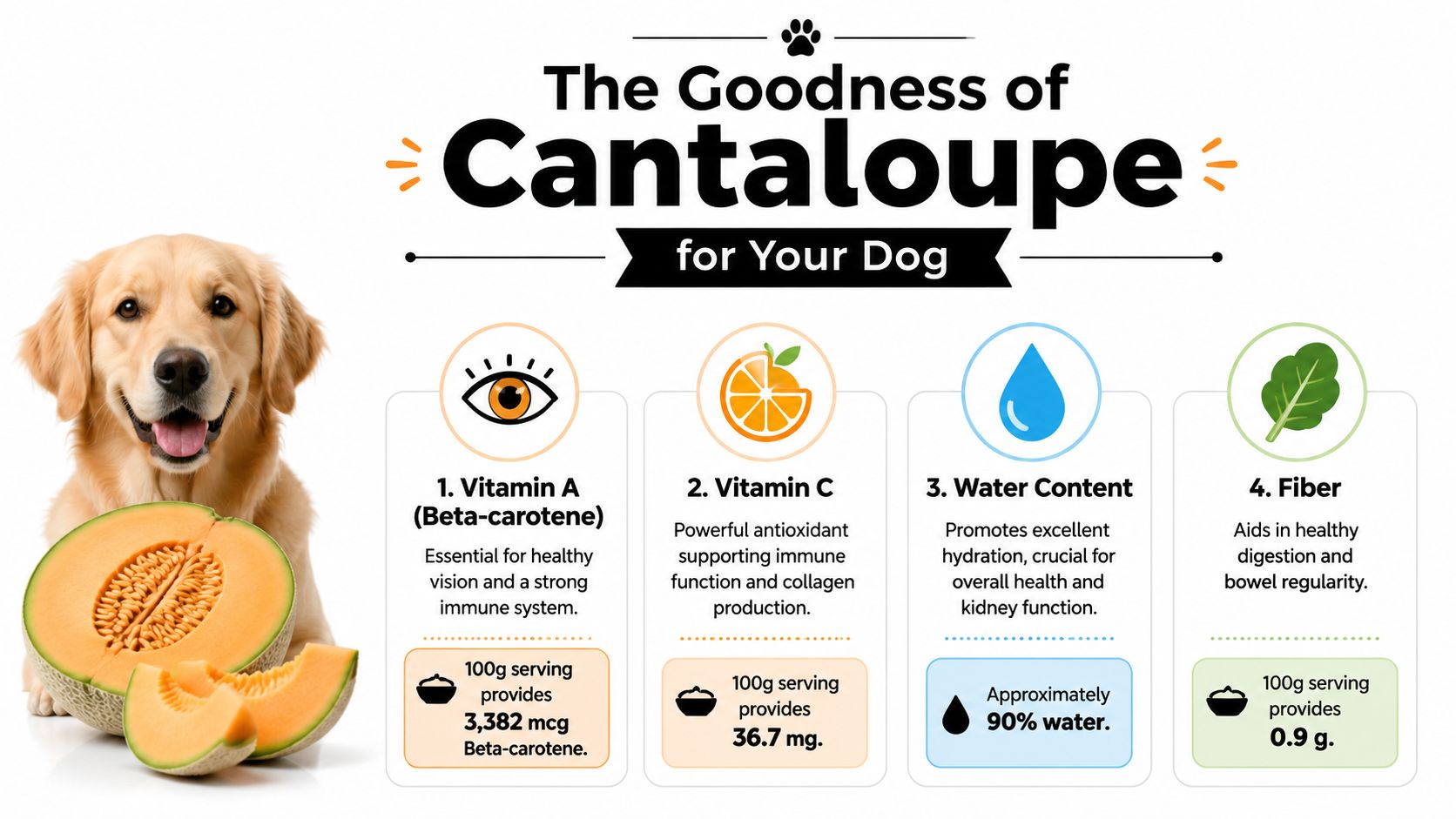
Cantaloupe looks simple, but nutritionally it gives you a nice mix of hydration, light calories, fiber, and vitamins. According to PetMD's cantaloupe nutrition guidance for dogs, cantaloupe contains about 90% water, approximately 34 kcal per 100g, around 0.9g of fiber per 100g, and nutrients including vitamin A, vitamin C, B6, and potassium at 267mg per 100g.
Why the water matters
Dogs don't always drink as much as we'd like, especially after exercise, during warm weather, or when they're older and less interested in the bowl. A fruit that's mostly water can be a gentle way to add moisture to the day.
That doesn't replace fresh drinking water, of course. It gives you another tool. Think of cantaloupe as a juicy snack that can support hydration while also feeling like a treat.
Why the vitamins matter
Vitamin A is one of the standout nutrients in cantaloupe. It supports normal vision, along with skin and other body functions. If you want a deeper look at that nutrient in a dog's diet, this guide to vitamin A and your dog explains why it matters beyond eyesight alone.
Vitamin C is often described as an antioxidant. A simple way to picture antioxidants is as helpers that deal with everyday cell wear and tear. They're part of the reason fresh produce can be a useful add-on in moderation.
Why the fiber matters
The fiber in cantaloupe isn't huge, but it's enough to be relevant. In small portions, fiber can help keep digestion moving in a steady, comfortable way.
For many dogs, that means cantaloupe works best as a light treat rather than a heavy snack. It has enough structure to be useful without feeling rich or greasy.
A good fruit treat should do two things at once. Feel rewarding to your dog and stay easy on the stomach.
Why owners often like it
Cantaloupe is appealing because it checks several boxes at once:
- Hydrating: The high water content makes it refreshing.
- Light: It's relatively low in calories for a sweet-tasting food.
- Soft: The flesh is easy to cut into safe pieces.
- Nutrient-rich: It offers vitamins and potassium in a simple whole-food form.
That combination is why so many owners looking up “cantaloupe good for dogs” are pleased to learn the answer is often yes.
Real Health Benefits of This Juicy Treat
The best part of cantaloupe isn't the nutrition label by itself. It's what those nutrients can look like in daily life. A safe piece of melon can help a dog feel refreshed after a warm walk, add interest to the diet of a fussy eater, or give an older dog a softer treat that's easy to enjoy.

A useful way to think about this fruit is that it supports comfort and function more than intensity. It's not a performance food. It's a gentle extra that can fit nicely into everyday care.
What you may notice in real life
According to ZiwiPets' overview of cantaloupe for dogs, cantaloupe provides about 3,382 IU of vitamin A per 100g, 36.7mg of vitamin C per 100g, and 90% water, while its beta-carotene can support up to 20 to 30% improved low-light vision and its potassium helps with hydration-related balance in hot climates.
For an aging dog, that vision support is an especially interesting benefit. You may not “see” vitamin A working in the way you notice a burst of energy from a game of fetch, but support for normal vision can matter a lot in low light, on evening potty trips, and in dogs that seem less confident at dusk.
For active dogs, the hydration side tends to be more obvious. A cold cube of cantaloupe after time outdoors can feel cooling and pleasant, which makes it a smart seasonal treat.
Why soft fruit can be useful
Some dogs don't want hard biscuits. Others have missing teeth, sensitive mouths, or just prefer moist foods. Cantaloupe gives those dogs a softer option.
That doesn't make it complete nutrition. Fresh fruit doesn't provide the same foundation as a balanced diet. But as a topper-style extra or a treat between meals, it can add variety and make food routines feel more enjoyable.
Here's a helpful visual if you want to see safe preparation ideas in action:
The most practical benefits
- Warm-weather refreshment: Cold cantaloupe can be a pleasant summer snack.
- Gentle texture: Soft flesh is easier for many seniors to handle than crunchy treats.
- Diet variety: Small fresh extras can make feeding feel less repetitive.
- Easy reward: Tiny cubes work well for dogs who enjoy food-based reinforcement.
Fresh foods often work best when they solve a small problem. Hydration, interest, softness, or variety.
That's where cantaloupe shines.
Potential Risks and How to Avoid Them
Cantaloupe is one of those foods that's safe in principle but risky in the wrong form. The danger usually isn't the melon flesh. It's the parts owners forget to remove, or the amount they assume is harmless because it's fruit.
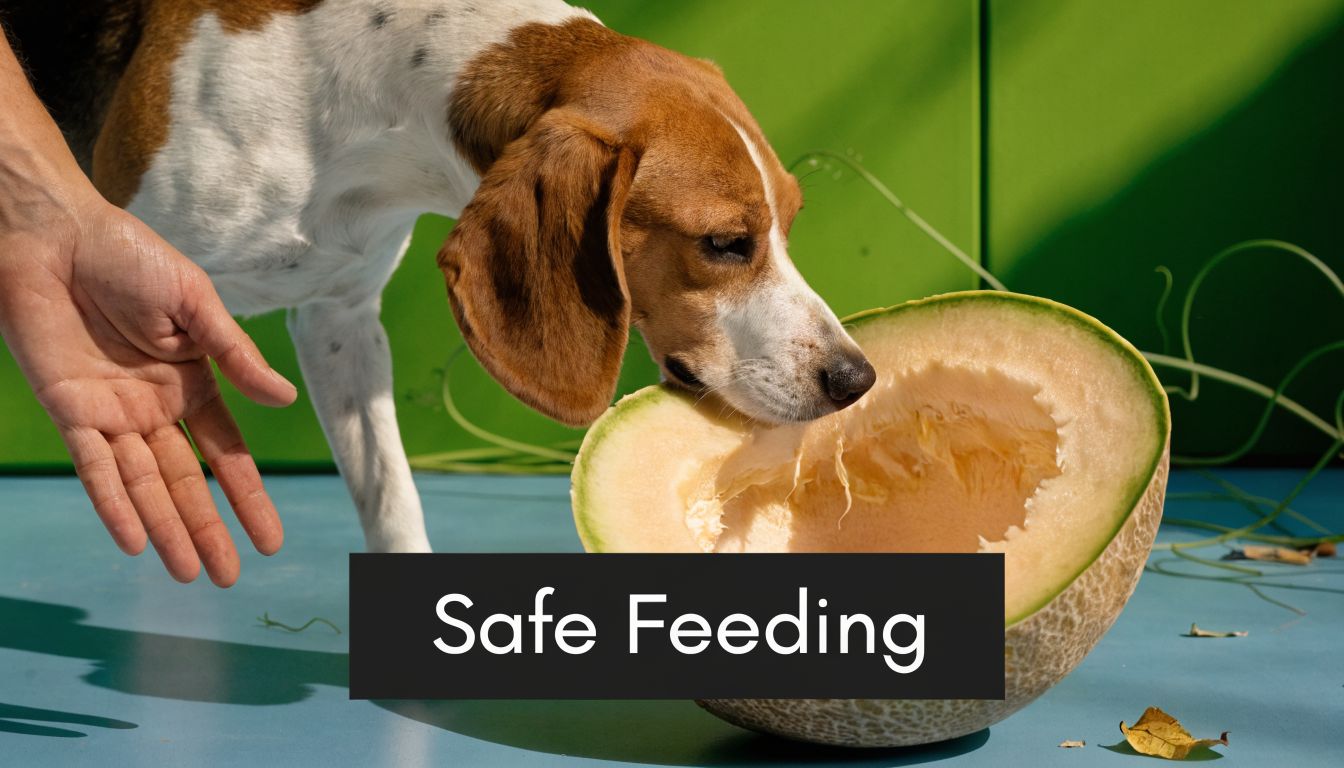
According to Nextrition Pet's safety notes on cantaloupe for dogs, the rind and seeds should be removed, the fibrous rind can pose a 15 to 20% risk of impaction in veterinary case reports, too much fiber can contribute to osmotic diarrhea, and for a 20kg dog, around 100g of flesh daily is a recommended upper limit to avoid excess.
Risk one: the rind
The rind is tough, fibrous, and hard for a dog to break down. Even strong chewers can swallow pieces that are too large to digest comfortably.
This is the biggest place owners make mistakes. A dog may seem to enjoy gnawing on the outside of the melon, but enjoyment doesn't equal safety. The rind belongs in the trash, not the bowl.
Risk two: the seeds
The seeds are easy to overlook because they seem small and harmless. But small objects can still cause trouble, especially in dogs that inhale food.
If you're serving fresh cantaloupe, take an extra moment to scrape out the middle thoroughly. It's a small prep step that removes a completely avoidable risk.
Risk three: too much at once
Fruit sugar and fiber can both become a problem when portions creep up. A few neat cubes are very different from a big handful.
Watch for signs that you've overdone it:
- Loose stool: Often the first sign a serving was too generous.
- Gassiness or stomach upset: Some dogs are more sensitive than others.
- Begging for more: Not a health warning, but definitely not a signal to keep going.
- Messy swallowing: If your dog gulps, pieces may be too large.
Dogs that need extra caution
Some dogs need a more conservative approach:
| Dog type | Why more caution helps |
|---|---|
| Puppies | Their digestion can be more sensitive to new foods |
| Overweight dogs | Treat calories add up, even with healthy foods |
| Diabetic dogs | Sweet fruits may not be a good fit without veterinary advice |
| Fast eaters | They're more likely to gulp poorly sized pieces |
If your dog has a medical condition, the safest approach is to treat cantaloupe as optional, not necessary.
That mindset keeps decisions simple. If there's any doubt, skip it or ask your veterinarian.
How to Safely Serve Cantaloupe to Your Dog
Serving cantaloupe safely is mostly about prep. Once you know the routine, it's easy. Choose ripe fruit, wash the outside, remove the rind, scoop out the seeds, and cut the flesh into pieces that match your dog's size and chewing style.
A simple prep routine
- Wash the melon first. Even though your dog won't eat the rind, your knife moves from the outside through the flesh.
- Cut away the rind completely. Don't leave a thin green edge attached.
- Remove all seeds. Scrape out the center well.
- Dice into bite-sized cubes. Smaller is better for gulpers.
- Serve plain. No salt, sugar, seasoning, yogurt coating, or fruit salad extras.
If your dog is trying cantaloupe for the first time, start with a very small amount. That gives you a chance to watch how their stomach handles it before you make it a repeat treat.
Daily Cantaloupe Serving Guide for Dogs
| Dog Size | Weight Range | Recommended Serving |
|---|---|---|
| Small | under 20 lbs | 1 to 2 half-inch cubes, about 10 to 20g |
| Medium | 20 to 50 lbs | 3 to 5 half-inch cubes |
| Large | over 50 lbs | up to 6 half-inch cubes |
These small servings help keep cantaloupe in the treat category, where it belongs.
Best ways to offer it
Not every dog enjoys food the same way. Try the format that fits your dog best.
- Fresh cubes: Great for training rewards or quick snacks.
- Chilled pieces: Nice for warm afternoons.
- Mashed cantaloupe: Useful for senior dogs or dogs with tender mouths.
- Frozen mini bites: Good for dogs who like longer-lasting snacks, as long as the pieces are still manageable.
Some owners like rotating fruits for variety. If that sounds like you, this guide to finding the best single-ingredient dog treats can help you keep treats simple and easy to evaluate.
Smart serving habits
A few habits make fruit treats much safer:
- Use them after meals, not during frantic hunger. Dogs tend to gulp less when they're not ravenous.
- Supervise the first few times. You'll learn whether your dog chews or swallows whole.
- Keep portions consistent. Tiny “just one more” pieces are how stomach upset starts.
- Store leftovers properly. Fresh fruit spoils. If it smells off, toss it.
Plain, peeled, seedless, and bite-sized. That's the serving formula to remember.
Once you've got that routine down, cantaloupe becomes a very easy occasional extra.
Frequently Asked Questions About Dogs and Cantaloupe
Can puppies eat cantaloupe
They can, but be more cautious than you would with an adult dog. Puppies have sensitive digestion and are more likely to get loose stool from rich or unfamiliar foods. Offer only a tiny piece of soft, seedless flesh and watch closely.
What if my dog ate the rind
Don't panic, but don't ignore it either. The rind is the part most likely to cause trouble because it's fibrous and hard to digest. If your dog ate a small piece, monitor for vomiting, straining, pain, lethargy, or loss of appetite. If they ate a large piece, or if your dog is small, call your veterinarian promptly.
Are other melons safe too
Some are, but the same rules usually apply. The edible soft flesh may be fine in moderation, while the rind and seeds are the risky parts. Whenever you try a new fruit, treat it like a brand-new food. Start small, serve it plain, and watch how your dog responds.
Cantaloupe can be a smart occasional treat when you handle it carefully. It's refreshing, soft, and easy to portion. Just remember that treats support a dog's diet. They don't build it.
If you want to upgrade your dog's regular meals, ChowPow is designed as a meal enhancer, not a kibble replacement. It adds nutrient-dense, dehydrated beef heart and simple whole-food ingredients to help boost flavor and nutritional value, which can be especially helpful for picky eaters, seniors, and dogs recovering from illness who need more support in the bowl they already know.
-
Product on sale
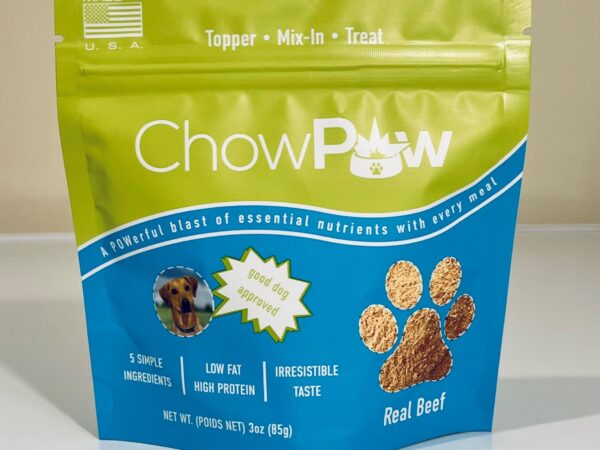 Dog Food Topper - Beef HeartOriginal price was: $14.99.$10.95Current price is: $10.95. - or subscribe and save up to 20%