Cat Eats Too Fast? Vet Tips to Stop Vomiting & Speed Eating
You put the bowl down, turn around for a second, and your cat has already inhaled the meal. Then comes the awful sound. A few minutes later, there's a pile of undigested food on the floor, and your cat acts like nothing happened.
That pattern is common, and it's frustrating because it feels preventable. If your cat eats too fast, the fix usually isn't one big change. It's a mix of understanding why your cat is rushing, choosing the right feeding setup, and making mealtimes feel calmer and more satisfying.
The good news is that many fast eaters improve with simple changes at home. A better bowl, a smarter routine, or a less stressful feeding space can make a real difference.
Why Your Cat Eats So Fast and the Risks Involved
You fill the bowl, and your cat eats like the food might vanish in the next ten seconds. That rush usually has a reason behind it. Cats are not trying to be difficult. They are responding to habit, stress, body signals, or the setup around the bowl.
For some cats, the habit started long before they came to your home. A cat that once lived outdoors, shared food with littermates, or spent time in a shelter may have learned that fast eating was the safest way to get enough. Even in a quiet house, that old pattern can stick.
Home life can also create pressure. A nearby cat, a curious dog, a busy kitchen, or even a bowl placed in a hallway can make mealtime feel rushed. To your cat, it can feel a bit like trying to finish dinner while someone keeps walking past your plate.
Hunger is another piece of the puzzle, and it is easy to miss. Some cats are not only eating fast because of habit. They may also finish a meal and still not feel fully satisfied. If food is low in staying power for that cat, mealtime can turn into a sprint instead of a calm routine. That is one reason some owners see improvement when they pair slow-feeding strategies with more satisfying meals or toppers that add substance and flavor. If you want a simple example of how slowing eating and improving satisfaction can work together, this guide to slow feeding with a food topper shows the idea well.
Some cases need a closer look. If your cat suddenly becomes much hungrier than usual, loses weight, vomits often, or seems restless around food, a medical problem could be driving the behavior.
What happens when a cat gulps food
A cat that swallows large mouthfuls often takes in extra air at the same time. That can leave the stomach too full, too fast. The result is the classic scene many owners know well. A few minutes after eating, the meal comes back up looking barely digested.
That reaction is usually regurgitation, not true vomiting. The difference matters. Regurgitation happens soon after eating and often looks like a tube or pile of undigested food. It is the body's quick response to food that went down too fast or sat badly in the esophagus or stomach.
Bowl position can make this worse. A feeder that sits very low may encourage awkward gulping in some cats. A raised feeder can help some cats eat in a more comfortable posture and may reduce how much air they swallow along the way. If you are comparing bowls and setups, a curated pet product selection can give you a starting point.
Why fast eating is more than a messy habit
The floor mess is annoying, but the larger problem is the cycle it creates. Your cat gulps. The food comes back up. Your cat still feels hungry, so the next meal gets eaten even faster.
Over time, some cats also lose the natural pause that helps them register fullness. Eating becomes mechanical, almost like pouring kibble down a chute, instead of a meal that gives the brain and stomach time to catch up with each other.
Watch for patterns. One rushed breakfast is not a crisis. Repeated gulping, frequent regurgitation, signs of stress around the bowl, or hunger that never seems to settle means your cat needs a better feeding plan and, in some cases, a vet check.
Essential Slow-Feeding Devices and Toys
The best slow-feeding tool should match the way your cat eats. A cat who inhales dry kibble needs a different setup than one who laps up wet food in seconds. Start by asking a simple question. Is your cat gulping from a bowl, or would they do better if mealtime felt more like foraging?

Slow-feeder bowls
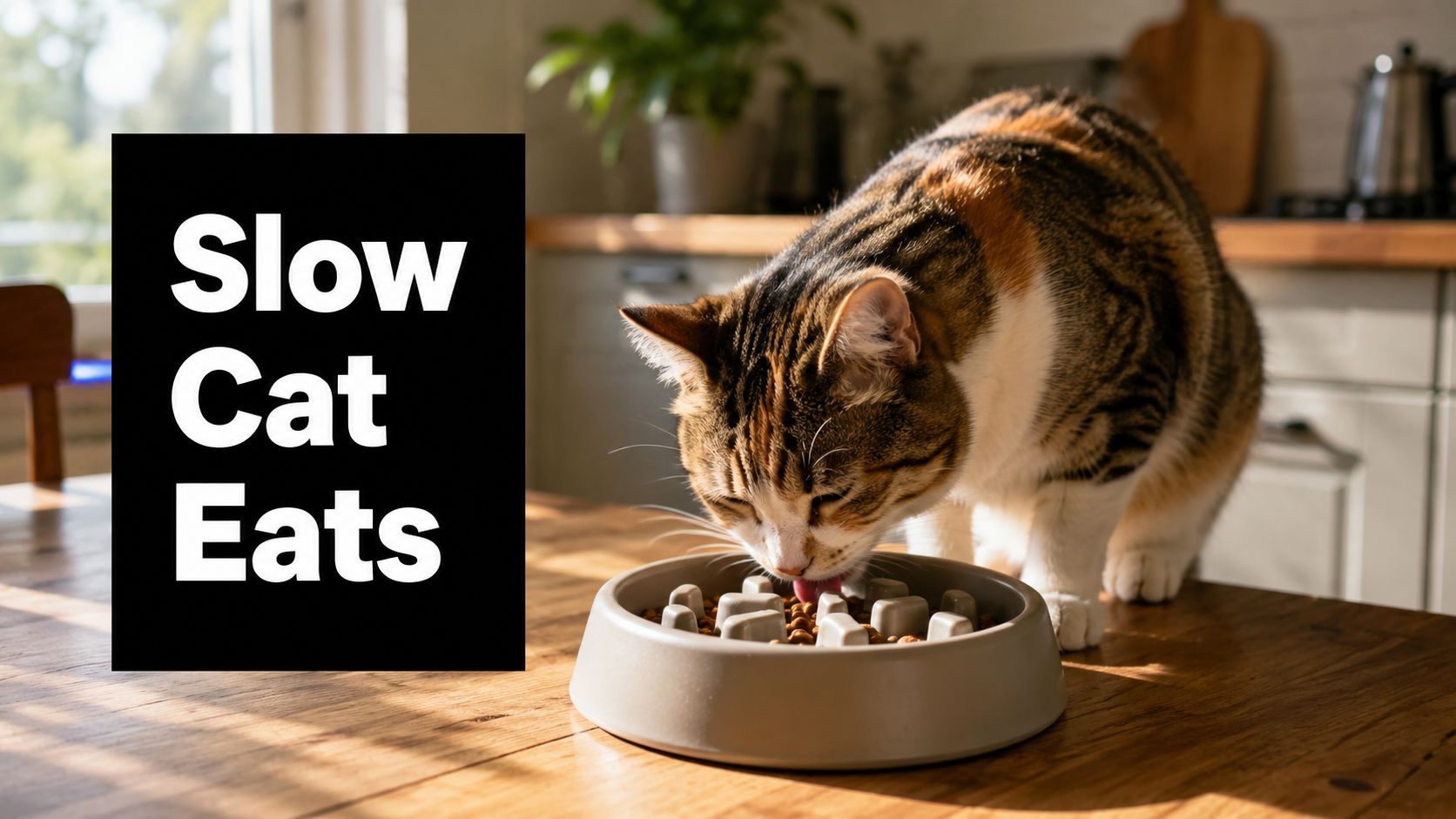
Slow-feeder bowls are often the easiest place to begin. The ridges and channels break one large mouthful into many smaller bites, which gives your cat less chance to gulp and swallow air.
For dry food, maze-style bowls usually work best. For wet food, choose a design with wider, shallower grooves so food does not get packed into tight corners. If the pattern is too deep, some cats give up or become more frantic, so a moderate design is usually the safer first try.
Bowl height matters too. A slow feeder that sits slightly higher can improve your cat's posture and may help reduce air swallowing. That small change can make a noticeable difference for cats who tend to regurgitate right after meals.
Lick mats for wet food
Lick mats work well for pâté, mousse, and other spreadable meals. Instead of scooping up clumps quickly, your cat has to lick food out of a textured surface little by little.
That repetitive licking can have a calming effect for some cats. It slows the body and the brain at the same time, which is helpful for cats who seem worked up the moment food appears.
Spread the food thinly. A thick pile is easier to gulp.
Puzzle feeders and automatic feeders
Puzzle feeders are a good fit for cats who treat dinner like a race. They turn eating into a small problem to solve. Your cat has to paw, nudge, or roll the feeder to get each piece, which stretches the meal and taps into hunting instincts.
Automatic feeders help in a different way. They are useful for cats who panic because meals feel too far apart. Smaller servings released on a schedule can lower that urgency, especially in homes where breakfast or dinner times shift from day to day. If you are comparing styles, a curated pet product selection can help you sort through the options.
One more piece often gets missed. Some cats are not only eating fast. They are also finishing a meal that does not leave them fully satisfied. If the food is low in protein quality or does not feel filling, your cat may stay in that restless "still hungry" mode. In that case, slowing the meal mechanically helps, but improving what is in the bowl can help just as much. This guide to slow feeding and food toppers for better mealtime satisfaction explains how those two pieces can work together.
Choosing the Right Slow Feeder for Your Cat
| Feeder Type | Best For | Pros | Cons |
|---|---|---|---|
| Slow-feeder bowl | Cats that inhale kibble from a regular dish | Easy to start using, fits daily meals, helps break up fast bites | Some cats get frustrated if grooves are too deep or narrow |
| Lick mat | Cats eating wet or spreadable food | Slows licking, adds a calming routine, works well for thin layers of food | Not useful for most dry kibble |
| Puzzle feeder or automatic dispenser | Curious cats, bored cats, or cats that get frantic between meals | Adds mental stimulation or steadier meal timing, helps reduce urgency | Some cats need time and practice before they accept it |
Simple DIY Hacks for a Slower Mealtime
Your cat hears dinner hit the bowl, rushes over, and finishes before you have even put the scoop away. If that sounds familiar, you can start slowing things down with items you already have at home.

Turn one bowl into many small bites
A muffin tin is one of the easiest DIY slow feeders. Split your cat's meal into several cups so they have to pause, reposition, and eat in smaller mouthfuls. That small bit of effort can make the meal feel less like a race.
A baking sheet works well too, especially for dry food. Spread the kibble out so your cat has to pick up pieces one by one instead of plunging their face into a deep pile. It turns dinner into a little search job, which is closer to how cats naturally eat than gulping from a heap.
Wet food can be handled in a similar way. Smear a thin layer across a flat plate or tray instead of serving it as one mound. Licking and nibbling are slower than grabbing big bites.
Add a safe obstacle
If you only have a regular bowl, you can still make it harder to gulp. Place one or two large, food-safe objects in the dish so your cat has to eat around them.
The object needs to be too large to swallow, smooth, and sturdy. If it can chip, splinter, or fit in your cat's mouth, do not use it.
Ceramic ramekins, a clean stainless steel cup turned upside down in a wide bowl, or another heavy food-safe item can work better than small loose objects. The goal is simple. Break up the open space in the bowl so your cat cannot scoop up a full mouthful at once.
Raise the bowl to reduce air swallowing
Feeding height matters more than many cat owners realize. When a cat has to hunch low and gulp fast, they may swallow extra air along with the food. That can leave them uncomfortable afterward and may contribute to regurgitation in some cats.
A raised feeder can help by bringing the bowl closer to chest height. You do not need special equipment to test this. A stable box, low stool, or sturdy stack of books under a non-slip mat can work for a trial run. The setup should feel secure and level, with no wobble and no slick surface.
This tip pairs well with the bigger picture. Slowing the mechanics of eating helps, but some cats also calm down when the meal feels more satisfying. If you are already looking closely at what goes in the bowl, it can help to learn about which human foods, like celery, are actually safe for cats before making simple at-home additions.
This video shows another simple slow-feeding idea you can try at home:
Calming a Frantic Eater with Nutrition and Routine
You put the bowl down, and your cat acts like they have not eaten in days. That kind of urgency can come from habit, stress, or simple hunger. It can also come from a meal that fills the bowl but does not leave your cat feeling settled.
Routine helps first. Cats tend to relax when food shows up at the same times each day, because predictability lowers that panicky "eat it now" response. If your cat gets one or two large meals and turns frantic before feeding time, ask your vet whether smaller, more frequent meals make sense for their age, weight, and health.
Why meal quality affects mealtime behavior
A full stomach and a satisfied cat are not always the same thing.
Cats are built for animal-based nutrition. If a meal is less satisfying, some cats seem hungry again very quickly and bring that tension to the next feeding. That is why it helps to look beyond speed alone and ask a second question. Does this meal keep my cat comfortable and content for a reasonable stretch of time?
A nutrient-dense meal can help here. High-quality protein and animal-based ingredients often do more for satiety than a diet that relies heavily on less useful fillers. You do not need to overhaul the menu overnight. The goal is to make meals feel more complete, so your cat is less likely to approach the bowl in a frantic state.
A topper can support satisfaction, if you use it correctly
Some owners use a small meal topper to make food more appealing and add nutrient density. Used the right way, a topper works like adding a little extra substance to a meal, not just extra flavor. The cat still eats a complete, balanced diet, but the meal may feel more rewarding and satisfying.
That distinction matters. A topper should support the food already in the bowl, not replace a nutritionally complete cat food.
If you like learning ingredient by ingredient before trying anything new, this guide to which human foods, like celery, are actually safe for cats can help you sort safe curiosity from risky guesswork.
Beef heart as an example of a nutrient-dense ingredient
Beef heart shows up in some whole-food toppers because it is a muscle meat with dense nutrition. Many pet owners hear the word "heart" and assume it belongs in the same category as secreting organs. Nutritionally, it is closer to meat than to liver or kidney.
According to this overview of beef heart for pets, beef heart provides high-quality protein and taurine, two nutrients that matter in animal-based diets.
That does not mean every fast eater needs a topper. It means meal satisfaction is worth paying attention to, especially if your cat always seems desperate for food even when portions are appropriate.
Keep changes small and practical
Start with one adjustment at a time. Keep meal times consistent. Ask your vet about splitting daily food into smaller servings. If your cat may benefit from a more satisfying meal, discuss whether a nutrient-dense topper or a different food formula fits your cat's needs.
Pair that nutrition piece with the feeding setup from earlier. A raised feeder can reduce hunching and may help some cats swallow less air while they eat. For many cats, the best result comes from both sides working together. Slow the eating mechanics, and make the meal feel worth slowing down for.
Solving Mealtime Mayhem in Multi-Cat Homes
One cat starts eating. A second cat walks past the bowl. Suddenly the first cat gulps like the food might disappear in the next five seconds.
That pattern is common in multi-cat homes. Fast eating here is often driven by competition, or the fear of competition, more than true hunger. A cat does not have to lose a meal to feel pressure. Just seeing another cat nearby can flip mealtime from calm to guarded.
The goal is to make each cat feel safe enough to slow down. A good setup works like giving every diner their own table instead of asking everyone to share one crowded plate. Once the social pressure drops, you can judge the true problem more clearly. Some cats were rushing because of stress. Others also need a more satisfying meal, especially if they still act frantic even after the room is quiet.
A simple three-step setup
Break the line of sight
Feed cats where they cannot watch each other eat. Separate rooms are ideal. Baby gates, room dividers, or feeding cats on different levels of the home can also help.Assign each cat a specific station
Use one bowl and one location per cat at every meal. Predictability matters. Cats relax faster when the same food appears in the same safe spot each time.Protect slow eaters from interruption
If one cat finishes first and crowds the other, the slower cat learns to rush. Close a door, stay nearby, or pick up bowls as each cat finishes so no one gets ambushed at the dish.
Some cats look calm while they eat but are still eating defensively. The speed is often the clue.
If tension stays high, look beyond bowl placement. A cat who never seems satisfied may be reacting to both social stress and low meal satisfaction. That is one reason routine matters so much in shared homes. Regular meal times, protected feeding spaces, and food that leaves the cat feeling well-fed can work together. If your cat tends to gulp and vomit after stressful meals, it may help to read about what to know before using anti-vomiting medication for dogs as a reminder that repeated vomiting should be handled carefully and species-specific advice matters.
Small setup details can help too. If one cat swallows a lot of air while rushing, a raised feeder may make eating more comfortable and reduce some of that frantic gulping. In multi-cat homes, the best results often come from fixing both pieces of the puzzle. Reduce the pressure around the bowl, and make the meal feel satisfying enough that your cat does not act like every bite is the last one.
When to See Your Vet and Final Takeaways
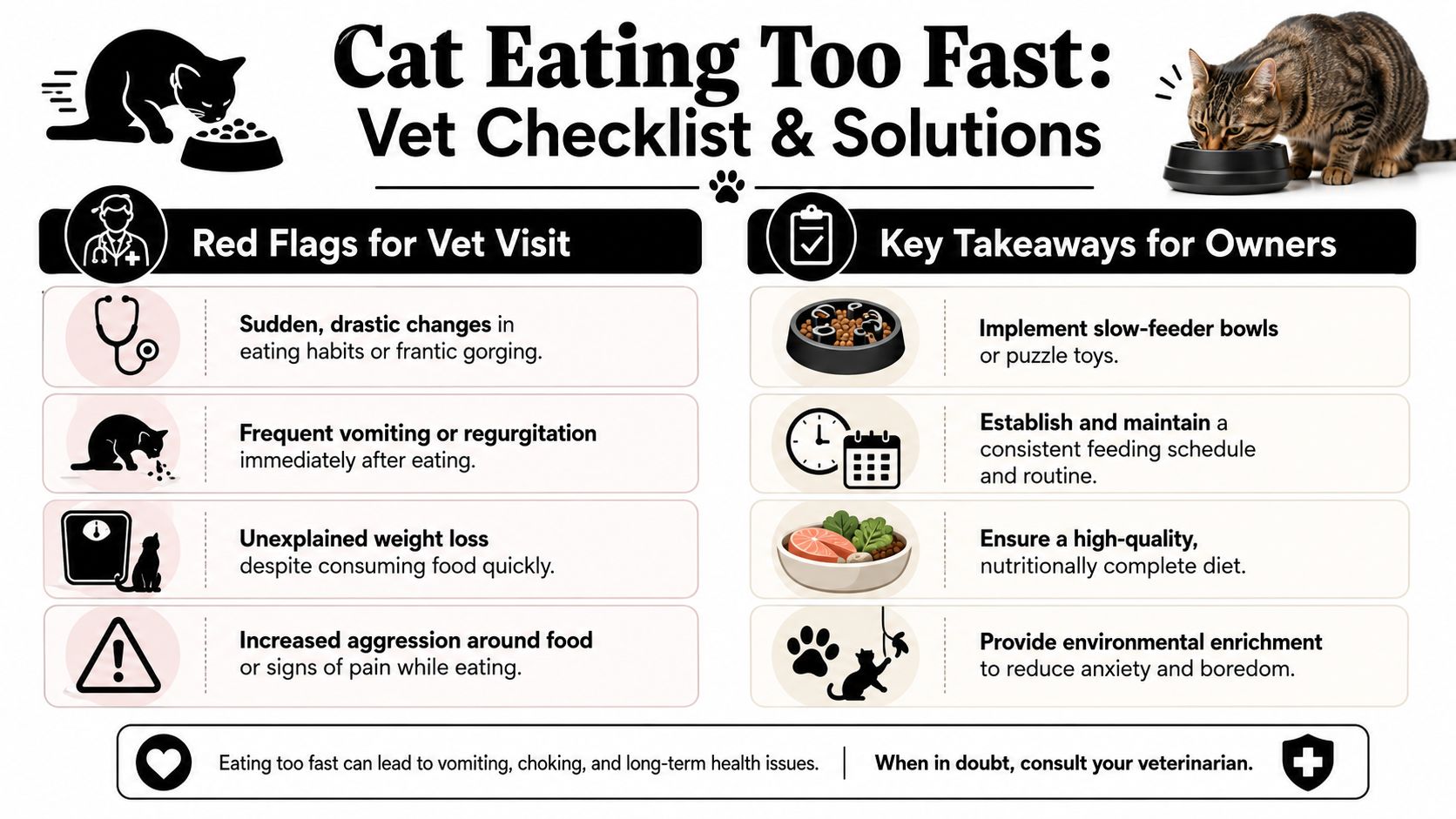
You change the bowl, slow the pace, and tighten up the routine, but your cat still gulps, spits food back up, or acts strangely hungry. That is the point where fast eating may be a symptom, not the whole problem.
Call your vet if the change was sudden, if your cat is losing weight, seems painful while eating, vomits often, or becomes unusually tense around food. A cat who has always eaten quickly may need better mealtime setup. A cat who starts doing it out of nowhere deserves a closer look.
What to do after a regurgitation episode
If your cat brings food back up right after eating, the hardest part is often waiting. Many cats act hungry almost immediately, which can trick owners into refilling the bowl too soon. That often restarts the cycle.
A short stomach break is usually kinder than another quick meal. Offer water if your vet has not told you otherwise, watch your cat closely, and contact your clinic if vomiting repeats, your cat seems weak, or you notice anything else unusual. If you want a broader reminder about when repeated vomiting needs more careful attention, read this guide to anti-vomiting medication and care questions for pet owners.
If your cat hates the new feeder
Some cats treat a new feeder like a pop quiz they did not study for. If the bowl feels too strange or too hard, they may give up, get irritated, or try to inhale food even faster when they finally can reach it.
Make the change easier:
Start small
Put only part of the meal in the slow feeder at first, then increase the amount over several days.Match the tool to the food
Wet food often works better on a lick mat. Dry food is usually easier in puzzle bowls or food toys.Watch for frustration
If your cat paws wildly, vocalizes, or walks away, the feeder may be too difficult.Check bowl height
A slightly raised feeder can help some cats eat in a more comfortable posture and swallow less air.
Automatic feeders can help too, especially for cats who do better with smaller meals spread through the day.
The big picture is simple. Slow eating is not only about making the bowl harder to empty. It is about helping your cat feel safe, comfortable, and fed. That is why the best results often come from combining the right feeder with a predictable routine and a meal that is satisfying enough to take the edge off that frantic hunger. A more nutrient-dense topper can fit naturally into that plan if your cat always seems interested in food but never seems settled after eating.
Choose the fix your cat can live with every day. A calm mealtime is usually built from small changes that work together.
-
Product on sale
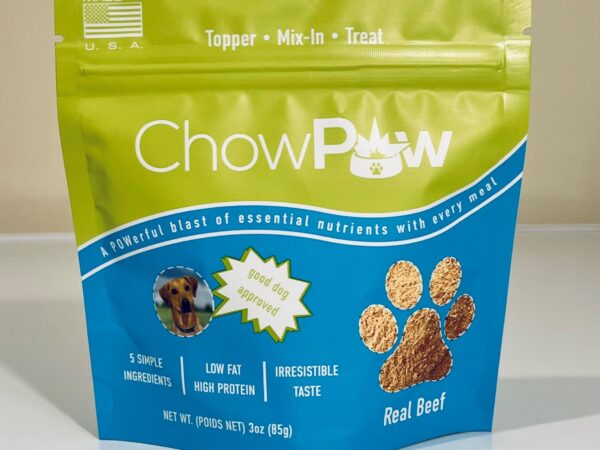 Dog Food Topper - Beef HeartOriginal price was: $14.99.$10.95Current price is: $10.95. - or subscribe and save up to 20%