

Cats and Celery: Safe or Not?
Yes, cats can eat celery in small, properly prepared amounts, but it should stay an occasional treat, not a staple. A practical upper limit is about 1 tablespoon per day of finely chopped celery, and all treats together should stay within 10% of your cat's daily intake.
If you're reading this because your cat suddenly got fascinated by the celery stalk on your cutting board, you're not alone. Plenty of cats ignore vegetables completely, while others seem oddly interested in the crunch, the smell, or the way a leafy stalk wiggles like a toy. That curiosity can make cat owners wonder if celery is safe, useful, or just one of those strange feline moments.
The short version is reassuring. Celery isn't toxic to cats, but it also isn't something they need. The actual question isn't only “can cats eat celery?” It's “why would they want it, and how do I offer it safely if I choose to?”
The Curious Case of Your Cat and Your Salad
You're making dinner, you turn around, and your cat is suddenly standing guard by the cutting board like celery is the most important thing in the kitchen. That can feel confusing because cats usually don't act like vegetable lovers.
Most of the time, the interest isn't about nutrition. It's often about texture, movement, or novelty. A celery stalk is crisp, fibrous, and fun to bat around. For some cats, it's closer to a crunchy enrichment object than a meaningful snack.
What the safe answer looks like
Cats can have a small amount of celery if it's served plain and cut into tiny pieces. What matters most is moderation and preparation. Celery should never compete with your cat's normal food, because cats are built for a meat-based diet.
That's why cats and celery should be thought of like this:
- A curiosity snack: something a cat may nibble once in a while
- A texture experience: not a nutritional upgrade
- A minor add-on: never the center of the bowl
Practical rule: If your cat seems interested, treat celery like a garnish, not a food group.
Why some owners ask this question in the first place
More pet owners are thinking carefully about fresh ingredients and where food comes from. If you already enjoy harvesting fresh celery at home, it makes sense to wonder whether a tiny bit can be shared with your cat too.
That curiosity is healthy. The important part is keeping the answer species-appropriate. Freshness matters, but so does remembering that a cat's body doesn't view celery the way a human does. For your cat, celery is optional, small, and mostly about safe enrichment.
The Nutritional Truth About Celery for Cats
Cats are obligate carnivores. That means their bodies are designed to get essential nutrition from animal-based foods, not vegetables. This is the core fact that helps everything else make sense.
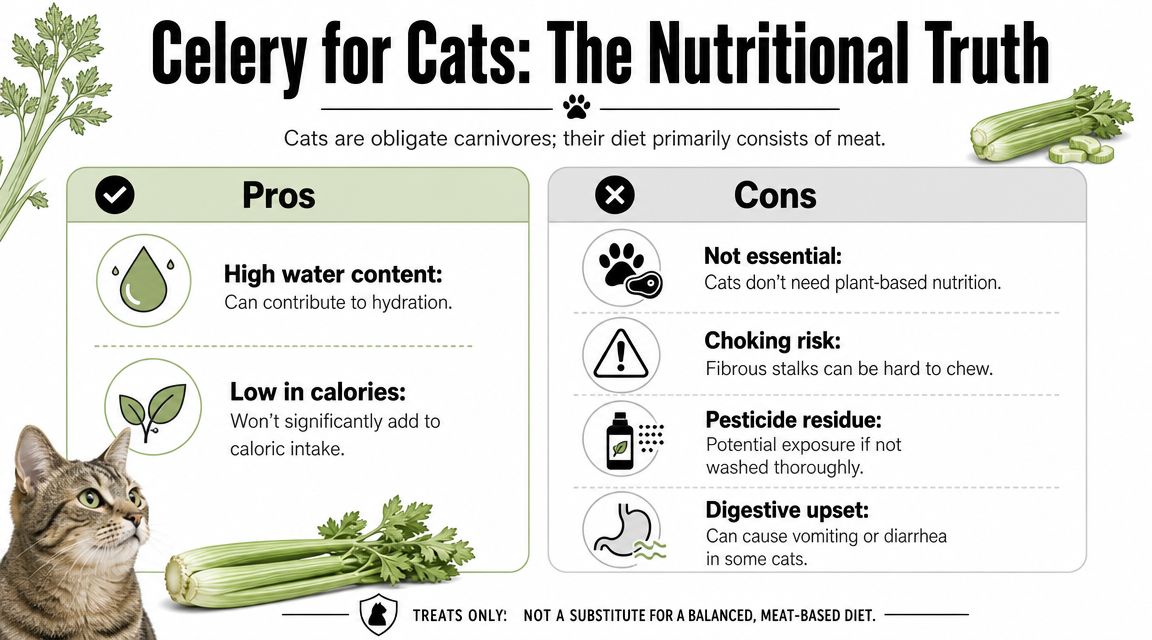
So if your cat nibbles celery, it doesn't mean celery has become an important health food for them. It usually means they're responding to the crunch, the moisture, or the simple novelty of something different.
What celery does offer
Celery is mostly water. One pet nutrition source notes that it's about 95% water by weight and describes it as a low-calorie snack option for cats when served in tiny amounts (Catster).
In practical terms, that means celery may have a small role as:
- A hydrating nibble: because of its high moisture content
- A fiber source in tiny amounts: which some cats may tolerate well
- A low-calorie treat option: if your cat enjoys it
Another pet health source also notes that many articles answer the safety question but skip the more useful one: whether celery is worth feeding to an obligate carnivore. Their conclusion is simple. It may be safe in tiny amounts, but it's not a meaningful source of nutrition for cats and should remain an occasional, non-essential treat (WagWalking).
What celery does not offer
Celery doesn't provide what a cat fundamentally needs from food. It isn't a substitute for a complete meat-based diet, and it doesn't change your cat's nutritional foundation.
That's the part many people miss. Safe doesn't automatically mean useful.
A simple analogy helps. If your cat's regular food is the house, celery is the welcome mat. It may add a little interest, but it doesn't hold the structure up.
If you're comparing how pet-safe vegetable treats differ across species, this guide on celery for dogs shows why dogs and cats don't approach the same food in the same way.
Cats and celery can coexist safely, but celery belongs in the category of “harmless extra,” not “nutritional strategy.”
How to Safely Prepare Celery for Your Cat
Preparation matters more than enthusiasm. A cat may eagerly sniff or chew at celery, but the stalk's long, stringy fibers can be awkward to handle. That's where most of the risk comes from.
A neutral pet health source points out that celery's stringy texture can create a choking concern, which is why tiny pieces and removal of tough strings matter so much (Lucy Pet Products).
The safest way to serve it

If you decide to offer celery, keep the process simple:
- Wash it well. Clean off dirt and any surface residue.
- Remove the tough strings. Those fibrous strands are the part most likely to cause trouble.
- Chop it very finely. Think tiny bits, not slices from a salad platter.
- Serve it plain. No salt, butter, dip, broth, or seasoning.
- Watch your cat afterward. Any sign that chewing or digestion was difficult means celery isn't a good fit.
Raw and cooked celery can both be offered if they're plain, but many owners find softened celery easier for a cat to manage. The goal isn't to preserve some magical benefit. The goal is to make the texture less awkward.
Which cats need extra caution
Not every cat should experiment with crunchy vegetables.
Use more caution if your cat is:
- A fast eater: cats that gulp may swallow pieces badly
- A senior cat: chewing may be less efficient
- Living with dental issues: crisp, fibrous food may be uncomfortable
- Prone to stomach upset: even small changes can backfire
This same kind of species-specific thinking shows up with other backyard or kitchen foods too. For example, people often ask whether the same vegetable is safe across animals, but the answer changes a lot depending on chewing style and digestion. A guide on is celery safe for chickens is a good reminder that one ingredient can behave very differently from one species to another.
A quick visual guide can help if you want to see safe prep in action:
Tiny, plain, soft, and string-free is the safest way to think about celery for cats.
A Guide to Celery Serving Size and Frequency
Portion size is where good intentions can go wrong. A few tiny bits of celery may be fine. A loose handful dropped into the bowl is not the same thing.

One pet nutrition source explains that treats should not exceed 10% of a cat's daily diet and notes that celery is about 95% water, making it a low-calorie option when fed sparingly. The same source gives a suitable serving size of about 1 tablespoon of finely chopped pieces per day at most (Catster).
An easier way to think about portions
For most cats, celery should feel more like a sprinkle than a snack.
Use this mental model:
| Approach | Better choice |
|---|---|
| Whole stalk | Tiny chopped bits |
| Frequent habit | Occasional treat |
| Mixed with table food | Served plain by itself |
| Big crunchy chunk | Small easy-to-chew pieces |
A simple serving mindset
Keep celery in the “condiment” category.
- Start small: Offer a tiny amount the first time.
- Don't make it routine: If your cat likes it, that still doesn't mean they need it daily.
- Count all treats together: Celery shares that treat budget with every other extra.
Some guidance also recommends aiming for less than 5% of the diet for treats overall, which makes the “tiny amount” approach even more sensible when you're offering vegetables to a carnivore (Great Pet Care).
Watching for Trouble and Foods to Avoid
Celery itself is considered non-toxic, but “non-toxic” doesn't mean “problem-free.” A cat can still react badly if they eat too much or struggle with the texture.
One pet health source warns that excessive celery intake can cause vomiting, diarrhea, and bloating in cats, and adds that celery should always be served plain and finely chopped because it can be hard to chew (Great Pet Care).
Signs to watch after your cat tries celery
If your cat samples celery, monitor for:
- Vomiting: especially repeated vomiting
- Loose stool or diarrhea: a sign their digestion didn't like it
- Bloating or visible discomfort: including restlessness or a tense belly
- Trouble chewing or swallowing: gagging, pawing at the mouth, or coughing
If any of these show up, stop offering celery and contact your veterinarian for guidance.
A food can be technically safe and still be the wrong choice for an individual cat.
Foods that often come with celery but should stay away from cats
This is a common kitchen trap. Cats rarely get plain celery from a cutting board alone. They often encounter it in dips, soups, stocks, stuffing, or chopped vegetable mixes.
Be especially careful with:
- Onions, garlic, and chives: common in mirepoix and soup bases, and not safe for dogs or cats. If you want a clear example of why allium vegetables are a problem in pet diets, this guide on can dogs eat onions explains the issue well.
- Creamy dips: many are too rich, heavily seasoned, or contain ingredients that don't belong in a pet bowl.
- Seasoned cooked celery: butter, salt, broth, and spice blends turn a simple vegetable into a poor pet choice.
The safest celery is boring celery. Plain, tiny, and separate from human recipe extras.
Celery's Role in a Carnivore's Complete Diet
The fairest conclusion on cats and celery is simple. It's a safe option for some cats in very small amounts, but it isn't nutritionally important. Its value is mostly in hydration, texture, and enrichment, not in building a complete feline diet.
That's worth remembering because pet nutrition can get noisy. A food doesn't become valuable just because it's fresh, green, or healthy for humans. For cats, the priority stays the same: species-appropriate nutrition first, extras second.
A better way to judge add-on foods
A useful question is not “Is this ingredient trendy or wholesome?” It's “Does this ingredient make sense for the animal eating it?”
For cats, that usually means:
- Meat-based complete food comes first
- Extras stay small and optional
- Texture and safety matter as much as ingredient quality
That same careful mindset applies across pet feeding more broadly. Dog owners exploring homemade options often look for vet-approved dog food meals because they want freshness without losing balance. That's a smart instinct. The principle is the same even when the species changes: whole foods are helpful only when they fit the animal's actual nutritional needs.
Where responsible supplementation fits
For dogs, meal enhancers and toppers can play a thoughtful role when they support appetite and add targeted nutrients to an existing base diet. Understanding building blocks like essential amino acids for dogs helps show why intentional supplementation works best when it supports a complete meal instead of trying to replace one.
For cats, celery doesn't play that role. It's better seen as a tiny side note. If your cat likes it and handles it well, fine. If your cat ignores it, that's just as normal.
The healthiest feeding choice is often the least exciting one. Give your cat a complete meat-based diet, and let novelty foods stay minor.
If you're feeding a dog and want to make everyday kibble more appealing without replacing the meal itself, ChowPow is designed as a topper, not a substitute. It uses simple whole food ingredients to boost aroma, taste, and nutritional value, which can be especially helpful for picky eaters, seniors, and dogs that need extra encouragement at mealtime.
-
Product on sale
 Dog Food Topper - Beef HeartOriginal price was: $14.99.$10.95Current price is: $10.95. - or subscribe and save up to 20%