

Cause of Seizures in Dogs: A Complete Owner’s Guide
One minute your dog is napping by the couch. The next, they're stiff, paddling, staring, or completely unresponsive. Most owners remember that moment in sharp detail because it's frightening, confusing, and hard to process in real time.
If that's where you are right now, take a breath. A seizure is always worth veterinary attention, but it isn't a mystery your vet has never seen before. There's a practical path forward, and understanding the cause of seizures in dogs starts with knowing what happened, what it might mean, and what clues matter most.
Your Dog Had a Seizure What Happens Now
The first job is safety. Move nearby objects away if your dog could hit them. Keep your hands away from the mouth. Time the event if you can, even if it feels impossible in the moment.
The second job is observation. Try to notice what your dog was doing just before it started, how long it lasted, what the body looked like during it, and how your dog behaved afterward. That information helps your veterinarian more than most owners realize.
A seizure feels rare when it happens in your living room. In veterinary practice, it's a known medical problem with a structured workup. A large UK study found that 0.82% of dogs under primary veterinary care had at least one seizure during a 1-year period in 2013, and risk was higher in dogs aged 3 to 6 years (population study on canine seizures).
Practical rule: Your goal after a seizure isn't to diagnose it yourself. Your goal is to keep your dog safe and gather useful details for your vet.
What to do right after the episode
- Call your veterinarian: Even if your dog seems normal again, your vet needs to know this happened.
- Write down the basics: Time of day, duration, body movements, loss of awareness, urination, drooling, pacing, confusion.
- Look for possible exposures: Human medications, foods, chemicals, trash, garden products, or anything chewed.
- Save a video if you have one: A short phone video can be extremely helpful.
What not to assume
Many owners jump straight to “my dog has epilepsy.” Sometimes that's true. Sometimes it isn't.
A seizure is a symptom, not a final diagnosis. Consider the example of a fire alarm. The alarm tells you something is wrong, but it doesn't tell you whether the cause is burnt toast, an electrical problem, or a real fire. Your vet's job is to find the source.
That's especially important because a dog's age, overall health, and the exact way the event looked can all change what's most likely going on.
What a Seizure Actually Looks Like in Dogs
Not every seizure looks like a dramatic full-body convulsion. That's one reason owners sometimes miss early warning signs or mistake seizures for odd behavior, tremors, pain, or even stomach upset.
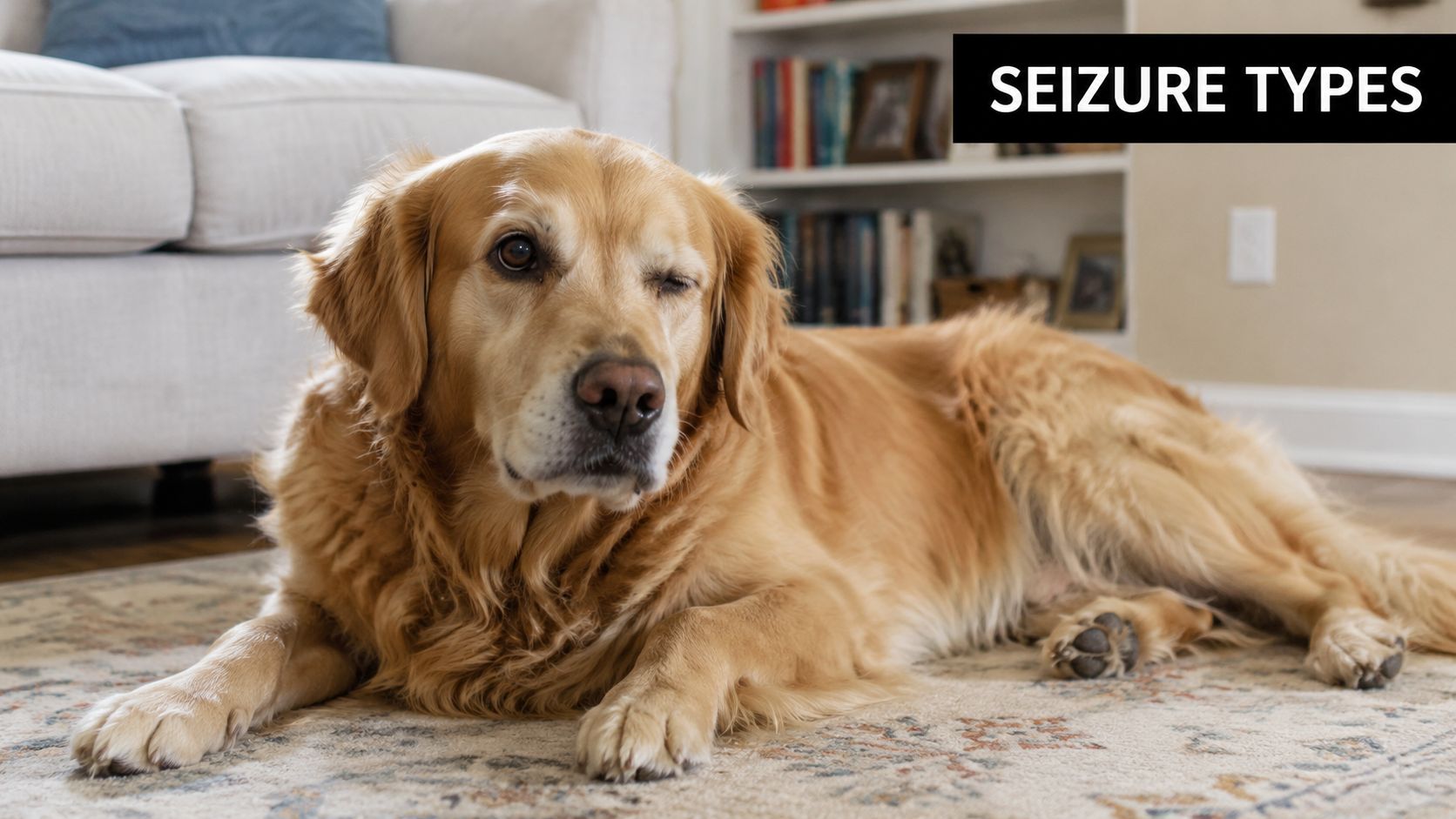
Generalized seizures
These events are often what come to mind first. A dog may fall over, lose awareness, stiffen, paddle the legs, drool, vocalize, or urinate. Afterward, many dogs seem dazed, restless, wobbly, clingy, or temporarily “not themselves.”
It can help to think of a generalized seizure as an electrical storm affecting broad areas of the brain at once. That's why the whole body may seem involved.
Focal seizures
Focal seizures can be much subtler. A dog might twitch on one side of the face, snap at the air, stare, lick repeatedly, bob the head, or seem briefly disconnected. Owners often describe these as “weird episodes” rather than seizures.
That subtlety matters. If you've been seeing repeated odd spells in a small breed, behavior-focused resources can be helpful alongside veterinary care, including this guide on Chihuahuas and seizures.
Some seizures are loud and unmistakable. Others are quiet enough to look like a habit, a startle, or a strange moment of confusion.
Seizure versus fainting versus trembling
Owners often ask how to tell them apart. The shortest answer is that you usually can't be fully sure at home.
A seizure often includes abnormal movements plus a period of confusion afterward. Fainting may be more like a sudden collapse with quick recovery. Trembling from pain, cold, or fear usually happens in an awake, responsive dog. Still, those lines can blur.
A video gives your veterinarian a much better chance of sorting that out. If you can safely record the event without interfering, it's worth doing.
Uncovering the Main Causes of Canine Seizures
Your dog's brain runs on carefully balanced electrical signals. A seizure happens when those signals misfire. The next question is why that misfire happened.
Veterinarians often sort the causes into two groups. Extracranial causes begin outside the brain but disrupt how the brain works. Intracranial causes start within the brain itself. That split gives your vet a practical map. It helps narrow down whether the problem is more like bad fuel reaching a healthy engine, or a problem inside the engine.
The two main categories
| Cause Category | Origin | Common Examples |
|---|---|---|
| Extracranial | Outside the brain, affecting brain function secondarily | Low blood sugar, liver dysfunction, kidney disease, electrolyte imbalance, toxins |
| Intracranial | Inside the brain itself | Tumors, inflammation, trauma, hydrocephalus, vascular disease |
A plain-language overview from Chatham Animal Hospital explains seizures as episodes of abnormal electrical activity in the brain and groups causes into outside-the-brain problems, such as toxins or metabolic disease, and inside-the-brain problems, such as tumors, inflammation, trauma, or congenital disease (plain-language seizure overview for owners).
Extracranial causes
With extracranial seizures, the brain may be structurally normal, but the body chemistry around it is off balance. Brain cells are sensitive. If blood sugar drops too low, waste products build up, or minerals like sodium and calcium shift too far from normal, those cells can start firing abnormally.
Common examples include:
- Low blood sugar
- Liver disease or a liver shunt
- Kidney disease
- Electrolyte imbalances
- Toxin exposure
- Reactions to human medications or certain supplements
Poisoning deserves special attention because it is one of the few causes owners may be able to identify quickly at home. Sugar-free gum, some medications, cannabis products, certain insecticides, and even common cold items can be dangerous. If you are reviewing household risks, Glo More Grooming's pet safety insights offer a helpful reminder that everyday items can trigger serious problems, and this guide on whether cough drops are bad for dogs covers one example in more detail.
Intracranial causes
Intracranial causes involve the brain tissue itself. In these cases, the brain is not just reacting to a body-wide problem. It has its own structural or inflammatory issue.
Examples include:
- Brain tumors
- Inflammation or infection of the brain
- Head trauma
- Congenital abnormalities
- Bleeding or vascular events
These causes matter more as dogs age. A first seizure in a senior dog raises stronger concern for conditions like a brain tumor, vascular disease, or organ disease affecting the brain. In a younger dog, inherited epilepsy or congenital problems often sit higher on the list of possibilities. That age difference is one of the most useful clues in seizure workups, and it is often missed in general advice online.
Where idiopathic epilepsy fits
Idiopathic epilepsy means a dog has repeated seizures, but testing does not find a toxin, metabolic problem, or visible brain disease. In plain language, the brain has a seizure tendency even though the underlying trigger is not identified on routine testing.
This diagnosis is more commonly considered in younger to middle-aged dogs, especially if they are normal between seizure episodes. A brand-new seizure in a very young puppy or an older dog usually pushes vets to look harder for another cause first.
Why the cause matters for long-term care
The cause shapes the plan.
A dog with low blood sugar needs a different response than a dog with a brain tumor. A dog with suspected idiopathic epilepsy may need anti-seizure medication and steady long-term monitoring. A dog with liver-related seizures may also need diet changes that reduce metabolic stress on the brain. Nutrition does not replace diagnosis or medication, but it can be an important part of long-term support once your veterinarian knows what type of seizure disorder your dog is dealing with.
That is one reason seizure care is bigger than stopping the episode you just saw. It is about identifying the trigger, lowering future risk, and supporting the brain over time.
How Vets Diagnose the Seizure's Cause
The diagnostic process usually starts with your story, not a machine. What happened before, during, and after the event can point your veterinarian toward the right branch of the workup.
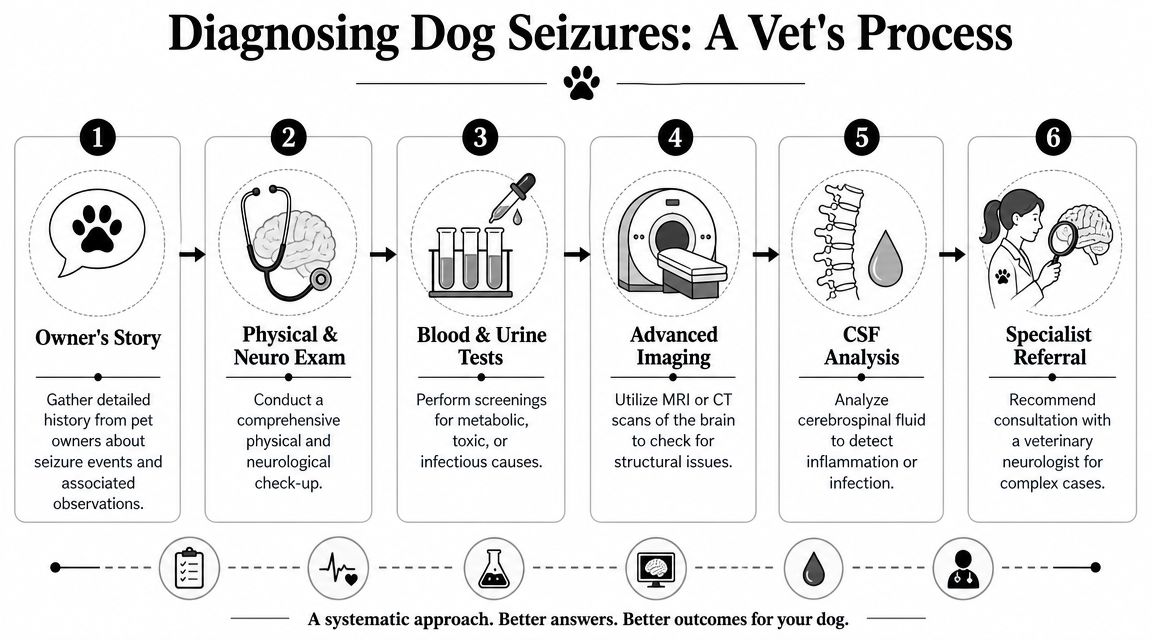
Step one starts at home
Bring details like these if you can:
- Timing: What time did it happen, and how long did it last?
- Pattern: Was it the first event or part of a series?
- Behavior changes: Anxiety, hiding, pacing, staring, wobbliness, confusion.
- Diet and exposures: New treats, trash, chemicals, human medication, supplements.
- Video evidence: Even a short clip helps.
The first-line veterinary exam
Your veterinarian will usually perform a full physical exam and a neurologic exam. These aren't the same thing.
A physical exam looks at the whole dog. A neurologic exam looks for clues that point toward the brain, spinal cord, nerves, balance system, or vision pathways. Even subtle deficits can matter.
Bring this with you: a written seizure log, a list of medications and supplements, and any phone videos of the episode.
Baseline testing and advanced testing
The first round of tests often includes bloodwork and urine testing. These help screen for extracranial problems such as metabolic disturbance, organ disease, or toxin-related issues.
If those results don't explain the seizures, or if the exam raises concern for brain disease, your vet may recommend more advanced diagnostics. That may include brain imaging such as MRI, and in some cases cerebrospinal fluid analysis to look for inflammation or infection.
Some dogs also benefit from referral to a veterinary neurologist, especially when the pattern is complex, severe, or difficult to classify. The main point is that diagnosis usually moves from broad screening toward more specialized testing in a deliberate order.
Seizure First Aid and When to Seek Emergency Care
When a seizure happens, owners need simple instructions, not a lecture. Focus on safety, timing, and getting help when the pattern crosses into emergency territory.
A useful place to start preparing ahead of time is a practical guide to items for your dog's emergency kit. Having basics ready lowers panic when something urgent happens.
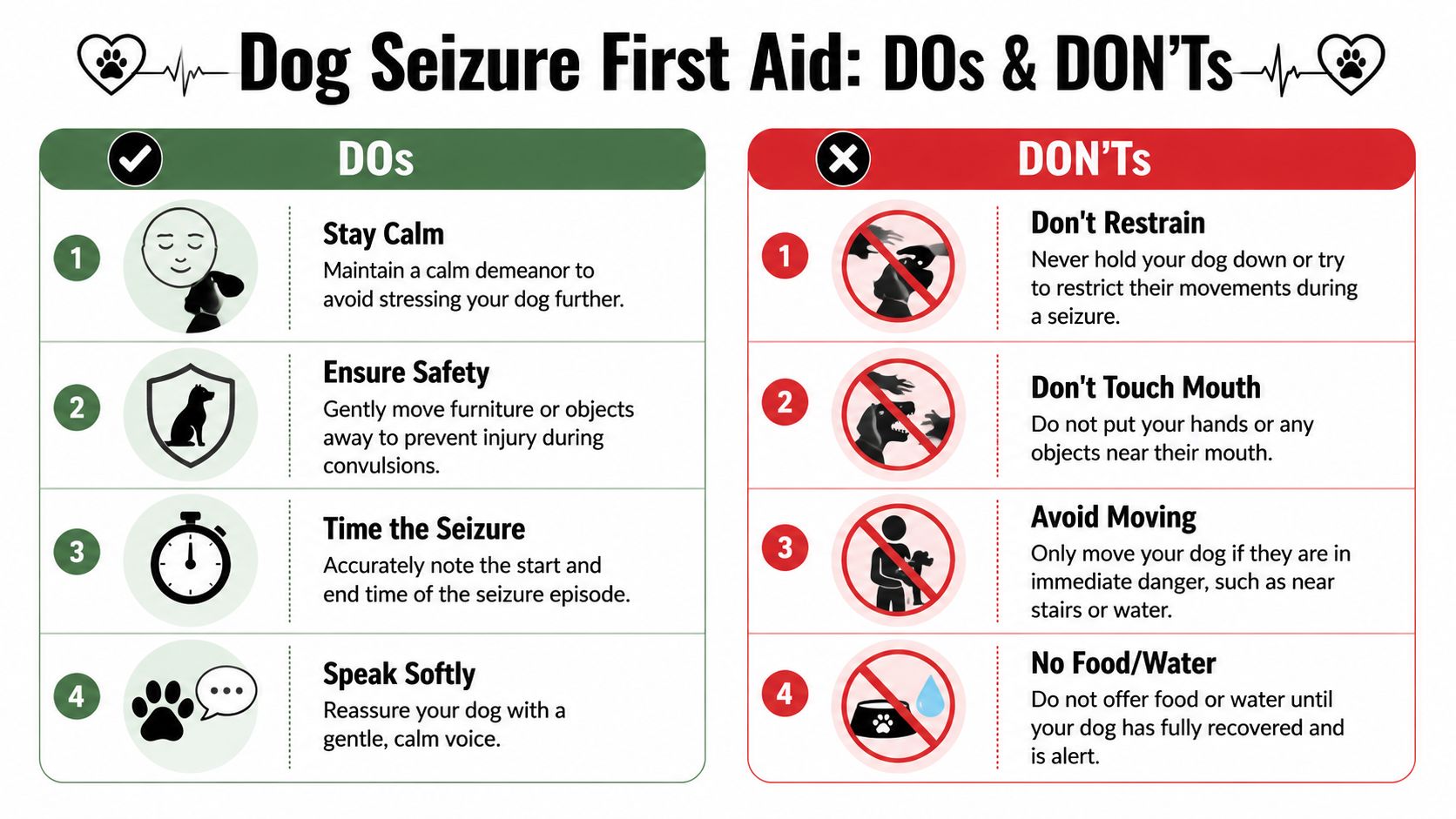
What to do during a seizure
- Protect your dog from injury: Move chairs, tables, cords, or anything sharp out of the way.
- Time the event: Guessing usually feels shorter than reality. Use your phone.
- Dim the chaos: Reduce noise, keep other pets back, and speak softly.
- Move only if needed: If your dog is near stairs, water, or another immediate hazard, guide carefully if you can do so safely.
What not to do
- Don't put your hands near the mouth: Dogs can bite unintentionally during a seizure.
- Don't hold the tongue: Dogs do not need you to pull their tongue out.
- Don't restrain the body: That can cause injury to both of you.
- Don't offer food or water right away: Wait until your dog is awake and coordinated.
This short video can help owners visualize calm, safe response during an episode.
When it becomes an emergency
Seek urgent veterinary care if:
- The seizure lasts more than five minutes
- Your dog has multiple seizures close together
- Your dog doesn't recover normally between episodes
- A possible toxin exposure happened before the seizure
- Your dog is injured, struggling to breathe, or severely distressed afterward
If this happens outside regular hours, it helps to know where to find after-hours veterinary help before you need it.
If the event is prolonged, repeats, or recovery is abnormal, treat it like an emergency and leave for veterinary care.
Managing Seizures and Supporting Your Dog Long Term
The first seizure is frightening. The next question is usually, "What does normal life look like now?"
For many dogs, life can still be happy, active, and familiar. Long-term care usually works best as a steady routine built around veterinary treatment, trigger awareness, and day-to-day support at home. That routine matters even more because the likely cause can shape the plan. A younger dog with idiopathic epilepsy may need years of pattern tracking and medication review. A senior dog with new seizures often needs closer attention to age-related disease, while also needing support for appetite, strength, and hydration.

If your veterinarian starts anti-seizure medication, consistency becomes part of the treatment. Missing doses can make control harder. Changes in sleep, stress, household routine, and environment can also play a role in some dogs. Research on canine idiopathic epilepsy has described common precipitating factors such as stress, sleep loss, unfamiliar settings, and hormonal influences (study on seizure triggers and management).
A simple seizure diary helps more than many owners expect. It works like a weather log for your dog's brain. You are looking for patterns, not perfection.
Write down:
- Date and time
- How long the episode lasted
- What your dog was doing before it started
- What the seizure looked like
- How recovery went afterward
- Whether food, medication, stress, travel, or poor sleep may have been involved
Over time, those notes can help your veterinarian answer practical questions. Are the seizures becoming more frequent? Do they cluster after exciting days? Is recovery taking longer? Those details often guide treatment changes better than memory alone.
Nutrition deserves a place in this plan too. Food does not cure seizures, but the body and brain still need reliable fuel. Dogs recovering from episodes, aging dogs, and dogs taking long-term medication often do better when meals are consistent, easy to eat, and appealing enough to prevent skipped calories.
That is one reason nutritional support should be treated as a real pillar of care, not an afterthought. A dog with stable eating habits, good hydration, and healthy body condition gives you and your veterinarian a steadier base to work from. For some families, that means choosing foods or toppers that help maintain interest in meals during stressful periods or after medication changes. ChowPow fits naturally into that kind of support plan by helping owners keep meals nourishing, consistent, and appealing over time.
A practical long-term plan usually includes a few repeating habits:
- Keep follow-up appointments so your veterinarian can review seizure control, side effects, and any change in likely cause.
- Give medication exactly as prescribed and ask before making any adjustment.
- Track patterns at home so triggers and changes are easier to spot.
- Protect sleep and routine because sudden schedule changes can matter for some dogs.
- Support appetite and hydration with a feeding plan your dog will maintain.
- Prepare the household so each family member knows the plan and stays calm during future episodes.
Some owners also find comfort in marking the journey their dog has been through. During difficult seasons, families sometimes create lasting pet tributes as a way to honor the bond they share while continuing daily care.
The goal is not a perfect life. The goal is a manageable one. With the right diagnosis, steady treatment, and thoughtful support that includes nutrition, many dogs with seizures can continue to enjoy a good quality of life.
Frequently Asked Questions About Dog Seizures
Can one seizure cause permanent brain damage
A single brief seizure doesn't always lead to lasting injury, but any seizure should still be reported to your veterinarian. The bigger concern is the pattern. Repeated seizures, very long seizures, or poor recovery afterward are more urgent.
Will seizures or seizure medication change my dog's personality
Some dogs act confused, needy, restless, or tired after a seizure. That post-seizure phase often improves with time. Some medications can also affect energy or behavior, especially early on, so owners should report changes rather than stopping medication on their own.
If my older dog just had a first seizure, should I worry more
Yes, this deserves prompt attention. Senior dogs are more likely to have structural brain disease such as tumors or strokes as the cause of new-onset seizures, which is why a faster workup for intracranial disease is more urgent in older dogs (senior dog seizure guidance).
If my dog has idiopathic epilepsy, should they be bred
That's a conversation to have directly with your veterinarian, because inherited factors can play a role in some dogs. Many owners also think about how they want to honor a beloved dog's story over time, and some families choose to create lasting pet tributes that celebrate the bond they share through difficult medical journeys as well as happy years.
If you're supporting a dog with seizures, daily nutrition can be one part of a steadier routine. ChowPow is a dehydrated beef heart meal topper designed to enhance your dog's current food, not replace their kibble. It's a simple way to make meals more appealing while adding nutrient-dense support for dogs who are picky, stressed, aging, or recovering.
-
Product on sale
 Dog Food Topper - Beef HeartOriginal price was: $14.99.$10.95Current price is: $10.95. - or subscribe and save up to 20%