
Causes of Ear Infections in Dogs: A Complete Guide
If you're reading this because your dog is shaking their head again, pawing at one ear, or leaving that unmistakable funky smell on the couch pillow, you're not overreacting. Ear problems can make dogs miserable fast. They can also leave owners feeling stuck in a loop of cleaning, drops, temporary improvement, and then another flare-up a few weeks or months later.
That repeating pattern is the part that confuses people most. It seems like the infection should be the whole problem. But in many dogs, the infection is only the visible part. The deeper issue is what changed the ear canal enough for yeast or bacteria to take over in the first place.
Veterinary medicine has shifted strongly toward that root-cause view. A major review of canine otitis explains that otitis externa is usually not a stand-alone infection, but a consequence of underlying triggers that change the ear canal environment. That same review identifies hypersensitivity disease as the most common primary factor and also separates out the organisms that keep the cycle going, including Staphylococcus spp., Pseudomonas, and Malassezia yeast (peer-reviewed review on canine otitis).
That matters because lasting relief usually comes from answering a different question. Not just, "What grew in the ear?" but "Why did this dog's ear become such a good place for it to grow?"
A dog with allergies, trapped moisture, irritated skin, or a narrow ear canal often needs more than a one-time medication. They need a plan that supports the whole dog, including inflammation control, good skin health, and a steady nutritional foundation that helps the body stay resilient.
Is Your Dog's Ear Bothering Them Again?
Most owners notice the same handful of signs first. The head shake. The scratching. That moment when your dog yelps because you touched the side of their face by accident. Sometimes it's dramatic. Sometimes it's subtle, like a dog who suddenly doesn't want their ears rubbed anymore.
Ear discomfort can sneak up on you because dogs don't always announce pain clearly. Some get clingy. Some get cranky. Some rub one side of the head across the carpet and keep going as if nothing happened.
Why it keeps coming back
A lot of people assume recurring ear infections mean they didn't clean well enough the first time. Usually, that's not the case. In many cases, the ear is reacting to something ongoing, such as inflammation from allergies, trapped moisture after bathing, or debris sitting down in the canal.
Think of the infection as weeds in a damp garden bed. You can pull the weeds, but if the soil conditions stay the same, they come back.
Most chronic ear cases improve more reliably when the vet identifies the trigger that changed the ear canal environment, not just the organism growing there.
What this article will help you sort out
If your dog has repeat ear issues, it's helpful to separate the problem into three practical questions:
- What does an infection look like? You need to know the early signs before the ear gets very painful.
- What started the irritation? Triggers can include allergies, moisture, foreign material, parasites, and body-wide health issues.
- What supports long-term stability? That usually means good veterinary diagnosis, careful home care, and overall wellness habits that reduce inflammation instead of constantly reacting to flare-ups.
The good news is that recurrent ear trouble usually isn't random. Once you understand the pattern behind it, the problem becomes much less mysterious.
Recognizing the Telltale Signs of an Ear Infection
Some ear infections are obvious. Others look like "my dog is just being weird today." A quick home check can help you decide whether this is mild irritation, a likely infection, or a problem that needs prompt veterinary care.
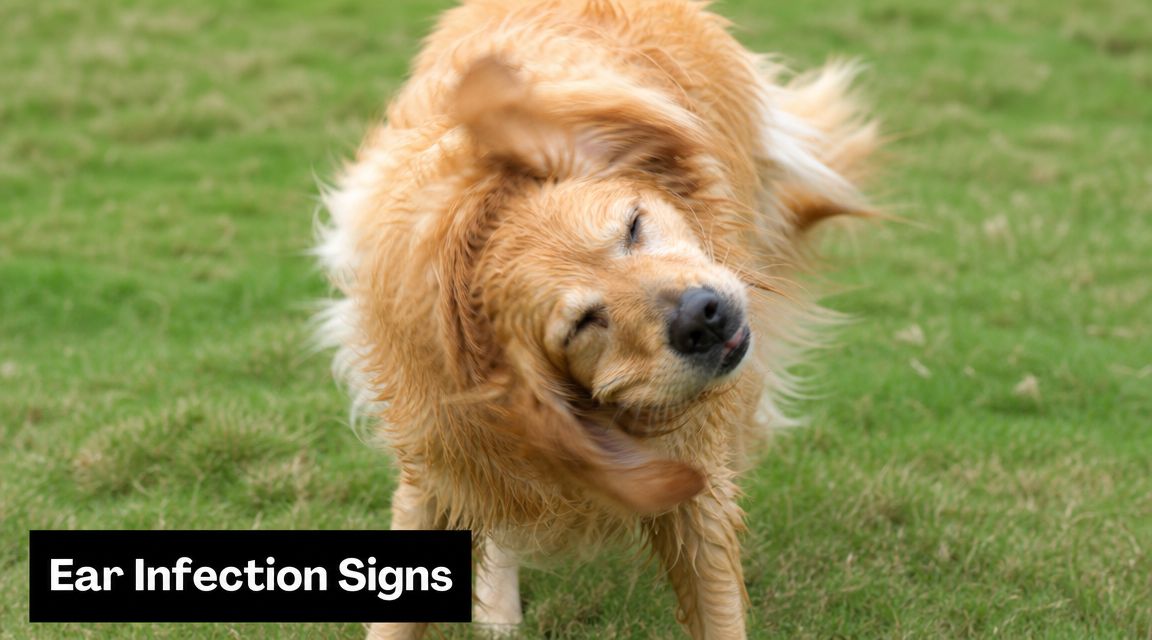
What you might notice in your dog's behavior
Watch for changes in how your dog acts around their head and ears.
- Frequent head shaking: This is often one of the first clues that the ear canal feels irritated or full.
- Scratching at one or both ears: Repeated scratching can make the skin around the ear flap raw.
- Rubbing the head on furniture or carpet: Dogs often do this when they can't reach the itch directly.
- Pulling away when touched: A dog who normally loves ear rubs may suddenly flinch or turn away.
- Mood changes: Some dogs become restless, irritable, quieter than usual, or less interested in food because the ear hurts.
What the ear may look or smell like
You don't need to diagnose the exact cause at home, but you can spot signs that something isn't normal.
- Redness: The skin inside the ear flap or around the canal opening may look pinker or redder than usual.
- Swelling: A puffy, narrowed opening can mean inflammation is building.
- Discharge: You may see waxy buildup, sticky material, or pus-like debris.
- Odor: Healthy ears shouldn't smell strong. A musty, sour, or foul smell is a red flag.
- Crusting or dampness: The ear may look greasy, wet, or dirty much faster than normal.
Signs that suggest the problem may be deeper
These don't always happen, but if they do, don't wait.
- Head tilt
- Loss of balance
- Whimpering or obvious pain
- Trouble chewing or opening the mouth comfortably
A short visual guide can help you compare what you're seeing at home with common clinical signs:
Home check rule: Look, smell, and observe behavior. Don't put cotton swabs, oils, or random leftover drops into the ear unless your veterinarian told you to use that specific product.
If your dog's ear is painful, foul-smelling, suddenly swollen, or causing balance changes, schedule a vet visit. Ear infections rarely sort themselves out, and the longer inflammation sits there, the harder the ear can be to treat.
The Primary Causes and Unfortunate Anatomy of Dog Ears
A lot of ear trouble starts with simple mechanics. A dog's ear canal is long, bends sharply, and holds onto moisture and debris more easily than a human ear. If you have ever tried to rinse out a bent straw, you already understand the problem. Water, wax, shed skin cells, and inflammatory gunk can sit in that turn instead of clearing out cleanly.
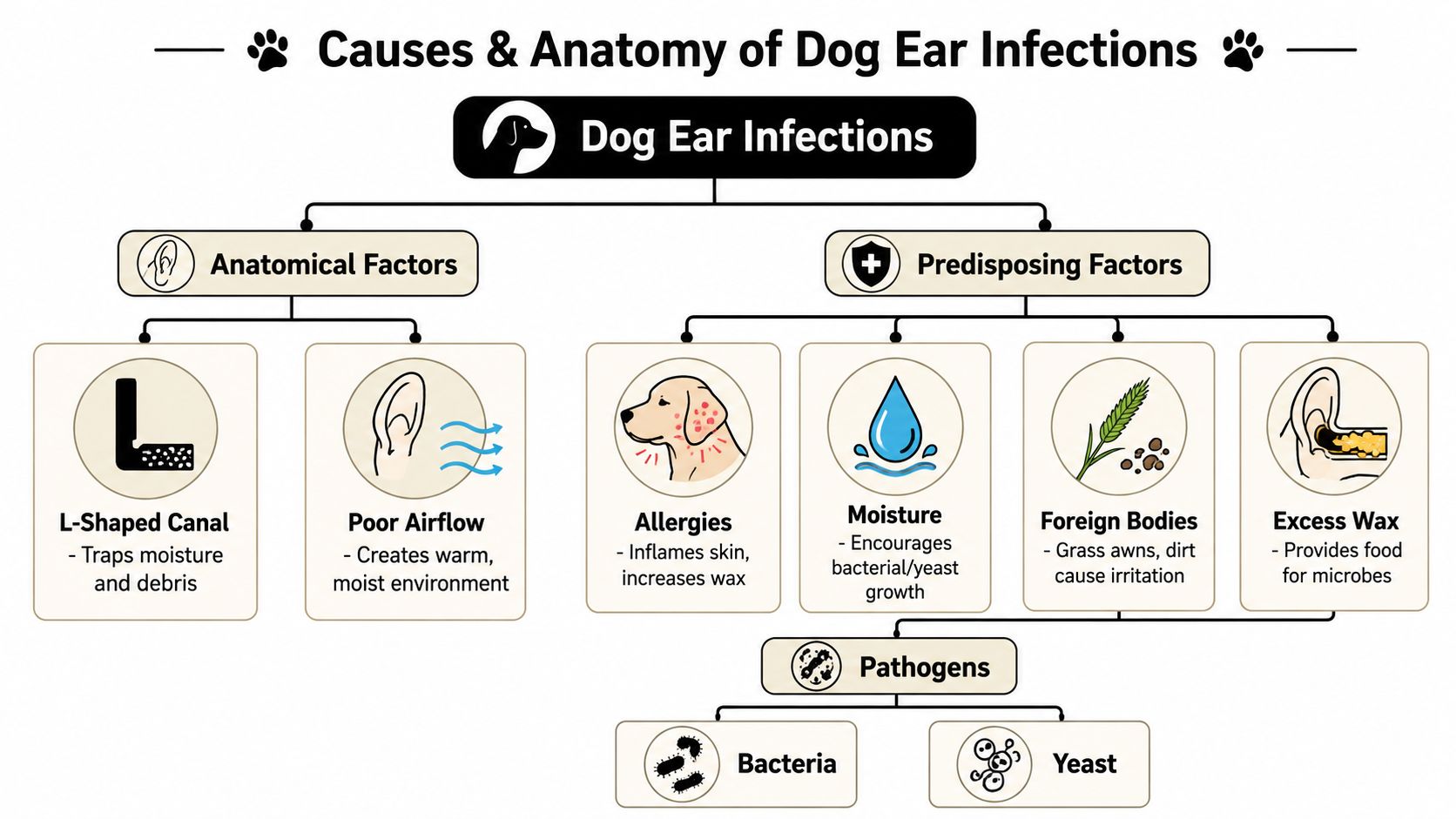
That shape does not cause infection all by itself. It creates the perfect place for trouble to build if something irritates the ear first. Once the lining becomes inflamed, the canal swells, airflow drops, and normal wax starts acting more like a trap than a protective coating.
Why the ear keeps becoming a problem site
Veterinarians often sort causes into two buckets. First, there is the thing that starts the irritation. Then there are the factors that make the ear easier to keep inflamed.
Primary causes include:
- Allergic skin disease, including food reactions, environmental allergies, and contact sensitivity
- Parasites, especially ear mites in younger dogs
- Foreign material, such as grass seeds or plant debris
- Growths or polyps that crowd the canal
- Hormone-related skin changes, which can affect the health of the ear lining
Predisposing factors include:
- Heavy ear flaps that reduce airflow
- Narrow ear canals
- Extra hair in or around the canal
- Frequent swimming or bath water left behind
- Over-cleaning, which can irritate the skin instead of helping it
This is why two dogs can play in the same pond and only one ends up at the vet scratching its ears all night. The dog with underlying skin inflammation, a tighter canal, or more wax production has less room for error.
Anatomy explains part of it. Whole-body inflammation explains a lot more.
This is the piece many owners do not hear early enough. Repeated ear infections are often a skin-health problem that happens to show up in the ears. The ear canal is lined with skin, so anything that disrupts skin barrier function can set the stage for recurring flare-ups.
For some dogs, seasonal triggers matter. Pollen, grasses, and outdoor irritants can inflame the skin long before you notice obvious ear debris. If your dog tends to flare during high-pollen months, this guide to spring allergies in dogs and how they affect sensitive skin can help connect the dots.
Environmental load can matter too. Dogs walking, rolling, and lying on treated grass bring those exposures straight to their skin and coat, which may add to the irritation burden in sensitive pets. That is one reason some owners focus on maintaining a pet-safe lawn as part of a broader skin and ear care plan.
Why infections keep coming back
Bacteria and yeast usually take advantage of an ear that is already inflamed, damp, or blocked. In other words, they are often the passengers that turn a small problem into a painful one. If the underlying trigger stays active, the ear may improve with drops and then flare again a few weeks later.
That repeat pattern matters. It often points to a dog who needs more than short-term ear medication. They may need allergy workup, better moisture control, gentler ear care, and a stronger day-to-day foundation for skin health. Good nutrition will not replace treatment for an active infection, but it does support the skin barrier and immune balance that help some sensitive dogs stay more resilient over time.
Recurrent ear infections usually mean the ear canal keeps getting irritated, not that your dog simply has "dirty ears."
Allergies The Most Common Hidden Trigger
If a dog keeps getting ear infections, allergies move high on the suspect list very quickly. That's because the ear canal is lined with skin. When the skin is inflamed, the ear changes right along with the paws, belly, armpits, and face.
The strongest practical takeaway for owners is simple. Recurrent ear trouble often points to a dog whose whole body is reacting to something, not just a dog with "bad ears."
Why allergy dogs get stuck in the cycle
Merck's dog-owner guidance notes that allergies are involved in as many as 43% of ear infection cases, and ear infections occur in 65% to 80% of dogs with allergic skin disease (Merck Veterinary Manual on ear infections and otitis externa in dogs).
That link helps explain a pattern many owners recognize:
- itchy feet in spring
- red belly after rolling in grass
- chewing at the skin
- ear flare-ups that seem to arrive "out of nowhere"
They usually aren't out of nowhere. The ear is often one of the places allergic inflammation shows up first, or one of the places it lingers longest.
Food and environment can both matter
Some dogs react mainly to environmental triggers such as pollen, dust, or yard exposure. Others have food-related sensitivity layered into the picture. Many have both. That's why a dog may improve with medication but still relapse during a season change, after more outdoor time, or while eating a diet that doesn't agree with them.
If your dog tends to flare after time outside, reducing irritant exposure around the home can help. For yard-focused households, this guide to maintaining a pet-safe lawn is a useful place to start.
For dogs who struggle during high-pollen months, this article on understanding and managing spring-time allergies in dogs gives a good overview of what seasonal patterns can look like.
Why whole-body support matters
Ear drops can calm the local infection. They can't do much for a body that's staying inflamed day after day.
That's why long-term management often includes things like:
- allergy workups and pattern tracking
- better control of known food or environmental triggers
- less moisture and irritation in the ear canal
- steady nutrition that supports skin integrity and normal immune function
No food topper, supplement, or diet should be treated like a cure for allergies. But a dog with chronic inflammation often does better when their overall nutrition is consistent, simple, and supportive instead of adding more variables.
When the ear keeps relapsing, think beyond the ear. Ask what is irritating the dog's skin system-wide.
Infections Unpacked Bacteria and Yeast Overgrowth
Once the ear canal becomes inflamed, damp, or packed with wax, microbes can multiply fast. This is the part most owners hear about at the appointment: "It's yeast," or "It's bacterial." That's useful information, but it still doesn't answer why the overgrowth happened.
A healthy ear can contain small numbers of normal organisms without causing trouble. Problems start when the environment changes enough that those organisms gain the upper hand.
Why yeast and bacteria look different
The names can sound technical, but the visible clues are often familiar. Malassezia is the yeast frequently encountered in dog ears. The bacterial culprits commonly discussed in chronic ear disease include Staphylococcus and Pseudomonas.
Here's a practical comparison of signs owners may notice.
| Symptom | Yeast Infection (Malassezia) | Bacterial Infection (Staphylococcus, Pseudomonas) |
|---|---|---|
| Discharge appearance | Often brown, waxy, or greasy | Often yellow, greenish, or pus-like |
| Odor | Often sweet, musty, or "bread-like" | Often sharper, foul, or rotten-smelling |
| Skin texture | Greasy, thickened, wax-heavy canal | Wet, inflamed, sometimes more ulcerated |
| Pain level | Can be itchy and uncomfortable | Often more painful, especially when swollen |
| What owners notice first | Odor and dark buildup | Pain, redness, wet discharge, stronger smell |
This table is a general guide, not a home diagnosis. Many dogs have mixed infections, so the ear can show features of both.
Why medication helps, but sometimes not for long
When your vet prescribes antifungal drops, antibiotic drops, or a combination product, they're targeting the organisms found in the ear. That's why the treatment often works well at first.
The confusion starts when the same ear flares again. In those cases, owners sometimes assume the medicine failed. More often, the medicine treated the overgrowth correctly, but the canal stayed vulnerable because the underlying trigger was still active.
If your dog has been prescribed an oral antibiotic and you're trying to understand where that fits in the bigger treatment picture, this guide on amoxicillin for dogs can help you understand why antibiotics are only one piece of care.
Yeast and bacteria are often the follow-up act. The opening act is usually inflammation, moisture, debris, or allergy.
How Your Veterinarian Diagnoses Ear Problems
You bring your dog in because the scratching started again, and from the outside it can look like the same old ear problem. Your veterinarian is sorting out something more specific. They need to identify what is irritating the ear today, and what keeps setting the stage for repeat flare-ups.
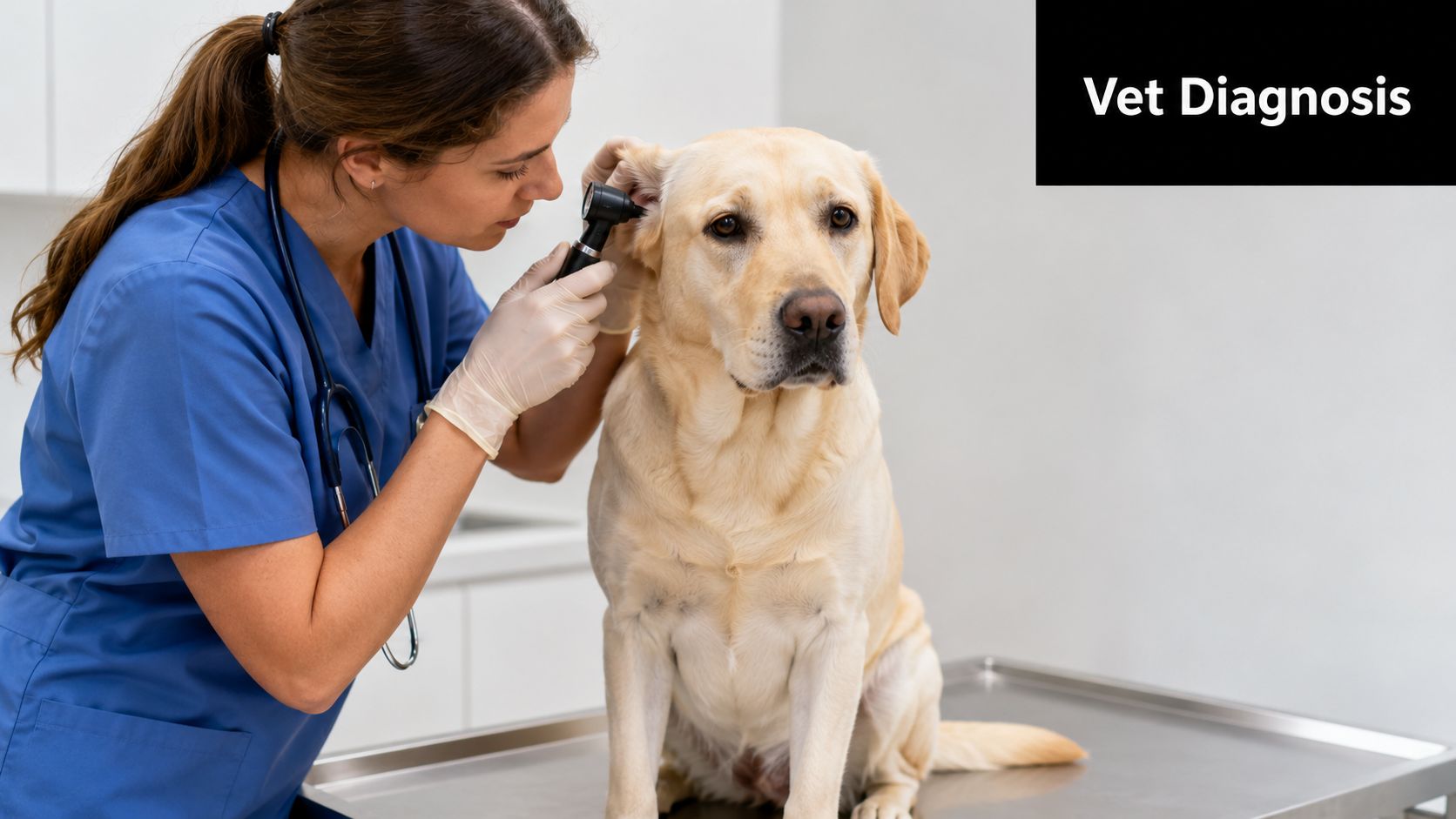
Your dog's history gives the exam context
A recurring ear case is a little like troubleshooting a leak in your house. The puddle matters, but so does where the water keeps getting in.
That is why your vet will ask about more than the ear itself. Helpful details include when the signs began, whether one ear or both are involved, what the discharge looked or smelled like, and whether the problem seems tied to pollen season, swimming, grooming, or certain foods. Skin clues matter too. Itchy paws, face rubbing, belly redness, and recurrent licking can point toward allergies or a larger inflammation pattern affecting the whole body.
Bring a list of anything you have already used at home, including cleaners, leftover drops, supplements, or medications. That saves time and helps your vet avoid treatments that may have already failed or irritated the canal.
What your veterinarian is looking for during the exam
The exam usually starts with the visible parts of the ear and the skin around it. Your vet checks for redness, thickening, scabs, swelling, pain, odor, and debris. They may also look beyond the ears because chronic ear trouble often travels with skin disease elsewhere on the body.
Then they use an otoscope to look down the ear canal. It works like a flashlight and magnifier combined. This helps them see how swollen the canal is, whether there is trapped material, and whether the eardrum can be seen safely. If the canal is very inflamed, your dog may need pain control, a cleaning plan, or even sedation before anyone can get a full look without causing more discomfort.
Why ear cytology matters so much
For many dogs, the microscope gives the most useful answers.
With ear cytology, your vet or technician collects a sample from the ear, places it on a slide, stains it, and checks it under the microscope. That shows whether yeast, bacteria, inflammatory cells, or a mix of all three are present. It turns guesswork into a treatment plan.
Two ears can look similar to an owner, yet they may require different medication. One may be dominated by yeast. Another may involve bacteria, marked inflammation, or both. If a dog keeps having repeat infections, cytology also helps your vet tell whether the organisms changed, whether the ear never fully cleared, or whether a deeper trigger such as allergy is still feeding the cycle.
That bigger pattern is why long-term control often involves more than drops. For sensitive dogs, better skin barrier support, steadier inflammation control, and a diet that does not keep stirring up the immune system can make the ear canal less reactive over time.
When your vet recommends more testing
Some ear cases need a closer look, especially if they are severe, painful, or keep returning. Your veterinarian may suggest:
- A thorough ear cleaning to remove wax and debris so medication can reach the skin
- Culture testing if bacteria seem resistant or the ear has not improved as expected
- Allergy workup when the ear disease appears to be part of a whole-body itch pattern
- Bloodwork or other screening if an endocrine or immune-related condition is suspected
- Sedation or anesthesia if the canal is too painful, narrowed, or packed with debris for a safe exam while awake
If your dog seems trapped in a repeat cycle, ask your vet what the primary trigger might be, not just which drops to use this week. That question often changes the whole plan.
For a practical next step at home, this guide on preventing ear infections in dogs with a simple routine can help you spot patterns early. And if recurring ear issues are part of a bigger cleanup challenge at home, this guide on how to get rid of dog urine may also be useful.
Your Proactive Plan for Prevention and Early Care
Prevention doesn't mean scrubbing your dog's ears every day and hoping for the best. In fact, over-cleaning can irritate the canal in some dogs. A better plan is targeted, calm, and consistent.
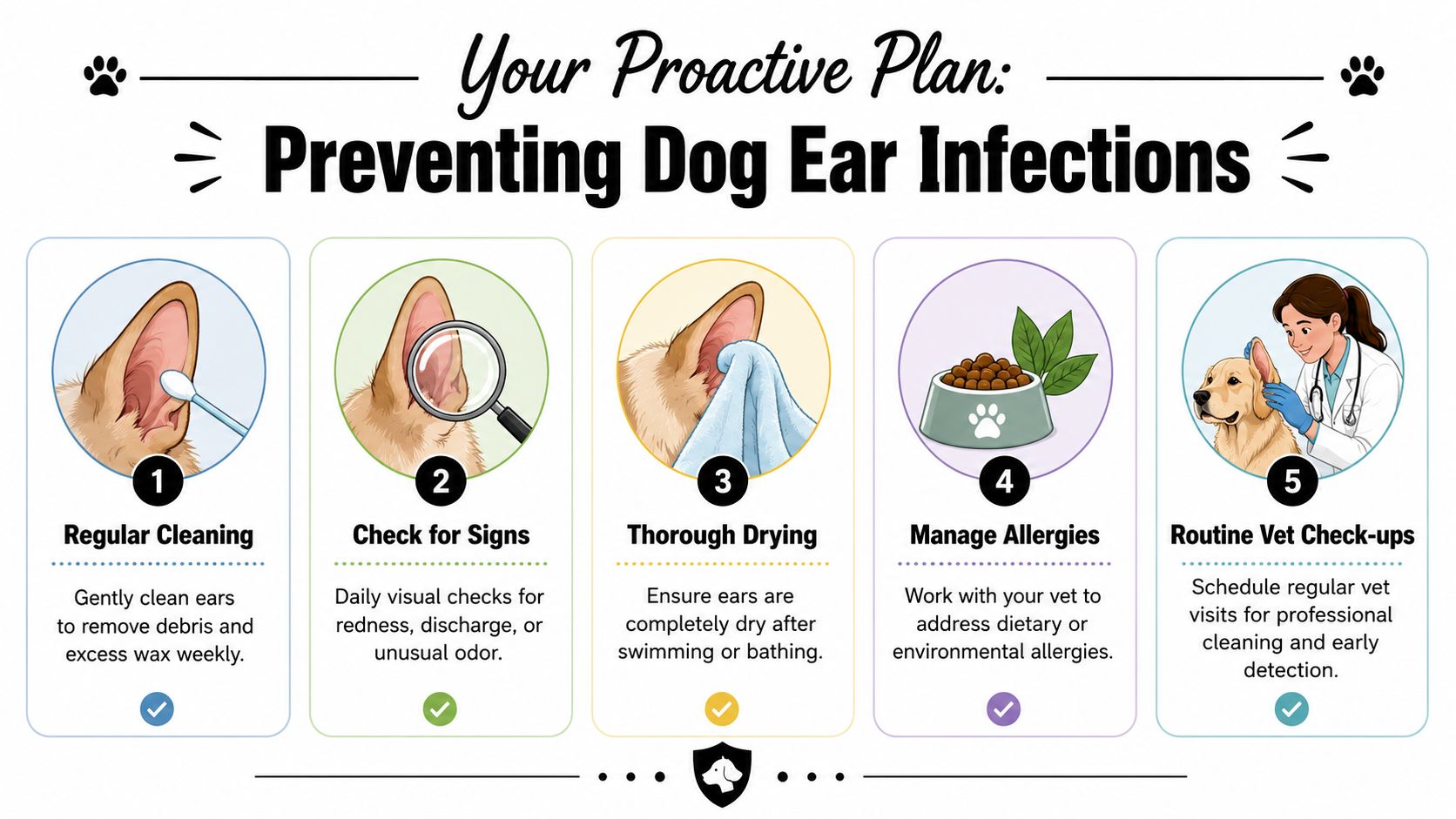
Build a routine your dog can tolerate
For dogs prone to ear trouble, regular checks matter more than dramatic cleaning sessions.
- Look at the ears often: Notice redness, odor, or fresh debris before the ear becomes painful.
- Dry ears after water exposure: Swimming and bathing leave moisture behind, especially in dogs with hairy or floppy ears.
- Use only vet-approved ear cleaners: Harsh home remedies can make an angry ear worse.
- Be gentle: If the ear is painful, don't force a deep cleaning at home.
Some dogs also benefit from a preventive cleaner or drying solution used on a schedule recommended by their veterinarian, especially if their anatomy traps wax and moisture easily.
Reduce the things that keep triggering flare-ups
This is the part people often skip because it feels less immediate than putting drops in the ear. It's also the part that changes outcomes.
Focus on the dog's full pattern:
- Track allergy timing. Keep notes on weather, grass exposure, grooming, new foods, and seasonal flare-ups.
- Support healthy skin. Dogs with irritated skin often have irritated ears too.
- Watch for over-cleaning. If the ear gets redder after frequent cleaning, tell your vet.
- Recheck persistent cases. A dog who improves halfway and then stalls usually needs a re-evaluation, not guesswork.
If accidents happen in the house during stressful or uncomfortable periods, clean them thoroughly so lingering odor doesn't keep drawing your dog back to the same spot. This guide on how to get rid of dog urine smell is practical and easy to use.
Think long-term, not just flare-up to flare-up
The most effective prevention plan usually combines ear care with better management of the dog's broader health picture. That can include allergy control, reducing moisture exposure, follow-up exams, and a stable diet that supports skin and immune resilience.
This article on how to prevent ear infections in dogs is a helpful companion if you want more day-to-day prevention ideas.
Practical rule: Healthy ears are usually the result of healthy routines. Drying after baths, catching allergy flares early, and avoiding ear irritation do more than emergency cleaning ever will.
Dogs with chronic ear issues often do best when owners stop treating each episode like an isolated event. The ear is connected to the rest of the dog. Once you care for the pattern, not just the mess inside the canal, things usually become much more manageable.
If your dog is sensitive, picky, recovering, or just needs a stronger nutritional base, ChowPow can be a simple way to boost what you're already feeding. It's a meal enhancer, not a replacement for your dog's current kibble. You sprinkle it on top to add nutrient-dense support in an easy, appealing form. For many owners, that's a practical way to support appetite, overall wellness, and the kind of consistent daily nutrition that helps sensitive dogs handle life's bumps a little better.
-
Product on sale
 Dog Food Topper - Beef HeartOriginal price was: $14.99.$10.95Current price is: $10.95. - or subscribe and save up to 20%