

The Truth About Coconut Oil Dog Allergies
You're probably here because your dog won't stop scratching.
Maybe it started with licking paws at night. Maybe it's the ears, the belly, or those little red patches that seem to flare up out of nowhere. You want something gentle, simple, and safe. Then you hear the same advice over and over: try coconut oil.
That suggestion sounds reassuring because it feels natural. Rub a little on the skin. Mix a little into food. Help the coat. Calm the itch. Support the skin barrier. For a worried dog owner, that kind of promise is hard to ignore.
The problem is that “natural” and “helpful” aren't always the same thing. Regarding coconut oil dog allergies, the online advice is often much more confident than the actual evidence. That leaves owners stuck between hope and confusion.
A better approach is to ask two questions. First, does coconut oil help allergic dogs? Second, even if it might help some dogs, is it the safest way to chase the result you want?
The Itchy Dog Dilemma and the Coconut Oil Hope
You see your dog scratch, stop, then scratch again five minutes later. You check for fleas. You change the shampoo. You wash the bedding. You try to ignore it for a day, hoping it passes, but it doesn't. Soon you're looking at every “easy fix” you can find.
That's usually when coconut oil enters the conversation.
A friend may swear by it. A social post may show a shiny-coated dog with a jar beside the food bowl. Some owners use it on dry skin. Others add it to meals because they hope it supports the body from the inside out. If your dog looks miserable, it makes sense that you'd want to try something that seems simple and low-risk.

Why owners reach for it so fast
Coconut oil appeals to loving owners for a few understandable reasons:
- It feels familiar. People already use it in their own homes for skin and cooking.
- It sounds gentle. Many assume a pantry item must be milder than a medicated product.
- It offers control. When your dog is uncomfortable, doing something feels better than waiting.
- It seems versatile. Owners hear that it can be used on skin, paws, coat, and food.
None of that makes you gullible. It makes you attentive.
Your dog's itching is real, and your urge to help quickly is a caring response, not an overreaction.
Where the confusion starts
The trouble is that itching can come from several different problems that look similar at home. Allergies, yeast overgrowth, bacterial skin issues, environmental irritants, and even grooming products can all create red, itchy skin. A greasy substance may seem soothing in the moment while subtly making the wrong problem worse.
That's why the right question isn't “Is coconut oil good or bad?” It's “What are we treating, and what has evidence behind it for dogs?”
When you look at coconut oil dog allergies through that lens, the picture gets more nuanced. It's not a miracle. It's not always dangerous either. But it's also not the straightforward allergy solution many owners are led to believe.
What Science Says About Coconut Oil and Dog Allergies
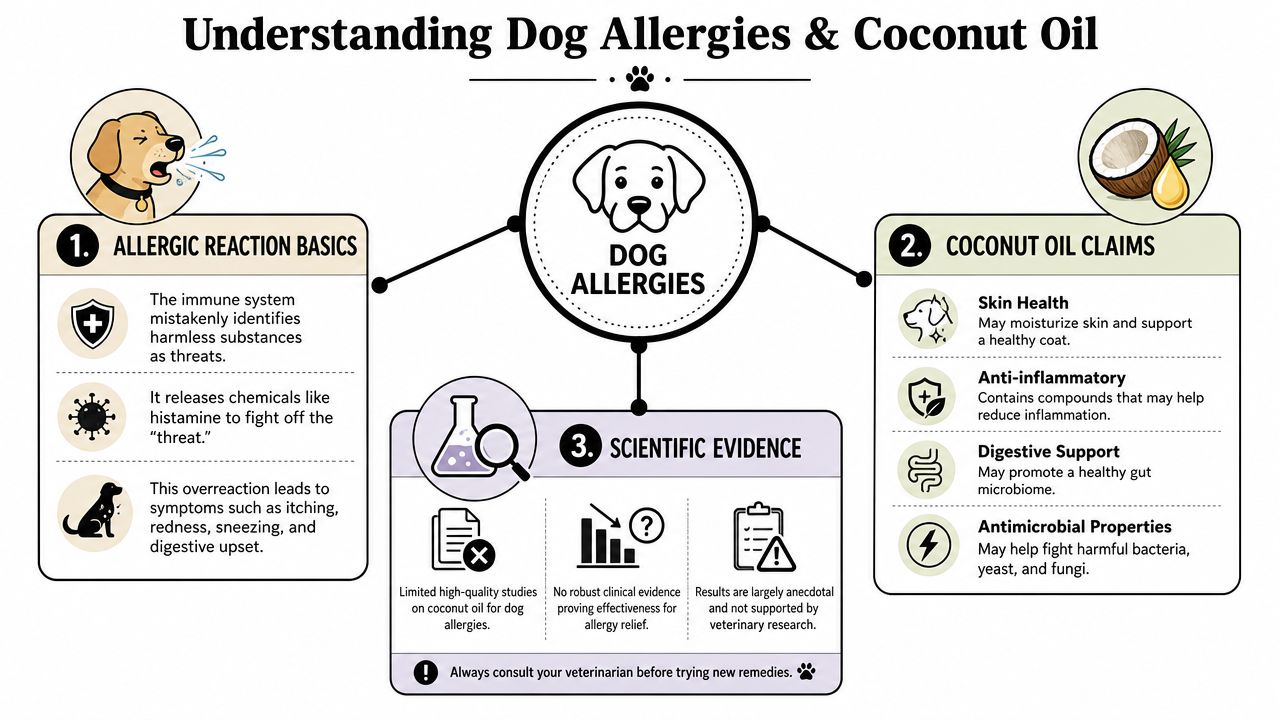
Dog allergies are an overreaction of the immune system. The body treats something ordinary, such as pollen, dust, mold, or a food ingredient, like a threat. The result often shows up on the skin first. You may see itching, licking, redness, ear trouble, or repeated skin irritation.
That helps explain why coconut oil gets attention. Owners often hear that it may support skin comfort or improve the look of the coat. On paper, that sounds relevant to an allergic dog. But “might support skin” is not the same as “treats allergies.”
The biggest issue is the evidence gap
The clearest fact to understand is this: a veterinary dermatology review states there is “no scientific research available to evaluate its use in dogs” despite topical coconut oil showing benefit in human children with atopic dermatitis, as explained in this veterinary review of coconut oil for dogs.
That single point changes the whole conversation. A lot of the confidence around coconut oil dog allergies comes from extrapolation, not from strong dog-specific research. In plain language, people are borrowing ideas from other contexts and assuming they apply to canine allergy care.
Human skin findings don't automatically transfer to dogs
Dogs aren't small humans in fur coats. Their skin, grooming habits, medical history, and common skin complications can differ in practical ways. A product that seems soothing on one species or one type of skin issue may not address the main driver of itching in a dog.
Here's a simple way to think about it:
| Question | What many owners hope | What the evidence supports |
|---|---|---|
| Can coconut oil soothe dry skin? | Possibly | Anecdotally, sometimes |
| Can it treat the cause of allergies? | Many assume yes | Evidence doesn't support that conclusion |
| Is it proven in dogs with allergy-related skin disease? | Many expect yes | The dog-specific evidence is limited |
If your dog has suspected atopic dermatitis, this guide on managing canine atopic dermatitis can help you understand the bigger picture of care.
Practical rule: If a remedy is popular but the canine research is thin, treat it as an experiment with risks, not as a proven solution.
Why this matters for everyday decisions
Owners often get confused because they see two ideas blended together online. One is skin conditioning. The other is allergy treatment. They are not the same.
A greasy moisturizer may change how the skin surface feels. That doesn't mean it changes the allergic process underneath. If your dog's itch is being driven by an immune response, yeast, bacteria, environmental triggers, or a mix of those, coconut oil may miss the actual problem.
That's the heart of the issue. The hype is strong. The dog-specific science isn't.
The Hidden Risks of Using Coconut Oil for Your Dog
Once you know the evidence for allergy benefit is weak, the next question becomes more important: what's the downside?
For some dogs, the downside is small. For others, it's the whole story. Coconut oil can create problems whether it's eaten or rubbed onto the skin, and those problems often line up with the exact dogs owners are trying hardest to help.

What the canine study found
In the main published canine study on coconut oil and allergic disease, oral and topical coconut oil did not reduce total IgE levels in dogs with canine atopic dermatitis, according to this published canine study on coconut oil and IgE.
That matters because IgE is a core allergy marker. If it doesn't move, there's little reason to assume coconut oil is changing the underlying allergic immune response in a meaningful way.
The oral risks are easy to underestimate
A spoonful can feel harmless, but coconut oil is calorie-dense. One consumer-veterinary source cited in that same study notes 120 calories per teaspoon. For dogs that are small, sedentary, or already struggling with weight, that can become a real issue fast.
The same source also warns that excess intake can lead to:
- Diarrhea
- Loose stools
- Weight gain
- Pancreatitis
These aren't niche concerns. They're exactly the kinds of setbacks that make owners feel like they traded itching for a different health problem.
To hear another perspective on common concerns, this video gives a useful overview:
Topical use has its own problems
Owners often assume topical use is safer because “at least the dog isn't eating it.” But skin application isn't risk-free either.
The same study summary notes that topical coconut oil can trigger:
- Allergic reactions
- Hives
- Red bumps
- Scabbing
- Worsening itch
That last one confuses people most. If your dog is itchy, a greasy layer may seem like it should calm things down. In some dogs, it does the opposite.
If a product can worsen itch in an already itchy dog, it shouldn't be treated as a casual home remedy.
The risk-benefit balance is the real issue
Coconut oil doesn't have to be “bad” in every circumstance for the math to work against it. If a product hasn't shown a meaningful anti-allergy immune effect in dogs, but can still cause digestive upset, extra calories, skin reactions, and flare-ups, the margin for casual use gets very narrow.
That's why many owners do better when they stop asking, “Can I use coconut oil?” and start asking, “What's the safest proven way to support skin comfort and overall skin health?”
How to Proceed Safely If You Still Choose to Try
Some owners will still want to test coconut oil, especially if they've used it before or their veterinarian thinks a cautious trial makes sense. If that's you, the safest mindset is not “natural remedy.” It's “controlled test.”
If you want to try it on the skin
Start small. Pick one tiny area instead of applying it all over the body. Then watch closely over the next day for increased redness, more licking, new bumps, or stronger odor.
Use this simple sequence:
- Clean and dry a small spot so you're not sealing dirt or moisture onto irritated skin.
- Apply a very thin amount only to that one area.
- Prevent immediate licking as best you can for a short period.
- Monitor the area carefully for any change in itch, redness, or texture.
- Stop immediately if the spot looks worse, not better.
A patch test doesn't make coconut oil proven. It only lowers the chance of a bigger mistake.
If you're thinking about feeding it
A vet consultation is vital. Dogs with sensitive digestion, a history of fat intolerance, weight concerns, or pancreatic issues need extra caution. Even if your dog seems healthy, high-fat additions can backfire.
If your vet approves any diet tinkering, keep the rest of the meal simple and stable while you monitor stool quality, appetite, and skin comfort. During that time, many owners also find it helpful to revisit bland-diet basics such as chicken and rice dog food when sorting through digestive sensitivity.
Know when to stop
Don't push through side effects hoping they'll settle on their own. Stop if you notice:
- Loose stool or diarrhea
- Vomiting
- More scratching or licking
- New skin bumps or hives
- A greasy, smelly coat that seems worse than before
Try one change at a time. If you also switch treats, shampoo, or food, you won't know what your dog is reacting to.
The safest use of coconut oil is cautious, limited, and supervised. If you're having to do detective work around your dog's skin, that usually means you need a clearer diagnosis more than another home experiment.
Effective Topical Alternatives Your Vet Recommends
If your dog needs skin relief, it helps to choose products that match the problem instead of using a one-size-fits-all oil.
That's where veterinary topical care usually outperforms coconut oil. These options are designed for canine skin, targeted to likely causes, and easier to adjust based on what your dog is dealing with.
Medicated shampoos for yeast or bacteria
Some itchy dogs don't just have inflammation. They also have yeast overgrowth, bacterial imbalance, or both. In those cases, a medicated shampoo gives you something coconut oil doesn't: a treatment matched to the problem.
These shampoos are often used because they can help cleanse the skin surface while addressing common secondary skin issues. If your dog smells musty, has greasy skin, or keeps getting irritated paws and ears, your vet may lean this direction first.
Oatmeal baths for simple soothing
Not every dog needs a medicated wash. For mild dryness or temporary irritation, an oatmeal-based dog shampoo or bath can be a gentler first step. The key point is that it's made for dogs, rinses cleanly, and doesn't leave a heavy oily layer behind.
Owners sometimes miss that last part. Relief isn't only about what you put on the skin. It's also about what you don't leave sitting there.
Prescription sprays and mousses
For dogs with hot spots, inflamed patches, or recurring flare-ups, your vet may recommend a spray, mousse, or wipe instead of an oil. These can be easier to apply to a specific area and may be less messy for dogs that lick everything off.
A targeted product often works better because it gives you precision. You can treat the itchy area without coating the whole dog.
Good topical care is specific. If the problem is yeast, use a yeast-focused plan. If the problem is inflammation, use an anti-inflammatory plan your vet chose for canine skin.
Why these options are usually better than coconut oil
A quick comparison makes the difference clearer:
| Option | Best use | Why owners like it |
|---|---|---|
| Medicated shampoo | Yeast, bacteria, recurring skin trouble | Targets common secondary skin issues |
| Oatmeal dog shampoo | Mild dryness or temporary irritation | Gentle and easy to rinse |
| Spray or mousse | Localized itchy spots | Precise and less messy |
| Coconut oil | Unclear, variable home use | Popular, but not well supported for allergy treatment |
Topical care works best when you treat what's there. If your dog has an irritated skin barrier, that matters. If your dog has yeast, bacteria, or an allergy flare, that matters too. The more specific the treatment, the better your odds of real relief.
Building a Healthy Coat from the Inside with Nutrition
Topical products can help with comfort, but they don't do the whole job. Skin and coat health start much deeper than the fur you can see.
A dog's skin is living tissue. It needs steady nutritional support to repair itself, maintain its barrier, and grow a healthy coat. When the diet is weak, inconsistent, or not meeting the dog well, the outside often shows it first.
What healthy skin needs from food
Think of skin support in three broad categories:
- Quality protein helps the body maintain and repair tissue.
- Essential fats help support normal skin moisture and coat condition.
- Vitamins and minerals help the body carry out the everyday work of renewal and resilience.
When owners search for coconut oil dog allergies, they're often chasing one visible goal: less itching and better skin. But nutritional support works differently from an oil on the surface. It helps create stronger conditions from within.

Why meal quality matters even when kibble stays the base
A lot of owners assume they need to throw out their current food to improve skin support. Usually, that's not the most practical first move. For many households, it's easier to keep the regular kibble and improve what goes into the bowl with a thoughtful topper or meal enhancer.
That approach can be especially helpful for:
- Picky eaters who don't consistently finish meals
- Senior dogs who need gentler, nutrient-dense support
- Dogs recovering from illness who need appetite encouragement
- Owners who want more whole-food nutrition without rebuilding the entire feeding routine
If you want a broader look at diet choices that support appearance and comfort, this guide on the best dog food for skin and coat is a useful next read.
Where ChowPow fits
ChowPow is best understood as a meal enhancer, not a kibble replacement. That distinction matters. It's there to boost the nutritional value and appeal of your dog's current meal, not to replace a complete diet.
Its simple ingredient approach, including beef heart plus produce-based components, makes it a practical option for owners who want to add nutrient density without turning feeding into a complicated project. For dogs with low appetite, sensitive teeth, or inconsistent interest in food, that can make daily nutrition more reliable.
Better skin support often starts with a better bowl. Not a trendy oil. Not a random add-on. A more nourishing meal your dog will actually eat.
Nutrition won't act like an overnight anti-itch cream. But over time, a stronger diet supports the body the way quick fixes can't.
Your Action Plan for a Happier Less Itchy Dog
When your dog is scratching, it's easy to bounce from one remedy to the next. A calmer plan usually works better.
Start with diagnosis, not guessing
Book a vet visit if the itching is persistent, recurrent, or getting worse. Allergies can look like yeast issues, bacterial skin trouble, contact irritation, or a mix of several things. The right treatment depends on knowing what you're dealing with.
If your home environment seems to make symptoms worse, it can also help to understand how airborne particles affect both pets and people. This overview of pet dander and allergy treatments is a useful background read for households managing indoor allergy load.
Focus on the bowl every day
Long-term skin support is built meal by meal. Keep the base diet consistent, then improve nutritional quality in a practical way. For many owners, that means adding a topper rather than replacing the whole feeding routine.
A simple checklist helps:
- Keep meals consistent so you can spot patterns more clearly.
- Support better intake if your dog is picky, older, or recovering.
- Think in nutrients, not trends. Skin needs protein, fats, and overall dietary quality more than hype.
Use topical care with a purpose
Don't smear random products on irritated skin and hope for the best. Match the topical tool to the problem. Your vet may suggest an oatmeal product for simple soothing, a medicated shampoo for yeast or bacteria, or a spray for a specific inflamed area.
Track patterns like a detective
Keep a short journal for a few weeks. Write down flare days, foods, treats, grooming products, weather changes, and where your dog spent time. You don't need a complex system. A basic note on your phone works.
Look for themes such as:
- Seasonal flares
- Paw licking after walks
- Ear irritation after swimming
- Stomach upset after new foods
That record often helps your vet much more than memory alone.
A less itchy dog usually comes from a combination of accurate diagnosis, smarter topical care, and stronger daily nutrition. Quick fixes are tempting. Consistent support is what tends to hold up.
If you want an easy way to boost your dog's current meals without replacing their kibble, ChowPow is a simple, nutrient-dense topper made with beef heart and other straightforward ingredients. It's designed to enhance everyday nutrition, support appetite, and make the bowl more appealing for picky eaters, seniors, and dogs who need extra encouragement at mealtime.
-
Product on sale
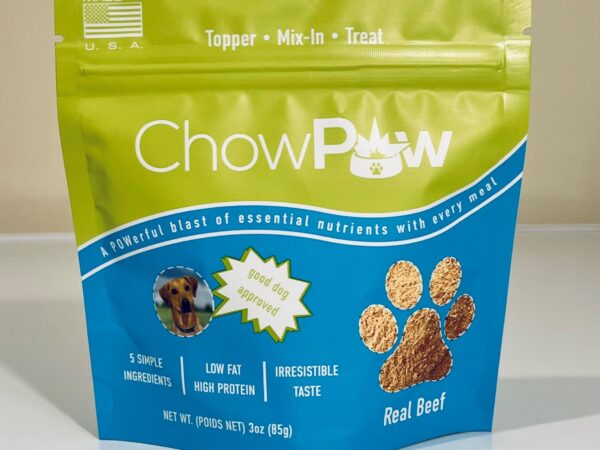 Dog Food Topper - Beef HeartOriginal price was: $14.99.$10.95Current price is: $10.95. - or subscribe and save up to 20%