A Pet Parent’s Guide to Constipation in Dogs
When your dog has trouble going number two, or maybe isn't going at all, you're likely dealing with constipation. This common digestive snag means their stool is often hard, dry, or smaller than usual, and it can be pretty uncomfortable for your pup. Getting on top of it quickly is key to keeping them comfortable and avoiding bigger problems down the road.
What Is Dog Constipation Really Telling You?
Picture your dog's digestive system like a well-oiled assembly line. When things are running smoothly, waste moves through and exits right on schedule. Constipation is a big red flag that this assembly line has hit a major slowdown, or maybe even ground to a halt.
When this happens, the waste just sits in the colon for way too long. The colon's main job is to absorb water, so the longer the stool hangs around, the harder and drier it gets. This turns what should be an easy process into a painful, difficult cycle for your dog.
A Sign of Imbalance
It might seem like just a simple backup, but constipation is your dog's way of telling you that something’s out of balance. Think of it as a physical clue that can point to anything from a simple dietary oopsie to a more serious health issue.
Even though it can be worrying, it’s worth noting that constipation is actually one of the less frequent digestive issues vets see. A huge study on canine digestive problems found that only 0.89% of cases were constipation—far less common than things like diarrhea or vomiting.
Paying close attention to your dog's potty habits is one of the best windows you have into their overall health. Any change in how often they go, what it looks like, or if they seem uncomfortable is your first sign that something needs a closer look.
Getting familiar with what your dog's poop is telling you is a massive part of being a proactive pet parent. For a deeper dive into decoding their daily deposits, check out our guide on using your dog's poop as a digestive health report card. When you know how to read the signals, you can jump on potential problems fast, keeping your best friend happy, healthy, and comfortable.
Uncovering the Common Causes of Constipation
Think of your dog's digestive system like a well-oiled machine. When everything is running smoothly, things move along just as they should. But like any complex system, one little snag can bring the whole production line to a screeching halt. Figuring out what’s causing the backup is the first step to getting things flowing again.
The reasons a dog gets constipated can be surprisingly varied, but they usually fall into one of three main buckets: their diet, their lifestyle, or an underlying health problem. Sometimes, the fix is simple. Other times, it takes a bit of detective work.
Dietary and Hydration Hiccups
More often than not, the root of the problem is right there in your dog's food bowl. An imbalance in their daily meals can quickly create a digestive traffic jam.
- Not Enough Water: Dehydration is the number one offender. Without enough water, your dog's colon pulls too much moisture from the stool, making it hard, dry, and difficult to pass. This is a common issue for dogs who eat a diet of only dry kibble.
- Low Fiber Intake: Fiber is like a broom for the intestines, sweeping everything through. A diet that's low in fiber means there isn't enough bulk to keep things moving efficiently.
- Too Much Fiber: On the other hand, a ton of fiber without enough water to go with it can create the opposite effect—a "log jam" that makes the constipation even worse.
- Ingesting Foreign Items: Let’s face it, dogs eat things they shouldn’t. Swallowed hair from over-grooming, bits of a destroyed toy, or bone fragments can all cause a serious blockage.
While it's no fun for your pup, it might be reassuring to know that constipation isn't as common as other tummy troubles. A huge 2023 survey from the Dog Aging Project found that while nearly 30% of dogs deal with a GI issue at some point, constipation wasn't even on the list of top problems. This suggests it likely affects less than 2% of dogs. You can dig into more of the data on canine gastrointestinal health insights.
Lifestyle and Age-Related Factors
Your dog's daily routine and physical state also play a huge part in keeping them regular.
A lazy lifestyle is a major contributor. Just like for us, regular exercise gets the intestinal muscles moving and helps promote regular bowel movements. A couch potato pup is more likely to have a sluggish digestive tract.
Senior dogs can have a double whammy. Not only does their digestive system naturally slow down as they get older, but they might also be dealing with arthritis or joint pain. That discomfort can make the simple act of squatting to poop painful, causing them to hold it in and kickstarting a vicious cycle of constipation.
Big changes in their routine, like moving to a new house, being boarded, or even just the stress of travel, can also make a dog reluctant to go, leading to a backup.
Finally, some common medications—like certain pain relievers, antihistamines, or diuretics—can have constipation as a side effect. If your dog recently started a new medication and suddenly seems backed up, it’s definitely something to bring up with your vet.
When You Need to Call the Vet
While a mild case of constipation can often be sorted out at home, it's critical to know the difference between a minor backup and a real emergency. Your dog can't tell you what's wrong, so it’s up to you to spot when their symptoms cross the line from uncomfortable to genuinely concerning. Acting fast is key to getting them the professional help they need, right when they need it.
Most dogs have a bowel movement once or twice a day. If it’s been more than 48 hours since your dog’s last poop, it’s time to start paying closer attention. This isn't an immediate panic button, but it’s a clear signal that something isn’t quite right.
Red Flags That Demand Immediate Attention
Some symptoms should never be ignored. If you notice any of the following signs along with straining or a lack of bowel movements, you need to call your veterinarian right away.
These "red flags" can point to a serious issue that goes way beyond simple constipation, like an intestinal blockage, an enlarged prostate, or another urgent medical problem.
- Vomiting: If your dog is throwing up, especially over and over, it could signal a dangerous obstruction.
- Extreme Lethargy: A sudden crash in energy or unusual weakness is a sign of significant distress.
- Painful or Swollen Abdomen: A hard, bloated, or tender belly can indicate a serious internal problem.
- Crying Out in Pain: Vocalizing while trying to go potty means your dog is in a lot of pain.
- Blood in Stool: Seeing any blood, whether it's bright red or dark and tarry, requires an immediate vet visit.
This decision tree infographic helps visualize the common paths that lead to dog constipation, breaking them down by diet, lifestyle, and underlying health factors.
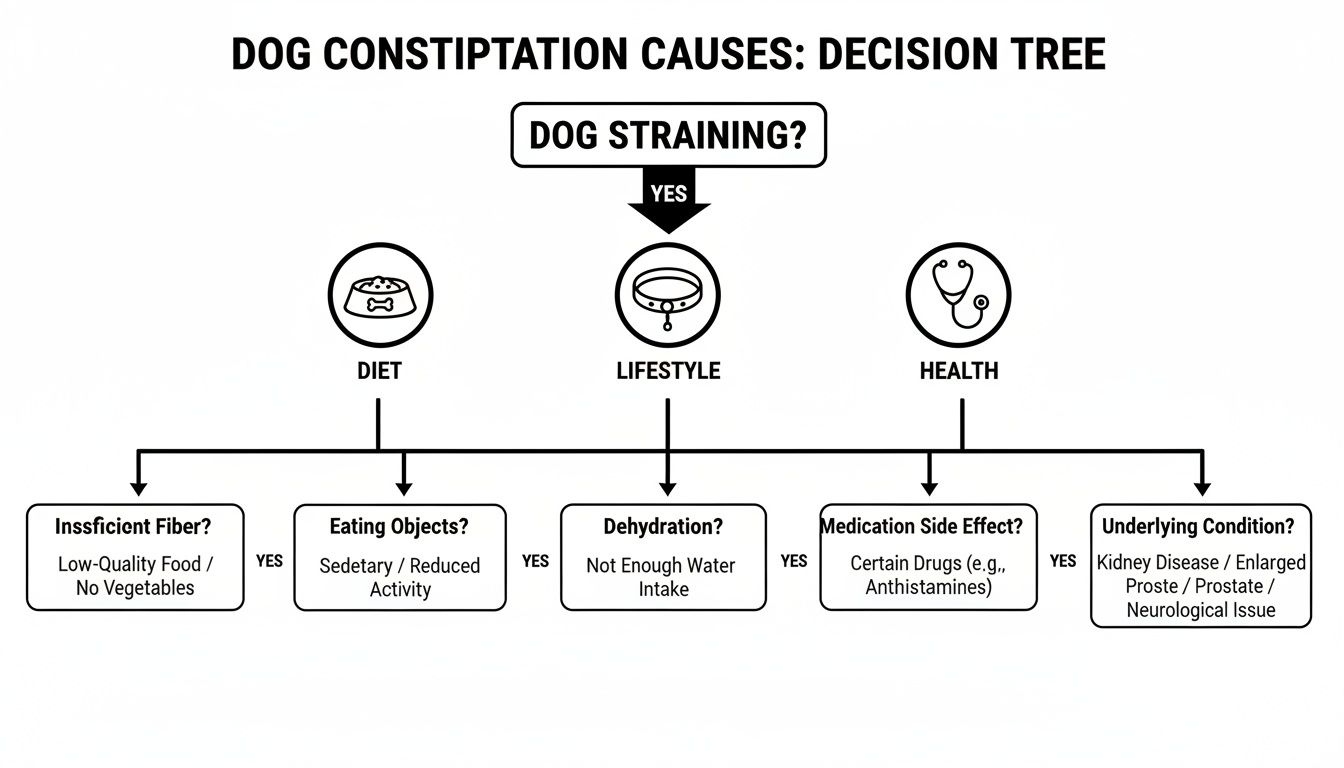
As the graphic shows, while diet is a common culprit, it's just as important to consider health and lifestyle issues when you're trying to get to the root of the problem.
Trust Your Instincts
When in doubt, always play it safe. You know your dog better than anyone.
If your dog’s behavior just seems off, if they look like they're in pain, or if home remedies aren't helping after a day, getting a professional opinion is the smartest and safest choice. Your veterinarian can do a proper exam, run tests like X-rays if needed, and provide treatments like enemas or prescription medications to give your pup safe, effective relief.
Safe Home Remedies to Provide Relief
When you first notice your dog straining, don't panic. It doesn't always mean you need to rush to the emergency vet. For mild, occasional backups, a few safe and effective home remedies can often get their digestive system moving smoothly again. The secret is to start with gentle, simple solutions first.
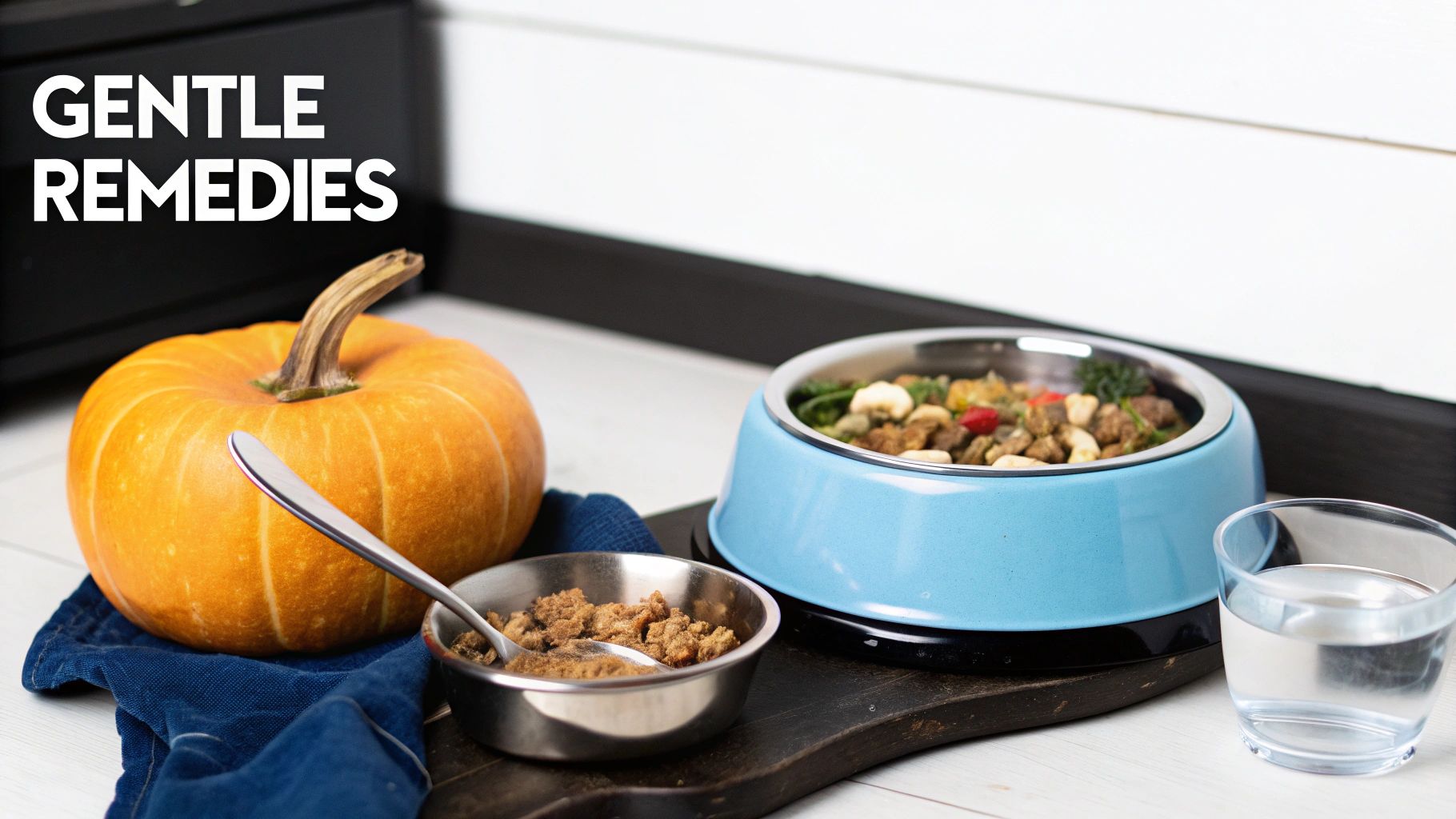
Often, the fix can be as straightforward as upping their water intake and adding a little more movement to their day. A short, gentle walk can work wonders by stimulating the intestinal muscles, which helps encourage things to move along.
Simple Dietary Additions
Beyond more water and walks, a few simple additions to your dog’s meals can provide some real relief. These are kitchen staples known for their ability to gently ease constipation without harsh effects.
One of the most popular and effective remedies is pure canned pumpkin. It’s a superstar for a reason—it’s packed with both fiber and moisture, a perfect combination for softening stool and adding bulk.
Just be sure you grab 100% pure canned pumpkin, not pumpkin pie filling! The pie mix is loaded with sugar and spices like nutmeg that can be harmful to dogs.
We have a whole guide on why pumpkin is a gourd-geous choice for pup parents if you want to dig deeper. As a general rule of thumb, add one teaspoon per 10 pounds of body weight to their food once or twice a day.
Fiber and Hydration Boosters
If pumpkin alone isn't quite doing the trick, you can explore other options to increase fiber and moisture. Think of it as turning their regular meal into a gut-friendly powerhouse.
A small sprinkle of psyllium husk powder can also be very effective. This type of soluble fiber soaks up water and forms a gel-like substance, helping to push everything through the digestive tract. Just remember, anytime you add extra fiber, you have to make sure plenty of fresh water is available.
Here are a few more easy ideas to try:
- Encourage More Drinking: Make their water bowl more enticing by adding a splash of low-sodium bone broth or a meal enhancement like ChowPow mixed with water.
- Wet Food: Temporarily mixing some high-quality wet food into their kibble is a fantastic way to boost the meal's moisture content.
- Gentle Movement: A second short, leashed walk a few hours after a meal can also help stimulate a bowel movement.
It's important to remember that some breeds are just more prone to these digestive slowdowns. Veterinary literature shows that breeds like English Bulldogs, Boston Terriers, and German Shepherds face a higher risk due to their unique anatomy or neurological factors.
These home remedies are designed for mild, temporary cases of constipation. If your dog doesn’t show improvement within 24-48 hours, or if they start showing signs of pain, vomiting, or extreme lethargy, it's time to stop home treatment and call your veterinarian right away.
Building a Proactive Digestive Health Plan
When it comes to constipation in dogs, the best offense is a good defense. An ounce of prevention is truly worth a pound of cure, and a proactive plan focused on daily nutrition and hydration can keep your dog’s digestive system running like a well-oiled machine. It’s all about building a foundation of gut health that stops those uncomfortable backups before they even start.
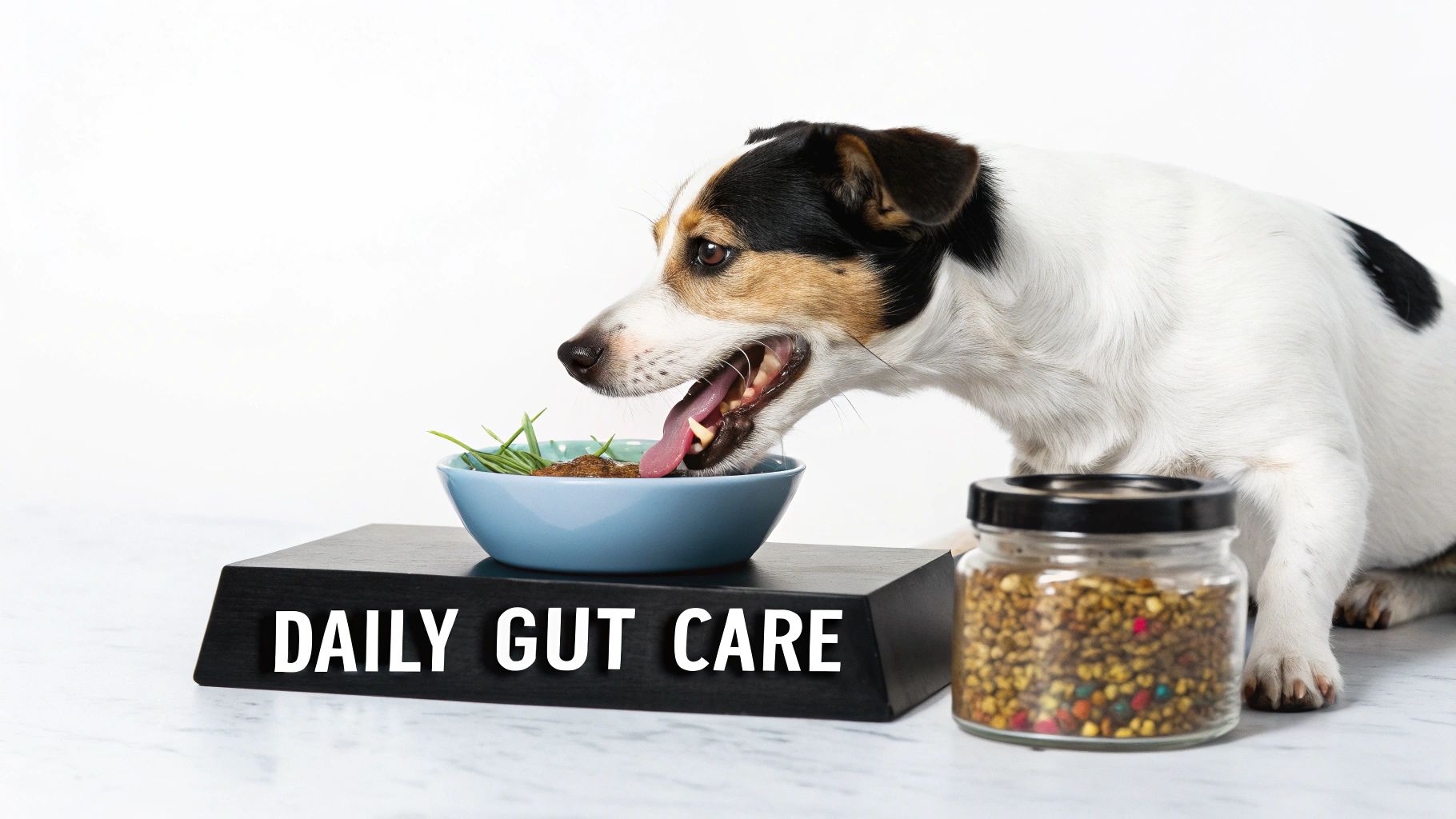
This entire strategy really boils down to two key players: fiber and water. Getting the right balance of these two is everything for maintaining regular, healthy bowel movements and preventing the hard, dry stools that cause so much straining and discomfort.
The Power of Fiber and Hydration
Think of fiber as your dog’s internal cleanup crew. It comes in two different types, and both play distinct, equally important roles as they move through the digestive tract.
- Soluble Fiber: Picture this one as a sponge. As it travels through the intestines, it soaks up water and forms a soft gel. This gel makes the stool softer and much, much easier to pass.
- Insoluble Fiber: This fiber is more like a broom. It doesn’t dissolve in water. Instead, it adds bulk to the stool, helping to literally sweep the colon clean and keep things moving along on schedule.
A diet that has a healthy mix of both is crucial for gut health. But here’s the catch: fiber can't do its job without plenty of water. This is especially true for dogs eating a diet of mostly dry kibble. Without enough hydration, a high-fiber diet can actually backfire and make constipation worse. You can get a deeper dive into this by exploring the role and benefits of fiber for canine digestion.
Elevating Their Meal—Not Replacing It
This is where a high-quality meal enhancement like ChowPow can be a total game-changer for proactive digestive care. You don't need to throw out your dog's current food and start from scratch. Instead, you can simply boost the nutritional value of what they're already eating.
ChowPow is a meal supplement, not a replacement for your dog's regular kibble. It's designed to enhance their current food, turning an ordinary meal into a powerhouse for digestive wellness.
Just by sprinkling ChowPow onto their food, you’re adding a targeted dose of essential fiber and other key nutrients. When you mix it with a little water first, you’re also giving them a huge hydration boost—perfect for combating the dryness of a kibble-only diet. It’s a simple, daily step that makes their meal more exciting while actively working to keep their gut healthy and regular.
This way, you ensure their digestive system has all the support it needs to prevent constipation and promote their long-term well-being without a drastic diet change.
Your Dog Constipation Questions, Answered
When you're dealing with your dog's health, it's natural to have questions. This is especially true for something as common yet worrying as constipation in dogs. To give you a bit more peace of mind, let's tackle some of the questions we hear most often.
How Long Can a Dog Go Without Pooping?
Most healthy dogs will poop at least once a day, but don't panic if they miss a day. Going up to 48 hours without a bowel movement isn't necessarily a red flag.
However, if you hit the 72-hour mark with no poop, or if you see your dog straining and struggling with nothing to show for it, it’s time to call the vet. The longer you wait, the harder and more impacted the stool can become, turning a simple problem into a much more painful and difficult situation.
Can I Give My Dog Human Laxatives?
This is a hard no. You should never give your dog a human laxative or stool softener unless your vet has specifically prescribed it. Many of these over-the-counter products have ingredients that are toxic to dogs, and the dosages are far too high for their systems.
Trying to medicate your dog with human products can backfire badly, leading to everything from painful cramping and severe dehydration to other serious complications. It's much safer to stick with vet-approved options or the natural home remedies we've already covered.
Does Straining Always Mean My Dog Is Constipated?
Straining is the classic sign of constipation we all look for, but it's not always the case. It's a really important distinction to make, because straining can also point to other serious health issues that need attention.
A few other possibilities include:
- Colitis: This is an inflammation of the colon. It creates a constant urge to "go" but often with very little coming out.
- Urinary Tract Problems: Straining to pee can look almost identical to straining to poop.
- Intestinal Blockage: This is a life-threatening emergency and needs immediate veterinary care.
Look at the whole picture. Is your dog producing any stool at all? Are they also lethargic or vomiting? If the straining continues, a trip to the vet is the only way to know for sure what's going on and get the right help.
How Can a Meal Topper Help Prevent Constipation?
This is where a little proactive care goes a long way. A quality meal enhancement like ChowPow is a fantastic tool because it addresses two of the biggest constipation culprits at once. It’s an easy way to level up your dog's current food without having to switch diets completely.
First, it adds a targeted boost of fiber to their bowl. This helps form healthier, bulkier stools that are softer and much easier for your dog to pass, keeping everything moving regularly.
ChowPow is not about replacing your dog's food, but elevating it. As a supplement, it turns regular kibble into a meal that actively supports their long-term digestive wellness.
Second, when you mix it with a bit of water, it instantly increases the moisture in their meal. This is a game-changer for dogs eating a dry kibble diet, since that extra hydration is absolutely key to preventing hard, dry stools from forming in the first place. It’s a simple step that makes their daily diet work that much harder for their gut health.
For a happy and healthy dog, every detail matters, even during your travels. Considering options like Pigeon Forge pet friendly cabins your dog will love ensures their comfort and well-being on the road.
When it comes to your dog’s digestive health, being proactive is always the best approach. Adding a nutrient-packed meal topper from ChowPow to their daily kibble is a simple way to boost their fiber and hydration, helping to keep them regular, happy, and comfortable.
Learn more about how ChowPow can elevate your dog's daily meal.
-
Product on sale
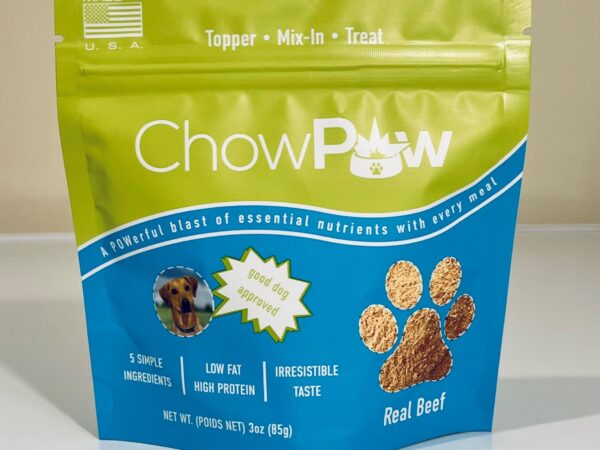 Dog Food Topper - Beef HeartOriginal price was: $14.99.$10.95Current price is: $10.95. - or subscribe and save up to 20%