Best Dog Food for Weight Gain: Vet-Approved Guide 2026
Your dog may still seem bright and interested in life, but the food bowl tells a different story. Meals are taking longer. Ribs feel sharper than they used to. Maybe your senior dog sniffs dinner and walks away, or your recovering dog eats a few bites and quits. That's usually the moment worry sets in.
Safe weight gain starts with a simple idea. A dog has to want to eat before any higher-calorie plan can work. That matters more than many owners realize. In a 2025 multi-brand survey summarized by We Feed Raw, 38% of underweight dogs were not eating enough because food wasn't appealing, not because it lacked calories. For many dogs, the first fix isn't a dramatic food swap. It's making meals easier, tastier, and more comfortable to finish.
First Steps Before Changing Your Dog's Food
When a dog looks thin, people often rush to buy richer kibble. That reaction makes sense, but it can skip the most important question. Why is your dog underweight in the first place?
Some dogs are fussy. Others are dealing with dental pain, stress, a recent illness, trouble chewing, or an underlying medical problem that needs treatment before a feeding plan will help. The safest move is to gather good observations and talk with your veterinarian before you change the diet.
What to watch at home
Start with a few simple checks over several days.
- Appetite pattern: Is your dog refusing all food, or only their usual kibble?
- Energy level: Are they playful and alert, or quieter than normal?
- Stool quality: Are bowel movements formed and regular, or has digestion changed?
- Coat and skin: Does the coat seem dull, dry, or less healthy than usual?
- Eating behavior: Do they approach the bowl eagerly, then stop? Do they chew slowly or drop food?
These details help your vet sort out a picky eater from a dog who may be uncomfortable or unwell.
Bring notes, not guesses. A short list of what your dog ate, how much they finished, and how they acted around meals makes the appointment far more useful.
Questions that matter more than the brand name
Before changing food, ask yourself:
- Has the weight loss been sudden or gradual?
- Did this start after boarding, travel, surgery, medication, or stress?
- Does your dog seem hungry but reluctant to chew?
- Are they interested in soft foods but not dry kibble?
That last point is common in older dogs. Owners may think the dog is being stubborn when the issue is mouth discomfort or reduced interest in dry texture.
Don't self-diagnose, but don't ignore patterns
You don't need to solve the cause on your own. You do need to notice patterns. A dog who's bright, normal in the stool, and choosy about texture may need an appetite-first feeding strategy. A dog who's losing weight and also seems tired, nauseated, or uncomfortable needs veterinary attention first.
That's why “dog food for weight gain” isn't just about calories. It's also about matching the feeding plan to the reason your dog stopped maintaining weight.
Building a Safe Weight Gain Nutrition Plan
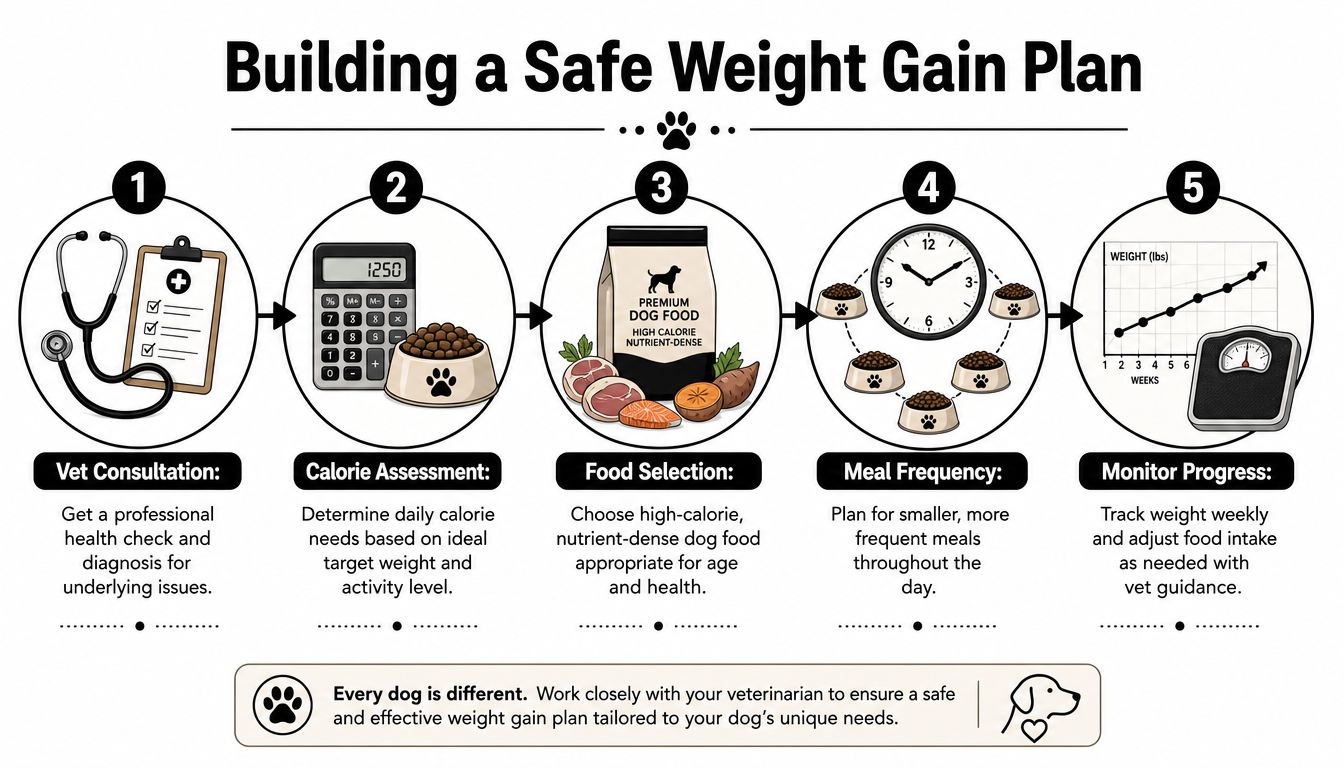
Once your vet rules out a medical issue or gives you a feeding plan to support treatment, you can build a more purposeful routine. The goal isn't random weight gain. It's steady gain with muscle support, not just extra body fat.
Start with protein, not just calories
One of the easiest mistakes is picking the richest food on the shelf without checking whether it supports lean tissue. According to PetPlace's high-protein dog food guide, dogs need one gram of protein per pound of ideal body weight to build muscle mass, and you can use a dry matter basis calculation to confirm whether a diet reaches the 30%+ high-protein threshold for effective weight gain.
That means a dog whose ideal weight is 25 pounds needs 25 grams of protein daily from the full diet. If you want a practical breakdown of protein needs, this guide on how much protein a dog needs can help you think through ideal weight instead of just current weight.
How to read the label without getting lost
Dog food labels confuse people because the front of the bag says one thing and the nutrition panel says another. Focus on the back panel.
Use this quick check:
| What to check | Why it matters |
|---|---|
| Protein level | Higher protein supports muscle instead of only adding fat |
| Fat level | Fat raises calorie density, but richer isn't always better for every dog |
| Food form | Wet food may tempt a reluctant eater, while dry food is often denser per bite |
| Your dog's activity | Active dogs use richer diets differently than sedentary dogs |
The dry matter basis idea sounds technical, but it's simple in practice. You're trying to avoid a food that looks high in protein at first glance but turns out to be less concentrated once moisture is considered.
Keep the plan measurable
A good plan is easier to follow when it answers three questions:
- What is my dog's ideal weight?
- How much protein should the full day provide?
- Is my dog finishing the meals offered?
Practical rule: If your dog won't reliably finish the bowl, the nutrition plan on paper doesn't matter yet. Intake comes first.
You don't need to chase the fanciest formula. You need a food your dog can digest, enjoys eating, and that gives enough protein and energy to support healthy gain.
Boosting Appetite with Nutrient-Dense Toppers
Some underweight dogs don't need an entirely different kibble. They need a reason to start eating again.
That's where toppers can be useful. They change smell, taste, and texture without forcing a full diet overhaul all at once. This is often helpful for picky dogs, seniors who hesitate with dry food, and dogs who are recovering and don't have much enthusiasm for meals.
What a topper should and should not do
A topper is not a substitute for a complete diet. According to PetMD's explanation of dog food toppers, a complete and balanced diet should provide at least 90% of a dog's calories, with the remaining 10% left for toppers, treats, and extras.
That rule matters because owners sometimes keep adding flavorful extras until the bowl looks nutritious but the base diet is no longer balanced. Toppers work best when they support the main food, not replace it.
Why appetite-first feeding often works better
A richer bag of kibble won't help if the dog ignores it. A nutrient-dense topper can improve acceptance while letting you keep the familiar base food in place. That can be gentler for sensitive dogs and easier for owners who are already juggling medications, recovery instructions, or changing routines.
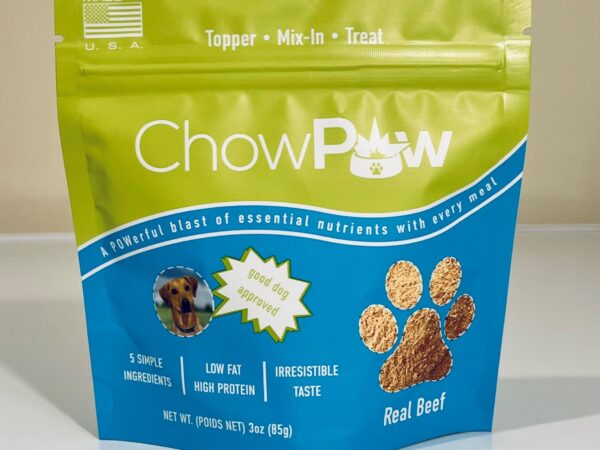
A practical example is ChowPow dog food toppers for weight gain, a dehydrated beef heart meal enhancer. It's used as a supplement over current kibble, not a replacement meal. Because it's concentrated and easy to sprinkle or mix, it fits the appetite-first approach many owners need when the issue is low interest in food.
Good topper habits
Keep the process simple.
- Use toppers to increase appeal: A stronger aroma or softer texture can help a reluctant eater engage with the meal.
- Protect the base diet: Most of the nutrition should still come from the complete food in the bowl.
- Watch response closely: If your dog suddenly cleans the bowl when a topper is added, you've learned something useful about appetite and palatability.
The best feeding plan is the one your dog will actually eat consistently.
Implementing the New Feeding Routine Safely
This is the step many owners underestimate. Even when you've chosen sensible dog food for weight gain, you can't switch too fast.
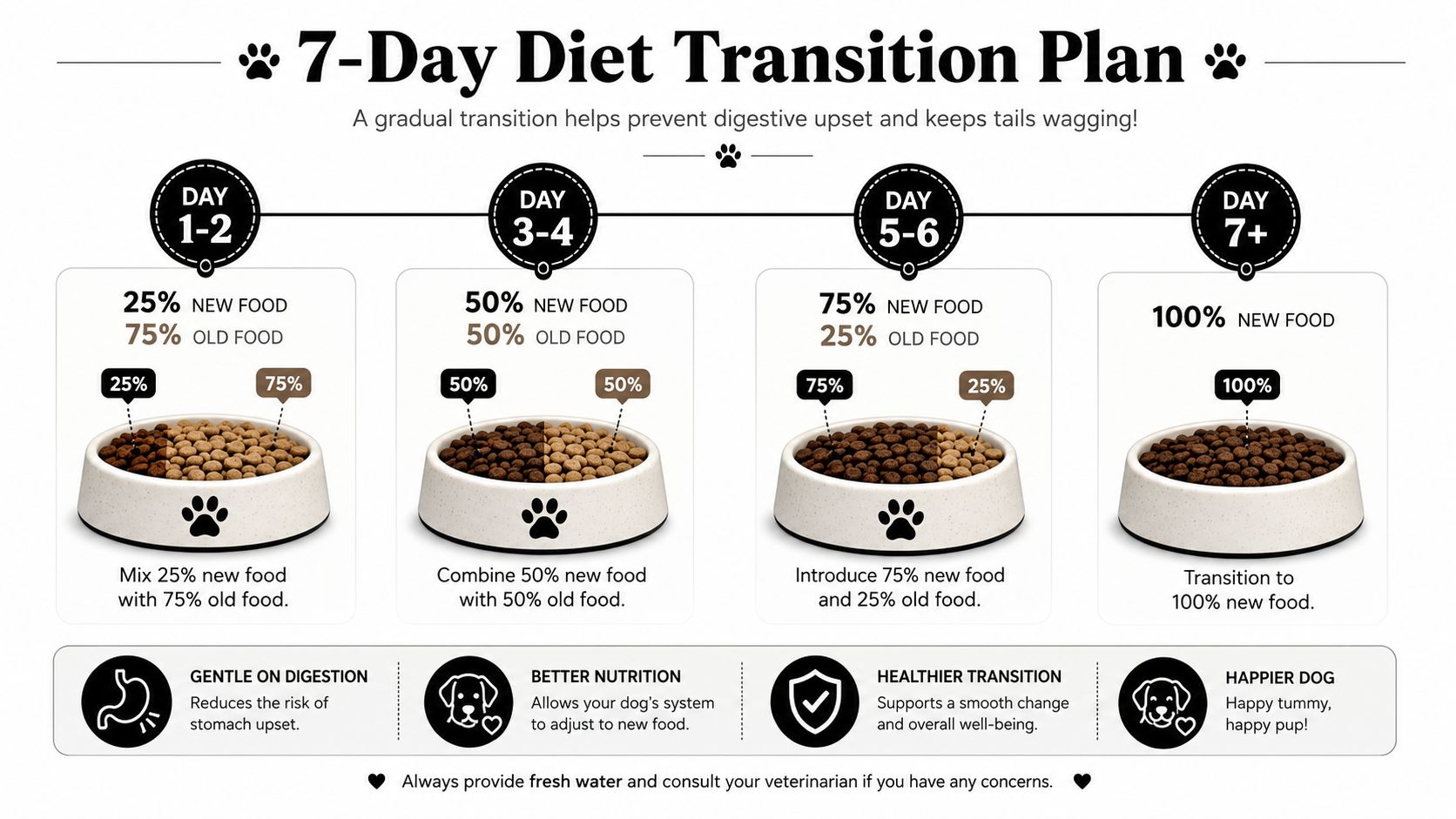
A clinically effective strategy for weight gain includes a gradual 7-day transition to help prevent pancreatitis. The schedule is specific: 25% new food for days 1 and 2, 50% for days 3 and 4, 75% for days 5 and 6, then 100% new food by day 7. Richer diets often contain more fat, and a sudden jump can be hard on the digestive system.
Here's the transition chart at a glance:
The easiest way to do the mix
Use the same bowl every time and measure each part before mixing. Don't eyeball it if your dog has a sensitive stomach. Consistency helps you spot whether the new routine is going smoothly.
Try this simple setup:
Days 1 and 2
Serve mostly the current food with a smaller portion of the new food mixed through it.Days 3 and 4
Split the meal evenly between old and new.Days 5 and 6
Let the new food become the main portion.Day 7 onward
Feed the new diet fully if your dog is tolerating it well.
Make mealtimes calm and repeatable
Dogs do better when the feeding routine feels predictable.
- Feed in a quiet spot: Less distraction often means better intake.
- Mix thoroughly: That prevents a dog from picking around the unfamiliar food.
- Serve smaller meals more often if needed: This can feel less overwhelming than one large bowl.
- Change one thing at a time: If you're introducing richer food, don't also pile on multiple extras at once.
This short video is a helpful visual reminder of how to think about feeding transitions and meal routines:
When to pause and call your vet
Stop and check in if your dog seems uncomfortable, won't eat the mixed food, or develops digestive upset that doesn't settle quickly. The schedule is gradual, but individual dogs still vary.
A slow transition isn't overcautious. It's what makes a richer feeding plan safe enough to continue.
Tips for Picky Seniors and Recovering Dogs
Some dogs need more than a standard feeding schedule. The thin senior who noses at crunchy kibble, the anxious rescue who only eats a little at a time, and the dog coming home after illness all have different obstacles.
The senior dog who seems interested but won't finish
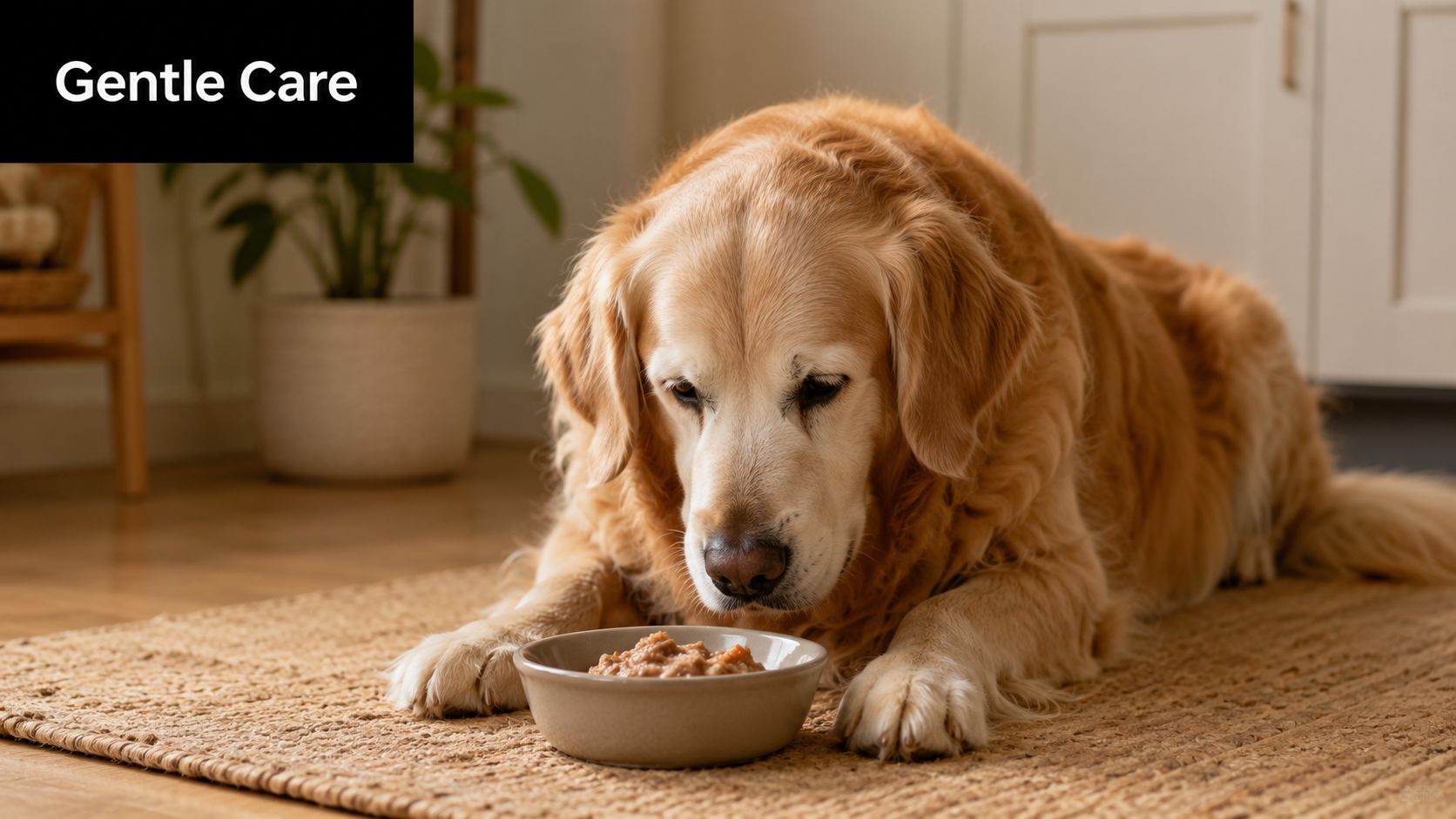
A common scene goes like this. Your older dog walks over, sniffs dinner, takes a few bites, then stops. Owners often assume the dog is no longer hungry. Sometimes the issue is that chewing dry food is tiring or uncomfortable.
Softening kibble with water can help. So can adding a measured topper for smell and flavor. Keep the bowl low-stress and give the dog time. Senior dogs often do better when the meal is easier to chew and more aromatic.
The picky eater who never eats enough at once
Some dogs don't need a giant meal. They need several easier chances to eat.
According to Under the Weather's weight gain guidance, underweight dogs should have their daily calorie goal split into three or four smaller meals, which is easier on digestion and can increase total intake, especially for picky eaters and seniors.
That can look like this in real life:
- Breakfast: Smaller portion, softened if needed
- Midday meal: A second chance for calories without a huge volume
- Dinner: Main meal when the dog is more settled
- Optional late meal: Useful for dogs that tire easily while eating
The recovering dog with low enthusiasm
Dogs recovering from surgery or illness often act hungry one minute and tired the next. Large meals can feel like too much work. Smaller, calorie-conscious feedings are usually easier to manage.
A few practical adjustments help:
- Warm water over kibble: This can improve smell and texture.
- Short mealtime windows: Offer food, then pick it up so the routine stays clear.
- Gentle encouragement: Sit nearby, but don't pressure the dog.
- Medication timing: Ask your vet whether appetite changes might be related to treatment.
These dogs often regain interest when meals become less physically demanding.
Monitoring Progress and Watching for Red Flags
Once your plan is in motion, pay attention to trends rather than a single meal. A dog may eat lightly one morning and better that evening. What matters is the overall direction.
What healthy progress looks like
You want to see gradual improvement in several areas at once:
- Body feel: Ribs should become less sharp over time, without the belly becoming heavy or sagging
- Meal interest: Your dog approaches food more willingly
- Energy: They seem brighter or more engaged
- Coat quality: The coat may start to look healthier as intake improves
A home check can be simple. Run your hands along the ribs and waistline every week in the same lighting and at about the same time of day. If you want a visual guide, this dog body condition score resource can help you compare what you feel with what you see.
Keep records simple
You don't need a complex chart. A notebook on the counter works.
Write down:
- What food was offered
- How much was eaten
- Any topper or add-in used
- Stool changes
- General attitude and energy
That record helps you notice patterns early.
If your dog is gaining only fat around the middle while staying weak or losing muscle over the back and hips, the plan may need adjustment.
Red flags that need a veterinary follow-up
Call your vet if you notice any of the following:
- Continued weight loss
- Poor appetite that doesn't improve
- Vomiting or ongoing diarrhea
- Lethargy or noticeable behavior change
- Trouble chewing or swallowing
- A dog who seems hungry but can't comfortably eat
Safe dog food for weight gain should make your dog look and feel better. If it doesn't, the answer usually isn't to add more extras. It's to step back and reassess the reason your dog isn't thriving.
If your dog needs more meal appeal without replacing their current food, ChowPow is a simple topper option to explore. It's designed as a meal enhancement, not a substitute for complete kibble, so you can boost flavor and nutritional value while keeping your dog's main diet in place.
-
Product on sale
 Dog Food Topper - Beef HeartOriginal price was: $14.99.$10.95Current price is: $10.95. - or subscribe and save up to 20%