Why Is My Dog Not Eating But Acting Normal?
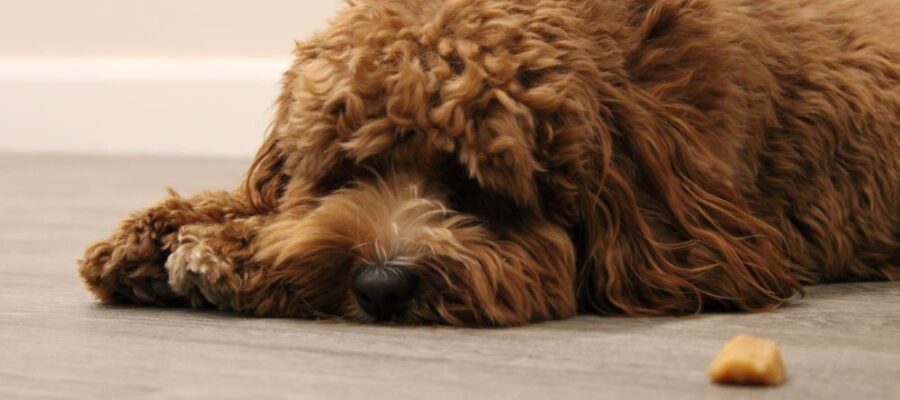
It's a scene that plays out in homes everywhere and sends a little jolt of worry through any dog owner: your pup is happy, playful, and begging for belly rubs, but their food bowl remains untouched. When a dog isn't eating but is otherwise acting completely normal, it's often due to something simple like food boredom, a bit of stress, or even just holding out for a tastier snack.
While it’s usually not a reason to hit the panic button, getting to the why is the first step toward finding a solution.
Why Your Happy Dog Is Suddenly Skipping Meals
It can be really confusing when your energetic, tail-wagging best friend suddenly turns their nose up at dinner. This strange behavior, where a dog seems perfectly fine but just won't eat, can come from a bunch of different places—from quirky behavioral habits to subtle health signals.
Think of it like when we skip a meal. Sometimes we’re just not that hungry, but other times, there might be something else going on under the surface.
Often, the fix is as easy as making their current food more appealing. This isn't about a complete diet overhaul, but more about reigniting their excitement for mealtime. A simple meal enhancement can boost the nutritional value of their regular food, making it more tempting. We'll walk you through how to read your dog's behavior and figure out when a simple nutritional boost can make all the difference.
Common Reasons for a Hunger Strike
A single skipped meal doesn't automatically mean something is wrong. In fact, many dogs only eat 60%-90% of their recommended daily calories, so a little disinterest here and there can be perfectly normal. It's when this becomes a pattern that you need to start playing detective.
The reasons usually fall into a few main categories:
- Behavioral Causes: Your dog might just be plain bored with their food—we call it "kibble fatigue." Or, they could be a bit too smart for their own good and have learned that refusing their meal might earn them some delicious table scraps.
- Environmental Changes: A new routine, having a guest over, or even just moving their food bowl can create a little stress that temporarily messes with their appetite.
- Minor Discomfort: Early-stage dental problems can make chewing painful, even if your dog is still up for a game of fetch. This is especially common in smaller breeds and older dogs.
It's definitely frustrating when your dog seems perfectly fine but is ignoring their bowl. The key is to observe them without overreacting. You can explore a more complete list of what causes loss of appetite in dogs in our detailed guide.
In many cases, a simple meal enhancement is all it takes to get them excited about their kibble again.
So, Why Is Your Dog on a Hunger Strike?
When your dog is bouncing off the walls but turns their nose up at dinner, it's easy to get confused. But don't panic just yet. It's time to put on your detective hat, because the clues to this mystery usually fall into one of three buckets: their mood, their environment, or some minor physical discomfort.
Figuring out the "why" is the first step toward getting them back to their bowl. Let's dig into the usual suspects.
To make it a bit easier, here’s a quick-glance table to help you identify what might be going on with your pup.
Common Reasons Your Dog Is Skipping Meals
Use this table as a quick reference to identify potential causes behind your dog's loss of appetite.
| Cause Category | Specific Reason | Key Signs to Observe |
|---|---|---|
| Behavioral | Picky Eating / Holding Out | Ignores kibble but happily eats treats or human food. |
| Kibble Fatigue | Gradually showing less interest in their regular dry food over time. | |
| Seeking Attention | Refuses food until you sit with them or hand-feed them. | |
| Environmental | Change in Routine | A new work schedule, a family member is away, or mealtimes are inconsistent. |
| New Surroundings | Recently moved, rearranged furniture, or even just changed the feeding spot. | |
| Household Stress | Addition of a new pet, a new baby, or visitors causing anxiety. | |
| Physical | Dental Discomfort | Hesitates to eat hard kibble, chews on one side, or drops food. |
| Mild Nausea | Might have eaten something that didn't agree with them; may lick lips often. | |
| Post-Vaccination Effects | A temporary loss of appetite is common for 24-48 hours after shots. |
This isn't an exhaustive list, of course, but it covers the most common reasons a dog who feels fine might suddenly decide dinner isn't on their agenda.
It Might Just Be Behavioral or Psychological
Sometimes, the problem isn't in their stomach—it's in their head. A dog not eating but acting completely normal can often be chalked up to behavioral quirks or their emotional state. Just like us, a dog's mood can zap their appetite.
One of the most common culprits is plain old kibble fatigue. Would you want to eat the same dry cereal for every meal, every day? Probably not. Another classic scenario is a dog who has trained you. If they know that skipping dinner might earn them a piece of your steak, they'll happily play the waiting game.
Key Insight: A dog that ignores its meal but eagerly accepts a treat is usually sending a crystal-clear message: "I'm not sick, I'm just picky!" This is almost always a behavioral issue, not a medical one, and it often just takes a little tweak to your mealtime routine.
Stress from Environmental Changes
Dogs are creatures of habit. They thrive on routine, so any disruption can throw them for a loop and put them off their food. And what seems like a minor change to us can feel like a world-altering event to them.
Have a think—has anything new happened around the house?
- A New Family Member: This could be a new baby, a partner moving in, or another pet joining the pack.
- Changes in Your Schedule: Did you start a new job with different hours? Is someone who is usually home now gone for the day?
- A New Location: Moving to a new house is a big one, but even something as simple as moving their food bowl can cause temporary stress.
These kinds of changes can stir up anxiety, and for many dogs, that leads directly to a temporary loss of appetite while they adjust to their new normal.
A Hint of Minor Physical Discomfort
Even if your dog is still up for a game of fetch, a subtle physical issue could be lurking under the surface. Dogs are absolute masters at hiding pain, so a lack of appetite might be the very first sign that something is slightly off.
Early-stage dental pain is a huge one. A sore tooth or sensitive gums can make crunching on hard kibble a real pain, even if it doesn't stop them from happily chasing a ball. Other minor issues could be a bit of nausea from a recent vaccination or a mild stomach upset that hasn't quite ramped up to more obvious symptoms yet.
The key here is that the discomfort isn't severe enough to tank their overall energy levels, but it's just enough to make them think twice at mealtime.
Your At-Home Observation Checklist
When your dog suddenly turns up their nose at dinner but seems otherwise fine, the best thing you can do is become a calm, careful observer. Before you panic, a simple 24-48 hour monitoring period can tell you a whole lot. This approach helps you collect the small details that matter—whether the issue blows over on its own or you end up needing to call the vet.
Think of yourself as a detective. Your mission is to gather the clues that might explain this sudden hunger strike.
Monitor Hydration and Energy
First thing's first: check the water bowl. Is your dog still drinking? Hydration is absolutely critical, and a dog who refuses both food and water is a much more immediate concern.
Next, tune into their energy levels, even if they seem normal on the surface.
- On walks: Do they have that usual pep in their step, or are they starting to lag behind?
- During playtime: Are they still pumped to chase that squeaky toy, or do they lose interest faster than usual?
Even a slight dip in stamina can be an early hint that they're feeling a little off.
Look for Subtle Signs of Discomfort
Dogs are masters of hiding pain, so you've got to look for the small stuff. Seemingly minor behaviors can speak volumes about how they're really feeling. Keep an eye out for these subtle signs:
- Excessive lip licking or drooling
- A tense or hunched-over posture
- Hesitation to jump up on the couch or use the stairs
- Any unusual whining or whimpering
Pro Tip: Sometimes, the problem is right in their mouth. A quick, gentle peek inside can reveal a lot. Look for red or swollen gums, a chipped tooth, or something stuck between their teeth. Mouth pain is a super common reason for a dog to suddenly go off hard kibble.
Track Bathroom Habits
Your dog's bathroom routine is a direct window into their digestive health. Take note of the frequency, consistency, and color of their stool. Any change from their normal output, like diarrhea or constipation, is a big clue. You can learn more in our guide on what your dog's poop can tell you about their digestive health.
By the end of your 48-hour observation, you'll have a much clearer picture of the situation. This checklist turns your worry into a proactive plan, empowering you to assess what's going on and decide on the next steps with confidence.
Simple Ways to Reignite Their Appetite
When your dog suddenly turns up their nose at mealtime but is otherwise their happy, tail-wagging self, it's often a sign that their food has just gotten a bit… boring. The good news? You can usually fix this right at home with a few simple tricks.
These aren't about overhauling their whole diet. Instead, we're just making their existing food more exciting to their powerful senses, turning a plain bowl of kibble into something they can't wait to dig into.
The first and easiest thing to try is adding a splash of warm water or low-sodium chicken broth to their food. This simple step does two powerful things at once: it softens hard kibble (a big plus for dogs with sensitive teeth) and, more importantly, it releases the food's aroma. A dog's world revolves around smell, so a more fragrant meal is almost always a more tempting one.
Making Their Current Food Irresistible
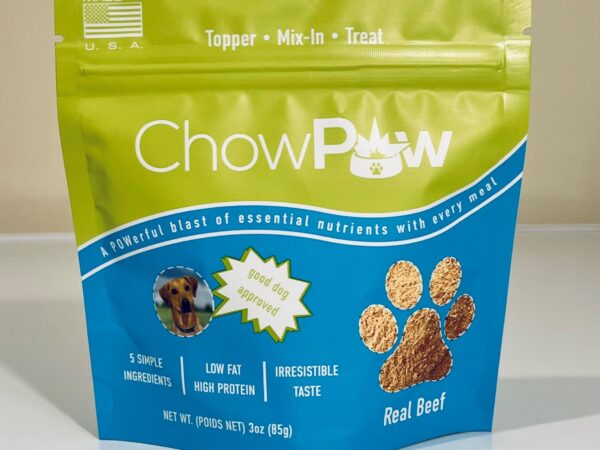
If warm water doesn't quite do the trick, it's time to bring out a more powerful tool: a high-quality meal topper or supplement. This is where a meal enhancement like ChowPow really shines, especially when your dog is not eating but acting normal. Toppers work by adding a burst of new, irresistible flavor and valuable nutrients right on top of the food they already know. This is not a meal replacement; it's a way to boost their current kibble's nutritional value and taste.
The goal isn't to switch their diet completely, which can sometimes lead to an upset stomach. Think of a meal topper as the ultimate seasoning for their food—it takes something familiar and makes it exciting again.
This simple addition can be a total game-changer, transforming mealtime from a daily struggle into a happy routine. It gets to the root of pickiness without forcing a drastic, disruptive change to their core diet.
This flowchart offers a clear path for what to do when you notice your dog's eating habits have changed.
As the guide shows, if your dog is acting completely normal besides skipping a meal, starting with some at-home enticements is a great first step before calling the vet.
The Power of a High-Value Topper
A meal enhancement like ChowPow, which is made from a single ingredient—dehydrated beef heart—provides an irresistible meaty flavor that can tempt even the most stubborn dog. Beef heart isn't just tasty for dogs; it's a superfood packed with high-quality protein and essential amino acids.
Here’s how a premium supplement can help get your dog eating again:
- Boosts Flavor: The rich, meaty smell is a powerful appetite stimulant that dogs find hard to ignore.
- Adds Nutrition: It supplements their regular kibble with extra vitamins and minerals, supporting their overall health. It’s not a replacement, but a nutritional boost.
- Creates Excitement: The new taste and texture break up the monotony of eating the same thing every single day.
This approach respects your dog's current diet while making it far more appealing. If you're looking for more ideas, check out our guide on the best dog food toppers for picky eaters to find the perfect fit for your pup. By just sprinkling a little on top, you can spark their interest and make sure they’re getting the nutrition they need to thrive.
When to Call the Veterinator
While a day or two of a dog turning their nose up at dinner is usually just them being picky, you need to know when a skipped meal is a sign of something more serious. Your own observations are your most powerful tool, but there are definitely clear lines that, once crossed, mean it’s time to call in a professional. A vet can often see beyond a happy tail wag to get to the root of the problem.
The most important rule of thumb is the 48-hour mark. If your otherwise healthy adult dog has flat-out refused all food for more than two days straight, it's time to get your vet on the phone. That timeline shrinks dramatically for puppies, senior dogs, or any dog with a pre-existing condition like diabetes—they need to be seen much sooner.
Red Flags That Demand a Vet Visit
Even if it hasn’t been 48 hours, some symptoms just can’t wait. If your dog isn’t eating and you spot any of the following, don’t hesitate to seek immediate help:
- Vomiting or Diarrhea: This one-two punch can lead to dangerous dehydration in a hurry.
- Lethargy or Weakness: A sudden crash in your dog’s energy level is a major warning sign.
- Obvious Pain: Are they whining, hunching over, or yelping when you touch them? That's a clear signal something is wrong.
- Refusing Water: A dog that won’t eat or drink needs professional attention right away.
When you're watching your dog for clues, it’s critical to know when to step in and what to avoid. For instance, some people might reach for human medications for what seems like a minor issue, but that can be risky. It's always best to understand the dangers, as outlined in guides covering topics like using Visine on dogs.
When "Acting Normal" Hides a Deeper Issue
Sometimes, a poor appetite is the very first, and most subtle, clue that a serious health issue is brewing—even when your dog is not eating but acting normal. Conditions like kidney disease, pancreatitis, and even some cancers can start with nothing more than a slight disinterest in food long before other symptoms show up.
For example, a diminished appetite is a common sign in dogs with cancer, a disease estimated to affect 4.2 million dogs in the US each year. This can lead to serious weight loss. One analysis of dogs battling certain cancers revealed that even minor weight loss was directly linked to shorter survival times compared to dogs that kept their weight steady. You can read the full research about these findings on PMC.
The Bottom Line: You know your dog better than anyone. If your gut is telling you something is off—even if you can’t quite put your finger on it—trust that instinct. A quick check-up can either give you peace of mind or, better yet, lead to early intervention. When it comes to your dog’s health, that’s always the best-case scenario.
Building a Proactive Mealtime Routine
Let's be honest, preventing a hunger strike is always easier than trying to solve one. When you build a positive and engaging mealtime routine, you can keep your dog excited about their food bowl and support their long-term wellness. This is a game-changer, especially if you have a senior dog or a notoriously picky eater.
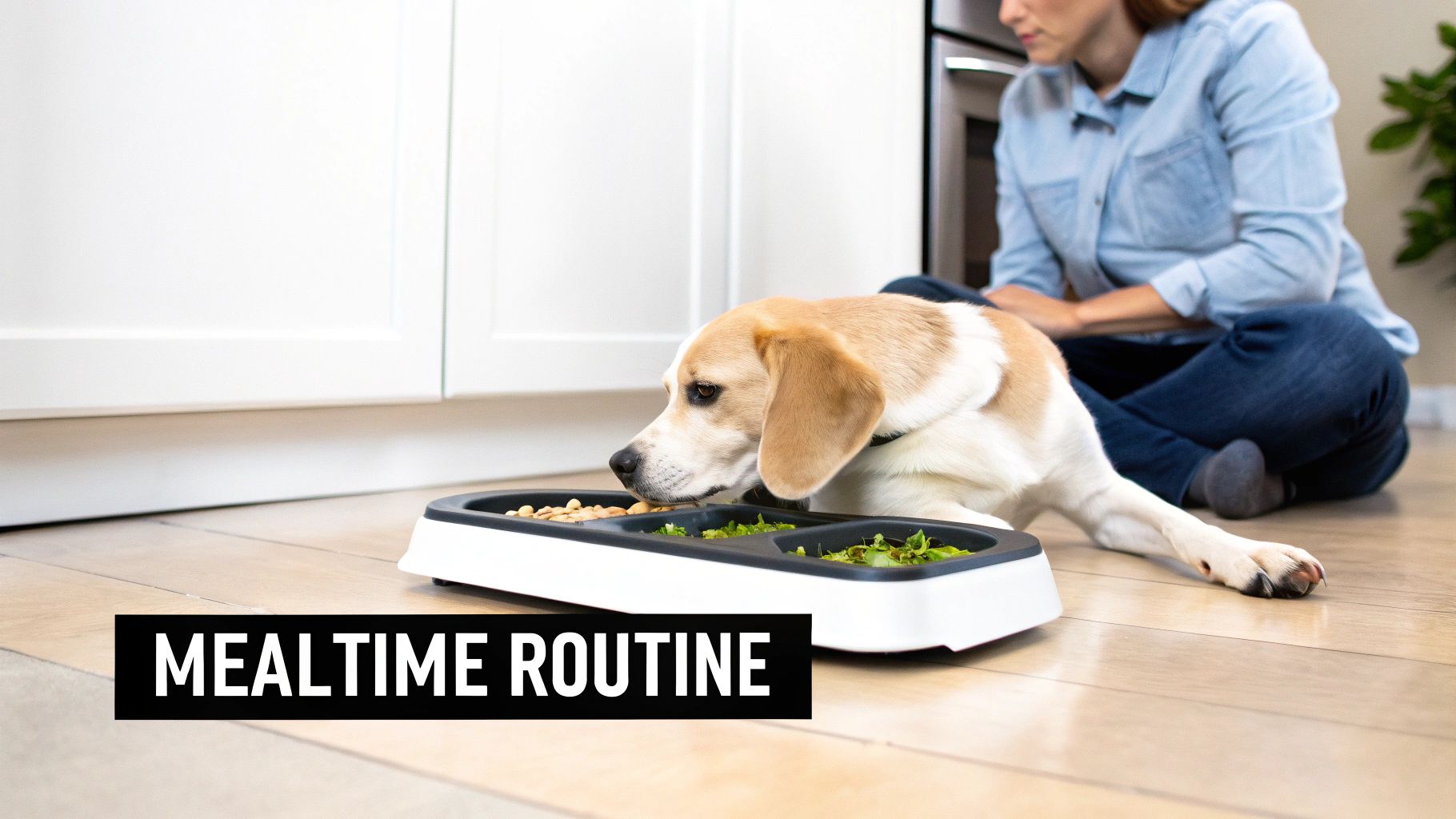
The idea is to shift from just fixing problems to creating a consistently happy relationship with food. A great way to start is by making mealtime an event. Instead of just plopping a bowl down, try using interactive puzzle feeders or snuffle mats. These tools turn eating into a fun mental challenge, tapping into your dog's natural instinct to forage. Making them "work" for their food can make that food seem a whole lot more valuable.
Long-Term Strategies for Mealtime Success
Another fantastic tip is to rotate the protein sources in their diet. If your dog's food brand offers different flavors like chicken, beef, or fish, switching things up every few months can prevent "kibble fatigue." The best part? You get all the benefits of variety without the digestive upset that often comes from a sudden brand change.
But the most powerful tool for long-term wellness is consistent nutritional support. This is where a daily meal enhancement like ChowPow becomes more than just a quick fix for pickiness—it becomes a cornerstone of their entire health routine.
By adding a nutrient-dense supplement every day, you're not just tempting your dog to eat. You're turning every single meal into a chance to boost their overall health and vitality for years to come.
ChowPow's single-ingredient, dehydrated beef heart formula provides a daily boost of high-quality protein and essential nutrients. It is a supplement, not a meal replacement, designed to boost the nutritional value of their current food. This supports their energy levels and helps keep them genuinely excited about their regular kibble. It's a simple, proactive step to ensure your dog stays happy, healthy, and always ready for dinner.
Answering Your Top Questions
When your dog suddenly stops eating, it's natural to have a million questions running through your head. Let's tackle some of the most common ones we hear from fellow dog owners.
My Dog Only Wants Treats, Not Their Real Food. What Gives?
Ah, the classic holdout! This is one of the most common scenarios, and it almost always points to a clever pup who has learned that if they ignore their boring kibble long enough, something way better (like a treat) will come along. They're not sick; they're just playing you.
The fix? Stop the game. Make their main meal the most exciting thing on the menu by mixing in a tasty, nutritious topper. At the same time, cut way back on the treats. Once they realize their bowl is where the good stuff is, their regular eating habits should get back on track.
How Long Is It Okay for a Dog to Go Without Eating?
A healthy, adult dog can typically go 24-48 hours without food as long as they're still drinking water and staying hydrated. It's not ideal, but it's not usually a full-blown emergency within that window.
But—and this is a big but—this rule absolutely does not apply to puppies, senior dogs, or any dog with an existing health issue like diabetes. Their systems are far more fragile. If any dog, regardless of age or health, refuses to eat for more than 48 hours, it’s time to call the vet.
Should I Just Swap to a Totally New Dog Food?
Hitting the panic button and immediately switching their food brand might seem like a quick solution, but it can often backfire by causing an upset stomach. Plus, it might not even solve the real problem if your dog is just being picky.
A much better first move is to enhance the food they're already used to. You can easily boost the flavor and nutritional appeal by adding a high-quality food topper or supplement. This avoids the risk of a sudden, dramatic diet change. If you do decide a new food is necessary, make sure to transition them slowly over a period of 7-10 days by gradually mixing the new food with the old.
Ready to make mealtime the highlight of your dog's day again? See how ChowPow can turn bland, boring kibble into a delicious, nutrient-packed feast. You can reignite their appetite and give their health a boost by grabbing our all-natural beef heart meal enhancement right here: https://chowpownow.com.
-
Product on sale
 Dog Food Topper - Beef HeartOriginal price was: $14.99.$10.95Current price is: $10.95. - or subscribe and save up to 20%