Dog Panting for No Reason: Causes & When to Worry
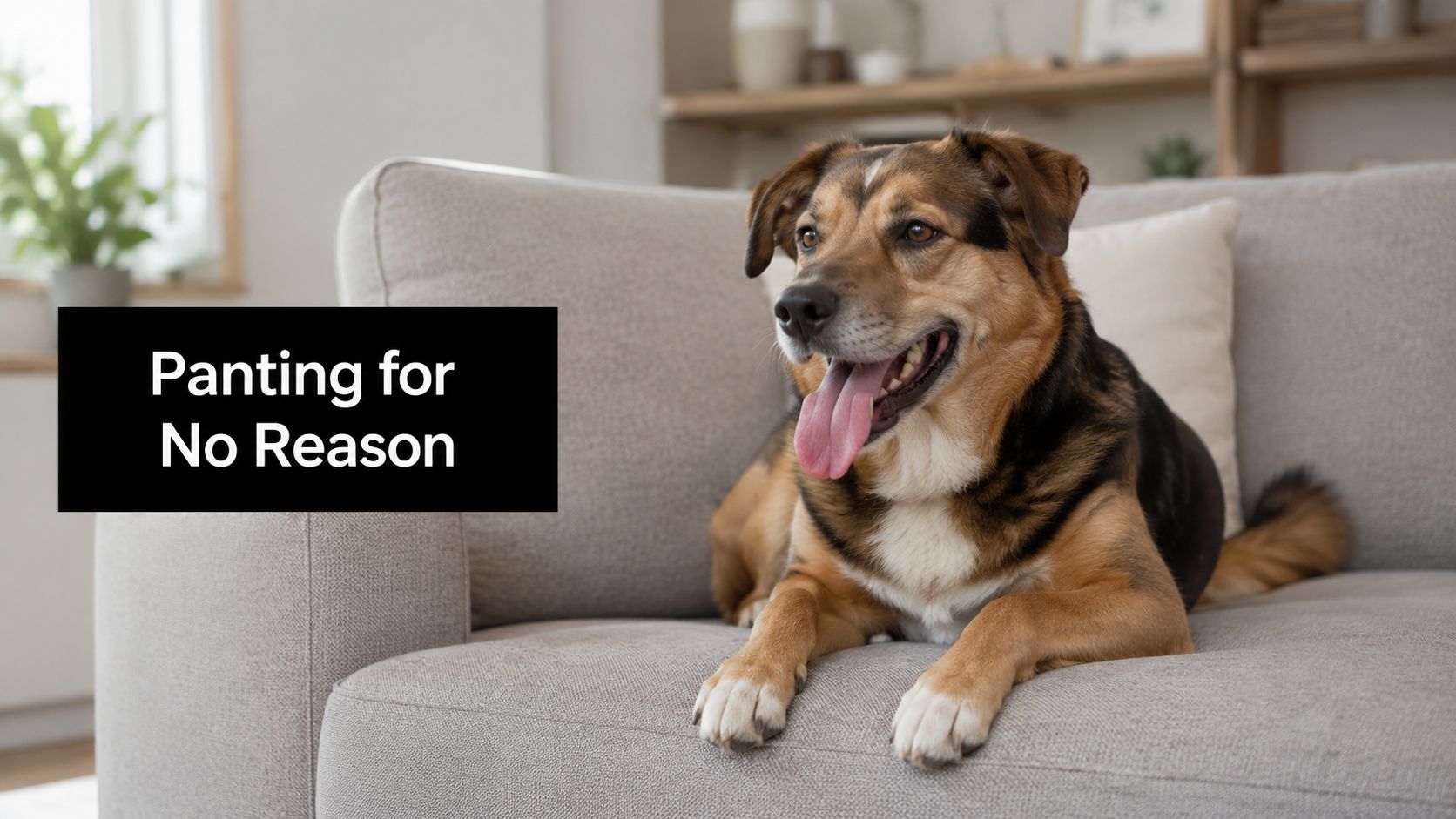
If your dog is resting and breathing more than 40 times per minute, that's abnormal and needs veterinary investigation, while a normal resting rate is 10 to 40 breaths per minute, with under 30 being ideal. When a dog pants in a cool room without exercise, heat, or excitement, it isn't happening for “no reason.” The reason may just be hidden, such as pain, stress, medication effects, or illness.
You may be reading this because your dog is stretched out on the floor, the room feels comfortable, and yet they're panting like they just finished a hard run. That's unsettling, and you're right to pay attention. Dogs do pant normally to cool themselves, but dog panting for no reason is usually panting for a reason that isn't obvious yet.
A lot of owners look for dramatic clues like limping, whining, or collapsing. The tricky part is that many dogs, especially older ones, don't advertise discomfort. They may eat, wag, and greet you at the door, while the only sign something's off is the sound of heavier breathing at rest.
The useful question isn't “Is this random?” It's “What kind of clue is this?” That shift helps you sort normal cooling from stress, silent pain, and true emergencies.
Why Is My Dog Panting When Nothing Is Wrong
It often feels like nothing is wrong because the usual triggers aren't there. Your dog hasn't been running. The house isn't hot. Nobody knocked on the door. But if panting shows up when none of the normal explanations fit, it deserves a closer look.
Dogs don't pant just because. They pant because the body is trying to solve a problem. Sometimes that problem is simple, like leftover excitement after play. Sometimes it's emotional, like anxiety after hearing thunder in the distance. Sometimes it's medical, and the body is signaling discomfort before anything else becomes obvious.
Why owners get confused
Many dogs are stoic. They won't cry out when joints ache or when their stomach feels off. Senior dogs are especially good at masking chronic discomfort. Owners often assume, “He seems fine otherwise,” because appetite is normal and the dog still wants attention.
That's why panting can be such an important clue. It's harder for a dog to hide an involuntary physical response than it is to hide pain behavior.
Practical rule: If panting doesn't match the moment, treat it as meaningful.
A better way to think about it
Try using this simple filter when you notice panting at home:
- Match the setting: Was your dog just active, excited, or warm?
- Match the timing: Did it stop after a short rest, or does it keep going?
- Match the dog: Is this typical for your dog, or is it new?
If the panting doesn't match the situation, don't brush it off. You don't need to diagnose the cause yourself. You just need to recognize that unexplained panting is worth observing carefully.
That's especially true if your dog is older, on medication, or has changed routines recently. A small shift in breathing can be your first sign that something internal has changed.
The Normal Reasons Dogs Pant
Panting is one of a dog's main cooling tools. Dogs don't cool themselves the way people do, so when they get warm, they move air quickly across moist surfaces in the mouth and airways to release heat. It operates like a built-in air conditioner that works by moving heat out through the respiratory tract.
After a walk, a game of fetch, or a burst of zoomies, normal panting makes sense. It should also make sense in context. You know why it's happening, and it gradually settles as your dog cools down and relaxes.
What healthy panting usually looks like
Normal panting tends to have a clear trigger and a clear ending point. Common examples include:
- After exercise: Your dog finishes play, pants for a bit, then recovers with rest and water.
- During warm weather: Panting helps release extra body heat.
- During excitement: Some dogs pant when visitors arrive, when the leash comes out, or during a fun car ride.
That last one can fool people. A dog can pant from happy anticipation without being in danger. The key is that the dog otherwise looks comfortable and settles once the excitement passes.
The baseline matters
A healthy baseline helps you spot when panting is no longer “normal for them.” Some dogs naturally pant a little more than others, especially after stimulation. What matters most is whether the pattern fits the situation.
Here's a simple comparison:
| Situation | More likely normal | More concerning |
|---|---|---|
| After play | Starts after activity and fades with rest | Continues long after recovery time |
| Warm room or hot day | Improves with cooling and water | Persists in a cool environment |
| Excitement | Stops when stimulation ends | Continues even after the dog is calm |
| Resting or sleeping | Uncommon in a healthy dog in comfort | Needs closer attention |
Normal panting explains itself. Concerning panting makes you ask, “Why is this happening now?”
If your dog is lying calmly in a cool room and still breathing hard, that's no longer acting like a cooling system. At that point, it's smarter to think of panting as a clue rather than a habit.
When Panting Signals a Medical Problem
Some causes of unexplained panting are easy to miss because they don't start with a dramatic event. They build gradually. A dog may pant more often at rest, at night, or during times when you'd expect them to be relaxed.

Silent pain in older dogs
This is the pattern many owners overlook. Ashby Animal Clinic notes that internal pain from arthritis or organ issues can trigger panting without the dog whining or hiding. In other words, panting may be the only visible symptom, especially in senior dogs.
That matters because older dogs often show chronic pain subtly. Instead of crying or limping, they may hesitate before lying down, seem stiff after a nap, avoid stairs, or pace a little at night. Owners naturally miss those signs because they appear gradually.
A dog with silent pain may still eat dinner, wag their tail, and ask to go outside. But the body still responds to discomfort, and increased breathing is one of the ways that response shows up.
Other medical causes to keep on your radar
Pain isn't the only possibility. A resting respiratory rate above 40 breaths per minute is abnormal and needs immediate veterinary investigation, according to River Oak Veterinary Hospital's guidance on excessive panting in dogs.
Medical causes can include:
- Heart-related problems: The body may pant more when oxygen delivery isn't working efficiently.
- Lung or airway disease: Breathing becomes harder work, so panting increases.
- Hormonal disease: Conditions such as Cushing's syndrome can lead to heavier breathing.
- Medication effects: Some drugs can trigger panting even when your dog isn't hot or active.
- Fever or metabolic problems: The body may use faster breathing as part of its stress response.
If you're wondering whether illness could be raising body temperature, this guide to signs of dog fever can help you think through what else to watch for at home.
Patterns that deserve a call
Medical panting often has a pattern that feels “off” rather than dramatic. Look for combinations like these:
- At rest in a cool room
- More noticeable at night
- Not relieved by cooling down
- Paired with restlessness, drooling, posture changes, or reluctance to move
- Sudden onset with no obvious explanation
A useful thing to tell your vet is not just “my dog is panting,” but “my dog started panting while lying still after dinner,” or “she pants at night and seems stiff getting up.” That detail helps much more than a general description.
When panting appears without exercise or heat, and especially when it doesn't stop after rest, think pain, illness, or medication before you think quirk.
Behavioral Triggers Behind Unexplained Panting
Not all abnormal panting starts in the body. Sometimes it starts in the nervous system. A dog can be lying on the rug and still feel unsettled.
Anxiety can look quiet
The three most common non-temperature-related causes of excessive dog panting are pain, anxiety, and underlying disease, and when dogs experience stress or pain, such as arthritis discomfort or thunderstorms, their bodies increase cortisol production, which can directly lead to excessive panting. Certain medications, including prednisone, can also increase panting as a side effect, as explained by Texas Veterinary Medical Foundation's article on abnormal panting.
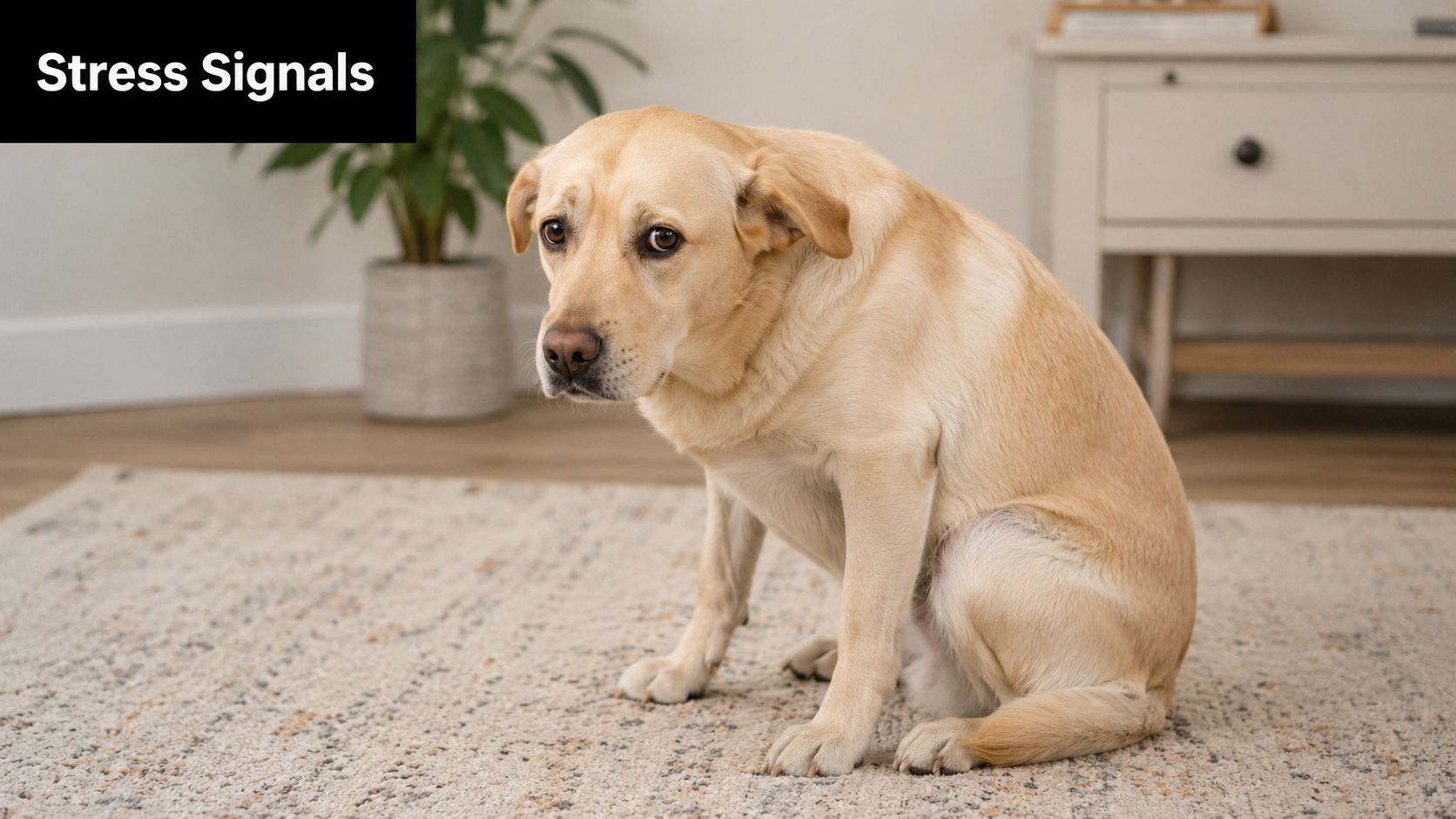
Owners often expect anxious dogs to bark, tremble, or hide. Some do. Others just pant, stare, pace a little, or stick closer than usual. A dog can look “calm enough” and still be stressed.
That's common during:
- Storms and fireworks
- Separation or routine changes
- Car rides or vet visits
- Visitors, noises, or unfamiliar environments
If loud sounds are a trigger for your dog, this article on why fireworks terrify our furry friends gives a helpful explanation of what fear can look like before it becomes full panic.
Stress panting versus happy panting
Excitement and anxiety can look similar at first. Both can cause fast breathing. The difference is the rest of the body.
A dog panting from happy anticipation usually has loose posture, bright eyes, and a body that softens once the fun begins. A dog panting from stress often seems unable to settle. They may pace, cling, scan the room, lick their lips, or keep shifting position.
Here's a quick comparison:
| Clue | More like excitement | More like anxiety |
|---|---|---|
| Body posture | Loose and wiggly | Tense or restless |
| Recovery | Settles once event starts | Keeps escalating or lingers |
| Environment | Positive trigger like leash or toy | Noise, absence, change, or fear trigger |
| Extra signs | Eager, playful behavior | Pacing, scanning, clinginess, avoidance |
Watch the pattern, not one moment
Behavioral panting makes more sense when you look at timing. Ask yourself:
- Does it happen before storms or at sunset?
- Does it start when someone leaves the house?
- Does it happen in the car but not after a walk?
- Did it begin after a move, schedule change, or new pet?
If there's a repeatable trigger, that's a strong clue. It doesn't mean the problem is “just behavioral” and should be ignored. Chronic stress still affects wellbeing and deserves attention. But recognizing the trigger helps you and your veterinarian decide whether the main driver is emotional, physical, or both.
Your Immediate Action Plan What To Do Right Now
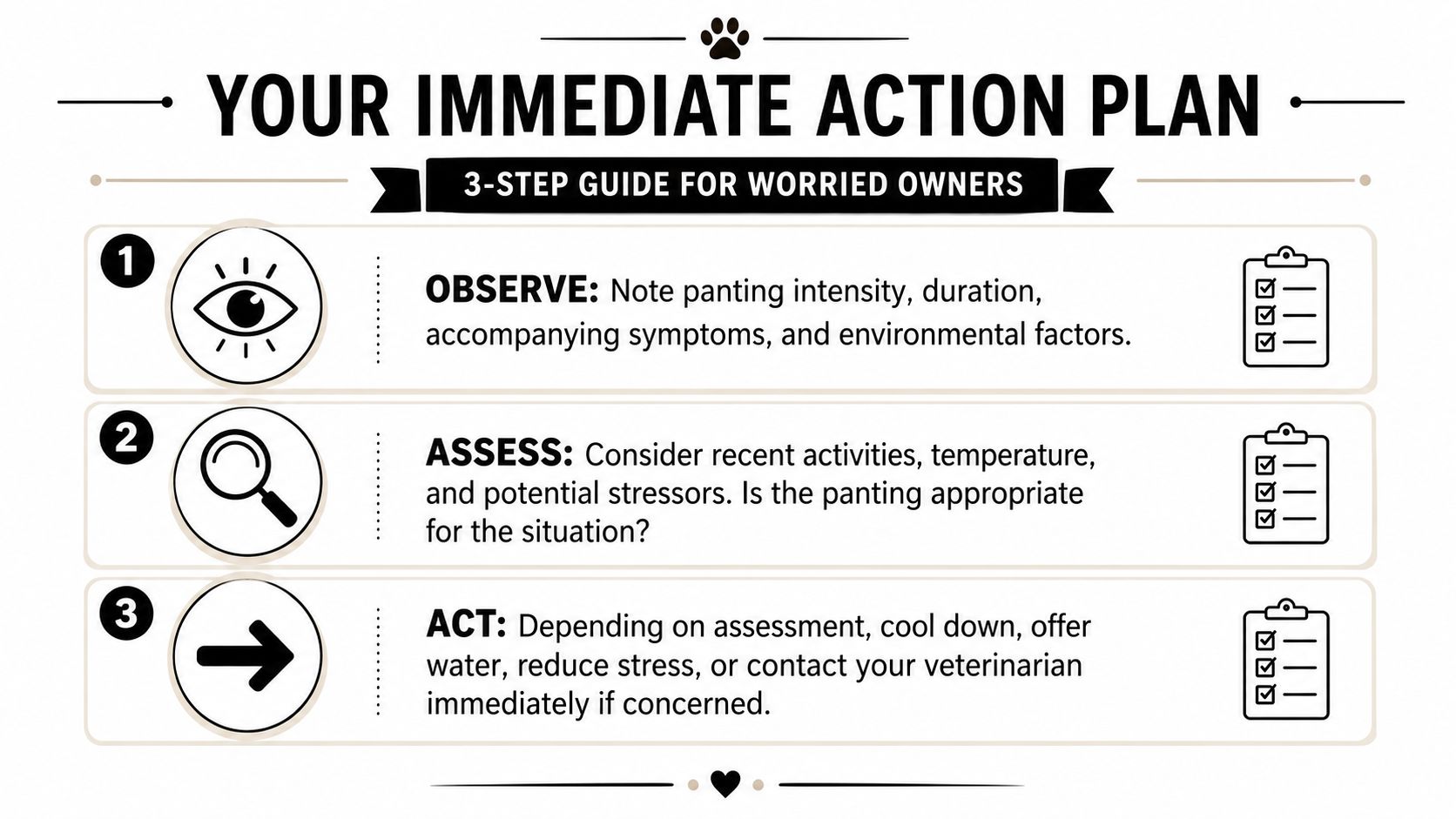
When your dog is panting and you're worried, panic doesn't help. A short checklist does.
Observe first
Start by watching before you intervene too much. You want a clean picture of what's happening.
Notice:
- Intensity: Is it mild open-mouth breathing, or hard, heavy panting?
- Duration: Has it lasted a few minutes, or does it keep going?
- Timing: Did it start suddenly?
- Body language: Is your dog resting, pacing, hunched, drooling, or struggling to get comfortable?
- Mouth and gum color: Blue or white is an emergency sign.
If you can safely do it, count breaths while your dog is resting. One rise and fall of the chest counts as one breath.
Assess the context
Next, ask what could reasonably explain it.
- Temperature: Is the room warm or poorly ventilated?
- Recent activity: Did your dog just exercise or get excited?
- Stressors: Was there thunder, fireworks, visitors, or separation?
- Medication: Has anything changed recently?
- Hydration: Is your dog drinking normally, or are you also seeing signs that might fit dehydration in dogs?
This step matters because appropriate panting usually matches the moment. Inappropriate panting doesn't.
A short demonstration can help you visualize what concerned owners often notice:
Act based on urgency
Some signs mean you should stop watching and leave for the vet.
According to VEG's guidance on persistent dog panting, sudden, constant and intense panting, or a tongue or gums that appear blue or white, are immediate red flags for heart failure or other life-threatening conditions. Owners should cool the dog gradually with cool, not cold, water and towels while heading to the vet, because rapid cooling can be dangerous.
If your dog looks like they can't catch their breath, or their gums are blue or white, this is not a “wait and see” situation.
Use this simple response guide:
- Mild and explainable: Rest, offer water, reduce stimulation, keep watching.
- Persistent and unexplained: Call your regular veterinarian the same day.
- Sudden, intense, or accompanied by pale, blue, or white gums: Go to an emergency veterinarian immediately.
Signs to track for your vet visit
| Symptom to Track | What to Note (Be Specific) |
|---|---|
| Panting pattern | When it started, how long it lasts, whether it happens at rest, night, after meals, or during certain events |
| Breathing effort | Mild, heavy, noisy, shallow, or labored |
| Activity level | Normal, restless, reluctant to move, weak, or collapsed |
| Triggers | Heat, exercise, thunderstorms, being left alone, car rides, new people, medication changes |
| Recovery | Stops with rest, cooling, reassurance, or doesn't improve |
| Other symptoms | Coughing, drooling, stiffness, pacing, vomiting, diarrhea, gum color changes |
Bring notes or phone videos if you can. A short clip of your dog breathing at home can be very helpful, especially if the panting eases by the time you arrive at the clinic.
Prevention and Long-Term Management Strategies
Some panting episodes can't be prevented. Many can be reduced by making your dog's daily life easier on the body and nervous system.

Build a calmer environment
Dogs that pant from stress often do better when the household becomes more predictable. That can mean a quiet resting spot, steady routines, and fewer abrupt environmental surprises.
Helpful habits include:
- Create a safe zone: A quiet room, crate, or corner with familiar bedding.
- Use sound buffering: White noise, fans, or calm background sound during storms or fireworks.
- Reduce chaos: Give nervous dogs distance from guests, loud televisions, or busy entryways.
- Keep routines steady: Feeding, walks, and bedtime consistency matter more than many owners realize.
Support senior dogs differently
Older dogs need a little more margin for comfort. Joint pain, night restlessness, and reduced resilience can all make panting more likely.
Try practical changes such as:
- Soft bedding that's easy to step onto
- Non-slip rugs near favorite resting places
- Shorter, gentler exercise sessions instead of one long outing
- Cooler sleeping areas, especially in warm months
If warm weather is part of the problem, these tips on keeping your dog cool and comfortable all summer long are useful for day-to-day management.
Know your dog's normal breathing
One of the best home habits is learning your dog's resting respiratory rate. Advanced Care Animal Clinic explains that a normal resting rate is 10 to 40 breaths per minute, with under 30 being ideal, and anything above 40 is abnormal and needs investigation.
That's a simple thing to monitor when your dog is asleep or relaxed. It gives you a baseline. Then, if your dog starts panting more at night or breathing faster at rest, you'll know it's a real change, not just a vague feeling.
A baseline turns “I think something is off” into “I know this is different.”
Think in patterns, not isolated events
Long-term management works best when you notice trends. Maybe panting happens only after busy days. Maybe it clusters at night. Maybe it began after a new medication. Those patterns help your veterinarian narrow the likely cause and help you make better home adjustments.
The main goal isn't to stop every pant. It's to reduce avoidable triggers and catch meaningful changes early.
Frequently Asked Questions About Dog Panting
Why is my dog panting so much at night
Nighttime panting often points owners toward an important clue because the house is usually quiet and cool. In older dogs, this can fit silent pain, especially arthritis or internal discomfort. Anxiety can also show up more clearly at night when the environment changes and the dog has fewer distractions.
Is it normal for my dog to pant in the car
Sometimes, yes. Car panting can come from excitement, anticipation, motion discomfort, or anxiety. The context matters. If your dog only pants in the car and settles once the ride ends, that leans behavioral. If the panting is intense, constant, or paired with distress, discuss it with your vet.
Could a new medication cause panting
Yes. The most common non-temperature-related causes of excessive panting are pain, anxiety, and disease, and specific conditions to keep in mind include heart failure, Cushing's syndrome, laryngeal paralysis, pneumonia, and reactions to medications like prednisone, as outlined by PetMD's guide to why dogs pant. If panting began after a prescription change, tell your veterinarian exactly when it started.
When should I stop watching and call right away
Call promptly if panting is new, happens at rest, keeps recurring, or comes with other signs such as weakness, coughing, drooling, pacing, stiffness, or trouble settling. Go urgently if the breathing is intense or your dog's gums look pale, blue, or white.
Can a dog seem fine and still be in pain
Absolutely. That's one of the biggest reasons owners miss early problems. Many dogs, especially seniors, hide discomfort well. Panting may be the first visible clue.
If you're caring for a picky eater, a senior dog, or a pup recovering from illness, ChowPow can help support daily nutrition without replacing your dog's current kibble. It's a meal enhancement, not a substitute meal, designed to boost the nutritional value and flavor of what your dog already eats so you know exactly what you're adding and why it matters.
-
Product on sale
 Dog Food Topper - Beef HeartOriginal price was: $14.99.$10.95Current price is: $10.95. - or subscribe and save up to 20%