A Complete Guide to Healthy Dog Food for Senior Dogs
The right healthy dog food for senior dogs isn't just about switching bags at the pet store. It’s about understanding their changing bodies and giving them the specific support they need in their golden years. The best diets for seniors are typically lower in calories, high in quality protein to keep muscles strong, and boosted with nutrients for their joints and minds.
As dogs get older, their metabolism slows down, making a specially formulated diet one of the most important things you can provide for their well-being. But that doesn't always mean you have to change their favorite food completely.
Understanding Your Senior Dog’s New Nutritional Needs
Watching your loyal companion enter their golden years is a beautiful thing. But their body is going through some big, albeit subtle, shifts. Think of them as a well-loved classic car; it still runs like a dream, but now it needs premium fuel and a bit more specialized care to stay in top condition.
The energetic puppy who could chase a ball for hours has become a distinguished senior who's happier with a leisurely stroll and a long, sunny nap. This change isn't just in their personality—it's metabolic. An older dog's metabolism naturally slows, meaning they simply don't burn as many calories. If they keep eating the same food they did in their prime, weight gain is almost inevitable, putting extra strain on aging joints and organs.
The Core Pillars of Senior Dog Nutrition
To give their changing bodies the support they need, a senior dog’s diet should be built on a few core pillars. Each one targets a specific need that comes with age, and they all work together to keep your dog feeling comfortable and full of life.
- Lower Calorie Count: To avoid unhealthy weight gain, a senior dog's food should be less dense in calories. This helps them stay at a healthy weight without you having to drastically cut their portion sizes.
- High-Quality Protein: They might need fewer calories, but they still need plenty of top-notch protein. This is absolutely essential for maintaining lean muscle mass, which can start to decline as dogs get older.
- Increased Fiber: A happy digestive system is key to a happy dog. Adding more fiber from sources like pumpkin or beet pulp can help keep things regular and also helps your dog feel full and satisfied after meals.
- Joint and Cognitive Support: This is a big one. Nutrients like glucosamine, chondroitin, and omega-3 fatty acids are vital for supporting creaky joints and keeping their minds sharp.
A senior golden retriever with graying fur around its muzzle looks lovingly at its owner while resting its head on their knee.
Why Enhancing Their Current Kibble Works
Let's be honest, making a sudden, drastic switch to a brand-new food can sometimes wreak havoc on an older dog's sensitive stomach. This is where a simple meal enhancement, like a supplement or topper, becomes such a powerful tool. You don’t have to throw out the food they know and love.
By adding a nutrient-dense topper to their existing kibble, you can boost its nutritional value without a complete dietary overhaul. This approach allows you to precisely target their senior-specific needs—like adding extra protein for muscle support or enticing a picky eater—while maintaining the familiarity of their regular meals.
This strategy is all about elevating their food, not replacing it. It ensures they get the targeted nutrition they need for this new stage of life, empowering you to make the best decisions for your aging friend.
How to Read Senior Dog Food Ingredient Labels
Ever walk down the dog food aisle and feel completely overwhelmed? The bags shout flashy claims, but the real story is on the back. To find the best food for your senior dog, you have to ignore the pretty pictures and learn to decode the ingredient label.
Think of the ingredient list like a recipe. The ingredients are listed by weight, so whatever you see in the first five to seven spots makes up the vast majority of the food. This is your first clue to separating the good stuff from the bags full of cheap fillers.
Decoding the First Few Ingredients
The very first ingredient should always be a high-quality, named animal protein. This isn't the place for vague descriptions—you want to see specifics.
- Look for: Real meat like deboned chicken, lamb meal, beef, or salmon. These are top-notch protein sources that help your senior dog hang on to that precious muscle mass.
- Avoid: Generic terms like "meat by-products" or "animal meal." These are mystery meats, made from rendered parts that can be low-quality and inconsistent.
After the protein, you want to see healthy, whole-food carbohydrates. Things like brown rice, oats, sweet potatoes, and peas provide the steady energy your older pup needs, plus fiber for good digestion. For a complete masterclass, check out our guide on how to read dog food labels.
Essential Nutrients to Spot for Senior Health
As you scan down the list, keep your eyes peeled for the supporting cast—those special ingredients added to target the unique needs of an aging body. These are what make a senior formula truly special.
A great senior dog food does more than just fill the bowl. It packs in functional ingredients that are specifically chosen to support creaky joints, keep their mind sharp, and give their immune system a helping hand.
Here’s what to look for:
- Glucosamine and Chondroitin Sulfate: These are the dynamic duo for joint health. They help maintain cartilage and can make a world of difference for a dog with stiff hips or elbows.
- Omega-3 Fatty Acids: Usually from fish oil or flaxseed, these healthy fats are fantastic for reducing inflammation, keeping their coat shiny, and even supporting brain function.
- Antioxidants: Ingredients like blueberries, cranberries, spinach, and added Vitamin E help protect their cells from damage and keep their immune system strong.
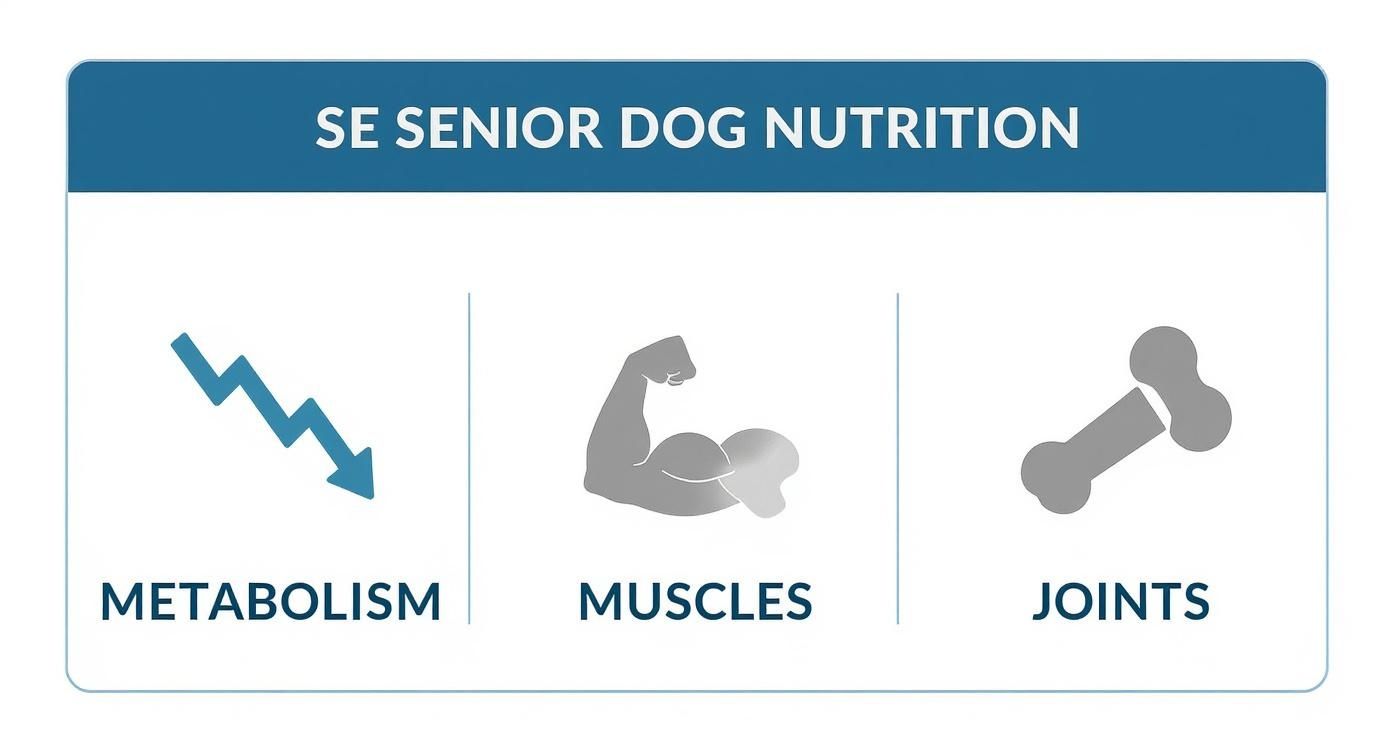
This infographic really breaks down why these nutrients are so critical for our gray-muzzled friends.
As you can see, a senior dog’s body is going through real changes. Their metabolism slows down, they're at risk of losing muscle, and their joints have seen a lot of miles. The right diet directly addresses these challenges.
Fillers and Unwanted Additives to Avoid
Knowing what to steer clear of is just as important as knowing what to look for. Many companies use cheap fillers to bulk up their food without adding much nutritional value.
Common culprits include corn, wheat, and soy. While not bad for every dog, they are frequent allergens and simply aren't as nutrient-dense as whole vegetables. You should also watch out for artificial colors, flavors, and chemical preservatives like BHA, BHT, or ethoxyquin. Natural options, like mixed tocopherols (a form of Vitamin E), are a much better choice.
Learning how to read nutrition labels like a pro is a skill that helps you make better choices for everyone in your family, including the furry ones.
To make it easier, here's a quick cheat sheet for your next trip to the pet store.
Good vs Bad Ingredients for Senior Dogs
| Ingredient Category | Look For These (The Good) | Avoid These (The Bad) |
|---|---|---|
| Protein Source | Named meats (e.g., deboned chicken, beef, salmon meal) | Vague terms (e.g., meat by-products, animal meal) |
| Carbohydrates | Whole grains & vegetables (e.g., brown rice, sweet potatoes, peas) | Cheap fillers (e.g., corn, wheat gluten, soy) |
| Fats | Named animal fats & oils (e.g., chicken fat, salmon oil, flaxseed) | Unspecified fats (e.g., animal fat, vegetable oil) |
| Preservatives | Natural preservatives (e.g., mixed tocopherols, rosemary extract) | Artificial preservatives (e.g., BHA, BHT, ethoxyquin) |
| Additives | Functional ingredients (e.g., glucosamine, omega-3s, probiotics) | Artificial colors, flavors, and sweeteners (e.g., Red 40, propylene glycol) |
Spotting these good and bad ingredients becomes second nature once you get the hang of it, empowering you to make the best choice for your dog's golden years.
It’s clear that pet parents are catching on. The global market for elderly dog food was valued at around USD 1.5 billion and is expected to more than double to USD 3.2 billion by 2033. This boom is driven by owners like you who are looking for specialized foods to help their dogs live longer, healthier lives.
Elevating Their Bowl With a Nutritional Meal Topper
You've already done the heavy lifting. You've scrutinized the labels, compared the brands, and picked a high-quality kibble you feel good about giving your senior dog. That's a fantastic foundation.
But think of that kibble like the solid frame of a house. It's strong and dependable, but the real comfort comes from the details you add inside. This is exactly where a nutritional meal supplement like ChowPow comes in.
It’s not about overhauling their entire diet. In fact, suddenly switching foods can be tough on an older dog's digestive system. Instead, a meal enhancement works with their existing food, acting as a potent nutritional booster that fills in any gaps and targets the specific needs of their golden years.
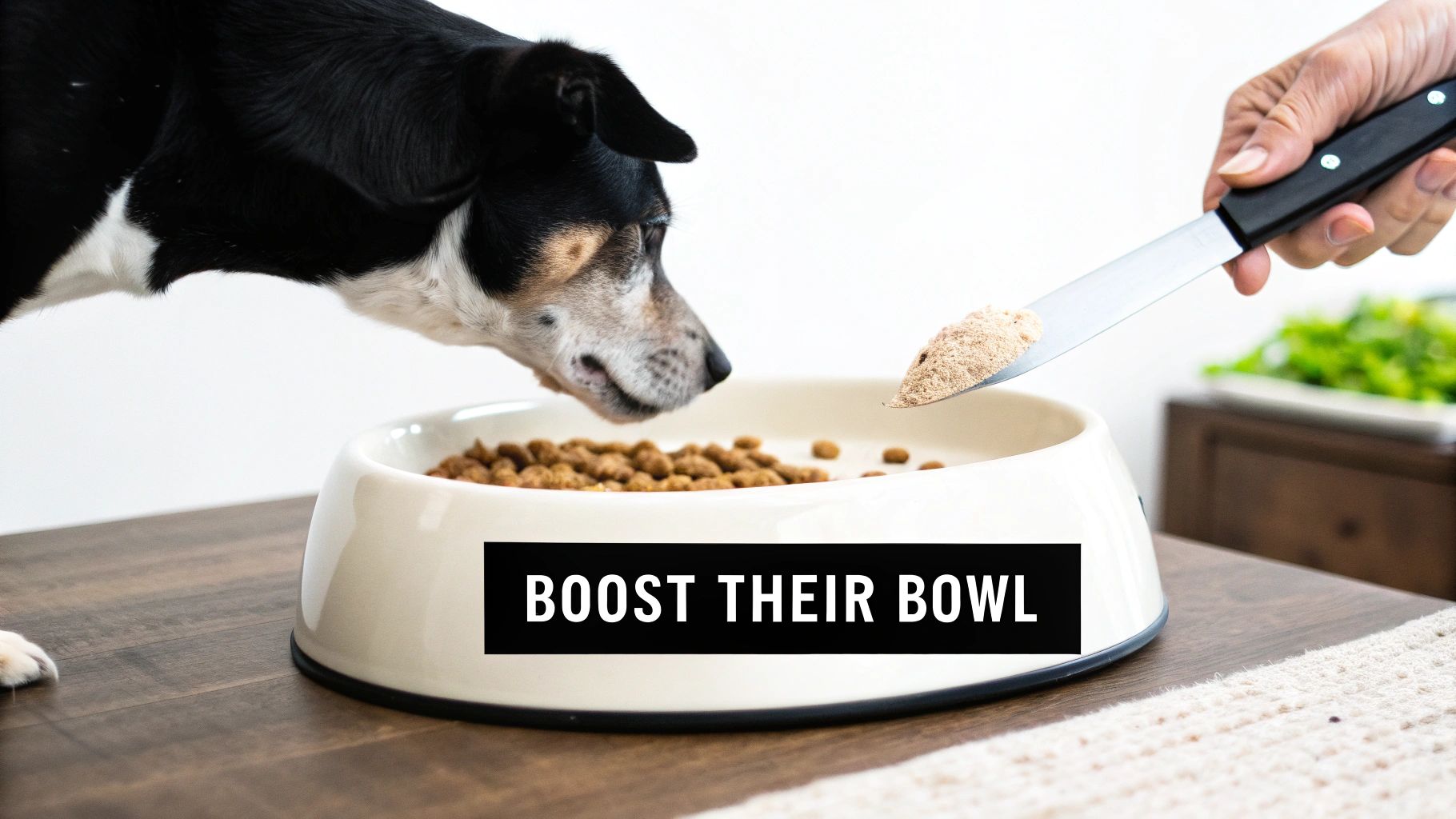
The Superfood Smoothie for Their Kibble
Think about how you’d make a healthy smoothie. You start with a good base—maybe some yogurt or almond milk—but the real magic is in what you add. A scoop of protein powder for muscle support, some spinach for iron, a handful of blueberries for antioxidants.
A meal enhancement like ChowPow does the very same thing for your dog's kibble. It takes their trusty, everyday meal and supercharges it with a concentrated dose of targeted nutrition. It's a supplement, not a replacement for their regular food.
You get to keep the food they know and love, avoiding any tummy troubles from a sudden change, while elevating its benefits.
A high-quality meal enhancement transforms a good meal into a great one. It’s a simple, effective strategy to ensure your senior dog receives targeted support for their aging body, making every bite count towards their vitality and well-being.
Just by sprinkling a little on top, you can tackle common senior issues right in their bowl, giving them a daily boost that makes a real difference in their energy and comfort.
How ChowPow Directly Supports Senior Dogs
We designed ChowPow with the most common challenges of aging dogs in mind. No fluff, just simple, powerful ingredients that deliver real benefits. This is functional nutrition, not just a flavor enhancer.
Here’s exactly what our meal supplement does:
- Maintains Precious Muscle Mass: Older dogs often struggle with muscle wasting, a condition called sarcopenia. ChowPow is made from dehydrated beef heart, which is packed with high-quality, easy-to-digest protein. This gives their bodies the amino acids they need to hold onto that strength and stay mobile.
- Supports Stiff and Aging Joints: While it’s no substitute for vet care, providing nutrients that support overall wellness is key for joint health. The natural components in a well-formulated supplement contribute to their body's ability to maintain joint function and comfort.
- Tempts the Pickiest Eaters: Has your senior’s appetite started to fade? It’s a common problem. The rich, meaty aroma of ChowPow can make mealtime exciting again. A simple sprinkle is often all it takes to get them interested in their food, ensuring they don't miss out on vital calories and nutrients.
You Don't Need to Change Their Favorite Food
One of the best things about using a meal enhancement is the freedom it gives you. There’s no need to abandon the food that’s worked for your dog for years. You just make it better. It’s less stress for your dog and way more convenient for you.
You can learn more about the benefits of adding food toppers to your dog's diet and discover how this small step can completely change their mealtime experience.
Adding a supplement like ChowPow is an easy yet powerful way to customize their nutrition, making sure they have everything they need to thrive. Ultimately, it’s about a holistic approach—starting with a great kibble and perfecting it with a targeted boost. You're not just feeding them; you're investing in their health and happiness for all the years to come.
Solving Common Senior Dog Health Issues with Diet
As our dogs ease into their golden years, a new set of health challenges often comes along for the ride. While some changes are just a natural part of getting older, the right nutrition can be an incredibly powerful tool for managing symptoms, boosting their comfort, and improving their overall quality of life.
Think of their diet as a proactive way to support their body exactly where it needs it most. By being strategic about what goes into their bowl, you can directly tackle common senior dog problems. From creaky joints to touchy tummies, a well-planned diet gives their body the building blocks it needs to stay as resilient as possible.
Supporting Stiff and Aching Joints
One of the most familiar signs of a senior dog is that little bit of stiffness, especially when they're getting up from a good nap. All those years of joyful running and playing can really take a toll on their joints. You can't turn back the clock, of course, but you can provide fantastic nutritional support to help them stay mobile and comfortable.
Many high-quality senior foods and supplements are packed with key ingredients known for their joint-supporting magic. These nutrients work to maintain cartilage and help cool inflammation, which can make a real difference in how easily your dog moves. For a deep dive on this, check out our article on the best foods for dogs with arthritis.
Managing Dental Sensitivity and Picky Eaters
Have you noticed your older pal seems less thrilled about their crunchy kibble lately? Dental sensitivity is a super common issue for seniors. Years of chewing can lead to worn-down teeth, gum issues, or even missing teeth, making hard food downright painful to eat.
This is where texture and moisture become your best friends. Simply adding a splash of water, some warm bone broth, or a moisture-rich topper can soften their kibble, making it much easier and more pleasant to chew.
A supplement like ChowPow is perfect for this. When mixed with a little water, it not only adds moisture but also coats their kibble in an irresistible beefy flavor. This can be a total game-changer for those picky eaters whose appetites might be fading, ensuring they get the calories and nutrients they need without a daily struggle.
Calming Digestive Troubles
An older dog's digestive system can get a lot more sensitive with age. You might notice they're more prone to an upset stomach, gas, or just general irregularity. A gentle, easily digestible diet is the secret to keeping their gut happy and humming along smoothly.
Look for foods that feature high-quality, digestible proteins and beneficial fibers. Prebiotics are another fantastic addition to watch for, as they feed the good bacteria in your dog's gut and promote a balanced microbiome. A healthy gut is absolutely essential for proper nutrient absorption, meaning they get the full benefit from every single bite.
A well-balanced diet for a senior dog should be both gentle and effective. The goal is to provide maximum nutrition with minimal digestive stress, allowing their system to work efficiently without discomfort.
This focus on gut health isn't just a local trend. In China, where senior dogs make up about 23% of the dog population, there's a huge and growing demand for functional pet foods. These are foods specifically designed with benefits like digestive aids and joint support to address the common health issues of aging pets. You can learn more about this global shift toward functional pet foods on the USDA website.
Controlling Weight Without Sacrificing Nutrients
As a senior dog’s metabolism naturally slows down, they can pack on extra pounds pretty easily. That extra weight puts a ton of strain on their joints, heart, and other organs. While controlling calories is vital, simply feeding them less of their old adult food can accidentally lead to nutritional gaps.
The real solution is to switch to a diet that’s less dense in calories but still packed with essential nutrients—especially protein. High-quality protein is crucial for fighting off sarcopenia, the age-related loss of muscle mass. Keeping their body lean and strong helps them better handle all the challenges of aging. A nutrient-dense meal enhancement can be a great way to ensure they feel full and get key vitamins, even if their overall kibble portion is a bit smaller.
Practical Feeding Tips and Sample Meal Plans
Knowing what to feed your senior dog is half the battle. The other half—the part where the real magic happens—is putting all that knowledge into a simple, daily routine. It’s all about turning good nutritional theory into a delicious, health-boosting reality, right there in their food bowl.
The secret to a successful senior diet is structure and consistency. Older dogs naturally have slower metabolisms, which means even a little extra food can lead to unwanted weight gain. Sticking to a regular feeding schedule, like two smaller meals a day instead of one big one, really helps with their digestion and keeps their appetite in check.
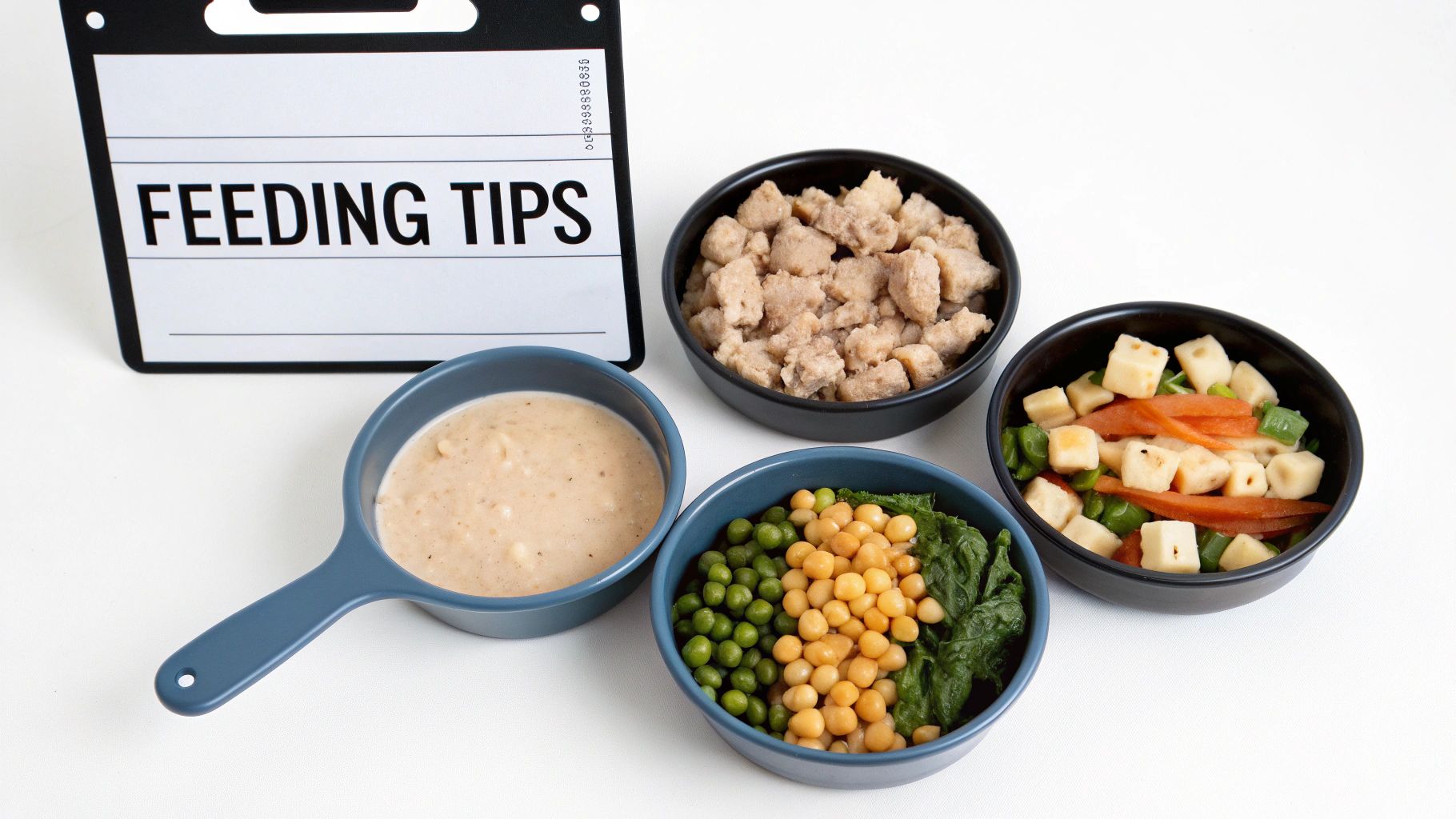
A thoughtfully prepared meal bowl for a senior dog, combining kibble with fresh, healthy additions.
To get into a good rhythm, you might find some inspiration from effective meal planning strategies. Believe it or not, the same principles that help us humans stay on track with our meals can be tweaked for our furry family members, making sure they get the right nutrients at the right time, every time.
Crafting a Nutrient-Boosted Bowl
The best meals for your senior pup often start with their trusted base kibble and then get a boost from targeted enhancements. This approach lets you address specific health needs—like achy joints or a sensitive tummy—without the digestive upset that a complete food switch can sometimes cause. It’s a simple way to make every single meal count.
A sprinkle of ChowPow is the perfect place to start. As a dehydrated beef heart supplement, it packs a serious punch of high-quality protein to help maintain that precious muscle mass. Plus, its rich, meaty flavor is a godsend for enticing those picky eaters, especially seniors whose sense of smell might be fading.
From there, you can get creative by adding dog-safe fruits and veggies for extra fiber, vitamins, and antioxidants. These little additions don't just add nutrition; they bring exciting new textures and flavors to keep mealtime interesting.
Think of each meal as an opportunity. When you combine their base kibble with a functional supplement like ChowPow and a sprinkle of fresh ingredients, you’re not just filling their stomach—you’re actively supporting their joints, digestion, and overall vitality.
Sample Meal Ideas for Senior Dogs
Putting this all into practice is actually fun and easy. You can totally customize their bowl based on what they need that day or week.
To give you a head start, here are a couple of simple "recipes" to try:
The Joint Support Bowl
- Base: 1 cup of your dog's senior-formulated kibble.
- Booster: 1 scoop of ChowPow for that high-quality protein hit.
- Add-in: 1 tablespoon of pureed pumpkin for fiber and digestive health.
- Bonus: A few fresh blueberries for a powerful antioxidant punch.
The Sensitive Tummy Bowl
- Base: 1 cup of your dog’s kibble, softened with a splash of warm water.
- Booster: 1 scoop of ChowPow, mixed in to create a savory gravy that’s gentle on the stomach.
- Add-in: 1 tablespoon of plain, cooked sweet potato (mashed) for easily digestible carbs and fiber.
Little combinations like these make healthy eating enjoyable for both of you. It transforms mealtime from a simple chore into a daily act of love and care.
Sample Senior Dog Weekly Meal Booster Plan
To keep things exciting and nutritionally diverse, you can rotate your boosters and add-ins throughout the week. Here’s a sample plan to show you just how easy it is to add variety while keeping their base kibble consistent.
| Day of the Week | Morning Meal Booster | Evening Meal Booster |
|---|---|---|
| Monday | 1 scoop ChowPow | 1 tbsp pureed pumpkin |
| Tuesday | 1 tbsp plain yogurt | 1 scoop ChowPow |
| Wednesday | 1 tbsp mashed sweet potato | 1 scoop ChowPow |
| Thursday | A few fresh blueberries | 1 scoop ChowPow |
| Friday | 1 scoop ChowPow | 1 tsp fish oil |
| Saturday | 1 tbsp chopped carrots | 1 scoop ChowPow |
| Sunday | 1 scoop ChowPow | Leftover-friendly: a mix of pumpkin & blueberries |
This simple rotation ensures your senior dog gets a wide range of micronutrients and flavors, which can help keep their appetite strong and their body nourished. Remember to introduce any new foods slowly and watch for any digestive upset.
When to Consult Your Vet About Senior Nutrition
While this guide gives you a solid game plan for your senior dog's nutrition, your most valuable player is always going to be your veterinarian. Think of them as the head coach of your dog's wellness team. They have the deep expertise and diagnostic tools to create a truly customized care strategy.
Regular check-ups become non-negotiable in the golden years. Your vet can pick up on subtle health changes you might miss at home and offer professional advice tailored precisely to your dog's unique needs. This is especially true for dogs managing conditions like kidney disease, heart issues, or diabetes, where diet isn't just a suggestion—it's a critical part of their medical treatment.
Making Your Vet Visit Count
To get the most out of your appointment, a little prep work goes a long way. Showing up with a list of questions helps you cover all your bases and ensures the nutritional plan you build together is the perfect fit for your pup.
An informed conversation empowers you to be your dog's best advocate. It's your chance to discuss everything from their ideal weight to whether a nutritional boost from a supplement like ChowPow would be a good move for their specific health profile.
Your veterinarian provides the personalized roadmap to your senior dog's health. By combining their medical expertise with your daily observations, you can create a nutritional strategy that truly supports a long, happy, and comfortable life.
Here are a few key questions to bring to your next appointment:
- Is my dog at their ideal body weight and body condition?
- Are there any specific nutrients we should focus on or limit?
- Could a meal supplement like ChowPow help us meet their nutritional goals?
- Based on their health, do you have any specific food brands or key ingredients you'd recommend?
This kind of teamwork ensures you're providing the best possible healthy dog food for senior dogs. As more of us see our pets as family, the pet food industry has responded with more scientifically formulated foods for aging companions. It’s part of a global focus on senior pet wellness, a trend you can learn more about by exploring the growth of the specialized dog food market on futuremarketinsights.com.
Got Questions About Senior Dog Food? We've Got Answers.
As your dog starts to gray around the muzzle, it’s only natural for questions about their diet to pop up. Feeling confident you're doing the right thing for them starts with getting clear answers. Let's tackle some of the most common questions we hear from pet parents navigating their dog's golden years.
When Is My Dog Officially Considered a Senior?
This is one of the first questions people ask, and the truth is, it’s not a one-size-fits-all answer. It really depends on your dog's breed and size. Think of it like this: a Great Dane ages a lot faster than a tiny Chihuahua.
Here’s a general guide:
- Small breeds (like Chihuahuas or Dachshunds) usually enter their senior years around 10-12 years old.
- Medium breeds (think Beagles or Border Collies) hit that milestone a bit earlier, around 8-9 years old.
- Large and giant breeds (like Great Danes or Mastiffs) can be considered seniors as early as 6-7 years old.
Of course, your vet is the ultimate authority here. They can look at your dog’s overall health and let you know when it’s time to start thinking about senior-specific care.
My Senior Dog Is Losing Weight. Should I Be Worried?
Yes, this is definitely something to pay attention to. Any sudden or unexplained weight loss in an older dog is a red flag that calls for an immediate trip to the vet. It’s so important to rule out any underlying health problems first.
If your vet gives you the all-clear, the weight loss might be due to a few common senior issues, like a waning appetite, sensitive teeth, or just their body not absorbing nutrients as well as it used to. This is where a super tasty and nutrient-dense meal enhancement like ChowPow can make a huge difference. As a supplement, a simple sprinkle can get them excited about their food again and packs every bite with the extra calories and nutrition they need to stay at a healthy weight.
Can't I Just Feed My Senior Dog a Smaller Amount of Their Adult Food?
It might seem like a logical fix, especially for a dog that needs to watch their weight, but just cutting back on their regular food is not the best move. When you reduce the portion size, you're also reducing their intake of vital nutrients they need now more than ever.
Senior dog formulas are crafted specifically for their changing bodies. They usually have higher-quality protein to protect against muscle loss and carefully balanced minerals to be gentle on aging organs like the kidneys. Simply feeding less adult kibble cuts calories, but it also starves them of these critical nutrients.
A much smarter approach is to either switch to a high-quality senior food or, even better, boost their current meal with a supplement designed for their needs. That way, you’re giving them targeted support without creating nutritional gaps.
Is Wet Food or Dry Food Better for Seniors?
There's no single "best" answer here—both have their perks, and it often comes down to your dog's individual needs and, let's be honest, their personal preference!
Dry kibble is great for helping to scrape tartar off their teeth and is typically more calorie-dense. On the flip side, wet food has a ton of moisture, which is fantastic for keeping them hydrated and can be a lifesaver for dogs with sore gums or missing teeth.
Many senior dog owners land on a "best of both worlds" strategy. They use a quality dry kibble as a base and then mix in a spoonful of wet food or a nutrient-rich supplement like ChowPow. This adds moisture, amazing flavor, and a targeted nutritional punch, making mealtime a win-win.
At ChowPow, we believe giving your senior dog a mealtime upgrade shouldn't be complicated. Our dehydrated beef heart meal enhancement is the easiest way to boost their current food with the high-quality protein and irresistible flavor they need to thrive. See the difference a sprinkle can make by visiting https://chowpownow.com.
-
Product on sale
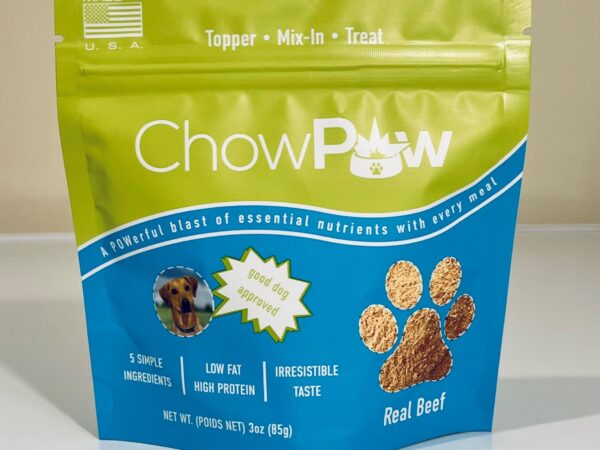 Dog Food Topper - Beef HeartOriginal price was: $14.99.$10.95Current price is: $10.95. - or subscribe and save up to 20%