
How to Encourage Your Dog to Drink Water: Simple Tips & Tricks
Worried your dog isn’t hitting the water bowl as often as they should? It’s a common concern. The good news is, sometimes all it takes is making their water a little more enticing, maybe with a splash of broth or a hydrating topper.
But before we jump into the fun tricks, let’s talk about why keeping your dog hydrated is one of the most important things you can do for their health.
Why Your Dog’s Hydration Is So Important
Water is the lifeblood of your dog’s body, just like it is for ours. It’s involved in pretty much everything—from digesting food and absorbing all those good nutrients to keeping joints lubricated and regulating body temperature. Simply put, without enough water, their organs just can’t do their jobs correctly.
Think of proper hydration as your dog’s first line of defense against some serious health problems. When a dog is well-hydrated, their system can easily flush out toxins, which is absolutely critical for healthy kidney and liver function. Dehydration, on the other hand, puts a massive strain on these vital organs and can lead to dangerous complications down the road.
Especially in warmer weather, keeping them cool and hydrated is non-negotiable. For more tips on that, check out our guide on how to keep your dog cool and comfortable all summer long.
The Risks of Poor Hydration
One of the most frequent issues we see linked to low water intake is urinary tract trouble, including the formation of painful bladder stones. Getting your dog to drink more is one of the best preventative measures you can take. Vets even monitor this by measuring urine specific gravity (USG). The goal is to keep it below 1.020 to ensure their system stays properly diluted and flushed.
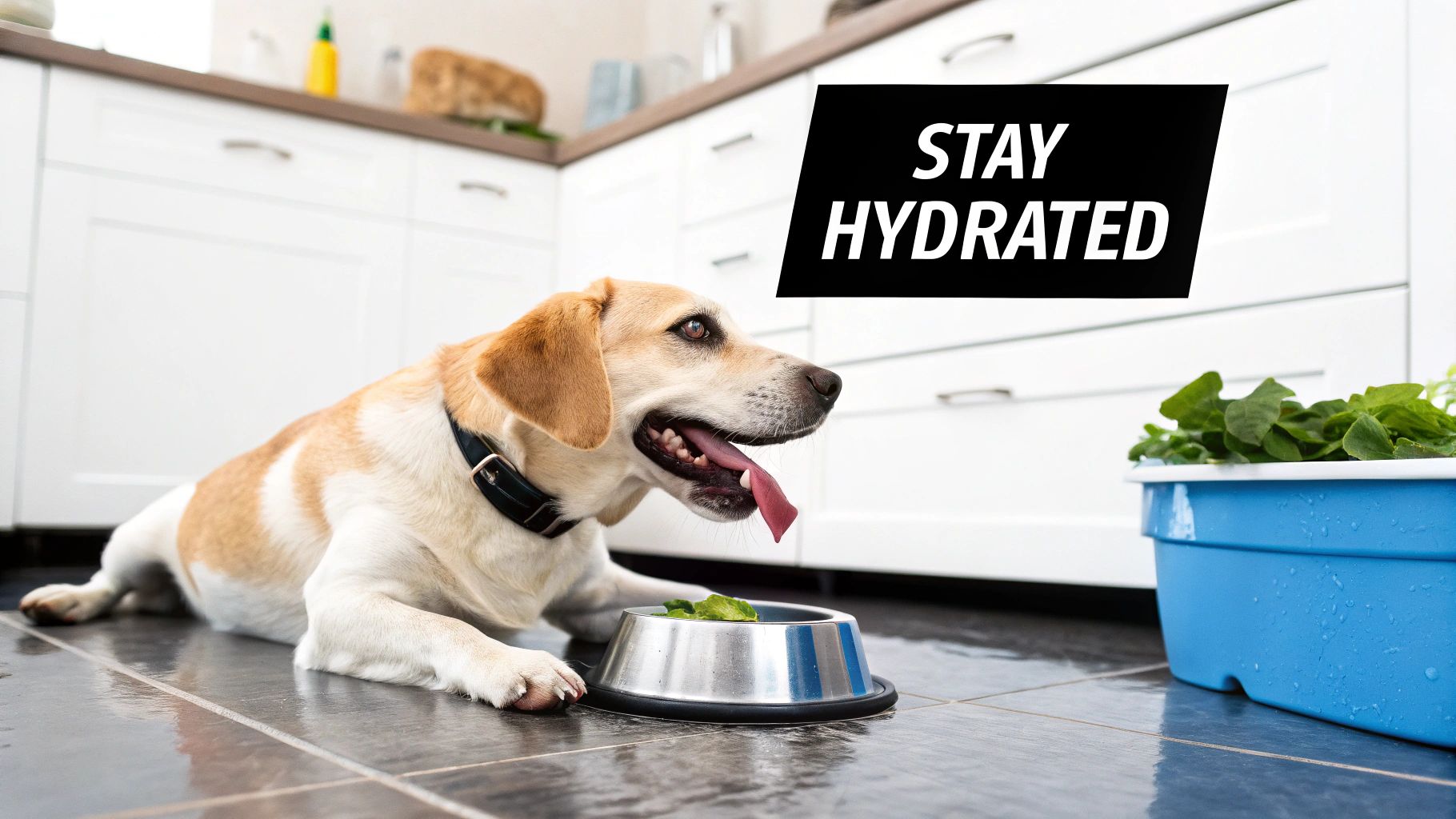
A dehydrated dog is at a higher risk for heatstroke, kidney problems, and urinary tract infections. Even mild dehydration can cause lethargy, loss of appetite, and a dry nose.
How Much Water Does Your Dog Really Need?
So, what’s the magic number? A great rule of thumb is that a dog needs about one ounce of water for every pound of body weight per day. So, if you have a 30-pound dog, they should be drinking around 30 ounces (which is just under 4 cups) of water daily.
Here’s a quick guide to help you visualize it:
Daily Water Needs By Dog Weight
| Dog Weight (lbs) | Approximate Daily Water Intake (ounces) | Approximate Daily Water Intake (cups) |
|---|---|---|
| 10 | 10 | ~1.25 |
| 20 | 20 | ~2.5 |
| 40 | 40 | ~5 |
| 60 | 60 | ~7.5 |
| 80 | 80 | ~10 |
This table gives you a solid starting point for monitoring your pup’s daily intake.
Of course, this is just a baseline. Life isn’t lived on a chart, and several factors can ramp up their hydration needs:
- Activity Level: A dog who just spent an hour chasing balls at the park is going to need a lot more water than a pup who spent the day snoozing on the couch.
- Weather: On hot and humid days, dogs lose more moisture through panting. You’ll need to offer water more frequently to keep them topped up.
- Diet: This is a big one. Dogs on a dry kibble diet need to drink more water to stay hydrated. If your dog eats wet or fresh food, they’re already getting a good amount of moisture from their meals.
Understanding these basics is the first step. It’s not just about getting them to drink; it’s about proactively supporting their entire well-being from the inside out. Now, let’s get into the practical ways to make that happen.
Upgrading Your Dog’s Water Station
Before you start experimenting with fancy flavorings, it’s worth taking a hard look at your dog’s current water setup. Sometimes, the simplest fix for a reluctant drinker is improving the drinking station itself. The bowl, its location, and even the type of water can make a world of difference to a discerning pup.
You’d be surprised how a few small, immediate tweaks can create a much more inviting environment. Your dog might have strong preferences you never even realized.
Choosing the Right Water Bowl
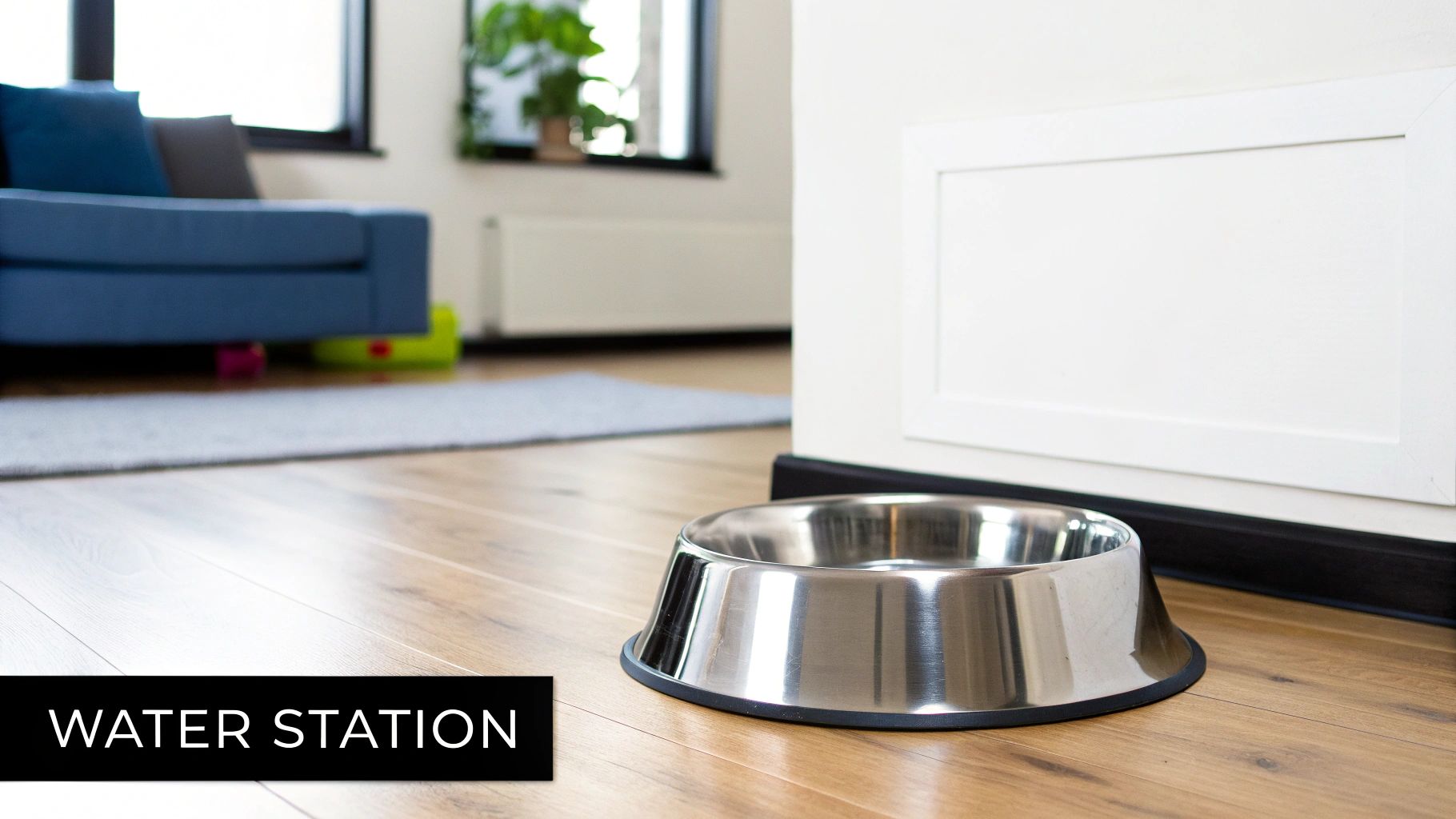
The material of your dog’s bowl is a bigger deal than you might think. Plastic bowls are everywhere, but they come with a few major downsides. They scratch easily, creating tiny crevices where bacteria can throw a party. On top of that, some dogs can develop an allergy or sensitivity to the plastic itself.
This is why so many vets recommend stainless steel or ceramic bowls. They’re non-porous, a breeze to keep clean, and way more durable. Just a heads-up: if your dog is on the skittish side, the reflection in a shiny metal bowl can sometimes be startling. A ceramic option might be a better fit for an anxious pup.
Pro Tip: Wash your dog’s water bowl every single day with soap and water. A slimy, dirty bowl is a huge turn-off and can harbor harmful bacteria that actively discourages drinking.
Consider a Circulating Water Fountain
Ever seen your dog try to sip from a running faucet or a garden hose? It’s not just a weird quirk. Many dogs are instinctively drawn to moving water. It’s a throwback to their wild ancestors, who knew that stagnant water was far more likely to be contaminated.
A circulating pet water fountain taps right into this instinct. The constant movement and gentle bubbling sound can entice even the most stubborn drinkers. Plus, these fountains usually have filters that keep the water tasting fresh and clean—a huge win for picky dogs who turn their noses up at water that’s been sitting out.
Strategic Bowl Placement Matters
Where you put the bowl can be just as crucial as the bowl itself. A bowl tucked away in a noisy laundry room next to a rattling washing machine might be too intimidating for a nervous dog to even approach.
Think about your dog’s daily routine and put water stations right in their path.
- High-Traffic Zones: Pop a bowl in the living room or a main hallway they often pass through.
- Favorite Napping Spots: An extra bowl near their bed ensures water is right there when they wake up thirsty.
- Near the Back Door: This is perfect for a quick drink right after coming inside from playtime.
- Multiple Levels: If you have a multi-story home, put a bowl on each floor so they don’t have to make a special trip.
By making water ultra-convenient and accessible, you remove the little barriers that might be preventing them from staying properly hydrated. An extra bowl is a small investment that can pay off big time for their health.
Making Water Irresistible to Your Dog
So you’ve upgraded the water station, but your dog is still giving it the side-eye. What now? Sometimes, plain old water just doesn’t cut it for a discerning canine palate. The great news is, you don’t have to settle for a dehydrated pup. There are plenty of simple, safe ways to make their water more appealing, turning hydration into a treat instead of a chore.
The real secret is figuring out what tempts your dog. Just like us, every dog has its own preferences. A little bit of creative experimentation can go a long way in cracking the code to what makes them happily lap up every last drop.
Simple Flavor Enhancements
One of the easiest tricks in the book is to add a little something tasty to the water bowl. A few drops of low-sodium chicken or bone broth can instantly turn a boring bowl of water into a savory “soup” they can’t get enough of. The golden rule here is to use products with no added salt, onions, or garlic, as these ingredients are a big no-no for dogs.
Another fantastic option is to toss in some dog-safe fruits or veggies. A handful of frozen blueberries, a slice of cantaloupe, or a couple of cucumber slices can add just enough subtle flavor to pique their interest and get them drinking.
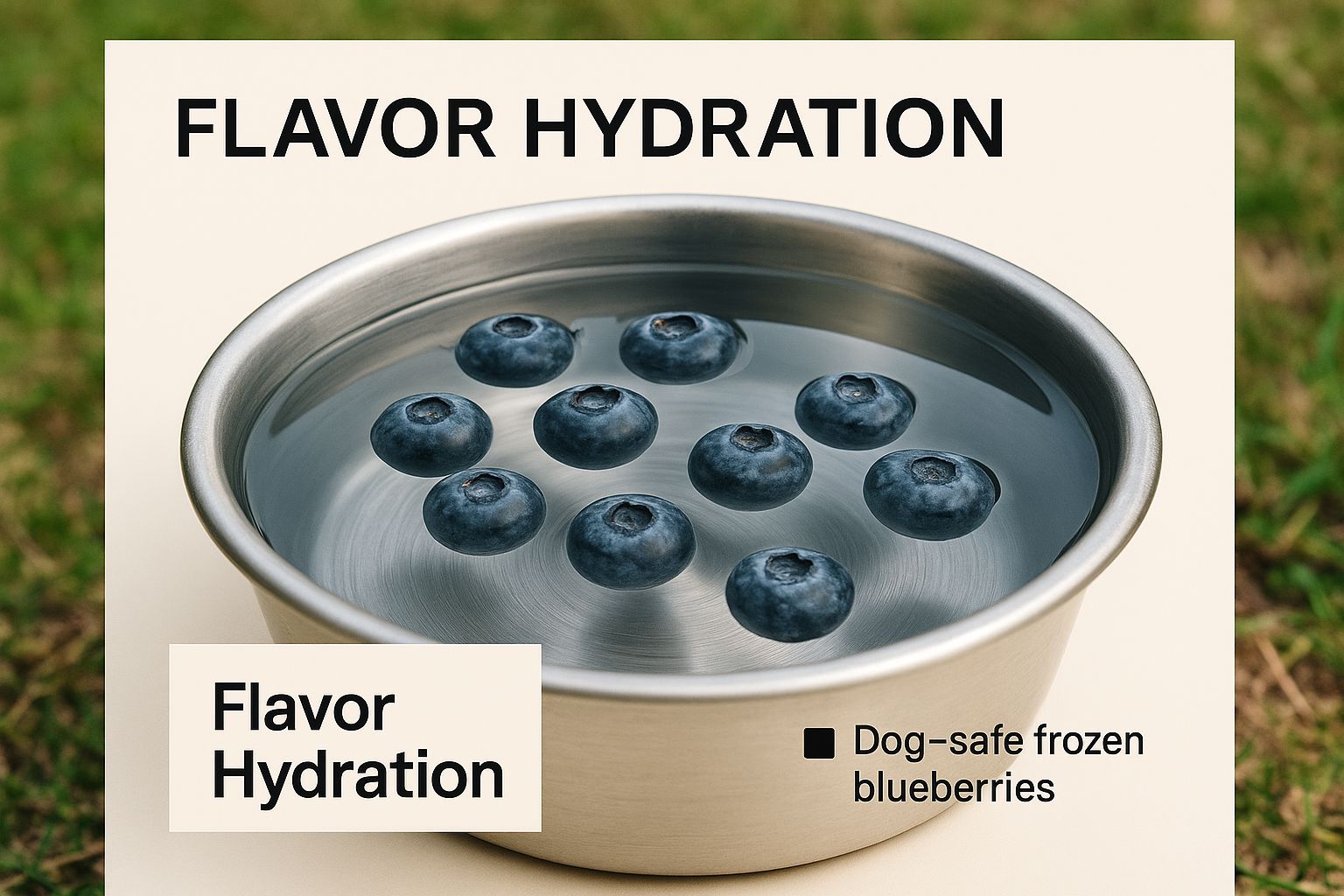
As you can see, something as simple as frozen fruit can make a water bowl far more enticing. It’s a visual and flavorful treat!
Create Hydrating Treats and Games
Why not make hydration fun? On warmer days, “pupsicles” are a game-changer. Just freeze some low-sodium broth or blended, dog-safe fruit like seedless watermelon in an ice cube tray. Your dog gets a cooling, hydrating snack that also doubles as a bit of enrichment.
You can also turn drinking into a game. Try floating a few pieces of their regular kibble or a small, high-value treat in their water bowl. As they bob for the prize, they’ll naturally take in more water along the way.
By associating their water bowl with positive things like treats and playtime, you can completely shift your dog’s perspective on drinking. It stops being a necessity and starts being a source of enjoyment.
The Power of Palatability
The science here is pretty straightforward: tastier water gets consumed more. Research has consistently shown that offering flavored water or increasing the water content in a dog’s food can dramatically boost their fluid intake.
In fact, one study found that when dogs were given a special palatable liquid, their average water intake shot up from 71 mL/kg/d to as high as 156 mL/kg/d. That’s more than double! You can dig into the specifics by checking out the full research on canine water intake and see the data for yourself.
This is exactly why a high-quality meal topper like ChowPow works so well. It is a dehydrated beef heart formula designed to be mixed with water to create an irresistible gravy. It taps into your dog’s natural love for savory, meaty flavors to make sure they get the fluids they need. This not only makes their food taste incredible but also gives them a major hydration boost with every single meal.
Boosting Hydration Through Your Dog’s Diet
Enhancing your dog’s water bowl is a great start, but one of the most powerful tools you have is already part of their daily routine: their food. A dog’s diet offers a consistent, sneaky way to increase fluid intake without them even realizing it. By making smart choices at mealtime, you can turn every bite into a step toward better hydration.
While switching entirely to wet food is a common suggestion due to its high moisture content, it’s not the only—or always the best—solution. Sometimes, the real game-changer comes from what you add to their existing bowl. This approach lets you stick with their favorite kibble while supercharging it with the fluids they need.
The Power of Meal Toppers for Hydration
This is where a high-quality, delicious meal topper like ChowPow truly shines. It’s not just about adding flavor; it’s about fundamentally changing how your dog interacts with their meal and, by extension, their hydration. The beauty of this method is in its simplicity and how downright irresistible it is for most dogs.
ChowPow is an all-natural, dehydrated beef heart formula specifically designed to be mixed with water. When you add a scoop to your dog’s bowl and stir in some warm water, it instantly transforms dry kibble into a rich, savory gravy. Suddenly, an ordinary meal becomes an exciting, aromatic feast that even the pickiest eaters can’t resist.
Your dog is naturally drawn to the scent and taste of real meat. By creating a delicious gravy, you’re not just feeding them—you’re proactively encouraging them to lap up vital fluids with every single bite.
This simple addition transforms mealtime into a major hydration event. You’re no longer just fighting to get them to the water bowl; you’re delivering necessary fluids directly through their food, supporting their total well-being from the inside out. For more ideas, you can find additional hydration hacks using dog food toppers in our detailed guide.
Comparing Hydration Methods
When you’re trying to figure out how to get a reluctant dog to drink more water, it helps to see how different strategies stack up. Each method has its own set of benefits and might work better for different dogs or situations.
Here’s a quick look at some popular options:
| Method | Effectiveness | Convenience | Added Benefit |
|---|---|---|---|
| Adding Broth to Water | Moderate to High | Fairly easy, but requires low-sodium broth on hand | Adds appealing flavor to otherwise plain water |
| Switching to Wet Food | High | Simple, but can be expensive and require a diet change | High moisture content is built directly into the food |
| Using a Water Fountain | Varies by dog | Requires setup, cleaning, and filter changes | Entices dogs who prefer moving water |
| Using ChowPow Topper | Very High | Extremely easy; just add a scoop and water to food | Boosts nutrition and makes existing food irresistible |
As you can see, using a meal topper like ChowPow offers a unique combination of high effectiveness and convenience, all while adding significant nutritional value to your dog’s current diet. It’s a win-win.
Why This Approach Works So Well
The success of using a hydrating topper like ChowPow comes down to a few key factors that really speak to a dog’s nature.
First, it taps into their instincts. The rich, meaty aroma of real beef heart signals a high-value meal, which is incredibly effective for picky eaters or senior dogs whose appetites might be fading.
Second, it provides consistency. By incorporating hydration directly into their meals—often twice a day—you create a reliable and predictable source of fluids. This is far more dependable than just hoping they visit their water bowl enough times throughout the day.
Finally, you’re in complete control. You can adjust the amount of water you add to the gravy, tailoring it to your dog’s specific needs based on the weather, their activity level, or their health. It’s a flexible, powerful way to ensure they get the hydration they need to thrive.
Weave Hydration Into Your Dog’s Daily Routines
Great hydration habits aren’t built in a day—they’re woven directly into the fabric of your dog’s life. The secret is to be proactive. Instead of just waiting for your dog to tell you they’re thirsty, you can anticipate their needs and make drinking water a rewarding, predictable part of their schedule.
Think about when your dog is most active. A long walk, a wild game of fetch, or even a tough training session causes them to lose fluids through panting. This is your golden opportunity.
By making a bowl of fresh, cool water available right after these activities, you create a powerful connection. The fun they just had is immediately followed by the reward of rehydration. It quickly becomes a natural, expected end to their favorite parts of the day.
Hydration On the Go
A dog’s need for water doesn’t magically stop the second you walk out the door. Whether you’re hitting the trails for a hike, embarking on a long car ride, or just heading to the park, having water on hand is non-negotiable. This is where portable solutions are an absolute game-changer.
Packing a collapsible bowl and a bottle of fresh water is a simple step that ensures your buddy doesn’t have to wait until you get home. It’s a small bit of prep that can prevent dehydration during your adventures together.
This isn’t just a niche idea anymore; the need for mobile hydration is widely recognized. In fact, the global market for dog water bottles is projected to grow significantly between 2021 and 2031. This trend shows a real shift in how we think about pet care, with a growing focus on providing consistent access to water, no matter where we are. You can discover more insights about pet travel trends to see how innovation is making on-the-go care easier than ever.
Integrating hydration into routines makes it an instinct, not an afterthought. A post-play drink or a mid-hike water break should be as predictable as their morning meal.
Making It a Seamless Habit
Consistency is what transforms these occasional offers into rock-solid habits. The goal is to make drinking water so deeply ingrained in their daily rhythm that it becomes second nature.
Here are a few easy ways to seamlessly integrate more water into their day:
- The Post-Potty Sip: Offer a quick drink every single time they come back inside. It’s a simple, repeatable cue.
- The Mealtime Ritual: If you aren’t already using a hydrating topper like ChowPow, placing their water bowl next to their food encourages them to drink during or after their meal.
- A Final Nightcap: Offering one last chance for water before settling down for the night helps keep them comfortable and hydrated until morning.
By weaving these small moments into your day, you build a powerful, healthy routine. You’re no longer just trying to figure out how to encourage your dog to drink water; you’re actively creating a lifestyle that supports their well-being every single day. These simple actions become the foundation of truly excellent care.
Answering Your Top Dog Hydration Questions
Even when you’re doing everything right, it’s natural to have questions about your dog’s drinking habits. Let’s clear up some of the most common worries so you can feel confident you’re keeping your pup properly hydrated.
One of the first things people ask is how to spot dehydration early. The signs can be subtle at first. Keep an eye out for a dry nose, unusually thick or stringy saliva, and a general lack of energy.
There’s also a quick at-home check you can do. Gently lift the skin on the back of your dog’s neck. If it snaps back into place instantly, they’re likely well-hydrated. If it’s slow to return, that’s a classic sign they need more fluids.
When Is It Time to Call the Vet?
It’s the question every dog owner dreads: when does a lack of drinking become a real emergency? A good rule of thumb is this: if your dog has gone a full 24 hours without touching their water bowl, it’s time to get your vet on the phone.
This becomes especially urgent if their refusal to drink is combined with other worrying symptoms like vomiting, diarrhea, or obvious weakness. These can be red flags for more serious health issues, from a simple bladder infection to more complex kidney problems, and that’s when you absolutely need a professional opinion.
While you’re keeping a close eye on them and waiting for veterinary advice, our guide on how to hydrate a sick dog has some gentle techniques you can try.
Are Ice Cubes a Good Idea?
We get this one a lot! Are ice cubes safe for dogs? For most healthy dogs, the answer is a big yes. Many pups absolutely love the crunch and it’s a fantastic, calorie-free trick for sneaking in a little extra water, especially when the weather heats up.
Just be smart about it. Consider your dog’s dental health—if they have sensitive teeth, this might not be the best option. And always offer ice cubes that are an appropriate size to prevent any choking hazards.
At the end of the day, trust your gut. You know your dog better than anyone. If their behavior just seems off or they’ve been avoiding the water bowl for too long, a quick call to the vet is always the smartest, safest move.
By making hydration a priority, you’re supporting your dog’s overall health from the inside out. For a simple, delicious way to boost their fluid intake every day, try ChowPow. It’s an all-natural beef heart formula that transforms their regular food into a savory, hydrating gravy they’ll love. Visit our website to learn more.
-
Product on sale
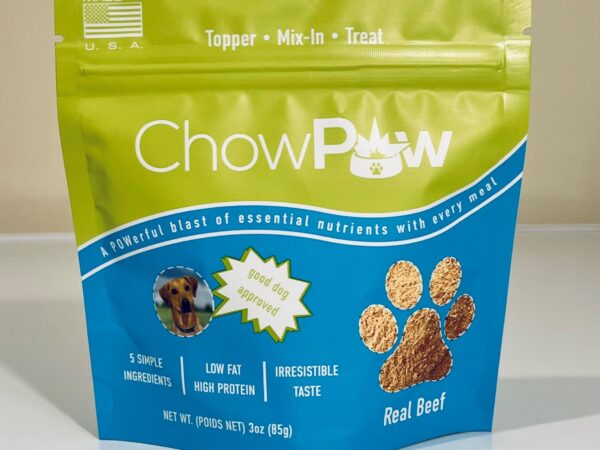 Dog Food Topper - Beef HeartOriginal price was: $14.99.$10.95Current price is: $10.95. - or subscribe and save up to 20%