
How to Get My Dog to Eat More: Easy Tips
It's one of the most stressful things to watch: your dog, who usually gobbles up their dinner, suddenly turns their nose up at a full bowl. Your first instinct might be to label them a "picky eater," but that can sometimes cover up a bigger issue.
Before you start a frantic search for a new dog food brand, it's crucial to figure out why your dog isn't eating. The reason almost always falls into one of two buckets: medical or behavioral.
Figuring out which one you’re dealing with is the absolute first step. A sudden loss of appetite, especially if it comes with other symptoms, is a clear signal to call your veterinarian.
Is Your Dog a Picky Eater or Is It Something Else?
Identifying Medical Reasons for Appetite Loss
When a dog abruptly stops eating, they're often trying to tell you something doesn’t feel right. A whole host of health problems can zap their appetite, and you don’t want to ignore those signals.
Think about it—your dog can't say, "My tooth hurts," or "My stomach is upset." Refusing food is one of the main ways they communicate pain or discomfort.
Some of the most common medical culprits include:
- Dental Issues: A cracked tooth, painful gums, or a hidden abscess can make chewing agony. You might see them approach the bowl, sniff, and then back away.
- Gastrointestinal Upset: Nausea is a powerful appetite killer. An upset stomach, or more severe conditions like pancreatitis, will quickly make food the last thing on their mind.
- Pain or Discomfort: Just like us, dogs who are in pain from arthritis, an injury, or internal discomfort often don't feel like eating.
- Underlying Illness: More serious conditions like kidney disease, infections, or even cancer can have loss of appetite as an early warning sign.
This decision tree gives you a quick visual for what to do when your dog's eating habits change.
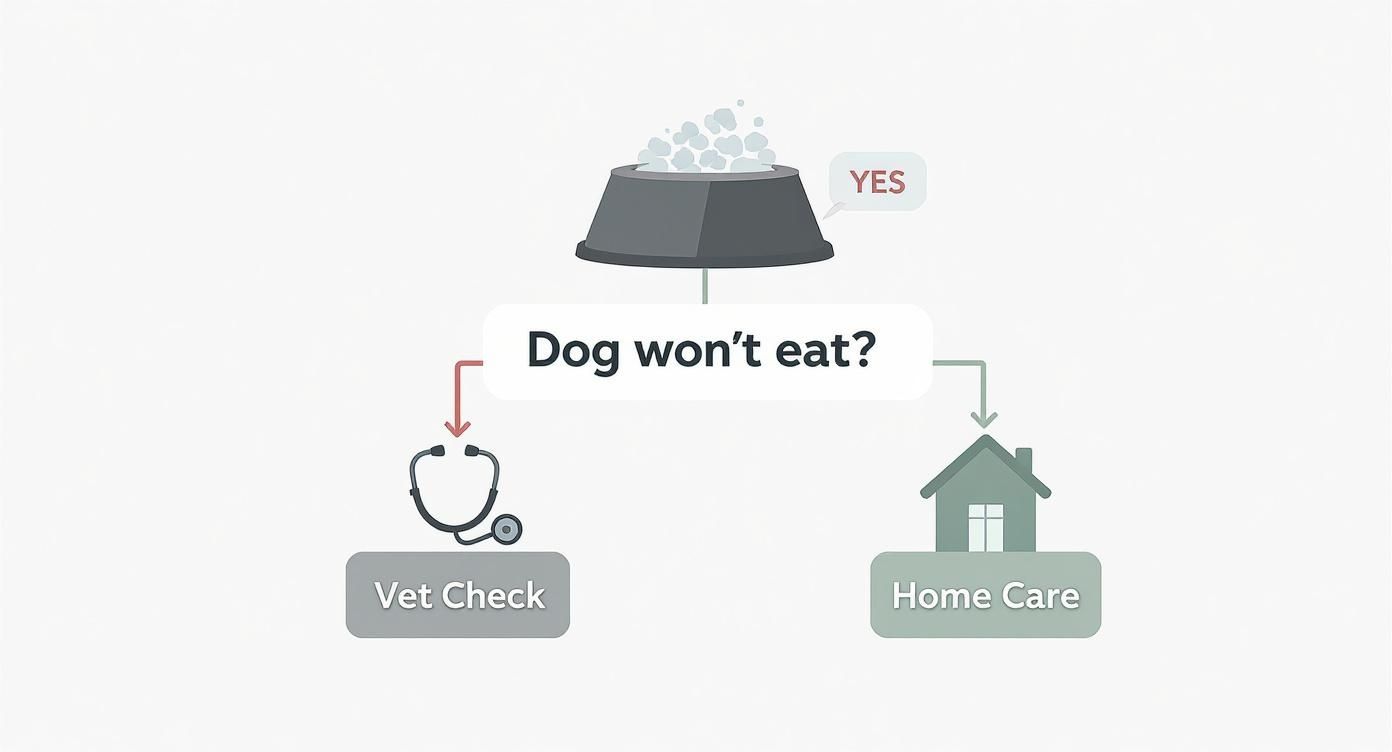
As the graphic shows, the fork in the road always starts with one question: Is it time to see a professional?
Understanding Behavioral Triggers
Okay, so you've been to the vet and your dog has a clean bill of health. Now what? It's time to put on your detective hat and investigate behavioral reasons.
These issues are often tied to your dog's environment, daily routine, or even your own habits. Unlike a medical problem that needs treatment, a behavioral cause can usually be fixed with a little patience and consistency at home.
Maybe your dog is stressed out by a new baby in the house, loud construction noises next door, or even just a change in where you feed them. Sometimes, we accidentally create the problem ourselves by offering too many tasty table scraps or constantly switching their food, teaching them to hold out for something better. If this sounds familiar, you can dig deeper into the common reasons why dogs become picky eaters and how to help them.
Here’s a quick reference guide to help you spot the difference between a medical red flag and a behavioral quirk.
Medical vs Behavioral Reasons for a Poor Appetite
This quick reference guide can help identify the potential cause behind your dog's refusal to eat.
| Symptom or Behavior | Potential Medical Cause | Potential Behavioral Cause |
|---|---|---|
| Sudden, complete refusal to eat | Dental pain, GI upset, infection, underlying disease | Severe stress or anxiety (new home, loss of companion) |
| Picks at food, eats very little | Nausea, chronic pain (e.g., arthritis) | Boredom with food, holding out for treats |
| Shows interest but won't eat | Painful mouth/teeth, difficulty swallowing | Dislikes the food, feels pressure from being watched |
| Also has vomiting, diarrhea, lethargy | Almost always medical. Call your vet immediately. | Unlikely to be purely behavioral if other symptoms are present. |
| Only eats treats or human food | Less common, but could be trying to soothe a GI issue. | Has been conditioned to wait for something better. |
This table is a starting point, not a substitute for professional advice. When in doubt, a vet visit is always the right call.
Key Takeaway: If your dog refuses to eat for more than 24 hours, or if their appetite loss is paired with vomiting, diarrhea, or lethargy, it's time to call the vet. It’s always better to be safe and rule out a health problem first.
Behavioral pickiness is manageable, but it requires a totally different strategy. These dogs aren't sick; they're bored, stressed, or just plain savvy enough to know something more exciting might be on the menu. By figuring out if your dog can't eat versus won't eat, you can take the right first step toward getting them back to their happy, food-loving selves.
Build a Positive Mealtime Routine
Dogs are creatures of habit, just like us. If their mealtime feels stressful, rushed, or chaotic, they're simply not going to be interested in eating. The key is to create a predictable and calm environment. Think of it less as just plopping down a bowl of food and more as creating a positive ritual they can actually look forward to.
Consistency is everything. I mean it. Dogs have surprisingly accurate internal clocks, and feeding them at the same times each day—say, 8 AM and 6 PM—helps regulate their hunger cycles. That predictability builds anticipation and signals to their body that it's time to get hungry, which can be a game-changer for a reluctant eater.
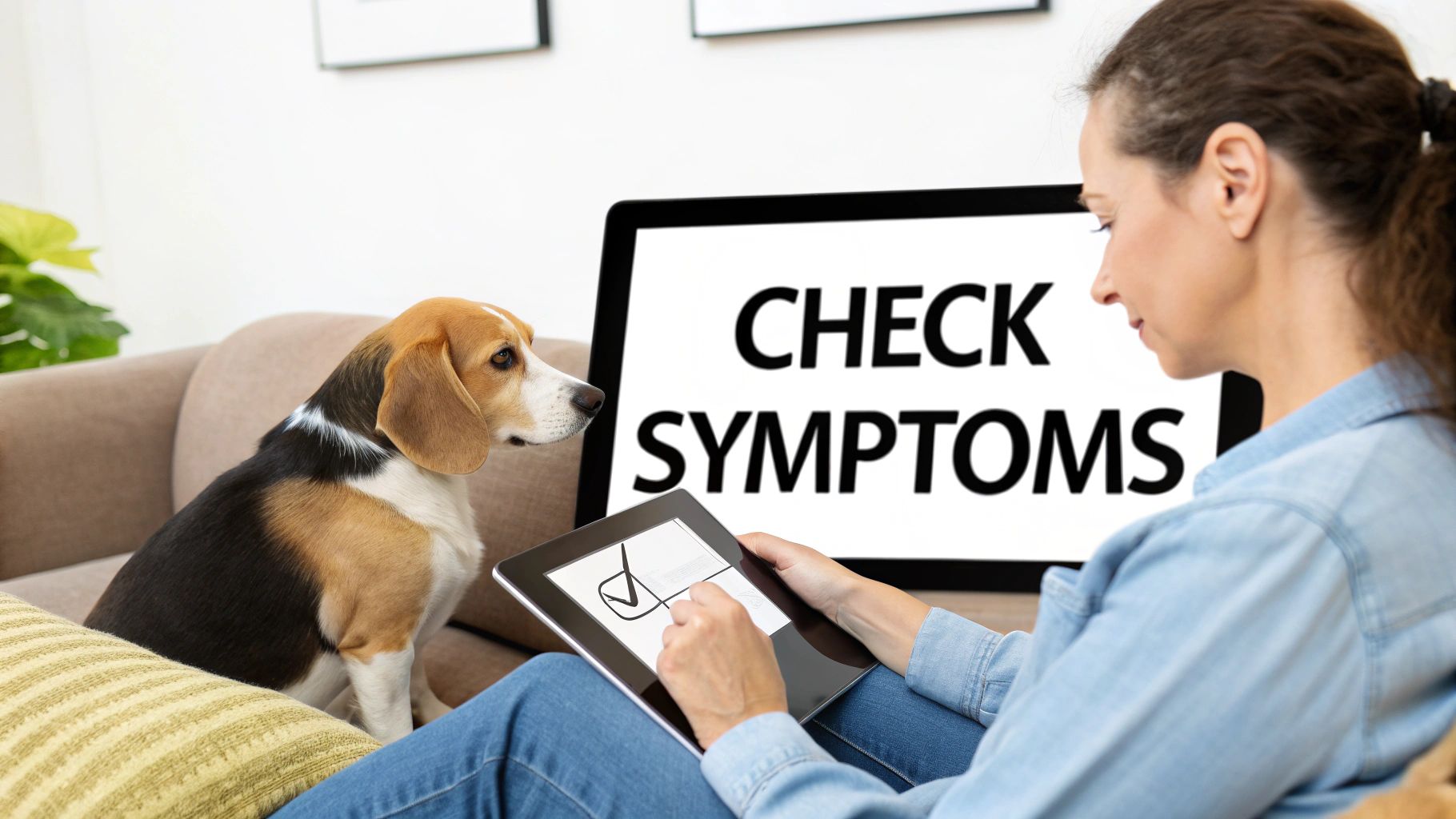
As you build this routine, step away from "free-feeding," where a full bowl of food is left out all day. This practice can make food seem less valuable and gives your dog zero incentive to eat on a schedule. Instead, offer the meal for a set period, like 15-20 minutes. If they walk away, calmly take the bowl away until their next scheduled meal. This quickly teaches them that food is available at specific times, encouraging them to eat when it's offered.
Create a Mealtime Sanctuary
Where your dog eats matters just as much as when. A high-traffic spot in the middle of a busy kitchen, with people constantly walking by and loud noises, can be incredibly stressful for a dog trying to eat. The solution? Create a dedicated "feeding sanctuary."
Find a quiet, low-traffic spot where your dog feels safe and won't be bothered. For many dogs, a corner in the dining room or a quiet spot in the laundry room works perfectly. The goal is to build a strong association between that specific location and a calm, pleasant meal.
If you have more than one pet, competition or intimidation can be a massive factor, even if they seem to get along. One dog might feel pressured by another's presence, causing them to lose their appetite.
- Feed pets in separate rooms. This is the easiest way to completely remove any sense of competition.
- Use crates for feeding. This gives each dog their own private, safe dining space.
- Place bowls on opposite sides of the room. This can work if the dogs aren't overtly competitive but just need a bit more personal space.
By getting rid of these environmental stressors, you allow your dog to focus on their food without feeling anxious or rushed.
Choose the Right Tools for the Job
Sometimes, the problem isn't the food or the environment—it's the bowl itself. The wrong bowl can cause real discomfort or even make eating physically difficult for some dogs.
A dog that inhales their food, for instance, could really benefit from a slow-feeder bowl. These have built-in obstacles that force them to slow down, which is much better for their digestion. A tall dog or a senior with arthritis might find it more comfortable to eat from a raised dish, which reduces neck strain. And for dogs sensitive to noise, a ceramic or plastic bowl is a much better choice than a loud, clanging metal one.
To keep that routine consistent, especially when you're traveling or out on an adventure, consider using durable collapsible camping bowls. Using the same familiar bowl on the go can help reduce stress in new places.
Real-World Scenario: I once worked with a timid rescue who flinched at every loud noise. Her owners were feeding her from a metal bowl on a tile floor in a busy kitchen—a recipe for anxiety. We simply moved her to a quiet corner and swapped the metal for a non-clanking ceramic bowl. The change was immediate. She felt more secure and started finishing her meals. Small adjustments can yield big results.
Making Your Dog's Current Food Irresistible
So, your dog is turning their nose up at dinner again. Before you run out and buy a completely new bag of food, let's try a few tricks. Often, the solution to "how to get my dog to eat more" isn't a dramatic diet overhaul but a simple upgrade to their current meal. A dog's sense of smell is incredibly powerful, and sometimes, all it takes is enhancing the aroma to get them interested.
One of the easiest things you can do is add a splash of warm water or low-sodium bone broth to their dry food. This simple step does two things brilliantly: it softens the kibble, which is great for seniors or dogs with dental issues, and it releases a rich, meaty scent that can entice even the most stubborn eater.
This idea lines up with what other pet owners are already doing. Recent data shows that a whopping 93% of pet owners say it's critical that their dog actually likes the food they buy. The concept of 'food as medicine' is also catching on, with more people looking for simple additions like broth to support hydration and organ health.
The Power of a High-Quality Meal Enhancer
If warm water doesn't do the trick, it’s time to bring in a high-quality meal enhancer or supplement. This is where you can seriously boost both the flavor and nutritional value of their food without committing to a full diet change. Think of a good enhancer as a delicious, nutrient-packed seasoning for your dog's meal.
But it’s important to know what a meal enhancer is—and what it isn't. A meal enhancer is a supplement, not a replacement for their balanced kibble. Its job is to boost the nutritional value of their current food, not take its place. It's like adding a superfood smoothie to your own diet; it adds value but doesn't replace a full meal.
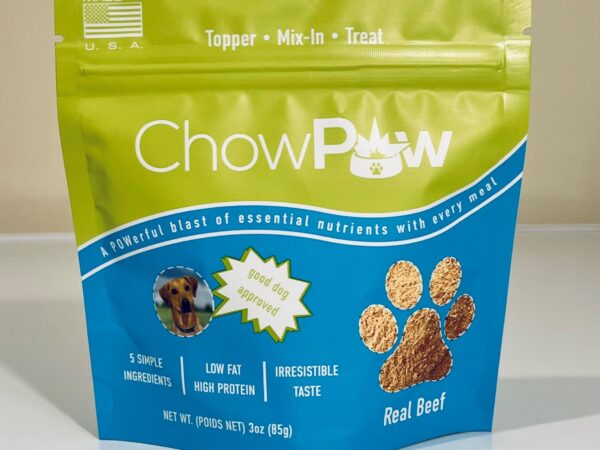
This is exactly where a product like ChowPow comes in. It's a dehydrated beef-heart supplement designed specifically to make your dog's existing food more appealing and nutritious. Sprinkling just a small amount over their kibble can turn a boring meal into something your dog gets excited about.
Why ChowPow Works as a Meal Booster
ChowPow is made from simple, high-value ingredients, with beef heart as the star. For dogs, beef heart is a true superfood. It's packed with high-quality protein, essential amino acids, and vital nutrients like taurine, which is fantastic for heart health.
Here’s why a dehydrated beef-heart supplement is so effective:
- Irresistible Aroma and Flavor: The dehydration process concentrates that rich, meaty scent, making it incredibly appealing to a dog's sensitive nose. That smell alone can trigger a strong desire to eat.
- Nutrient Density: Unlike empty-calorie flavorings, ChowPow adds a real punch of vitamins and minerals. It’s an easy way to give your dog extra nutritional support with every bite.
- Simple, Clean Ingredients: With a short ingredient list—beef heart, carrots, celery, and apple cider vinegar—you know exactly what you’re adding to your dog's bowl. No weird fillers or artificial additives.
Important Reminder: ChowPow is a meal enhancement or supplement. It’s designed to work with your dog’s balanced kibble to amplify its taste and nutrition, not to serve as a meal on its own. Always follow the feeding guidelines to keep your dog's diet balanced.
How to Use Meal Enhancers Effectively
Using a supplement like ChowPow is simple, but a few best practices can help you get the most out of it without creating a picky eater. The goal is to make their kibble better, not to teach them to only eat the "good stuff." For more ideas, check out our guide on the best dog food toppers for picky eaters.
Here are a few ways to add an enhancer to their bowl:
- The Classic Sprinkle: The easiest method is to just sprinkle the recommended amount of ChowPow right over their dry kibble.
- Mix It In: If your dog is clever enough to lick off the topping and leave the kibble, mix the powder in thoroughly. A little warm water helps it coat every piece.
- Create a "Gravy": My favorite trick is to mix the ChowPow powder with a bit of warm water to form a savory gravy. Pour this over the kibble for a moisture-rich, flavorful meal that also helps with hydration.
By adding a high-quality meal enhancer, you're not just tricking your dog into eating. You're actively making their meal more delicious and nutritious—a win-win for both of you.
Time for a New Menu? Exploring Different Dog Food Options
So, you've tried all the usual tricks. You’ve warmed up their food, added tasty broths, and maybe even sprinkled on some toppers, but your dog is still turning up their nose. When that happens, it's often a sign that the issue isn't just the presentation—it might be time to rethink their core diet.
Walking down the pet food aisle can feel like a sensory overload. But don't worry, figuring out the main types of dog food is the first step to finding something that finally gets your picky eater excited for mealtime.
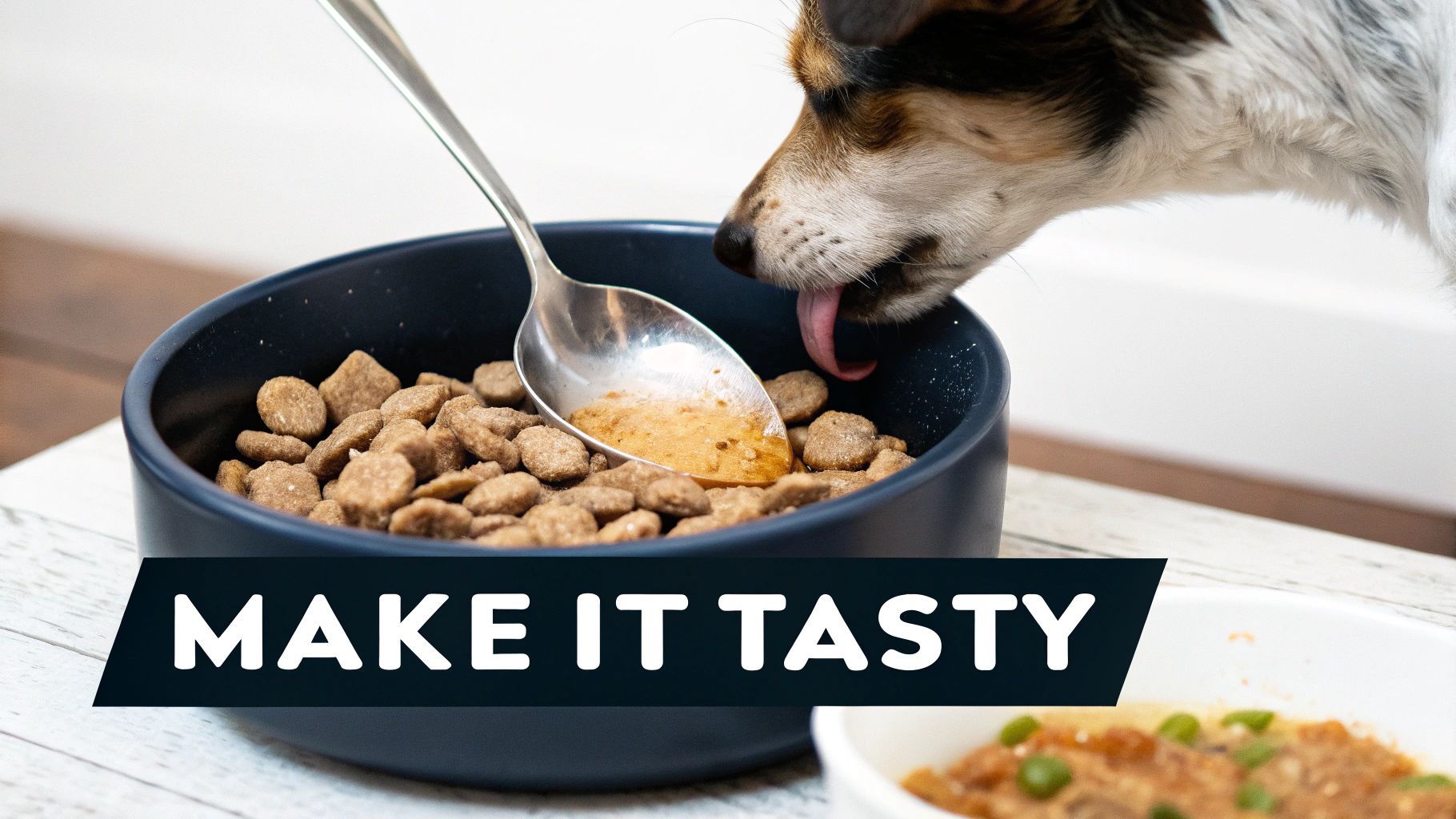
The good news? You have more choices than ever. The global pet food market has exploded to meet the demand from owners just like you. Production recently hit an incredible 52.51 billion kilograms worldwide, and that number is only expected to grow. You can see the latest pet food industry stats from Dogster.com to get the full picture.
This massive growth means there’s almost certainly a perfect food out there for your dog. Your mission is to crack the code on which texture, moisture, and ingredients will finally make them clean their bowl.
Breaking Down the Main Food Types
Let's cut through the noise and look at the most common dog food categories. Each one has its own pros and cons, especially when you're dealing with a dog who needs a little extra convincing.
- Dry Kibble: This is the go-to for most owners. It's convenient, lasts a long time, and is great for your dog's teeth. The downside? Its low moisture and sometimes-bland smell can be a major turn-off for picky dogs.
- Wet (Canned) Food: With its strong, meaty aroma and high moisture content, wet food is often a home run for picky eaters. It’s also a lifesaver for senior dogs or pups with dental issues. It is, however, more expensive and needs to be refrigerated once opened.
- Fresh-Cooked Food: These are gently cooked meals made from human-grade ingredients, delivered right to your door. They look like real food because they are real food, making them incredibly appealing. While they're a fantastic option, they come with a higher price tag and require fridge or freezer space.
- Raw Diets (BARF): Biologically Appropriate Raw Food (BARF) diets are all about raw meat, bones, fruits, and veggies. Fans believe it’s the most natural way for a dog to eat. However, it carries a risk of bacterial contamination and requires very careful handling and balancing to be nutritionally complete.
It's Not Just Flavor—It's About Feel
For a lot of dogs, the problem isn't just the taste; it's the texture. A dog who has crunched on kibble their whole life might suddenly decide they prefer something softer, especially if they're dealing with sensitive teeth or gums.
Moisture content is a game-changer for palatability. Wet and fresh foods have a much stronger scent because the moisture helps release those delicious, meaty aromas. That simple difference can be the key to figuring out how to get my dog to eat more. Sometimes, the fix is as easy as switching from a dry food to one with more water content.
Expert Tip: You don't have to go all-or-nothing. Try mixing a spoonful of wet food into your dog's regular kibble. It can add the aromatic boost and textural change they're craving without forcing a complete diet overhaul.
Could Rotational Feeding Be the Answer?
Does this sound familiar? Your dog absolutely loves a new food for a few weeks, and then, just like that, they're bored again. If so, you might be a perfect candidate for rotational feeding.
This strategy is simple: you periodically switch your dog's food, usually by changing the main protein source (like from chicken to beef to fish) while sticking with the same brand or food type.
There are two big wins with this approach:
- It keeps things interesting. The novelty of a new flavor can prevent "flavor fatigue" and keep your dog engaged with their meals long-term.
- It provides a broader nutrient profile. Different proteins offer a wider range of amino acids, vitamins, and minerals.
Just remember to transition slowly. Always mix the new food with the old over a week or so to give their digestive system time to adjust. A sudden switch can lead to an upset stomach, which is the last thing you want. By exploring different options, you can find the perfect meal plan that keeps your dog happy, healthy, and—most importantly—eating well.
When It's Time to Call the Veterinarian
While most of the time you can tempt a picky eater back to their bowl, it's crucial to know when a poor appetite signals something more than just fussiness. A dog's refusal to eat can be a quiet cry for help, and recognizing the red flags is a massive part of being a responsible dog owner.
Look, dogs skip a meal now and then. It happens. But when a sudden or persistent loss of appetite pops up—especially if it's totally out of character—that's your cue to stop playing chef and get some professional advice.
Clear Signs That Demand a Vet Visit
Some symptoms, when they show up alongside a lack of appetite, are non-negotiable signs that your dog needs to see a vet right away. These aren't "wait and see" situations. They require immediate attention to figure out what's really going on.
Keep a close eye out for these warning signs:
- Going Over 24 Hours Without Food: For a healthy adult dog, skipping a single meal isn't a huge deal. But if your dog refuses everything for more than a full day, it's time to pick up the phone. For puppies and senior dogs, that timeline is much shorter.
- Vomiting or Diarrhea: When inappetence is paired with any kind of gastrointestinal upset, it could be anything from a simple bug to something more serious like pancreatitis or even an intestinal blockage.
- Lethargy or Weakness: A dog who has no interest in food and no energy for walks, playtime, or even just getting up is sending a clear signal that they don't feel well. This combination is a major red flag.
- Sudden Weight Loss: If you're noticing your dog is dropping pounds unexpectedly, their lack of appetite is almost certainly a symptom of a bigger medical issue that needs a proper diagnosis.
A dog's health can shift in the blink of an eye. A persistent refusal to eat is one of the most common signs of illness, and catching things early almost always leads to a better outcome. Never hesitate to call your vet if your gut tells you something is off.
Beyond the Obvious Symptoms
Some other signs might be less dramatic but are just as important. For instance, if your dog suddenly develops severe neurological symptoms such as those resembling a stroke, that's a true emergency requiring immediate veterinary attention.
Other things to watch for include changes in their drinking or urination habits, any difficulty swallowing, or obvious signs of pain. These all warrant a professional consultation. You can learn more about the specific causes of appetite loss in dogs to get a better handle on what might be happening.
How Your Vet Can Get to the Bottom of It
A trip to the vet is a team effort. You bring your invaluable observations from home, and your vet brings the medical expertise to connect the dots. They have a whole toolkit to figure out exactly why your dog isn't eating.
A typical visit for appetite loss will probably involve a few key steps:
- A Full Physical Exam: Your vet will check your dog from nose to tail, feeling for any signs of pain, looking for dental issues, checking for abdominal discomfort, or any other physical clues.
- Diagnostic Tests: This is where the real detective work happens. Blood work, a urinalysis, or imaging like X-rays or an ultrasound can uncover hidden problems that a physical exam can't see.
- A Targeted Treatment Plan: Once they have a diagnosis, your vet can create a specific plan. This might involve medication, a prescription therapeutic diet, or other interventions to get your dog on the mend.
- Appetite Support: In some cases, your vet might even prescribe an appetite stimulant to help jump-start your dog's interest in food while they recover from whatever was ailing them.
Ultimately, you are your dog's number one advocate. While home remedies and tasty meal toppers are fantastic for managing behavioral pickiness, they are no substitute for a real medical diagnosis. Trust your instincts—if you're worried about your dog's eating habits, a conversation with your vet is always the right move.
Got Questions About Your Dog's Appetite?
When you’re staring at a full bowl of untouched food, it’s easy to feel a little lost. Sorting out a picky eater’s habits can bring up a lot of questions, so let’s clear up a few of the most common ones dog owners face.
Should I Just Leave Food Out All Day?
This is a common tactic known as "free-feeding," and while it feels like a simple solution, it often backfires with a picky pup. When food is constantly available, it loses its novelty and appeal. There’s no excitement around mealtime if the buffet is always open.
Creating a predictable schedule—say, two distinct meals a day—is usually far more effective. A routine builds anticipation and helps regulate their natural hunger signals, making them more likely to eat when food is actually presented.
Is It Okay to Mix in Human Food to Get My Dog to Eat?
Tempting, isn't it? A little bit of chicken or some plain rice might get them to eat right now, but it's a slippery slope. Dogs are smart, and they can quickly learn to hold out for the "good stuff" instead of their nutritionally complete kibble.
Over time, this can lead to serious nutritional gaps. A much better approach is to use a balanced meal enhancer designed for dogs, like ChowPow. It boosts the flavor and nutrition of their regular food without teaching bad habits or unbalancing their diet.
ChowPow is designed to make your dog’s balanced meal exciting again. It’s a targeted solution that boosts flavor and nutrients, turning a boring bowl of kibble into something they’ll genuinely look forward to.
How Long Can a Healthy Dog Go Without Eating?
A healthy adult dog can typically go a day or two without food as long as they're drinking water. They're pretty resilient. But that grace period isn't a hard-and-fast rule for every situation.
If your dog skips meals for more than 24 hours, it's time to pay closer attention. This is especially true if you notice other symptoms like vomiting, diarrhea, or unusual lethargy.
For puppies, senior dogs, or dogs with known health issues, the timeline is much shorter. They just don't have the same reserves, and a single missed meal can be a bigger deal. When in doubt, your veterinarian is your best resource. A quick call can help you figure out if you're dealing with simple pickiness or something more serious that needs immediate attention.
Ready to transform your dog's mealtime from a struggle into a celebration? ChowPow makes it easy to boost the flavor and nutrition of any kibble. Give your picky eater the delicious, nutrient-packed meal they deserve.
Learn more about ChowPow and give your dog a reason to clean their bowl!
-
Product on sale
 Dog Food Topper - Beef HeartOriginal price was: $14.99.$10.95Current price is: $10.95. - or subscribe and save up to 20%