How to Give Dog Pills Without the Stress
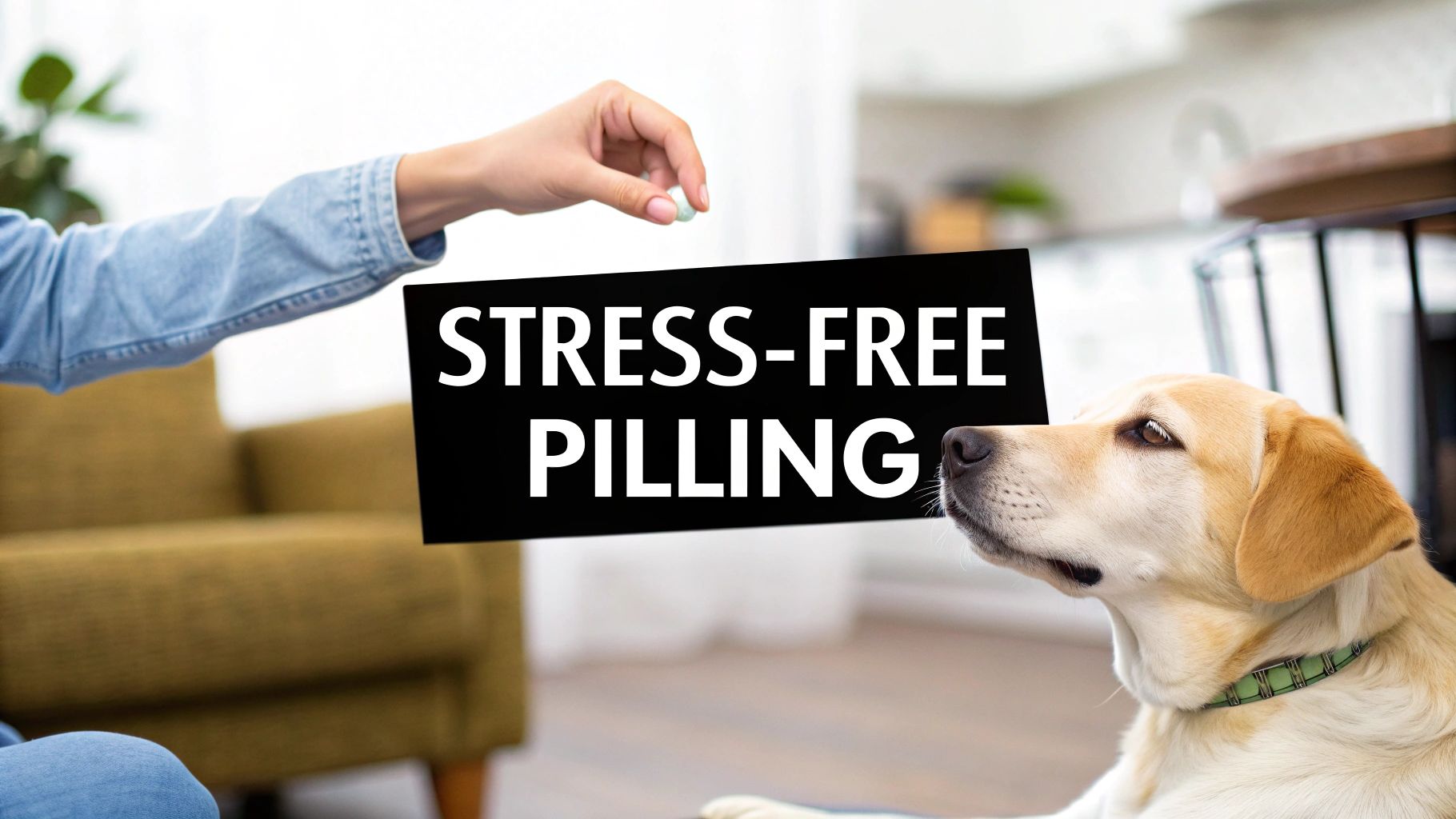
Giving your dog a pill doesn't have to be a monumental struggle. Whether you're a pro at direct pilling or prefer hiding meds in a tasty treat, the real secret is to remain calm and confident. Your dog is an expert at reading your energy, so if you're stressed, they'll be stressed too. Success usually boils down to picking the right trick for your dog's unique personality and keeping the whole thing positive.
Why Giving Your Dog a Pill Can Feel Impossible
Let's be real for a second. Trying to get a dog to take their medicine can feel like a daily battle of wills. If you've ever found yourself in a gentle headlock with your pup, only to discover a soggy, half-dissolved pill glued to the rug moments later, you are definitely not alone. It's a surprisingly common and significant challenge in veterinary medicine.
This isn't just about frustration, either. It can directly impact your dog's health. Consistent medication is critical for everything from preventing heartworm and fleas to managing chronic conditions like arthritis or allergies. When pilling becomes a dreaded chore, it’s all too easy to skip a dose, which can completely undermine the treatment's effectiveness.
To put it in perspective, recent research revealed that a staggering 30 to 42% of dog owners buy only one or two doses of oral flea and tick medication for an entire year, often because of how difficult it is to administer.
Finding the Right Pilling Method
The goal here is to reframe this frustrating task into a manageable skill. It’s all about outsmarting your pup with a calm, clever technique. Forget the wrestling match; it’s time for a smarter approach that makes medicine time a better experience for both of you.
Sometimes, the resistance runs deeper than just not wanting a pill. It could be linked to underlying behavioral issues. In those cases, exploring Dog Behavior Modification Techniques can help address the root cause of their anxiety or stubbornness.
To get started, this decision tree can help you figure out the best approach based on your dog's temperament.
As the chart lays out, your dog’s willingness to cooperate and just how much they love food are the two biggest clues for choosing a method that will actually work.
How to Give a Dog a Pill the Old-Fashioned Way
Sometimes, you just have to get it done. Maybe your dog is a master at finding and spitting out pills hidden in treats, or perhaps they're on a strict diet where extra food is a no-go. For those times, knowing how to give a pill directly is a skill every dog owner should have in their back pocket.
It might seem a little daunting, but when you do it with confidence and a calm demeanor, it’s over in a flash.
The whole thing really comes down to your energy. Dogs are experts at reading our body language, and if you're stressed, they'll be stressed. So, take a moment, breathe, and approach it like it's no big deal. A calm voice and steady hands go a long way in telling your dog that everything is okay.
Getting Set Up for Success
Before you even bring your dog over, get everything you need ready and within easy reach. Fumbling around mid-pill is a recipe for a wiggly, unhappy dog.
- The Pill: Have it out of the bottle and ready in your dominant hand.
- A "Chaser": This is absolutely essential. Grab a high-value treat your dog loves, a bit of water in a needleless syringe, or even a spoonful of peanut butter. This helps them swallow and makes sure the pill doesn't get stuck.
- Your Dog: Get them into a comfortable, secure spot. For smaller pups, sitting them in a corner or between your legs can keep them from trying to back away.
Once you’re ready, hold the pill between your thumb and index finger. With your other hand, gently grasp your dog's muzzle from the top—thumb on one side, fingers on the other.
Key Takeaway: Your goal here is gentle control, not a show of force. The grip should be just firm enough to keep them from turning their head away, but not so tight that it causes panic. A stressful hold will only make your dog fight you.
The Technique: Quick, Calm, and Effective
With your dog’s muzzle held securely, slowly tilt their head back so they're looking toward the ceiling. You'll notice their lower jaw will naturally hang open a bit.
Now, use the middle finger of the hand holding the pill to gently press down on their lower lip and front teeth, opening their mouth a little wider.
Be quick! Place the pill as far back on their tongue as you can manage. The further back it lands, the more likely you are to hit their natural swallow reflex. Instantly close their mouth and bring their head back to a normal position.
To encourage the swallow, you can gently stroke their throat in a downward motion or give a light puff of air on their nose. Watch for the tell-tale sign: a little lick of the nose or lips. That's your cue! Immediately give them that chaser—the treat, the water, whatever you have prepared. This not only confirms they swallowed but also leaves them with a positive memory of the whole thing.
Whatever you do, never dry-pill your dog. A pill can easily get lodged in the esophagus, which is not only uncomfortable but can cause serious irritation. That chaser is non-negotiable; it washes the pill down safely and ends the interaction on a much happier note.
Outsmarting Your Pup with Clever Food Disguises
For a dog who lives for mealtime, hiding a pill in their food is often the path of least resistance. The goal is to make the medicine part of an irresistible treat they swallow before their brain can even process what just happened. It’s a classic for a reason, but let's be honest, we can do better than just a slice of cheese—especially for the clever dogs who've caught on to that old trick.
The secret to a successful disguise is making it small, potent, and something your dog will gulp down in one go. Think of a tiny, handmade meatball from lean ground turkey, a dollop of plain cream cheese, or even a spoonful of plain Greek yogurt. These are sticky enough to hold the pill and delicious enough to get your dog excited.
The Three Treat Trick
What about the certified pill detectives? You know the type—they expertly eat the treat and spit the pill right back out on the floor. For these masters of evasion, you need a more advanced tactic. This is where the "Three Treat Trick" comes into play. It's a simple but surprisingly effective bit of canine psychology that works by bypassing their suspicion.
- The Decoy: First, give your dog a "clean" treat, one with no medication. This first bite lowers their guard and gets them pumped for what’s coming next.
- The Delivery: Immediately follow up with the treat hiding the pill. Don't hesitate! The goal is to keep the momentum going so they swallow it quickly without overthinking it.
- The Chaser: As soon as they've swallowed, give them one more clean treat. This final reward reinforces the whole experience as a positive one and helps make sure the pill goes down smoothly.
This rapid-fire sequence stops them from carefully inspecting each treat. Suddenly, medicine time becomes a fun, fast-paced game.
Safe Foods for Hiding Pills
Just a reminder: not all human foods are safe for disguising medication. Always stick to small amounts of pet-friendly options to avoid any tummy troubles.
Here are a few solid choices:
- A small piece of banana or a single blueberry
- A spoonful of canned pumpkin (which is also great for digestion)
- A dollop of low-sodium peanut butter (just make sure it's xylitol-free)
- A small cube of low-fat cheese or a tiny bit of cream cheese
Critical Reminder: Before you hide any medication in food, you absolutely must check with your veterinarian to make sure it's okay. Some medications are meant to be absorbed on an empty stomach, and giving them with food could make them less effective or even cause side effects.
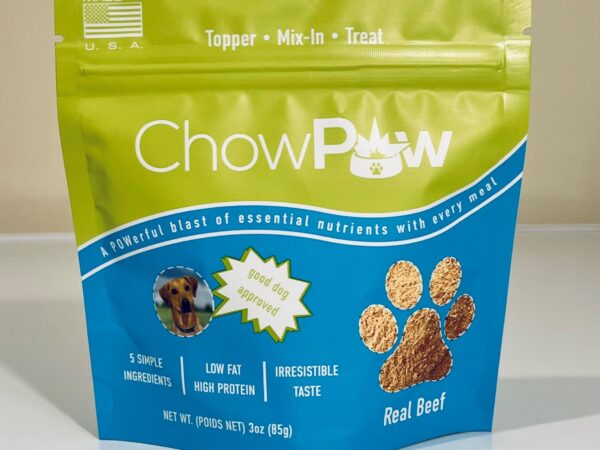
Ultimately, finding the perfect disguise might take a little trial and error. For dogs who are especially picky, a highly aromatic meal enhancer can be a game-changer. You can learn more about finding the best dog food toppers for picky eaters in our article on the topic. A nutrient-dense supplement like ChowPow not only helps mask the medicine but also adds a powerful nutritional boost to their meal. It's designed to enhance their existing kibble, not replace it, ensuring they get the best of both worlds.
The Secret Weapon for Extremely Picky Eaters
What happens when your dog isn't just picky, but a certified pill detective? You’ve tried cheese, peanut butter, and even the "Three Treat Trick," but they still manage to eat the treat and leave a soggy, rejected pill behind.
This is where a powerful meal enhancer becomes your most valuable tool.
For these clever or sensitive dogs, the issue is often the medicinal smell. Their powerful noses can detect the faintest unfamiliar scent, triggering immediate suspicion. Your secret weapon is to overwhelm that scent with an aroma they find absolutely irresistible.
Using an Aromatic Meal Topper
This is precisely why a high-value meal enhancer like ChowPow works so well. It's made from a single, potent ingredient—dehydrated beef heart—which has a rich, meaty scent that dogs are naturally drawn to. This powerful aroma effectively masks the smell and taste of medication, turning a suspicious meal into an exciting one.
Remember, ChowPow is a supplement designed to boost the nutritional value and appeal of your dog’s current food, not replace it. You're making medicine time a seamless part of their regular meal. This approach is especially helpful for dogs recovering from illness or senior dogs whose appetites might be on the decline.
The key is using an enhancer that makes their regular food too good to refuse, even with medicine hidden inside.
A Simple How-To for Hiding Pills with ChowPow
Getting this right is easy. It can transform a stressful daily task into a simple mealtime routine, ensuring they get their necessary medication without the fight.
- Get Permission to Crush: First and most importantly, ask your veterinarian if the pill can be crushed. Some medications are time-released or have special coatings and must be given whole. Never skip this step.
- Prepare a Small Portion: Take just a few spoonfuls of your dog’s regular kibble. Using a small portion ensures they eat all of it and get the full dose of medicine.
- Mix in the Medicine: Crush the pill into a fine powder and mix it thoroughly into that small serving of kibble.
- Sprinkle on the Magic: Now, sprinkle a generous amount of ChowPow over the food. For an extra boost, add a splash of warm water to rehydrate it. This strengthens the aroma and helps the powder coat every single piece of kibble.
By mixing the crushed pill into a small, irresistible meal, you're not just giving medicine—you're providing a nutrient-dense snack that supports their appetite and overall health. It's a win-win.
This method is more than a trick; it's a strategy rooted in understanding your dog's behavior. For more insights into why some dogs develop such selective habits, check out our guide on unraveling the mystery of why dogs become picky eaters.
As pet parents invest more in their companions' health, the demand for effective medication solutions is growing. The global veterinary medicine market is expanding, driven by the 71% of U.S. households that now own pets and are spending more on preventive care. This makes palatable, appetite-enhancing products a key part of modern pet wellness. You can discover more insights about the growth of the veterinary market on Grandview Research.
Troubleshooting Common Pill-Giving Headaches
Even with the best-laid plans, pill time can go sideways. A clever dog can turn a simple task into a frustrating game of cat and mouse. But don't worry—if your pup is outsmarting you, we’ve got a few advanced tricks up our sleeve.
The struggle is real, and it’s far more common than you might think. A survey of veterinarians revealed that over 9 out of 10 (91.5%) have clients who are worried about or outright refuse core treatments for their pets. This points to a much bigger issue of owner confidence, making it critical to have backup strategies ready to go. You can find more insights into the state of global pet care on Health for Animals.
For the Expert Pill Spitter
We've all been there. Your dog wolfs down the cheese or peanut butter, and a moment later, you find a perfectly clean pill sitting on the floor. For these furry little magicians, you just need a better disguise.
A great trick is to use empty gelatin capsules, which you can easily find online or at a local pharmacy. These are perfect for hiding the bitter taste of certain meds or even combining a few small pills into one. Just pop the medicine inside, close the capsule, and then hide that in their favorite treat. The capsule completely masks any off-putting taste or smell.
When They Fear the Medicine Bottle
Sometimes the problem isn’t the pill itself, but everything leading up to it. Does your dog bolt the second they hear the rattle of the pill bottle? If so, they’ve learned to associate that sound with a negative experience. The trick is to change that association through counter-conditioning.
Here’s how you do it:
- Several times a day, just pick up the medicine bottle. Don't even try to give a pill.
- The second you touch the bottle, give them something they absolutely love—a high-value treat, their favorite toy, or some over-the-top praise.
- Rinse and repeat. Consistently. Over time, your dog will start to see the bottle and think, “Oh boy, something good is about to happen!” instead of tensing up.
This process is all about rebuilding trust. You're flipping the script in their mind. The medicine bottle goes from being a predictor of stress to a signal for a reward, which makes them much calmer when it’s actually time for their medicine.
Special Care for Seniors and Long-Term Meds
Older dogs can present a whole new set of challenges. Their teeth might be sensitive, making chewing painful, or their appetite just isn't what it used to be. For these sweet seniors, crushing pills (get the okay from your vet first!) and mixing them into a soft, smelly food topper like ChowPow is a fantastic solution. Since it’s a supplement, it easily mixes into their existing food without requiring any chewing, and the enticing aroma can help kick-start their appetite.
Dogs on medication for the long haul can also develop "pill fatigue"—they just get sick of the daily routine. It's so important to keep things fresh. Rotate the types of treats you use, change up the time you give the medicine, or make a game out of it. Keeping them guessing prevents them from becoming suspicious and resistant.
When you're trying to solve these pill-giving problems, it helps to think about their behavior as a whole. For a broader perspective, you might find it useful to check out some practical strategies for managing dog behavior in different contexts.
Answering Your Top Pill-Giving Questions
Even with a solid game plan for giving your dog pills, a few questions always seem to pop up. Whether it's about medication safety or dealing with a pup who's a little too clever, getting the right answers can make all the difference.
Is It Always Safe to Crush My Dog's Pills?
This is a big one, and the answer is a firm no—not without checking with your vet first. It’s absolutely critical to ask before you crush anything.
Many pills have special time-release coatings that are meant to dissolve slowly in your dog’s system. Others are coated to protect their stomach lining from irritation. Crushing these can mess with the dosage, leading to side effects or making the medicine ineffective.
If your veterinarian gives you the all-clear, then crushing can be a great strategy. Mixing the fine powder into a small bit of their kibble with a powerful supplement like ChowPow is an easy way to hide it. The rich, meaty aroma is fantastic for masking any bitter medicinal taste, adding a nutritional boost without changing their core diet.
What if My Dog Eats the Treat but Spits Out the Pill?
Ah, the classic "spit-out." It’s a common and frustrating problem that just means you need to get a little stealthier.
The "Three Treat Trick" is a go-to for a reason. Give a plain treat, then the pill-hiding treat, then another plain treat, all in quick succession. The idea is to create a fun, fast-paced game so they don't have time to inspect what they're eating.
You might also need to up your disguise game. Use something with a strong, appealing smell that completely overpowers the pill’s scent. Think tiny, handmade meatballs or a few pieces of kibble coated in rehydrated ChowPow. You want the treat to be so delicious they gulp it down without a second thought.
Your dog's safety and your bond are what matter most. If you see any signs of aggression like growling or snapping, stop immediately. Trying to force it will only make their fear worse and can seriously damage your trust. Call your vet to talk about safer handling techniques or to explore other options, like a liquid medicine, an injection, or even having the pharmacy compound the medication into a flavored chew.
If you're ever on the fence about a medication—even over-the-counter ones—it's always best to ask a professional. For instance, it's smart to learn whether you can give a dog Pepcid safely before reaching into your own medicine cabinet.
-
Product on sale
 Dog Food Topper - Beef HeartOriginal price was: $14.99.$10.95Current price is: $10.95. - or subscribe and save up to 20%