
How to Make Your Dog Drink More Water: Simple, Effective Tips
Trying to figure out how to get your dog to drink more water can be puzzling. The key isn't to force them, but to understand why they might be hesitant in the first place. The reason could be anything from a simple preference to a more serious health concern.
Why Some Dogs Avoid Drinking Water
Have you ever watched your dog walk right past a full water bowl? It’s a common behavior that can be confusing for pet owners. While it's easy to assume they're just not thirsty, the truth is often more complex.
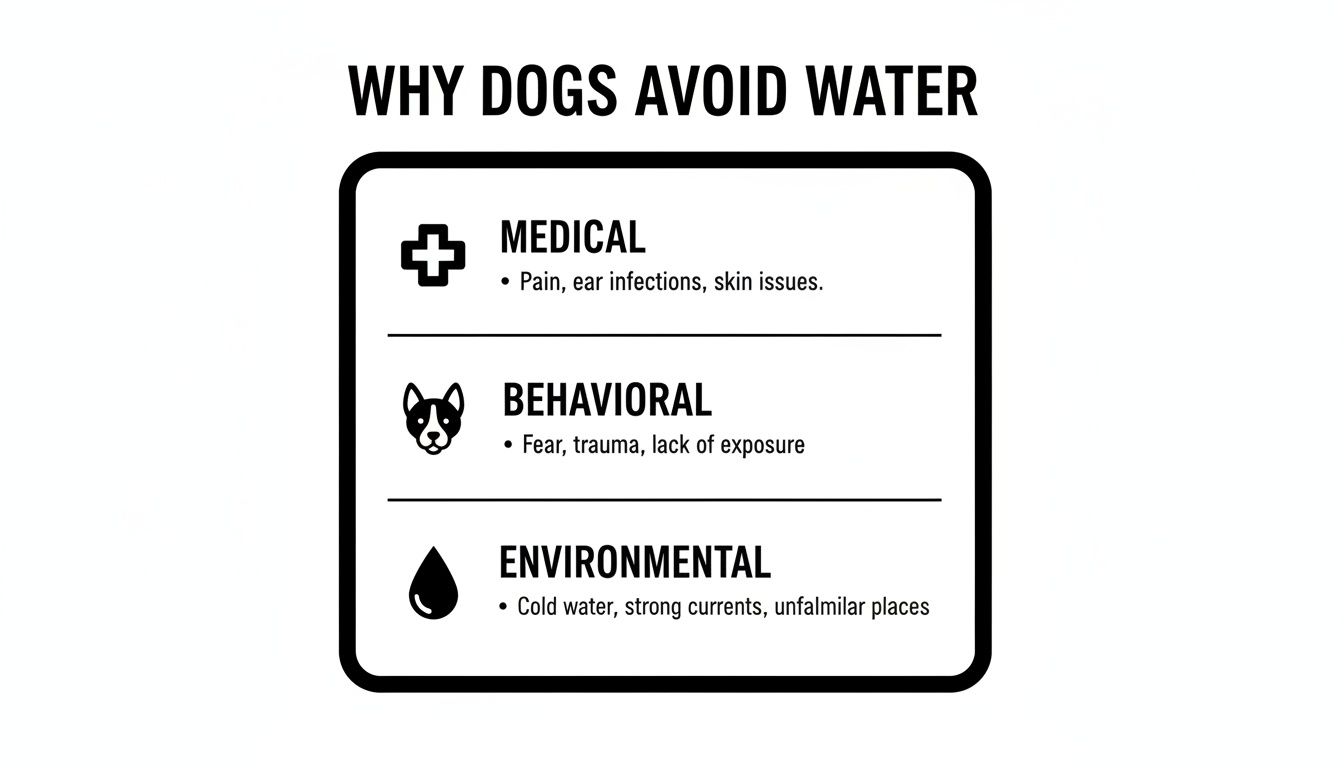
A dog’s reluctance to drink can stem from medical, behavioral, or environmental issues. Since they can't tell you what's wrong, it's up to you to put the clues together. Figuring out the "why" is the first step toward getting them properly hydrated again.
Medical and Health-Related Reasons
Sometimes, a sudden disinterest in water is a sign that something is physically wrong. If your dog abruptly stops drinking, it's always wise to consider health issues first, as these often require a veterinarian's attention.
- Dental Pain: This is a common culprit. A cracked tooth, sore gums, or an injury in their mouth can make drinking painful, especially with cold water. You might notice your dog approach the bowl, hesitate, and then back away.
- Illness or Nausea: Just like people, dogs who feel sick often lose their appetite and thirst. Conditions like kidney disease, urinary tract infections (UTIs), or even a simple upset stomach can make them uninterested in water.
- Age-Related Issues: Senior dogs can face unique challenges. Arthritis can make bending down to a bowl on the floor a painful task. Additionally, an older dog's sense of thirst can weaken, meaning they don't feel the urge to drink as often as they should.
Behavioral and Environmental Factors
If you're confident your dog isn't sick, the reason might be related to their environment or behavior. The good news is these factors are often easier to address with a few simple adjustments.
A dog’s hesitation can be instinctual. An unfamiliar water source might smell 'unsafe' to them—a survival tactic from their wild ancestors. This is often why some dogs refuse water when traveling or in a new place.
Think about the bowl's location. A timid dog might avoid a water station placed in a busy, high-traffic area like the middle of the kitchen. The constant foot traffic and noise can be stressful, making them too anxious to stop for a drink.
The bowl itself is another important consideration. Some dogs have surprisingly strong preferences. A plastic bowl can hold onto smells over time, while a metal bowl might create a strange reflection or a clanging noise that spooks them. Sometimes, the solution is as simple as swapping a plastic bowl for a ceramic or stainless steel one.
The Quality and Taste of the Water
Perhaps the most overlooked reason a dog avoids drinking is the water itself. With a sense of smell far more powerful than ours, they'll know immediately if the water tastes or smells "off." This could be caused by a dirty bowl that has collected bacteria, tainting the flavor.
It can also be the quality of your tap water. One study found that tap water in two-thirds of surveyed U.S. households contained heavy metals like arsenic and lead at levels the EPA considers unsafe for humans. An unpleasant taste from these contaminants could be a major reason for your dog’s protest. You can learn more about how to purify tap water to improve its taste and safety. Simply using a filter or offering bottled water can make a world of difference.
How to Spot Dehydration in Your Dog
Dehydration can develop quickly in a dog, turning from a minor issue into a serious health risk. As a dog owner, learning to spot the early signs is one of the most valuable skills you can have. It’s about more than just a dry nose; there are a couple of simple, hands-on checks you can do at home.
Catching these signs early means you can take action—like adding a hydrating meal topper or making their water more enticing—long before a vet visit becomes necessary. Knowing what to look for helps you understand when it's time to step in.
Simple At-Home Hydration Checks
You don't need any special equipment to check for dehydration, just your eyes and hands. These two simple tests are trusted by vets and are easy for any owner to learn.
The Skin Tent Test
This is the go-to method for a quick hydration check. Gently pinch the skin between your dog’s shoulder blades, lift it up, and then let it go.
- Well-hydrated skin: It should snap right back into place almost instantly.
- Dehydrated skin: You'll notice the skin is slower to return, or in more serious cases, it might even stay "tented" for a moment.
This test measures skin turgor, or its elasticity, which decreases as the body loses fluid. It's a surprisingly reliable indicator.
The Gum Check
Another great way to check on hydration is to look at your dog's gums. Carefully lift their upper lip to see the color and feel the texture. Healthy gums should always be pink and moist.
Now, gently press your finger against their gums. The spot will turn white but should return to its normal pink color in less than two seconds. Vets call this the capillary refill time. If the gums feel sticky or tacky, or if the color takes longer to come back, your dog is likely dehydrated.
Other Subtle Signs to Watch For
Beyond these physical checks, your dog’s overall behavior can tell you a lot. Sometimes the clues are less obvious but just as important.
- Lethargy and Low Energy: Is your usually playful pup suddenly dragging their paws and ignoring their favorite toys? A sudden drop in energy is a classic sign they aren't feeling well, and dehydration is a very common culprit.
- Sunken or Dull Eyes: Dehydration can actually cause the fatty tissue around the eyes to shrink, giving them a sunken look. Their eyes might also appear dry or dull instead of their usual bright and alert self.
- Loss of Appetite: It’s a classic combo: many dogs who won't drink also won't eat. If your dog suddenly turns their nose up at food, especially with other symptoms, it should raise a red flag.
- Thick, Stringy Saliva: Instead of normal drool, a dehydrated dog might have thick, almost rope-like saliva as their body tries to conserve every last drop of water.
This infographic breaks down the common reasons a dog might be avoiding their water bowl, which is often the root cause of these symptoms.
Knowing whether the issue is medical, behavioral, or something in their environment is the key to finding the right fix. For a deeper dive, our guide covers all the signs of dehydration in dogs in more detail.
Dog Dehydration Levels at a Glance
Recognizing the severity of dehydration can help you decide on the right course of action. This table offers a quick reference for what to look for at different stages.
| Symptom | Mild Dehydration (5%) | Moderate Dehydration (7-9%) | Severe Dehydration (10%+) |
|---|---|---|---|
| Gums | Slightly sticky or tacky | Dry and sticky | Very dry, almost chalky |
| Capillary Refill | Slightly delayed (2 seconds) | Delayed (2-4 seconds) | Very delayed (over 4 seconds) |
| Skin Tent | Returns to normal slowly | Stays tented for a few seconds | Stays tented indefinitely |
| Eyes | Appear normal | Slightly sunken or dull | Very sunken and dry |
| Energy Level | A bit tired, less playful | Noticeably lethargic, weak | Unresponsive, unable to stand |
Remember, this chart is just a guide. If you suspect your dog has moved past mild dehydration, or if they aren't improving with at-home care, it's always best to contact your veterinarian immediately. Severe dehydration is a medical emergency.
Creative Ways to Encourage Your Dog to Drink
Once you've ruled out any immediate health concerns with your vet, you can start making your dog's water bowl a place they want to visit. The goal here is to make drinking an easy, appealing, and positive part of their day.
It's amazing how a few simple tweaks to their environment and routine can make a world of difference. Figuring out how to make a dog drink more water is less about force and more about finding what works for your pup. You'll want to experiment a bit to see what clicks with their unique personality.
Upgrade Their Drinking Environment
The setup of your dog's water station can have a huge impact on their drinking habits. Sometimes, the problem isn't the water itself, but the entire experience.
Start with the bowl. It needs a daily wash with soap and water to prevent that slimy bacteria buildup, known as biofilm, which can make the water taste strange. You wouldn't want to drink from a dirty glass every day, and neither does your dog.
The location matters, too. Place multiple fresh water stations around your home, especially if you have a multi-level house or a senior dog with mobility issues. Try putting bowls in quiet, low-traffic areas where they can drink without feeling rushed. One near their bed, another in the living room, and one outside in a shady spot is a great start.
Experiment with Different Bowls and Water Sources
Dogs can be surprisingly particular about what they drink from. If your dog is hesitant, it might be time for a change.
- Material Matters: Plastic bowls scratch easily, creating tiny spaces where bacteria and odors can hide. Try switching to a stainless steel or ceramic bowl; they are non-porous and much easier to keep clean. Some dogs also dislike the clanging noise of a metal bowl or their own reflection, making ceramic a fantastic alternative.
- Size and Shape: Make sure the bowl is the right size for your dog. A pup with a long snout might prefer a deeper bowl, while a flat-faced breed like a Pug will need a shallower dish to drink comfortably.
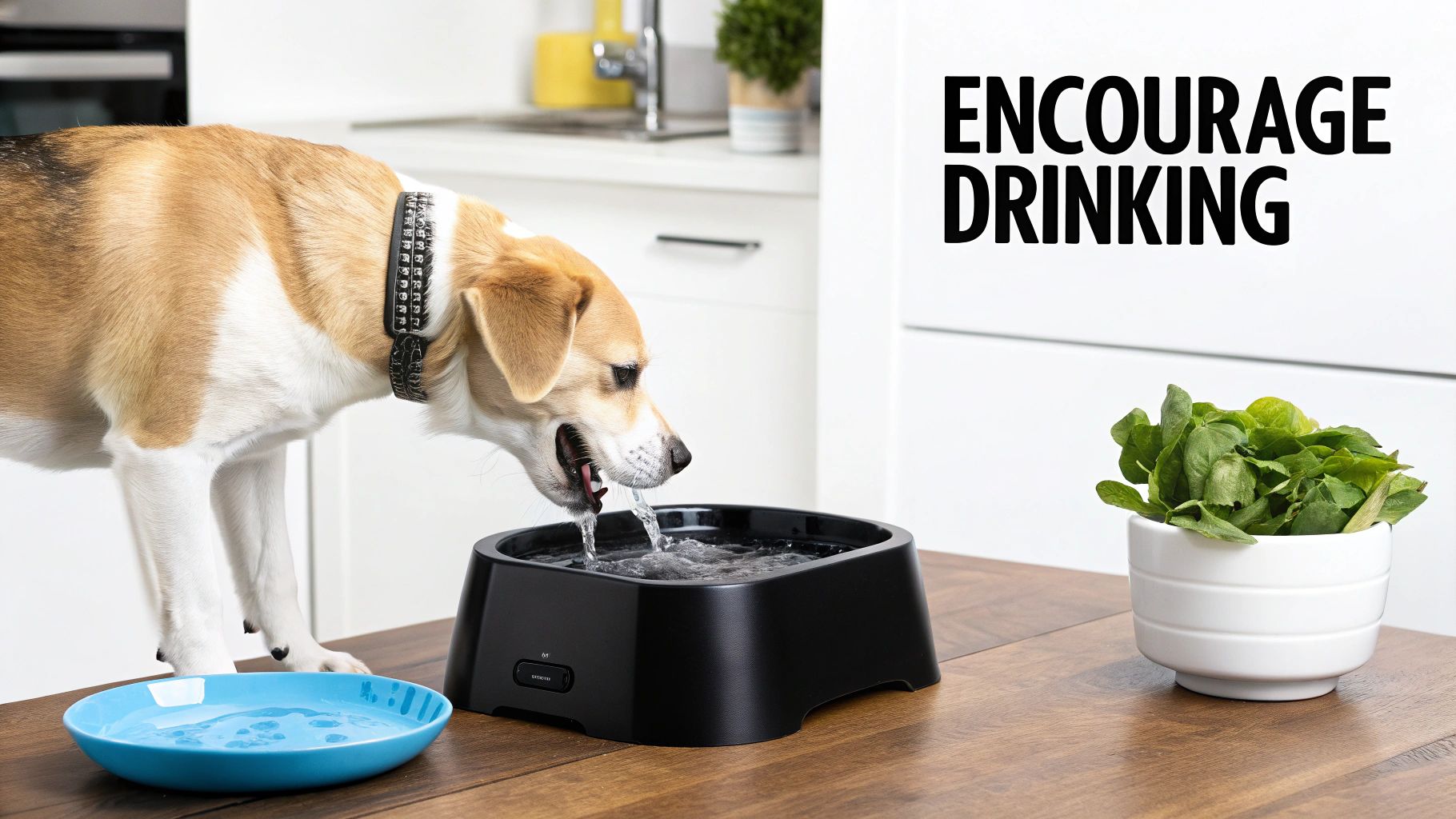
- Introduce a Water Fountain: Many dogs are instinctively drawn to moving water. A pet water fountain can be a game-changer. The constant circulation keeps the water fresh, cool, and oxygenated, and the gentle bubbling sound can entice a curious dog to take a sip.
A dog’s instinct often tells them that stagnant water can be unsafe—a holdover from their wild ancestors. Running water signals freshness and purity, which can trigger their natural urge to drink.
Make Water More Appealing
If a clean bowl and a perfect location aren't enough, the next step is to make the water itself more appealing. A little flavor can go a long way in tempting a picky drinker. The key is using ingredients that are both safe and irresistible.
One of the easiest tricks is adding a splash of low-sodium chicken or beef broth to their water. Just make sure the broth is completely free of onions, garlic, and other harmful seasonings. A small amount is usually all it takes to get their attention. You can also freeze bone broth in ice cube trays for a crunchy, hydrating treat on a warm day.
Another simple hack is to drop a few dog-safe fruit slices, like cucumber or watermelon, into their bowl. This infuses the water with a subtle flavor that can pique their interest.
Supercharge Their Hydration with a Nutritious Topper
For a solution that not only encourages them to drink but also adds a significant nutritional boost, consider a high-quality meal enhancement. This is where a supplement like ChowPow truly stands out. It's not a replacement for their current food, but a powerful way to enhance their daily kibble and improve their hydration.
ChowPow is a dehydrated beef heart powder that dissolves easily in water, creating a savory, nutrient-rich broth. Dogs are naturally drawn to the meaty aroma, making it an excellent tool for tempting even the most stubborn drinkers. Simply mix a scoop into their water bowl to create a hydrating "beef tea" that they will love.
This approach gives you two big benefits:
- Encourages Drinking: The irresistible flavor motivates your dog to consume more water, helping them stay properly hydrated.
- Adds Nutritional Value: Unlike plain broth, ChowPow is packed with high-quality protein, vitamins, and minerals from beef heart. It’s a meal supplement that supports everything from your dog's energy levels to their muscle health.
This method is a fantastic choice for senior dogs who may have a diminished sense of thirst, dogs recovering from an illness, or any picky pup who needs a little extra encouragement. It transforms a boring task into a delicious and rewarding experience.
Boosting Hydration Through Your Dog's Diet
Hydration isn't just about what’s in the water bowl. Your dog's food can play a surprisingly big role in their overall moisture intake. If you're looking for another way to get your dog to drink more water, turning your attention to their meals is a simple and effective strategy.
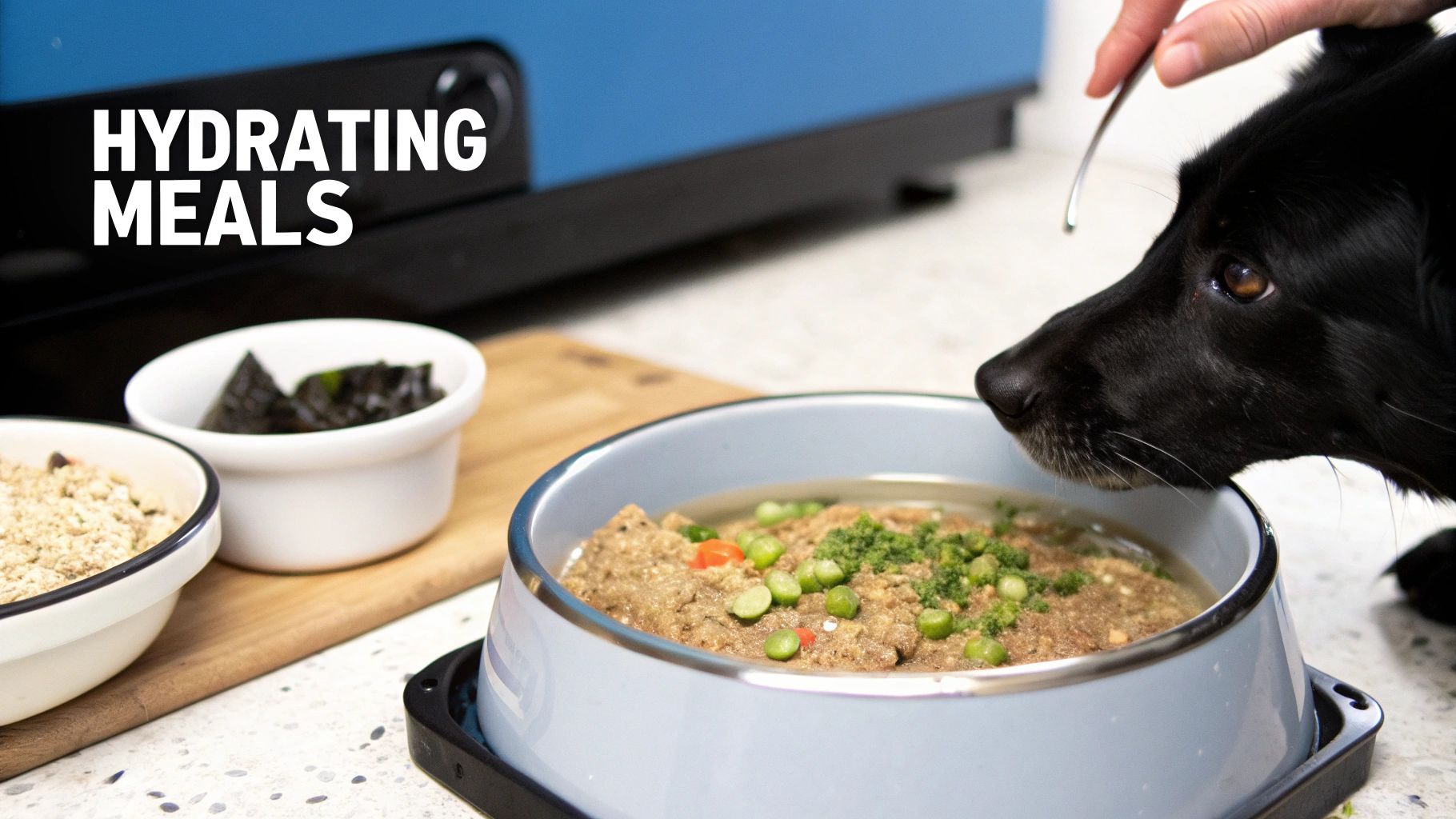
The moisture difference between kibble and wet food is significant. Dry food typically contains only about 10% moisture, whereas canned or fresh food can be upwards of 75-85%. Making a full switch, or even just mixing in some wet food, is an easy win for getting more water into your dog without them even realizing it.
Upgrading Kibble with Hydrating Additions
Many of us love the convenience of dry kibble, and that's perfectly fine. You don't have to completely change their diet just to increase their water intake. Instead, you can "supercharge" their favorite crunchy meals with a bit of extra moisture.
One of the easiest things to do is pour some warm water or low-sodium bone broth directly over their kibble. Let it soak for a minute or two before serving. This not only adds hydration but also softens the food (a bonus for seniors with sensitive teeth) and makes it smell much more appealing to picky eaters.
You can also toss in some hydrating, dog-safe snacks. They add both water content and a nice boost of vitamins and fiber.
- Cucumber Chunks: These are over 95% water and provide a satisfying crunch.
- Watermelon Pieces: A sweet, juicy treat that's packed with moisture—just make sure you remove all seeds and the rind.
- Steamed Zucchini: A soft, easy-to-digest veggie that adds a good amount of water.
This strategy helps close the hydration gap that a dry-food-only diet can create. Studies have shown that while dogs on dry kibble often struggle to drink enough, their intake increases significantly when their water is made more appealing. In one study, a nutrient-enriched water supplement boosted consumption by at least 30%. You can read the full research about these hydration findings to see just how effective this can be.
The Role of a High-Quality Meal Topper
Another fantastic way to upgrade mealtime is with a versatile supplement that adds both moisture and serious nutrition. This is where a meal enhancement like ChowPow really shines as a simple, effective addition to your dog's current food.
ChowPow is a dehydrated beef heart powder designed to be sprinkled over your dog's regular kibble. Add a splash of water, and it instantly rehydrates into a rich, meaty gravy that coats every piece. This does more than just add water; it creates a meal that even the fussiest dogs go crazy for, boosting the nutritional value of what they already eat.
This method is a game-changer for picky eaters. It takes their familiar food and turns it into something new and exciting, encouraging them to clean their bowl while getting extra hydration and nutrients in every single bite.
Using a meal supplement like ChowPow gives you multiple benefits in one easy step. It's a hydration hack, but it's also a simple way to get high-quality protein and essential nutrients from beef heart into their diet. To learn more, check out our guide on hydration hacks with dog food toppers. It's a simple addition that makes supporting their health effortless.
Knowing When to Call Your Veterinarian
While all the tips and tricks for encouraging your dog to drink are great, it’s just as important to know when the problem is more than just picky behavior. Sometimes, a dog’s refusal to drink is their only way of telling you something more serious is going on.
Recognizing the red flags that signal a need for professional medical help is a critical part of being a responsible dog owner. Our goal is to help you feel confident, and that includes knowing when it's time to pick up the phone. If your gut is telling you something is off, listen to it. It’s always better to be safe than sorry.
Urgent Scenarios That Require a Vet Call
Some situations are clear emergencies. If you see any of the following signs, stop the home remedies and get your vet on the phone immediately.
These are not "wait and see" symptoms. Acting quickly can make all the difference.
- Refusal to Drink for 24+ Hours: A full day without any water is a major red flag. This can cause dehydration to set in fast and often points to a serious underlying issue that needs a proper diagnosis.
- Combined with Other Symptoms: If your dog isn't drinking and is also dealing with vomiting, diarrhea, severe lethargy, or confusion, it's an urgent situation. This combination can signal anything from poisoning to a bad infection.
- Signs of Significant Pain: Watch their body language. If your dog yelps when trying to drink, paws at their mouth, or seems to be in pain when lowering their head, they could have a broken tooth, an object lodged in their throat, or another painful oral injury.
If your dog is sick and you're struggling to keep them hydrated, our specific guide on how to hydrate a sick dog has more targeted tips you can use while you wait for your vet appointment.
Monitoring Changes in Thirst Levels
Sometimes the warning sign isn't a lack of drinking, but a sudden, dramatic change in your dog's habits. A dog who suddenly can't get enough water can be just as concerning as one who won't drink at all.
A dog's normal water intake can range from 20-70 mL/kg of body weight per day. While that fluctuates a bit, a persistent shift from their personal norm is what you need to watch for.
For senior dogs, a change in thirst is a particularly big deal. Chronic kidney disease affects between 0.05% and 3.74% of the canine population, and increased thirst is often one of the first signs. Catching this shift early is key to getting a diagnosis and starting treatment.
A sudden, unquenchable thirst (called polydipsia) is a classic symptom of conditions like kidney disease, diabetes, or Cushing’s disease. Don't just write it off as your dog being extra thirsty—it’s something that definitely warrants a conversation with your vet to rule out any health problems.
Beyond hydration, other health issues like parasites are also worth a vet's attention. Making sure you're up to date on proactive flea and tick prevention is another simple way to protect your dog's overall well-being.
Got Questions? We’ve Got Answers.
Let's tackle some of the most common questions that pop up when you're trying to get your dog to drink more. Think of this as your quick-reference guide for those little "is this normal?" moments.
How Much Water Should My Dog Drink Every Day?
This is a very common question. The general rule of thumb is about one ounce of water for every pound of body weight per day. So if you have a 40-pound dog, they should be drinking roughly 40 ounces, or about five cups.
But remember, that's just a starting point. Your dog's needs will change based on a few key factors:
- Activity: A lazy afternoon on the couch requires a lot less hydration than an hour-long fetch session at the park. More activity means more water.
- Diet: Dogs on a dry kibble diet will naturally need more water than dogs who eat wet or fresh food, which already contains a lot of moisture.
- Weather: Just like us, dogs get thirstier on hot, humid days. Panting is their natural air conditioner, and it uses up a lot of water.
The best thing you can do is make sure a clean, fresh bowl of water is always available. Get to know your dog's personal drinking habits, and you'll quickly learn what's normal for them.
Is It Safe to Add Flavor to My Dog's Water?
Absolutely! As long as you stick to dog-safe ingredients, flavoring their water is a fantastic and safe way to get a reluctant pup to drink up. A splash of low-sodium bone broth is a classic choice, but be sure it's free of onions or garlic, which are toxic to dogs.
For an even better option that packs a nutritional punch, try mixing in a meal enhancement like ChowPow. It’s a brilliant supplement designed to boost the nutritional value of their current food, not replace it. When you stir the all-natural beef heart powder into their water, it creates a savory, irresistible broth that most dogs can't resist.
A quick but crucial reminder: Never, ever add anything containing xylitol (a common artificial sweetener), sugar, or tons of salt to your dog’s water. These can be incredibly dangerous.
A safe flavor boost turns their water bowl from a chore into a treat. It’s a simple trick that can make a huge difference for picky drinkers.
Why Is My Senior Dog Suddenly Drinking So Much Water?
We've talked a lot about dogs not drinking enough, but what if your older dog suddenly starts drinking a lot more? This is a significant red flag and a clear sign you need to call your vet. This condition, called polydipsia, should never be ignored.
While it could be something simple like a reaction to a heatwave, a sudden, dramatic increase in thirst is a classic symptom of several serious health issues, including:
- Kidney Disease: When the kidneys can't conserve water properly, the dog drinks more to try and make up for it.
- Diabetes Mellitus: The body attempts to flush out excess sugar through urination, which leads to dehydration and an intense thirst that follows.
- Cushing’s Disease: This hormonal disorder causes a wide range of symptoms, and increased thirst and urination are two of the most common.
Catching these conditions early is key to managing them well. Please don't write this off as just a quirk of old age—it’s your dog’s way of telling you something is wrong, and it’s time for a check-up.
Ready to turn your dog’s water bowl into something they’ll actually get excited about? ChowPow makes it easy to create a nutrient-dense, delicious broth that encourages drinking and supports their overall health. Give their hydration and nutrition a boost by visiting ChowPowNow.com to grab your first bag.
-
Product on sale
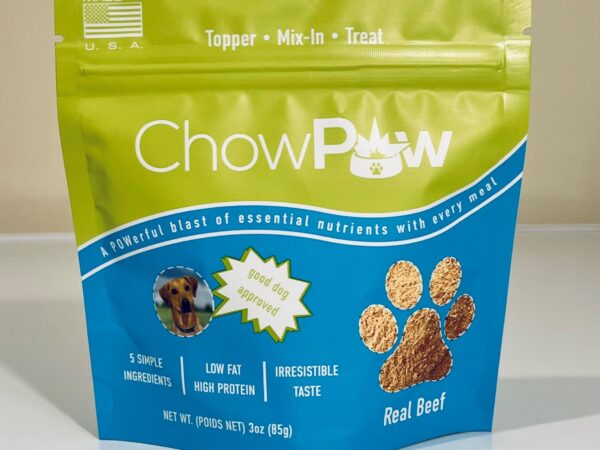 Dog Food Topper - Beef HeartOriginal price was: $14.99.$10.95Current price is: $10.95. - or subscribe and save up to 20%